Key takeaways
- Bearded iris flower May to June; rhizomes must sit half-exposed in full sun
- Plant or divide in July and August, six weeks after flowering ends
- Need 6+ hours of direct sun and free-draining neutral to alkaline soil
- Divide every 3 to 4 years or flowering stops as clumps congest
- Size classes run from 15cm dwarf (SDB) to 90cm tall bearded (TB)
- High nitrogen and deep planting are the two main causes of no flowers
Bearded iris (Iris germanica) are among the most rewarding early-summer perennials for UK gardens, yet more of them fail to flower than almost any other border plant. The reason is nearly always the same: the rhizome is buried when it needs to be baked. Get the planting depth and the sun right and a bearded iris rewards you with sculptural blooms every May and June for decades. This guide covers the size classes, the exact planting method, dividing rhizomes step by step, and why these plants stop flowering.
Three rules matter most. Plant the rhizome shallow, with its top exposed to the sun. Divide every three to four years. Use a low-nitrogen feed.
What Makes a Bearded Iris Different
Bearded iris are the rhizomatous, hairy-flowered irises, quite unlike the bulbous types.
The name comes from the row of fuzzy hairs, the beard, running down each of the three lower petals, called falls. The three upper petals that stand up are the standards. This structure, plus the thick surface stem called a rhizome, sets them apart from bulbous iris such as Dutch and Reticulata types, which grow from true bulbs and are covered in our iris bulbs guide.
Bearded iris are grown for their May-to-June flowers in almost every colour except pure red. They thrive on the same free-draining, sunny conditions that suit Mediterranean plants, which is why they sit so well with the picks in our drought-tolerant plants guide. For the wider iris family, including Siberian and water iris, see our complete iris guide.
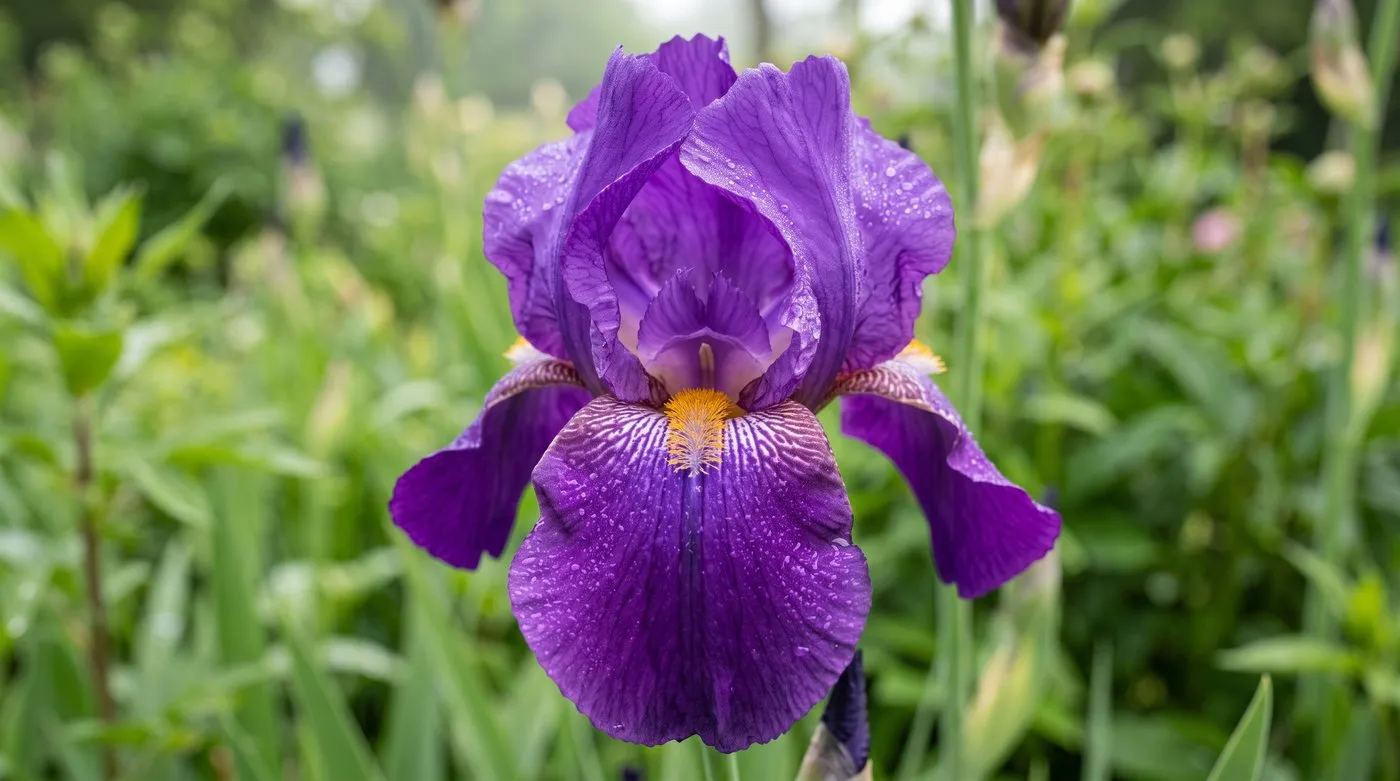 The anatomy that names the plant. The three upright petals are the standards, the three lower petals are the falls, and the fuzzy line down each fall is the beard. Tall bearded iris usually flower in late May and June.
The Bearded Iris Size Classes Explained
Bearded iris are grouped by height and flowering time, and choosing across the classes stretches the season.
| Class | Abbreviation | Height | Flowering |
|---|---|---|---|
| Miniature dwarf bearded | MDB | Under 20cm | Early April |
| Standard dwarf bearded | SDB | 20-40cm | Late April |
| Intermediate bearded | IB | 40-70cm | Early May |
| Border and miniature tall | BB / MTB | 40-70cm | Late May |
| Tall bearded | TB | 70-90cm+ | Late May to June |
Tall bearded are the classic border iris, the largest flowers on the tallest stems. Dwarf types flower a full month earlier and suit the front of a border, gravel garden or a pot. Planting one variety from each class gives roughly eight weeks of iris flowers, from early April to late June. The dwarf and intermediate types also cope better with wind on exposed sites, where tall bearded may need discreet staking.
How to Plant Bearded Iris Rhizomes
Planting depth is the one thing that decides whether a bearded iris flowers. Get this right and most other things forgive themselves.
Method:
- Plant in July or August, when rhizomes are semi-dormant after flowering
- Choose a spot in full sun with at least 6 hours of direct light
- Dig a shallow hole with a small ridge of soil in the centre
- Sit the rhizome on the ridge, spreading the roots down either side
- Cover only the roots; leave the top of the rhizome exposed at the surface
- Face the fan of leaves the way you want the flowers to lean, usually toward the sun
- Firm in, water once, then keep fairly dry
Space tall bearded iris 30-45cm apart, dwarfs 15-20cm. On heavy or wet ground, plant on a raised ridge or add horticultural grit, because the rhizome rots in standing water. Bearded iris love the free-draining, limey conditions covered in our chalky and alkaline soil planting guide.
Gardener’s tip: Point the leaf fan south when you plant. The new rhizome grows in the direction the fan faces, so facing it toward the sun keeps the clump moving into the light rather than into shade over the years.
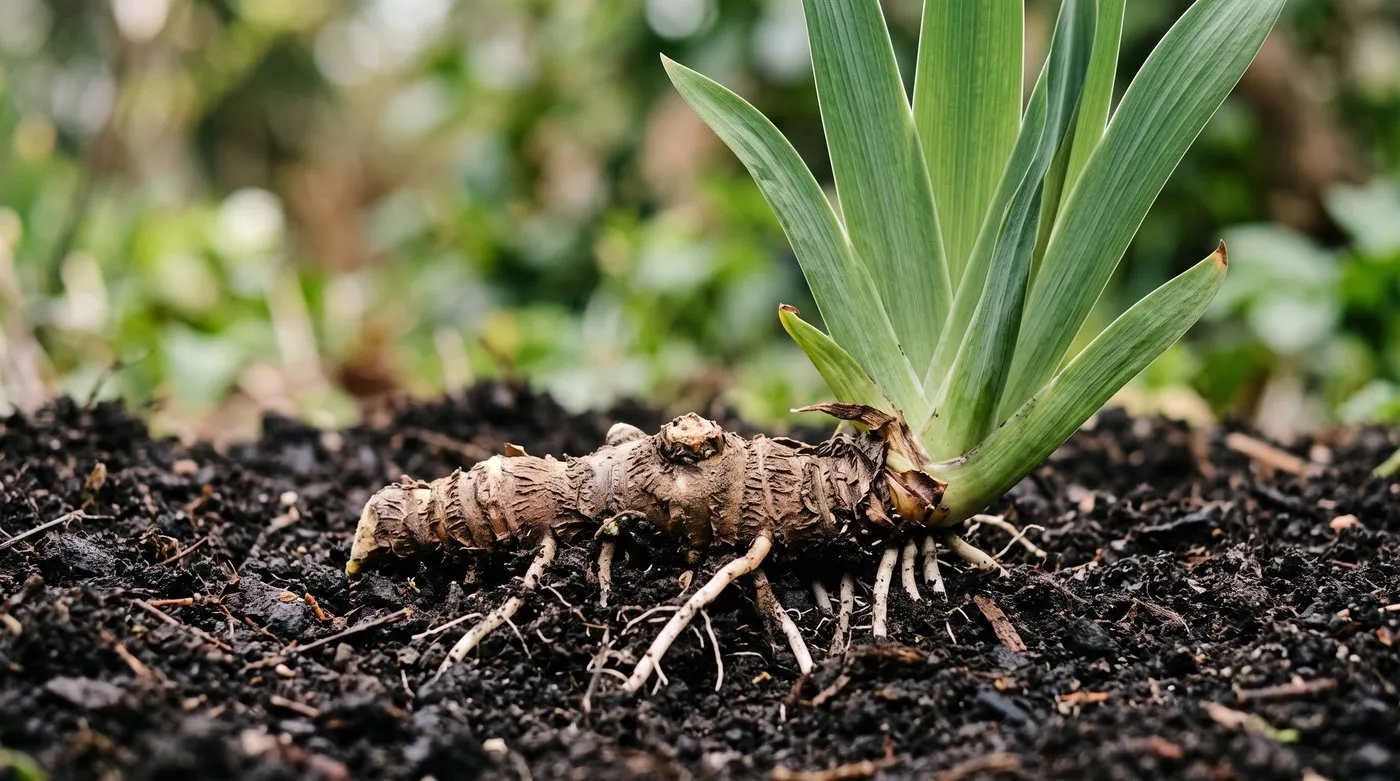 Correct planting depth. The roots are buried but the top of the rhizome sits proud of the soil, exposed to the sun. This is the most important detail for reliable flowering.
Why Bearded Iris Stop Flowering
A bearded iris that grows plenty of leaves but no flowers is telling you something specific. Three causes account for nearly every case.
Buried or mulched rhizomes. The rhizome must be sun-baked to set flower buds. Bury it, mulch over it, or let neighbouring plants shade it, and flowering stops within a year or two. This is the number one cause.
Overcrowding. Each rhizome flowers once, then makes offsets. After three or four years the clump becomes a congested mat of old, spent rhizomes. Only the younger outer growth flowers well. Divide when the centre becomes bare or flowering declines.
Too much nitrogen. Rich feeding and manure push leaf growth at the expense of flowers, and soft growth invites rhizome rot. Bearded iris want a low-nitrogen feed such as sulphate of potash in spring, never a general high-nitrogen fertiliser.
Fix the cause and flowering returns the next season. Our guide to the Chelsea chop and perennial care covers the wider border, but bearded iris need this specific, hands-off approach.
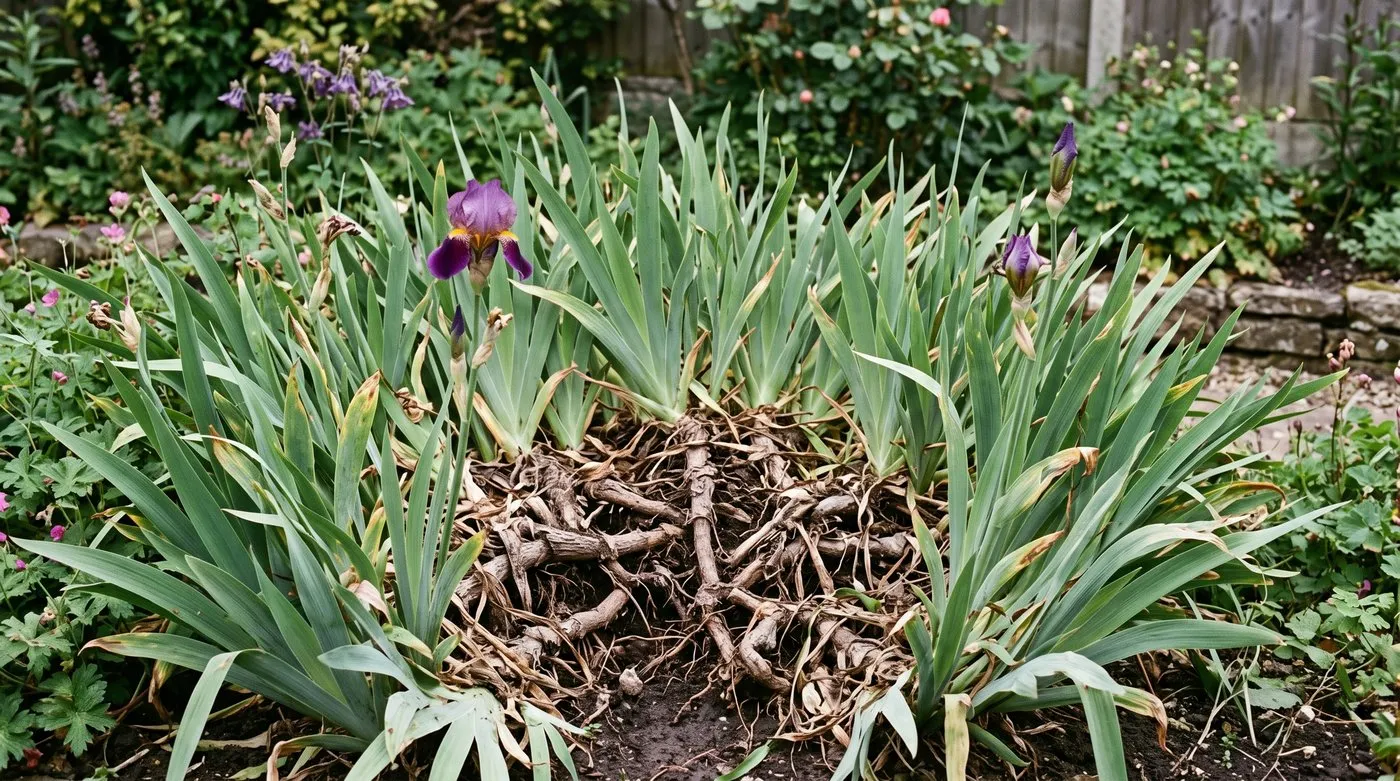 A congested clump ready for division. The centre is a mat of old spent rhizomes and flowering has declined. This is the point to lift and divide.
How to Divide Bearded Iris Step by Step
Division is the core skill of bearded iris growing and the fix for a clump that has stopped flowering. Do it six weeks after flowering.
- In July or August, lift the whole clump with a fork
- Shake off the soil and wash it if needed to see the rhizomes
- Snap or cut off the young, firm rhizomes from the outer edge, each with a fan of leaves and its own roots
- Discard the old, woody central rhizomes; they will not flower again
- Check every division for soft rot and cut back to firm white tissue
- Trim the leaves to a 15cm fan to reduce wind-rock while roots re-establish
- Let cut surfaces dry for a few hours, then replant shallow in full sun
A single old clump gives 6 to 12 good divisions. Replant them straight away at the correct depth, water once, and they flower the following year or the year after. Dividing perennials is a wider summer job covered in our dividing perennials guide, though bearded iris divide later than most, after their June flowers.
 Dividing in late July. A young firm rhizome with its own leaf fan and roots is cut from the edge of the old clump. The woody centre is discarded. Each division is trimmed to a 15cm fan before replanting.
Feeding, Watering and Aftercare
Bearded iris need less care than most perennials, and overdoing it causes more harm than neglect.
Feeding: apply a light dressing of sulphate of potash or a low-nitrogen rose feed in early spring, and again lightly after flowering. Keep all feed and mulch off the rhizome itself.
Watering: water only newly planted divisions in their first autumn. Established clumps need no summer watering in UK conditions and resent wet soil.
Deadheading: snap off each faded flower, then cut the whole stem to the base once all buds have finished. Leave the leaves to feed the rhizome.
Autumn: remove any brown or spotted leaves to reduce overwintering disease, but keep the healthy green fans. For a mixed planting that carries the border past the iris season, see our best perennial plants guide and mixed border planning.
Common Pests and Problems
Bearded iris are tough, but three problems recur in UK gardens.
Rhizome rot is a soft, smelly bacterial rot that turns the rhizome to mush, worst in wet soil or after damage. Cut out all soft tissue back to firm white flesh, dust with nothing, and let it dry in the sun. Improve drainage to prevent it.
Iris leaf spot is a fungal disease causing brown, water-soaked spots on the leaves in damp weather. Remove and bin affected leaves; do not compost them.
Slugs and snails graze new spring growth and flower buds, especially on dwarf types. Our slug control guide covers the methods that work.
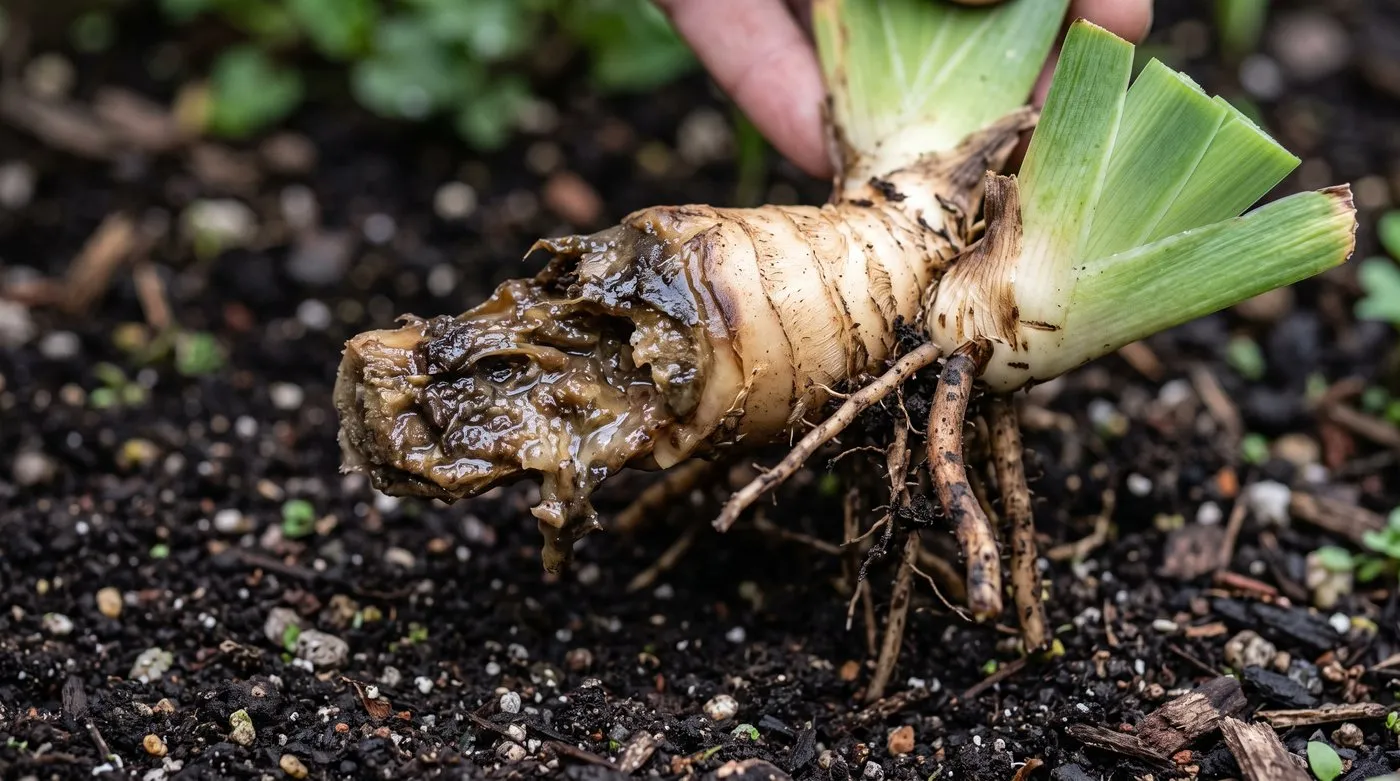 Rhizome rot after a wet autumn. The soft brown tissue must be cut back to firm white flesh and dried in the sun. Good drainage and shallow planting are the real prevention.
Treatment and Variety Choice Ranked
Not every fix carries equal weight. Ranked by how much each improves flowering in UK gardens.
| Action | Role | Effect on flowering | Note |
|---|---|---|---|
| Plant rhizome top exposed | Primary | Very high | Fixes most non-flowering clumps |
| Full sun, 6+ hours | Primary | Very high | Shade is the second big killer |
| Divide every 3-4 years | Maintenance | High | Restores congested clumps |
| Free-draining soil | Prevention | High | Stops rhizome rot |
| Low-nitrogen feed only | Supplementary | Moderate | Too much nitrogen cuts flowers |
| Face fan to the sun | Supplementary | Low but useful | Keeps clump moving into light |
The gold standard is shallow planting in full sun with division on a three-to-four-year cycle. Everything else is fine-tuning. The Royal Horticultural Society’s advice on growing border irises agrees that exposing the rhizome to summer sun is what drives flowering.
Bearded Iris Calendar UK Month-by-Month
| Month | Bearded iris task |
|---|---|
| January | Dormant; check no leaves or mulch have buried rhizomes |
| February | Clear winter debris off the rhizomes |
| March | Apply light sulphate of potash; watch for slug damage |
| April | Dwarf and miniature types flower |
| May | Intermediate and early tall bearded flower |
| June | Peak tall bearded flowering; deadhead spent stems |
| July | Lift and divide congested clumps; replant shallow |
| August | Continue dividing and planting new rhizomes |
| September | Water new divisions; remove spotted leaves |
| October | Tidy foliage; check drainage before winter |
| November | Clear fallen leaves off the rhizomes |
| December | Plan variety additions across the size classes |
Common Mistakes With Bearded Iris
Mistake 1: planting too deep. The classic error. A buried rhizome grows leaves but no flowers. Set the top proud of the soil.
Mistake 2: mulching over the rhizomes. Bark or compost over the rhizome shades it and holds damp. Keep all mulch off the crown.
Mistake 3: never dividing. Clumps congest and flowering collapses by year five. Divide every three to four years.
Mistake 4: high-nitrogen feeding. Rich feed gives leaves not flowers and invites rot. Use low-nitrogen potash only.
Mistake 5: a shaded or wet spot. Bearded iris need sun and sharp drainage. A damp, shady corner will never flower well.
Frequently asked questions
Why are my bearded iris not flowering?
The rhizomes are usually buried too deep or too shaded. Bearded iris need the top of the rhizome exposed to direct sun to form flower buds. Overcrowded clumps and high-nitrogen feed also stop flowering. Lift, divide and replant shallow in full sun to fix it.
How deep do you plant bearded iris rhizomes?
Barely at all. Set the rhizome so its top surface sits level with or just above the soil. Only the roots go under. The rhizome must be baked by summer sun to flower well. Deep planting is the single most common reason bearded iris fail.
When should I divide bearded iris?
Six weeks after flowering, usually July or August. This gives the divisions time to root before winter. Lift the clump, snap off healthy young rhizomes from the edge, trim the leaves to a 15cm fan, and replant immediately. Divide every three to four years.
What soil do bearded iris like?
Free-draining, neutral to slightly alkaline soil in full sun. They hate waterlogging and heavy shade. On clay, plant on a raised ridge or add grit to improve drainage. A pH of 6.8 to 7.5 suits them; very acidic soil reduces flowering.
Do bearded iris come back every year?
Yes, they are hardy perennials that live for decades. Each rhizome flowers once then produces offsets that flower in later years. Without division every few years the clump congests and flowering declines. Well-managed clumps flower reliably for 20+ years.
Should I cut back bearded iris after flowering?
Remove the flower stem at the base once blooms fade. Leave the leaves; they feed next year’s rhizome. Only trim leaves to a fan when dividing or if they show brown leaf spot. Never cut all the foliage off in summer.
Can bearded iris grow in pots?
Yes, dwarf and intermediate bearded iris grow well in pots. Use a gritty, free-draining compost with the rhizome exposed on top. Choose a wide, shallow pot in full sun. Water sparingly and divide every two to three years as pots congest faster than borders.
 Replanting divisions in August. Each trimmed fan goes back in shallow, top exposed, spaced 30cm apart in full sun. Replanted straight after division, they root before winter and can flower the following year.
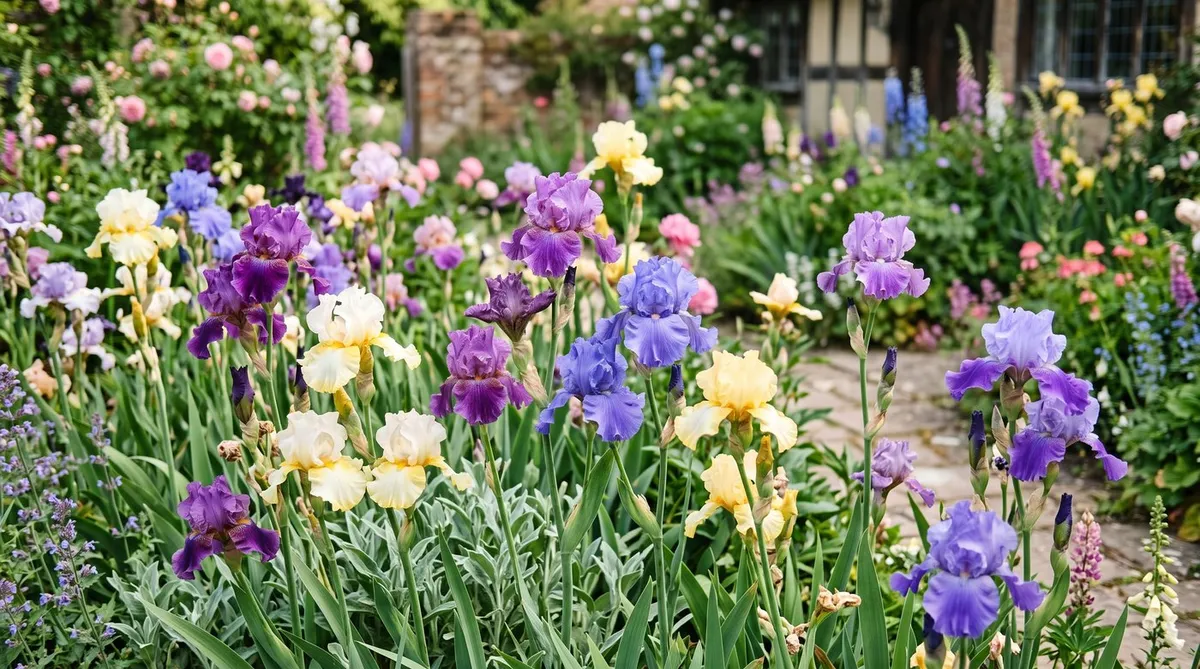
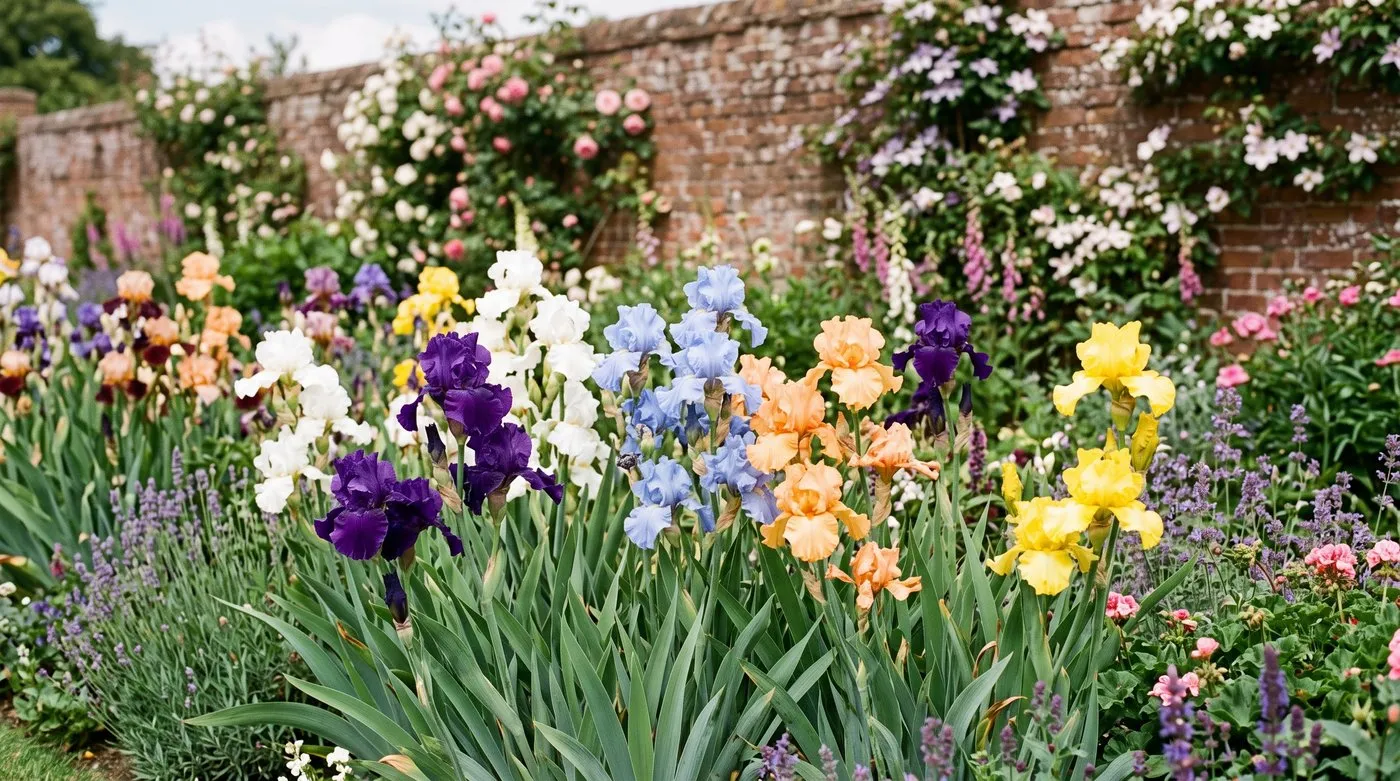 The reward for shallow planting and full sun. A June border shows bearded iris across the colour range. Planting one variety from each size class stretches the display from April to late June.
Now plan the rest of your summer border
Bearded iris give the border its early-summer structure. Now you know to plant the rhizome shallow, bake it in full sun and divide every few years, the flowers will follow. Build the rest of the planting with our best perennial plants guide, set them among the picks in our drought-tolerant plants guide, and for the full iris family read our complete iris guide and iris bulbs guide.
Our team produces practical UK gardening guidance from source research, contributor records and established horticultural practice. Editorial standards are overseen by Matt W.