Key takeaways
- Corncockle is a hardy annual, 60 to 100cm tall, flowering June to August in UK gardens
- Sow direct where it flowers: September for bigger, earlier plants, or March to April in spring
- Every part is poisonous, the seeds most of all, so wear gloves and keep seed from children and pets
- It thrives on poor soil; rich ground makes it tall and floppy and forces you to stake it
- Cut when the buds show colour for a vase life of about 5 to 7 days
- A near-extinct UK cornfield wildflower; grow it with poppies, cornflowers and corn marigold
Corncockle is one of the prettiest hardy annuals you can sow for cutting. Once a common weed of British cornfields, corncockle (Agrostemma githago) now survives mainly in gardens and seed mixes. The single flowers open a clear magenta-pink, each petal marked with fine pale lines that radiate from a paler centre. Plants reach 60 to 100cm on slender, wiry stems that sway in the lightest breeze. It flowers from June to August and self-seeds where it is happy. There is one important catch. Every part of the plant is poisonous, and the seeds most of all. Grown with care, corncockle brings an airy, old-fashioned charm to a cutting patch or a cottage border. This guide covers sowing, support, cutting and the safety points that matter.
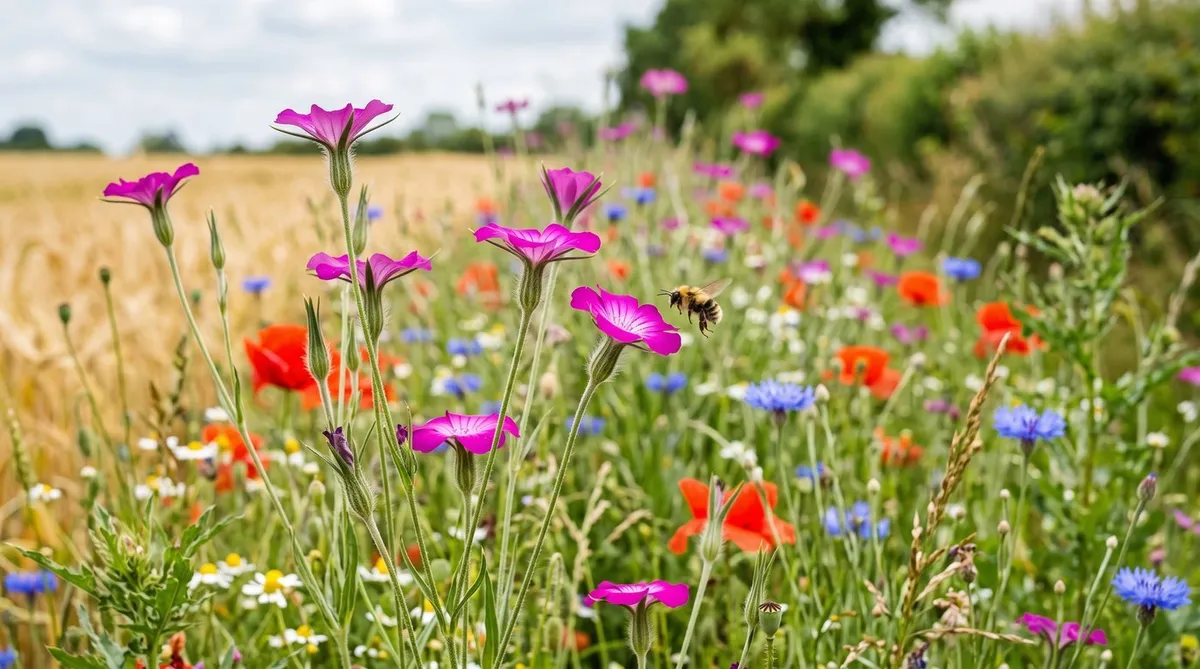
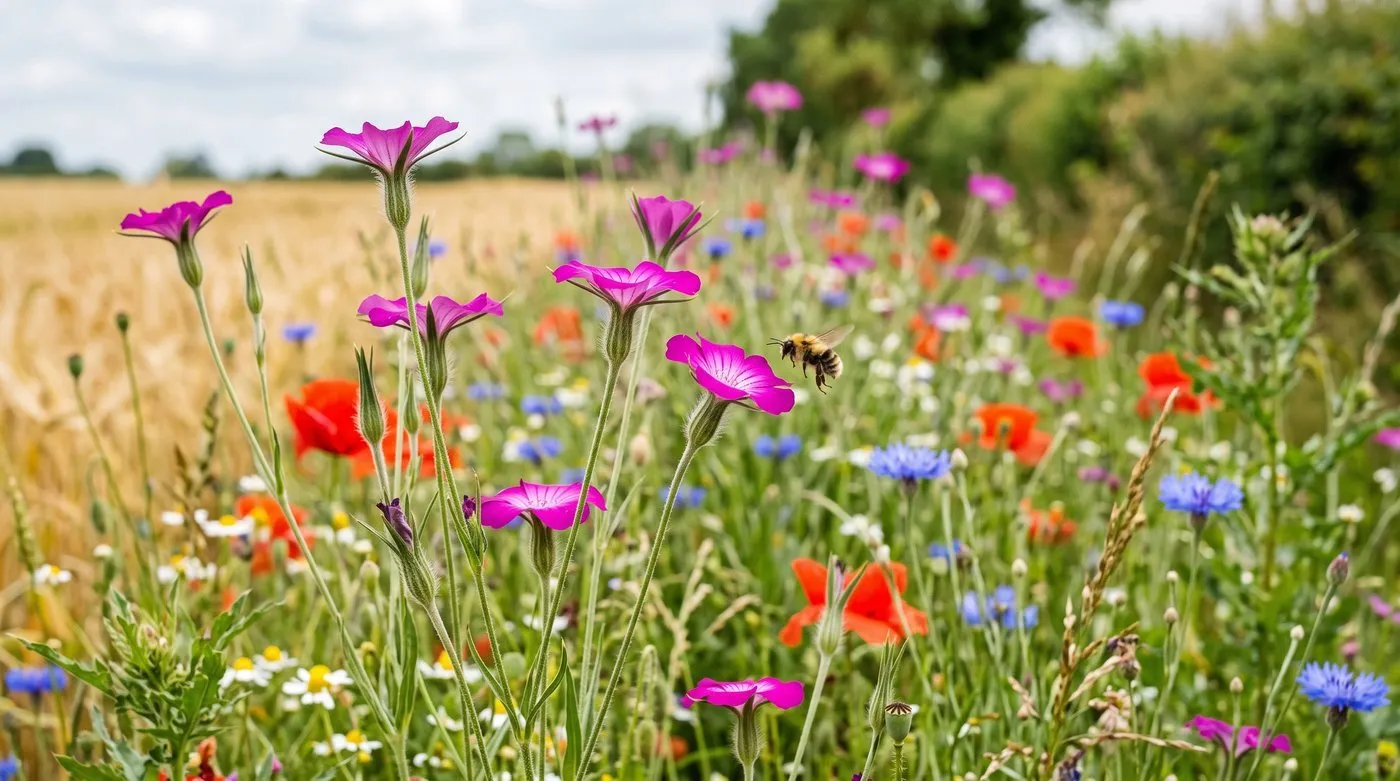 Corncockle among poppies and cornflowers, the classic cornfield-annual mix that flowers from June to August.
What conditions does corncockle need in the UK?
Corncockle is a plant of poor, open ground. It grew for centuries among cereal crops, so it wants sun and lean soil rather than a pampered border. Give it those two things and it almost grows itself.
Sun: Full sun, at least 6 hours a day. In shade the stems stretch, flop, and carry fewer flowers.
Soil: Poor to average and free-draining. Corncockle thrives on thin, hungry soil that mimics a cornfield. Sandy or stony ground suits it well. Heavy clay is workable if you avoid winter waterlogging and never enrich it.
Fertility: Keep it lean. This is the point most gardeners get wrong. Rich, freshly manured soil pushes tall, sappy growth that cannot hold itself up. Do not feed corncockle and do not mulch it with compost.
Moisture: Free-draining above all. Corncockle copes with dry spells once its roots are down. It dislikes sitting wet, which rots autumn-sown seedlings over winter.
These are the same lean conditions that suit cornflowers and field poppies, which is why the three grow so well together in a single sunny bed.
Best corncockle varieties for cutting
Corncockle does not offer a long list of cultivars, but the few available give you a useful spread of colour for the vase. The wild species is worth growing too, especially for conservation plantings.
| Variety | Colour | Height | Notes |
|---|---|---|---|
| ’Milas’ | Clear lilac-pink | 80-100cm | The standard garden form. Large 5cm flowers, the best all-round cut flower |
| ’Ocean Pearl’ | White | 70-90cm | Pure white with faint veining. Softens mixed bunches and lights up a border |
| ’Purple Queen’ | Deep magenta-purple | 70-90cm | The richest colour of the group. Strong presence in a mixed planting |
| Wild species (A. githago) | Magenta-pink, pencil lines | 60-100cm | The true cornfield annual. Best for meadow mixes and conservation plots |
Buying tip: Seed is cheap and a single packet raises 30 or more plants. ‘Milas’ is the one to start with for cutting, as the stems are long and the flowers large. Grow ‘Ocean Pearl’ alongside it for contrast. Sow the wild species if you are recreating a cornfield strip or a conservation planting, where authenticity matters more than uniform colour.
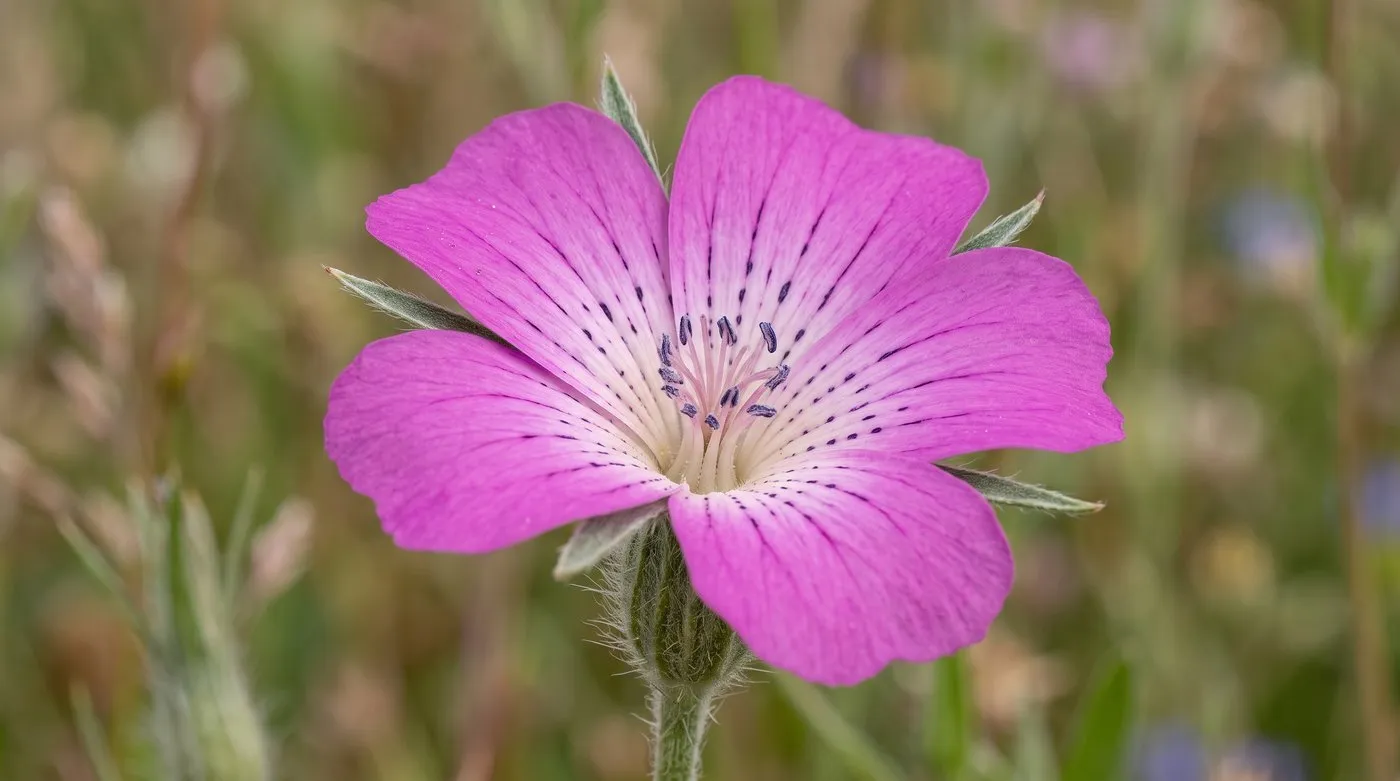 The single 5cm flower, with pale radiating lines and small dark dots that give corncockle its distinctive look.
How to grow corncockle from seed
Corncockle is a hardy annual sown direct where it is to flower. It has a fine root system that resents disturbance, so avoid raising it in trays and transplanting if you can. Sow it in the ground and thin the seedlings instead. It is one of the more reliable hardy annuals to grow from seed.
When to sow: Two windows work in the UK. September gives the strongest plants, which overwinter as small rosettes and flower from early June. March to April is the spring option, flowering a few weeks later through summer. The seed is large and black, so it is easy to handle and space.
How to sow direct:
- Choose a sunny spot with free-draining soil. Do not enrich it.
- Rake the surface to a fine tilth and remove weeds and large stones.
- Draw out shallow drills about 5 to 6mm deep, or broadcast the seed thinly over the bed.
- Space seed roughly 5cm apart, or sprinkle thinly if broadcasting.
- Cover lightly with soil and firm gently with the back of a rake.
- Water in with a fine rose if the soil is dry.
- Germination takes 1 to 2 weeks in warm soil.
- Thin seedlings in stages to a final spacing of 20 to 30cm apart.
You can also start a few in modules if slugs are heavy, then plant out young before the roots fill the cell. For the full method, follow our guide to sowing hardy annuals direct.
Warning: Every part of corncockle is poisonous, and the seeds contain the highest concentration of toxic saponins. Wear gloves when handling and sowing the seed. Keep the seed packet well away from children and pets. Never grow corncockle where the ripe seed could fall into or mix with an edible crop. In the past, seed accidentally milled with wheat caused a form of poisoning called githagism. Treat the seed with the same care you would give any garden chemical.
 Sow corncockle direct where it is to flower. Wear gloves, as the seed is the most poisonous part of the plant.
Thinning, spacing and supporting floppy stems
Corncockle grows fast once it germinates, and the young seedlings look grassy and slender. Thin them early so each plant has room to build a sturdy base. Crowded seedlings draw each other up thin and weak.
Thinning: Thin in two or three passes. Take the plants to about 10cm apart first, then to a final 20 to 30cm. Removing thinnings by hand disturbs neighbours less than hoeing. Wash your hands afterwards.
Spacing for support: Grown at 20 to 30cm apart, the plants lean on each other and stay upright with little help. This is deliberate. A dense stand supports itself far better than isolated plants.
Support: On exposed sites or richer soil, the tall stems flop after rain. Push twiggy hazel or birch pea sticks in among the young plants in May, at about 50cm high. The plants grow up through them and hide the framework. You can also let corncockle scramble through sturdier neighbours.
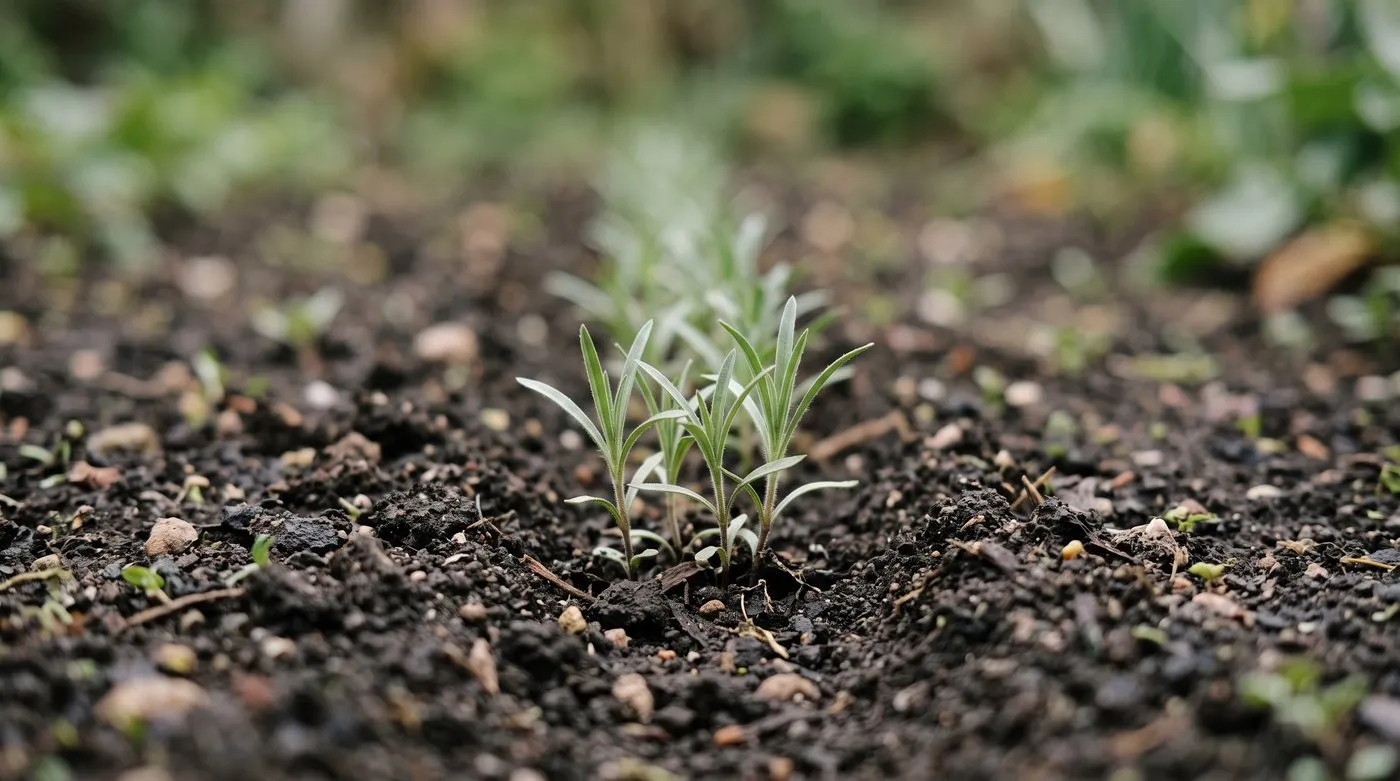 Thin the grassy young seedlings in stages to 20 to 30cm apart so the stems can support each other.
Month-by-month corncockle growing calendar
| Month | Task |
|---|---|
| January | Order seed. Autumn-sown rosettes sit tight through the cold. No action needed |
| February | Check autumn seedlings for slug damage. Firm any lifted by frost |
| March | Main spring sowing window opens. Sow direct into a fine tilth in mild areas |
| April | Continue spring sowing. Thin autumn and early-spring seedlings to 10cm |
| May | Push pea sticks in for support. Thin to a final 20 to 30cm. Watch for slugs |
| June | Flowering begins on autumn-sown plants. Start cutting stems for the vase |
| July | Peak flowering. Cut regularly and deadhead spent blooms to prolong the display |
| August | Flowering continues. Let a few capsules ripen if you want seed and self-seeding |
| September | Best autumn sowing window. Collect ripe seed with gloves. Clear spent plants |
| October | Autumn seedlings emerge and settle in before winter. Keep the bed weeded |
| November | Growth slows. Free-draining soil protects seedlings from winter rot |
| December | Little to do. Plan next year’s cornfield-annual mix from catalogues |
Both sowing times work, but autumn sowing wins for cutting. Autumn-sown plants have months to build a root system before they bolt into flower, and the payoff shows in the vase.
The gain comes down to root time and lean growing. Give corncockle an early start and hungry soil, and it rewards you with taller, sturdier, longer-flowering plants. Pair it with other early hardy annuals in a dedicated cutting patch and you fill June and July jugs with almost no effort.
Gardener’s tip: Sow a short second batch in March even if you sowed in September. The staggered sowings extend cutting by three to four weeks, so you are not left with a gap when the autumn-sown plants tire in late July.
Common corncockle problems and how to fix them
Corncockle is largely trouble-free, which is part of its appeal. A few issues crop up, mostly linked to soil and site rather than pests. Ranked by how often they cause real damage, here is what to do.
| Problem | Cause | Effectiveness of fix | Role |
|---|---|---|---|
| Floppy, collapsing stems | Rich soil or exposed site | 90% with pea-stick support and lean soil | Primary, prevention beats cure |
| Slug damage to seedlings | Soft young growth in spring | 85% with barriers and evening patrols | Primary, protect seedlings |
| Winter rot of autumn seedlings | Wet, heavy soil | 80% by sowing in spring instead | Maintenance, site-dependent |
| Poor flowering | Too little sun or over-feeding | 75% by moving to full sun and stopping feed | Supplementary |
Floppy stems are the number one complaint. The plant grows tall and thin, then flattens after a summer downpour. The cause is almost always too much soil fertility, plus too much space between plants.
Slugs target the soft seedlings, especially in a wet spring. Fresh growth in April and May is the vulnerable stage. Use barriers, grit, or evening patrols around young plants until they toughen up.
Root cause on floppy plants: gardeners treat corncockle like a border perennial and give it good soil. That is the mistake. Corncockle evolved on poor, dry cornfield margins. Rich ground makes it grow soft and tall with weak cell walls that cannot bear the flower heads. The permanent fix is lean soil, close spacing at 20 to 30cm, and twiggy support pushed in early, not staking a collapsed plant after the event.
Cutting corncockle and conditioning the stems
Corncockle is championed by UK cut-flower growers for its light, informal look. The long wiry stems and open magenta flowers bring movement to a jug that stiffer blooms cannot match.
When to cut: Cut when the buds are showing colour or the first flower on a stem has just opened. Stems cut too tight may not open fully. Cutting in the cool of early morning gives the best vase life.
Conditioning: Strip the lower leaves, then stand the cut stems in cool water for a couple of hours before arranging. This lets them take up water and firm up. Vase life is about 5 to 7 days.
Arranging: Corncockle suits loose, cottage-style bunches. Combine it with cornflowers, ammi and grasses for an airy, meadow feel. It looks best in a simple jug rather than a tight, formal posy. Keep the flowers away from kitchen surfaces where food is prepared, and wash your hands after handling the stems and seed capsules.
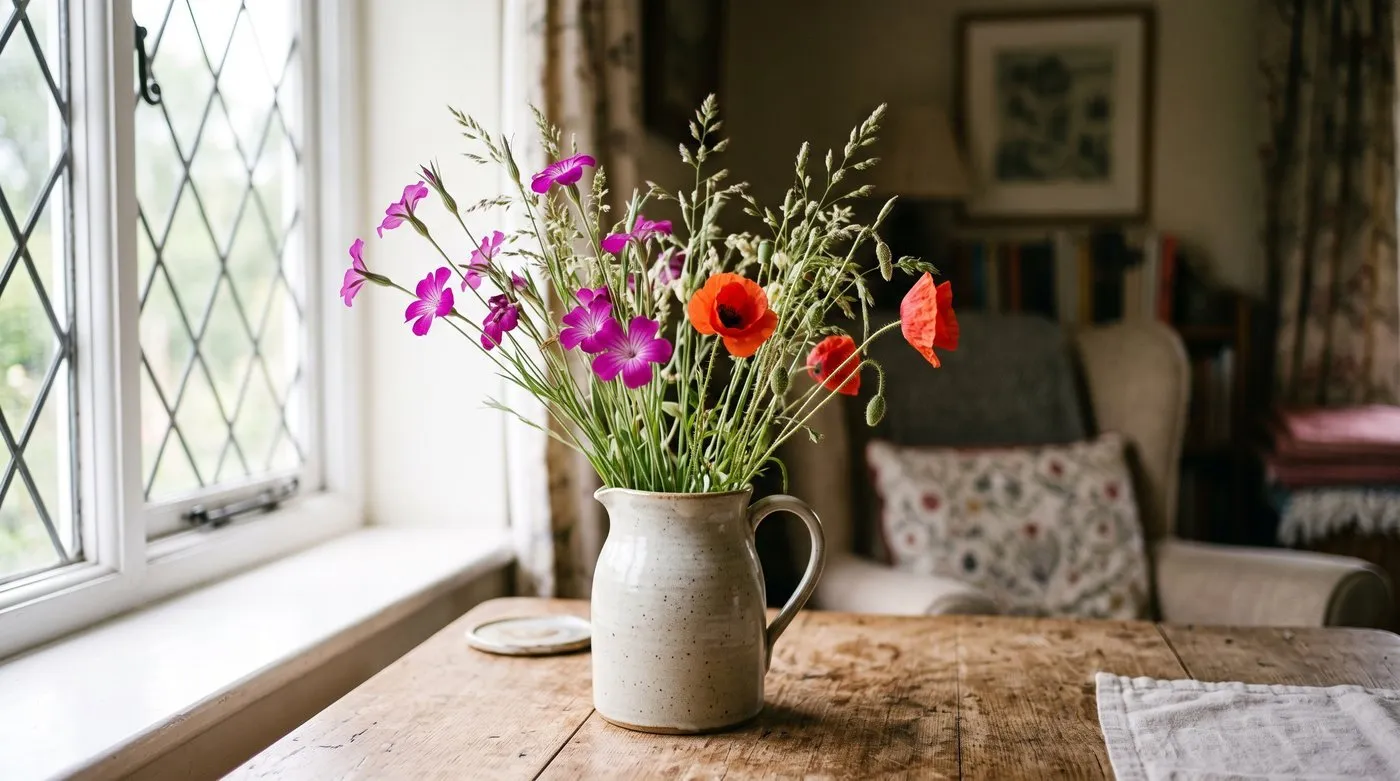 Cut corncockle when the buds show colour. The airy stems last about 5 to 7 days in an informal jug.
Once the flowers fade, they form upright seed capsules packed with large black seeds. These ripen through August and September. Handle them with the care set out in the warning above.
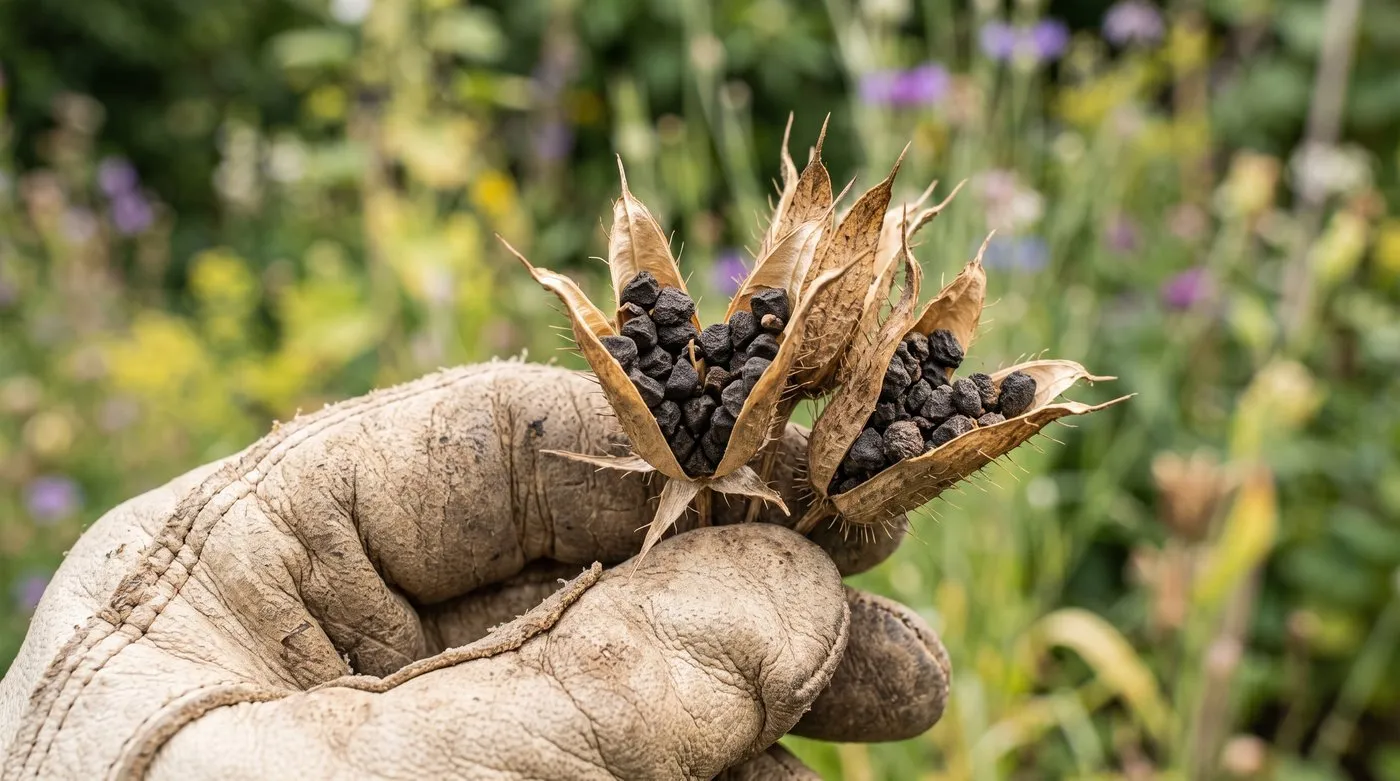 The ripe seed capsules. The black seeds inside are the most poisonous part, so collect them with gloves.
Growing corncockle with cornfield annuals
Corncockle belongs to a small group of arable wildflowers that once filled British cornfields. Better seed cleaning and modern herbicides nearly wiped it from the wild, so it is now very rare in arable fields. Growing it in the garden keeps a piece of that heritage alive.
For an authentic cornfield-annual planting, sow it with three classic partners: field poppies (Papaver rhoeas), cornflowers, and corn marigold. All four are annuals that germinate readily on disturbed, poor soil and flower together from June to August. Broadcast the mix over a cleared, sunny patch, rake it in, and let it grow. It suits a conservation strip, an allotment edge, or a corner of a wildflower meadow.
The flowers are good for pollinators too. Bees work them steadily, and long-tongued bumblebees reach the nectar deep in the flower. The RHS Plants for Pollinators scheme lists cornfield annuals like these as useful garden plants for insects. Add corncockle to a border of bee-friendly plants and it earns its place through both looks and value to wildlife.
 Corncockle in a cornfield-annual mix, a nod to the arable wildflower it once was across Britain.
Common mistakes to avoid
Feeding the soil. Rich, manured ground gives soft, floppy plants that collapse. Corncockle wants lean soil. Never feed it or mulch it with compost.
Sowing too thinly. Widely spaced plants have nothing to lean on and flop badly. Thin to 20 to 30cm so the stand supports itself. Close spacing is a feature, not a fault.
Transplanting seedlings. Corncockle resents root disturbance. Raising it in trays and moving it on checks growth. Sow direct where it is to flower for the strongest plants.
Handling seed carelessly. The seed is the most poisonous part. Never sow it near edible crops or leave the packet where children or pets can reach it. Always wear gloves.
Cutting too late. Stems left until the flowers are fully blown have a short vase life. Cut when the buds show colour or the first flower opens for the longest display indoors.
Frequently asked questions
Is corncockle poisonous?
Yes, every part of corncockle is poisonous, the seeds most of all. The plant contains saponins that are toxic if eaten. Historically, seed milled with wheat caused poisoning known as githagism. Wear gloves when handling the seed, keep it from children and pets, and never grow it where seed could contaminate an edible crop.
When do you sow corncockle in the UK?
Sow corncockle direct in September or in March to April. A September sowing gives larger plants that flower earlier, from early June. Spring sowing from March to April also works and flowers a few weeks later. Sow where the plants are to flower, as corncockle resents root disturbance.
How tall does corncockle grow?
Corncockle grows 60 to 100cm tall on slender, wiry stems. Height depends on soil and sowing time. Autumn-sown plants on poor soil stay sturdy, while rich ground pushes soft growth that flops. Thin plants to 20 to 30cm apart so the stems support each other.
Does corncockle come back every year?
Corncockle is an annual, so individual plants die after flowering. It returns by self-seeding rather than by regrowing. Leave a few seed capsules to ripen and shed, and new seedlings appear the following spring. To keep it going reliably, save some seed and re-sow each autumn.
Is corncockle a wildflower?
Yes, corncockle is a former UK cornfield wildflower, now very rare in the wild. Seed cleaning and herbicides nearly wiped it out of arable fields. It survives today mainly in gardens, conservation plots and cornfield-annual seed mixes grown for pollinators.
What can I plant with corncockle?
Grow corncockle with other cornfield annuals for an authentic look. Field poppies, cornflowers and corn marigold are the classic partners. Together they make a colourful conservation planting that flowers from June to August and feeds bees and other pollinators.
Is corncockle good as a cut flower?
Yes, corncockle is a lovely airy cut flower for informal arrangements. Cut stems when the buds show colour or the first flowers just open. Vase life is about 5 to 7 days. Its long, wiry stems and open flowers suit loose, cottage-style jugs rather than tight bunches.
Further reading
- Best hardy annual flowers to grow from seed, easy sowings for a first cutting patch
- How to grow cut flowers in the UK, grow a cutting patch of corncockle and more
- Easy self-seeding plants for UK gardens, plants that sow themselves like corncockle
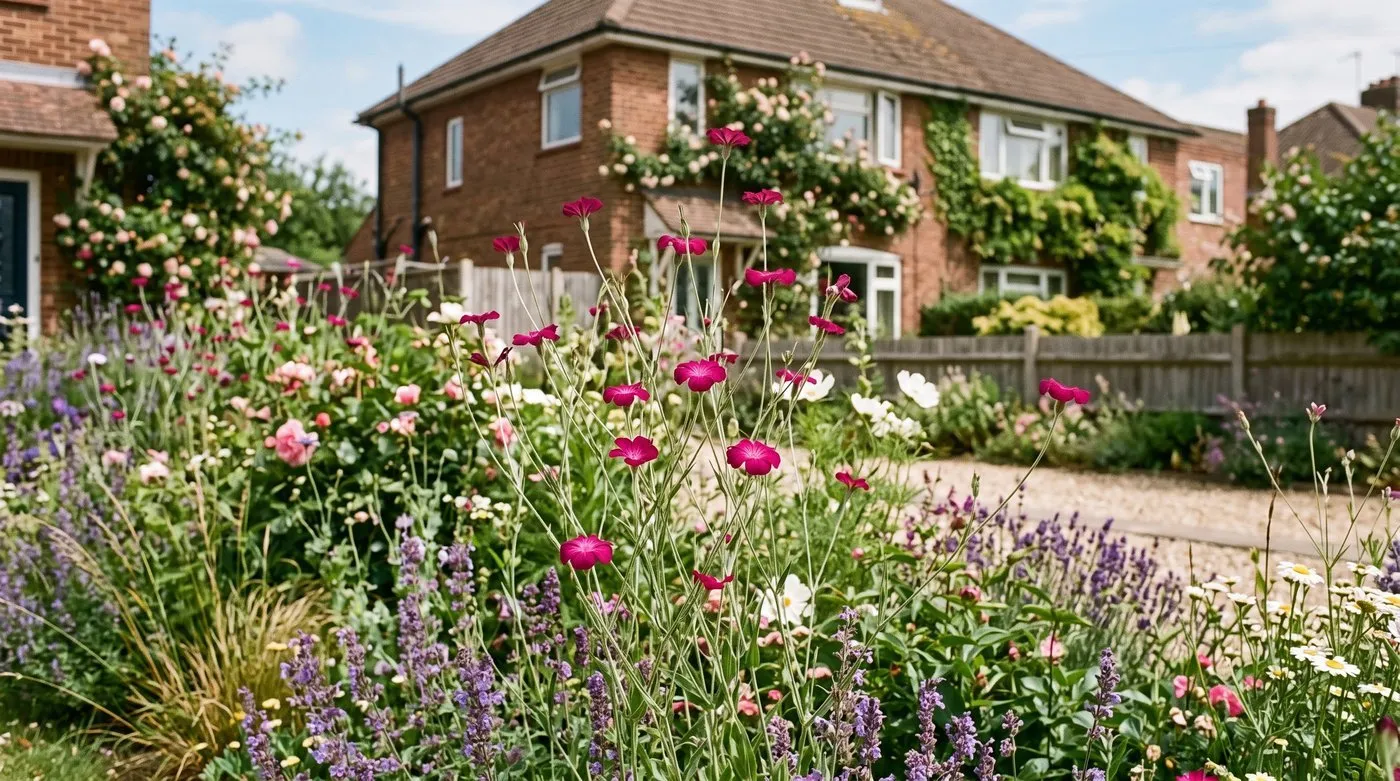 Corncockle woven into a sunny cottage border, where its wiry stems rise through lower planting.
Our team produces practical UK gardening guidance from source research, contributor records and established horticultural practice. Editorial standards are overseen by Matt W.