Key takeaways
- Platycodon is fully hardy in the UK, rated RHS H5 and surviving down to -15C
- It emerges very late, often mid-May, so mark the crown in autumn to avoid hoeing it off
- The deep fleshy taproot hates being moved or divided, so plant young and leave in place
- Flowers run from July to September, with each balloon bud opening into a 5cm star bell
- Taller forms like 'Fuji Blue' reach 60-70cm and need staking; 'Sentimental Blue' stays at 20cm for pots
- Slow from seed, taking 2-3 years to flower well, so sow in spring at 18-21C
Learning how to grow platycodon rewards patience more than most border perennials. The balloon flower, Platycodon grandiflorus, earns its name from its fat inflated buds that swell like tiny hot-air balloons before bursting open into five-pointed star bells. It is fully hardy, long-lived and reliably blue, with white and pink forms too. The catch is its timing. This plant emerges later than almost anything else in the spring border, so it tests the nerve of gardeners who assume a bare patch means a dead plant. Get the position, the soil and the spring patience right, and a single clump will flower every July for a decade or more.
Why balloon flower is the last perennial to wake up
Platycodon emerges very late, often not breaking ground until mid-May in most of the UK. Many other border perennials are already 30cm tall by then. This late start is the single most common reason gardeners lose the plant. They see bare soil in April, assume winter has killed it, and either hoe the area over or dig a fork straight into the dormant crown.
The fix costs nothing. In autumn, push a labelled split cane into the soil right beside each crown. It marks the exact spot through winter and the early spring gap, so you never weed, plant or dig where the balloon flower is sleeping.
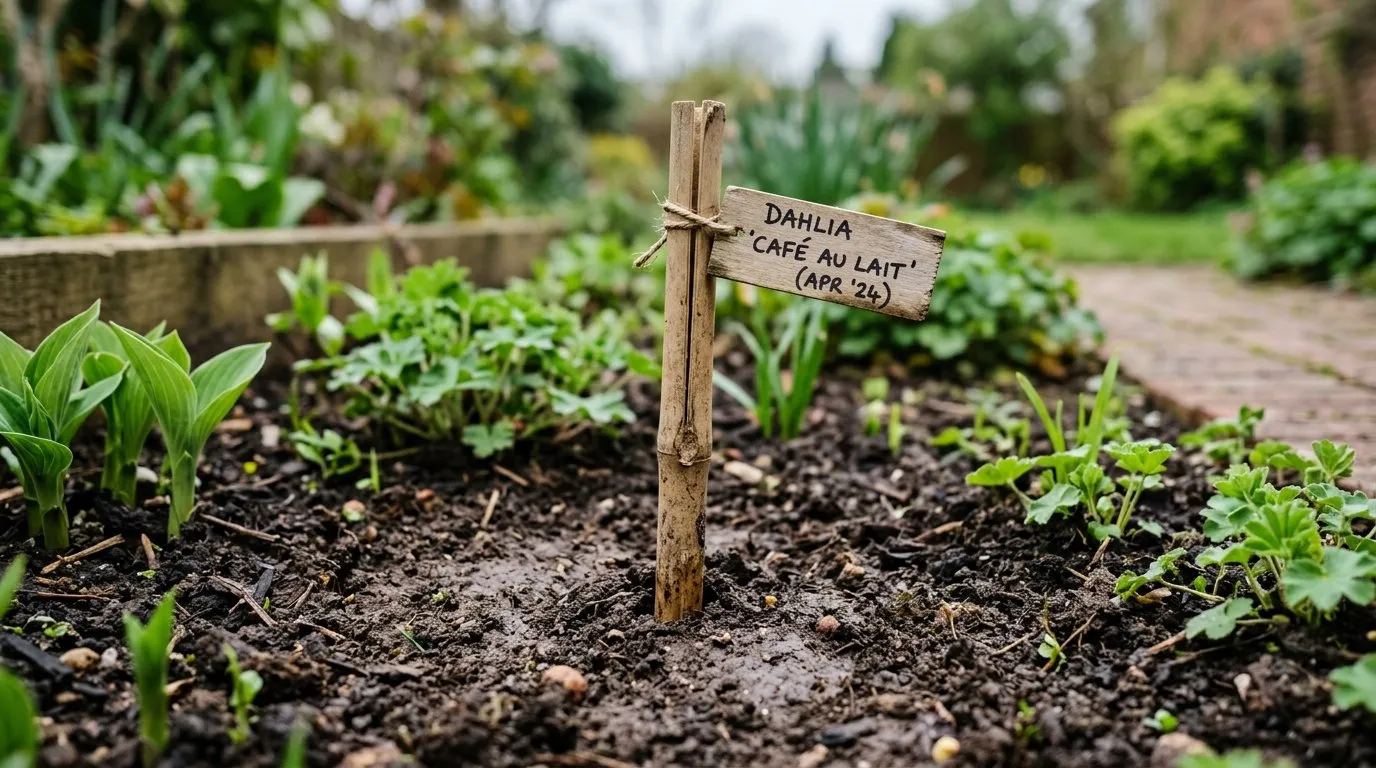 A labelled cane marks the crown so the late-emerging plant survives spring weeding.
Choosing a planting spot and getting the soil right
Plant platycodon in full sun to light shade on fertile, free-draining soil. It flowers hardest in sun but tolerates a few hours of afternoon shade, which helps the colour hold in a hot July. The white forms in particular keep cleaner in part shade.
The enemy is winter wet. The fleshy taproot rots in cold, waterlogged ground, which is the usual cause of death on heavy clay. Before planting, fork a couple of handfuls of horticultural grit into each planting hole on clay soils to lift drainage around the crown. On naturally sandy or loamy ground it needs no help.
The taproot rule: plant young, then leave it alone
The deep, brittle taproot defines how you handle this plant. It resents being moved, lifted or divided. A mature root can run 20-30cm straight down, and it snaps cleanly if you try to ease a clump out of the ground.
This single fact drives three decisions. Buy or raise young plants, since small roots settle far better than large ones. Plant them in their final position first time, because you will not get a second chance to move them without loss. And do not try to divide an old clump to make more, which kills the parent more often than it succeeds.
If you must shift one, do it in spring just as shoots appear, lift the entire root ball with a long spade and as much soil as you can hold, and accept that it may sulk for a season. Compare this with easier movers in our guide to moving perennials and shrubs, where most species transplant far more freely than balloon flower.
Raise from seed in modules; small young roots establish far better than lifted mature ones.
From balloon bud to star bell: the flowering lifecycle
The flowering display follows a clear sequence, and knowing it helps you spot problems early.
- Shoots emerge in mid-May, dark and slow at first, then lengthening fast through late May.
- Buds form in June as fat, sealed green pods at the stem tips and in the leaf joints.
- Buds inflate in late June and early July, swelling and turning blue, white or pink like little balloons.
- Bells open from July, each balloon splitting along five seams into a flat star bell up to 5cm wide.
- Flowering continues through August and into September if you deadhead spent bells regularly.
- Die-back comes late, with foliage often holding green into October before yellowing.
The critical mistake most people make is at stage one. They write the plant off during the long bare gap before shoots emerge and disturb the crown. Trust the marker cane, leave the soil alone until June, and the cycle runs itself.
 A balloon bud splits along five seams into a flat star bell up to 5cm wide.
Best platycodon cultivars compared
The taller ‘Fuji’ forms reward staking, as covered below. The dwarfs earn their place in containers and at the border edge, where their balloon buds sit at eye level for children to watch open.
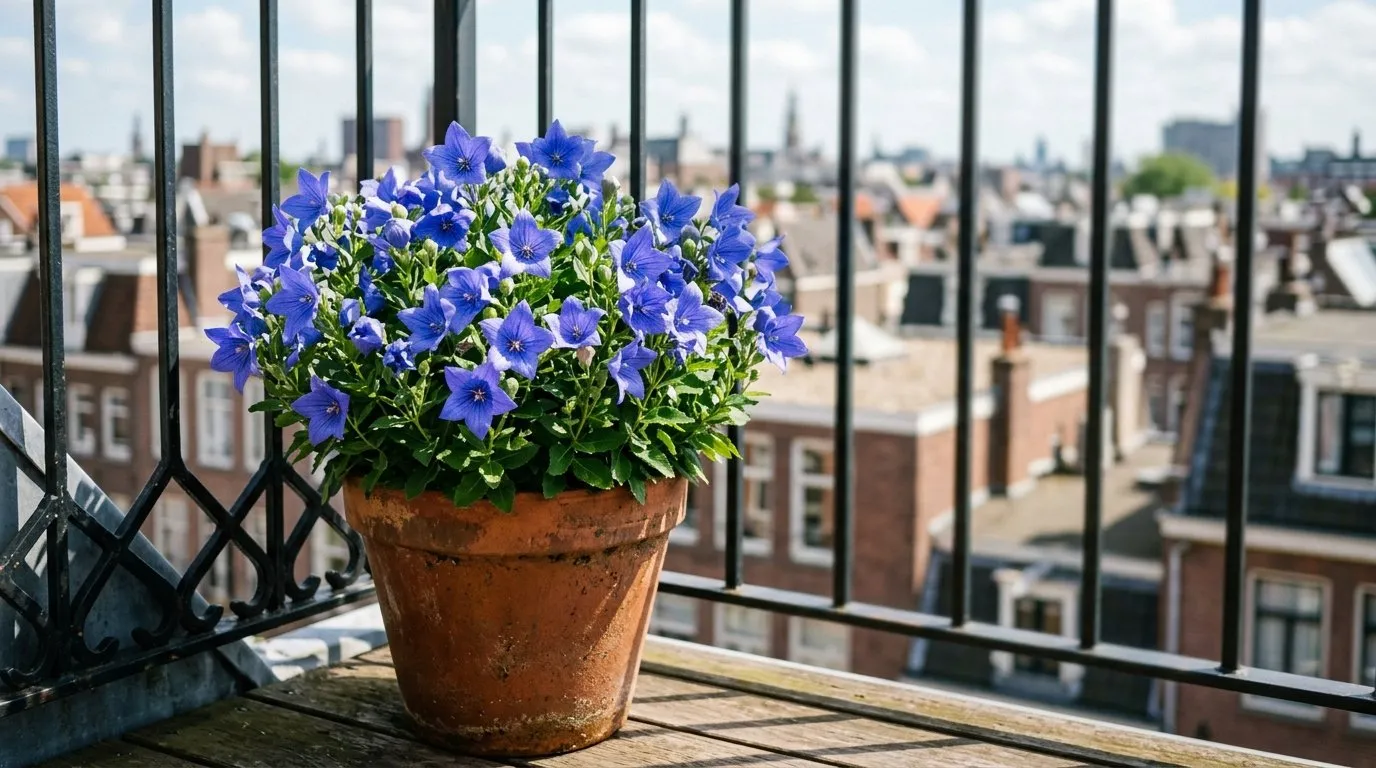 Dwarf ‘Sentimental Blue’ stays at 20cm, ideal for a deep terracotta pot on a balcony.
Staking, deadheading and ongoing care
Tall cultivars need support before they flop. Forms reaching 60-70cm splay open in summer wind and rain, especially after the first heavy flush of flower weighs the stems down. Push twiggy hazel or pea sticks in among the shoots in mid-May, while stems are still short, so the plant grows up through the support and hides it. Our guide to staking tall perennials covers the cane-and-string and grow-through methods in detail.
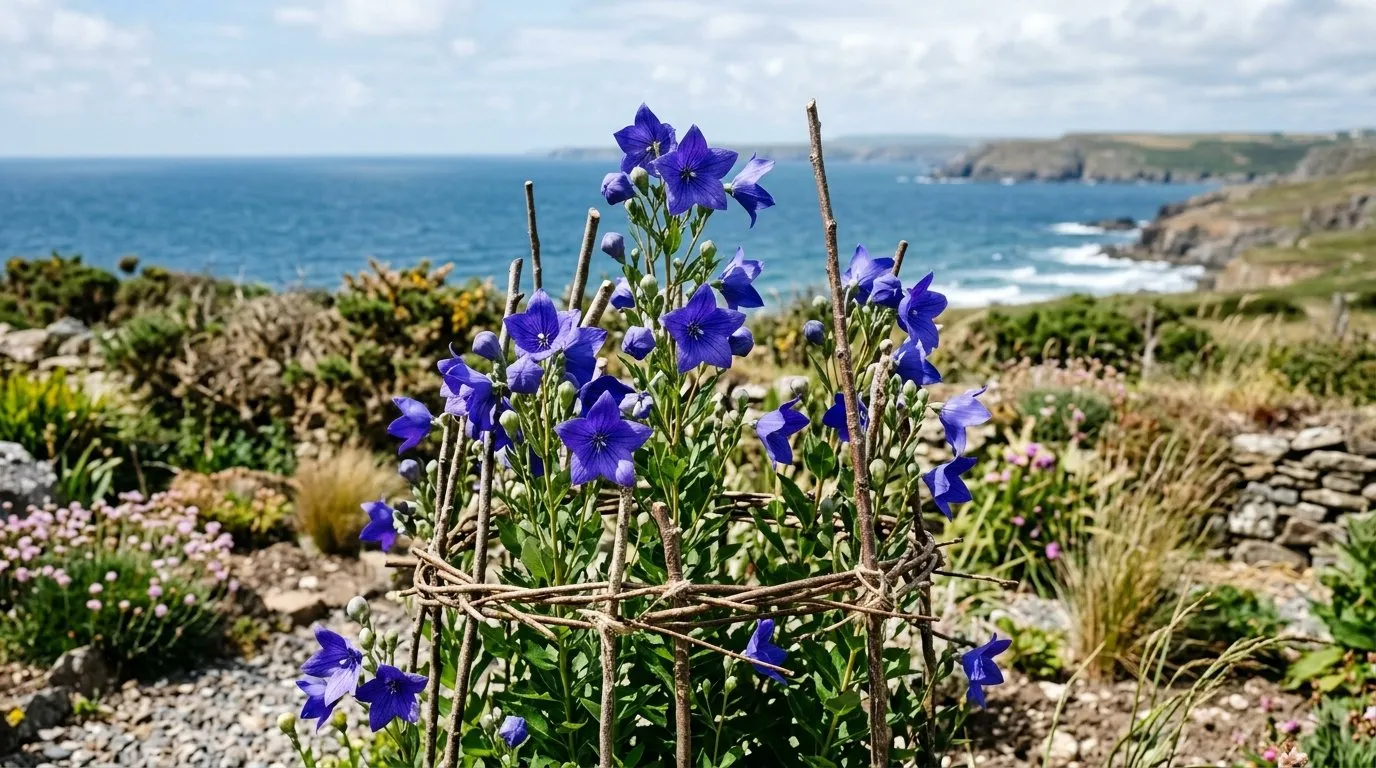 Tall ‘Fuji’ forms need twiggy support to stand up in an exposed coastal garden.
Feed lightly. A single spring mulch of garden compost is enough on decent soil. Avoid heavy nitrogen feeds, which produce soft, floppy growth that needs even more staking. Water pots in dry spells, but never let the compost stay soggy.
Gardener’s tip: Cut a few stems for the vase just as the first balloon buds start to show colour. They open indoors over several days and last 7-10 days in water, giving you the strange pleasure of watching the buds pop on the kitchen table.
A month-by-month UK growing calendar
Balloon flower needs little attention once established, but the few jobs that matter are tied to specific months. This calendar suits most of the UK; gardeners in Scotland and the north should expect emergence and flowering a week or two later.
| Month | Job | Detail |
|---|---|---|
| March | Sow seed | Sow indoors at 18-21C in modules; do not cover, light aids germination |
| April | Resist weeding | Crowns still dormant; do not hoe or dig where canes mark the plants |
| May | Watch for shoots, stake | Shoots emerge mid-month; push in twiggy supports for tall forms |
| June | Plant out, feed | Plant young pot-grown stock; mulch established clumps with compost |
| July | Deadhead, enjoy | Buds inflate and open; snip spent bells weekly to prolong the season |
| August | Deadhead, water pots | Peak flowering; keep containers watered but never waterlogged |
| September | Final flowers | Last bells fade; stop deadheading to let a few seed heads form if wanted |
| October | Mark crowns | Foliage yellows late; push in a labelled cane beside each crown |
| November | Tidy | Cut down dead stems once frosted; leave roots fully undisturbed |
| December-February | Leave alone | Plant dormant underground; avoid digging or planting over the crowns |
The two non-negotiable entries are October and April. Mark the crowns in autumn, and keep your hoe away from them in spring.
Growing platycodon from seed
Seed is the cheapest way to raise a sweep of balloon flowers, but it is slow. Plants take two to three years to flower well, so it suits gardeners willing to wait rather than those after instant colour.
Sow in early spring, from late February to April, at 18-21C. Scatter the fine seed on the surface of moist seed compost and do not cover it, as light helps it germinate. Expect seedlings in 14-21 days. Prick them out carefully once large enough to handle, holding a leaf not the stem, and grow them on in deep modules to give the developing taproot room. Our guide to sowing seeds indoors covers temperature, light and damping-off in full, and the UK seed sowing calendar puts platycodon alongside other spring sowings.
Pot on into deep pots rather than shallow trays, then plant out in their final spot in their first or second summer while roots are still small and easy to settle.
The root cause behind most platycodon failures
Almost every dead balloon flower traces back to one of two underlying causes, and both are about the root, not the top growth.
The first is disturbance during dormancy. Because the plant emerges so late, gardeners interfere with the crown in spring before it wakes. The brittle taproot snaps or gets sliced, and the plant cannot recover. This is not a pest or disease problem; it is a timing problem, solved entirely by marking the crown and leaving the soil alone.
The second is winter rot from poor drainage. The fleshy taproot stores water and sugars, which makes it prone to rotting in cold, waterlogged ground. Heavy clay that sits wet from November to March is the classic killer. Improve drainage with grit at planting, choose a spot that does not puddle, and the root comes through even hard frosts unharmed. Fix the soil and the spring patience, and platycodon becomes one of the most trouble-free perennials you can grow.
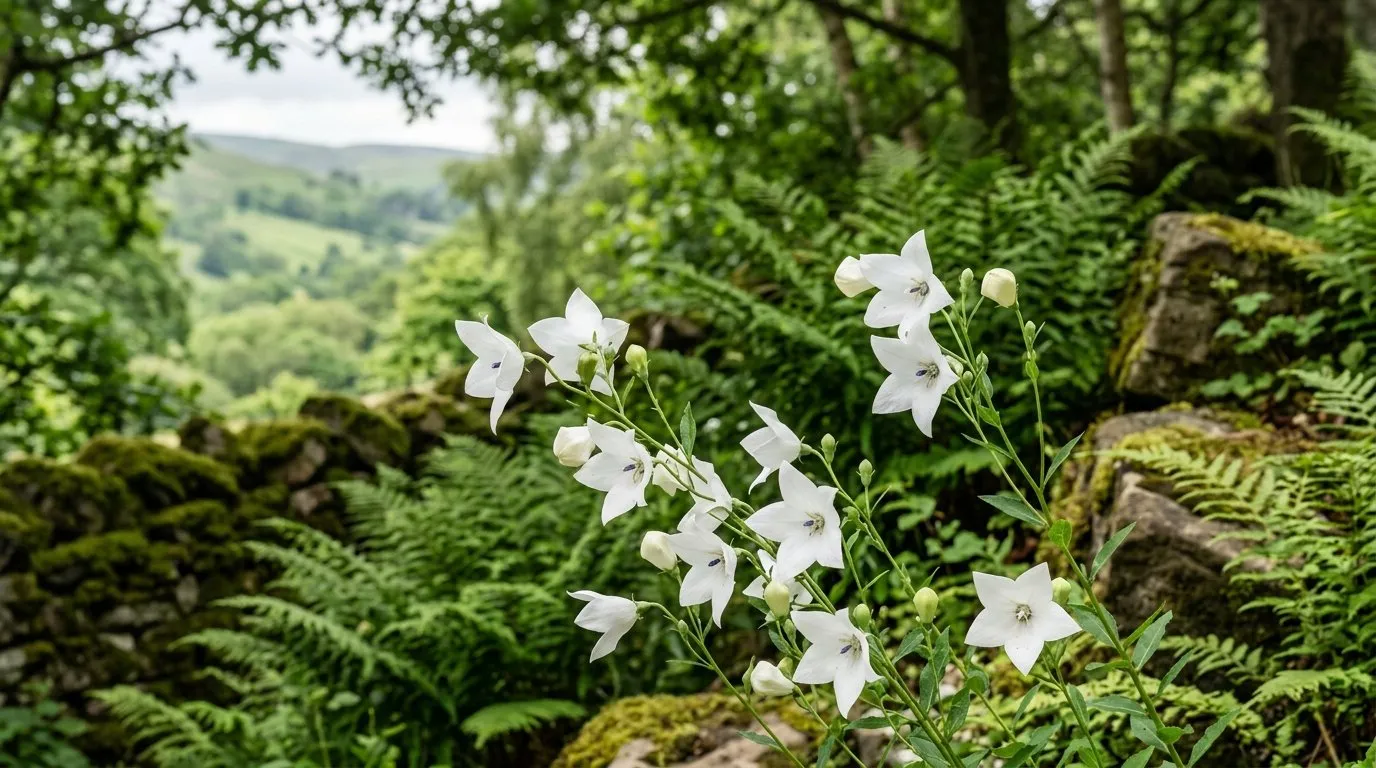 White forms keep their colour cleaner in light shade, ideal for a part-shade pocket.
Common mistakes to avoid
These three errors account for most of the disappointment gardeners report with balloon flower.
Hoeing or planting over the dormant crown. This happens because the plant emerges so late that the soil looks empty in April. Gardeners fill the gap with annuals or run a hoe through it. Avoid it by marking every crown with a labelled cane in October, then keeping all tools away until June.
Trying to divide an established clump. People assume balloon flower divides like other perennials. It does not, because the deep taproot breaks and the clump rots. Avoid it by raising new plants from seed or basal cuttings instead of splitting the crown.
Planting in heavy, wet soil. Gardeners drop it into clay that stays soggy all winter, and the taproot rots. Avoid it by adding grit at planting and choosing a free-draining, sunny or lightly shaded spot that never puddles.
Warning: Do not lift a mature platycodon to “tidy” or move a border in autumn. Lifting an established clump almost always severs the taproot and kills the plant. Work the border around it instead, or mark and skip it entirely.
Pairing platycodon with other perennials
Balloon flower sits beautifully among other late-summer perennials, and its clear blues are easy to place. The neat habit of the dwarf forms makes them tidy companions at the front of a border, while the taller ‘Fuji’ types weave through mid-border planting.
Good partners include the airy whites and pinks of astrantia, the strappy drama of agapanthus for a blue-on-blue scheme, and the late colour of Michaelmas daisies and other asters that carry the border into autumn. The upright bells of campanula echo the balloon flower’s star shape and flower a little earlier, bridging June to July. For the wider picture of long-lived border plants, browse our roundup of the best perennial plants for UK gardens.
The open star bells are a genuine draw for bees. Honeybees and bumblebees work the flowers steadily through July and August, gathering pollen from the five prominent stamens. If you are building a planting that feeds insects, slot it in alongside other bee-friendly garden plants. The Bumblebee Conservation Trust notes that a long, overlapping flowering season matters most for supporting bees, and balloon flower’s July-to-September run fills a useful late-summer gap.
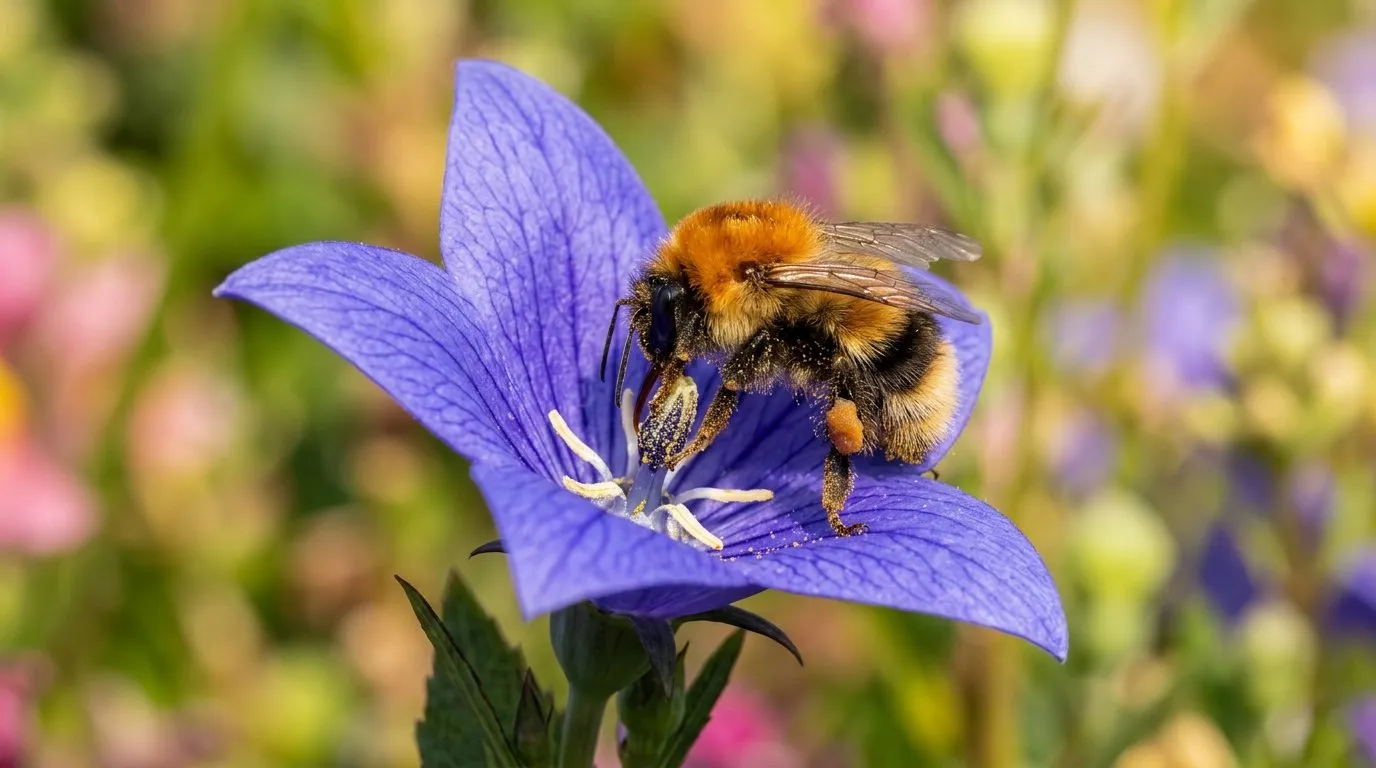 Bees work the open star bells steadily through July and August for pollen.
Frequently asked questions
Is platycodon hardy in the UK?
Yes, platycodon is fully hardy across the UK. It holds an RHS hardiness rating of H5 and survives temperatures down to roughly -15C. The roots sit deep in the soil, which protects them through hard winters. Plants in pots need more care, as roots in containers freeze faster than roots in open ground.
Why has my platycodon not come up in spring?
It is almost certainly just late, not dead. Platycodon is one of the last perennials to break ground, often waiting until mid-May. Many gardeners hoe it off or dig into the crown by accident. Mark the position with a cane in autumn and resist disturbing the soil until June.
Can you divide a balloon flower?
Division is risky and usually best avoided. The plant grows from a deep, brittle taproot that breaks easily and resents disturbance. Lifting an established clump often kills it. To make more plants, sow seed or take basal cuttings in spring rather than splitting the crown.
Where should I plant platycodon?
Choose full sun or light shade on fertile, free-draining soil. It dislikes heavy, wet ground in winter, which rots the taproot. A south or west-facing border suits it well. Add grit to clay soils before planting to improve drainage and protect the crown.
Do balloon flowers need staking?
Taller cultivars do, shorter ones do not. Forms like ‘Fuji Blue’ reaching 60-70cm flop in wind and rain without support. Push in twiggy stakes in May as shoots appear. Dwarf types such as ‘Sentimental Blue’ stay at 20cm and stand on their own.
How long does platycodon take to flower from seed?
Expect two to three years for a strong display. Seedlings flower sparsely in year one and build up slowly as the taproot develops. Sow at 18-21C in spring. For quicker results, buy young pot-grown plants and leave them undisturbed to settle.
Will platycodon grow in a pot?
Yes, dwarf cultivars are ideal for containers. ‘Sentimental Blue’ and ‘Astra’ forms suit terracotta pots on a balcony or patio. Use a deep pot to house the taproot and a free-draining compost. Move pots somewhere sheltered over winter to protect the roots from freezing.
Now you have the measure of this late-rising charmer, read our guide on the Chelsea chop for perennials to keep your border plants compact and flowering hard.
Our team produces practical UK gardening guidance from source research, contributor records and established horticultural practice. Editorial standards are overseen by Matt W.