Quick answer
The best acers for autumn colour in the UK include Japanese maples like 'Osakazuki' (scarlet), 'Orange Dream' (gold and orange) and 'Sango-kaku' (yellow). The paperbark maple, Acer griseum, turns red and has peeling bark. Field maple, Acer campestre, is a tough native that turns butter yellow. For big gardens, red maples and 'Autumn Blaze' give fiery reds.
Key points6 at a glance
- Japanese maples give the brightest reds and oranges in small spaces
- Paperbark maple gives red autumn leaves plus peeling bark all year
- Field maple is a tough native that turns butter yellow and suits chalk and clay
- 'Orange Dream' glows orange in spring and gold in autumn
- Red maples and 'Autumn Blaze' need lots of space
- Plant acers in autumn or winter, in shelter from cold, drying winds
In this article9 sections
Japanese maples, the paperbark maple and our native field maple are the best acers for autumn colour in the UK. Japanese maples give the brightest reds and oranges in a small space. Paperbark maple adds peeling bark. Field maple is tough, native and turns butter yellow. For big gardens, red maples give a fiery show.
Best acers for autumn colour at a glance
| Acer | Autumn colour | Rough size after 20 years | Best for |
|---|---|---|---|
| Acer palmatum ‘Osakazuki’ | Brilliant scarlet | 4 to 6m | The best red in a small garden |
| Acer palmatum ‘Orange Dream’ | Gold and orange | 2 to 3m | Colour in spring and autumn |
| Acer palmatum ‘Sango-kaku’ | Clear yellow | 4 to 6m | Coral-red winter stems |
| Acer palmatum ‘Bloodgood’ | Deep crimson | 4 to 6m | Purple leaves all summer |
| Acer griseum (paperbark maple) | Red and orange | 6 to 8m | Peeling bark, small gardens |
| Acer campestre (field maple) | Butter yellow | 8 to 12m | Wildlife, chalk, clay, hedges |
| Acer shirasawanum ‘Aureum’ | Gold to orange-red | 3 to 5m | Lime-gold leaves all summer |
| Acer rubrum ‘October Glory’ | Bright red | 10m plus | Big gardens, acid soil |
| Acer x freemanii ‘Autumn Blaze’ | Fiery orange-red | 10m plus | Big gardens, fast growth |
Sizes vary with soil and shelter. Japanese maples and paperbark maples grow slowly, so they stay smaller for years.
Japanese maples
Japanese maples (Acer palmatum) are the stars of autumn in small gardens. They like shelter, light shade and moist, well-drained soil.
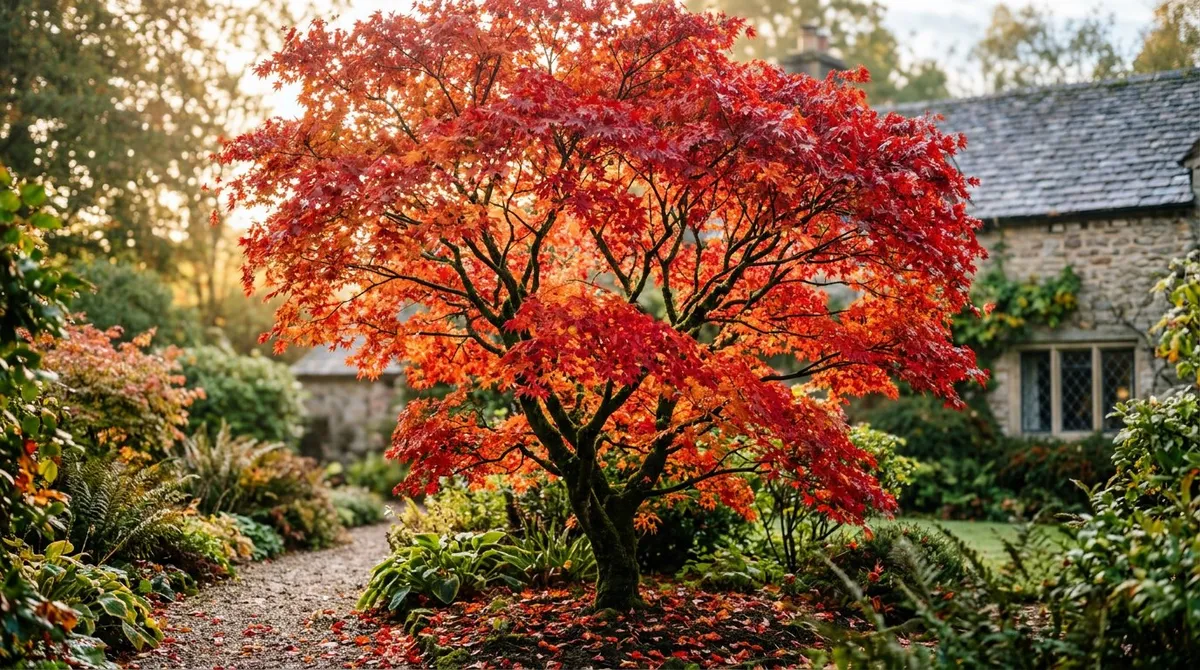
‘Osakazuki’ turns a blazing scarlet in October. If you only have room for one, this is it.
‘Orange Dream’ is a real two-season tree. New leaves open bright orange-yellow in spring, turn lime green in summer, then glow gold and orange in autumn. It’s slow-growing, so it suits pots and small borders.
‘Sango-kaku’ turns clear yellow in autumn. Once the leaves drop, its young stems glow coral-red all winter.
‘Bloodgood’ has deep purple leaves all summer that turn crimson in autumn.
Our full guide to Japanese maple care covers planting, pruning and pots.
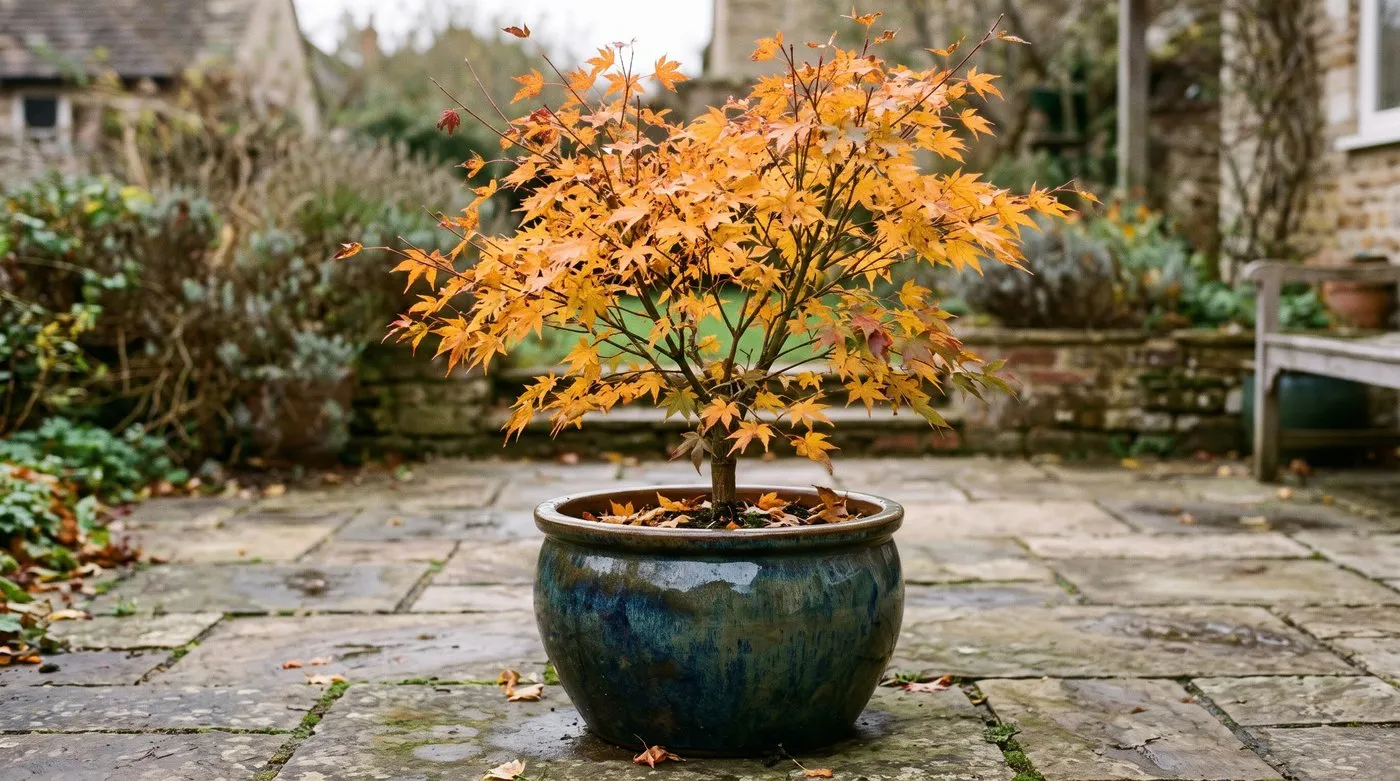
‘Orange Dream’ stays small and glows gold and orange in autumn, so it’s perfect for a pot.
Gardener’s tip: Japanese maples hate cold, drying winds. Plant them where a wall, fence or other shrubs give some shelter, especially from the east.
Paperbark maple
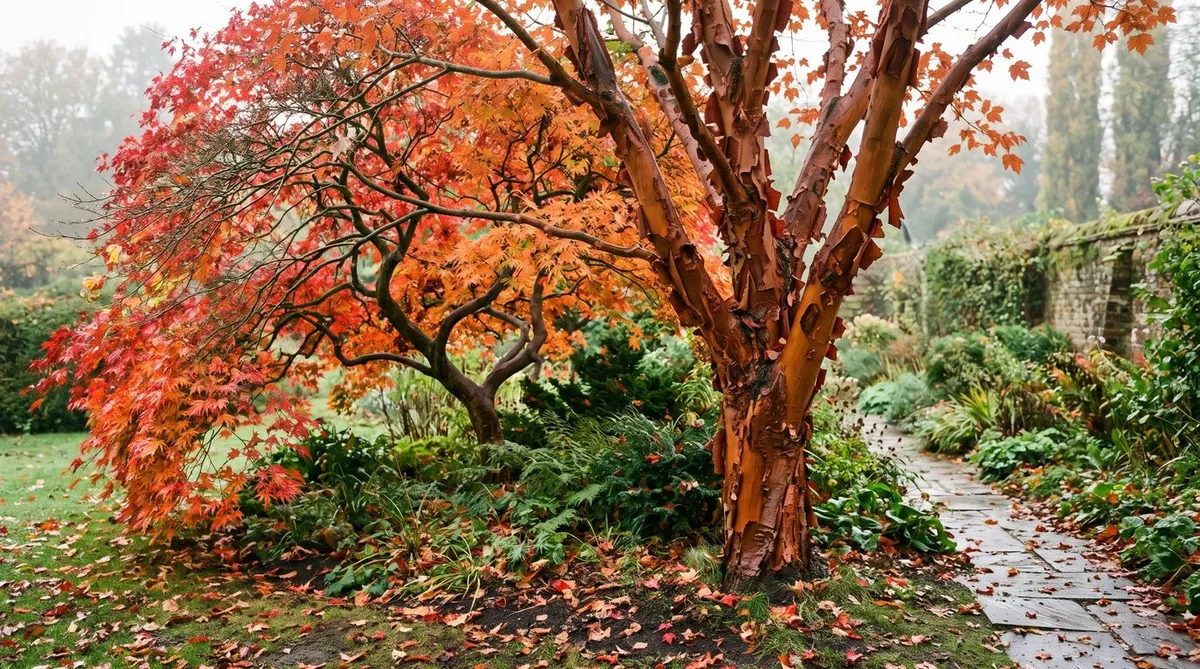
The paperbark maple (Acer griseum) is one of the best small trees you can grow. Its leaves turn rich red and orange in autumn. Its cinnamon-brown bark peels away in thin, papery curls that catch the low winter sun.
It grows slowly and stays a small tree for many years. It copes with most soils, including chalk and clay, as long as they don’t get waterlogged.
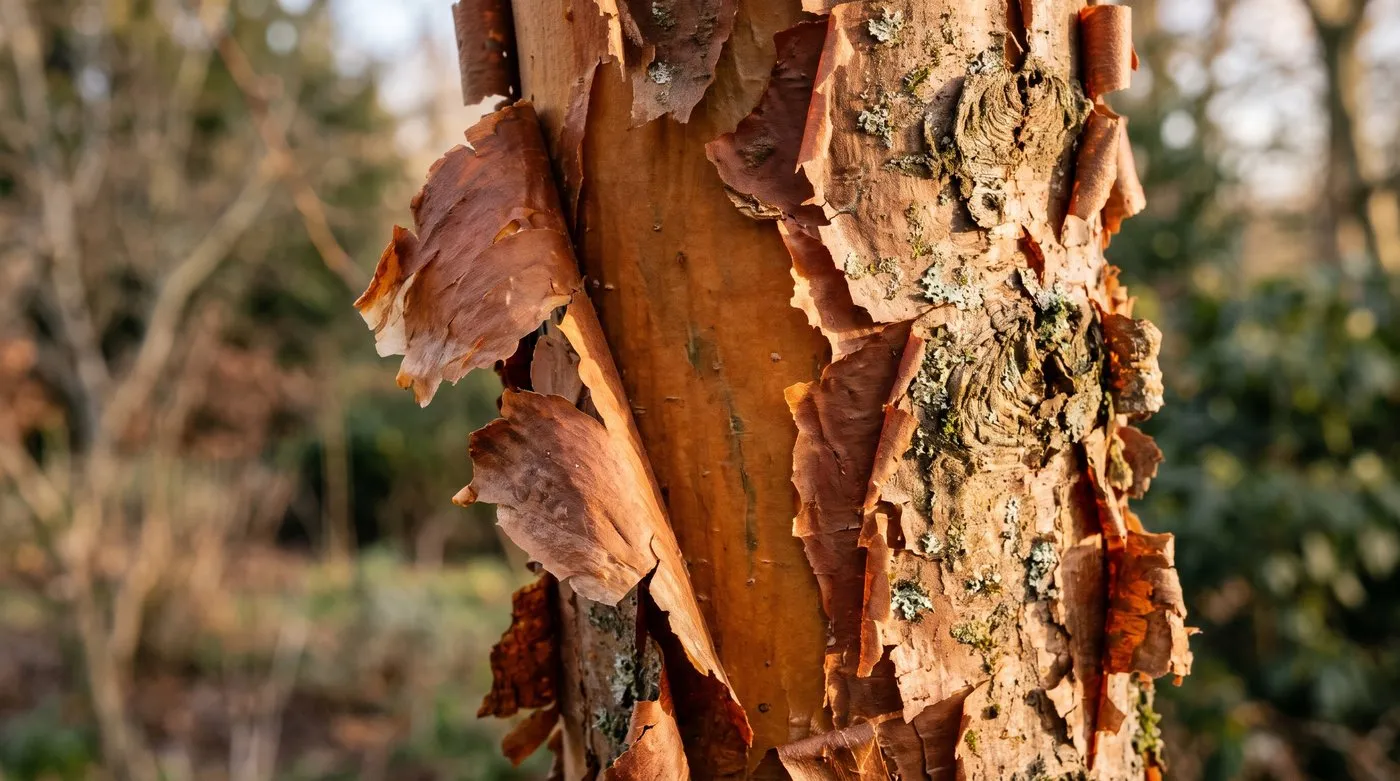
Paperbark maple’s peeling bark looks good long after the autumn leaves have fallen.
Field maple
Field maple (Acer campestre) is a tough native tree. Its small leaves turn a lovely butter yellow in autumn. It copes with chalk, clay, wind and dry summers, and it’s great for wildlife.
It also makes a brilliant native hedge, mixed with hawthorn and hazel. For smaller gardens, look for compact forms such as ‘Elsrijk’. Our guides to the best plants for clay soil and chalky soil have more tough trees.
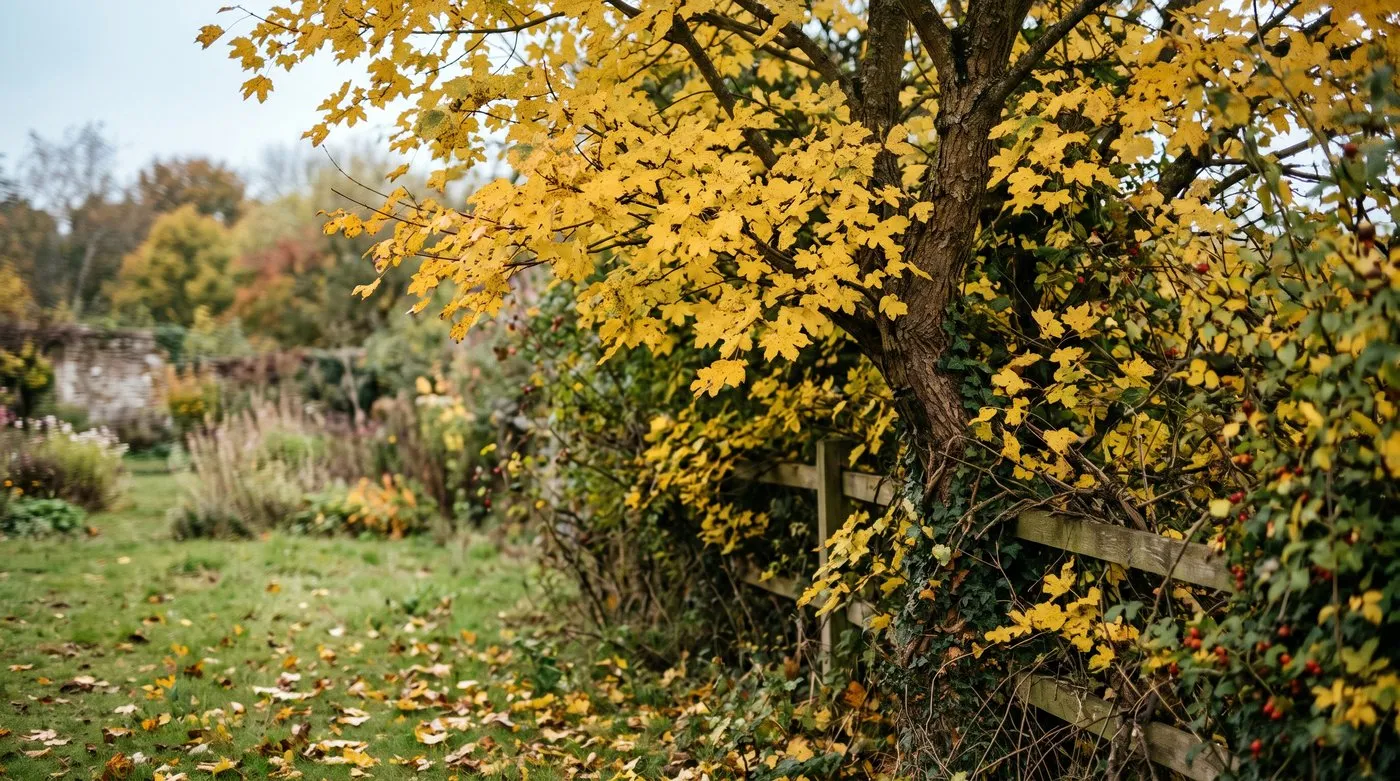
Field maple turns butter yellow and is one of the toughest native trees for gardens.
Big maples for big gardens
If you have room, a few larger maples give a show that stops people in the street.
Acer rubrum ‘October Glory’ is a red maple that turns bright red. It colours best on neutral to acid soil.
Acer x freemanii ‘Autumn Blaze’ grows fast and turns fiery orange-red. It’s popular for big gardens and parks.
Both grow into large trees, so plant them well away from the house. For more ideas, see our guide to the best trees for autumn colour.
Where to plant acers
Shelter. Most acers, especially Japanese maples, prefer a spot out of cold, drying winds.
Light. Sun or light shade gives the best colour. Deep shade dulls it.
Soil. Moist but well-drained soil suits most. Japanese maples prefer neutral to slightly acid soil, while field and paperbark maples cope with chalk.
Midday sun. In hot, sunny gardens, Japanese maples can scorch. Our guide to acer leaf scorch explains how to avoid it.
When and how to plant
Plant acers from October to March, while they’re dormant. Avoid frozen or waterlogged ground.
- Dig a hole as deep as the root ball and twice as wide.
- Plant at the same depth it was growing, never deeper.
- Firm the soil and water well.
- Mulch around the base, keeping it off the trunk.
- Water through dry spells for the first two summers.
Bare-root trees are cheaper and plant easily in winter. Our guide on how to plant a bare-root tree shows each step.
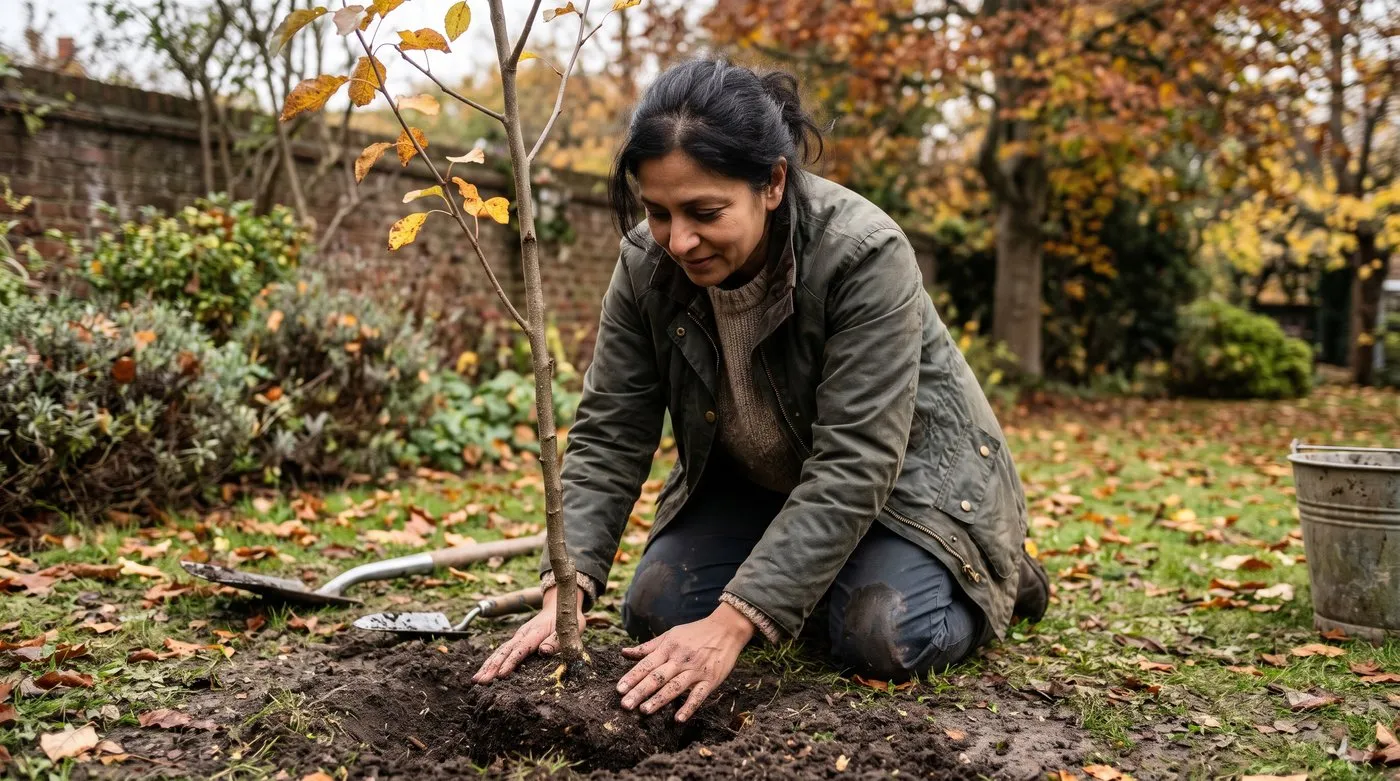
Autumn and winter are the best times to plant acers, while they’re dormant.
Why isn’t my acer colouring well?
Too much shade. Acers colour best with some sun.
Very alkaline soil. Red maples and some Japanese maples colour poorly on chalk.
The weather. A mild, wet autumn often gives duller colour. Sunny days and cold nights bring out the brightest reds.
Feeding too late. High-nitrogen feed in late summer keeps leaves green for longer.
Frequently asked questions
Which acer has the best autumn colour?
For a small garden, Japanese maple ‘Osakazuki’ is hard to beat, as it turns brilliant scarlet. For a bigger space, the paperbark maple and red maples like ‘October Glory’ give rich reds too.
Is paperbark maple good for small gardens?
Yes. Acer griseum grows slowly and stays a small tree for many years. It has red autumn leaves and peeling cinnamon bark that looks good all winter.
What colour does field maple go in autumn?
Field maple turns a clear butter yellow in autumn. It’s a tough native tree that copes with chalk, clay and exposed spots, and it makes a great hedge too.
What is Acer ‘Orange Dream’?
It’s a Japanese maple with bright orange-yellow leaves in spring. They turn lime green in summer, then gold and orange in autumn. It grows slowly to a small tree.
Why is my acer not turning red?
Too much shade, very alkaline soil or a mild, wet autumn can all dull the colour. Many acers colour best in sun or light shade, with cold nights and sunny days.
When is the best time to plant an acer?
Plant from October to March, while the tree is dormant. Avoid frozen or waterlogged ground, and water well through the first summer.
Can I grow acers in pots?
Many Japanese maples grow well in pots for years. Use loam-based compost, keep them sheltered from wind and never let the compost dry out in summer.
So pick an acer that suits your space and plant it this winter. Next autumn, you’ll have your own blaze of red, orange and gold.
Our team produces practical UK gardening guidance from source research, contributor records and established horticultural practice. Editorial standards are overseen by Matt W.