Key takeaways
- Plant 3-4 berberis per metre for a stockproof barrier hedge; ours closed up in 3 seasons
- Evergreen B. x stenophylla grew 35-40cm a year on free-draining Staffordshire soil
- Deciduous B. thunbergii 'Atropurpurea' turns scarlet in mid to late October before leaf fall
- Prune evergreens straight after flowering in May to June; prune deciduous types in late winter
- Berberis tolerates any well-drained soil, sun or part shade, and needs little feeding
- Always wear leather gauntlets: the triple spines puncture ordinary gardening gloves
Berberis, the barberry, is one of the toughest shrubs you can plant in a UK garden. Whether you want red autumn colour, spring flowers, berries for birds or an intruder-proof boundary, there is a berberis for the job. The genus splits into two useful camps: deciduous types grown for foliage and fruit, and evergreen types grown for flowers and dense hedging.
Deciduous or evergreen: which berberis to choose
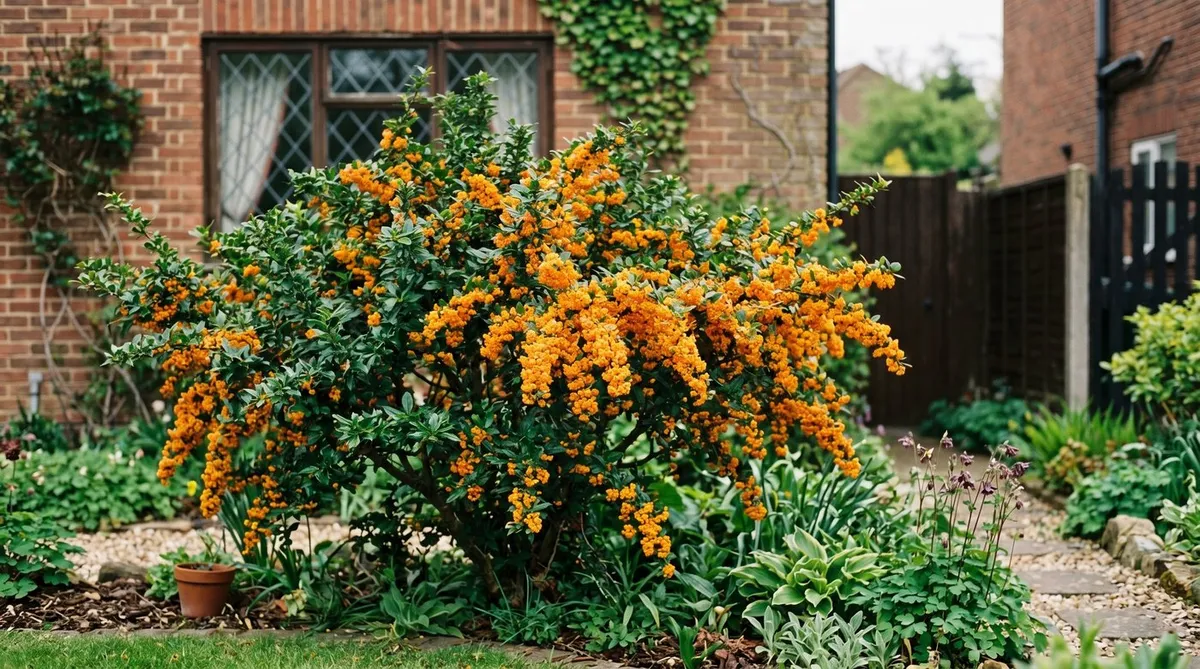
Berberis divides into two practical groups, and the choice decides everything else. Deciduous berberis, led by Berberis thunbergii, drops its leaves in winter but delivers fiery autumn colour and a heavy crop of red berries. Evergreen berberis, led by B. darwinii and B. x stenophylla, keeps its leaves all year and flowers in a blaze of orange or yellow each spring.
Pick deciduous types for seasonal drama and compact form. The purple-leaved ‘Atropurpurea’ and the dwarf ‘Atropurpurea Nana’ work well in borders and low edging. Pick evergreen types for screening, security and spring nectar. They hold a dense spiny wall twelve months a year, which is exactly what a boundary hedge needs.
Soil and aspect barely change the decision. Both groups grow in any well-drained soil, in sun or part shade. The split is about what you want above ground, not below it.
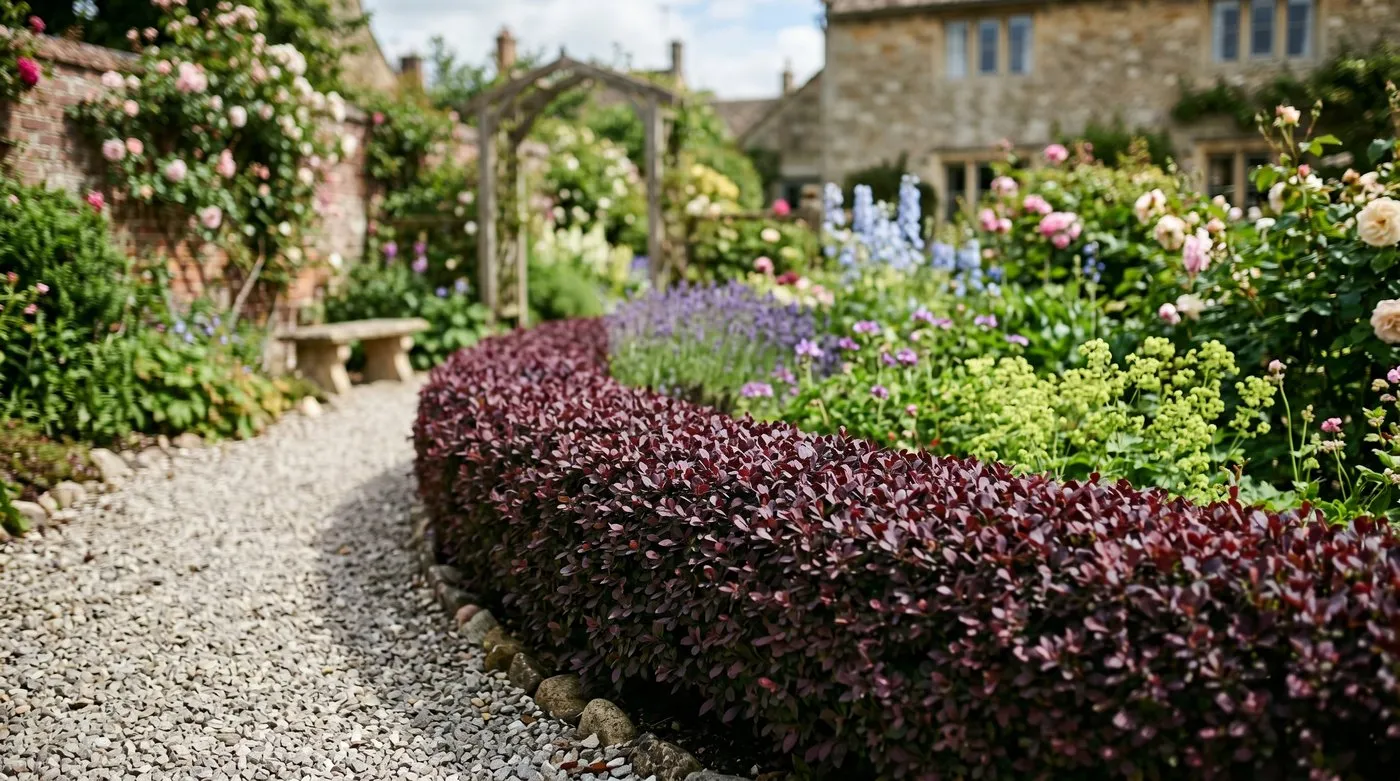 Dwarf deciduous ‘Atropurpurea Nana’ makes neat purple edging, while the evergreen forms below build a full hedge.
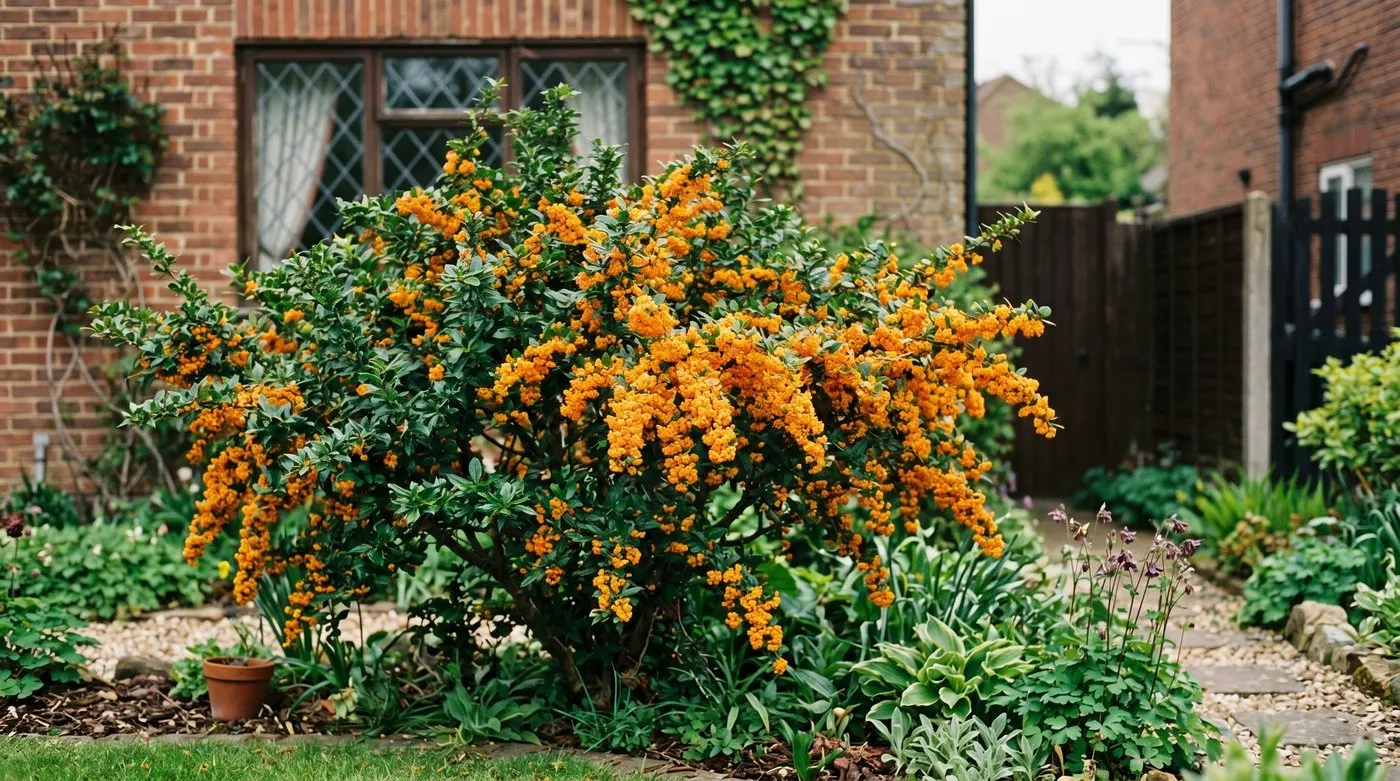 Evergreen Berberis darwinii smothered in orange flowers in early spring, the proof that this is no dull green shrub.
Deciduous vs evergreen berberis compared
The table below ranks the most useful garden berberis by job. Use it to match a species to your main aim, whether that is autumn colour, spring flowers or a stockproof barrier.
| Species | Type | Main role | Flowers | Berries | Height | Spine density |
|---|---|---|---|---|---|---|
| B. x stenophylla | Evergreen | Security hedging | Orange-yellow, April | Blue-black | 2.5-3m | Very high |
| B. darwinii | Evergreen | Flowering hedge | Deep orange, April-May | Blue-purple | 1.8-2.5m | High |
| B. thunbergii ‘Atropurpurea’ | Deciduous | Autumn colour | Yellow, May | Red | 1.2-1.5m | Medium |
| B. thunbergii ‘Atropurpurea Nana’ | Deciduous | Low edging | Yellow, May | Red | 0.6m | Medium |
| B. julianae | Evergreen | Barrier hedge | Yellow, May | Blue-black | 2.5-3m | Very high |
| B. thunbergii ‘Aurea’ | Deciduous | Foliage accent | Yellow, May | Red | 0.9m | Medium |
Stenophylla and julianae carry the fiercest spines and make the best security hedges. Darwinii gives the showiest spring flowers. The thunbergii cultivars earn their place on foliage and autumn fruit, not on thorns.
Planting a stockproof berberis hedge
Spacing decides whether your hedge becomes a true barrier or a row of separate bushes. For a stockproof spiny hedge, plant 3 to 4 plants per metre in a single staggered row, 30 to 40cm apart. Closer spacing closes the screen faster but uses more plants. Wider spacing leaves gaps that take years to fill.
Plant bare-root whips between November and March, or pot-grown plants at any time the ground is not frozen or waterlogged. Dig a trench rather than individual holes for an even line. Work in some garden compost on poor ground, then firm each plant in and water well. Bare-root plants are far cheaper for a long run, often a quarter of the pot-grown price.
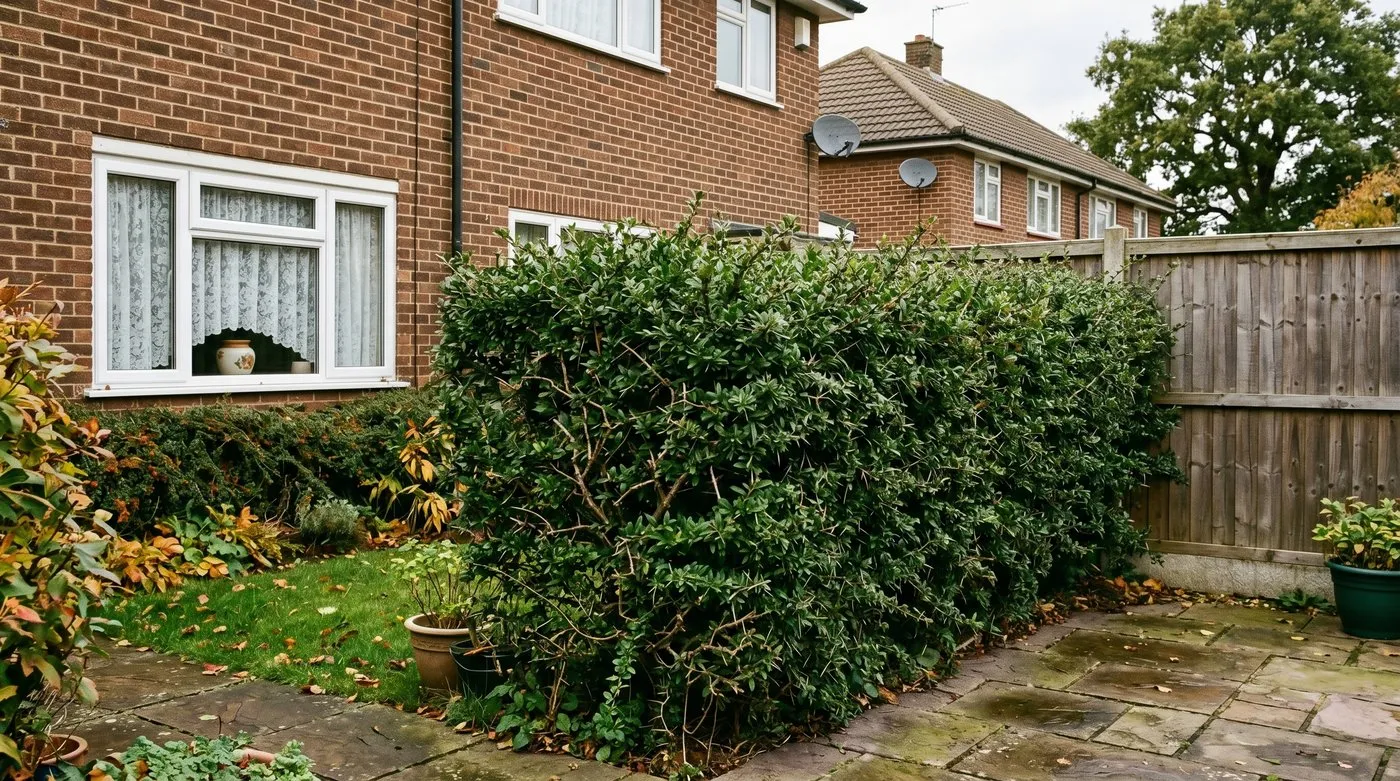 A mature B. x stenophylla hedge along a boundary fence: a dense, thorny screen that no person or fox pushes through.
Using berberis spines for intruder-proof security
A berberis hedge is one of the cheapest and most effective security barriers a UK home can have. The triple spines of stenophylla and julianae reach up to 12mm and sit in clusters at every leaf node. They puncture clothing, skin and gloves, which makes climbing or pushing through genuinely painful.
Plant a spiny hedge under ground-floor and basement windows, along boundaries, and beside drainpipes and flat-roof access points. Police-backed secured-by-design guidance has long recommended defensive planting as a deterrent that a fence alone cannot match. A fence can be climbed in seconds; a metre-deep spiny hedge cannot.
Keep the hedge at 1.5 to 2m where it screens windows, and let boundary runs reach 2.5 to 3m. Trim the face to encourage density right down to ground level, so there is no clear gap to crawl under. Combine the hedge with gravel beneath it for an audible warning underfoot.
Warning: Berberis spines carry soil bacteria and can cause painful infected puncture wounds. Always wear thick leather gauntlets and eye protection when planting, trimming or clearing fallen prunings. Never strim a berberis hedge in shorts and a t-shirt.
Autumn colour and berries for birds
The dense spiny growth gives small birds something a fence never will: safe nesting cover. Dunnocks and wrens nest low inside ours, protected from cats by the thorns. A mixed berberis hedge feeds and shelters wildlife across the whole year.
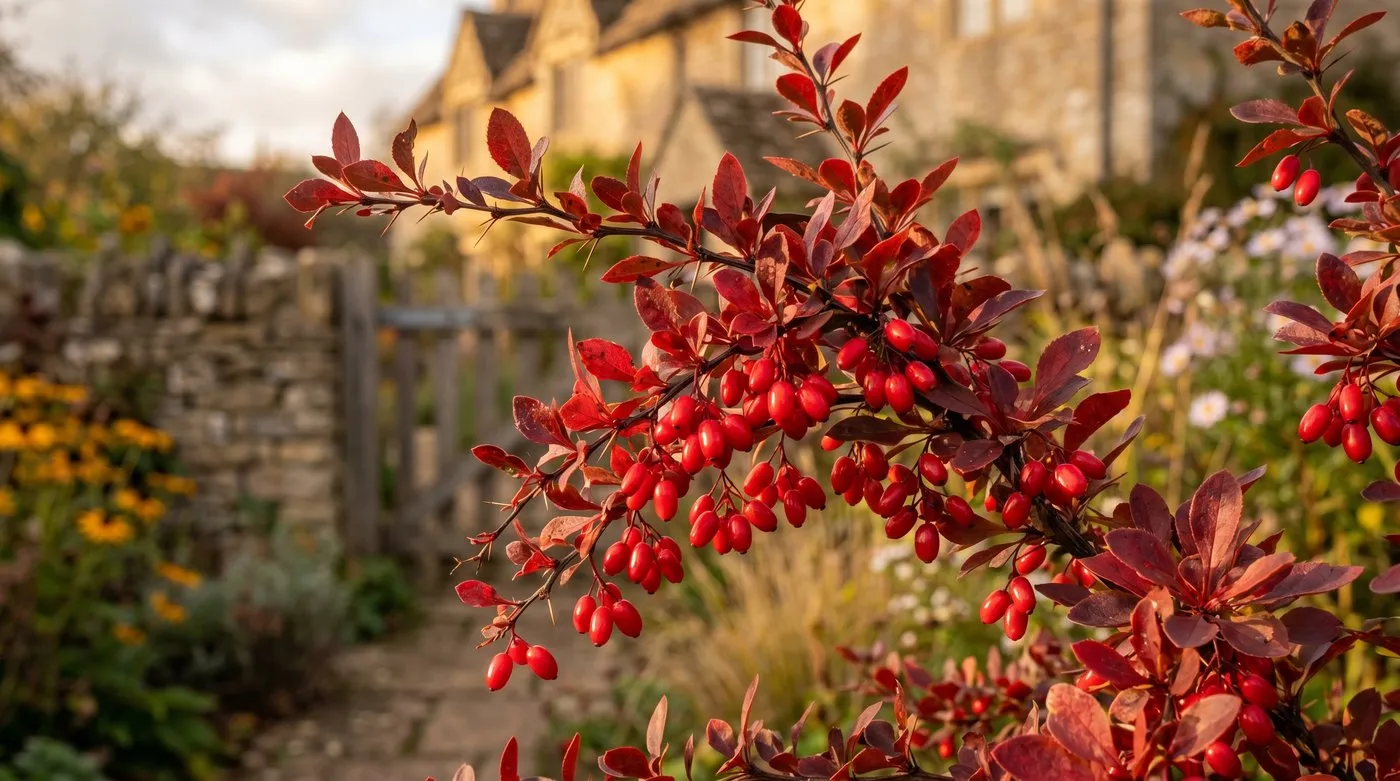 Berberis thunbergii ‘Atropurpurea’ in late October: scarlet foliage and red berries before the leaves fall.
Where berberis grows: soil, aspect and hardiness
Berberis is genuinely undemanding. It grows in any well-drained soil, including clay, sand, chalk and mildly acid ground. The only site it refuses is one that stays waterlogged, where the roots rot. On heavy clay, fork in grit and plant on a slight mound to lift the crown clear of sitting water.
For aspect, give it full sun or part shade. Purple and yellow-leaved deciduous forms colour best in full sun; in shade the purple fades towards green. Evergreen types keep dense, spiny growth even in part shade, which makes them useful for north and east-facing boundaries where little else thickens up.
Hardiness is rarely an issue. Most garden berberis tolerates temperatures down to around -15C once established, surviving any normal UK winter without protection. The plants also shrug off coastal wind, urban pollution and the dry, root-filled soil under established trees. This toughness is why berberis turns up in supermarket car parks and motorway plantings across the country.
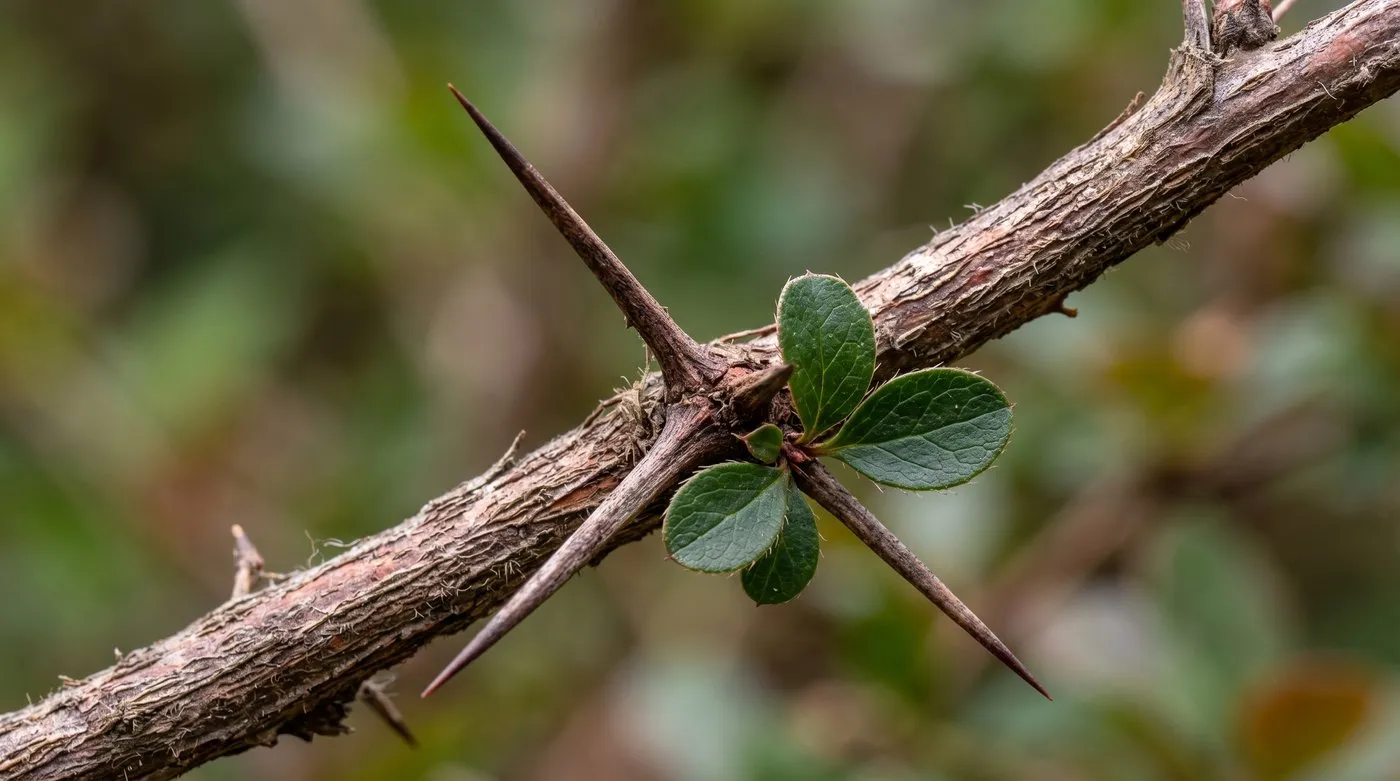 The characteristic triple spine of berberis, three sharp points at each node, is what makes the hedge intruder-proof.
When and how to prune berberis
Pruning timing depends entirely on type, and getting it wrong costs you a year of flowers. Prune evergreen berberis straight after flowering, in May to June. These types flower on the previous year’s wood, so cutting in winter or early spring removes the buds before they open. A light shear over to shape, plus removal of any dead or wayward stems, is all most need.
Prune deciduous berberis in late winter, from January to early March, while the plant is dormant and the bare stems are easy to see. Thin out old congested wood at the base to keep the centre open, and shorten long shoots to a bud. Deciduous types flower on new growth, so winter pruning does not cost the spring display.
Both groups tolerate hard renovation. A neglected, leggy hedge cut back to 30cm in late winter (deciduous) or after flowering (evergreen) will break from old wood and rebuild within two to three seasons. Ours recovered full density 18 months after a hard reduction cut. Always wear gauntlets and clear every spiny offcut, as fallen prunings stay sharp for months.
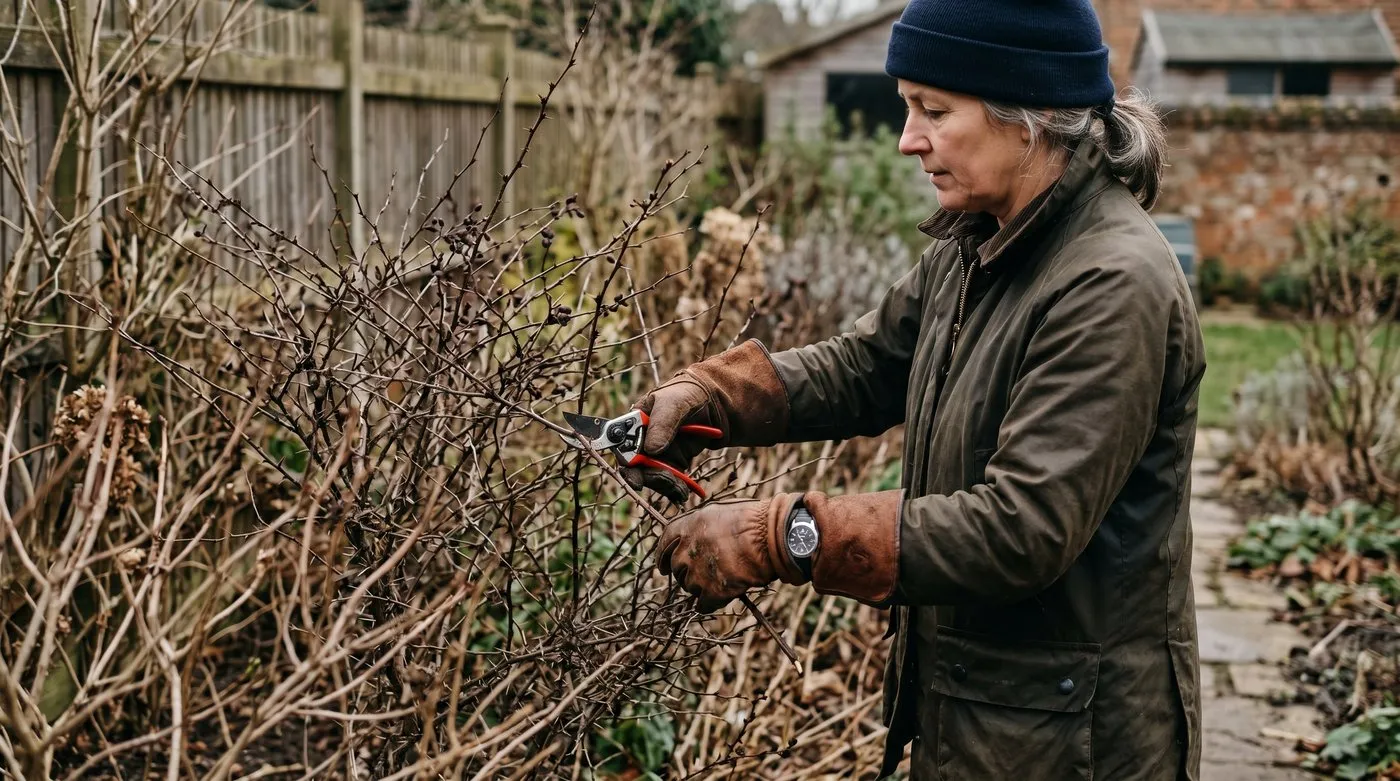 Pruning berberis demands thick leather gauntlets: ordinary gloves do not stop the spines.
The plant health question: cereal rust and Berberis thunbergii
There is a genuine plant-health footnote worth understanding. Common barberry, Berberis vulgaris, is an alternate host for black stem rust of cereals (Puccinia graminis). The fungus needs both a cereal crop and a barberry to complete its life cycle. For this reason common barberry was actively cleared near arable land across Europe and North America during the twentieth century.
Berberis thunbergii, the garden species, has been studied as a potential host too, and some North American states have restricted it. In the UK, thunbergii remains widely sold and is not banned. The risk in a typical garden, far from a wheat field, is negligible.
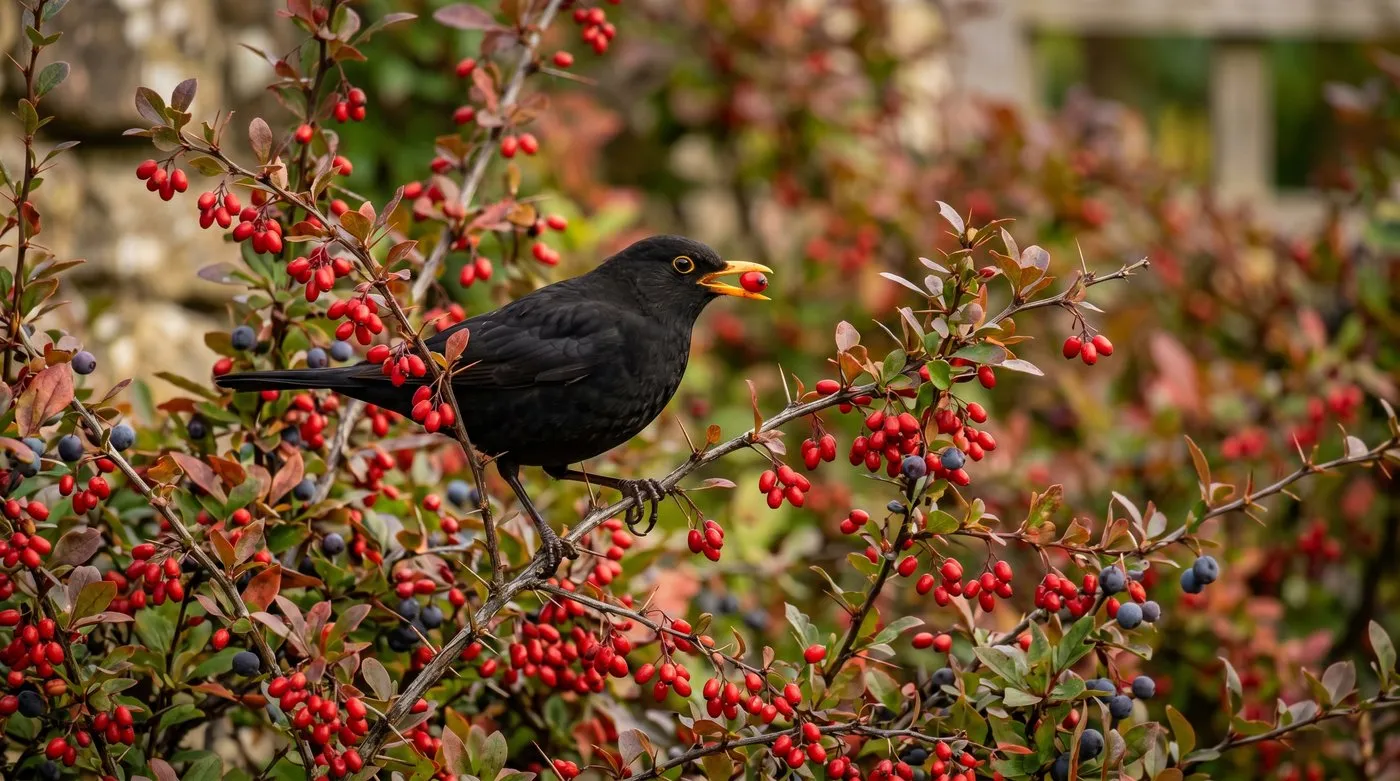 A blackbird taking berberis berries: the autumn fruit feeds thrushes and blackbirds well into winter.
Month-by-month berberis calendar
| Month | What to do |
|---|---|
| January | Prune deciduous berberis while dormant. Thin congested old wood at the base. Wear gauntlets. |
| February | Continue late-winter pruning of deciduous types. Plant bare-root whips before growth starts. |
| March | Finish bare-root planting. Mulch new hedges with compost. Evergreen flower buds begin to swell. |
| April | B. x stenophylla and B. darwinii burst into orange-yellow flower. Watch for early aphids on soft tips. |
| May | Peak evergreen flowering. Begin pruning evergreens once flowers fade. Yellow thunbergii flowers appear. |
| June | Finish pruning evergreen berberis. Water new plants in dry spells. Trim hedge faces for density. |
| July | Little to do. Keep first-year plants watered. Berries begin forming on flowered shoots. |
| August | Light trim of formal evergreen hedges to keep shape. Berries colouring on early types. |
| September | Berries ripen. Reduce watering as growth slows. Plan and order bare-root plants for winter. |
| October | Deciduous foliage turns scarlet, peaking 15-25 October. Red berries hang on the stems. |
| November | Leaf fall on deciduous types. Berries feed blackbirds and thrushes. Start bare-root planting. |
| December | Plant bare-root in open weather. Clear fallen spiny prunings. Evergreens hold winter structure. |
Common berberis mistakes to avoid
Pruning evergreens at the wrong time. Cutting B. darwinii or stenophylla in winter or early spring removes the flower buds and wastes the spring display. Always prune evergreen types after they flower, in May to June, not before.
Spacing a hedge too widely. Planting at one per metre to save money leaves permanent gaps that never fully close. For a stockproof barrier, commit to 3 to 4 plants per metre from the start.
Planting in waterlogged ground. Berberis tolerates almost any soil except one that stays wet. In a hollow or on heavy clay without drainage, the roots rot and the plant dies back. Add grit and plant high.
Handling without protection. The triple spines puncture ordinary gloves and snap off in skin, causing infected wounds. Strimming a hedge in light clothing scatters sharp fragments. Wear gauntlets, long sleeves and eye protection every time.
Gardener’s tip: When clearing berberis prunings, rake them into a tarp rather than picking them up by hand. The spines stay rigid and dangerous for months on the ground, and a stray offcut in the lawn finds bare feet and mower tyres alike.
Pairing berberis with other tough shrubs
Berberis sits naturally alongside other low-maintenance, wildlife-friendly shrubs. For a mixed defensive boundary, combine it with pyracantha (firethorn), whose thorns and berries do a similar job, and with evergreen euonymus for contrasting foliage. The yellow spring flowers of mahonia extend the nectar season either side of berberis.
For pollinators, plant buddleja nearby to draw butterflies through summer once the berberis flowers have faded. On the heavier ground berberis copes with so well, our guides to the best plants for clay soil and how to improve clay soil help you build a planting that thrives. On lighter ground, see the best plants for sandy soil for companions that share berberis’s drought tolerance.
Browse the full plant growing guides for more shrubs that earn their place in a working UK garden.
Now you’ve mastered berberis, read our guide on growing camellias in the UK for an evergreen shrub that brings flower colour to the shadier corners a spiny hedge cannot reach.
Frequently asked questions about growing berberis
Is berberis evergreen or deciduous?
Both types exist. Berberis darwinii and B. x stenophylla are evergreen with spring flowers. Berberis thunbergii is deciduous with red autumn colour and berries. Choose evergreen for year-round screening and security, and deciduous for seasonal foliage colour and a heavy crop of red fruit.
How far apart should I plant a berberis hedge?
Plant 3-4 plants per metre for a stockproof barrier. Set them in a single staggered row 30-40cm apart. A denser spacing closes the gaps faster but costs more plants. Ours met within three growing seasons at three per metre on average Staffordshire soil.
When should I prune berberis?
Prune evergreen berberis after flowering in May to June. Prune deciduous berberis in late winter before growth starts. Cutting evergreens before they flower removes the spring display. Both types tolerate hard renovation cuts and rebuild density within two to three seasons.
Is berberis good for security?
Yes, berberis makes an excellent intruder-proof hedge. The triple spines reach 12mm and puncture clothing and skin. Plant it under ground-floor windows and along boundaries. It deters climbing and crawling far more effectively than a fence, which can be cleared in seconds.
Do birds eat berberis berries?
Does berberis grow in shade?
Berberis grows in full sun or part shade. Evergreen types keep dense growth in part shade, useful for north-facing boundaries. Deciduous purple-leaved forms colour best in full sun. Avoid deep shade, where growth thins and the autumn colour fades towards green.
Is berberis thunbergii banned in the UK?
No, Berberis thunbergii is not banned in the UK. Historic restrictions targeted common barberry as a host for cereal stem rust. Thunbergii is widely sold and planted. Check the current Defra plant-health position before any large-scale planting near arable farmland.
What soil does berberis need?
Berberis grows in almost any well-drained soil. It copes with clay, sand, chalk and mildly acid ground. It dislikes only waterlogged sites. Improve heavy clay with grit before planting, and avoid hollows and hard pans where water collects.
Our team produces practical UK gardening guidance from source research, contributor records and established horticultural practice. Editorial standards are overseen by Matt W.