Key takeaways
- Brown crispy leaf edges on acer are scorch, not a disease, 95% of the time
- Drought in pots is the single commonest UK cause
- Cold drying wind scorches lace-leaf 'Dissectum' types worst
- Scorched leaves never green up again, but the tree reshoots next spring
- Fix: dappled shade, wind shelter, never let pots dry out
- Whole-branch dieback with olive streaks in the wood means verticillium, not scorch
Acer leaf scorch is the brown, crispy, curled leaf edges that appear on Japanese maples through a hot UK summer. It looks like a serious disease. It almost never is. In nine cases out of ten it is the tree drying out faster than its roots can keep up.
What Acer Leaf Scorch Actually Looks Like
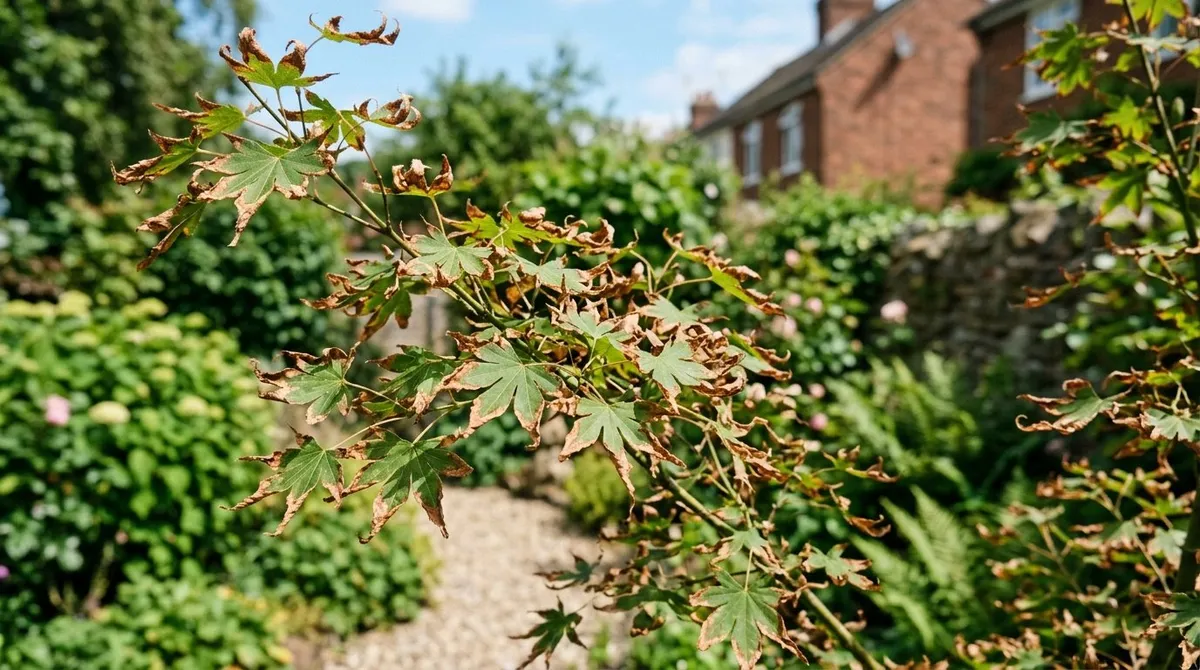
Scorch starts at the most exposed part of the leaf and works inward.
Diagnostic features:
- Brown or tan dead tissue on leaf edges and tips first
- The leaf centre and base often stay green
- Leaves curl, shrivel and go papery and crisp
- Worst on the side facing wind or hot afternoon sun
- Spreads across the whole canopy fairly evenly
- Appears June to August, fastest in heatwaves
The key tell is that the damage is on the leaf margins, not in spots. Black raised spots with yellow halos are a different problem entirely, a fungal disease rather than scorch. Scorch is brown, dry and edge-first.
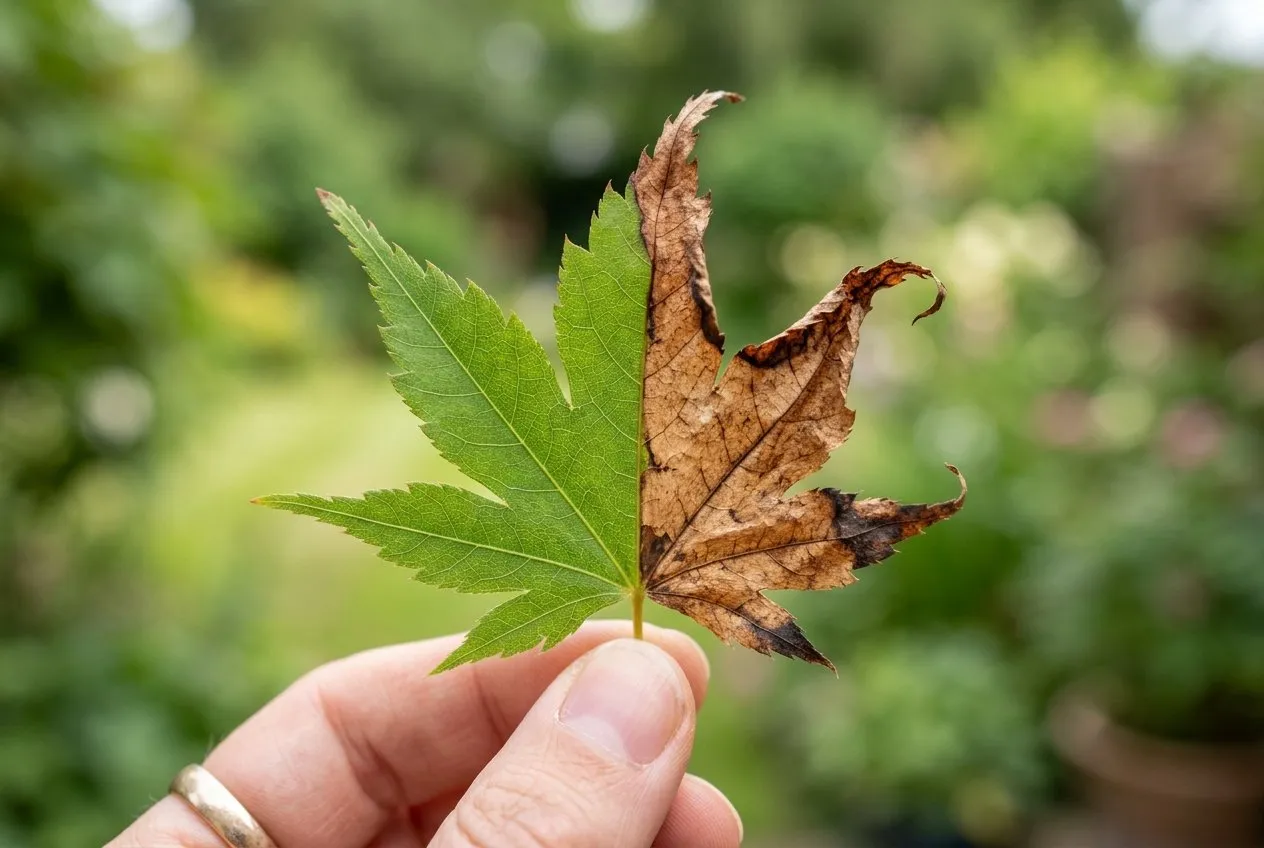 Edge-first scorch on an Acer palmatum leaf at Staffordshire in July. The margins go brown and papery while the centre stays green. This margin pattern is the clearest sign of scorch rather than a leaf-spot disease.
The Six Things That Cause It
Scorch is a watering and exposure problem, not an infection. Six things drive it in UK gardens.
| Cause | Signs to look for | The fix |
|---|---|---|
| Drought / under-watering | Edges crisp inward, whole tree, pots worst | Steady watering, mulch, never let pots dry |
| Drying wind | Worst on windward side, lace-leaf types hit hardest | Shelter from cold east and north winds |
| Hot afternoon sun | Scorch on the sun-facing side, reds and variegated worst | Dappled shade, morning sun only |
| Waterlogging | Browning plus yellowing, soggy compost, roots rot | Improve drainage, never stand pots in saucers of water |
| Salt / fertiliser build-up | Edge browning in pots, white crust on compost | Stop feeding, flush with rainwater, repot |
| Late spring frost | New April growth blackens overnight | Fleece on frost nights, plant in sheltered spot |
Why Pots Scorch First And Worst
A potted acer dries out far faster than one in the ground.
The roots are trapped in a small volume of compost. There is no deep soil to draw on. In a heatwave the pot walls heat up, the compost dries from the outside in, and a 45-litre pot in full July sun can run bone dry in a single day. The leaves crisp within hours.
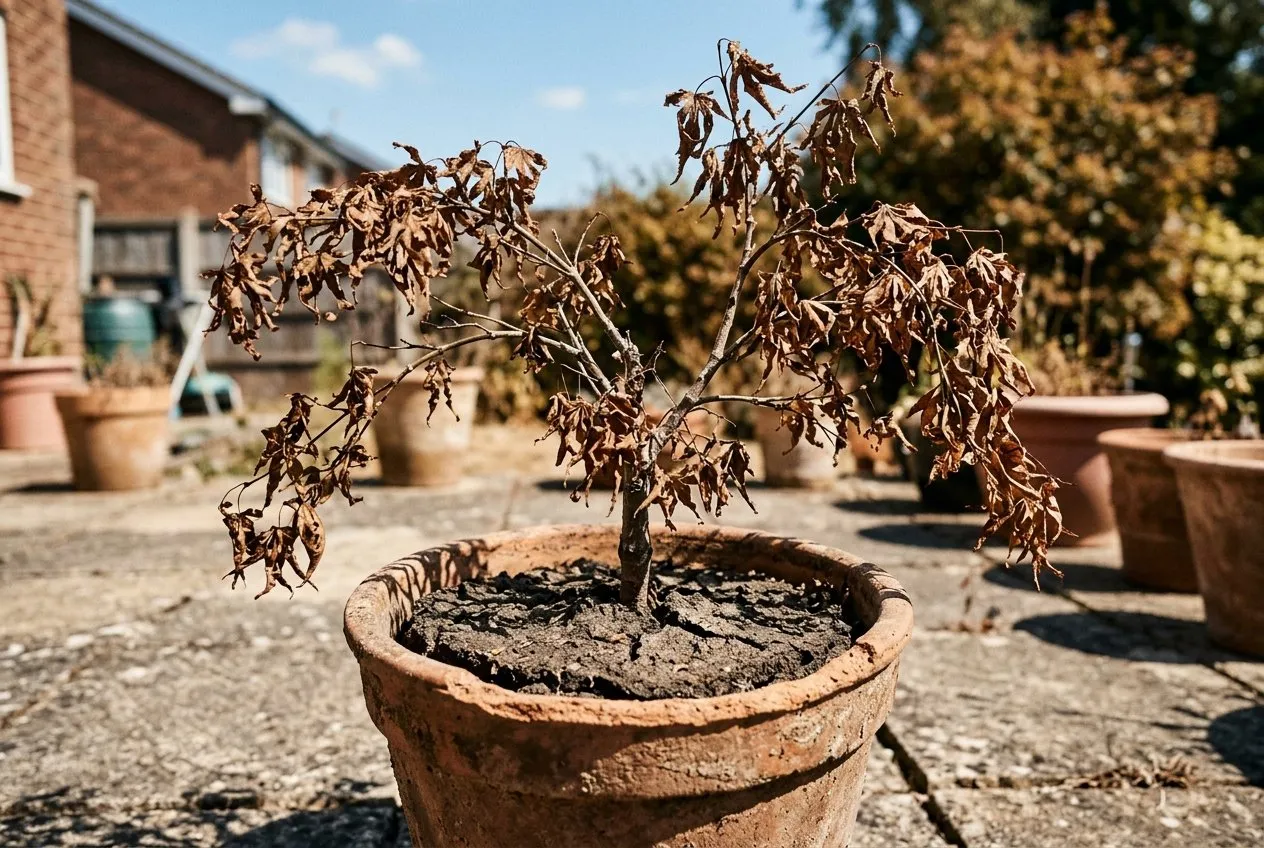
Wind Scorch: The Quiet Killer Of Lace-Leaf Acers
Cold, drying wind scorches acers even when the soil is moist.
Japanese maples hate wind. The dissected, lace-leaf types like ‘Dissectum’ have huge surface area for their thin leaves, so they lose water fastest in a breeze. An open, exposed corner that catches the east wind will brown a lace-leaf acer by June, no matter how well you water it.
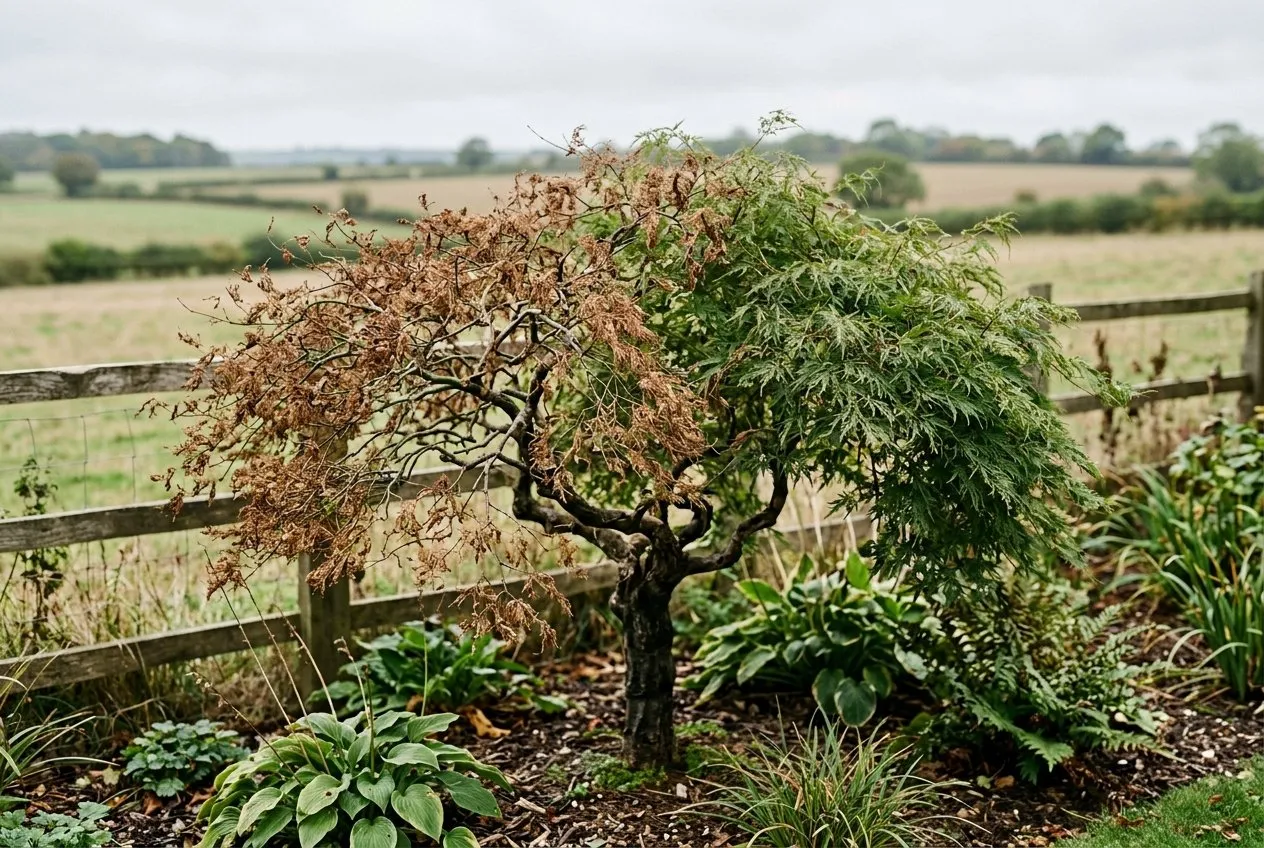 Wind scorch on a lace-leaf ‘Dissectum’ in an exposed Staffordshire border. The windward side is browned while the sheltered side stays green. Lace-leaf acers need shelter, not just water.
How To Tell Scorch From Verticillium Wilt
Most browning is harmless scorch. One disease is not, so rule it out.
Verticillium wilt is a soil fungus that blocks the tree’s water vessels. It is the one genuinely serious cause of acer dieback in UK gardens. It looks different from scorch.
Scorch: leaf edges brown across the whole tree fairly evenly, leaves stay attached, no wood damage.
Verticillium wilt: whole branches wilt and die one at a time, often on one side of the tree, and when you cut a dying stem you find olive-green or brown streaks in the wood under the bark.
If you see whole-branch dieback rather than even edge browning, suspect verticillium. There is no cure. Prune out dead wood, disinfect tools between cuts, feed and water to keep the tree strong, and never replant another acer in the same soil. The RHS holds the most reliable UK guidance on diagnosing tree problems like this at the Royal Horticultural Society.
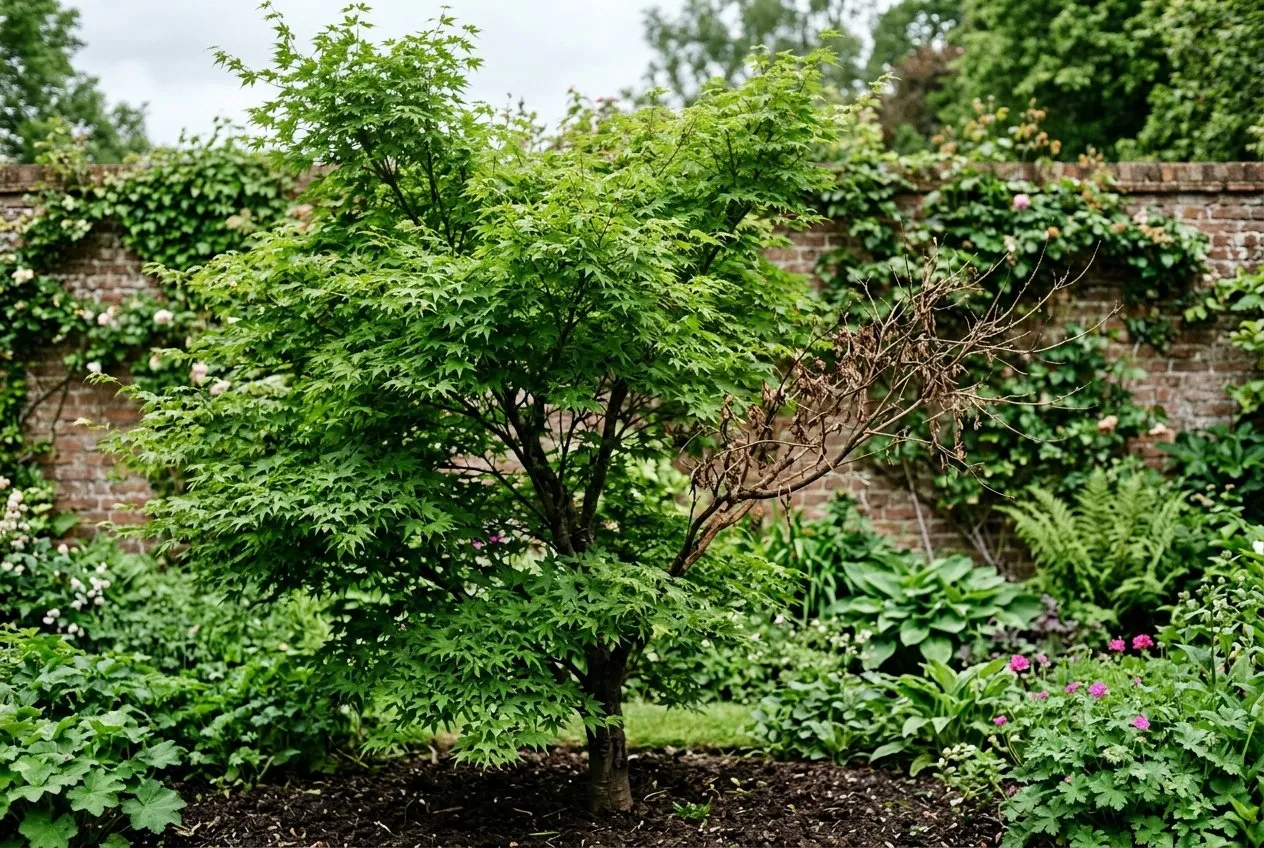 Verticillium dieback on a Staffordshire acer. One whole branch has collapsed while the rest stays healthy. Cut a dying stem and you find olive-green streaks in the wood. This is the serious one to rule out.
Siting And Watering: The Real Fix
Get the position and the watering right and scorch stops.
Japanese maples evolved as woodland-edge trees. They want dappled shade, moist but free-draining soil, and shelter from cold wind and fierce afternoon sun. Give them that and they barely scorch at all. Plant them in an open, sunny, windy spot and they will crisp every July.
Siting checklist:
- Dappled or light shade, ideally morning sun and afternoon shade
- Shelter from cold east and north winds
- Moist, free-draining soil enriched with leaf mould
- Out of frost pockets that catch late spring frosts
- Never in a hot, reflective corner against a south-facing wall
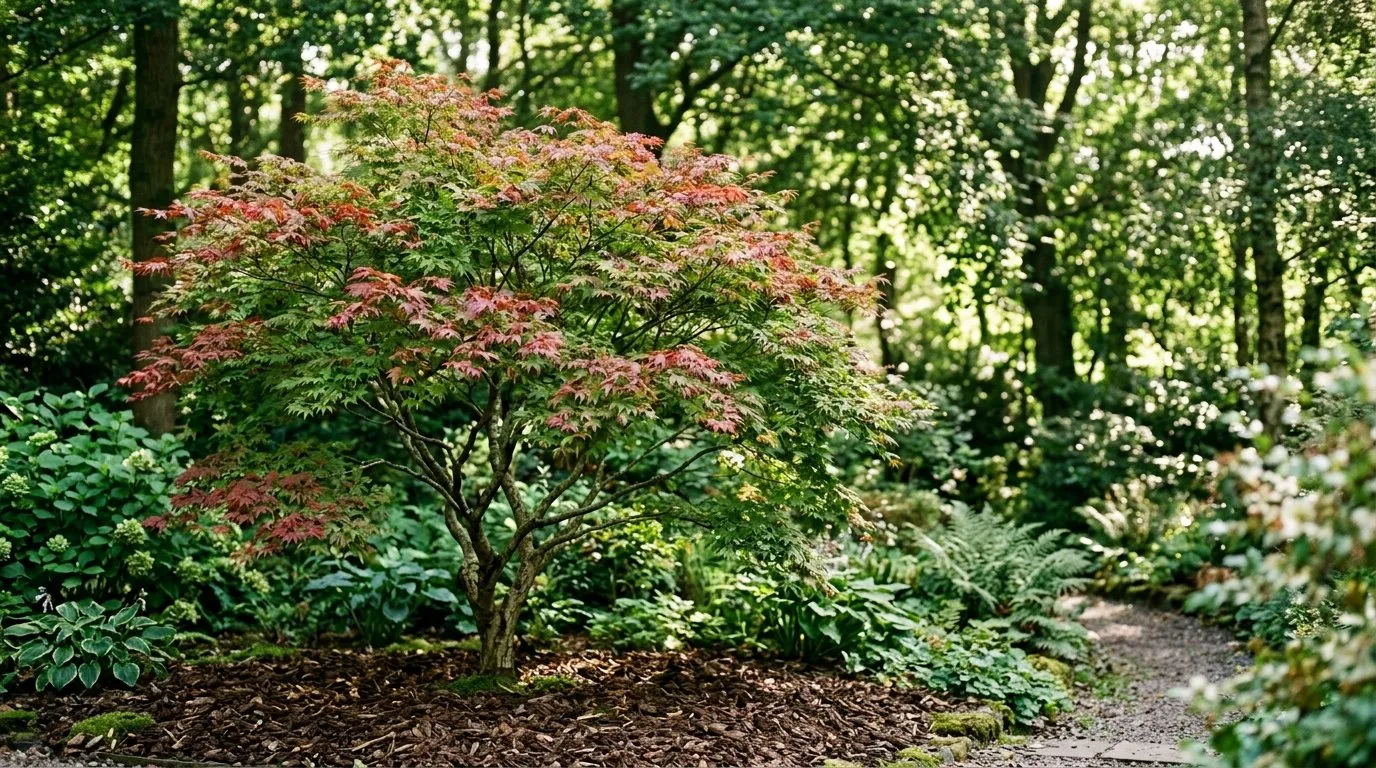 A well-sited Acer palmatum in dappled shade in a Staffordshire woodland-edge border. Sheltered from wind, shaded from hot afternoon sun, mulched and steadily watered. No scorch in six summers.
Mulching And Pot Care That Stops Scorch
Mulch and good pot care do most of the work of preventing scorch.
A 30 to 50mm mulch of leaf mould, bark or composted material over the root area keeps the soil cool and damp. It slows evaporation, which is exactly what a thirsty acer needs in July. Keep the mulch clear of the trunk to avoid rot.
For pots, repot every two to three years into fresh, free-draining compost. Old, compacted compost holds less water and lets salts build up. Choose a pot at least 50mm wider than the rootball, and stand it where it gets afternoon shade. A glazed or thick-walled pot stays cooler than a thin black plastic one in the sun.
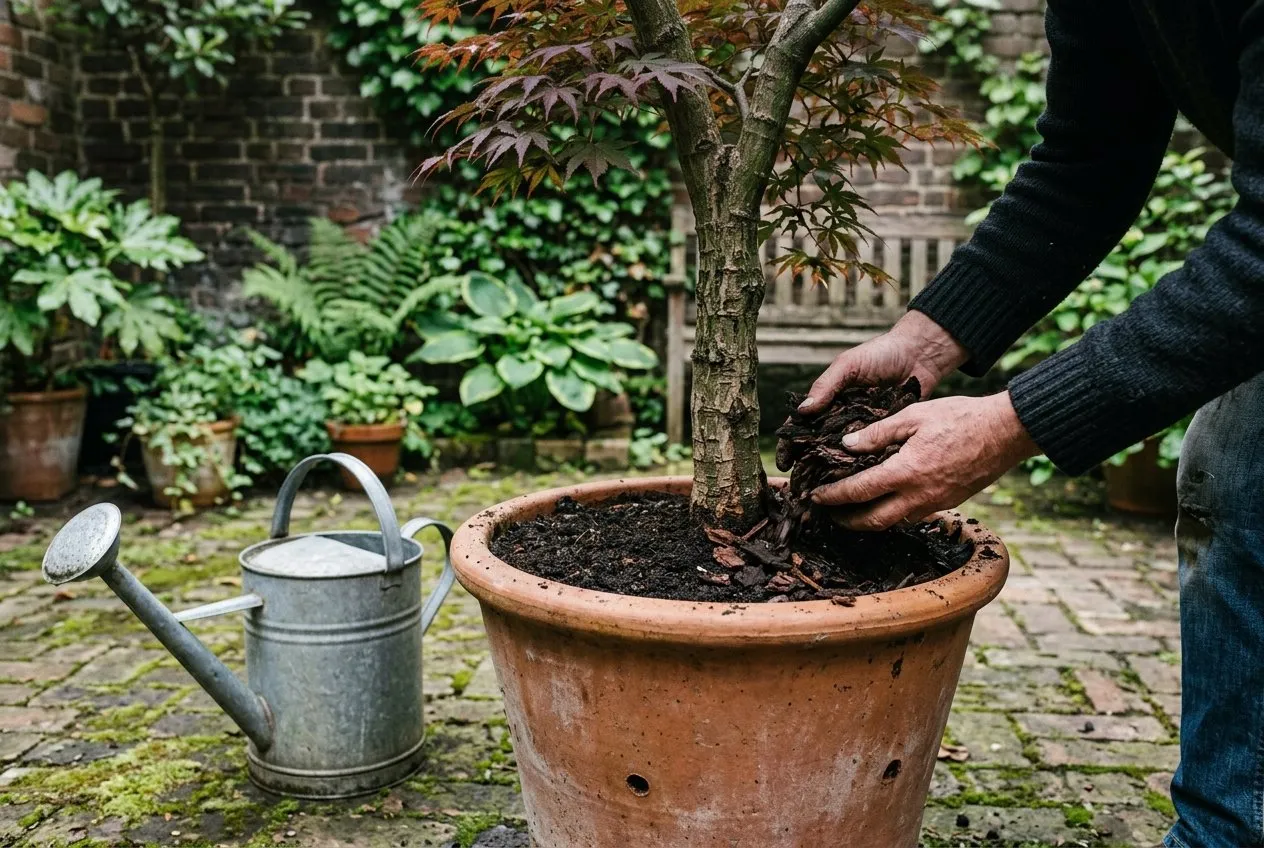 Mulching a potted acer in a shaded Staffordshire courtyard. A 40mm bark mulch over the compost slows evaporation and keeps the fine roots cool. Steady watering and afternoon shade are the difference between a full canopy and a crisped one.
Choosing Tougher Cultivars
Some Japanese maples shrug off heat and wind far better than others.
If you garden somewhere sunny or exposed, cultivar choice saves a lot of grief. The upright, sun-tolerant types cope with more light than the delicate lace-leaf forms.
More sun and heat tolerant:
- ‘Sango-kaku’ (coral-bark maple) - tough, upright, good in more sun
- ‘Osakazuki’ - strong green-leaved type, reliable autumn colour
- ‘Bloodgood’ - sturdy purple-leaved upright, copes with brighter spots
Need shelter and shade:
- ‘Dissectum’ and all lace-leaf forms - thin dissected leaves scorch fast
- Variegated cultivars - pale leaf tissue burns in strong sun
- Many red and finely-cut types - beautiful but delicate
If you garden somewhere sunny or exposed, pick an upright type over a delicate lace-leaf form and half the battle is won.
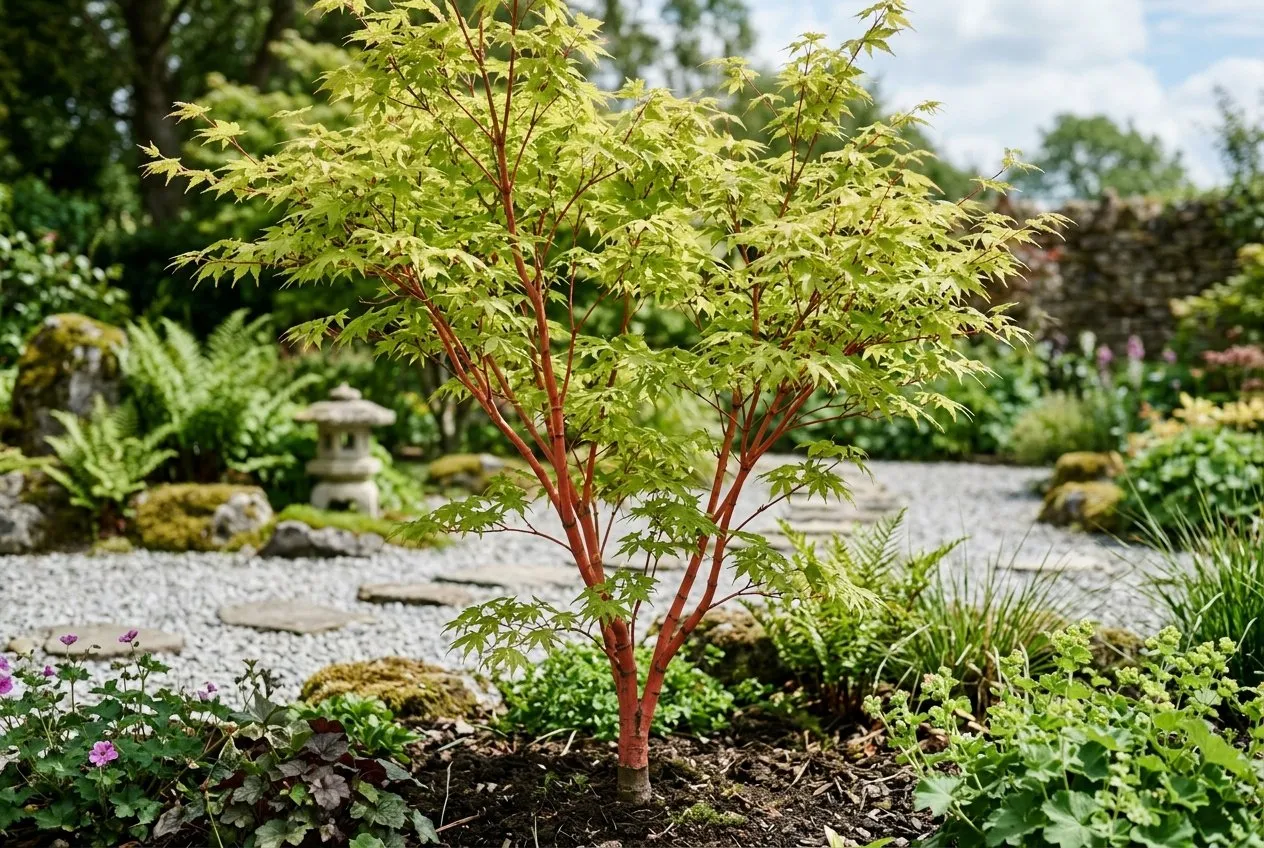 Acer palmatum ‘Sango-kaku’ in a Staffordshire border in early summer. This upright coral-bark type tolerates more sun than the lace-leaf forms. Cultivar choice is the easiest way to avoid scorch in a brighter garden.
Acer Leaf Scorch Calendar UK Month-by-Month
| Month | Scorch task |
|---|---|
| January | Plan repotting and any moves of badly sited acers |
| February | Repot potted acers into fresh free-draining compost |
| March | Move or plant acers into sheltered, dappled-shade spots |
| April | Fleece new growth on frost nights to prevent frost scorch |
| May | Apply 30-50mm mulch over the root area before the dry months |
| June | Start steady watering; check pots daily in warm spells |
| July | Water pots morning and evening in heatwaves; afternoon shade |
| August | Keep watering; do not panic over edge browning, leave leaves on |
| September | Watering eases as nights cool; assess scorch patterns |
| October | Collect fallen leaves for leaf mould; plan next year’s moves |
| November | Plant or move acers while soil is still warm |
| December | Prune out any dead, brittle wood once dormant |
Frequently asked questions
Why are my acer leaves going brown and crispy?
It is leaf scorch, usually from drought, drying wind or hot sun. Japanese maples lose water through their leaves faster than the roots can replace it. The leaf edges and tips dry out first, then curl. It is environmental, not a disease, in nearly every case.
Will my acer recover from leaf scorch?
The scorched leaves will not recover, but the tree usually does. Brown crispy tissue is dead and stays dead. The tree survives and pushes fresh leaves the following spring once you fix the cause. Severe repeat scorch over several years can weaken a young tree, so act on the cause early.
Should I cut off scorched acer leaves?
No, leave them on the tree until they drop naturally. The remaining green leaf area still feeds the tree. Removing leaves stresses it further and exposes inner foliage to more sun and wind. Only prune out wood that is fully dead and brittle in winter.
How do I stop my potted acer from scorching?
Move it out of hot afternoon sun and never let the compost dry out. A potted acer in full July sun can dry out in one day. Mulch the surface, water with rainwater not hard tap, and stand the pot where it gets morning sun and afternoon shade.
Is acer leaf scorch the same as verticillium wilt?
No, scorch is environmental and verticillium wilt is a soil fungus. Scorch hits leaf edges across the whole tree fairly evenly. Verticillium kills whole branches one at a time, with olive-green streaks in the wood when you cut a dying stem. Rule out verticillium if branches die back rather than just leaf edges browning.
Now sort the siting and the watering
Scorch is a siting and watering problem, so fix those first. Start with our full Japanese maple care guide for the whole growing routine, including pruning, feeding and repotting. For more on the look-alike fungal problem to rule out, see our guide to acer tar spot. And for picking a tree that fits a tight plot, our guide to the best trees for small gardens covers acers and their alternatives.
Our team produces practical UK gardening guidance from source research, contributor records and established horticultural practice. Editorial standards are overseen by Matt W.