Key takeaways
- Leave seedheads standing for winter structure, frost display and bird food, not tidiness
- Echinacea, rudbeckia, sedum, phlomis, eryngium and alliums give the strongest sculptural heads
- Grasses like miscanthus, calamagrostis and stipa add movement and catch low winter light
- Teasel and echinacea are the best for feeding goldfinches through winter
- Standing stems shelter overwintering insects, which boosts pest control next summer
- Cut everything back in late February or March, just before the new growth appears
The best plants for winter seedheads do something most gardens forget to plan for: they keep the garden alive through the bleakest months. When the flowers have gone and the borders could be bare and grey, a well-chosen set of seedheads gives sculptural structure, catches every frost, feeds the birds and shelters next year’s helpful insects. All you have to do is leave them standing.
Why leave seedheads standing through winter?
Leaving seedheads standing gives a winter garden three things a bare border cannot: frosted sculptural structure, food for seed-eating birds, and shelter for the insects that control pests next summer. The old habit of cutting everything down in autumn throws all three away for the sake of tidiness, and leaves the garden empty for five long months.
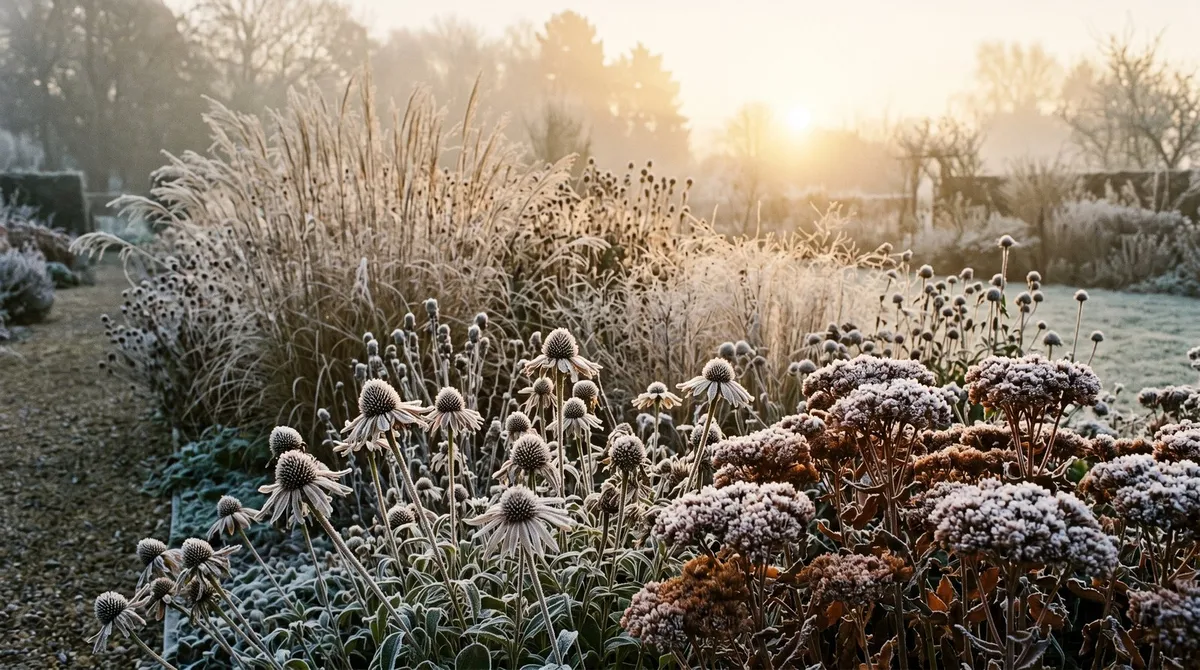
Structure comes first. The dried heads of echinacea, sedum, phlomis and the grasses hold their shape through cold and snow, and a hard frost turns them into something genuinely spectacular, every seedhead outlined in white and lit by the low winter sun. The Royal Horticultural Society rates winter seedheads as one of the great overlooked garden displays, and on a frosty morning it outshines high summer.
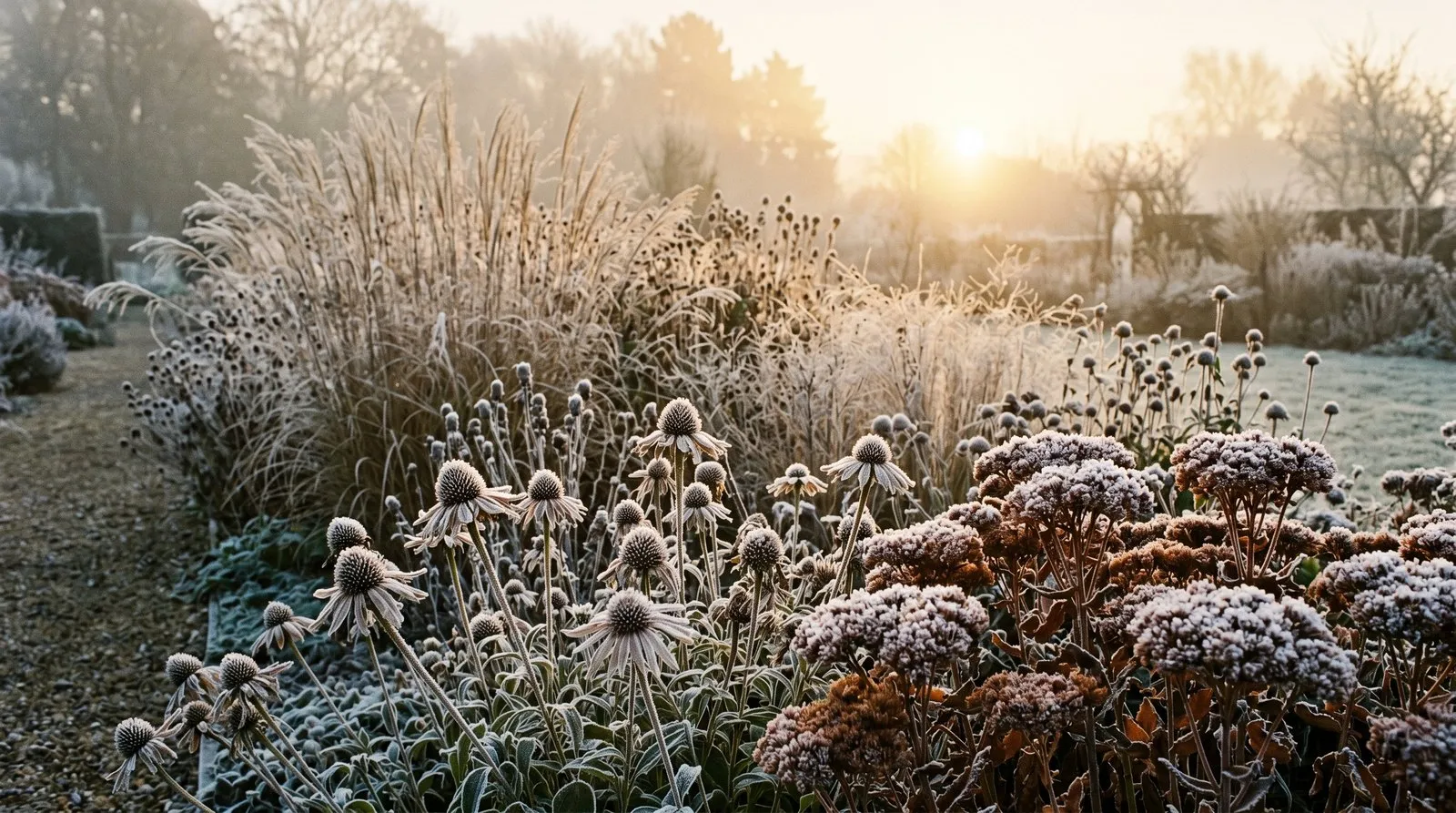 A frosted winter border at its best: echinacea and sedum heads rimed white, grasses catching the low sun. This is the reward for not cutting back.
The 14 best plants for winter seedheads
The strongest winter borders combine sturdy seedhead perennials for solid form with grasses for movement and light, so choose from both groups. Some plants give a rigid sculptural head that holds frost beautifully; others bring airy, glowing texture that moves in the wind. A good winter scheme uses both.
This table sets out fourteen of the best, what their winter seedhead offers, and whether they feed birds as well as furnish the border.
| Plant | Winter seedhead | Wildlife value | Height |
|---|---|---|---|
| Echinacea (coneflower) | Spiky dark cones, very sturdy | Excellent, feeds goldfinches | 60–90cm |
| Rudbeckia | Dark domed discs, rigid stems | Good, seed-eating birds | 60–90cm |
| Sedum / Hylotelephium | Flat russet heads, hold frost | Shelter for insects | 30–60cm |
| Phlomis russeliana | Tiered whorls up the stem | Moderate | 60–90cm |
| Eryngium (sea holly) | Metallic spiky cones | Moderate | 60–90cm |
| Allium | Hollow spheres, architectural | Structural mainly | 60–120cm |
| Teasel (Dipsacus) | Spiny brown heads | Outstanding, goldfinch favourite | 1.5–2m |
| Achillea (yarrow) | Flat plates, rust-brown | Some seed | 60–90cm |
| Miscanthus | Silver feathery plumes | Insect shelter | 1.2–2.5m |
| Calamagrostis ‘Karl Foerster’ | Stiff upright buff plumes | Insect shelter | 1.2–1.5m |
| Stipa gigantea | Golden oat-like sprays | Insect shelter | up to 2m |
| Honesty (Lunaria) | Translucent silver discs | Moderate | 60–90cm |
| Hydrangea paniculata | Papery dried flower heads | Structure | 1.2–2m |
| Verbena bonariensis | Airy dark seed clusters | Some seed | 1.5–1.8m |
Lead with the sculptural perennials. Echinacea and rudbeckia give the rigid, dark, spiky cones that hold frost best of all, on stems that rarely collapse, and our guide to growing echinacea covers them in full. Sedum brings flat russet plates that catch frost like nothing else, as our sedum growing guide describes. Alliums leave perfect hollow spheres on stiff stems, covered in our allium guide, and eryngium and phlomis add metallic and tiered architecture.
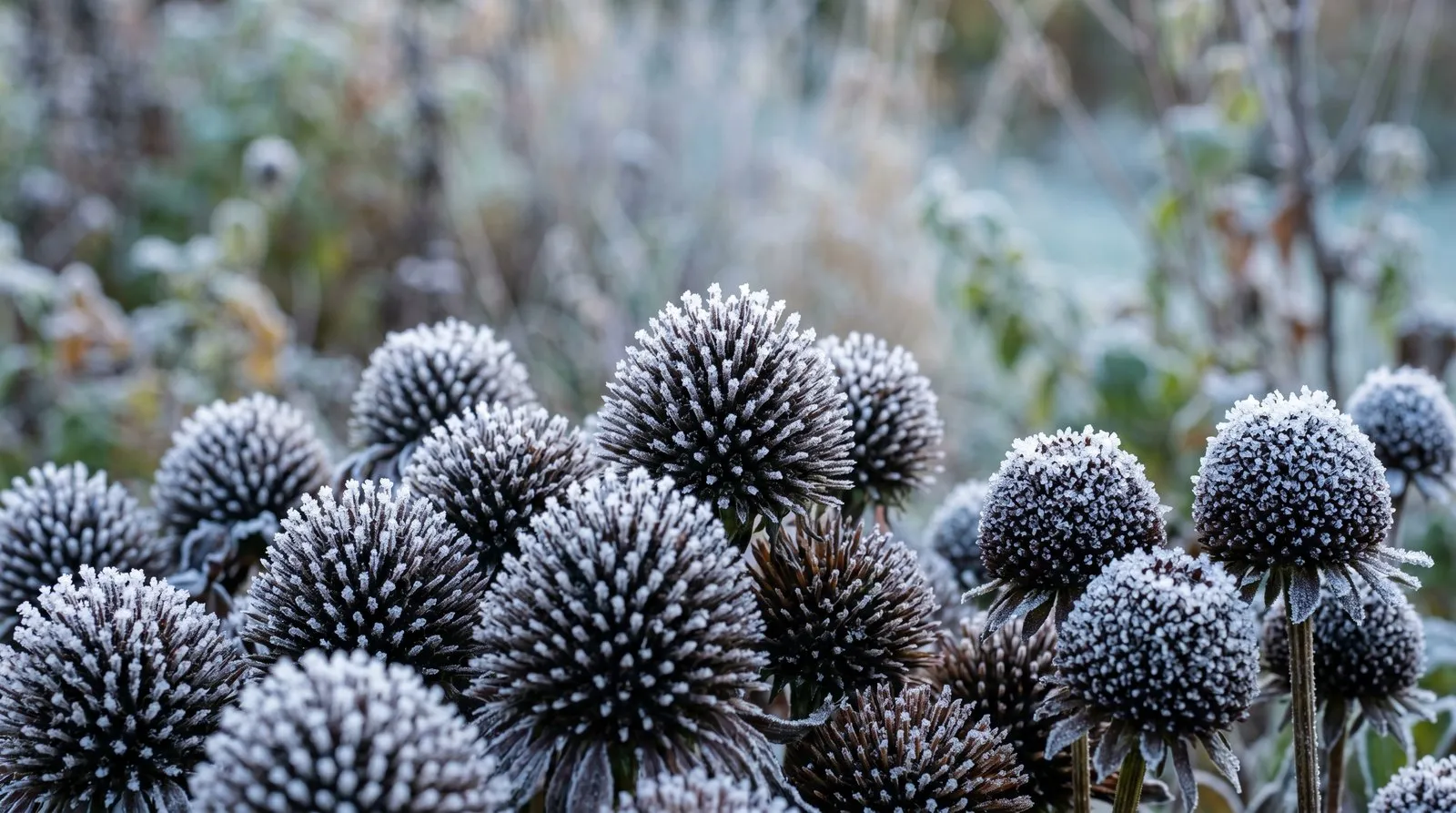 Echinacea and rudbeckia hold the most frost-worthy seedheads of all: dark, spiky cones on rigid stems that rarely collapse.
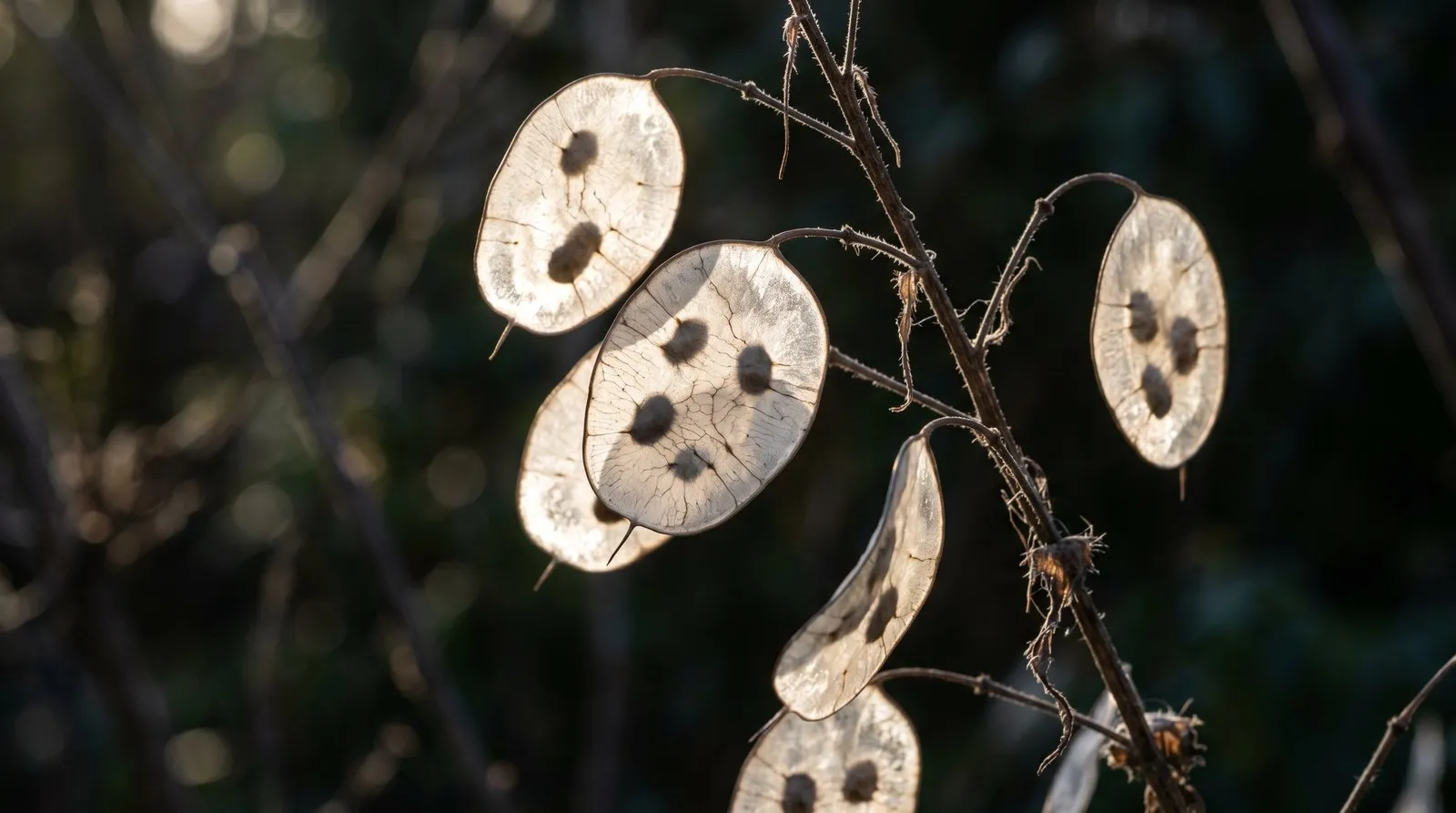 Honesty leaves behind translucent silver discs that glow when backlit by the low winter sun, a different kind of winter seedhead beauty.
Grasses for movement and winter light
Ornamental grasses are the other half of a great winter border, adding airy movement and catching the low winter sun in a way solid seedheads cannot. Where the perennials give form, the grasses give light and motion, and the two together make the season.
Miscanthus is the showstopper, its silvery plumes lasting from autumn well into winter and glowing when backlit. Calamagrostis ‘Karl Foerster’ is the architect’s grass, stiffly upright and never flopping, holding a clean vertical line through the worst weather. Stipa gigantea throws up golden, oat-like sprays that dance in the wind and shine in low sun. The RHS notes that grass foliage and seedheads turn straw-coloured in autumn but should be left standing for structure and movement, looking spectacular laced with frost, in its ornamental grasses selection guide.
Position matters with grasses more than with anything else. Plant them where the low winter sun, which barely climbs above the hedges from November to February, can shine through them from behind. Backlit, a miscanthus plume or a stand of stipa glows; lit from the front it is just beige. Our ornamental grasses guide and notes on growing miscanthus and stipa feather grass cover the choices.
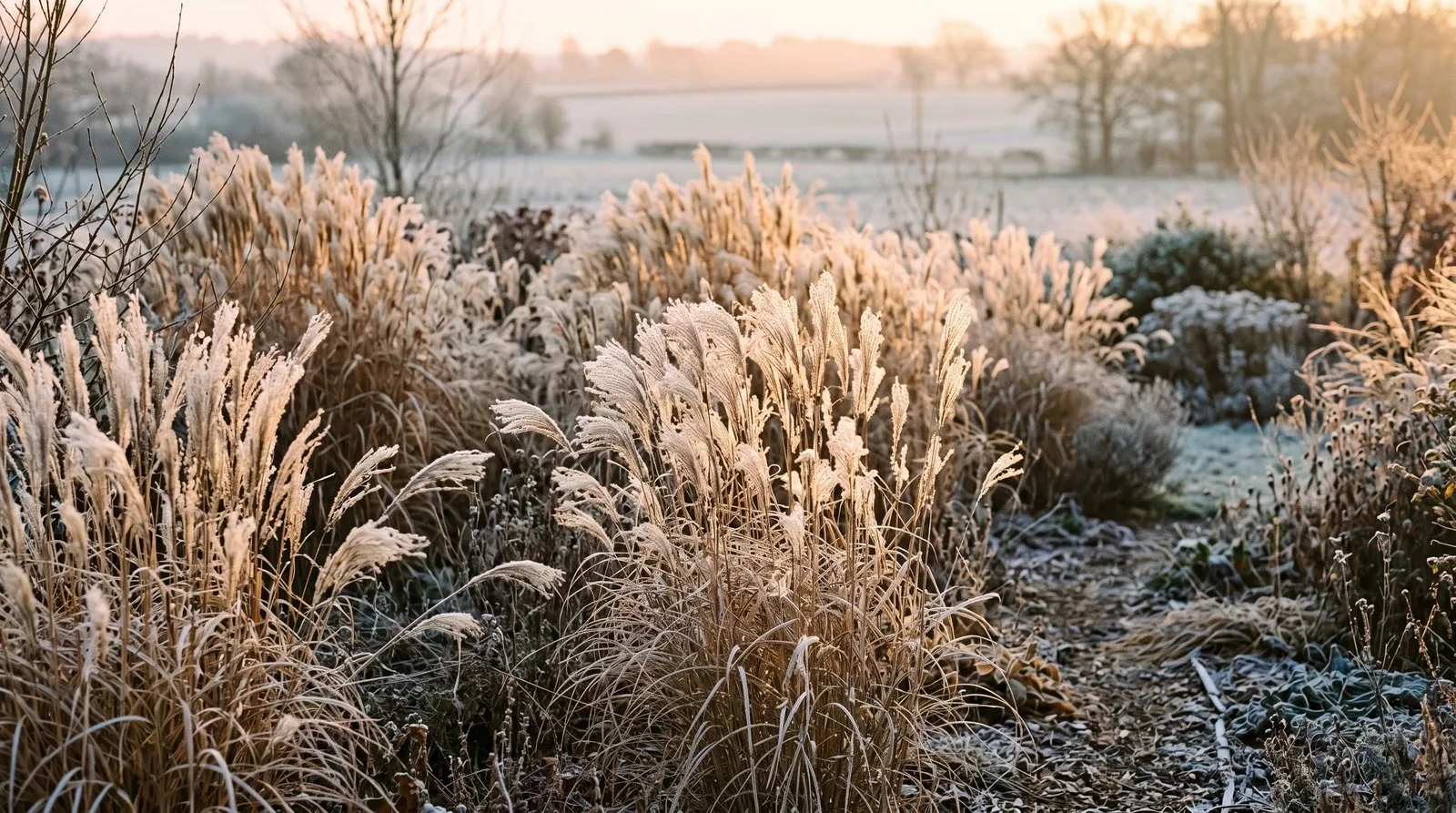 Grasses earn their place by catching the light. Backlit by the low winter sun, miscanthus and calamagrostis glow where solid seedheads only sit.
Seedheads that feed the birds
Teasel is the single best plant for feeding birds in winter, with goldfinches working its spiny heads, followed by echinacea, rudbeckia and other seed-rich perennials. A seedhead border is not just a display; it is a natural bird table that refills itself, exactly when other food is scarce.
Teasel earns its place for the birds alone. The tall, spiny seedheads hold thousands of seeds, and a charm of goldfinches working them on a frosty morning is one of the great garden sights of winter. Let a few teasels self-seed at the back of a border or in a wild corner and the goldfinches will find them. The same goes, in smaller measure, for echinacea, rudbeckia and many grasses, all of which feed finches through the cold months.
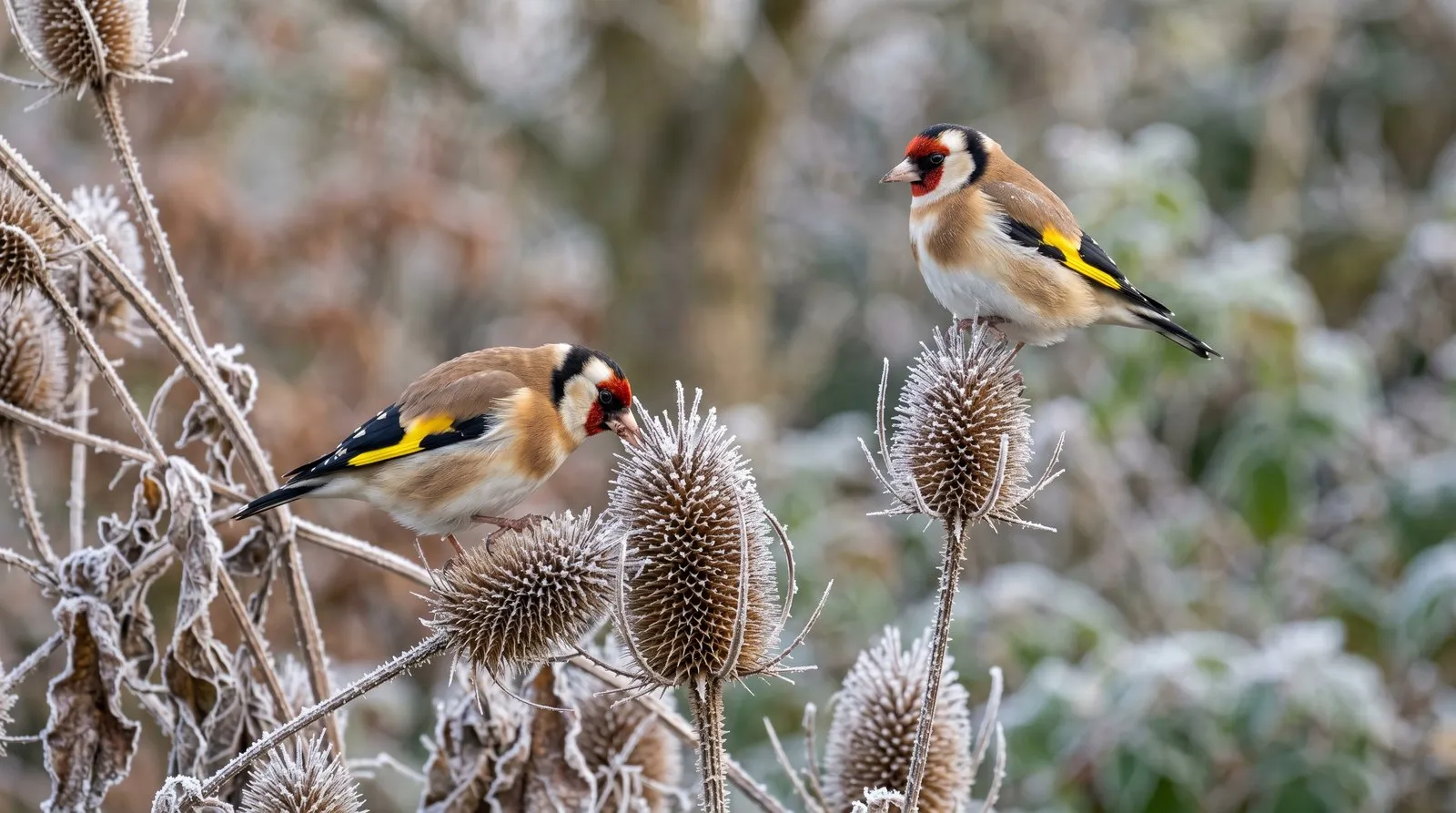 Teasel is the best bird plant of all for winter seedheads. A charm of goldfinches will work the spiny heads from autumn into late winter.
The naturalistic look, and how to plant it
To get the full effect, plant seedhead perennials and grasses together in generous, repeated drifts, in the naturalistic style that holds its beauty right through winter. This is the approach behind every great prairie-style border, and it is built for the dormant season as much as for summer.
The principle is simple. Mix sturdy seedhead perennials, echinacea, rudbeckia, sedum, eryngium, with airy grasses, miscanthus, calamagrostis, stipa, and repeat each in drifts of three, five or more rather than dotting single plants about. In summer it reads as a meadow of flowers; in winter it holds its form as a mass of seedheads and grasses that the frost transforms. The structure is deliberately left to do the work when nothing is in bloom.
Plant for the winter picture from the start. Put the tall grasses where low sun will backlight them, set sturdy perennials where their frosted heads will be seen against a dark hedge or the sky, and choose plants with strong stems that will not collapse in the first wet gale. Our roundup of the best perennial plants for UK gardens flags the reliable, long-lived performers that earn their place across all four seasons.
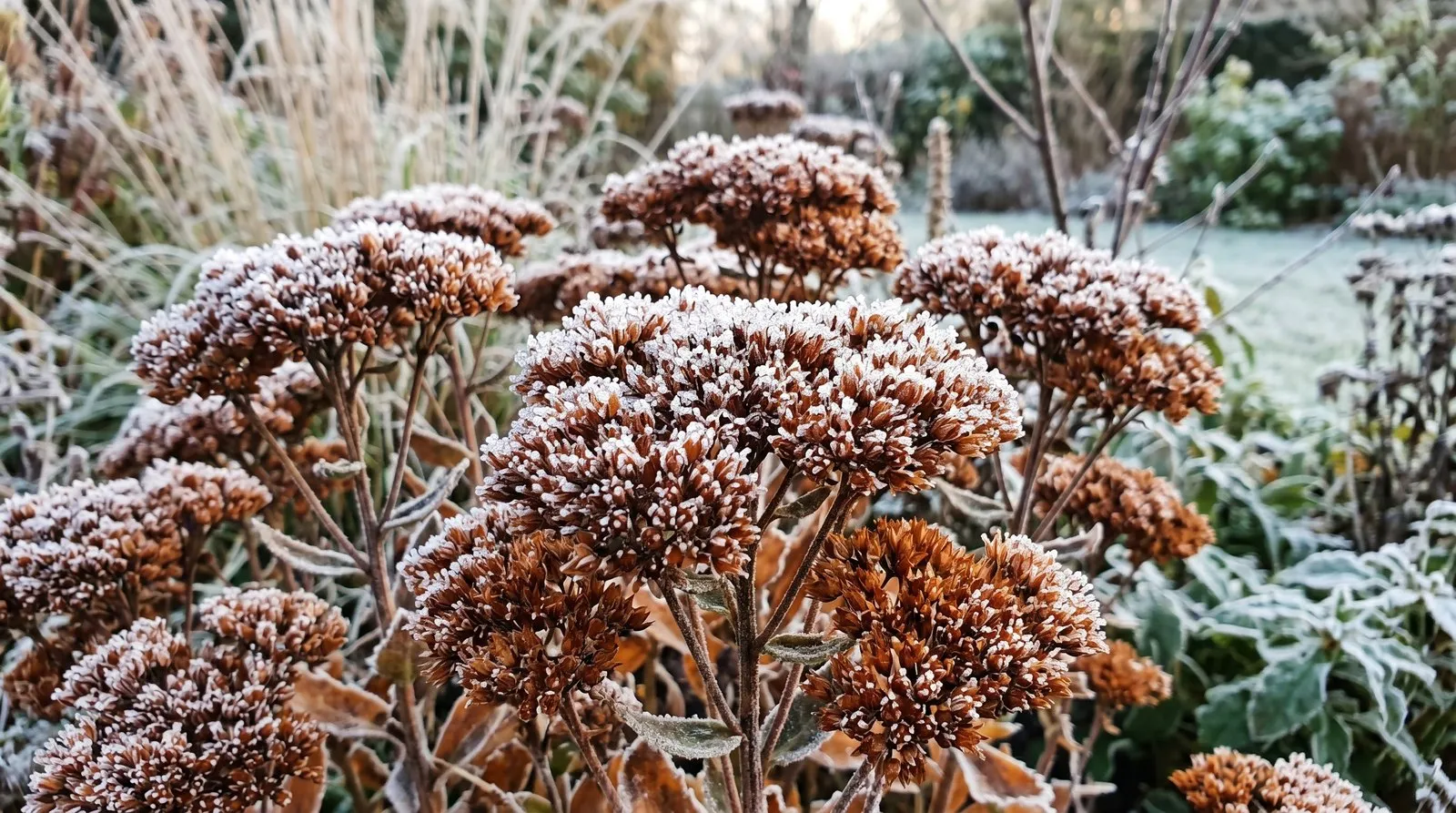 Sedum ‘Autumn Joy’ fades to rich russet and catches frost on its flat heads like nothing else in the border. Leave it standing all winter.
When to cut back: the one rule that matters
That is the whole of it. Choose plants with seedheads worth keeping, mix sculptural perennials with light-catching grasses, plant them where the winter sun and frost will show them off, and then leave them alone until late February. Do that, and the months most gardens write off become a season of frosted structure, glowing grasses and busy goldfinches, all from plants you already grow for summer.
Frequently asked questions
What are the best plants for winter seedheads?
The best are echinacea, rudbeckia, sedum, phlomis, eryngium (sea holly), alliums and teasel for sculptural heads, plus grasses like miscanthus, calamagrostis and stipa for movement and light. These hold their shape through frost and snow, feed birds and shelter insects. Choose a mix of sturdy seedhead perennials and grasses so the border has both solid form and airy texture all winter.
Should I cut back seedheads in autumn or leave them?
Leave them standing through winter and cut back in late February or March, just before new growth appears. Cutting in autumn strips out the frost display, the food for seed-eating birds and the shelter for overwintering insects. The only plants to tidy in autumn are any that flop, rot or collapse in wet weather. Everything sturdy is better left until late winter.
Which seedheads feed birds in winter?
Teasel is the single best, with goldfinches working the spiny heads through winter, followed by echinacea, rudbeckia and other seed-rich perennials. Grasses and many other seedheads feed finches too. Leaving these standing provides natural food when little else is available, which is why a seedhead border doubles as a bird-feeding station from autumn into early spring.
When should I finally cut back my seedheads?
Cut back in late February or early March, before the new growth breaks. In milder southern gardens late February is ideal; in colder northern gardens early March is fine. Cut grasses and perennials down to around 10cm, clearing the old growth so light reaches the emerging shoots. Doing it any earlier loses winter value; doing it much later risks damaging new growth.
Do seedheads really help wildlife?
Yes, in two clear ways. They feed seed-eating birds like goldfinches directly through winter, and the hollow standing stems shelter overwintering insects, including ladybirds and lacewings. Those predators emerge in spring to control aphids and other pests, so a seedhead border that is left standing genuinely reduces pest pressure the following summer as well as feeding birds.
Our team produces practical UK gardening guidance from source research, contributor records and established horticultural practice. Editorial standards are overseen by Matt W.