Key takeaways
- Crocosmia Lucifer is the most reliable hardy red, 1.2m, July to September
- Dahlia Bishop of Llandaff flowers June to first frost, often 150 days of colour
- Layer tulips, perennials and dahlias for red from April to November
- Most red flowers need full sun and free-draining soil to hold colour
- Single open reds feed bees and hoverflies, double blooms give little
- Scarlet fades fastest in hot afternoon sun, so site deep reds in light shade
Red sits at the warm end of the spectrum, so it reads as closer and bolder than blue or white. Use it as a full stop, not a sentence. A little goes a long way.
How these red flowers were selected
Every plant here was selected for three practical traits. Flowering length comes first. Fade resistance matters because many reds bleach to pink in strong sun. Hardiness matters because tender choices need extra winter care.
The list below is ordered by usefulness in a real border, balancing flowering length, reliability and how easy each is to place. For more seasonal context, see our guide to the best summer flowers for UK gardens.
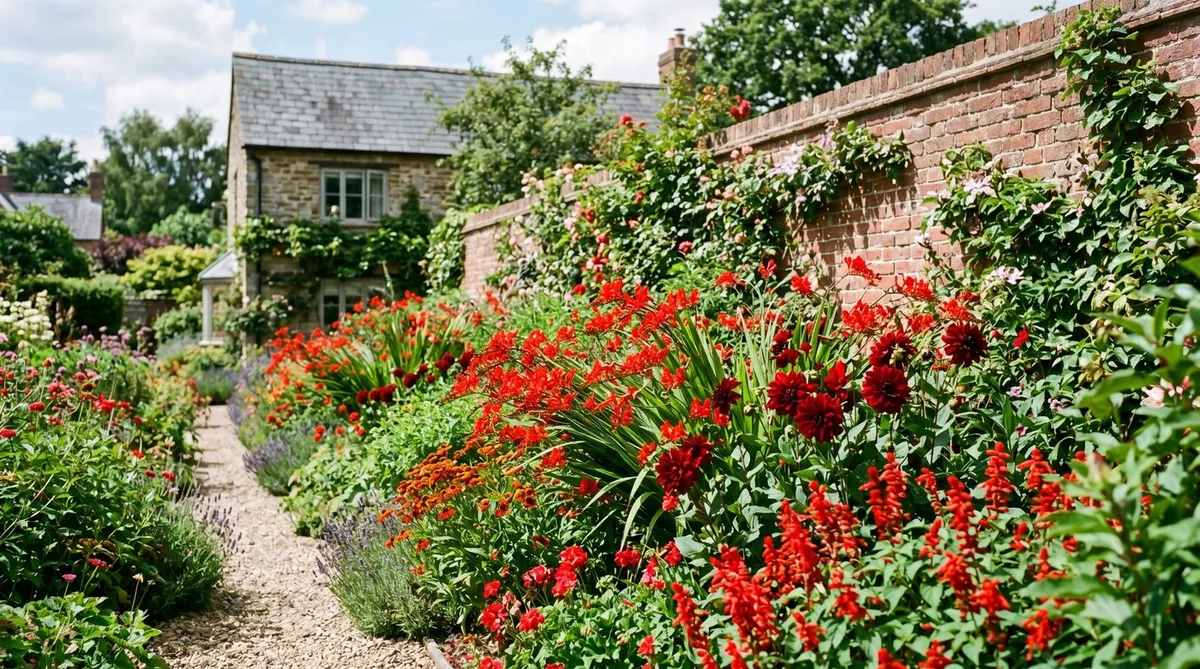
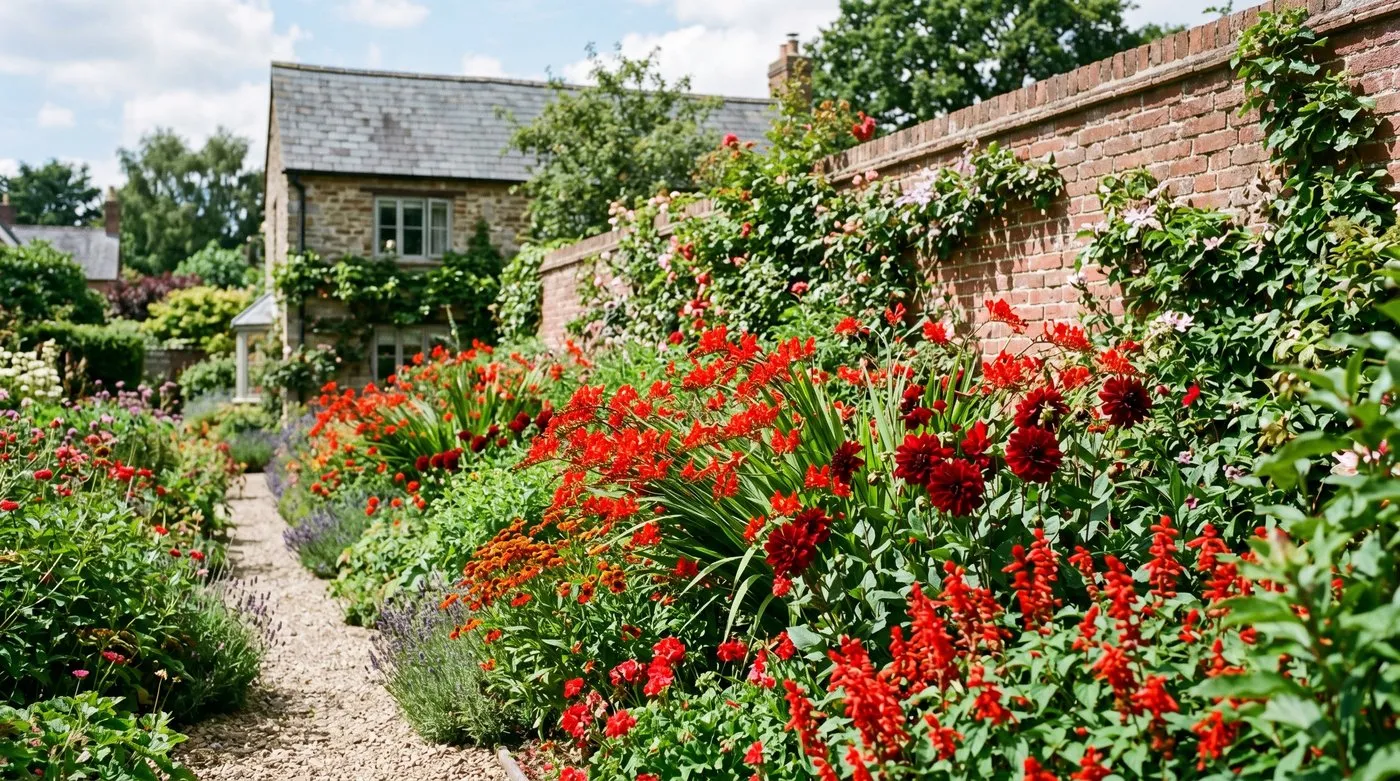 A worked red border in July. Crocosmia, dahlias and salvias give months of overlapping colour from one planting.
The best red perennials that return every year
Red perennials are the backbone of a lasting red scheme. They return each spring, bulk up over a few years, and need replacing far less often than bedding. These are strong choices for UK borders.
Penstemon Firebird carries tubular red flowers from July to October, the longest run of any hardy perennial here. Monarda Cambridge Scarlet draws bees from July and smells of bergamot when crushed. Red hot poker Kniphofia Royal Standard sends up red-and-yellow torches in summer on poor, dry soil where little else thrives. For the design thinking behind mixing these, read our notes on the best perennial plants for UK gardens.
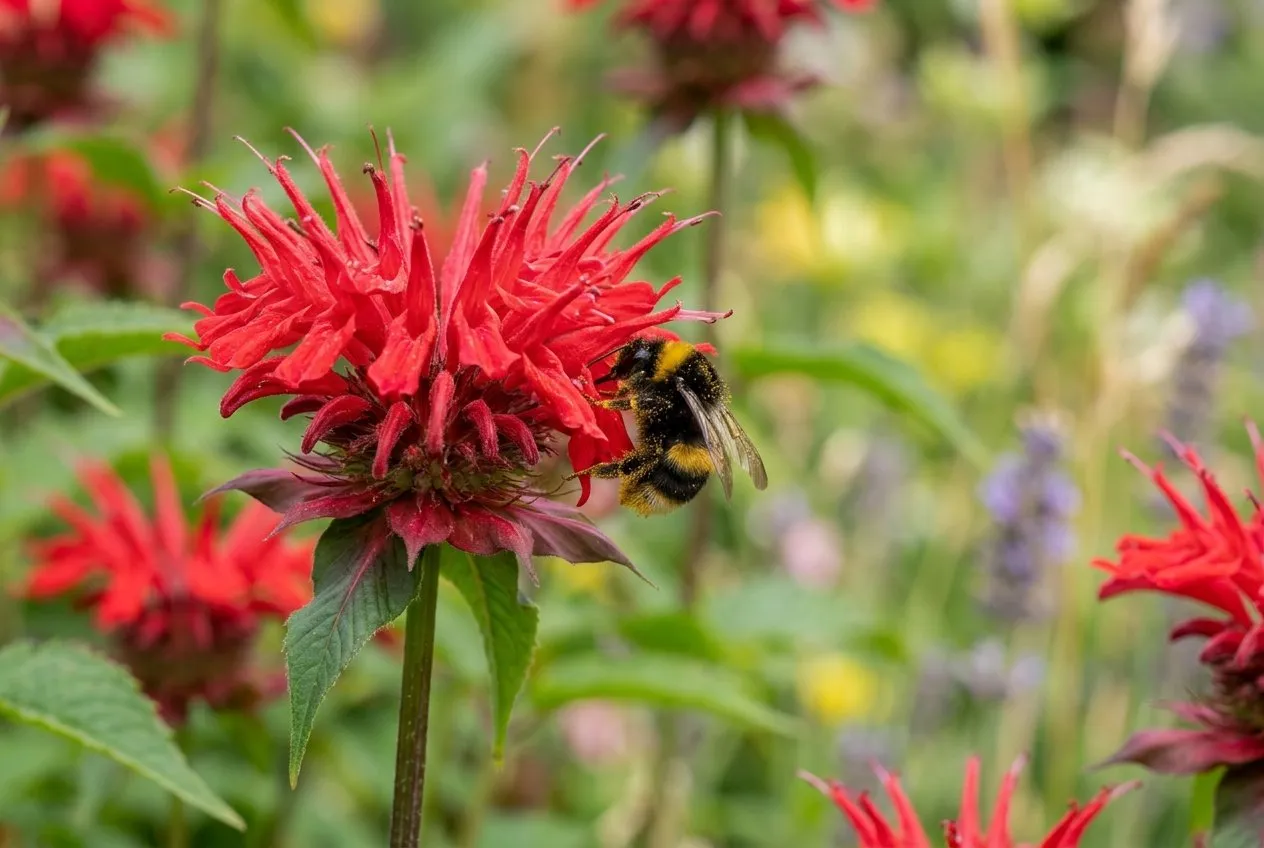 Monarda Cambridge Scarlet pulls in bees and hoverflies. The open single flowers give insects an easy feed.
Gardener’s tip: Cut crocosmia foliage to the ground only after it yellows fully in late autumn. The dying leaves feed next year’s corms, and cutting green leaves early weakens the clump and cuts flowering the following summer.
Red dahlias for the longest run of colour
Dahlias give the longest flowering of any red in the UK garden. They start in late June and run to the first frost, often 120 to 150 days of bloom if you deadhead. They are not fully hardy, so lift the tubers in cold areas or mulch deeply on free-draining soil.
For sheer impact, Dahlia Arabian Night offers near-black-red doubles, though the double form feeds few pollinators. Deadhead all dahlias every two to three days. A faded flower tells the plant to set seed and stop. Our full guide to growing dahlias in the UK covers lifting, storing and dividing tubers.
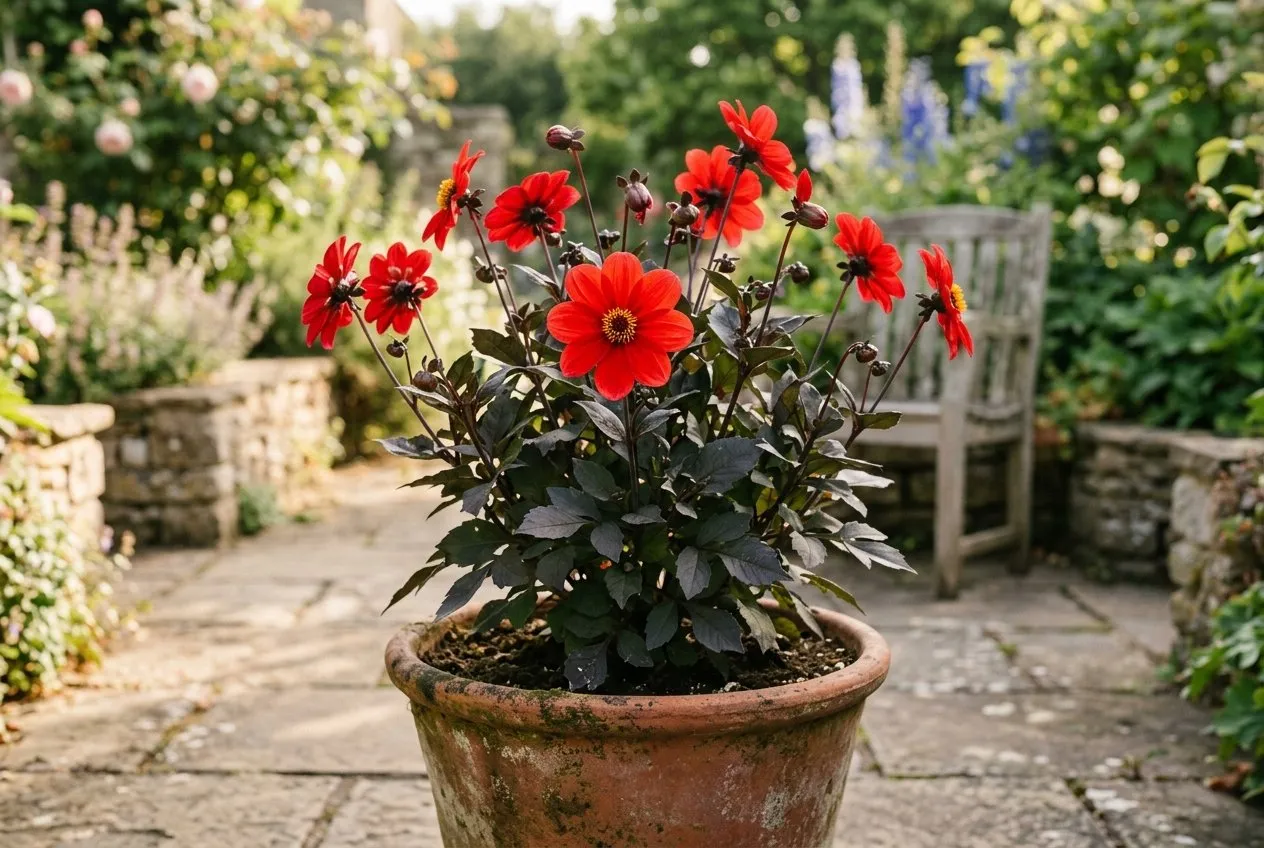 Dahlia Bishop of Llandaff. Single flowers feed bees and the bronze leaves earn their space all season.
Red roses and shrubs for height and structure
Red roses and flowering shrubs add height and a longer life than perennials. A good red shrub rose flowers from June to the first frost with repeat-flowering varieties, and lives for decades with little care.
Rosa Munstead Wood carries deep crimson, strongly scented blooms on a 1m shrub, repeat-flowering all summer. Rosa Darcey Bussell is a shorter crimson at 75cm, good for smaller borders and pots. Both want full sun, rich soil and a yearly mulch. For pruning and feeding, see our guide to growing roses in the UK.
Among shrubs, Chaenomeles Crimson and Gold opens scarlet flowers on bare stems in March and April, one of the earliest reds of the year. Weigela Bristol Ruby carries trumpet flowers in May and June. These woody reds anchor a scheme that perennials and dahlias then carry through to autumn. Browse more options in our roundup of the best flowering shrubs for UK gardens.
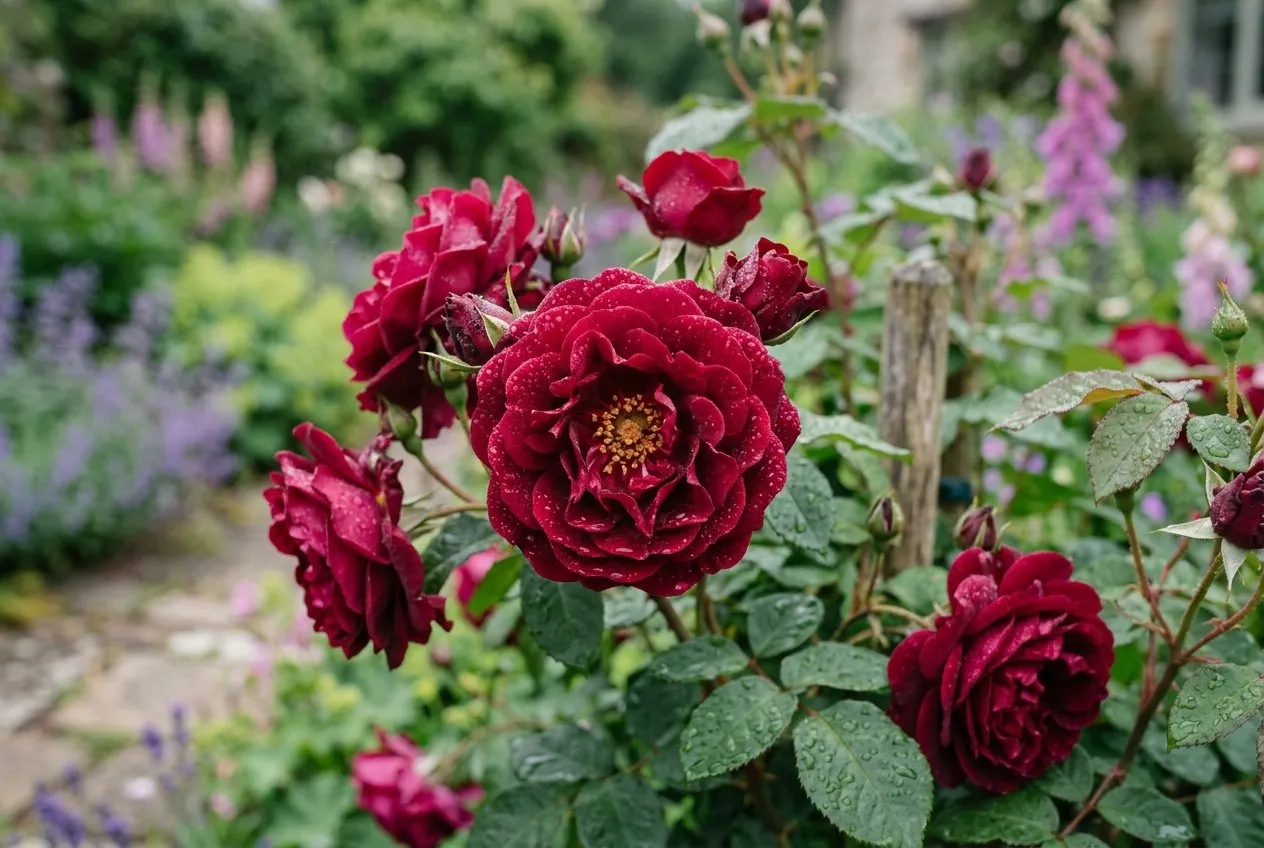 Rosa Munstead Wood. Deep crimson, strongly scented, and repeat-flowering from June to the first frost.
Red flowers compared by height, season and role
This table ranks the most useful reds by flowering length, the single measure that earns a plant its space. Find the height and season you need, then check the role each plays in the border.
| Plant | Type | Height | Flowering months | Effectiveness (days in flower) | Role |
|---|---|---|---|---|---|
| Dahlia Bishop of Llandaff | Tuber | 1m | Late June to frost | Up to 148 | Long-season centrepiece |
| Penstemon Firebird | Perennial | 75cm | July to October | Around 100 | Mid-border filler |
| Crocosmia Lucifer | Corm | 1.2m | July to September | Around 71 | Reliable structure |
| Rosa Munstead Wood | Shrub rose | 1m | June to frost | Repeat all summer | Scented backbone |
| Monarda Cambridge Scarlet | Perennial | 90cm | July to September | Around 60 | Pollinator magnet |
| Oriental poppy Beauty of Livermere | Perennial | 90cm | Late May to June | Around 25 | Early scarlet burst |
| Tulip Red Impression | Bulb | 50cm | April to May | Around 21 | Spring colour |
The gold standard for a long red display is layering. No single plant flowers all year, so combine an early scarlet like oriental poppy, a long-running dahlia, and a hardy perennial such as penstemon. That gives red from May to November without bare gaps. Tulips extend the season back into April but are best treated as annuals on heavy clay.
A month-by-month plan for red garden colour
Red can run from early spring to late autumn if you plan the succession. This calendar shows what to plant and when to expect each red to peak in an average UK garden.
| Month | Action and what is in flower |
|---|---|
| January | Order dahlia tubers and seeds, plan red drifts on paper |
| February | Chit dahlia tubers indoors in a frost-free shed from late month |
| March | Plant crocosmia corms, chaenomeles opens scarlet on bare stems |
| April | Red tulips peak, plant out hardy perennials |
| May | Oriental poppies open, plant dahlias once frost risk passes |
| June | Roses and weigela flower, first dahlias open late month |
| July | Crocosmia, monarda and penstemon all peak together |
| August | Deadhead dahlias and roses every few days to hold the display |
| September | Crocosmia fades, dahlias and penstemons carry on strongly |
| October | Last penstemons and dahlias flower until the first frost |
| November | Lift dahlia tubers after blackening, mulch crocosmia crowns |
| December | Review the year’s notes, reorder any reds that underperformed |
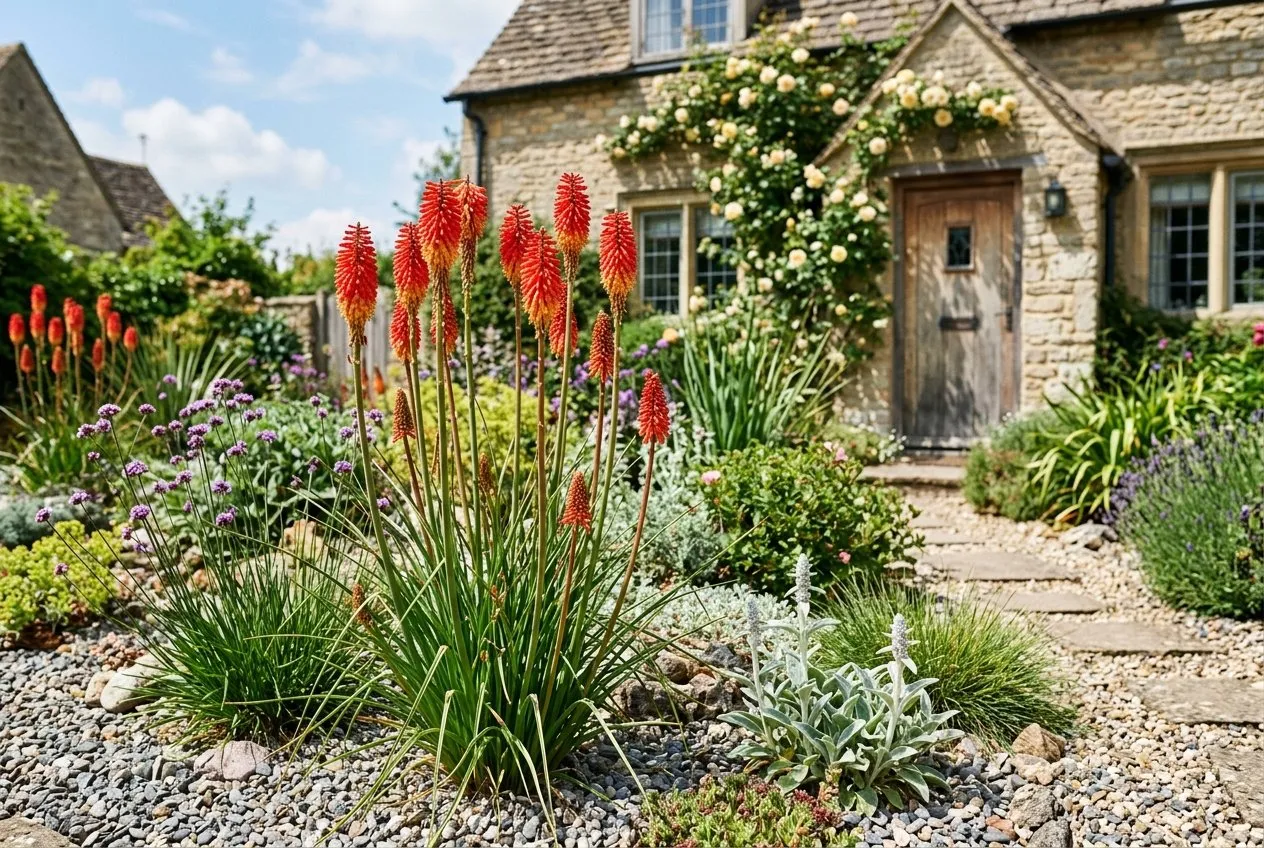 Red hot poker thrives on poor, dry soil. A useful red for hot gravel beds where crocosmia would sulk.
Common mistakes when planting red flowers
Most red schemes fail for the same few reasons. These are the errors that waste a season of growth.
- Spreading red too thinly. A single red plant dotted about reads as a mistake. Plant reds in groups of three or five so the colour registers as a deliberate block.
- Ignoring fade in full sun. Scarlet pelargoniums and some roses bleach to pink in hot south-facing beds. Site the deepest reds where they get shade after 2pm.
- Choosing double flowers for pollinators. Double red dahlias and roses look full but hide their nectar. Pick single open forms if you want bees and hoverflies.
- Planting tulips for the long term on clay. Red tulips rarely repeat well on heavy wet soil. Treat them as annuals or plant in pots of free-draining compost.
- Forgetting to deadhead. A faded dahlia or rose head tells the plant to stop. Remove spent flowers every few days to keep the display running into autumn.
How to pair red with other border colours
Red needs a foil to look its best. Set against the wrong neighbour it jars, against the right one it sings. The simplest pairing is red with green, letting foliage cool the heat of the colour.
For a hot scheme, pair red with orange and yellow for a fiery late-summer border. For contrast, set red against silver foliage such as artemisia, which calms the intensity. Avoid placing red next to strong pink, which clashes badly. Deep reds with bronze foliage, like Dahlia Bishop of Llandaff, carry a border on their own. To balance the heat with cooler tones, see our roundups of the best purple, pink and blue flowers and the best white flowers for UK gardens. The Royal Horticultural Society’s Plants for Pollinators list is worth checking before you buy, to pick reds that feed insects as well as please the eye.
Frequently asked questions
What is the best red flower for a UK garden?
Crocosmia Lucifer is the most reliable. It is fully hardy, flowers for around ten weeks from July, and needs no staking. The arching scarlet sprays suit borders and cut flowers. Plant the corms in spring in full sun for the strongest colour.
Which red flowers bloom the longest?
Are there red flowers that come back every year?
Yes, many red perennials are fully hardy in the UK. Crocosmia, oriental poppies, penstemons, monarda and red hot pokers all return each year. Dahlias survive if lifted or mulched over winter. Tulips are best treated as annuals on heavy soil.
What red flowers grow well in shade?
True reds are scarce in shade, but a few cope. Astilbe Fanal carries deep red plumes in moist part shade. Lobelia cardinalis and red-flowered hardy fuchsias also tolerate dappled light. Most scarlet flowers need sun, so reserve shade beds for these few.
Do red flowers attract bees and butterflies?
Single-flowered reds attract bees, hoverflies and butterflies. Bees see red poorly but still visit for nectar guides and scent. Monarda, single dahlias and salvias draw the most insects. Double red blooms hide their nectar and feed almost nothing.
Why do my red flowers fade to pink?
Strong afternoon sun bleaches red pigments, especially on pelargoniums and roses. The petals lose anthocyanin and pale over days. Site deep reds where they get shade after 2pm. Cooler spots and rich soil hold the colour far longer through summer.
Now you have the reds that work, build the rest of the spectrum around them. Read our guide to the best yellow flowers for UK gardens to plan a hot border, or browse the full plants section for more planting ideas.
Our team produces practical UK gardening guidance from source research, contributor records and established horticultural practice. Editorial standards are overseen by Matt W.