Quick answer
Cyclamen coum is a hardy cyclamen that flowers outdoors in the UK from January to March, often through frost and snow. It has small magenta, pink or white flowers and rounded leaves. Grow it in dappled shade under deciduous trees or shrubs, in soil that drains well. Plant tubers 2 to 3cm deep, or plant pot-grown plants in autumn or winter.
Key points6 at a glance
- Cyclamen coum flowers outdoors from January to March, even in frost
- It's fully hardy across the UK and comes back every year
- Plant it in dappled shade under deciduous trees or shrubs
- Plant tubers just 2 to 3cm deep, or plant pot-grown plants in leaf
- It seeds itself and slowly spreads into a carpet
- It isn't the same as the tender florist's cyclamen sold as a houseplant
In this article9 sections
Cyclamen coum is a tough little hardy cyclamen that flowers outdoors from January to March. Its magenta, pink or white flowers often shrug off frost and snow. Grow it in dappled shade under trees or shrubs, in soil that drains well. Once settled, it comes back every year and slowly spreads into a carpet.
What is Cyclamen coum?
Cyclamen coum is one of the two hardy cyclamen that grow happily in UK gardens. It’s small, tough and flowers in the darkest months of the year.
| Feature | What to expect |
|---|---|
| Flowers | Magenta, pink or white, January to March |
| Height | About 5 to 10cm |
| Leaves | Rounded, dark green, some with silver patterns |
| Hardiness | Hardy across the UK |
| Position | Dappled or part shade |
| Soil | Well-drained, with plenty of leaf mould |
| Spread | Slowly, by seed |
The flowers are small and dumpy, with short, swept-back petals and a dark blotch at the base. They sit just above the leaves, so plant them in drifts for the best show.
Cyclamen coum vs Cyclamen hederifolium
The two hardy cyclamen are easy to tell apart.
| Cyclamen coum | Cyclamen hederifolium | |
|---|---|---|
| Flowers | January to March | August to November |
| Leaves | Rounded | Pointed, ivy-shaped |
| Flower shape | Short, stubby petals | Longer, swept-back petals |
| Best for | Winter colour | Autumn colour |
Plant both and you’ll have cyclamen flowers for around seven months of the year. Our full guide to growing hardy cyclamen covers both in detail.

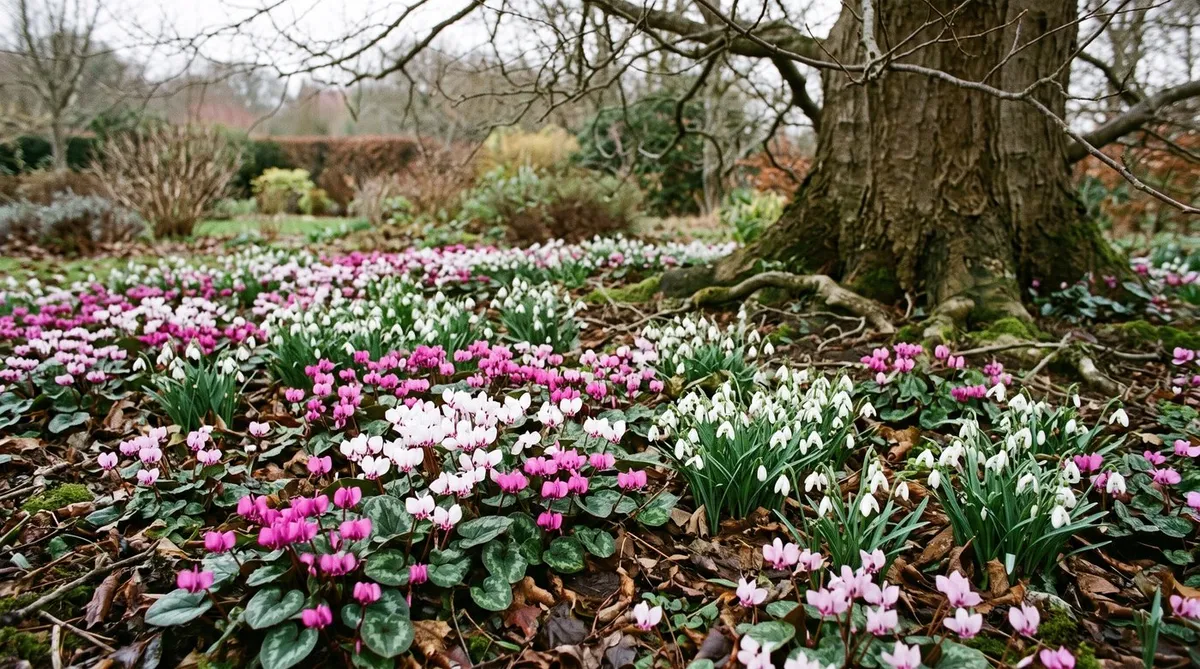
Cyclamen coum often flowers straight through frost and light snow.
Gardener’s tip: Look for silver-leaved forms such as the Pewter Group. Their leaves look lovely even when the plants aren’t in flower.
Where to plant Cyclamen coum
Under deciduous trees and shrubs. This is the perfect spot. Bare branches let in winter light while it flowers. In summer, the leaves above keep the resting tubers cool and dry.
At the foot of a hedge or wall. A lightly shaded spot works well, as long as it isn’t waterlogged.
In dry shade. It copes with the dry ground under trees better than most plants. See our guide to the best plants for dry shade.
Where you’ll see it. Plant it near a path or by a window, so you can enjoy it in the depths of winter.
Avoid soggy hollows, heavy unimproved clay and hot, sunny borders.
How to plant Cyclamen coum
Pot-grown plants are the easiest way to start. Buy them in flower in winter, so you can see the colours. Plant them at the same depth they sat in the pot.
Dry tubers are cheaper, but they can be slow to get going. Plant them in late summer or early autumn.
- Loosen the soil and mix in some leaf mould or garden compost.
- Set the tubers 2 to 3cm deep, rounded side down and slightly hollow side up.
- Space them about 10 to 15cm apart.
- Cover with soil and a thin layer of leaf mould.
- Water lightly to settle them in.
Our guide on how to make leaf mould shows how to make your own for free.

Pot-grown plants in flower are the easiest way to start, and you can choose your colours.
Growing Cyclamen coum in pots
Cyclamen coum is lovely in small pots and winter containers.
- Use gritty, free-draining compost, such as multipurpose compost mixed with grit.
- Stand pots in a sheltered, lightly shaded spot.
- Keep the compost just moist in winter.
- Let it stay almost dry in summer while the plant rests.
- Raise pots on feet so they don’t sit in water.
It looks great with snowdrops, small ferns and ivy. See our guide to winter container planting for more ideas.
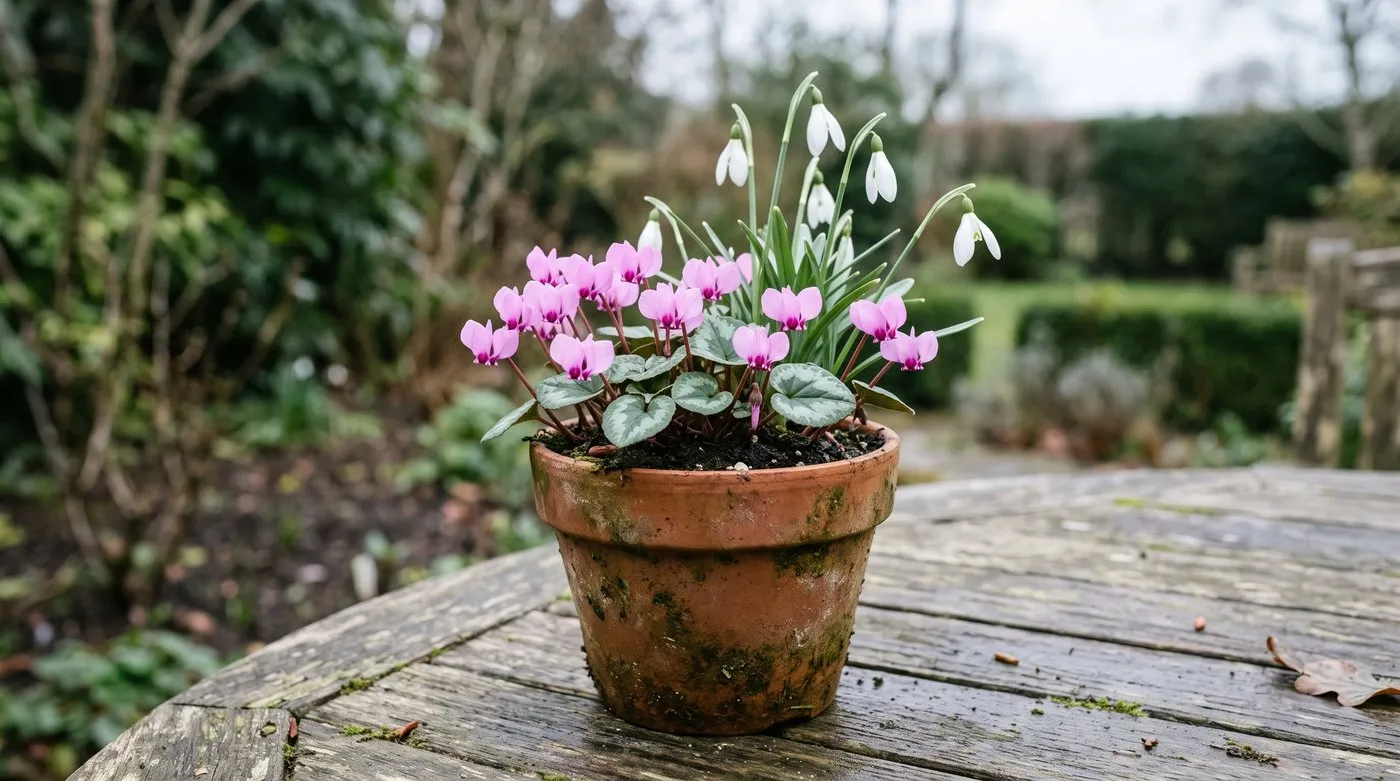
A small pot of Cyclamen coum and snowdrops brings winter colour right up to the door.
Good partners for Cyclamen coum
- Snowdrops flower at the same time for a pink and white carpet.
- Winter aconites add bright yellow cups.
- Hellebores give taller flowers above the cyclamen.
- Dwarf irises add blue and purple in late winter.
- Ferns fill the gaps in summer when the cyclamen rests.
Caring for Cyclamen coum
Leave it alone. It doesn’t like being dug around. Mark the spot so you don’t disturb the tubers in summer.
Mulch lightly. A thin layer of leaf mould in autumn keeps it happy. Don’t bury the tubers deeply.
Let it seed. After flowering, the stems coil down to the ground. Ants carry off the sticky seeds, so new plants pop up nearby.
Water only in dry spells in its first winter. Established plants rarely need watering.
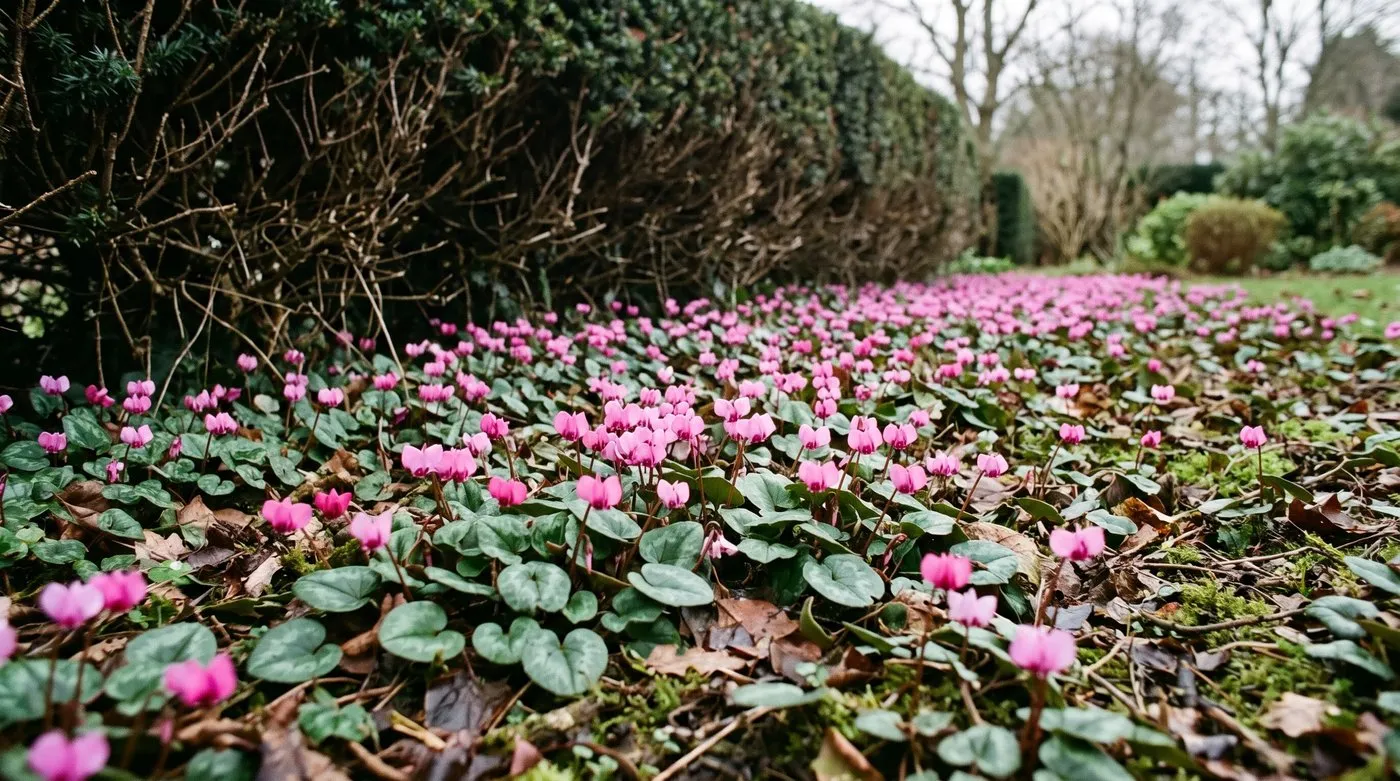
Left alone, Cyclamen coum slowly seeds about into a carpet of flowers and leaves.
Common problems
Tubers rotting. Usually caused by wet, heavy soil. Add grit and leaf mould, or grow it in pots.
No flowers. Often the tubers are planted too deep, or the spot is too shady and dark.
Leaves chewed. Mice, squirrels and slugs can nibble the tubers and leaves. Protect new plantings with wire mesh if needed.
Vine weevil in pots. The grubs eat the tubers. See our vine weevil guide.
Warning: All parts of cyclamen are toxic to cats and dogs, especially the tubers. Plant it where pets aren’t likely to dig.
Frequently asked questions
When does Cyclamen coum flower?
It flowers from January to March in most UK gardens. In mild spells the first flowers can open in December, and they often carry on through frost and light snow.
Is Cyclamen coum hardy?
Yes. It’s fully hardy across the UK, including Scotland and northern England. Wet, heavy soil is a bigger risk than cold.
How deep do you plant Cyclamen coum?
Plant the tubers just 2 to 3cm deep, with the rounded side down and the slightly hollow side up. Pot-grown plants go in at the same depth they sat in the pot.
Can I grow Cyclamen coum in pots?
Yes. Use gritty, free-draining compost and stand the pot in a sheltered, lightly shaded spot. Keep the compost just moist in winter and almost dry in summer.
Is Cyclamen coum the same as the cyclamen sold indoors?
No. The large cyclamen sold as houseplants are florist’s cyclamen, which are tender and die in frost. Cyclamen coum is a small, hardy garden plant.
What is the difference between Cyclamen coum and Cyclamen hederifolium?
Cyclamen coum flowers from January to March and has rounded leaves. Cyclamen hederifolium flowers from August to November and has pointed, ivy-shaped leaves.
Is Cyclamen coum poisonous to pets?
Yes, all parts of cyclamen are toxic to cats and dogs if eaten, especially the tubers. Plant it where pets aren’t likely to dig.
So tuck a few pots of Cyclamen coum under a tree this winter. In a few years you’ll have a bright pink carpet to cheer up every January.
Our team produces practical UK gardening guidance from source research, contributor records and established horticultural practice. Editorial standards are overseen by Matt W.