Key takeaways
- Dry shade means shade plus dry soil: under trees, north walls, next to hedges
- Geranium macrorrhizum and Epimedium are the most reliable ground cover
- Dryopteris filix-mas is the rare fern that copes with dry shade
- Plant small in autumn or spring, never in summer
- Water hard for the first two years to establish, then they cope alone
- Mulch with 50mm of organic matter every spring without fail
Dry shade is the hardest spot in any UK garden to plant. You get two problems at once: not enough light, and not enough water. It turns up under mature trees, against north-facing walls, and along the base of hedges and conifers that drink the soil dry. The good news is that a small group of plants genuinely cope. Get the ground prep right and you can carpet ground where nothing grew before.
Why Dry Shade Is the Hardest Planting Spot
Dry shade combines two stresses that most plants cannot handle together.
Shade alone is manageable. Plenty of woodland plants evolved under tree canopies and thrive in low light. Dry soil alone is manageable too, with the right drought-tolerant choices. The problem comes when you stack them. Most shade plants expect damp woodland soil. They will not survive the dry.
The dry comes from three sources. Tree canopies act like umbrellas, so rain never reaches the soil below. Tree and hedge roots pull huge volumes of water from the ground. North walls and house foundations create a rain shadow and bake the soil in summer reflected heat.
The worst spots in a UK garden are the soil under a beech or conifer hedge, the strip beside a north wall, and the ground inside a mature tree’s drip line. If you can plant those, you can plant anywhere.
Dry Shade Versus Damp Shade
Know which shade you have before you buy a single plant.
The two are completely different growing conditions. Plant a hosta or an astilbe in dry shade and it scorches and dies within a season. Plant a dry-shade specialist in damp shade and it may rot. Test your soil with a simple check: dig a hole 200mm deep in summer. If the soil is dusty and pale, you have dry shade. If it is cool and dark and holds together, you have damp shade.
| Feature | Dry shade | Damp shade |
|---|---|---|
| Typical location | Under trees, north walls, hedge bases | Low ground, beside ponds, clay hollows |
| Summer soil | Dust-dry, pale, cracks | Cool, dark, holds moisture |
| Best plants | Epimedium, geraniums, ferns below | Hosta, astilbe, ligularia, primula |
| Main enemy | Drought and root competition | Slugs and waterlogging |
| Establishment | Hard; needs two years of watering | Easier; less drought stress |
This guide covers dry shade only. For the broader picture, our best plants for shade UK guide covers both types together.
Best Ground Cover for Dry Shade
Ground cover is where you start. It smothers weeds and stops the soil drying further.
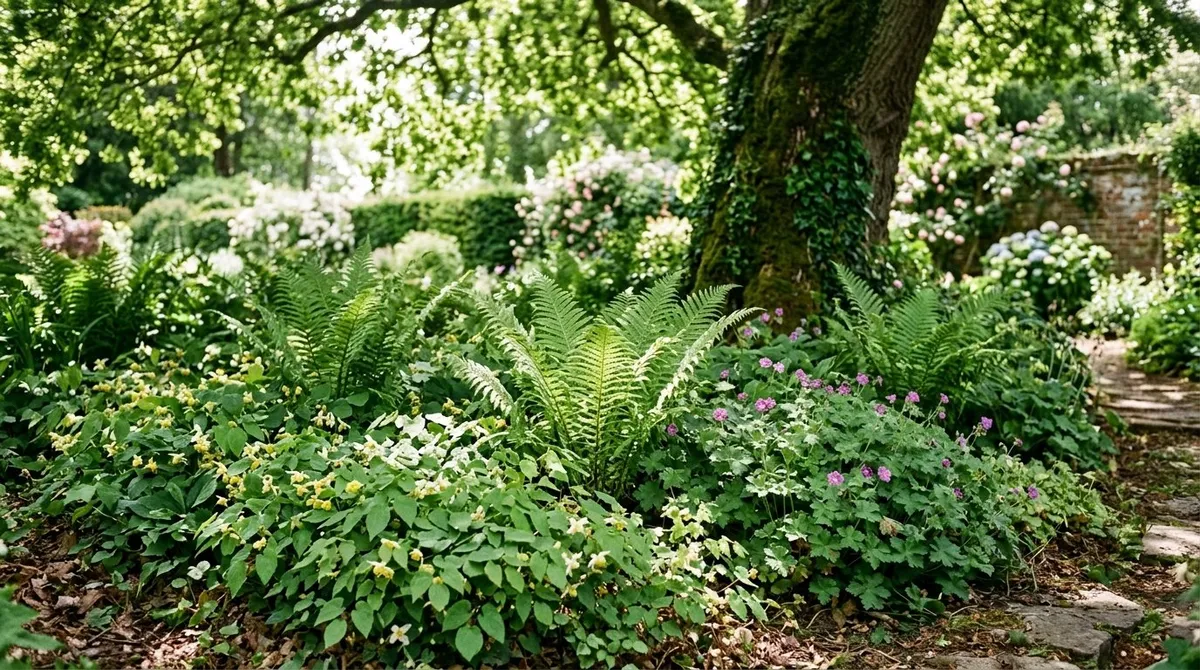
Epimedium (barrenwort) is the classic dry-shade survivor. The heart-shaped leaves form low mounds 25-40cm high and many are evergreen. Cut old leaves back in February and you get a haze of delicate spring flowers above fresh foliage.
Vinca (periwinkle) trails and roots as it goes, covering ground fast. Blue or white flowers from March. Vinca major is vigorous; Vinca minor is better behaved for smaller spots.
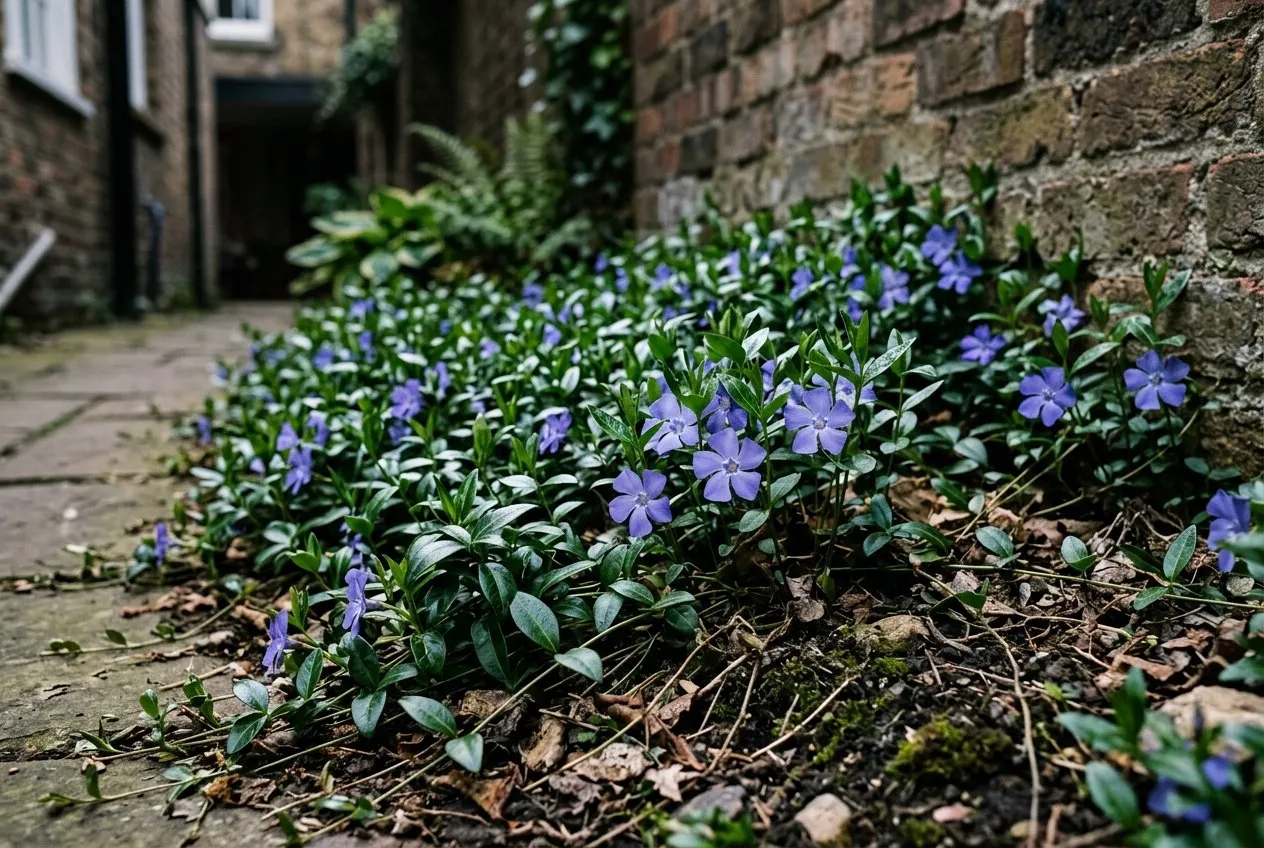 Vinca in flower in a shaded city courtyard. It roots as it trails, covering dry ground fast. Choose the smaller Vinca minor for tight spots and the vigorous Vinca major for big banks.
For more options across all conditions, see our best ground cover plants UK guide.
Reliable Perennials for Dry Shade
Above the ground cover, these perennials give height, flower, and foliage interest.
Bergenia (elephant’s ears) has huge leathery evergreen leaves that turn red in winter cold. Pink or magenta flowers on stout stems in spring. It survives almost total neglect once established.
Pulmonaria (lungwort) flowers early, often by March, in blue, pink or white. The silver-spotted leaves brighten dark corners. Cut it back hard after flowering for fresh foliage.
Brunnera macrophylla carries clouds of forget-me-not-blue flowers in April. The named forms like ‘Jack Frost’ have silvered heart-shaped leaves that light up shade.
Geranium phaeum (dusky cranesbill) takes drier, darker shade than most geraniums. Deep maroon flowers in late spring on plants up to 80cm.
Hellebores (Helleborus) flower through winter and early spring when little else does. The leathery leaves stay evergreen. They cope with dry shade once their roots reach down.
Liriope muscari is a grass-like evergreen with violet flower spikes in autumn, a rare late-season lift in shade. Tough and drought-tolerant.
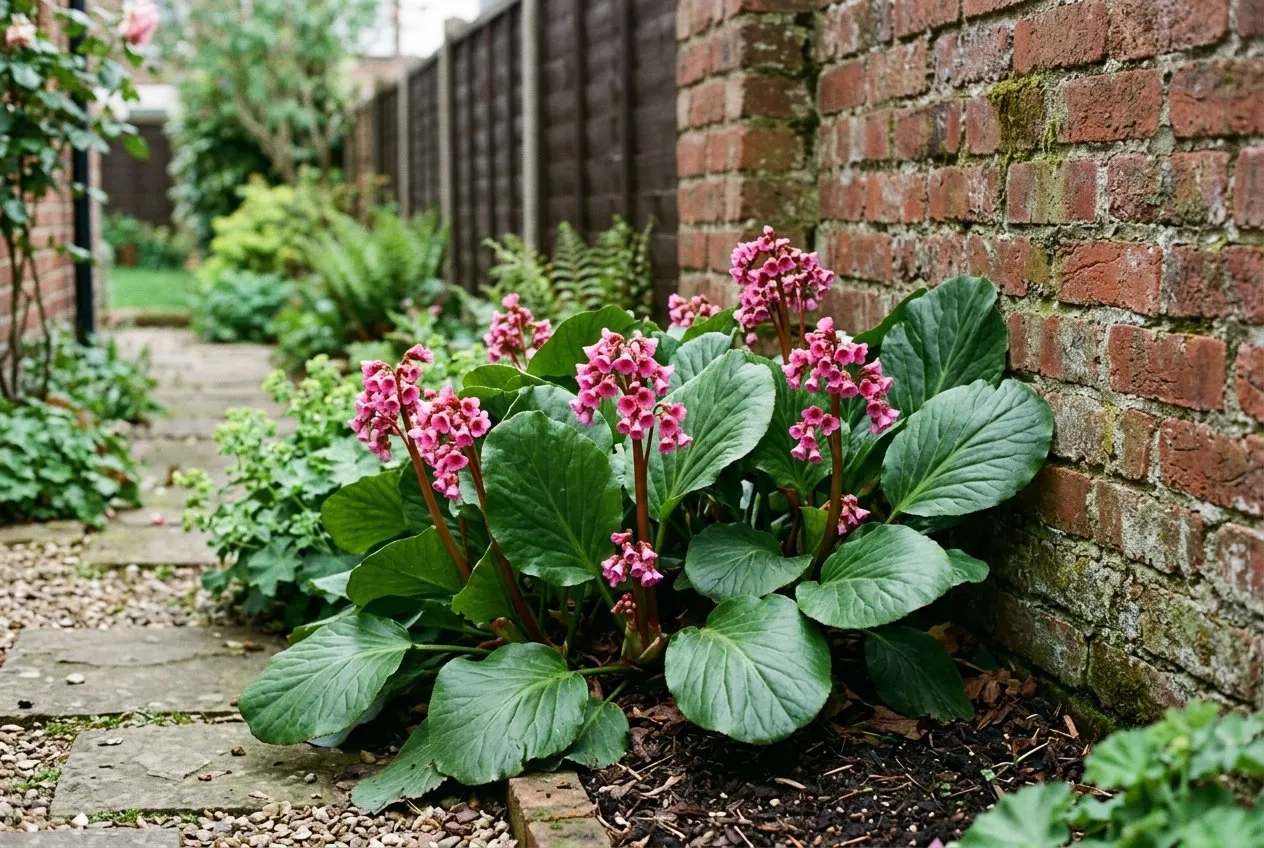 A Bergenia clump at the base of a north-facing terraced-house wall. The leathery leaves take rain shadow and reflected summer heat without complaint.
Ferns and Bulbs That Cope With Dry Shade
Most ferns need damp. A couple do not, and they bring a soft texture nothing else matches.
Dryopteris filix-mas (male fern) is the one to grow. It is one of very few ferns that tolerates dry shade once established. The fresh green fronds reach 90cm-1.2m and die back in winter. Plant it against a north wall and it copes with the rain shadow.
Polystichum setiferum (soft shield fern) is evergreen and also takes drier shade than most ferns. The arching fronds stay through winter, giving structure when the borders are bare.
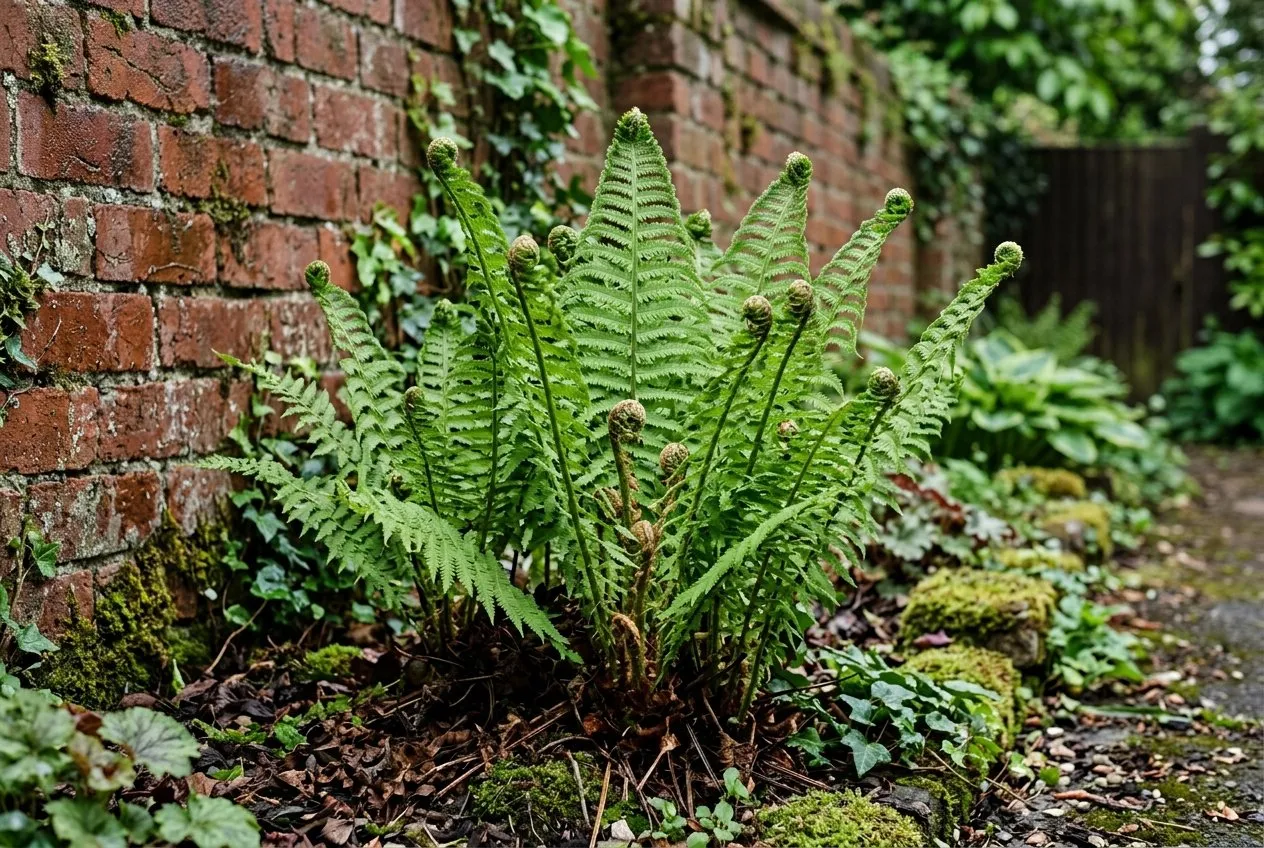 A male fern thriving against a north-facing brick wall in a suburban garden. This is the rare fern that handles dry shade. It still wants compost dug in and watering for two summers.
For the full range of UK ferns, our hardy UK ferns and fernery guide covers the moisture-lovers too.
Cyclamen hederifolium is the standout bulb for dry shade. Pink flowers appear in autumn before the marbled leaves, exactly when the ground under trees is at its driest. It naturalises into drifts over years and seeds itself around. Iris foetidissima earns a place too: evergreen, copes with dry shade, and splits open in autumn to show bright orange seeds.
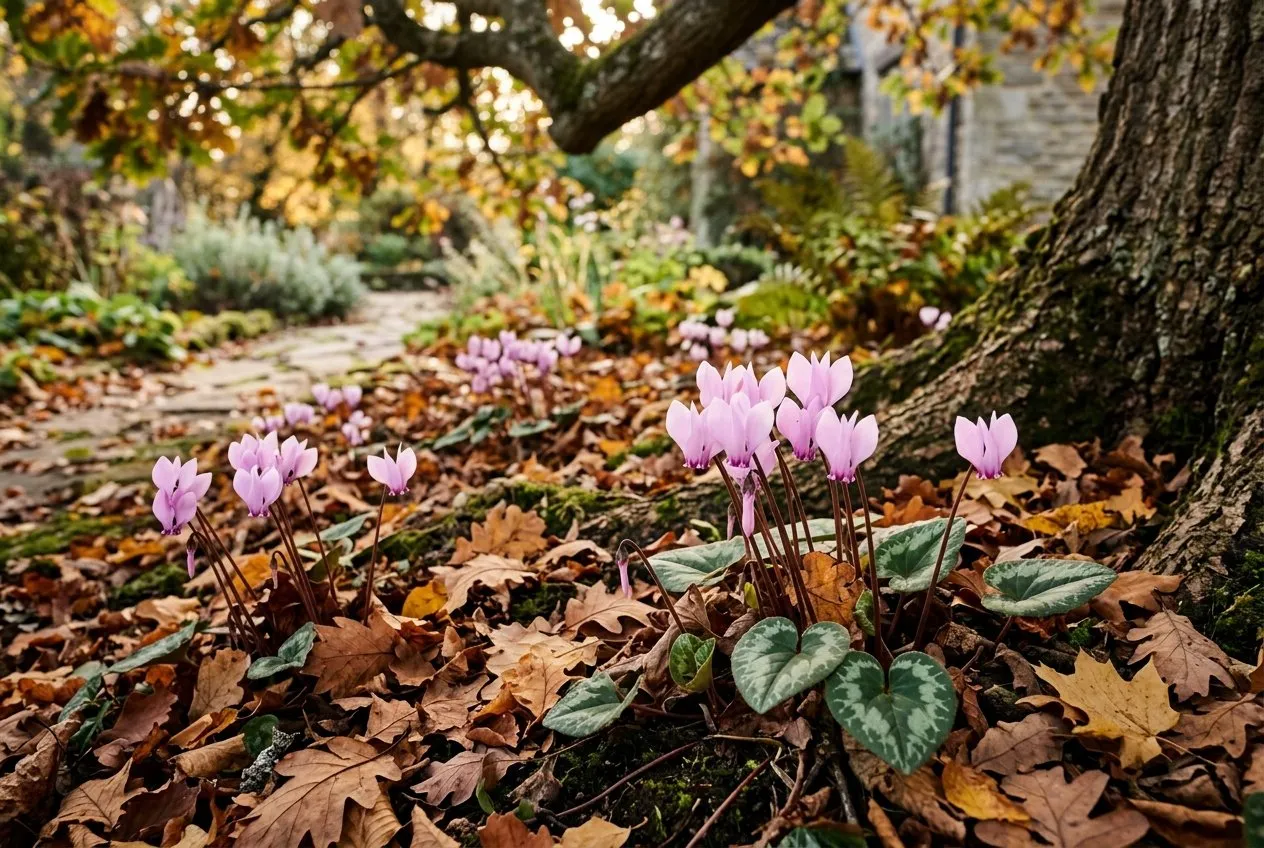 Cyclamen hederifolium flowering under a tree in October. It performs when the dry-shade soil is at its worst, then naturalises into wide drifts over the years.
Shrubs for Structure in Dry Shade
Shrubs give the backbone. Three earn their place in dry, shaded ground.
Sarcococca (Christmas box) is a small evergreen with tiny white winter flowers that scent the whole garden. It tolerates deep dry shade and stays neat at around 1m.
Mahonia brings architectural evergreen foliage and yellow winter flowers that feed early bees. Tough and unfussy in shade.
Aucuba japonica (spotted laurel) is the workhorse for the darkest, driest corners. The gold-speckled evergreen leaves brighten gloom and it survives where almost nothing else will. Its main weakness is aucuba blackening, where leaves turn black after frost, cold wind, or waterlogging.
The Real Key: Ground Preparation
Plant choice gets the headlines, but ground prep decides success or failure. This is the part most people skip.
Dry shade soil is poor, dusty, and full of competing roots. You cannot change the shade, but you can change the soil. Before planting, dig in as much organic matter as you can: garden compost, leaf mould, or well-rotted manure. Work it into the planting hole and the surrounding soil. Leaf mould is ideal because it mimics the woodland floor these plants evolved on.
Follow this sequence and plants establish:
- Plant small. Buy 9cm pots, not big specimens. Small roots push into tight soil; big ones sit and sulk.
- Plant in autumn or spring. Never summer. Autumn lets roots grow into warm, moist soil before winter.
- Dig generous holes. Twice the pot width. Work compost into the base and the backfill.
- Water in hard. A full 5-litre can per plant at planting.
- Water weekly for two summers. Through every dry spell, no exceptions, until established.
- Mulch every spring. A 50mm layer of organic matter holds moisture and feeds the soil.
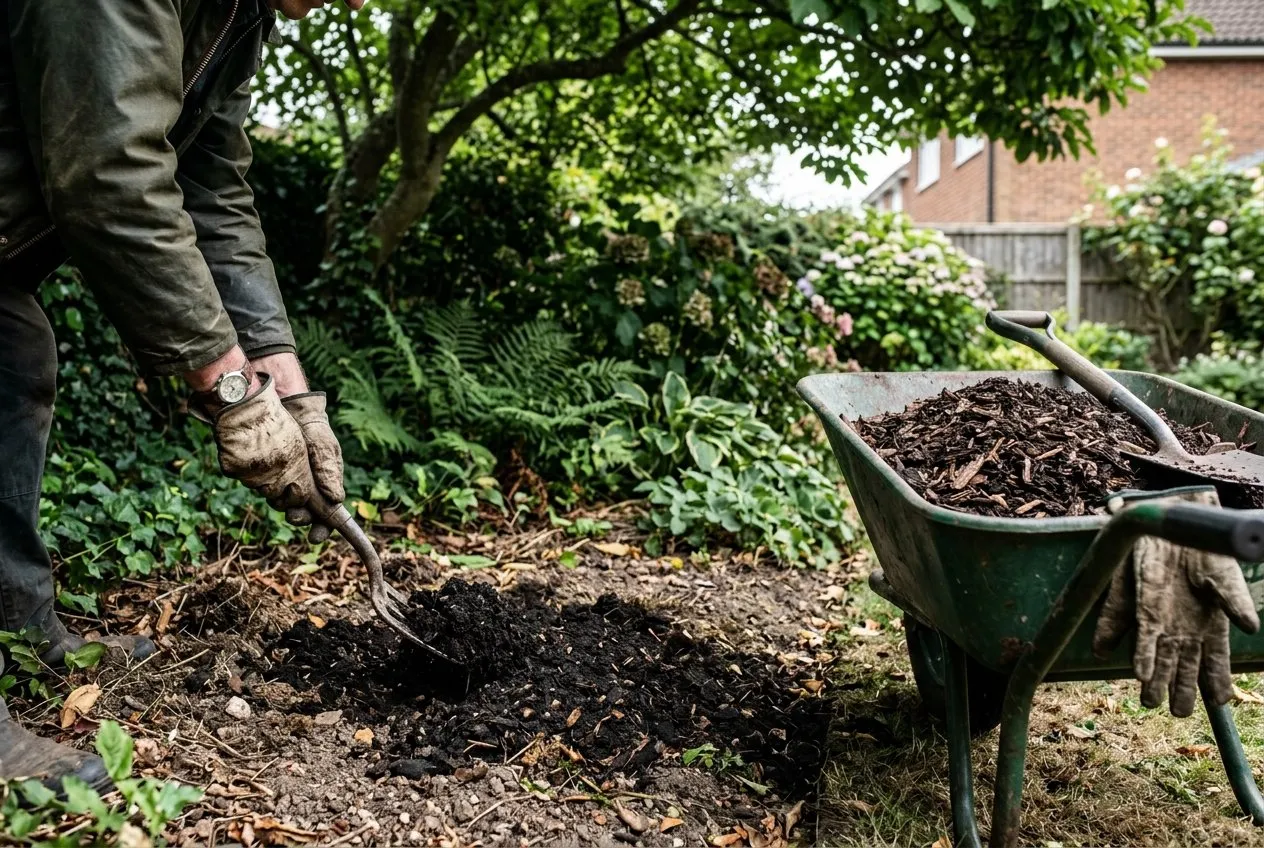
The watering is the bit people get wrong. They plant, water once, and walk away. In dry shade that kills plants. The first two summers decide everything. After that, the plants on this list cope on their own.
Frequently asked questions
What is the difference between dry shade and damp shade?
Dry shade has low light and low soil moisture together. It sits under tree canopies, against north walls, and beside hedges that drink the soil dry. Damp shade keeps moisture, so it grows different plants like hostas and astilbes. Dry shade is the harder of the two.
What is the best ground cover for dry shade UK?
Geranium macrorrhizum is the best ground cover for UK dry shade. It forms a dense weed-smothering carpet 30cm high, copes with deep dry shade, and self-seeds gently. Epimedium and Euphorbia amygdaloides var. robbiae are close seconds. All three need watering only while establishing.
Can ferns grow in dry shade?
Most ferns need moisture, but a few tolerate dry shade. Dryopteris filix-mas (male fern) is the most reliable, surviving under trees once established. Polystichum setiferum (soft shield fern) also copes. Both still want organic matter dug in and watering for the first two summers.
Why do my plants die in dry shade?
They usually die from being planted too big, too late, and left unwatered. Dry shade soil is full of tree roots competing for water. Plant small 9cm pots in autumn, dig in compost, and water weekly for two summers. Skip any of those steps and plants fail.
What can I plant under a tree where nothing grows?
Start with Geranium macrorrhizum, Epimedium, and Cyclamen hederifolium under a tree. They all handle the dry, root-filled, shaded soil. Improve the soil with leaf mould first, plant small, and water through the first two summers. Avoid digging deep among major tree roots.
Now plan the wider shade garden
Dry shade is one piece of a shaded plot. For evergreen structure, our best shrubs for shade UK guide covers the bones of the border. If your shade is partly used for produce, our vegetables to grow in shade UK guide shows what crops cope, and for summer colour our shade-tolerant annuals UK guide fills the gaps. Pick the plants from this list, prep the ground properly, and dry shade stops being the hardest spot in the garden.
Our team produces practical UK gardening guidance from source research, contributor records and established horticultural practice. Editorial standards are overseen by Matt W.