Key takeaways
- English ivy (Hedera helix) is a native evergreen that climbs 20 to 30m by aerial rootlets
- It has two forms: juvenile lobed leaves that climb, and mature unlobed growth that flowers
- Mature ivy flowers September to November, one of the last nectar sources of the year for bees and wasps
- Black berries ripen from November to February and feed blackbirds, thrushes and woodpigeons
- Ivy does not damage sound masonry; it only worsens mortar and render that are already crumbling
- To kill ivy, sever every stem at the base with a saw; the top growth dies within 3 to 6 weeks
English ivy is the plant gardeners argue about more than any other. Hedera helix is our only native evergreen climber, and the same plant that feeds late bees and winter birds is the one blamed for wrecking walls and strangling trees. Most of that blame is misplaced. This guide sets out where ivy earns its keep, where it genuinely causes trouble, and exactly how to remove it when it has to go.
What English ivy actually is
Ivy climbs by aerial rootlets, short brown pads that grow from the stems and grip the surface. These are not feeding roots. They anchor the plant to bark, brick or stone, while the true roots stay in the soil below. This is the single fact that settles most ivy arguments, so it is worth fixing early.
The leaves are dark, glossy and leathery, holding their colour right through winter. In deep shade ivy still grows, which is why it carpets woodland floors and north-facing walls where little else survives. It tolerates most soils, from our heavy clay to thin chalk.
The two lives of ivy: climbing form and flowering form
Ivy leads two lives, and confusing them causes half the misunderstanding about the plant. The juvenile form is the familiar climber. Its leaves are lobed, usually with three to five points, and matt to mid-green. This form climbs and spreads but never flowers, no matter how old it gets.
Once a climbing stem reaches good light, often at the top of a wall or tree, it switches to the mature or arboreal form. The change is striking. Mature leaves lose their lobes and become plain, oval and untoothed. The stems stop clinging and grow out into a stiff, shrubby bush. Only this mature growth flowers and fruits.
This matters for every decision you make. If you want flowers, berries and full wildlife value, you need ivy to reach the mature stage, which means giving it height and light. If you are removing ivy, the mature bushy crowns hold the seed, so those are the parts to target first.
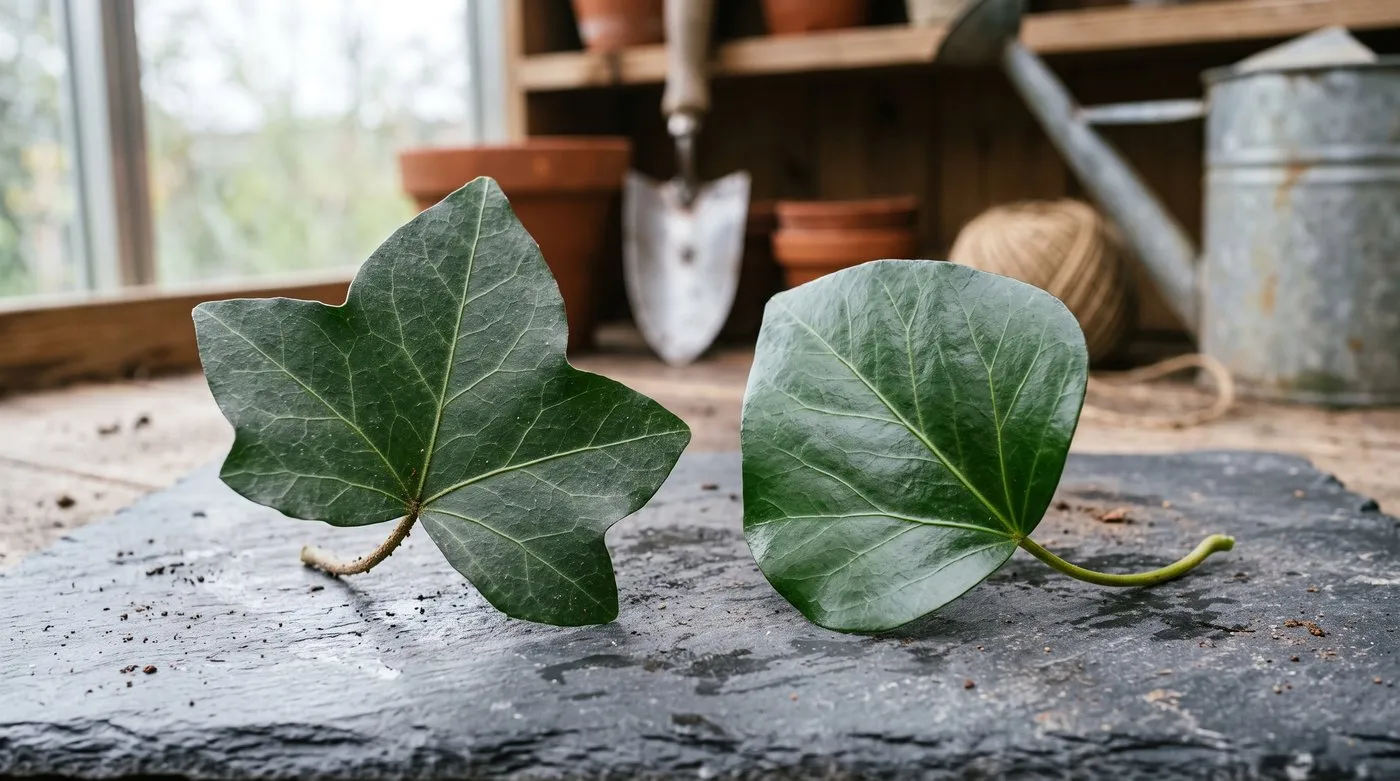 Left, the lobed juvenile leaves that climb but never flower. Right, the plain unlobed leaves of the mature arboreal form that carries the autumn flowers and berries.
Why English ivy is one of Britain’s best wildlife plants
Ivy is arguably the most valuable single plant for garden wildlife in the country, and its flowering time is the reason. Mature ivy flowers from September to November, weeks after almost everything else has finished. The greenish flowers sit in rounded heads called umbels and are packed with nectar and pollen.
That late timing is what makes it special. When queen bumblebees, honeybees and wasps are stocking up for winter, ivy is often the last open buffet in the garden. Our own count of 31 insects per square metre in ten minutes on a mild October afternoon is not unusual. The ivy bee, Colletes hederae, times its whole life cycle to these flowers. If you want more of this, our roundup of autumn-flowering plants for bees shows how ivy fits a late-season nectar plan.
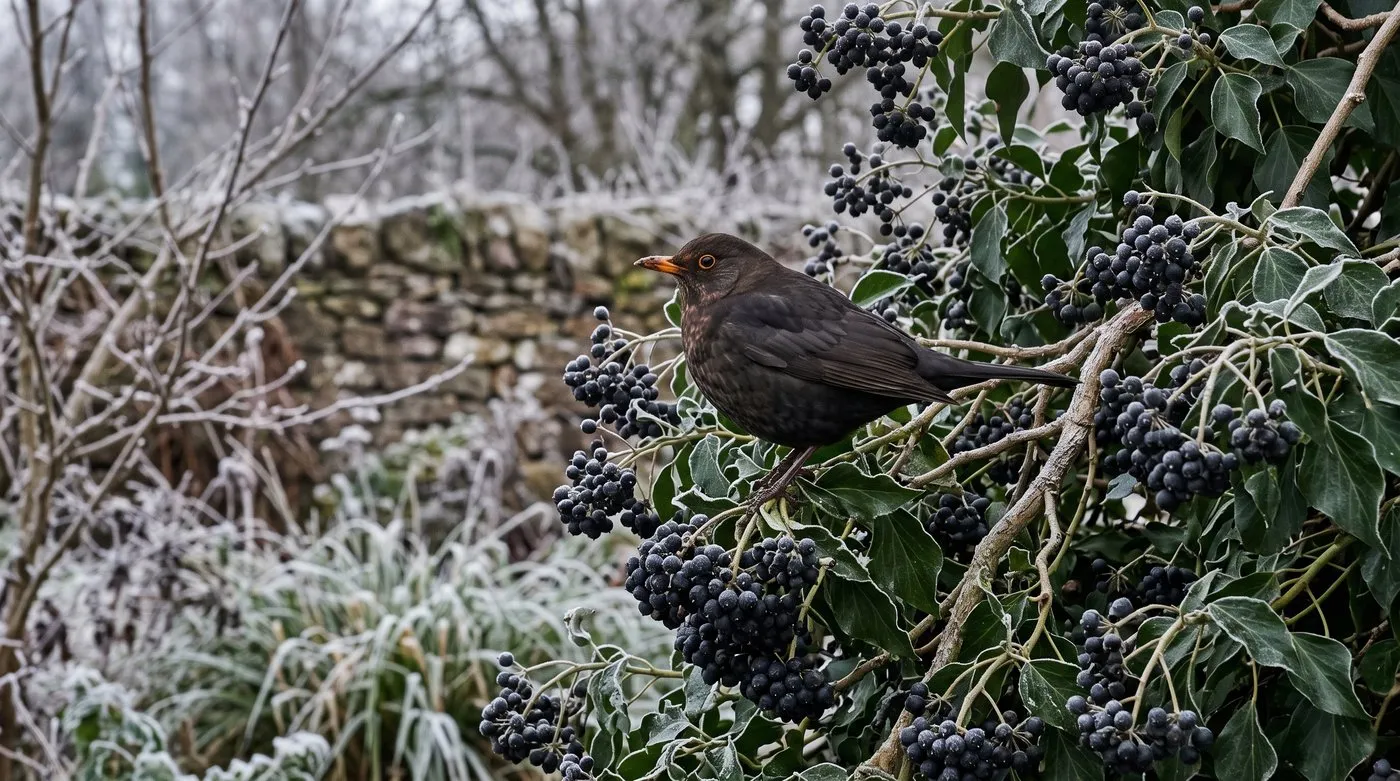 A blackbird stripping ivy berries in midwinter. The fruit ripens from November and feeds thrushes, blackbirds and woodpigeons through the leanest weeks.
Then there is shelter. The dense evergreen cover shields nesting wrens, robins and blackbirds in spring, roosting birds in winter, and hibernating insects including the brimstone butterfly. The holly blue butterfly lays its second-brood eggs on ivy flower buds. The RSPB rates ivy as a top wildlife plant for exactly this three-way value: nectar, fruit and shelter.
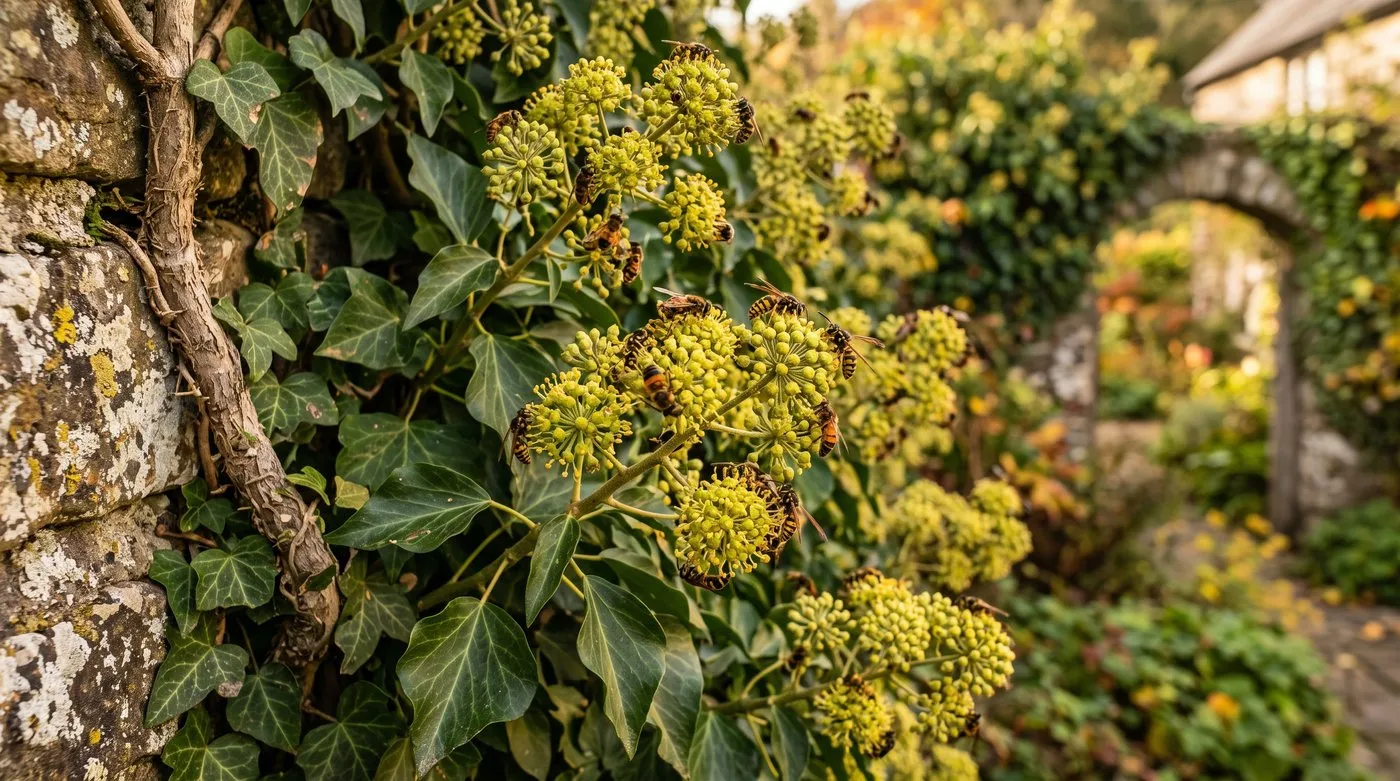 Mature ivy in full flower in late October. The umbels feed wasps, hoverflies and late bees when almost nothing else is blooming.
Does ivy damage walls and houses?
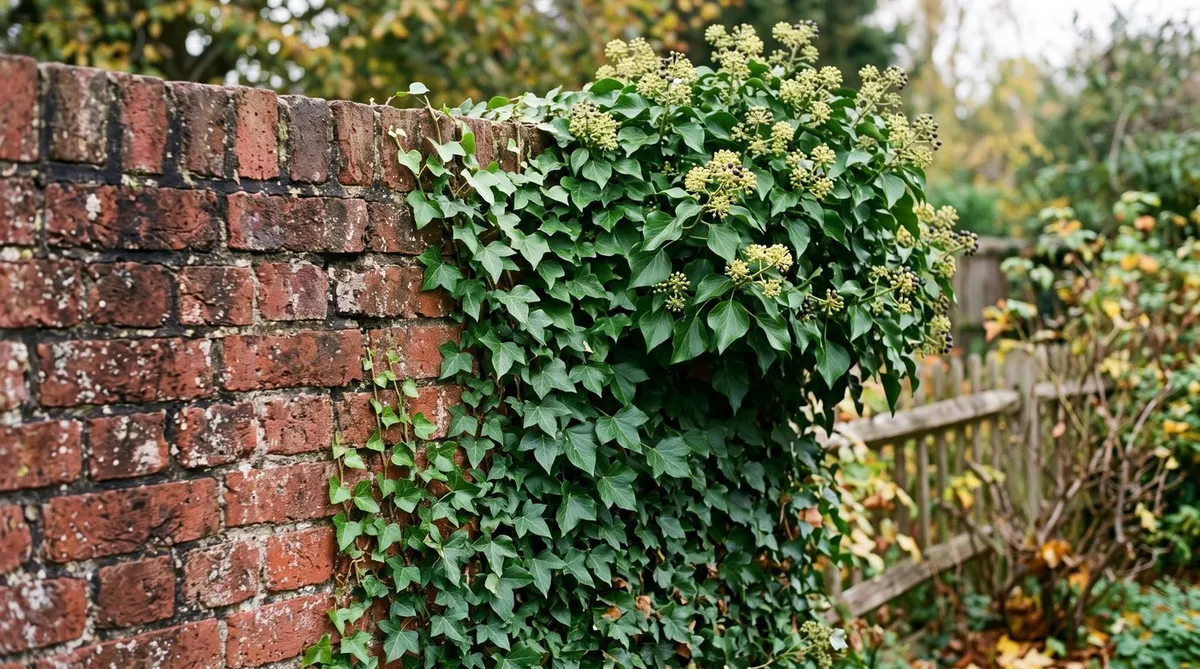
Here is the myth that costs ivy its reputation: that it eats into brickwork and pulls houses apart. On sound masonry it does neither. The aerial rootlets grip the surface and secrete a weak glue-like substance. They do not bore into solid brick, stone or intact mortar.
The real risk is different and specific. Where pointing is already loose, crumbling or missing, the rootlets work into the existing gaps and can widen them as the stems thicken. The same goes for cracked render, flaking paint and soft, perished brick. Ivy does not create these faults. It exploits and worsens ones already there.
So the rule is about wall condition, not ivy itself. On a well-built wall with hard mortar in good order, ivy is harmless and even protective, buffering the surface from frost and driving rain. Keep it off rendered walls, painted walls, poor pointing and anything already failing. Never let it reach the roofline, gutters, window frames or under tiles, where the woody growth genuinely levers things apart.
Warning: Never let ivy grow into gutters, under roof tiles or around window frames. Growth in these gaps is where ivy does real structural damage, prising joints apart and blocking drainage. Cut any stems heading for the roofline straight away, whatever the wall below is doing.
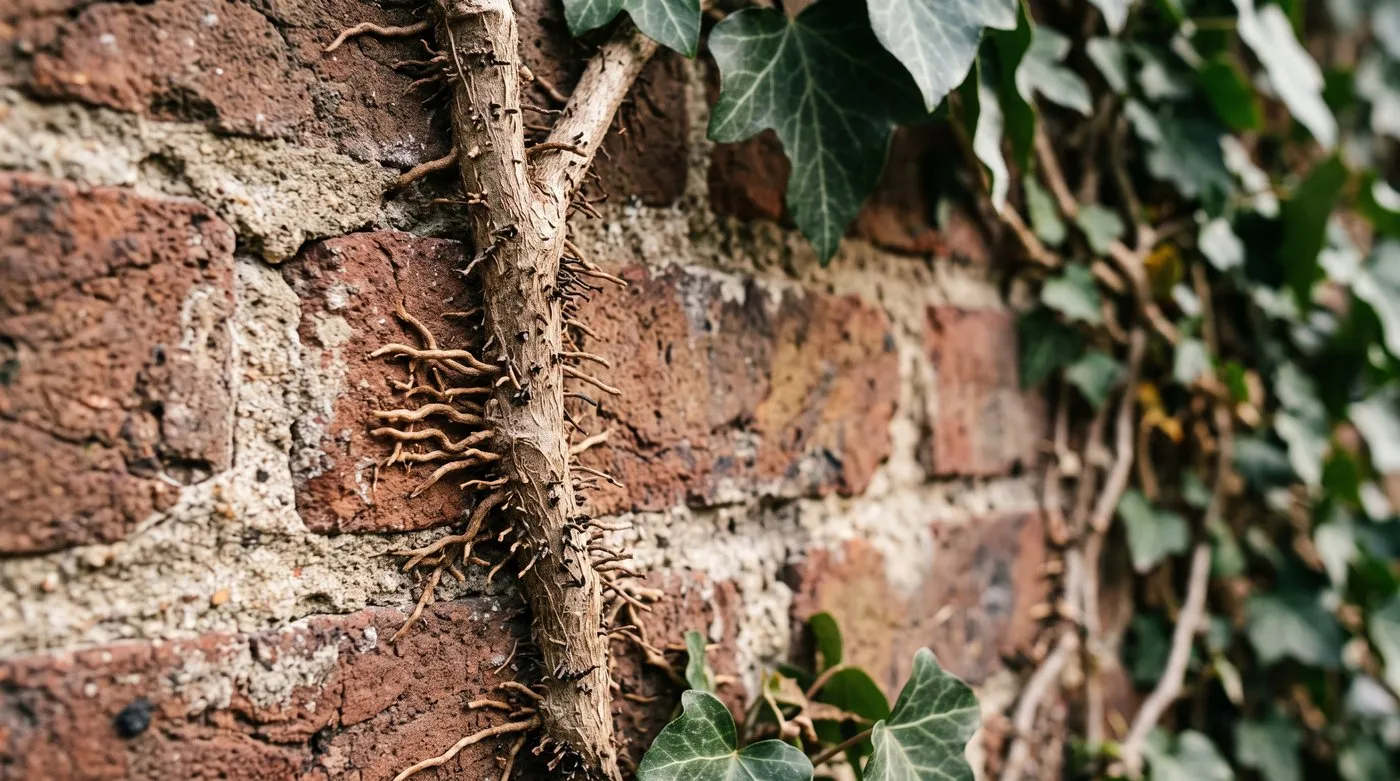 The aerial rootlets grip the wall surface rather than boring into it. On sound brick and hard mortar like this, ivy causes no structural harm.
Is ivy killing my tree?
The second myth is that ivy is a parasite that strangles trees. It is not a parasite. Ivy roots in the ground, draws its own water and nutrients from the soil, and takes nothing from the tree. It simply uses the trunk as a climbing frame. A healthy, vigorous tree and its ivy usually coexist for decades.
The genuine concerns are real but narrower. Heavy ivy in a canopy adds wind resistance, acting like a sail, which raises the chance of a tree failing in a gale. Thick ivy at the crown competes with the tree’s own leaves for light. And a dense ivy coat hides trunk defects, so decay, cavities or disease go unseen during inspections.
The judgement is about the tree’s health, not the ivy. On a mature, strong tree, ivy is part of a working habitat and best left. On a young, weak, newly planted or already ailing tree, cut it off. We cleared ivy from two young rowans in 2020 that were losing the light contest; both put on visibly stronger growth the next season. The Woodland Trust takes the same line: leave it on healthy trees, remove it from vulnerable ones.
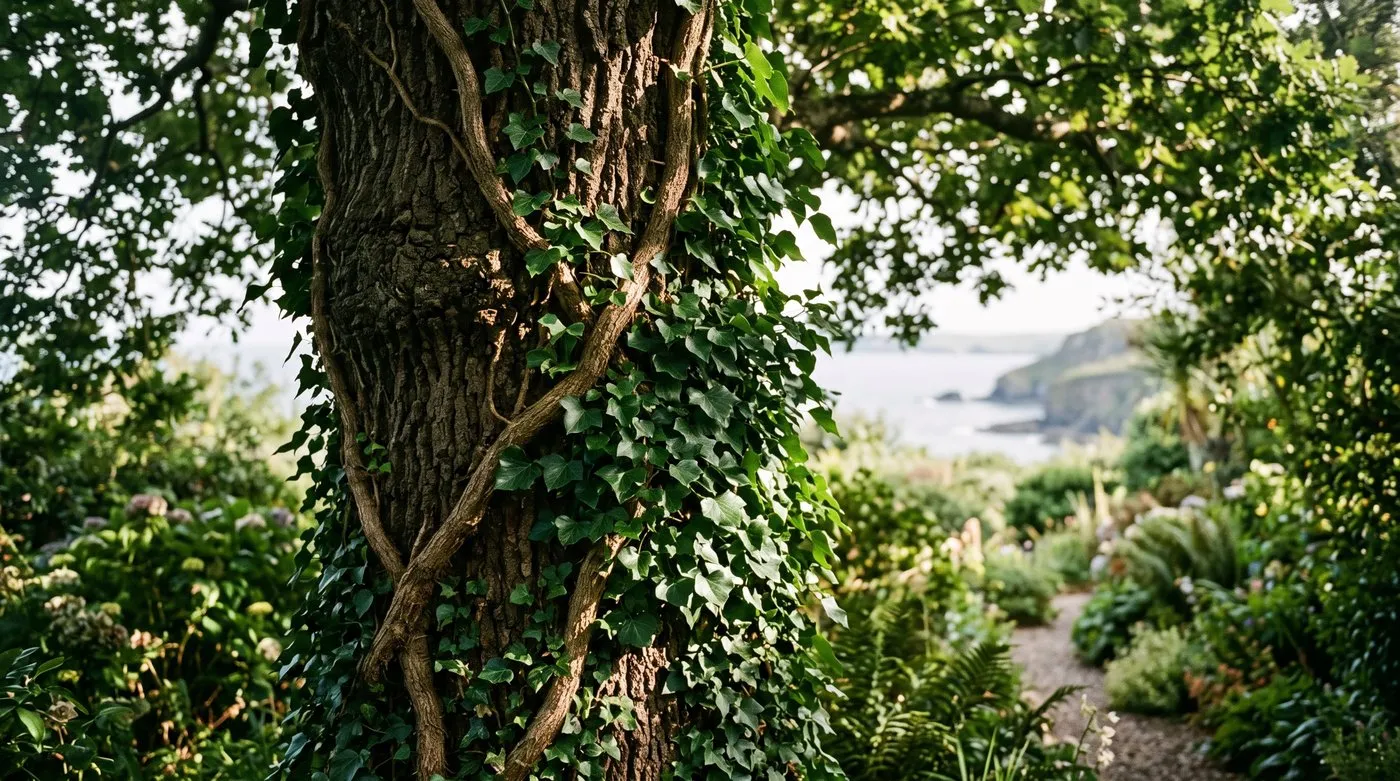 Ivy uses the trunk only as a climbing frame; its roots stay in the soil. On a strong, mature tree like this it takes nothing from the tree and adds valuable habitat.
Ivy value versus risk at a glance
Ivy is neither hero nor villain. Its worth depends entirely on where it grows. This table weighs the benefit against the risk for each common situation, so you can decide plant, leave or remove at a glance.
| Situation | Wildlife value | Real risk | Verdict |
|---|---|---|---|
| Mature tree, healthy and vigorous | Very high, nectar plus berries plus nest sites | Low, some added wind sail only | Leave it |
| Young, weak or newly planted tree | Moderate | High, out-competes for light | Remove it |
| Sound brick or stone wall, hard mortar | High, cover and nesting | Very low | Leave, keep off roof |
| Rendered, painted or crumbling wall | Moderate | High, worsens existing faults | Remove it |
| Ground cover in dry shade | Moderate, shelter for insects | Low, can smother small plants | Manage and contain |
| Into gutters, roof or windows | Low | Very high, structural and drainage | Remove urgently |
The pattern is clear. Ivy earns its place on strong trees and sound walls, and causes trouble on weak trees, failing walls and anywhere near a roof.
Growing and using ivy well
If you have the right spot, ivy is one of the easiest plants to grow. It thrives in shade to full sun and copes with poor, dry soil where little else will. The classic garden use is ground cover in dry shade under trees and along north-facing boundaries, exactly the awkward spots covered in our guide to ground cover plants for UK gardens.
For a controlled, ornamental effect, choose a named cultivar rather than the wild species. ‘Goldheart’ carries a bright yellow splash at the centre of each leaf and lifts a dark corner. ‘Glacier’ is silver-grey and cream variegated, slower and neater. Self-branching forms stay denser and less rampant than the straight species, so they suit smaller spaces and containers.
Ivy also works as a clothing climber for a strong wall, a fence or an ugly outbuilding, giving year-round evergreen cover. It sits alongside the other options in our list of climbing plants for UK walls. Plant it 45 to 60cm out from the base of the support, water it through the first summer, and guide the early stems onto the surface. After that it needs almost nothing but an annual trim to keep it off gutters and windows.
Gardener’s tip: Give mature, flowering ivy the sunniest, highest position you can spare, well away from the house. Ivy only flowers once it reaches the light at the top of its climb. A stump, a tall post or a sturdy old fence lets it turn arboreal and start feeding autumn insects within a few years.
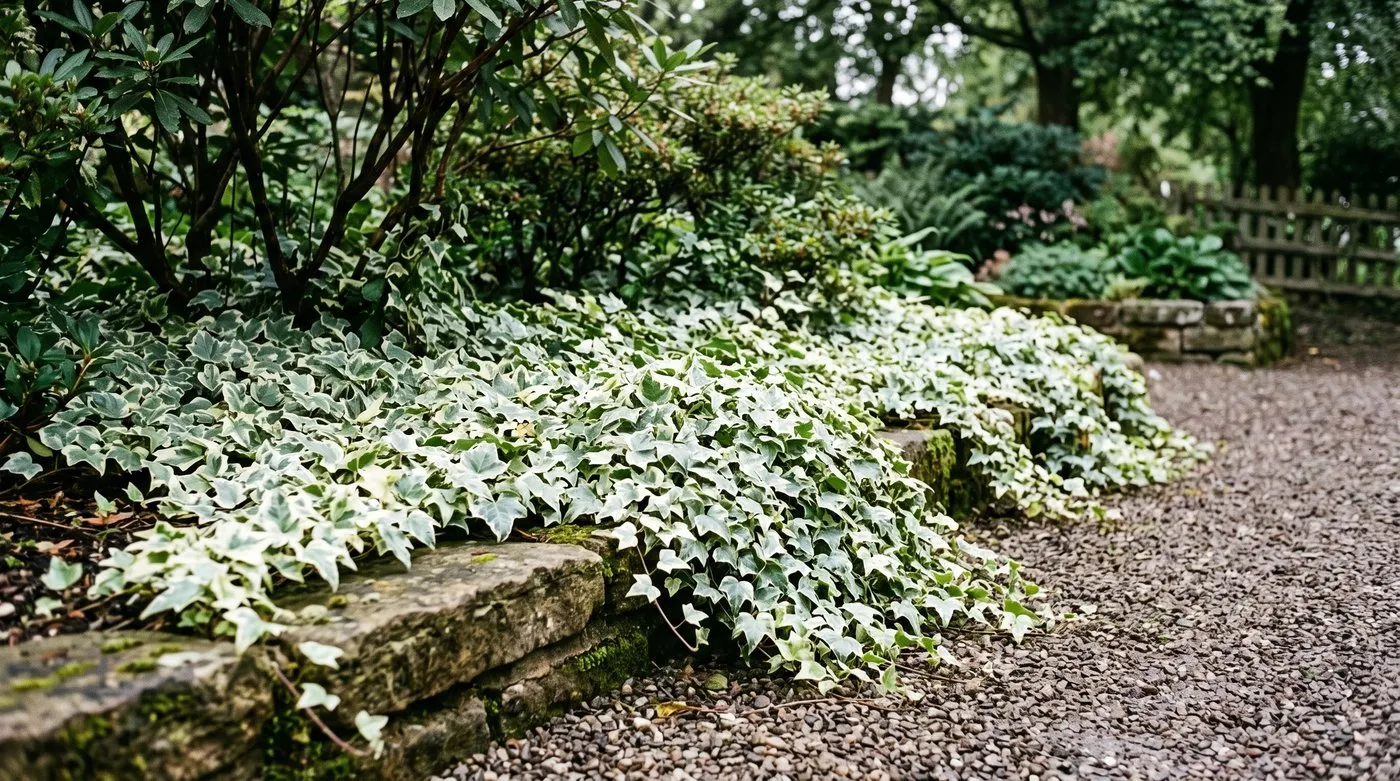 The variegated cultivar ‘Glacier’ as ground cover in dry shade. Named forms give ivy’s toughness with a brighter, more controlled look.
How to get rid of ivy for good
Removing ivy is straightforward if you attack the base, not the leaves. The core principle: cut off the supply and the top dies. The aerial rootlets on a wall or trunk feed nothing, so once you sever the stems from the roots, everything above the cut dies back.
Work in this order. First, sever every stem at ground level with a pruning saw or loppers. On a tree or wall, cut a second time about 30cm higher and remove that band completely, so no stem can rejoin across the gap. The top growth then browns and dies over the next 3 to 6 weeks. Do not try to rip living ivy off a wall; wait for it to die first.
Second, tackle the roots. Ivy regrows from any root left in the soil, so dig or pull out the whole root plate. On light soil it lifts fairly cleanly; on our clay it takes a fork and patience. Third, once the top is dead and brittle, peel it off the wall or trunk carefully by hand, working downwards, to avoid pulling away loose mortar or bark with it.
Finally, deal with regrowth. New shoots will appear from missed roots. Let them grow a few leaves, then bruise or cut the waxy foliage and paint or spray glyphosate onto the fresh damage so it can get past the leaf’s waterproof coat. Repeat through the growing season. Most sites are clear after one full season of follow-up.
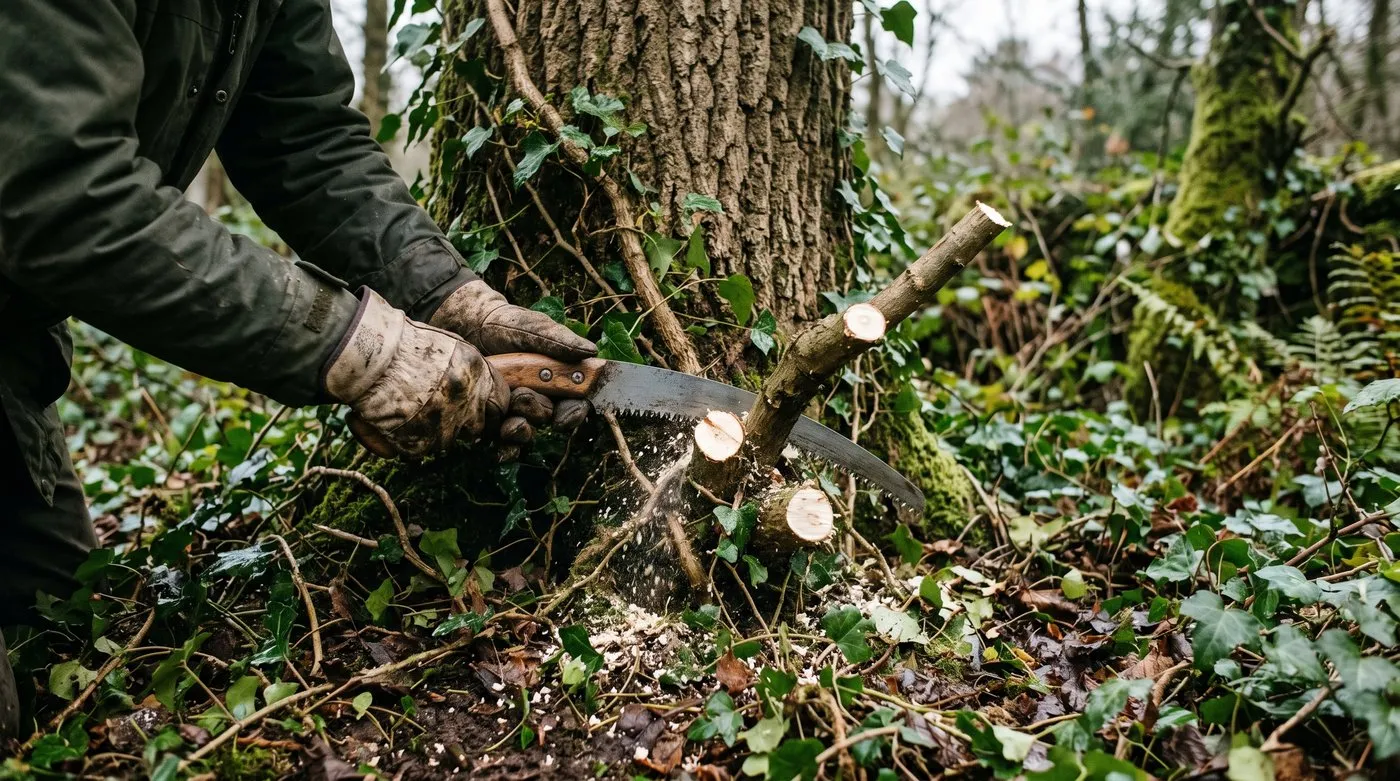 Severing the stems at the base is the whole job. Cut through every stem at ground level and the top growth dies within weeks.
Control methods ranked by how well they work
The gold standard is the first two combined: sever the base, then remove the roots. Everything else is support. Cutting foliage alone is the commonest wasted effort, because it leaves the roots to power straight back.
Month-by-month ivy calendar for UK gardens
| Month | Task |
|---|---|
| January | Cut ivy stems at the base while dormant and bird-free. Dig roots in soft ground. |
| February | Finish major removal before nesting starts. Peel off dead growth killed in autumn. |
| March | Last chance to cut hard before birds nest. Plant new cultivars for ground cover now. |
| April | Stop cutting established ivy; birds are nesting in it. Water any newly planted ivy. |
| May | Leave climbing ivy alone through the nesting season. Guide young plants onto supports. |
| June | Trim only light, obviously empty growth off gutters and windows. Check for nests first. |
| July | Keep ivy clear of roof edges. Spot-treat regrowth from earlier removal with glyphosate. |
| August | Continue glyphosate follow-up on regrowth while leaves are active. |
| September | Mature ivy comes into flower. Leave flowering growth for the autumn nectar. |
| October | Peak ivy flowering feeds late insects. Now is the time to enjoy it, not cut it. |
| November | Berries begin to ripen. Nesting is over, so restart base-cutting and root removal. |
| December | Main removal season. Sever stems and lift roots while the garden is dormant. |
Common mistakes when growing or removing ivy
- Ripping ivy off good render or brick. Tearing living ivy from a wall pulls away render, paint and soft mortar with the rootlets. Always kill it first by cutting the base, wait three to six weeks, then peel the dead, brittle growth off gently.
- Cutting ivy off healthy trees for no reason. On a strong, mature tree ivy is not a parasite and rarely harms it, while feeding huge numbers of insects and birds. Only remove it from young, weak or ailing trees that are losing the light contest.
- Planting vigorous species ivy in a tiny space. The wild form climbs 20 to 30m and swamps small gardens fast. In a courtyard or against the house, choose a slower self-branching or variegated cultivar instead, and keep it well away from the roof.
- Pulling regrowth without treating the roots. Snapping off new shoots leaves the roots intact, so ivy returns within weeks. Remove the roots when you cut, then treat any regrowth with glyphosate on damaged leaves through the growing season.
- Removing ivy in spring. Ivy is a favoured nest site from March to August. Cutting it then destroys active nests, which is also against the law. Do all major ivy work between October and February.
Why we leave one mature ivy and recommend a cultivar for shade
Ivy sits in the same evergreen, self-clinging group as several other useful climbers. If you want year-round green cover but not ivy’s vigour, weigh it against the alternatives in our guide to evergreen climbers for year-round cover, and browse the wider plants section for companions that share its shade tolerance.
Now you can tell where ivy helps and where it harms, read our guide to training climbing plants onto walls and fences for the next step in getting a climber growing exactly where you want it.
Frequently asked questions
Does English ivy damage house walls and brickwork?
No, ivy does not damage sound masonry. It clings to the surface by tiny root-like pads. Ivy only causes harm where mortar, render or brick is already loose or crumbling, because the rootlets work into existing cracks. Keep it off poor pointing, painted walls and render, and check the wall is in good order before letting it climb.
Will ivy kill my tree?
Not usually, ivy is not a parasite. It roots in the soil, not the tree, and takes no sap or nutrients from it. On a healthy, vigorous tree ivy is rarely fatal. Heavy growth adds wind resistance, competes for light at the canopy and hides trunk defects, so cut it off young, weak or ailing trees.
How do I get rid of ivy permanently?
Sever every stem at the base with a saw or loppers. The top growth dies within 3 to 6 weeks once cut. Then dig or pull out the roots, as ivy regrows from anything left in the ground. Treat stubborn regrowth with glyphosate after bruising or cutting the waxy leaves so the weedkiller can get in.
Is English ivy good for wildlife?
Yes, ivy is one of the most valuable wildlife plants in Britain. Its September to November flowers feed bees, wasps and hoverflies when little else blooms. The black winter berries feed blackbirds, thrushes and woodpigeons. The dense evergreen cover gives shelter and nest sites to birds and hibernating insects.
Why does some ivy flower and some never does?
Only mature ivy flowers, and it looks different from the climbing form. Juvenile ivy has lobed leaves and climbs but never flowers. Once a stem reaches good light at the top, it changes to a bushy mature form with plain, unlobed leaves that produces the autumn flowers and berries.
Is English ivy poisonous?
Yes, ivy is mildly toxic if eaten and the sap can irritate skin. The berries and leaves cause stomach upset if swallowed, so keep children and pets from eating them. The sap triggers a rash in some people, so wear gloves when cutting or pulling ivy, especially in quantity.
When is the best time to remove ivy in the UK?
Autumn and winter are the best times to cut ivy down. Sever the stems from October to February when birds are not nesting, as ivy is a favoured nest site in spring. Dig the roots in winter while the ground is soft. Leave glyphosate treatment of regrowth for the growing season, from spring to early autumn.
Our team produces practical UK gardening guidance from source research, contributor records and established horticultural practice. Editorial standards are overseen by Matt W.