Key takeaways
- Eucalyptus grow 1 to 2m a year and reach 15 to 30m unchecked, with shallow roots that can blow over in a gale
- Hardiest for UK gardens: cider gum (to about -14C), snow gum (hardiest, best bark, smaller) and E. dalrympleana
- Coppice or pollard every 1 to 2 years in early spring to hold it at 2 to 4m with silver-blue juvenile foliage
- Plant small: 9cm or 2 litre pots root and anchor far better than a large staked specimen
- Give full sun, shelter from cold drying wind, free-draining soil, and water for the first two years only
- A felled eucalyptus stump re-sprouts hard, so it must be ground out or it grows straight back
Which eucalyptus survive a UK winter
Only a handful of the 700-plus eucalyptus species cope with a British winter. Hardiness is the first filter, and it decides everything else. The three below have earned their place in UK gardens through decades of use and, in our case, ten years of side-by-side testing on cold clay.
Eucalyptus gunnii, the cider gum, is the one you see in every garden centre. It is fast, tough and takes about -14C in free-draining ground. Eucalyptus pauciflora subsp. niphophila, the snow gum, is the hardiest of the lot. It comes from the Australian alps, handles -14C and lower, stays smaller, and carries the finest bark of any hardy eucalyptus. Eucalyptus dalrympleana, the mountain gum, sits between the two for pace and cold tolerance, with pinkish young bark.
Ranked for a typical UK garden, snow gum wins on hardiness, bark and manageable size. Cider gum wins on speed and availability, but only if you commit to cutting it. For cross-checking hardiness ratings and mature sizes, the Royal Horticultural Society plant advice is a reliable UK source. For more permanent evergreen structure, our guide to the best evergreen trees for UK gardens sets eucalyptus against slower, tidier options.
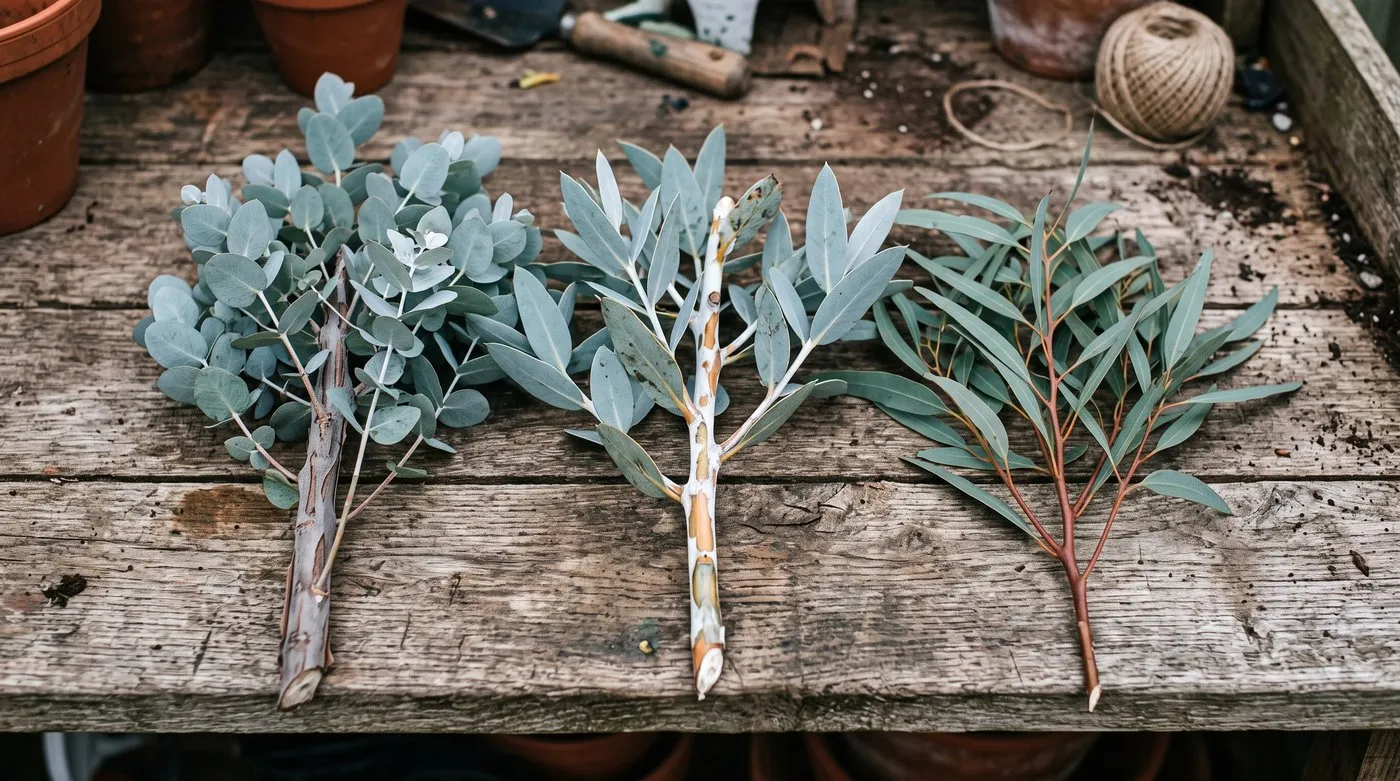 Three hardy eucalyptus for UK gardens, from left: cider gum, snow gum and mountain gum. Snow gum carries the finest mottled bark and the best cold tolerance.
Telling juvenile foliage from adult leaves
Eucalyptus carry two completely different sets of leaves, and knowing which is which changes how you grow the plant. Juvenile foliage is the round, blue-grey disc that florists cut for bouquets. It clasps the stem in pairs and holds the strongest silver colour and scent. Adult foliage is long, narrow and sickle-shaped, hanging down in a dull grey-green.
A young plant, or a coppiced one, stays in the juvenile phase. Left to grow into a tree, eucalyptus switches to adult leaves once it passes roughly 2 to 3m. That switch is why an old cider gum looks so different from the pot you bought. The pretty discs vanish and the tree takes on a loose, drooping outline.
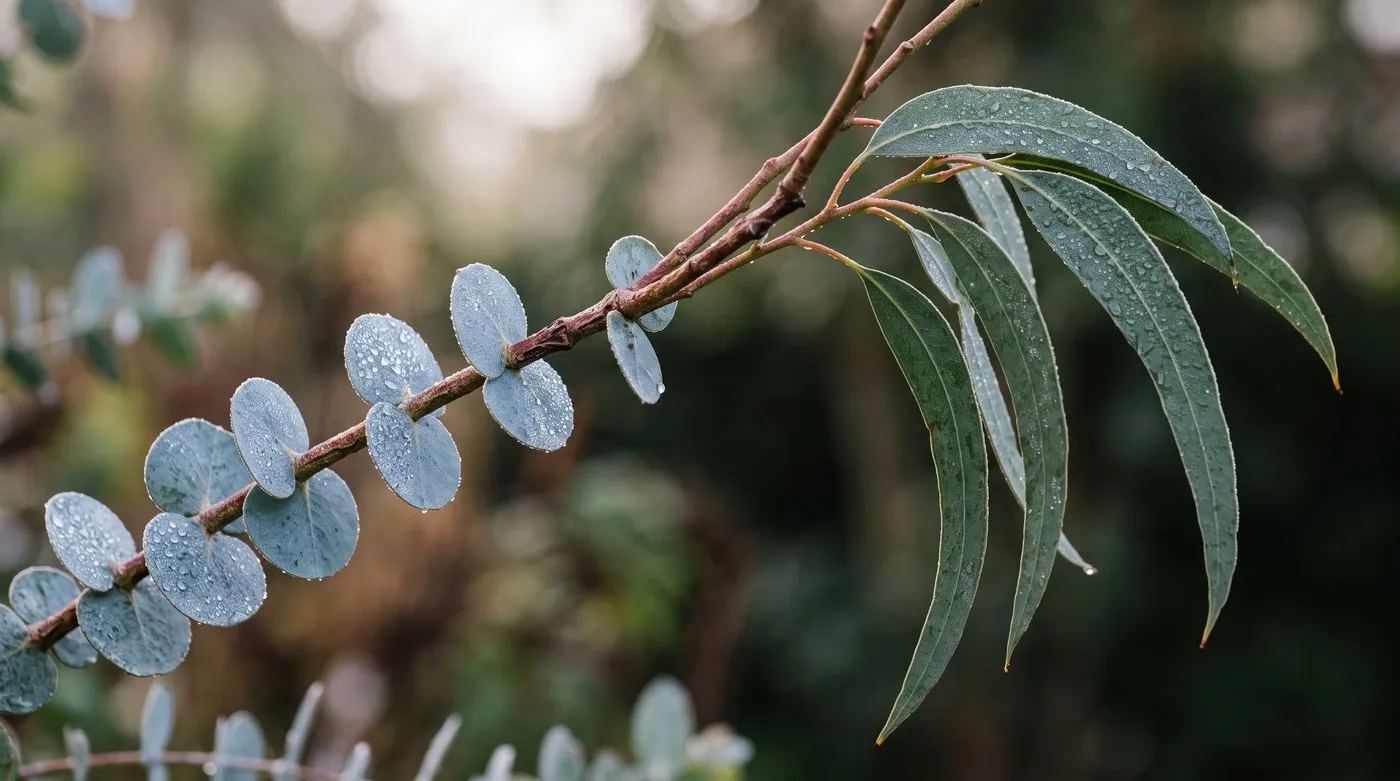 Juvenile discs, left, versus adult sickle leaves, right. Coppicing locks the plant in the round silver-blue juvenile phase that florists want.
How big and how fast does eucalyptus grow
Speed is the whole story with eucalyptus, and it is the source of most regret. These trees add 1 to 2m of height every year once their roots take hold. Our fastest cider gum grew 1.8m in the 2019 season alone, measured stem-tip to stem-tip. A snow gum on the same bed managed a steadier 0.9m.
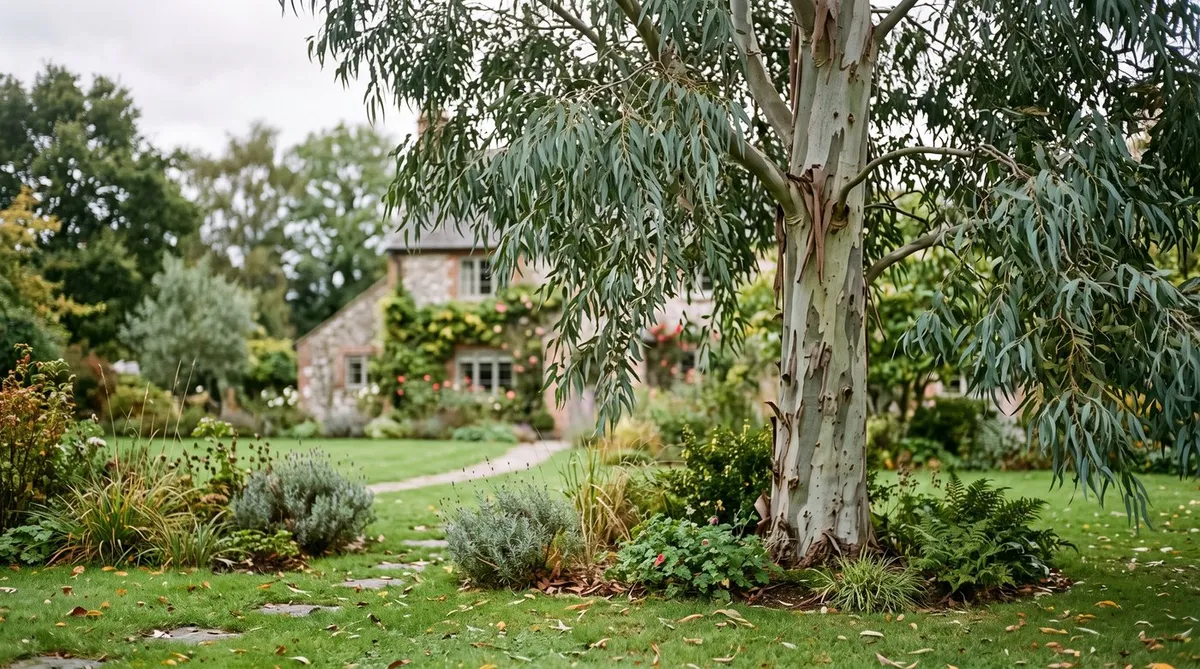
Left unchecked, a cider gum reaches 15 to 25m and a snow gum a more modest 6 to 10m. At that scale the problems begin. The canopy shades out borders, the roots drink hard, and the tree drops bark, twigs and the occasional limb across the garden. Because eucalyptus root shallow and wide rather than deep, a tall specimen has surprisingly poor anchorage in a gale.
This is why size planning comes before planting. A tree that will hit 20m does not belong 3m from a house. If you want a fast evergreen screen without a future giant, the best fast-growing hedging plants for UK gardens give height with far less drama. Reserve eucalyptus for a spot where you can either let it soar or commit to the saw.
Warning: Never plant a full-size eucalyptus species within 8 to 10m of a building, drain or boundary. The shallow, wide root plate dries the soil and the tall crown catches wind. On shrinkable clay, a thirsty mature tree close to foundations can worsen summer subsidence cracking.
Planting eucalyptus for strong roots
Good establishment is entirely about the roots, and it hinges on one counter-intuitive rule: plant small. A 9cm or 2 litre pot-grown eucalyptus roots faster and anchors better than an expensive 1.5m staked specimen. The small plant sends roots out before it puts on top growth, so it stands firm. The tall one is top-heavy from day one and rocks in the wind, which stops the roots ever gripping.
Plant from May to June so the tree gets a full warm season to establish. Stake low or not at all: a low stake lets the top flex, which drives the plant to build a stronger, wider root system. Remove any stake after the first year. Water through the first two summers, then stop. An established eucalyptus is genuinely drought-tolerant and resents pampering.
For the mechanics of getting a young tree in the ground, our guide on how to plant a bare-root tree in the UK covers hole prep, firming and staking height, all of which apply to pot-grown eucalyptus too.
Gardener’s tip: If you must use a stake on an exposed site, set it low at about a third of the stem height and angled into the prevailing wind. Cut it away after twelve months. The flexing top thickens the root plate, which is exactly what stops a fast eucalyptus toppling later.
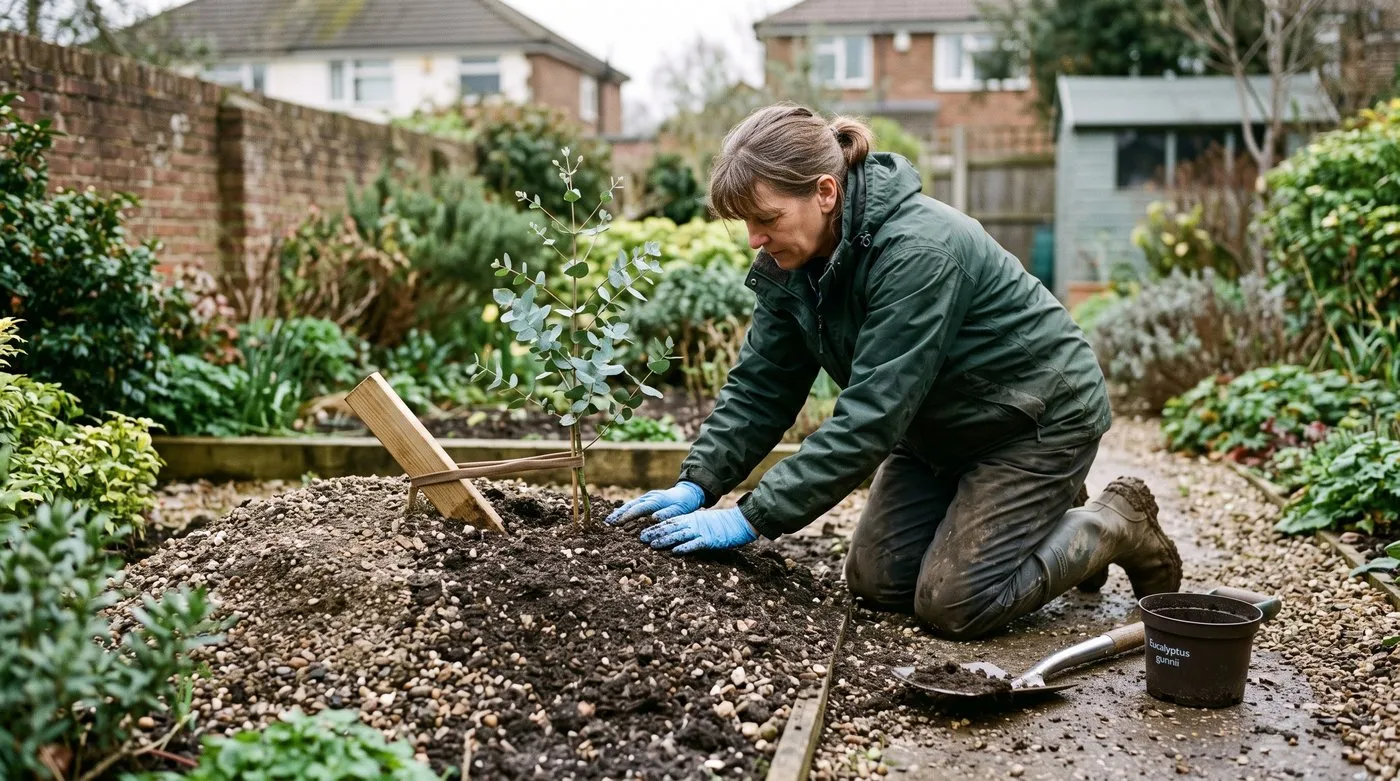 Planting small and staking low. A 2 litre eucalyptus like this out-anchors a tall staked specimen within two seasons.
Coppicing and pollarding to keep eucalyptus small
The single technique that makes eucalyptus a good garden plant is regular cutting. Coppicing means cutting the whole plant to a low stump, 15 to 45cm, and letting it re-shoot from the base. Pollarding does the same at head height, 1.5 to 2m, keeping a clear stem below. Eucalyptus takes both hard, because it evolved to regrow after bushfire.
Cut in early spring, March to April, just before the growth surge. A coppiced cider gum here throws up fresh multi-stem shoots that grow 1.5 to 2.5m in a single season, all clothed in round juvenile foliage. Do it every 1 to 2 years to hold a bushy plant at 2 to 4m. Leave it three or more years and the stems thicken past easy cutting.
The method you choose depends on the look you want. Ranked by how well each holds size and juvenile foliage in a UK garden:
| Method | Cut height | Frequency | Result | Holds juvenile leaves | Best for |
|---|---|---|---|---|---|
| Annual coppice | 15 to 30cm | Every year | Dense 1.5 to 2.5m shrub | Yes, fully | Foliage for cutting, small gardens |
| Two-year coppice | 30 to 45cm | Every 2 years | Multi-stem 2.5 to 4m | Mostly | Silver screen, low effort |
| Pollard | 1.5 to 2m | Every 1 to 2 years | Lollipop head on a clear stem | Yes on the head | Height control near paths |
| No cutting | none | never | 15 to 30m tree, adult leaves | No | Large gardens with space |
Annual coppicing is the gold standard for holding both size and the silver-blue foliage. Pollarding is the pick where you want to keep a stem and stand under it. Doing nothing is only sensible on a big plot that can house a full tree. For wider cutting-back principles across the shrub border, see our guide on how to prune shrubs in the UK.
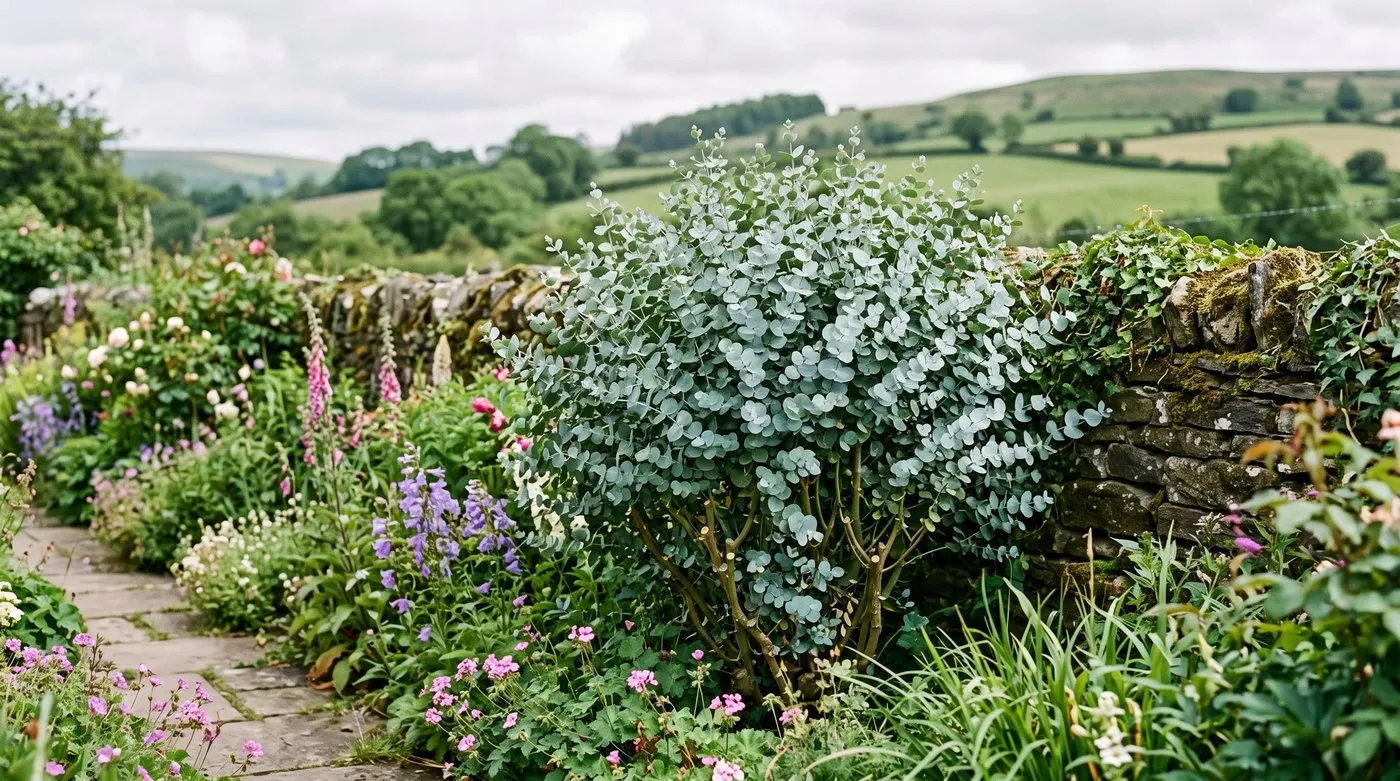 A cider gum coppiced each spring, held at head height as a silver-blue shrub. One cut a year keeps the juvenile foliage and the size in check.
A month-by-month eucalyptus calendar for the UK
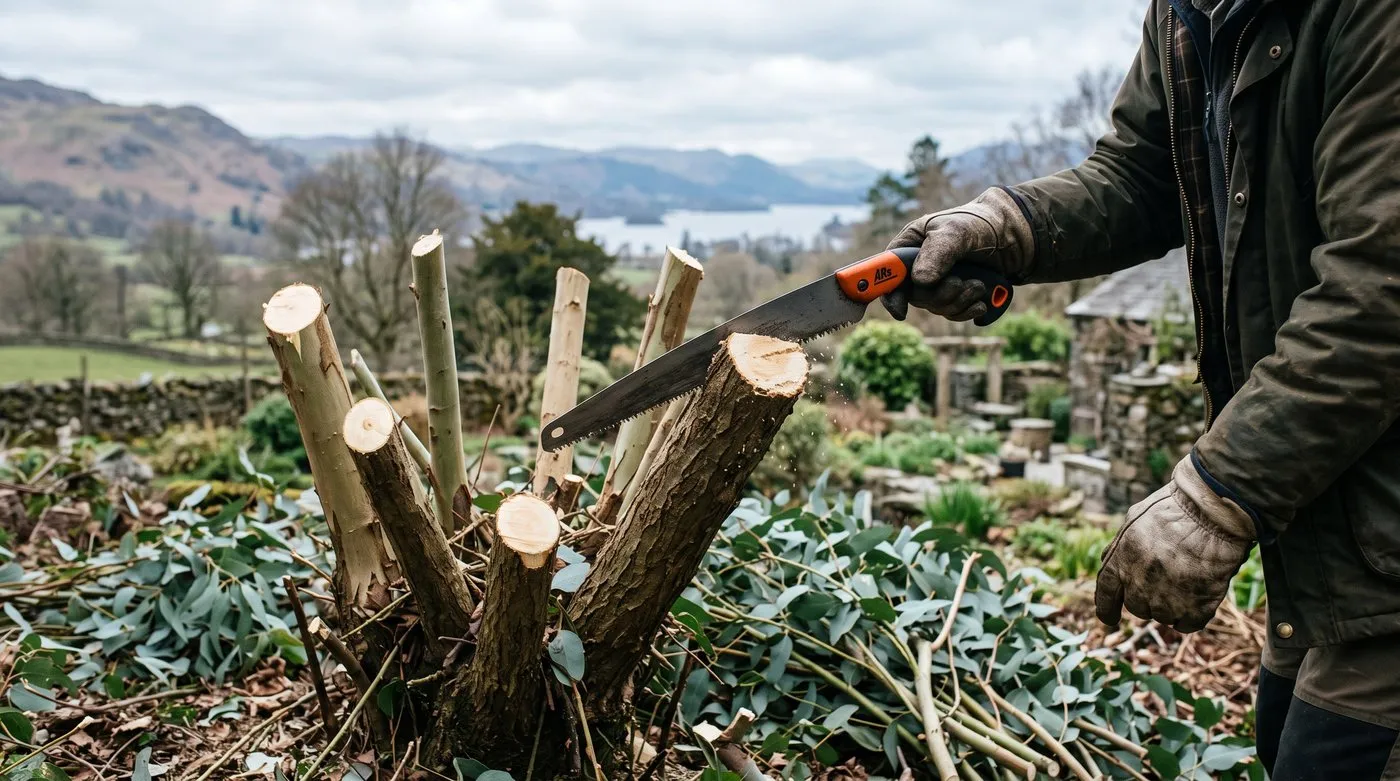 The March cut. Coppicing a eucalyptus to a low framework on a dry early-spring day drives fresh silver-blue regrowth by June.
Should you remove or just tame a eucalyptus
A mature eucalyptus is often removed for sound reasons: it is too tall, too close to the house, casting heavy shade, or drying out a border and lawn. Before you fell, weigh a middle path, because removal is not the only fix. Pollarding an established tree cuts its height, its water use and its wind risk in one job, while keeping the trunk and some screening.
If the tree genuinely must go, plan for its habits. Eucalyptus roots run shallow and wide, so a large specimen can blow over in a gale rather than snapping, taking a plate of soil and often a fence with it. A tall tree near a boundary is the usual candidate for full removal. Bark and dead limbs also shed year-round, which is a nuisance over a patio or pond.
Weigh the shade and thirst against the wildlife and screening value. Where the goal is simply a smaller, safer tree, our guide on what to do with a conifer that is too big walks through the same reduce-or-remove decision that applies to an overgrown gum. For a considered view on tree size and setting, the Woodland Trust is a sound UK reference.
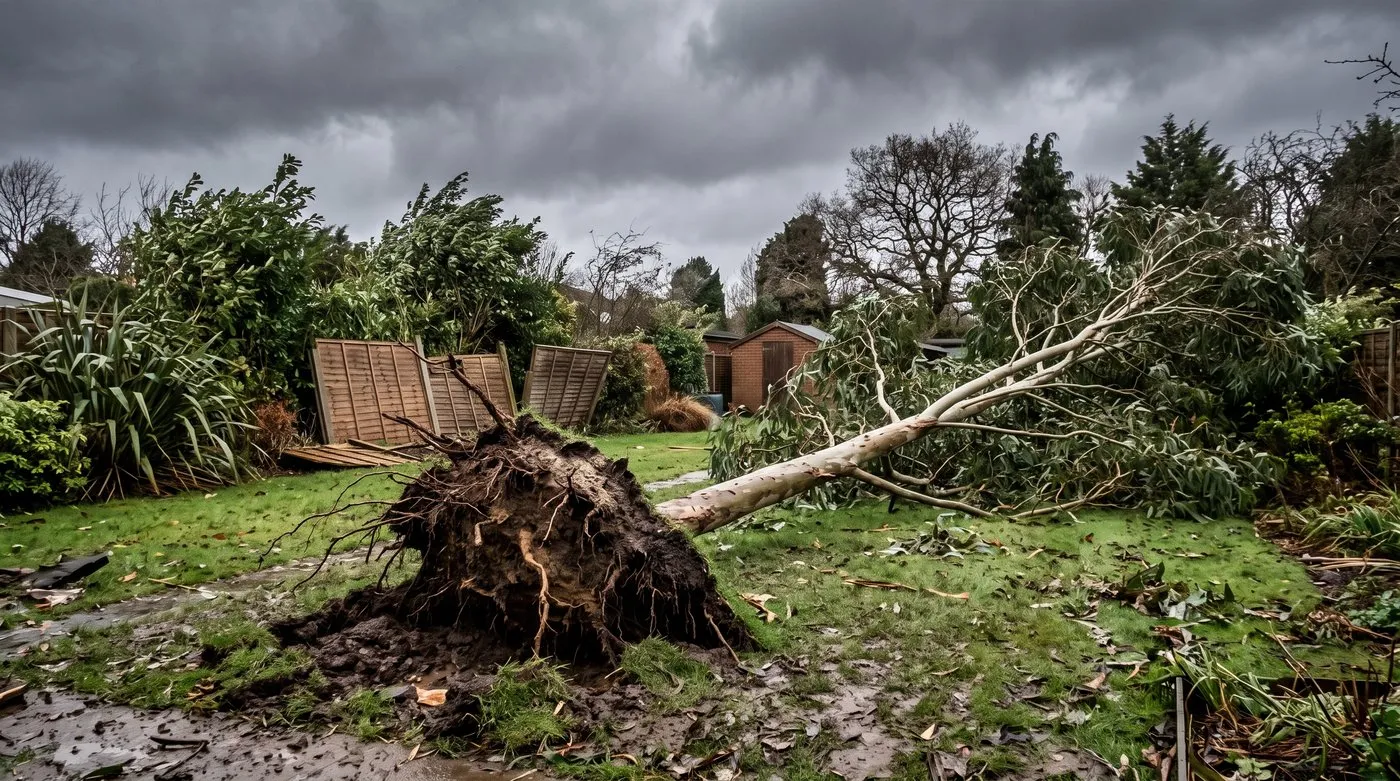 Wind-throw on shallow roots. This tall staked cider gum went over in a February gale, its root plate barely 40cm deep. The small-planted tree beside it stood firm.
Felling a eucalyptus and killing the stump
Cutting a eucalyptus down is only half the job, because a bare stump does not sit quietly. The genus evolved to regrow from a woody base after fire, so a felled stump re-sprouts hard, throwing a ring of vigorous shoots within weeks. This surprises people who expect a cut tree to die. It is the root cause of most “the eucalyptus came back” complaints.
To kill a stump for good, you have two reliable routes. Grinding the stump out below soil level physically removes the regrowth points and is the cleanest fix. Alternatively, treat the fresh cut surface with a suitable stump killer within minutes of felling, while the wood is still drawing, then cut off any shoots that appear over the next season. Persistent removal of every new shoot will also starve the stump over a year or two, though it is slower.
Expect suckering from the roots for a season after felling a large tree. Pull or cut these as they show. The bigger the tree, the more energy the roots hold, and the longer the regrowth pushes. A snow gum coppiced for years is far easier to remove than a 20m cider gum that has never been touched.
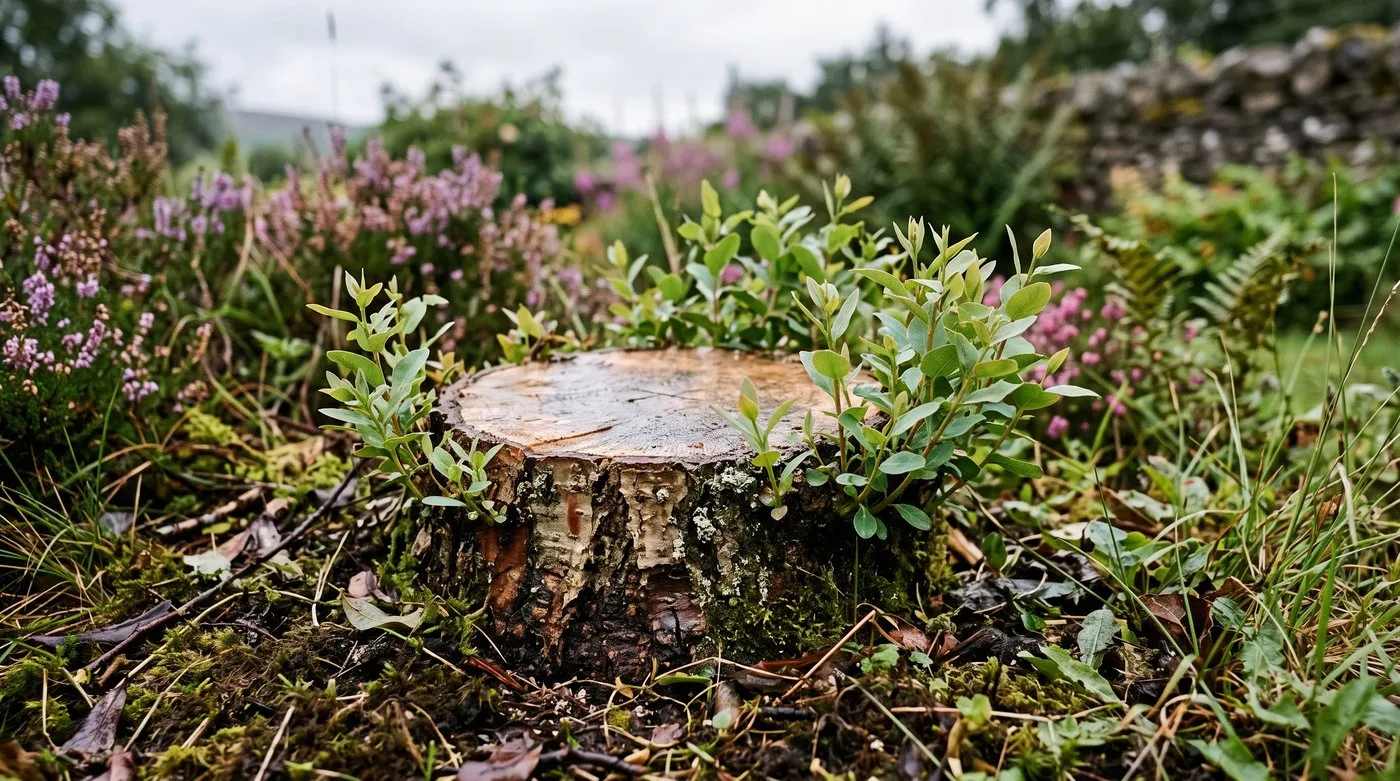 A cut eucalyptus stump re-sprouting from the base. Left untreated it rebuilds a multi-stem tree, so the stump must be ground out or killed.
Common mistakes when growing eucalyptus
- Planting too big. A tall staked specimen looks like a head start but roots slowly and rocks in wind. Buy a 9cm or 2 litre plant, plant it small, and it will out-grow and out-anchor the large one within three seasons.
- No shelter from cold wind. Eucalyptus keep their leaves all winter, so a freezing east wind scorches and browns them. An exposed, unsheltered site is the commonest cause of winter dieback on an otherwise hardy species.
- Letting it get too tall near a house. The 1 to 2m yearly growth is easy to underestimate. A gum planted 3m from a wall becomes a 15m problem within fifteen years. Pollard or coppice from the start, or plant it far away.
- Expecting a felled stump to die. Cut and walk away and the stump re-sprouts into a thicket. Always grind out or treat the stump, and remove suckers, or the tree simply rebuilds itself.
- Feeding and over-watering. Rich, moist conditions push soft growth that flops and suffers in cold. Eucalyptus want lean, free-draining soil and water only for the first two years. Kindness kills more than neglect.
Pairing eucalyptus with other trees and screens
Eucalyptus rarely works as the only tree in a garden. Its loose, silver, informal habit needs greener, denser company to read well and to cover its winter bare patches. Underplant with tough evergreens, or set it behind a solid screen so its height reads as a feature rather than a gap.
Now you can grow a eucalyptus that stays the right size, read our guide to drought-tolerant plants for UK gardens for the next step in a low-water, low-effort planting scheme.
Frequently asked questions
Which eucalyptus is hardiest for a UK garden?
Snow gum (Eucalyptus pauciflora subsp. niphophila) is the hardiest for UK gardens. It shrugs off -14C or lower and stays smaller than most, with superb mottled grey-green bark. Cider gum is the most widely sold and copes with about -14C in free-draining soil. E. dalrympleana sits between them for hardiness and pace.
How fast does eucalyptus grow?
Should I remove a eucalyptus tree?
Remove it only if it is too big, too close to a building, or drying out the soil. A large eucalyptus drinks heavily, drops bark and limbs, and can blow over on shallow roots. Before felling, consider pollarding instead, which keeps the tree while cutting its height and thirst.
How do you keep a eucalyptus small?
Coppice or pollard it every 1 to 2 years in early spring. Cutting to a low framework forces fresh multi-stem growth of 1.5 to 2.5m a season, clothed in round silver-blue juvenile leaves. This holds the plant at 2 to 4m and keeps the foliage florists prize, instead of the long adult leaves.
Do eucalyptus tree roots cause problems?
Eucalyptus roots are shallow and thirsty rather than deeply invasive. They spread wide near the surface, drying nearby soil and drawing moisture from lawns and borders. On heavy clay this can worsen summer cracking close to foundations. The bigger risk is wind-throw, because a shallow root plate gives a tall tree poor anchorage.
Will a eucalyptus stump grow back after felling?
Yes, a felled eucalyptus stump re-sprouts vigorously. The genus evolved to regrow from a woody base after bushfire, so cutting the trunk triggers a ring of new shoots. To kill it, grind the stump out or treat the fresh cut, then remove any regrowth. Expect suckering for a season or two.
When is the best time to plant eucalyptus in the UK?
Plant eucalyptus from late spring to early summer, May to June. This gives a full warm season to root before winter. Choose small pot-grown stock, plant in free-draining soil and full sun, and shelter it from cold drying wind. Water through the first two summers, then leave it to fend for itself.
Our team produces practical UK gardening guidance from source research, contributor records and established horticultural practice. Editorial standards are overseen by Matt W.