Key takeaways
- Ribes sanguineum flowers in March and April on the previous year's wood, so prune straight after flowering, never in winter
- Reaches 1.5 to 2.5m tall in 5 to 6 years in any reasonable soil, in sun or partial shade
- Remove one stem in three of the oldest wood each spring to keep flowering strong
- Hardwood cuttings taken in autumn root at near 90 percent; our Staffordshire batch hit 92 percent
- 'King Edward VII' is compact and deep crimson; 'Pulborough Scarlet' holds an RHS Award of Garden Merit
- Grown for flowers, not fruit: do not confuse it with the edible blackcurrant, Ribes nigrum
Flowering currant earns its place as one of the first shrubs to wake up a UK spring. Ribes sanguineum carries hanging clusters of pink, red or white flowers in March and April, just as the fresh leaves unfold. It is tough, fast and forgiving, happy in almost any reasonable soil in sun or part shade. This guide draws on ten years of growing four forms on heavy clay in Staffordshire. It covers where to plant it, the one pruning rule that matters, and how to root new plants for free from autumn cuttings. Get the timing of the cut right and you keep the flowers coming year after year.
What flowering currant looks like and when it flowers
Ribes sanguineum is a deciduous shrub from western North America, grown across the UK since the 1820s. It makes an upright, arching bush of grey-brown stems, reaching 1.5 to 2.5m tall and 1.5 to 2m wide. The leaves are lobed, soft and mid-green, shaped a little like a currant or small maple leaf.
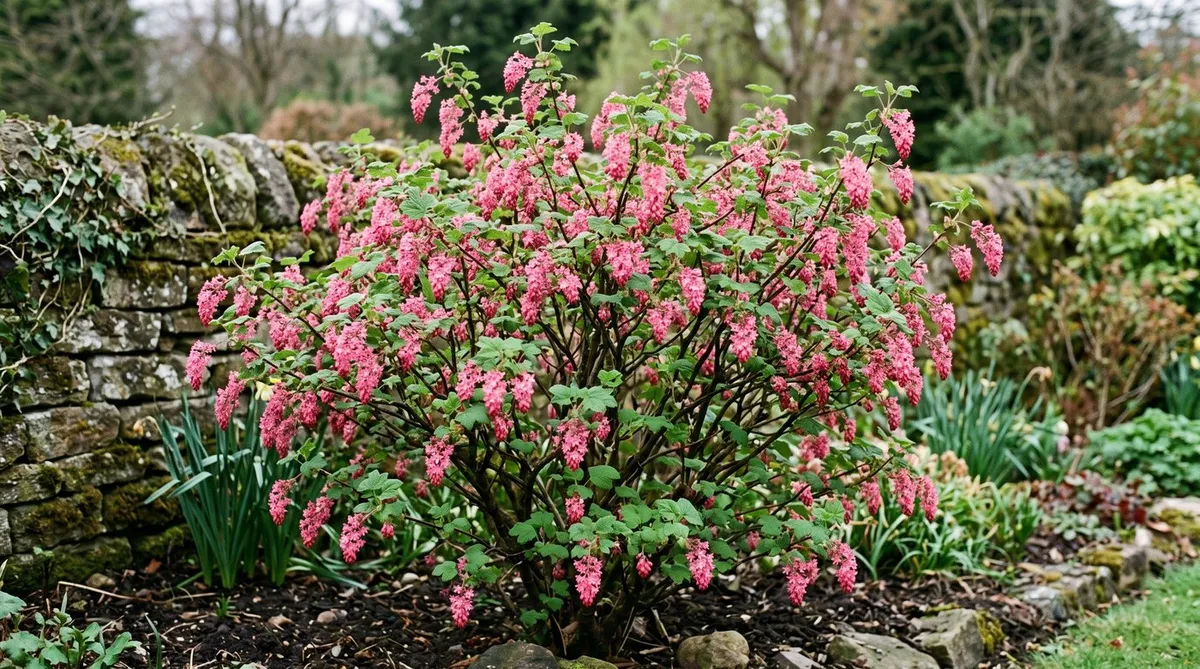
The flowers are the reason to grow it. They hang in drooping clusters called racemes, each one 5 to 7cm long and carrying 10 to 20 small tubular blooms. Colours run from soft pink through deep crimson to pure white, depending on the cultivar. The show opens in March and April, timed to the leaves emerging, and lasts about three to four weeks.
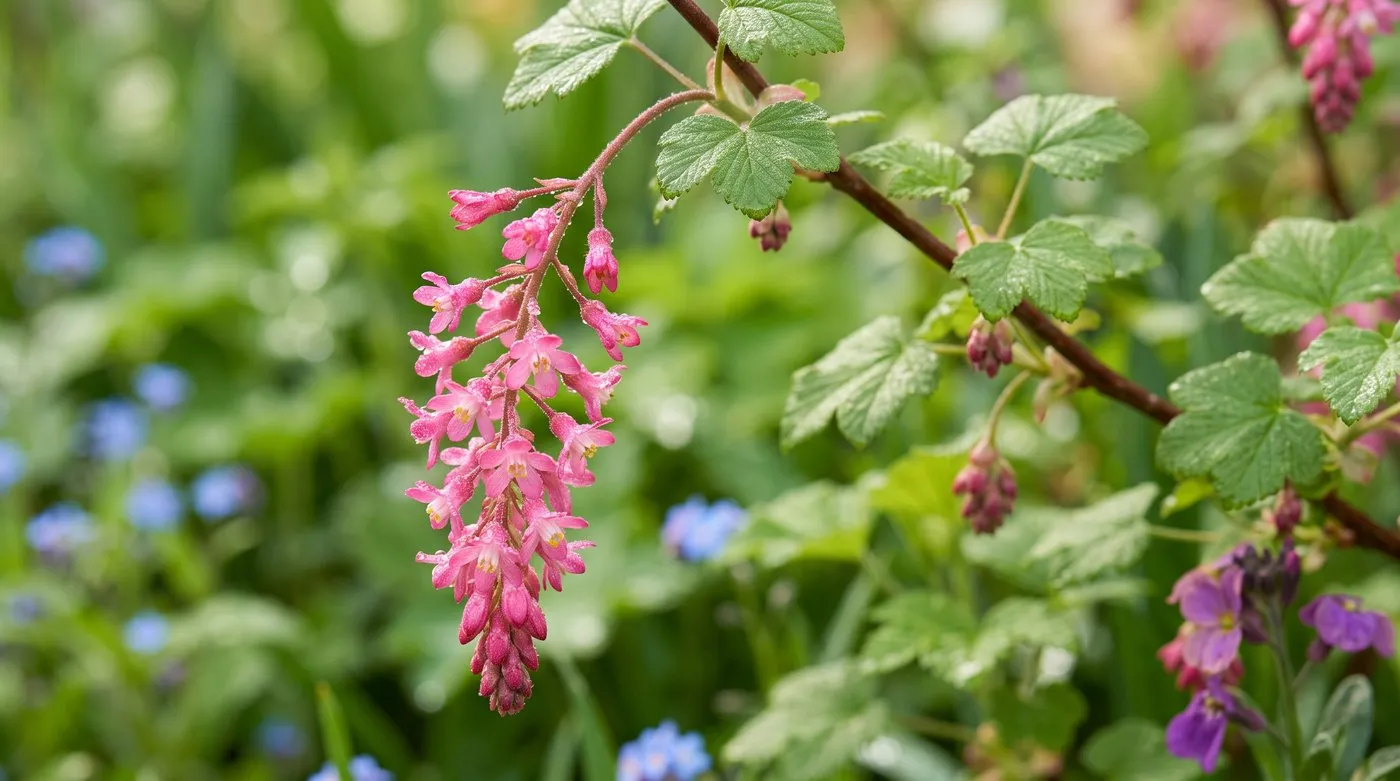 The hanging racemes of flowering currant, each 5 to 7cm long, open in March as the lobed leaves unfold. This is the feature that separates it from the edible currants.
Where flowering currant grows best
Flowering currant is one of the easiest shrubs to please. It grows in any reasonable soil, from our heavy clay-loam to free-draining sand, and copes with a soil pH of about 6.0 to 7.5. It only sulks in permanently waterlogged ground, where the roots rot.
It is fully hardy across the UK, rated RHS H6 and shrugging off temperatures down to about -20C. Wind, frost pockets and exposure barely trouble it. This toughness is why it turns up in so many older gardens, hedges and railway embankments. Plant it in autumn or early spring, water it in, and it establishes fast.
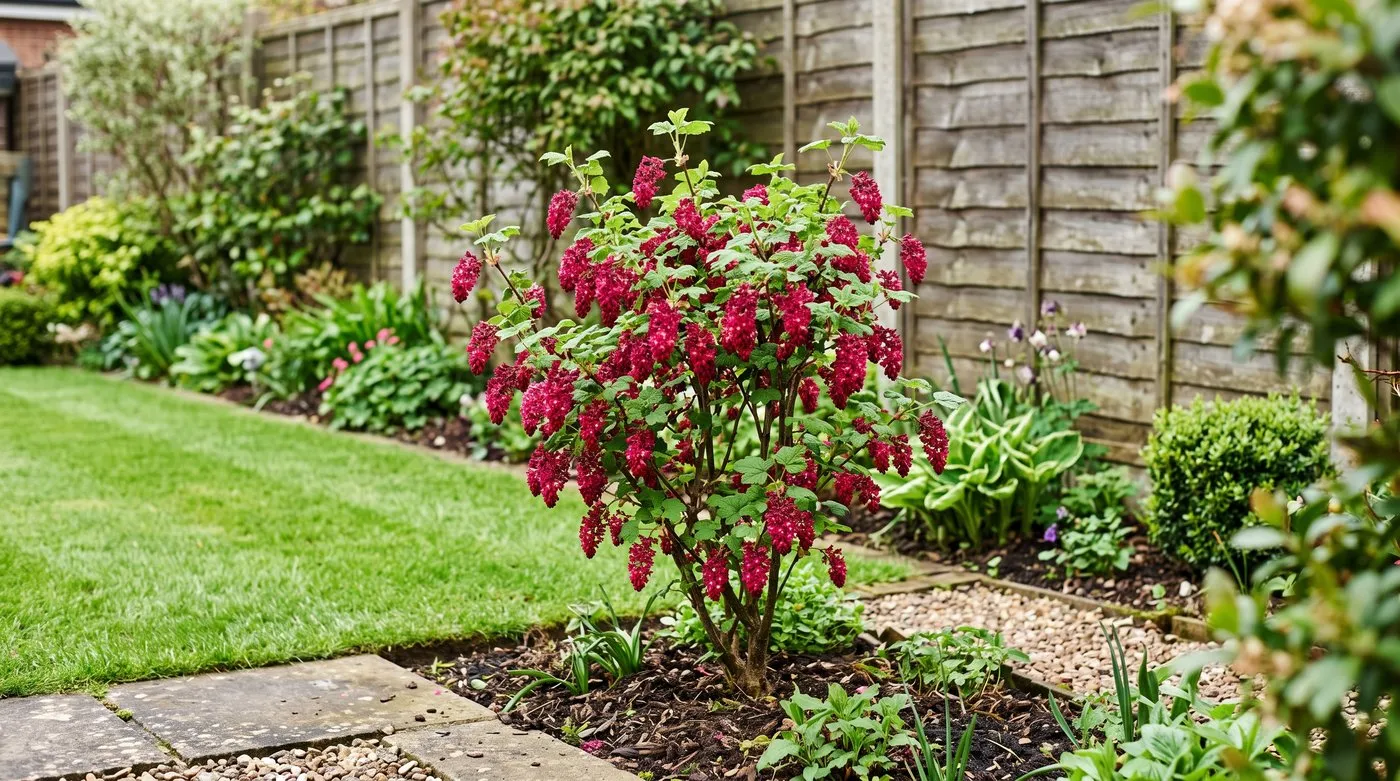 The compact cultivar ‘King Edward VII’ in a Midlands suburban border, its deep crimson racemes at their March peak. This form stays under 1.6m, so it suits smaller gardens.
Early nectar for emerging bumblebees
The real value of flowering currant is its timing. It flowers in the hungry gap of early spring, when queen bumblebees have just left hibernation and there is little else in bloom. Those early racemes are a genuine lifeline.
Because it feeds pollinators when the cupboard is bare, flowering currant slots neatly into a wildlife planting. Pair it with other spring feeders for an unbroken nectar chain. Our guide to early spring pollinator plants for UK gardens lists partners that flower alongside it, and the bumblebee species guide helps you tell the queens apart as they visit.
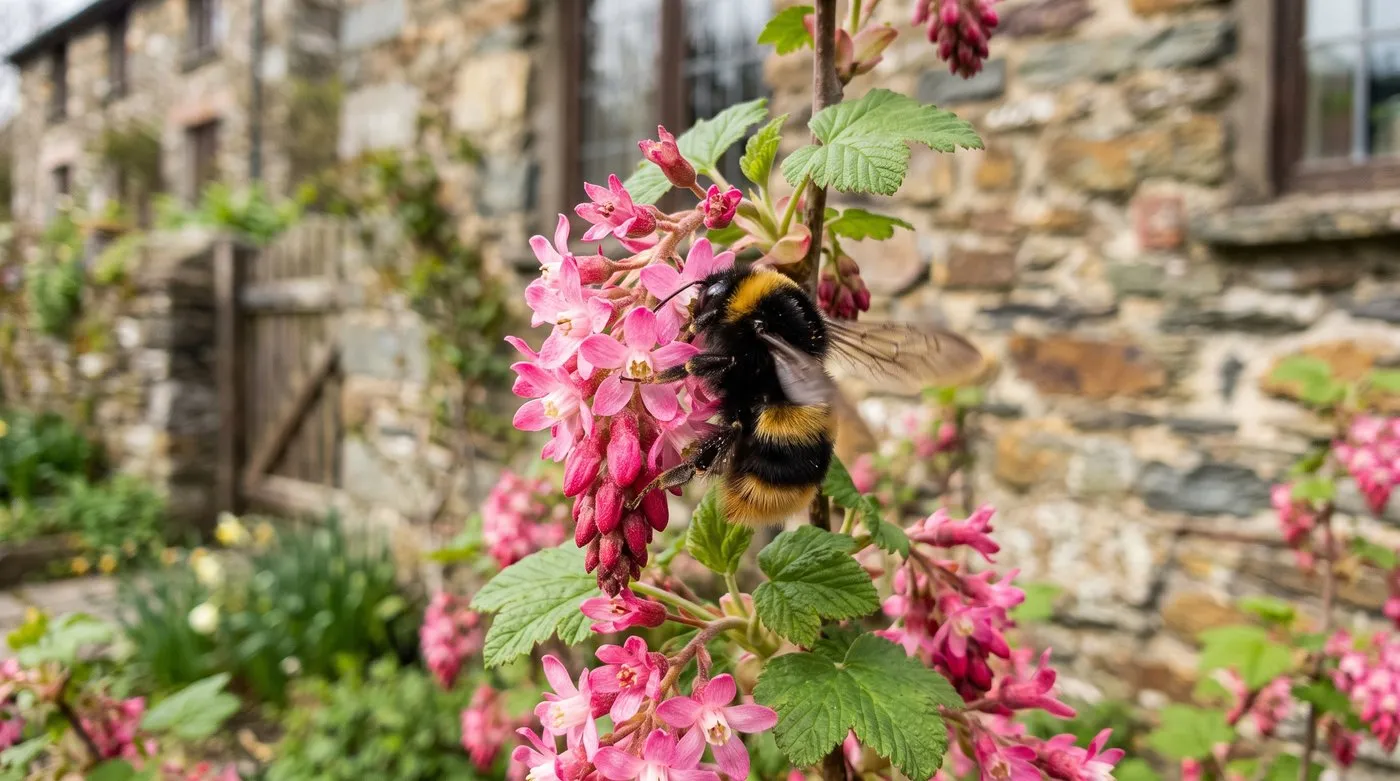 A buff-tailed bumblebee queen feeding on flowering currant in a Welsh garden. The March bloom fills the early nectar gap when little else is open.
Flowering currant varieties compared
‘Pulborough Scarlet’ was the strongest all-round performer, flowering hard every year and reaching 2.4m in six years. It holds an RHS Award of Garden Merit, the mark of a reliable garden plant. ‘King Edward VII’ gave the deepest colour on the most compact frame, ideal where space is tight. The white ‘White Icicle’ and low ‘Tydeman’s White’ suit a cooler, paler scheme. The yellow-leaved ‘Brocklebankii’ scorches in full sun, so give it light shade.
How to prune Ribes sanguineum after flowering
Pruning flowering currant is simple once you grasp one fact: it flowers on the previous year’s wood, the growth made last summer. Cut in winter and you slice off the coming spring’s flower buds. This is the single most common mistake, and it is why so many neglected bushes flower thinly.
The rule is to prune straight after flowering, in late April or May, so the shrub has the whole summer to grow new wood that will flower next spring. Renewal pruning keeps it young and floriferous:
- Wait until the last flowers fade, usually late April to mid-May.
- Cut out one stem in three of the oldest, thickest wood, taking it right down to the base.
- Remove any weak, dead or crossing stems to open the centre.
- Shorten one or two over-long shoots by a third if the shape needs balancing.
- Leave the youngest stems: these carry next spring’s flowers.
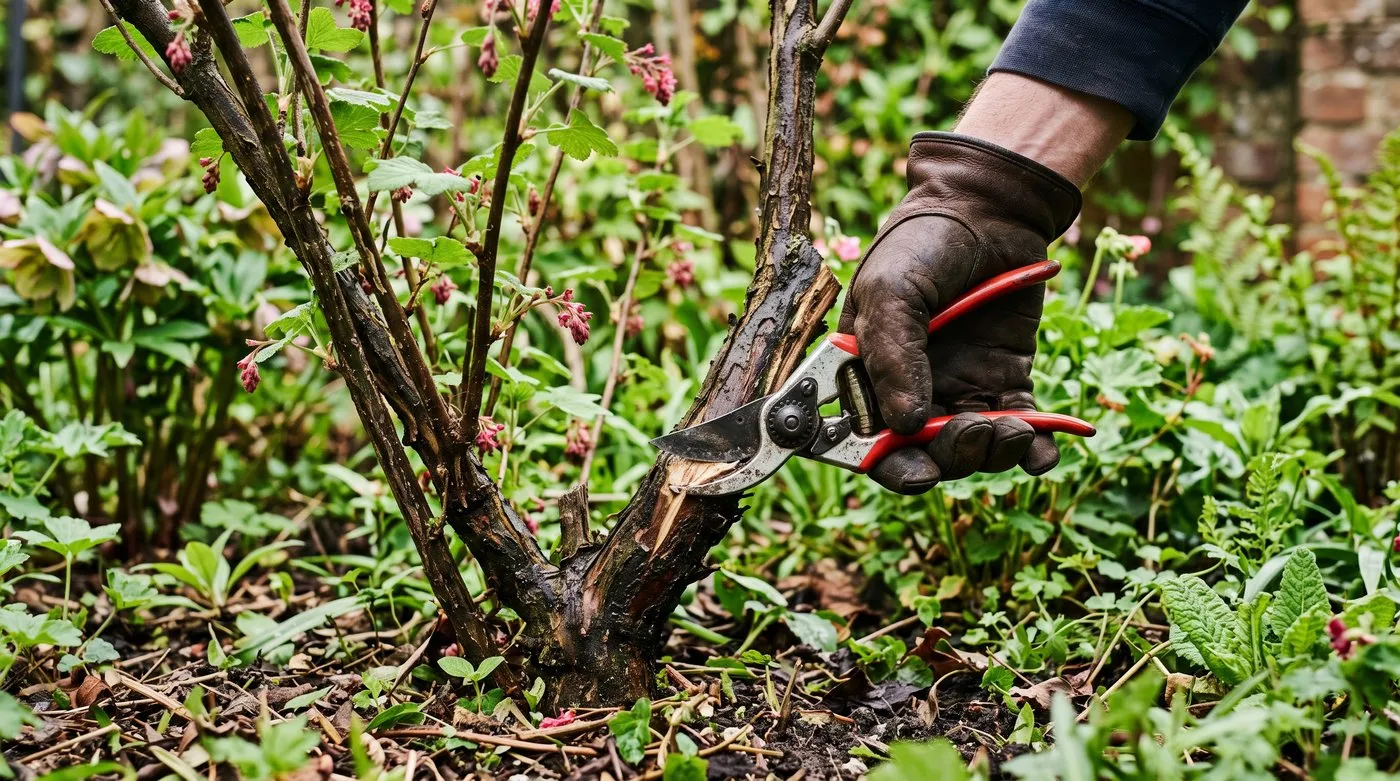 Renewal pruning: cutting one stem in three of the oldest wood to the base, straight after flowering. This keeps the shrub young without sacrificing next year’s blooms.
Gardener’s tip: Mark the oldest three or four stems with a loop of coloured wool while the plant is in flower. Once the blooms fade and the bush is a mass of leaves, those markers show you exactly which wood to remove without guessing.
Taking hardwood cuttings in autumn
Flowering currant is among the easiest shrubs to propagate, and hardwood cuttings cost nothing. Take them in late autumn, from October to December, once the leaves have dropped and the wood is firm.
Choose pencil-thick, straight shoots of this year’s growth. Cut lengths of 20 to 25cm, making a flat cut just below a bud at the base and a sloping cut above a bud at the top. The slope reminds you which way is up and sheds rain. Push each cutting two-thirds of its length into a slit trench of gritty soil outdoors, leaving two buds above ground, and firm them in.
Then leave them alone. No hormone, no cover, no watering beyond the first soak. Over winter they callus and root. Our 40-cutting batch of ‘King Edward VII’ rooted at 92 percent by the following October. Lift and pot the rooted cuttings, or move them straight to their final spot the next autumn. For the wider method across shrubs, see our guide to plant propagation by cuttings, division and layering.
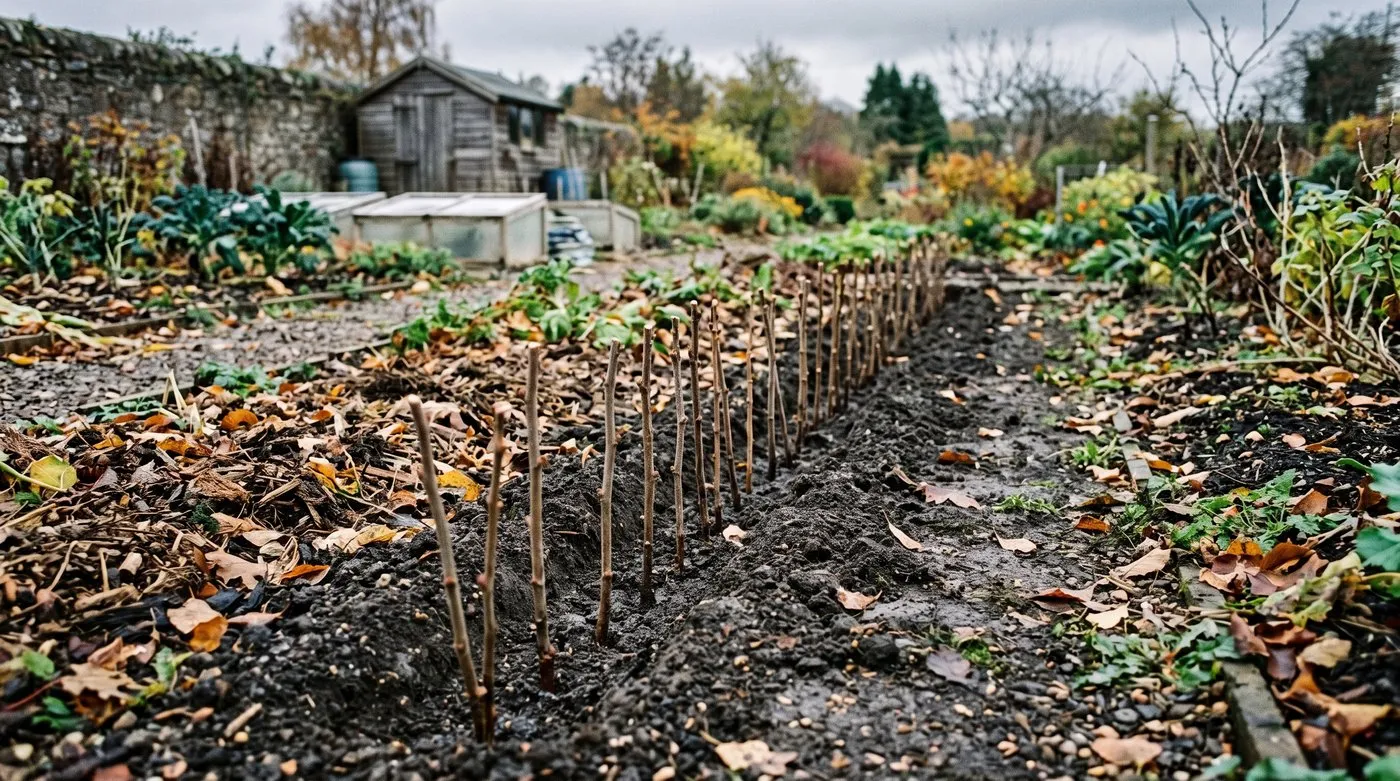 Hardwood cuttings pushed two-thirds deep into a slit trench in a Scottish garden. Taken in autumn and left over winter, they root at near 90 percent by the following year.
Growing flowering currant as an informal hedge
Its speed and toughness make flowering currant a fine informal flowering hedge. It is not a tight, clipped hedge like box or yew, but it gives a dense, relaxed screen with a wall of spring colour.
For a mixed native-style boundary, plant it among hawthorn and hazel for early colour before they leaf up. It pairs well with the taller options in our guide to fast-growing shrubs for UK gardens and sits happily alongside other easy performers from our best flowering shrubs roundup. A flowering currant hedge feeds bees in March and gives you cutting material each autumn.
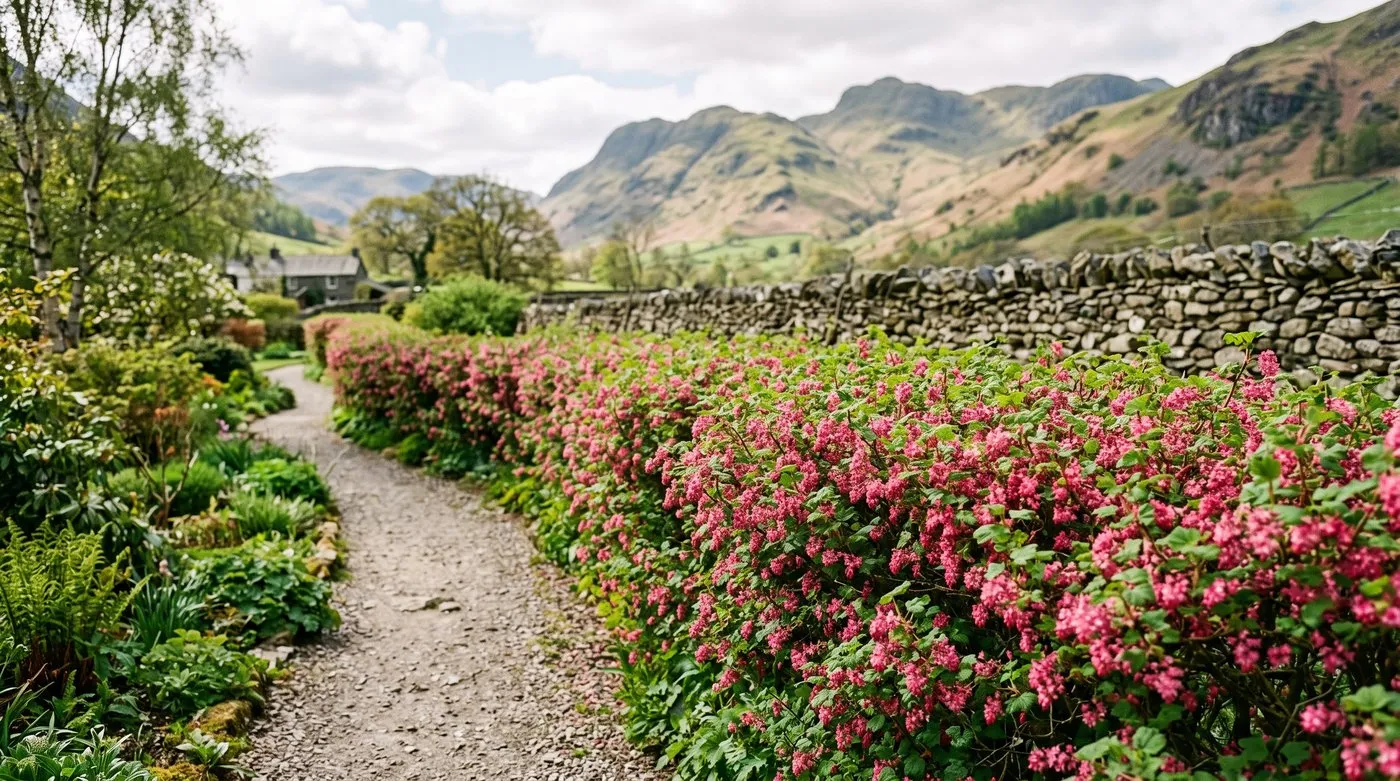 An informal flowering currant hedge in a Lake District garden, spaced 60 to 90cm apart and trimmed after flowering. It screens fast and blooms along its whole length.
Not an edible currant: telling the Ribes apart
Flowering currant sits in the genus Ribes alongside the edible blackcurrant, redcurrant and gooseberry. That shared name causes confusion, but the plants do different jobs. Ribes sanguineum is grown for flowers. Ribes nigrum, the true blackcurrant, is grown for fruit.
The differences are clear once you know them. Flowering currant makes showy hanging racemes and small, dark blue-black berries with a grey bloom that taste insipid and are not worth eating. Edible blackcurrant has smaller greenish flowers and glossy, aromatic fruit for jam and cordial. Crush a leaf of either and you get the same pungent blackcurrant or tomcat smell, so scent alone will not tell them apart. Rub a leaf before buying if the smell bothers you.
If you want fruit, grow the real thing: our guide to growing redcurrants and blackcurrants covers the edible side. For pure spring colour on a tough plant, flowering currant is the one. It also stands alongside early bloomers like forsythia in the same March slot.
Warning: Flowering currant is an alternate host of white pine blister rust, a fungal disease that can kill five-needle pines such as Weymouth pine and Bhutan pine. Do not plant it near vulnerable pines, and remove wild seedlings from their base. Ordinary two and three-needle pines and most garden conifers are not at risk.
Month-by-month flowering currant calendar
| Month | Task |
|---|---|
| January | Dormant. Plan any new planting. Do not prune, or you lose the spring flowers. |
| February | Plant bare-root or potted shrubs while dormant. Mulch established plants with compost. |
| March | First racemes open. Feed emerging bumblebees. Enjoy the show and do nothing else. |
| April | Peak flowering. Continue planting potted stock. Water new plants if the spring is dry. |
| May | Flowers fade. Prune now: cut one stem in three of the oldest wood to the base. |
| June | New growth builds the wood that flowers next year. Water young plants in dry spells. |
| July | Little to do. The shrub is quietly making next spring’s flowering wood. |
| August | Light shaping only if needed. Avoid hard cuts that remove developing flower buds. |
| September | Take softwood or semi-ripe cuttings if you want an early batch. Plant new shrubs. |
| October | Leaves colour and drop. Take hardwood cuttings from pencil-thick shoots. |
| November | Prime time for hardwood cuttings. Plant bare-root shrubs and hedging. |
| December | Fully dormant. Firm any cuttings lifted by frost. Leave pruning until after flowering. |
Common mistakes when growing flowering currant
- Pruning in winter. This is the big one. The shrub flowers on last year’s wood, so a winter cut removes the coming spring’s blooms. Always prune straight after flowering, in late April or May.
- Hard-pruning all at once. Shearing the whole bush back in one go strips off every flowering stem. Renew it gradually instead, taking one stem in three of the oldest wood each year.
- Planting near five-needle pines. Flowering currant hosts white pine blister rust. Keep it well away from Weymouth, Bhutan and other five-needle pines to break the disease cycle.
- Expecting edible fruit. The berries look like currants but taste insipid and are not grown for eating. If you want fruit, plant a true blackcurrant, Ribes nigrum, instead.
- Buying without a sniff test. The crushed foliage smells strongly of blackcurrant or tomcat. Some people dislike it near a path or door. Rub a leaf at the nursery before you commit.
Now you have flowering currant blooming and feeding bees each March, read our guide to pruning shrubs the right way for the next step, or browse more spring performers across the plants section to fill the rest of the border.
Frequently asked questions
When should I prune flowering currant?
Prune flowering currant straight after it finishes flowering, in late spring. It flowers on the previous year’s wood, so cutting in winter removes the coming spring’s blooms. Take out one stem in three of the oldest wood to the base each year, plus any weak or crossing shoots. This renews the shrub without losing next year’s flowers.
How big does Ribes sanguineum get?
Is flowering currant the same as blackcurrant?
No, flowering currant is grown for flowers, not fruit. Both belong to the genus Ribes, but the edible blackcurrant is Ribes nigrum. Flowering currant fruit is small, dark blue-black and insipid, so it is not worth eating. The two are close cousins with very different jobs in a garden.
Why does my flowering currant smell?
The foliage gives off a pungent blackcurrant or tomcat smell when crushed. Some gardeners dislike it, others barely notice. Rub a leaf before you buy, and site the shrub away from paths and doorways if the scent bothers you. The flowers themselves have only a faint honey note.
Does flowering currant grow in shade?
Yes, flowering currant grows in partial shade, though it flowers best in sun. In deep shade it flowers thinly and grows leggy. Give it at least three to four hours of direct sun for a strong March display. A spot in dappled light under high trees works well.
How do you take flowering currant cuttings?
Take pencil-thick hardwood cuttings, 20 to 25cm long, in autumn. Push them two-thirds deep into gritty soil outdoors and leave them over winter. They root at near 90 percent by the following autumn, making this one of the easiest shrubs to propagate. Choose a cool, sheltered spot rather than a warm one.
Can you grow flowering currant as a hedge?
Yes, flowering currant makes a good informal flowering hedge. Space plants 60 to 90cm apart and trim lightly straight after flowering. It gives a dense screen 1.5 to 2m tall with a wall of pink blooms each spring. It is not tight enough for a formal, clipped hedge.
Should I plant flowering currant near pine trees?
No, keep flowering currant away from five-needle pines. It is an alternate host of white pine blister rust, a disease that can kill vulnerable pines. The rust needs both hosts to complete its cycle. Ordinary two and three-needle pines and most garden conifers are not at risk.
Our team produces practical UK gardening guidance from source research, contributor records and established horticultural practice. Editorial standards are overseen by Matt W.