Key takeaways
- Two separate symbioses exist: Rhizobium bacteria on legumes, and the actinobacterium Frankia on alder, sea buckthorn, bog myrtle and Ceanothus
- Red clover tops the UK range at 150-250 kg N per hectare per year; field beans manage only 25-70 kg
- Cut a nodule open: pink inside means active fixation, white or green means it is doing nothing
- Living legumes release under 5% of fixed nitrogen to neighbours, so companion planting beans with sweetcorn does not feed the sweetcorn
- Harvest the pods and you export most of the fixed nitrogen; roots and nodules alone leave roughly 15-30 kg N per hectare
- Nitrogenase burns 16 ATP per nitrogen molecule, which is why plants stop fixing when soil nitrogen is already high
Nitrogen fixing plants are the closest thing gardening has to free fertiliser, and also the most oversold idea in the whole subject. The mechanism is real: bacteria living inside root nodules break apart atmospheric nitrogen and hand the plant usable ammonia. What almost every list of nitrogen fixing plants gets wrong is what happens next. The nitrogen does not flow sideways into your sweetcorn. It goes into the legume, stays in the legume, and comes out only when the legume dies.
This guide covers the eighteen species worth growing in Britain, ranked by how much nitrogen they actually fix, plus the two entirely separate symbioses behind them. It also covers why the companion planting advice you have read is wrong, and what to do instead.
How root nodules actually make nitrogen
The air above your garden is 78% nitrogen gas, and not one plant can use a molecule of it. Nitrogen gas is N2, two atoms locked together by a triple bond that takes roughly 945 kilojoules per mole to break. Plants have no tool for that job. Certain bacteria do.
The catch is cost. Fixing one molecule of N2 burns about 16 molecules of ATP, the cell’s energy currency. The plant pays that bill in sugar made by its own leaves. Estimates put the cost at roughly 6-12 grams of carbon per gram of nitrogen fixed. This is a purchase, not a gift, and it explains almost everything else in this article.
Nitrogenase has a second problem: oxygen destroys it. Any nitrogen fixing partnership has to solve the contradiction of running an oxygen-poisoned enzyme inside a living root sitting in aerated soil. The two symbioses below solve it in completely different ways.
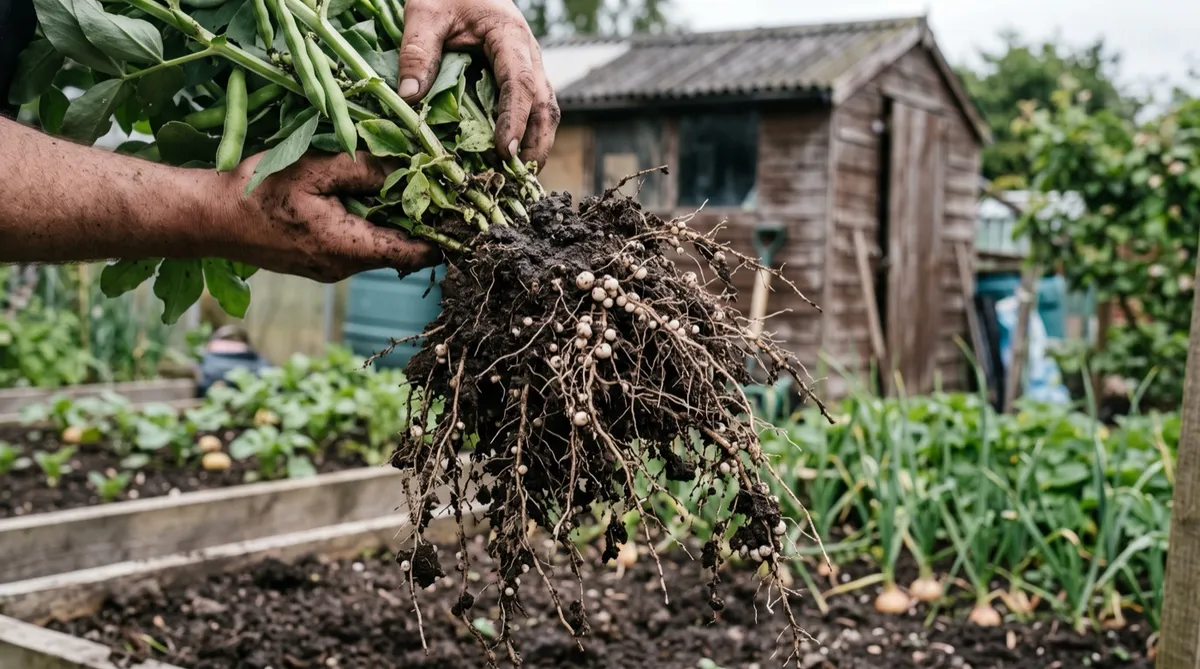
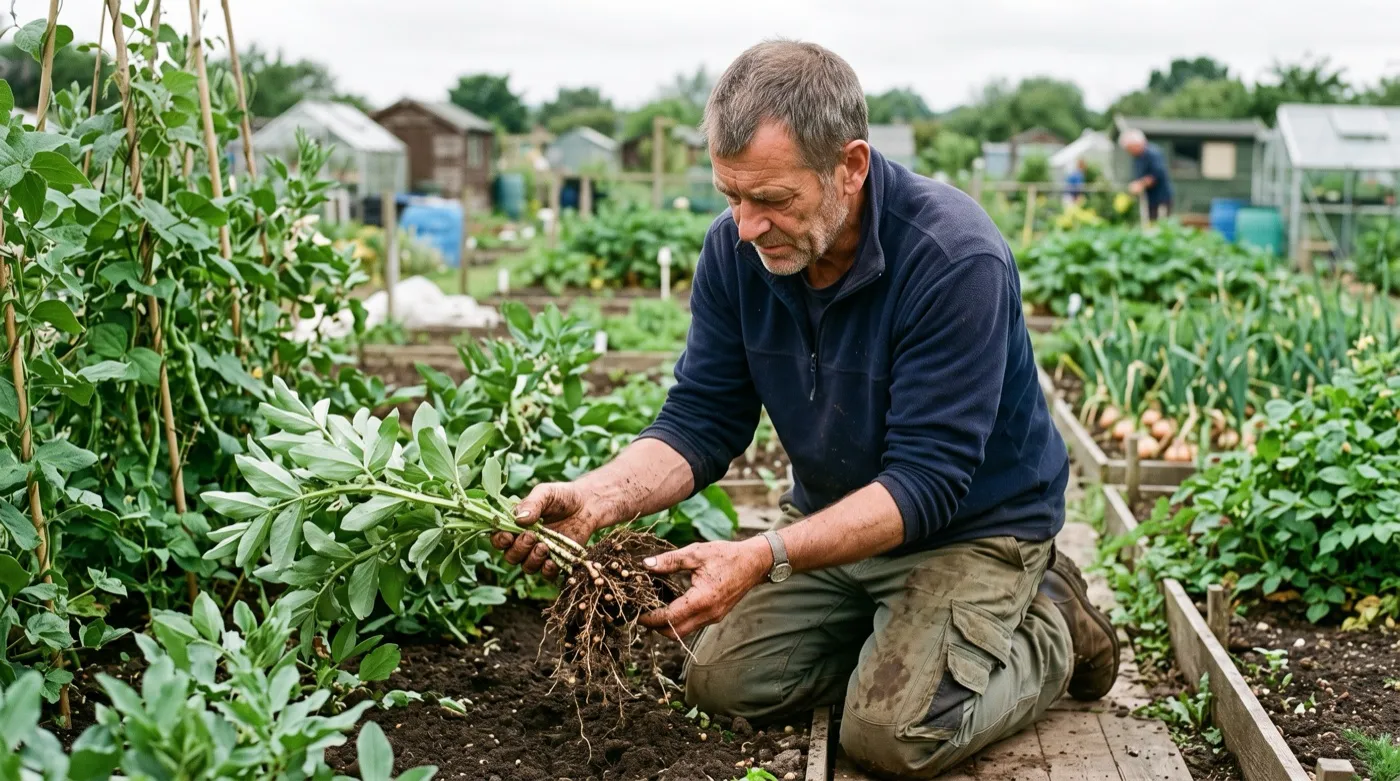 Lift a broad bean at flowering and the nodules are obvious: pale lumps clustered along the finer roots, most in the top 150mm of soil.
Rhizobium and Frankia are not the same thing
Nearly every article on nitrogen fixing plants treats this as one phenomenon. It is two, and the difference decides what you can plant where.
Rhizobium and its relatives (Bradyrhizobium, Mesorhizobium, Sinorhizobium) are proteobacteria. They partner exclusively with the legume family, Fabaceae: clover, peas, beans, vetch, lupins, gorse, broom, laburnum, Siberian pea tree. The bacterium detects flavonoid chemicals leaking from a root, replies with signalling molecules called Nod factors, and the root hair curls around it to let it in. The plant then builds a nodule around the invader.
The oxygen problem is solved with leghaemoglobin, an oxygen-binding protein closely related to the haemoglobin in your blood. It is why an active nodule is pink inside. That pink is not decoration. It is the plant mopping up free oxygen to keep nitrogenase alive.
Frankia is a different organism entirely: a filamentous actinobacterium, more closely related to the bacteria that make streptomycin than to Rhizobium. It partners with about 200 plant species across eight families, none of them legumes. In Britain that means alder (Alnus glutinosa), sea buckthorn (Hippophae rhamnoides), bog myrtle (Myrica gale), Elaeagnus and Ceanothus. These are called actinorhizal plants.
Frankia protects its nitrogenase differently, inside thick-walled cells called vesicles wrapped in layers of hopanoid lipids. The lipid envelope thickens as soil oxygen rises, so the bacterium adjusts its own armour to the site. Actinorhizal nodules are also structurally different: perennial, woody and coral-like, branching year on year until a mature alder carries clusters the size of a fist.
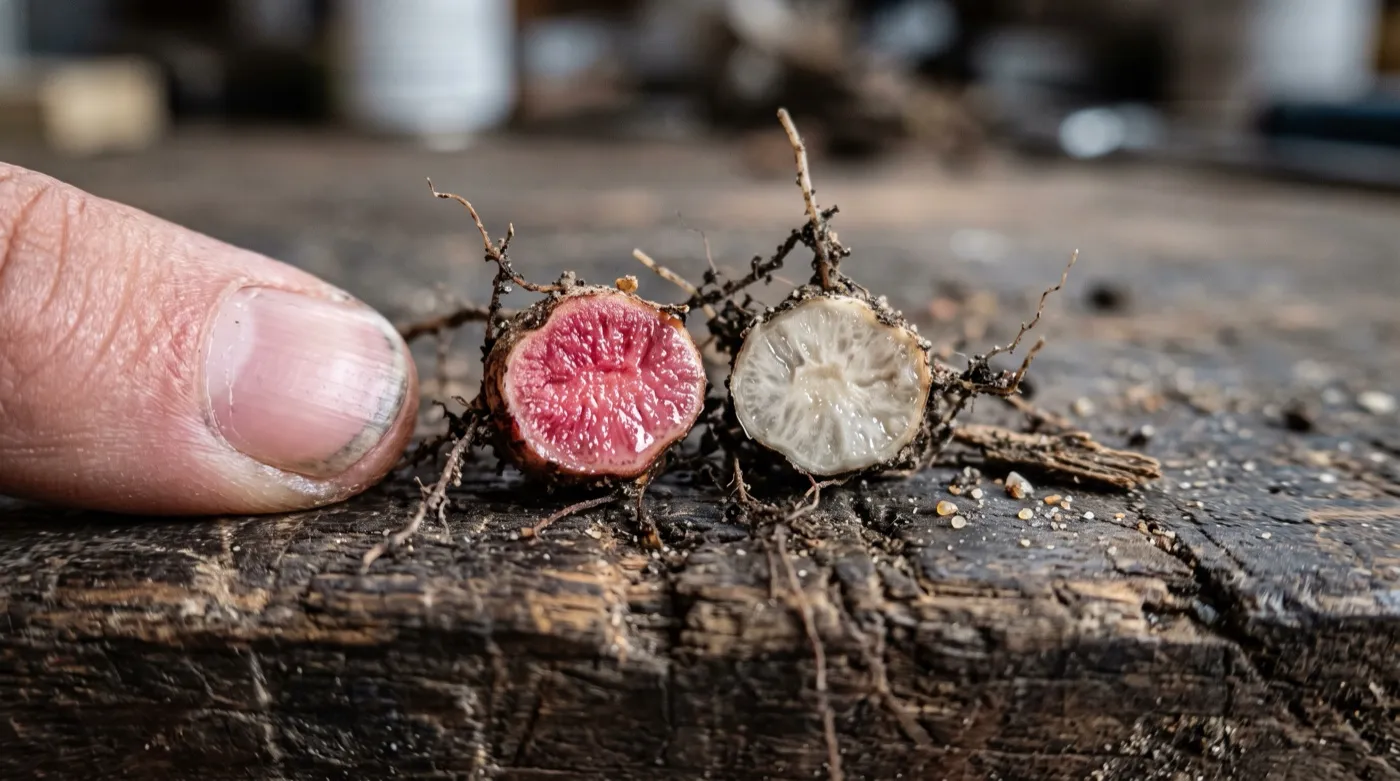 The nodule test. Pink inside means nitrogenase is running. The white nodule beside it is fixing nothing.
The myth that legumes feed their neighbours
Here is the claim, repeated on almost every gardening site in Britain: plant beans with your sweetcorn and the beans will feed the sweetcorn nitrogen. It is wrong, and it has been known to be wrong for decades.
Follow the nitrogen. Ammonia made in a nodule is converted immediately into amides (asparagine, glutamine) or ureides (allantoin), loaded into the xylem, and shipped upward into the plant’s own leaves, stems and developing seed. There is no mechanism that pumps it sideways into a plant of a different species. Evolution did not build one, because there is nothing in it for the legume, which has just paid a heavy sugar bill for that nitrogen.
The nitrogen is real. The timing is the whole point. It becomes available when the plant dies and decays, as soil microbes mineralise the nitrogen in the tissue back into ammonium and then nitrate. That takes weeks to months, and it happens whether the plant is a cut green manure or a spent bean haulm.
Warning: Harvesting your peas and beans exports most of the nitrogen. The seed is the nitrogen sink: it is where the plant deliberately concentrates everything it fixed. Pick the pods and you carry it off the plot in a trug. Roots and nodules left behind are worth roughly 15-30 kg N per hectare, which is about a fifth of what people assume. You cannot eat the crop and bank the fertility. Pick one.
Nitrogen fixing plants for UK gardens compared
Ranked by nitrogen fixed per hectare per year under UK conditions. Figures are field-measured ranges, and the spread is wide because site, soil and season all move them.
| Species | Type | N fixed (kg/ha/yr) | UK hardiness | Best use |
|---|---|---|---|---|
| Alder (Alnus glutinosa) | Tree, actinorhizal | 40-300 | H6, to -20C | Wet ground, shelter belts, coppice |
| Red clover (Trifolium pratense) | Short-lived perennial | 150-250 | H6, to -20C | Best all-round green manure, 2-year ley |
| Lupin (Lupinus angustifolius) | Annual | 100-180 | H4, to -10C | Acid and sandy soil, deep taproot |
| Sea buckthorn (Hippophae rhamnoides) | Shrub, actinorhizal | 60-180 | H6, to -20C | Coastal, pure sand, edible berries |
| Winter tare / vetch (Vicia sativa) | Annual | 80-150 | H5, to -15C | Overwinter cover, sow Aug to Sep |
| White clover (Trifolium repens) | Perennial | 70-150 | H6, to -20C | Lawns, paths, permanent understorey |
| Gorse (Ulex europaeus) | Shrub | 60-120 | H6, to -20C | Poor acid ground, exposed sites |
| Broom (Cytisus scoparius) | Shrub | 50-120 | H5, to -15C | Dry sandy banks, quick cover |
| Bog myrtle (Myrica gale) | Shrub, actinorhizal | 30-100 | H6, to -20C | Acid bog, damp wildlife corners |
| Ceanothus | Shrub, actinorhizal | 30-90 | H3-H4, to -5C | Sheltered walls, southern gardens |
| Siberian pea tree (Caragana arborescens) | Small tree | 40-90 | H7, to -25C | Windbreaks, cold and exposed plots |
| Broad bean (Vicia faba) | Annual | 40-150 | H5, to -15C | Edible crop, autumn or spring sown |
| Crimson clover (Trifolium incarnatum) | Annual | 50-120 | H4, to -10C | Fast summer green manure, bees |
| Alfalfa / lucerne (Medicago sativa) | Perennial | 100-200 | H5, to -15C | Deep taproot, needs pH above 6.5 |
| Bird’s-foot trefoil (Lotus corniculatus) | Perennial | 30-80 | H6, to -20C | Wildflower turf, poor thin soil |
| Laburnum | Small tree | 20-60 | H6, to -20C | Ornamental only, seeds toxic |
| Runner bean (Phaseolus coccineus) | Annual | 30-70 | H2, tender | Edible crop, fixes modestly |
| Field bean (Vicia faba var. minor) | Annual | 25-70 | H5, to -15C | Winter cover, the weakest fixer here |
Two things jump out of that table. First, the actinorhizal plants sit at the top and the bottom, because Frankia’s output depends enormously on site: an alder in wet ground is a machine, an alder on dry chalk is barely trying. Second, the crops you eat are mostly poor fixers. Runner beans and field beans are near the bottom. The plants at the top are the ones you grow specifically to kill.
Choosing by soil matters as much as choosing by rate. Lupins and sea buckthorn thrive on the free-draining ground covered in our guide to the best plants for sandy soil, while alder wants the opposite. If you do not know what you are working with, start with identifying your UK soil type before you buy anything.
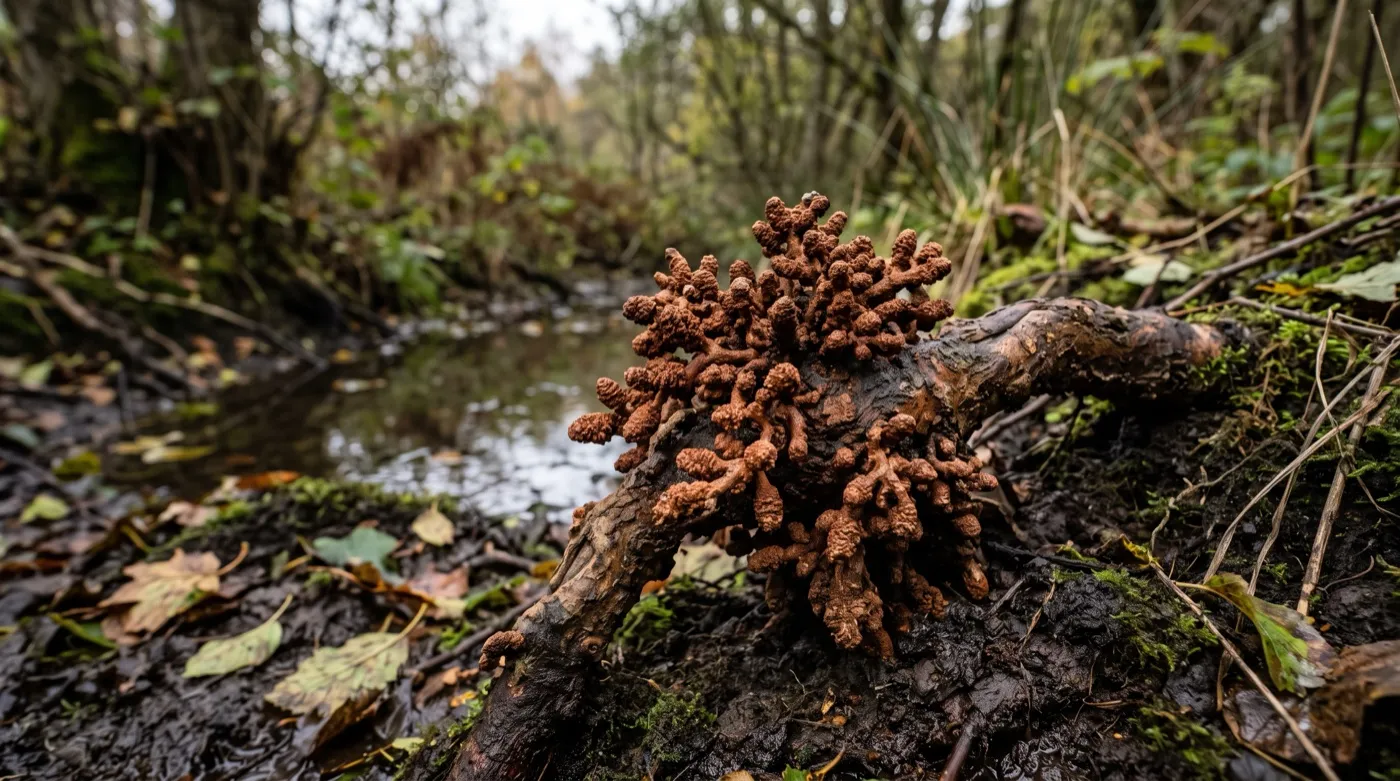 Frankia nodules on alder are nothing like a legume’s. They are woody, perennial and branch year on year into coral-like clusters.
Alder, sea buckthorn and the actinorhizal shrubs
The Frankia plants get overlooked because they are not vegetables. On a difficult site they are far more useful than any legume.
Alder is the one to reach for on wet ground. It fixes nitrogen while standing in soil that would drown almost anything else, coppices readily, and grows fast: 1.5-2m a year on a good site in youth. Common alder (Alnus glutinosa) is native and supports a long list of invertebrates. Italian alder (A. cordata) tolerates far drier ground and is the better choice on chalk. Both are covered alongside other options in our roundup of the best small native trees for UK gardens.
Sea buckthorn does something almost nothing else manages. It fixes nitrogen in pure coastal sand, tolerates salt spray, and holds dunes together with a spreading root system. The berries carry roughly 400-1,200mg of vitamin C per 100g, several times a blackcurrant. Two warnings: it suckers aggressively and will cross a lawn in a decade, and it is dioecious, so you need a male plant for roughly every six females to get fruit.
Bog myrtle is a plant for a wet acid corner. It fixes nitrogen, the foliage releases a resinous scent that has been used against midges in the Highlands for centuries, and it is a genuine native. It will not tolerate lime.
Ceanothus is the ornamental option, and the only one on this list that most gardeners already own without knowing it fixes nitrogen. It is also the least hardy: most cultivars fail below about -5C, so it wants a sheltered wall in the south rather than an open garden in Aberdeenshire.
Our own shelter belt on free-draining sand near Formby went in during 2018: eleven alders and nine sea buckthorn. By 2026 the alders average 6.2m with no feeding of any kind, and the grass beneath them is visibly darker green than the grass in the open twenty metres away. That is the nitrogen, arriving the way it actually arrives: through eight years of leaf litter rotting down.
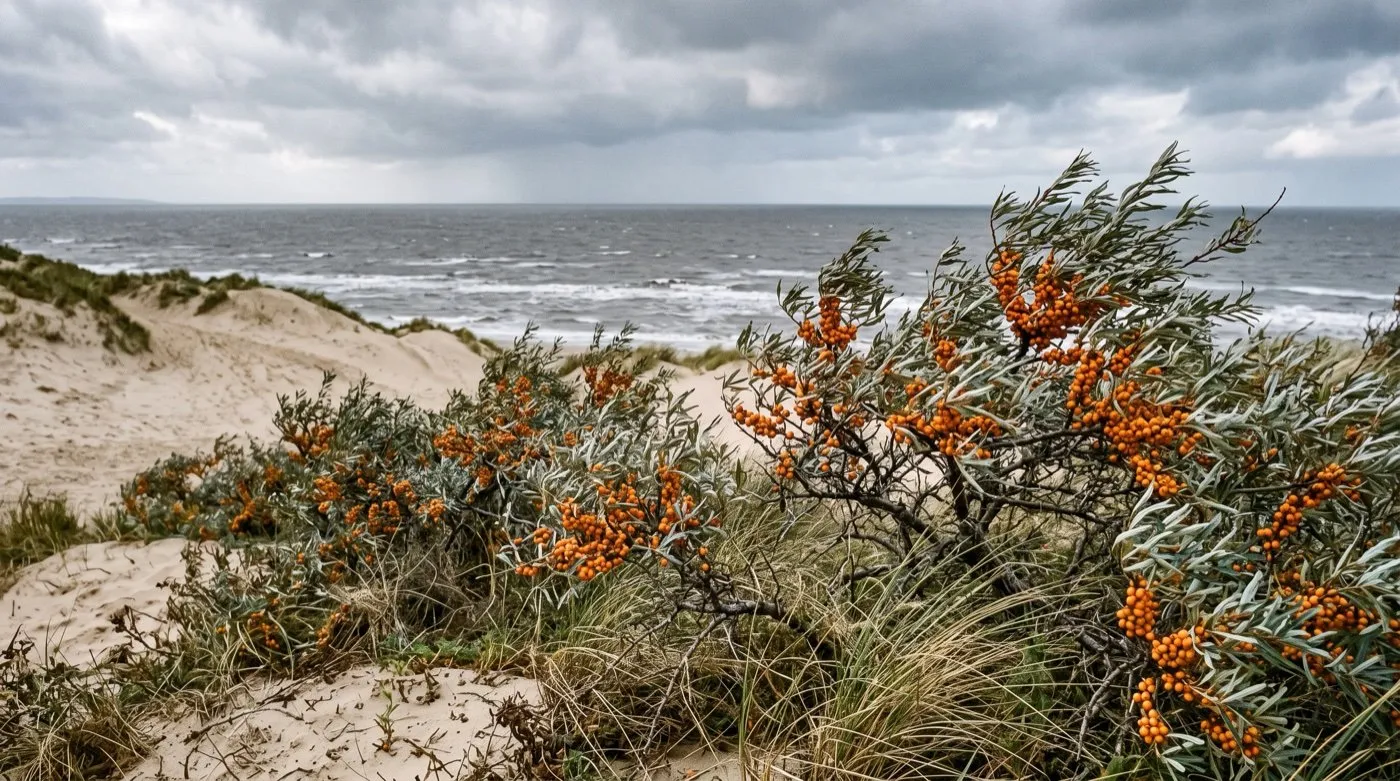 Sea buckthorn fixing nitrogen in pure dune sand near Formby. Almost nothing else will do this, and the berries are edible.
Timing is what people get wrong. Cut at flowering, not at seed. Nitrogen concentration in the tissue peaks around flowering and then falls sharply as the plant moves it into the seed. Cut a clover ley at full flower and the material carries roughly 3-4% nitrogen by dry weight. Let it set seed first and it drops towards 1.5-2%. You have halved the return by waiting a fortnight.
Sowing rates, timings and species choice for a full rotation are a separate subject, covered in the guide linked at the end of this article. This one is about the plants and the biology behind them.
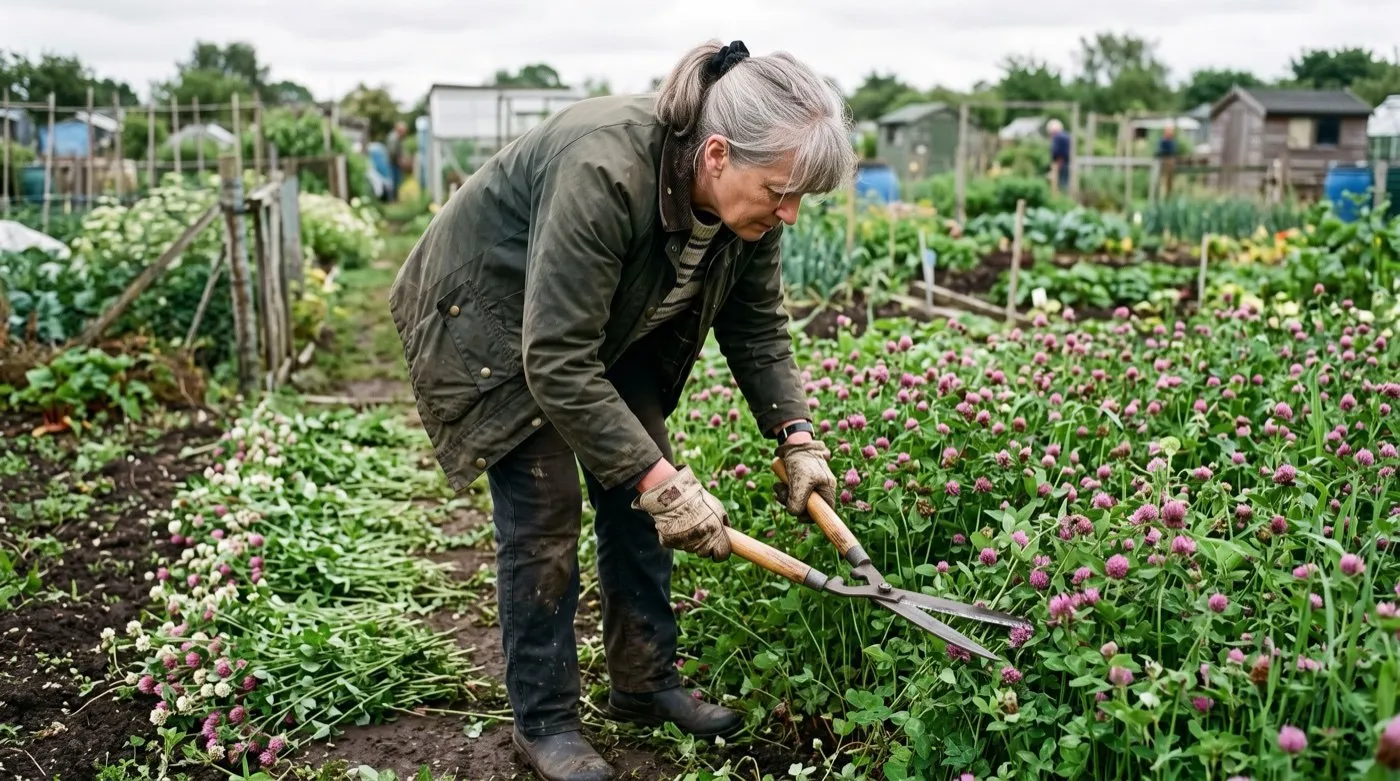 Cut green manure at flowering, never at seed. Nitrogen in the tissue peaks at flower and falls by roughly half once the plant sets seed.
The root cause: nitrogen is not the shortage you think it is
Most gardeners reaching for nitrogen fixing plants have diagnosed the wrong problem. They see poor growth, assume nitrogen, and plant clover. Often the actual constraint is organic matter, structure or pH, and the clover will not fix the problem because the clover is also struggling.
Three things suppress fixation regardless of how good your species choice is:
Soil nitrate that is already high. Fixation costs 16 ATP per molecule. If nitrate is freely available, the plant absorbs it directly and shuts nodulation down. Sow clover into ground you have just manured heavily and you get clover with almost bare roots. The plants are not broken. They are being rational. Our comparison of artificial and natural fertilisers covers what heavy feeding does to soil biology more widely.
Low pH. Rhizobium survival collapses below about pH 5.5. Alfalfa is the fussiest, wanting 6.5 or above. This is why clover thins out of an acid lawn and moss takes over: the bacteria went first, then the plant.
Phosphorus and molybdenum shortage. Nitrogenase contains a molybdenum-iron cofactor at its active site. No molybdenum, no enzyme. Nodule formation is also phosphorus-hungry. A plot short of P will nodulate badly no matter how much clover seed you scatter, which is a large part of why fixation on poor ground underperforms the textbook figures.
The permanent fix is not more legumes. It is getting pH into the 6.0-7.0 band, getting organic matter in, and only then expecting fixation to do its job. The Garden Organic guidance on green manures is sound on this sequencing. Where you genuinely need nitrogen this season rather than in two years, a bulky animal manure does the job faster than any plant will.
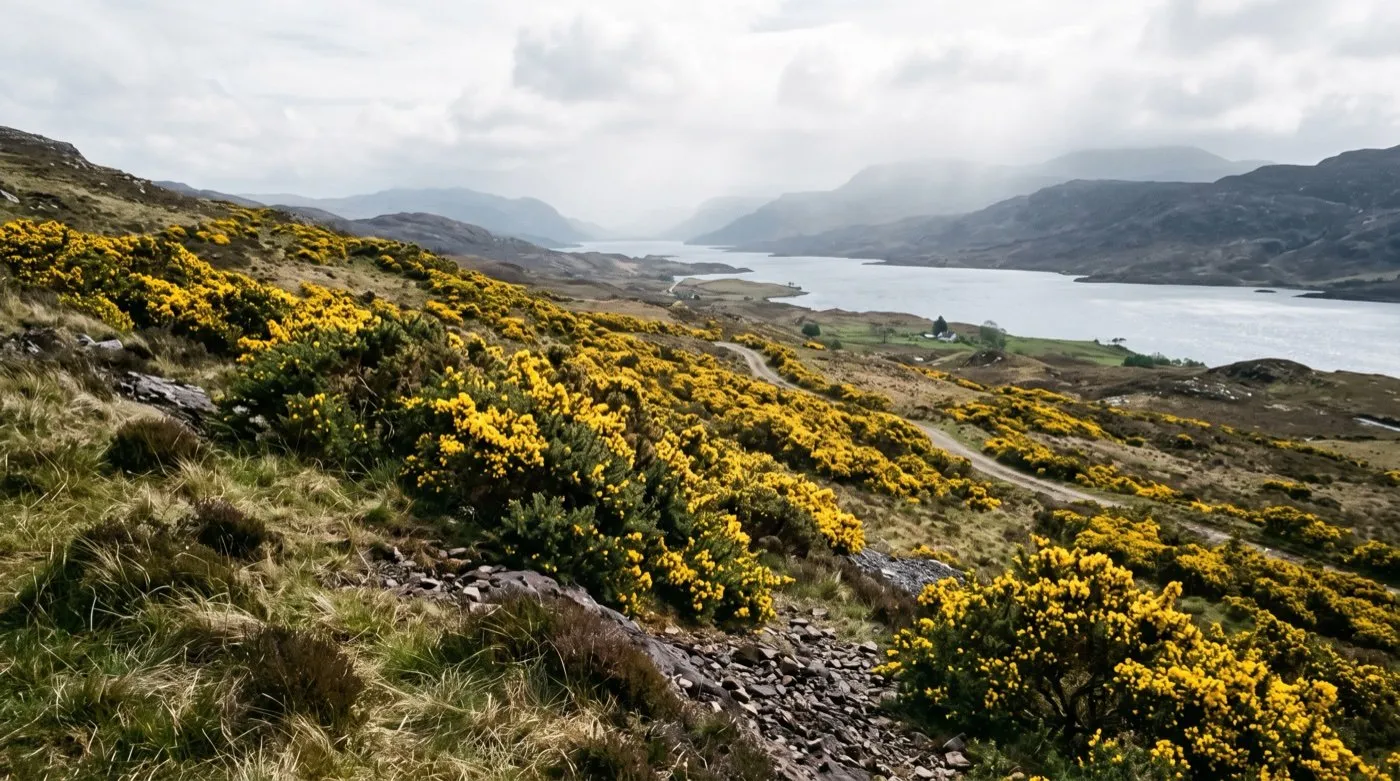 Gorse fixing nitrogen on thin acid soil in Scotland. It builds fertility on ground where nothing needed feeding in the first place.
Month by month with nitrogen fixing plants
| Month | Task |
|---|---|
| January | Plan the rotation. Order clover and vetch seed before spring prices rise. |
| February | Plant bare-root alder, sea buckthorn and Siberian pea tree while dormant. |
| March | Sow lupins as soil passes 8C. Last window for bare-root actinorhizal shrubs. |
| April | Sow red clover and alfalfa. Lift a bean plant and score the nodules. |
| May | Sow crimson clover for a fast summer cut. Nodules should be pink by now. |
| June | First cut of red clover at full flower. Leave every scrap on the surface. |
| July | Cut broad bean haulm at flowering if you want fertility rather than pods. |
| August | Sow winter tare from mid-month for overwinter cover on cleared beds. |
| September | Last safe tare sowing. Sow field beans on heavy ground that stays wet. |
| October | Second red clover cut before growth stops. Collect sea buckthorn berries. |
| November | Dig nothing in. Let worms take the residue down over winter. |
| December | Check pH on any bed where clover thinned out. Lime now if under 5.5. |
Common mistakes with nitrogen fixing plants
- Interplanting beans with a hungry crop and expecting a feed. Under 5% of fixed nitrogen moves in season. What your sweetcorn actually gets is shade and root competition. Grow the legume first, kill it, then plant the hungry crop into the ground six weeks later.
- Harvesting the crop and still counting the fertility. The nitrogen is in the seed. Pick the pods and you took it home. Roots and nodules alone leave roughly 15-30 kg N per hectare, not the 150 the seed packet implies.
- Digging the green manure in. Burying fresh green material creates an anaerobic layer that stalls decomposition. Cut it and leave it on the surface. The worms are better at this than a spade.
- Cutting at seed instead of at flower. Tissue nitrogen peaks at flowering and roughly halves once seed sets. A fortnight of impatience costs you half the return.
- Buying inoculant you do not need. UK soils already carry rhizobia for peas, beans, clover and vetch. Lupins on ground with no lupin history are the only case worth the £8-12.
- Planting Ceanothus in an exposed northern garden. It is actinorhizal and useful, but most cultivars die below -5C. It is a sheltered southern wall shrub, not a Pennine hedge.
What nitrogen fixing plants are genuinely for
Strip out the folklore and the picture is simple. Nitrogen fixing plants are not a companion planting trick and not an in-season feed. They are a way of banking atmospheric nitrogen into plant tissue, which you then release on your own schedule by killing the plant.
Used that way they work extremely well. A two-year red clover ley genuinely rebuilds a tired bed. An alder belt genuinely fertilises the ground under it, over eight years, through leaf litter. Sea buckthorn genuinely turns dune sand into something that will grow other things. None of it is fast, and none of it happens while the plant is alive and green and looking helpful next to your courgettes.
The gardeners who get the most out of this understand that they are running a slow bank account, not a tap. For more on feeding your soil across the whole year, browse everything in our plants section, or compare the alternatives in our guide to the best fertilisers for UK gardens.
Now you know which plants fix nitrogen and when it becomes available, read our green manures and cover crops guide to build them into a working rotation.
Frequently asked questions
Do nitrogen fixing plants feed the plants growing next to them?
No. Living legumes release under 5% of their fixed nitrogen to neighbours. Almost all the ammonia produced in the nodules is translocated straight into the legume’s own leaves, stems and seeds. Small amounts do leak out through nodule turnover and root exudates, but the quantity is trivial compared with what the plant keeps. The nitrogen becomes available to other plants only when the legume dies and its tissue decays.
What is the difference between Rhizobium and Frankia?
Rhizobium nodulates legumes; Frankia nodulates alder, sea buckthorn and bog myrtle. Rhizobium is a proteobacterium and forms smooth, rounded or finger-shaped nodules on plants in the family Fabaceae. Frankia is a filamentous actinobacterium and forms woody, coral-like nodule clusters that can reach the size of a fist on a mature alder. They are unrelated organisms that arrived at the same trick separately.
How do I know if my bean root nodules are actually fixing nitrogen?
Cut one open. Pink or red inside means it is working. That colour is leghaemoglobin, an oxygen-binding protein chemically close to the haemoglobin in your blood. It mops up free oxygen because the nitrogenase enzyme is destroyed by it. A nodule that is white, green or brown inside is either immature, senescent, or occupied by a strain that is taking sugar and giving nothing back.
Which nitrogen fixing plant fixes the most nitrogen in the UK?
Red clover, at roughly 150-250 kg of nitrogen per hectare per year. Alder can match or exceed it, with published ranges of 40-300 kg per hectare per year, but the figure swings hugely with site and age. Among annuals you can fit into a rotation, lupins and vetch are the strongest performers. Field beans sit at the bottom of the range at 25-70 kg.
Do I need to buy Rhizobium inoculant for peas and beans in the UK?
Usually no. The right rhizobia are already present in most UK garden soils. Peas, beans, clover and vetch have been grown across Britain for centuries and their bacterial partners are established almost everywhere. Lupins are the exception worth thinking about, because they partner with Bradyrhizobium strains that can be scarce in ground with no lupin history. Inoculant costs about £8-12 and is rarely the limiting factor.
Does harvesting peas and beans remove the nitrogen they fixed?
Yes, most of it. The seed is where the nitrogen ends up. Pick the pods and you carry the bulk of the fixed nitrogen off the plot in a trug. What stays behind is the roots and nodules, worth roughly 15-30 kg N per hectare. If you want the fertility rather than the food, cut the crop at flowering and leave every part of it on the ground.
Why do nitrogen fixing plants stop fixing in rich soil?
Because fixation is expensive and the plant will take a free lunch instead. Building and running nodules costs the plant 16 ATP for every nitrogen molecule split, plus the sugar to feed the bacteria. When soil nitrate is already high, the plant shuts nodulation down and absorbs nitrate directly. Sowing clover into a bed you have just manured heavily produces clover with almost no nodules on it.
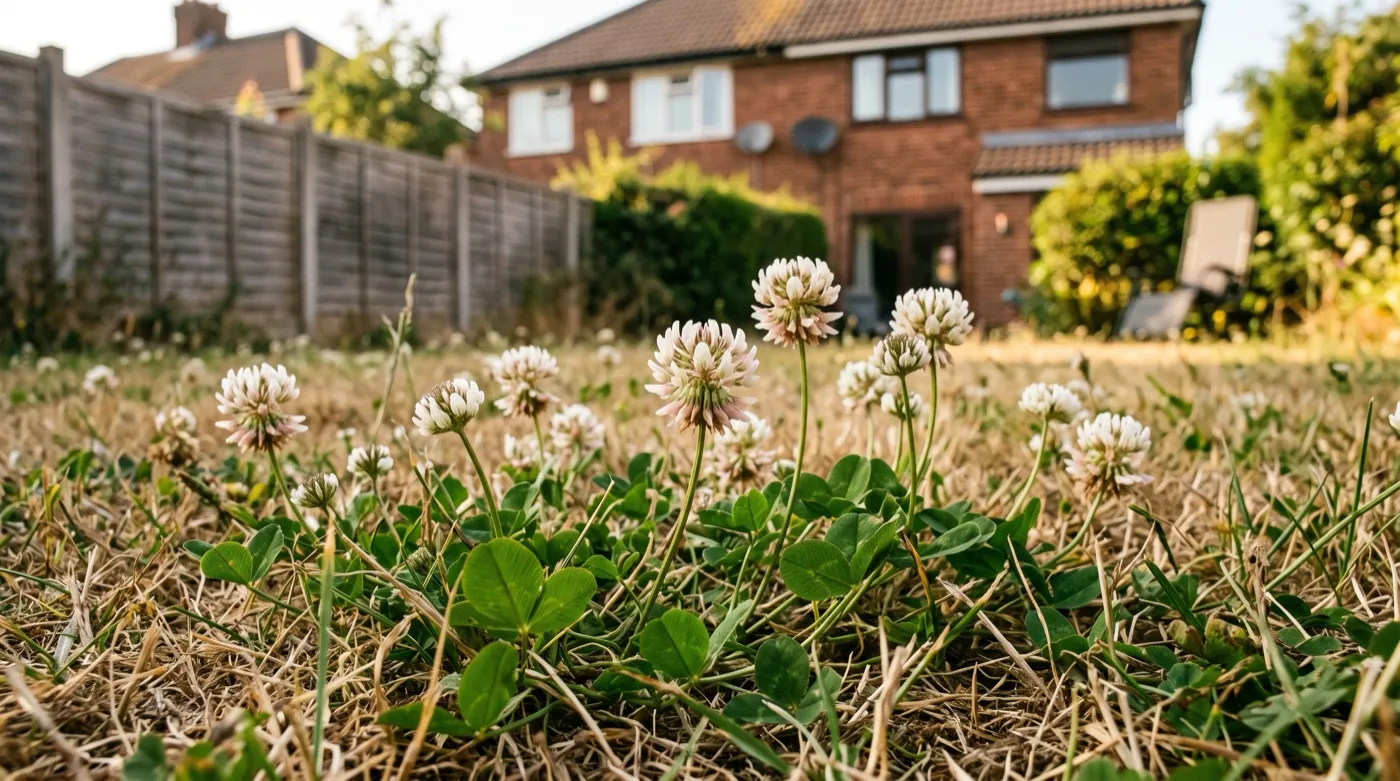 White clover in a suburban lawn. It fixes 70-150 kg N per hectare per year and stays green through drought that browns the grass around it.
Our team produces practical UK gardening guidance from source research, contributor records and established horticultural practice. Editorial standards are overseen by Matt W.