Key takeaways
- Lamprocapnos spectabilis grows 90 to 120cm tall and 45 to 60cm wide in dappled shade
- Flowers appear late April to June, then the whole plant dies back by July in most UK gardens
- Summer dormancy is normal, not death. Mark the crown so you avoid digging into it
- Plant the crown 2 to 3cm below soil level in moist, humus-rich soil out of cold wind
- Roots are brittle and fleshy, so divide only in early spring or autumn with great care
- The plant is toxic if eaten and the sap can irritate skin, so wear gloves when handling
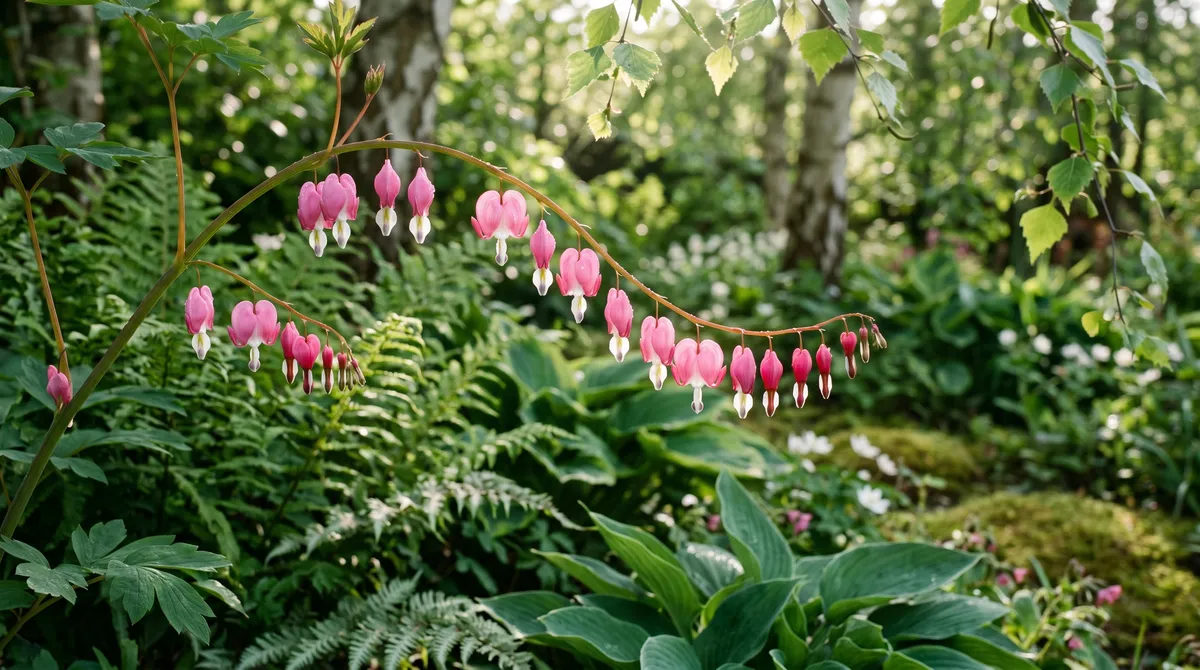
Knowing how to grow bleeding hearts well comes down to one thing: giving them the cool, moist shade they evolved for. Bleeding hearts (Lamprocapnos spectabilis, long known as Dicentra spectabilis) are among the most loved spring perennials in UK gardens. The arching stems hang with rows of heart-shaped lockets, pink or white, each with a small white drop at the tip.
This guide covers where to plant them, how deep, when to water and feed, and how to divide the brittle roots without losing the plant. It also explains the summer dieback that alarms so many gardeners, which is normal. The advice comes from growing them for five seasons in a Staffordshire shade border, with dormancy dates and division results logged.
The plant that changed its botanical name
The old bleeding heart, Dicentra spectabilis, is now Lamprocapnos spectabilis. Botanists reclassified it in 1997 after DNA work showed it sat apart from the other dicentras. You will still see both names on plant labels and in catalogues, so do not be confused when a nursery sells the same plant under either.
The genus split matters for the garden, not just the textbook. The classic tall bleeding heart is the only species now in Lamprocapnos. The lower, fern-leaved plants gardeners also call bleeding heart, such as ‘Luxuriant’ and ‘King of Hearts’, stayed in Dicentra. The two groups behave differently. The tall Lamprocapnos flowers early then dies back by mid-summer. The fern-leaved Dicentras flower for far longer and keep their foliage into autumn.
Both belong to the poppy family, Papaveraceae. They share the same brittle, fleshy roots and the same dislike of hot, dry positions. When this guide says bleeding heart without a variety name, it means the tall Lamprocapnos spectabilis.
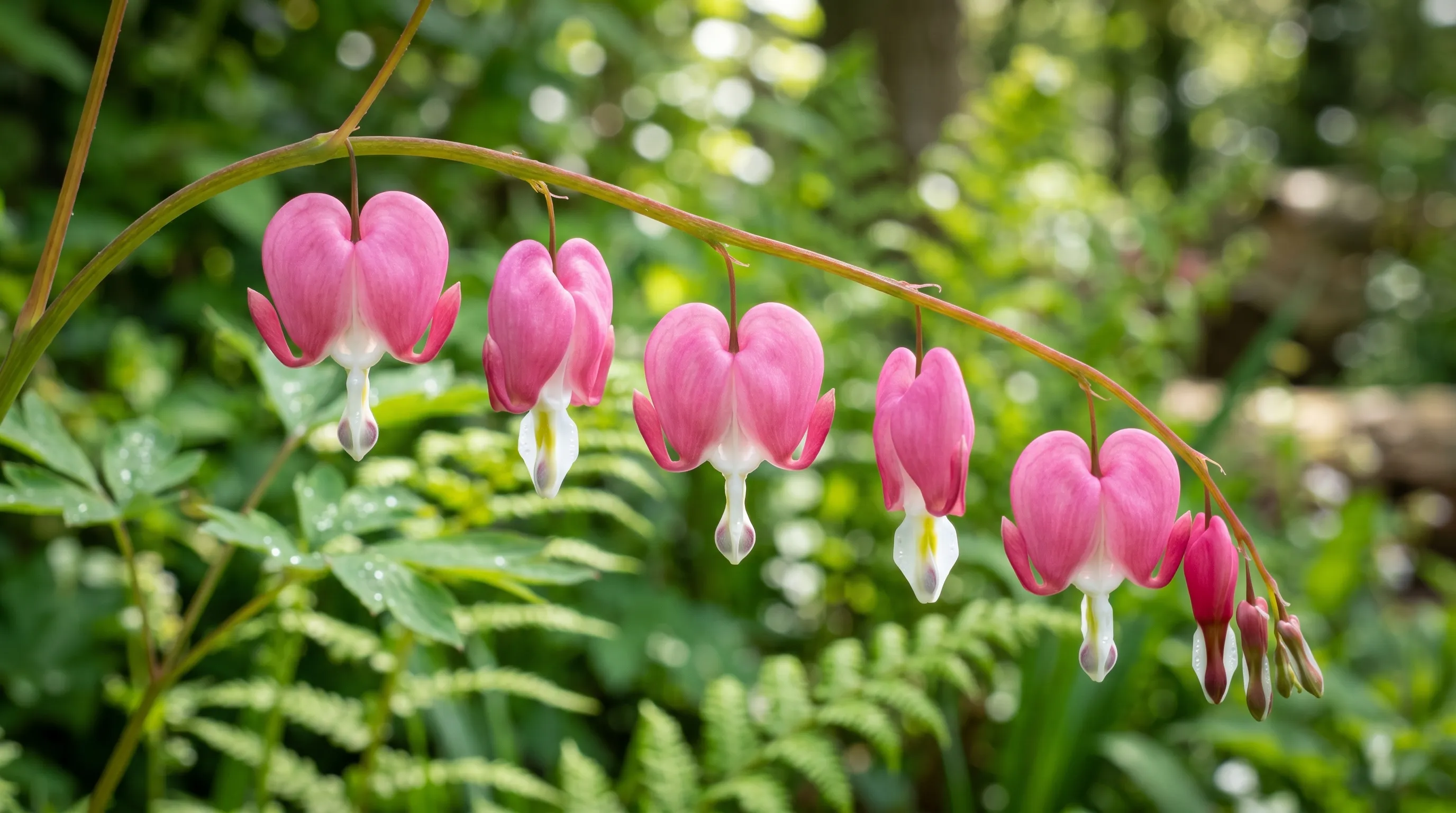 The heart-shaped lockets that give the plant its name, each with a small white drop at the tip.
Where to plant bleeding hearts for the best flowers
Bleeding hearts want dappled or partial shade in moist, humus-rich soil. Their natural home is woodland edge in eastern Asia, where they grow in leaf litter under a light canopy. Recreate that and the plant thrives. A spot under a deciduous tree, beside a north-facing wall, or in the cool back of a border all work well.
Avoid two things above all: full sun and dry soil. In a hot, sunny spot the foliage scorches and the plant dies back weeks early, often by late May. The soil should hold moisture without sitting waterlogged. Dig in garden compost or leaf mould before planting to build the humus content. On free-draining sandy soil, add extra organic matter and mulch yearly to hold water.
Shelter from cold spring wind is the other key factor. The new leaves and flower stems emerge soft in April. A sharp easterly wind blackens the tips and can flatten the whole plant. Pick a position that a fence, hedge, or wall protects from the prevailing wind. In our Staffordshire border the plants on the sheltered side of a yew hedge always opened a week earlier and held their stems upright, while an exposed clump lost stems to wind every spring.
Gardener’s tip: Plant bleeding hearts where spring bulbs and later perennials grow alongside them. When the bleeding heart dies back in July, the gap looks bare. Hostas, ferns and hardy geraniums fill the space and keep the border full through summer.
Planting depth and the right time to plant
Set the crown 2 to 3cm below the soil surface and plant in early spring or autumn. The fleshy roots radiate from a central crown like the spokes of a wheel. Dig a hole wide enough to spread them out flat without bending or cramming. Sit the crown just under the surface, backfill, firm gently, then water in well.
Timing depends on how you buy the plant. Bare-root crowns arrive dormant from mail-order nurseries between October and March. Plant them as soon as the soil is workable and not frozen. Early spring, around March, gives the fastest establishment because the soil is warming and the roots grow away at once. Pot-grown plants can go in at any time the soil is moist, though spring and autumn are still easiest, since summer planting risks the plant dying back before it settles.
Space individual plants 45 to 60cm apart to allow for the full spread. Water every few days for the first month if the weather stays dry. A new bleeding heart takes two to three years to reach full size, putting on a little more each spring as the crown bulks up. Do not expect a big display in year one.
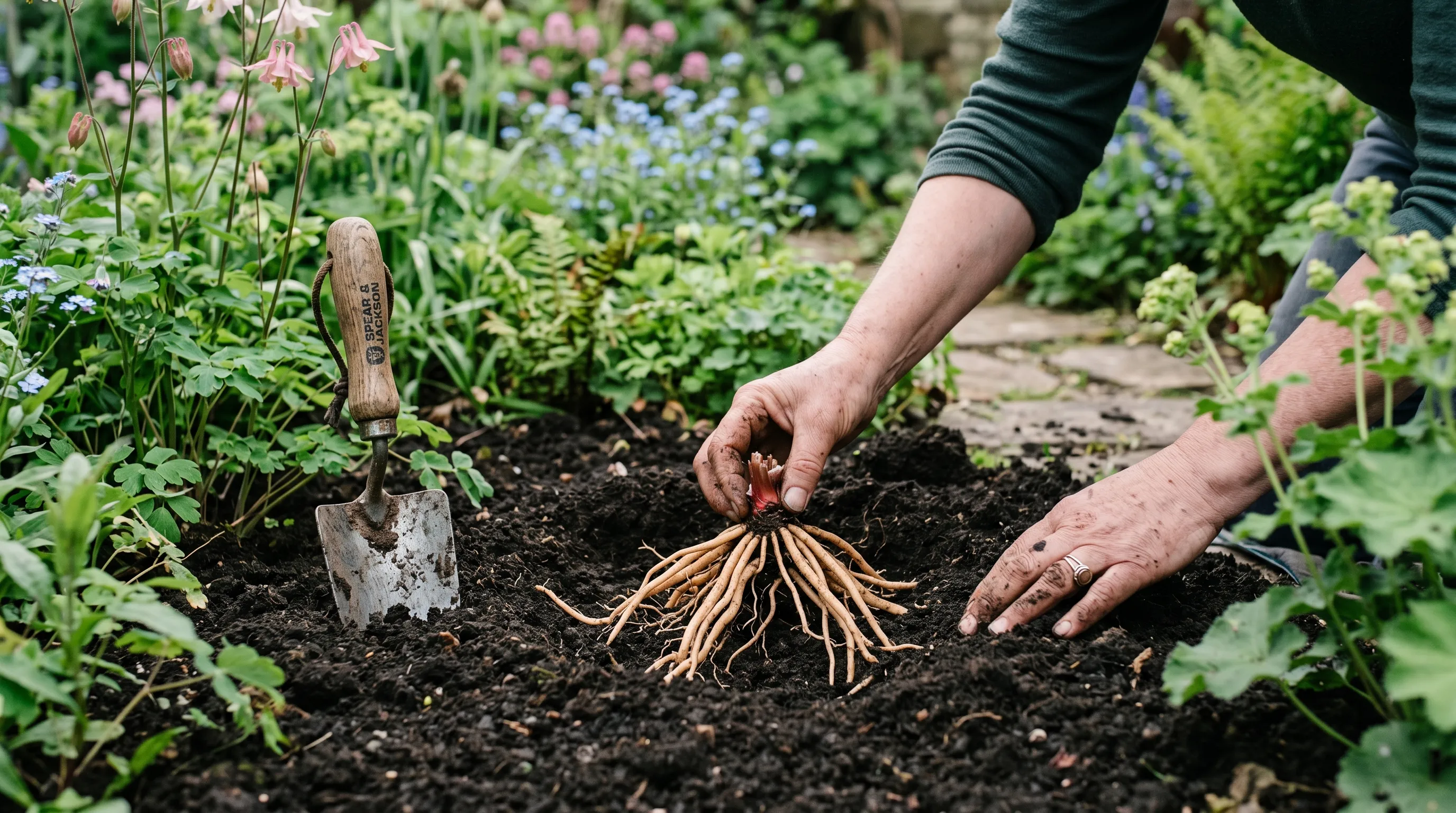 Spread the brittle roots flat and set the crown 2 to 3cm below the surface. Never cram the roots into a tight hole.
Why bleeding hearts die back in summer
The foliage yellowing and dying down by mid-summer is normal dormancy, not a dead plant. This single fact stops more gardeners panicking than any other. Bleeding hearts are spring ephemerals at heart. They flower early, set seed, then retreat below ground to wait out the dry heat of summer. The energy goes back into the crown, ready for next spring.
The dieback follows a clear sequence. Flowering finishes by June. The leaves turn pale, then yellow, then brown over two to three weeks. By July the plant has usually vanished completely, leaving bare soil. This happens earliest in dry or sunny positions, where a plant can be gone by early June. In a cool, moist, shaded spot the foliage lingers longer, sometimes into August.
Do not cut back green foliage to tidy the border. Let it yellow naturally, because the dying leaves feed the crown. Once the leaves are fully brown, trim them away at ground level. The most useful thing you can do is mark the crown. Push a labelled cane or short stake into the soil beside it the moment flowering ends. This stops you forgetting where it sits and slicing the roots when you plant or weed later in the year.
Watering, feeding and mulching through the year
Keep the soil consistently moist through spring, then feed and mulch to build the crown. Bleeding hearts hate to dry out while in active growth. From the first leaves in April until the plant dies back, water deeply during any dry spell. A weekly soaking that wets the root zone beats a daily splash that only dampens the surface. Mulched soil holds this moisture far longer.
Feeding is light but worthwhile. Apply a balanced general fertiliser such as fish, blood and bone at around 70g per square metre in early spring as the shoots emerge. A second light feed after flowering helps the crown store energy for next year. Do not overfeed with high-nitrogen feeds, which push soft growth that flops and scorches.
Mulch is the single best yearly job. Spread a 5 to 7cm layer of leaf mould or well-rotted compost around the crown each autumn or early spring, keeping it clear of the central bud. This holds moisture, feeds the soil, and recreates the woodland leaf litter the plant evolved in. In our border, a mulched clump held its foliage a full two weeks longer into summer than an unmulched one in the same bed.
How to divide bleeding hearts without killing them
Divide only in early spring or autumn, and handle the brittle roots with care. The fleshy roots snap as easily as fresh carrots, so timing and technique decide whether division works. The dormant or just-emerging plant in early spring is most forgiving, because the roots are turgid and full of stored energy, not dry and fragile.
Work in stages. Lift the whole clump with a fork, digging wide to get under the roots without spearing them. Shake or wash off loose soil so you can see the crown. Tease the clump apart by hand into sections, each with at least one growth bud and a fan of healthy roots. A clean knife helps separate stubborn crowns, but pull gently rather than wrenching. Replant each division at once at the original depth, water in, and keep moist.
Propagation by division, root cuttings and seed
Bleeding hearts propagate three ways: division, root cuttings and seed. Division, covered above, is the fastest and keeps the parent’s exact flower colour. It is the method most UK gardeners use, since one mature clump yields three or four new plants in an afternoon.
Root cuttings suit gardeners who want more plants without disturbing the whole clump. In winter dormancy, lift the plant, cut healthy roots into 5 to 8cm sections, and lay them flat on the surface of a tray of gritty compost. Cover with 1cm of compost, keep just moist at around 10 to 15C, and shoots appear in spring. This works because the fleshy roots store the energy to make new buds.
Seed is slowest but cheapest for a batch of plants. Collect seed when the pods ripen in early summer, or buy fresh. The seed needs a cold spell to break dormancy, so sow in autumn and leave the tray outside over winter, or chill the seed in the fridge for six weeks before a spring sowing. Germination is slow and uneven, and seedlings take two to three years to flower. Named varieties like ‘Alba’ and ‘Valentine’ do not come true from seed, so use division to keep those.
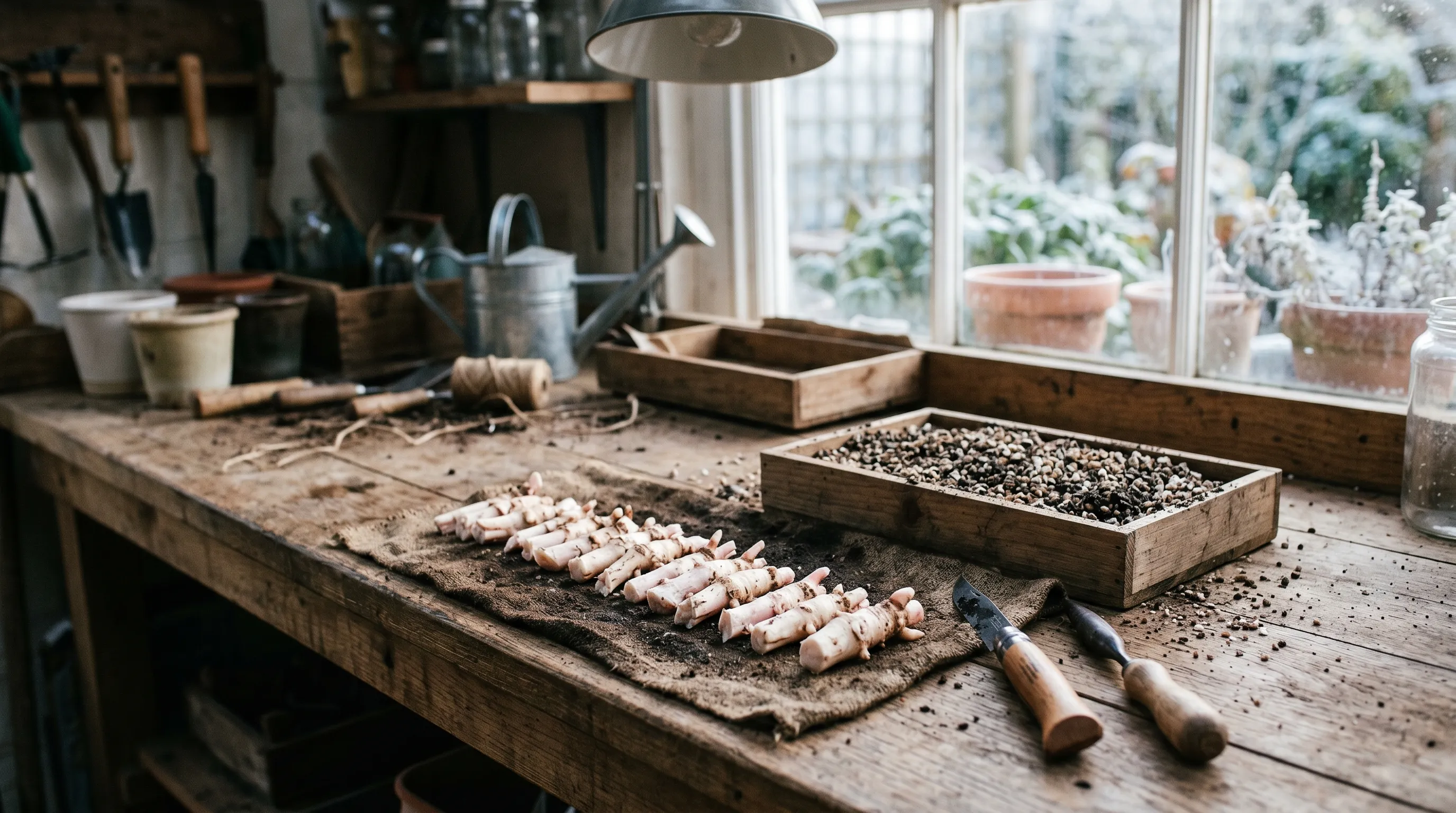 Winter root cuttings, laid flat and covered with 1cm of gritty compost, are an easy way to bulk up a single plant.
Pests, problems and what can go wrong
Bleeding hearts are largely trouble-free, with slugs and snails the main threat to new growth. The emerging spring shoots are soft and tender, and a single night of slug grazing can shred a flush of new leaves. Protect young plants and fresh divisions with your preferred slug control, whether wool pellets, beer traps, or nematodes, especially in a damp shady border where slugs thrive.
The other common worry is wilting, which usually traces back to one cause: dry soil. A bleeding heart that flops and yellows early in a hot spell is short of water, not diseased. Soak it well and mulch the crown. In persistently dry sites the plant simply dies back early, which is harmless but cuts the display short. Move it to a moister spot in autumn if it always vanishes by late May.
Bleeding heart varieties compared
Choose between the tall Lamprocapnos for spring drama and the fern-leaved Dicentras for a longer show. The two groups suit different jobs. Tall types give a big spring display then disappear. Low, fern-leaved types flower from late spring well into autumn and keep their foliage, so they bridge the gap the tall ones leave. Many gardeners grow both.
| Variety | Flower colour | Height | Spread | Notes |
|---|---|---|---|---|
| Lamprocapnos spectabilis | Rose pink, white tip | 90 to 120cm | 45 to 60cm | The classic. Spring flowering, dies back by July |
| L. spectabilis ‘Alba’ | Pure white | 75 to 90cm | 45 to 60cm | Lights up a shady corner, slightly shorter |
| L. spectabilis ‘Gold Heart’ | Pink | 70 to 90cm | 40 to 50cm | Golden yellow foliage, needs shelter from scorch |
| L. spectabilis ‘Valentine’ | Deep cherry red | 75 to 90cm | 45 to 60cm | Dark stems, flowers a week earlier than the species |
| Dicentra ‘Luxuriant’ | Cherry red | 30 to 40cm | 30 to 45cm | Fern leaves, flowers May to autumn, no summer dieback |
| Dicentra ‘King of Hearts’ | Deep pink | 20 to 25cm | 25 to 30cm | Compact, blue-grey foliage, very long flowering |
| Dicentra ‘Bacchanal’ | Dark crimson | 30 to 40cm | 30 to 45cm | Fern leaves, rich colour, good front-of-border choice |
The golden-leaved ‘Gold Heart’ is striking but fussier. Its bright foliage scorches in any direct sun, so it needs the deepest shade and steadiest moisture of all. The fern-leaved Dicentras like ‘Luxuriant’ and ‘Bacchanal’ are the toughest and longest-flowering, ideal at the front of a shady border where you want colour from May into September.
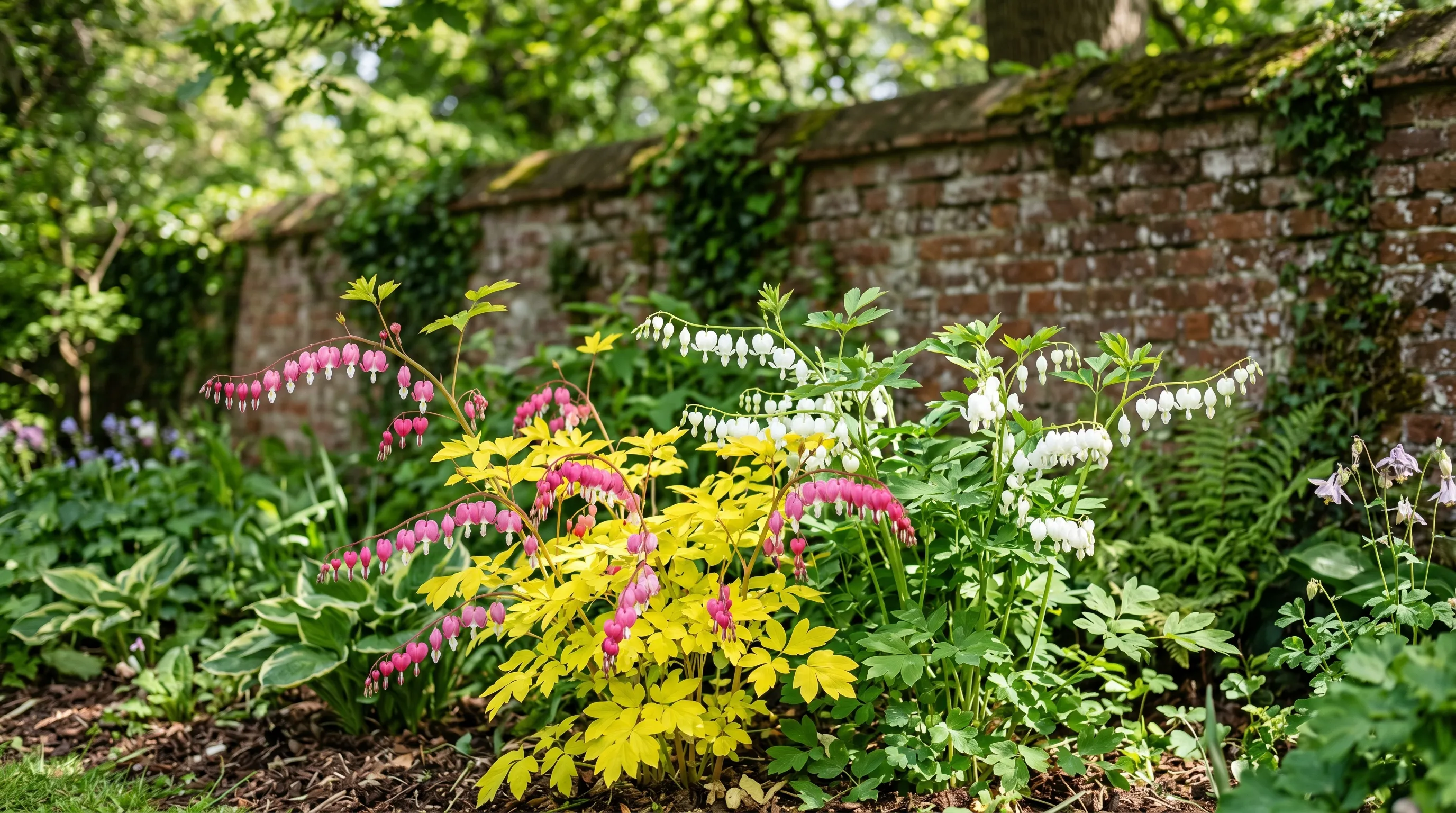 Three varieties side by side: the pink species, white ‘Alba’, and the golden-leaved ‘Gold Heart’ that needs the deepest shade.
Companion plants that cover the summer gap
Pair bleeding hearts with later-leafing shade plants that fill the space when they die back. This is the single best design trick for the plant. Because a tall bleeding heart vanishes by July, an unplanned border is left with a bare patch for the rest of summer. Plant around it with companions that emerge later and the gap never shows.
The classic partners are ferns and hostas. Both unfurl their foliage in late spring as the bleeding heart starts to fade, so they take over the space exactly when needed. Our guide to growing hostas in UK gardens covers the best shade varieties, and the hardy ferns for a UK fernery make ideal neighbours with their slow, reliable spread.
Brunnera and pulmonaria are two more strong companions. Both flower in spring alongside the bleeding heart, then hold ground-covering foliage all summer over the dormant crown. Spring bulbs like wood anemone and snowdrops add an even earlier layer of interest below. For a fuller planting scheme, our best perennial plants for UK gardens lists more shade-tolerant choices, and many of the easy self-seeding plants for UK gardens thread happily through a bleeding heart border without crowding the crown.
Common mistakes when growing bleeding hearts
Most failures come from three errors: wrong position, panic at dormancy, and damaging the brittle roots. Get these right and the plant is one of the easiest perennials you can grow.
Planting in full sun or dry soil. This is the most common mistake. The plant scorches, dies back weeks early, and never bulks up. Bleeding hearts need dappled shade and moisture. If yours always vanishes by late May, the spot is too hot or too dry, so move it in autumn.
Panicking when it dies back. Every summer, gardeners dig up a healthy dormant crown thinking it has died, or plant over the gap and lose the plant. The dieback is normal. Mark the crown the moment flowering ends and leave it alone.
Damaging the roots when moving or weeding. The fleshy roots snap easily, and a broken root rarely recovers. Never dig close to a dormant crown in summer. Divide and lift only in early spring or autumn when the roots are turgid, and work fast so they do not dry out.
Cutting back green foliage too soon. Removing leaves while still green starves the crown of the energy it needs for next year. Let the foliage yellow fully before you trim it.
Warning: All parts of Lamprocapnos and Dicentra are toxic if eaten, containing isoquinoline alkaloids that can cause sickness. The sap can also irritate skin on contact. Wear gloves when planting, dividing or handling the roots, wash your hands afterwards, and keep children and pets from chewing the foliage.
Bleeding heart care calendar for the UK
This month-by-month plan keeps a bleeding heart healthy through the UK year. Timings shift a week or two between the mild south-west and colder north, so read the plant alongside the calendar.
| Month | Task |
|---|---|
| January | Plant bare-root crowns if soil is workable. Order new plants |
| February | Mulch the crown with leaf mould before growth starts |
| March | Best month to plant and divide. Apply a balanced feed as shoots emerge |
| April | New leaves and stems appear. Protect from slugs and cold wind |
| May | Peak flowering. Water in dry spells, keep soil moist |
| June | Flowering ends. Mark the crown with a cane as foliage starts to yellow |
| July | Foliage dies back. Trim brown leaves at ground level. Do not dig nearby |
| August | Plant fully dormant. Companion plants cover the gap |
| September | Light feed if growth was poor. Keep new divisions watered |
| October | Plant or divide while soil is warm. Mulch the crown |
| November | Take root cuttings from lifted plants. Clear fallen tree leaves off the crown |
| December | Dormant. Plan companion planting for next year |
Frequently asked questions
Do bleeding hearts come back every year?
Yes, bleeding hearts are reliable hardy perennials. They return from the same crown each spring. The plant dies back to ground level by mid-summer, which fools many gardeners into thinking it has died, but the roots stay alive below ground. A healthy clump lasts many years and bulks up a little each spring, lasting decades in the right spot.
How long does a bleeding heart flower for?
The tall Lamprocapnos flowers for four to six weeks. Blooms open from late April and fade by mid-June. The fern-leaved Dicentra varieties such as ‘Luxuriant’ and ‘King of Hearts’ flower far longer, often from May right through to the first autumn frosts, which makes them a better choice for a long season of colour.
Can you grow bleeding hearts in pots?
Yes, bleeding hearts grow well in large containers. Use a pot at least 40cm wide with humus-rich, moisture-retentive compost. Keep it in dappled shade and never let it dry out, as pots dry far faster than open ground. Feed in spring and topdress with fresh compost each year. The plant still dies back in summer, so pair it with later container plants.
Should I cut back my bleeding heart after flowering?
Cut back only once the foliage has fully yellowed. Leaving green leaves to die down naturally feeds the crown for next year. Removing stems while still green weakens the plant. Once leaves are brown and limp, trim them off at ground level. Mark the crown so you do not lose its position over the dormant summer months.
Why is my bleeding heart not flowering?
The usual cause is too much shade, dry soil, or a plant that is too young. Bleeding hearts need dappled light, not deep gloom, and steady spring moisture to flower well. A newly planted crown often takes two to three years to flower freely. Overcrowded old clumps also flower less, so divide them in early spring to restore vigour.
What to plant alongside your bleeding hearts
Now you know how to grow bleeding hearts, the next step is building a shade border that looks full all summer once they die back. Read our guide to dividing perennials to split in May to bulk up the hostas, ferns and brunnera that fill the gap, and browse all our plant growing guides for more shade-loving partners. The Royal Horticultural Society also keeps detailed Lamprocapnos growing notes if you want the full botanical reference.
Our team produces practical UK gardening guidance from source research, contributor records and established horticultural practice. Editorial standards are overseen by Matt W.