Key takeaways
- Plant 10 to 12cm deep, pointed end up, in autumn with added leafmould and grit
- Site in dappled shade under deciduous trees in humus-rich, moisture-retentive but never waterlogged soil
- Erythronium 'Pagoda' is the easiest for beginners, vigorous yellow, AGM, increasing 30 to 40% a year
- Flowers appear March to April; leave clumps undisturbed for 3 to 4 years for the best display
- Seed-raised plants take 4 to 5 years to flower, so division of dormant clumps is faster
Erythroniums, the dog’s tooth violets, are among the loveliest of all spring woodland plants. Learning how to grow erythronium well comes down to one rule that most sellers never mention: the corms must never dry out. Get that right and these reflexed, turkscap-like flowers in pink, white, and yellow will light up a shady bed every March and April. The mottled foliage is half the appeal. This guide covers buying fresh stock, the best species for UK gardens, planting depth, siting in shade, aftercare through summer dormancy, and propagation.
What erythroniums are and why they are different
Erythroniums are spring-flowering woodland corms in the lily family (Liliaceae). The common name dog’s tooth violet comes from the corm shape: long, white, and pointed like a canine tooth. They are not violets at all. The flowers are small reflexed pendants, each like a tiny turkscap lily, held on slender stems above the leaves.
The foliage is often the main draw. Many species carry leaves beautifully marbled and mottled in bronze, maroon, and silver-green. These appear first, then the flowers follow. By late May the whole plant dies back and the corm rests underground through summer. This summer dormancy is the key to understanding their care. They are active for a short spring window only.
Most reach 10 to 35cm tall. They flower from March to April, before deciduous trees cast full shade, then vanish until the following spring.
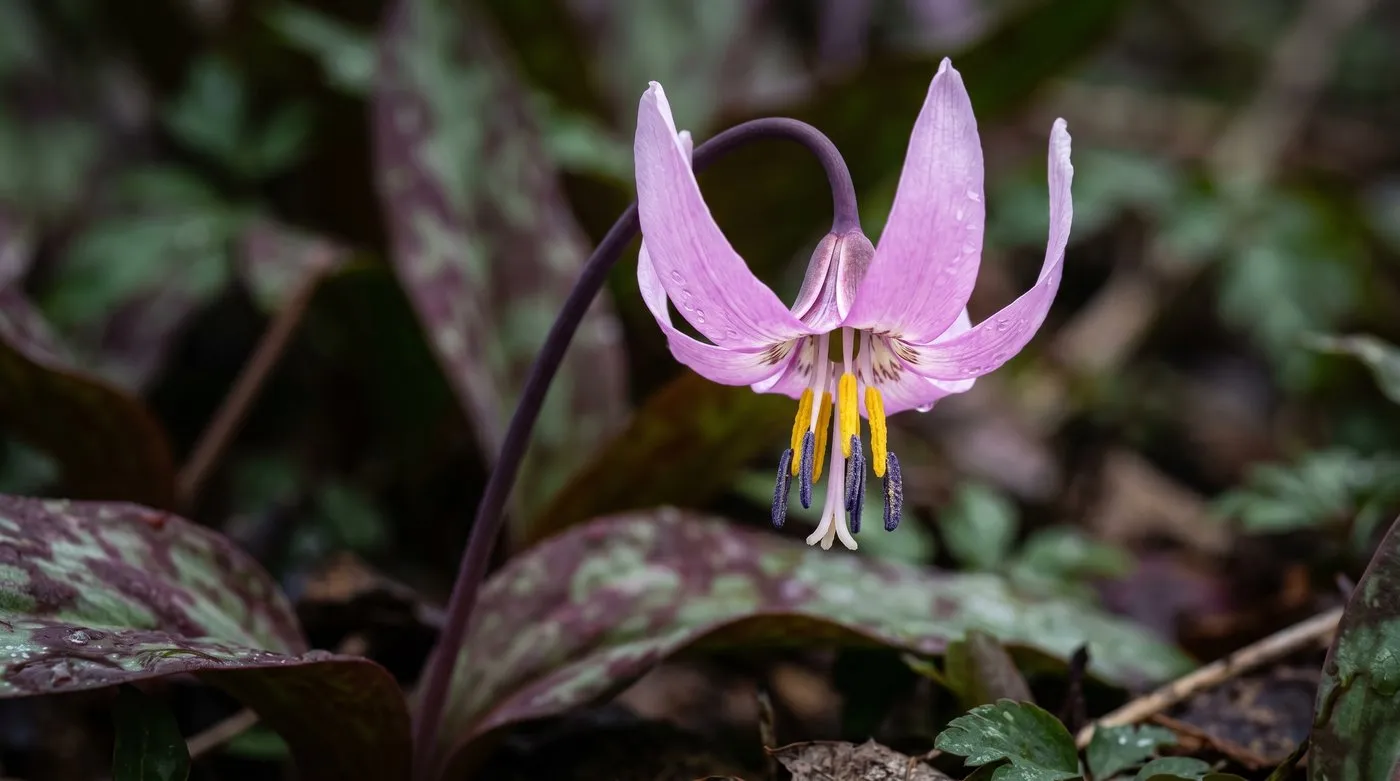 Erythronium dens-canis in flower, its petals fully reflexed like a tiny turkscap lily. The species name means “dog’s tooth” after the shape of the corm.
The single rule that decides success: never let corms dry out
This is the most important point in the whole guide. Erythronium corms have no protective tunic, unlike a daffodil or tulip bulb. Once they shrivel they cannot recover. A dried corm rots in the ground or sits blind and never flowers.
Buy in one of three ways. Pot-grown plants in growth, sold in spring, are the most reliable. Fresh corms packed in damp coir or peat, sold by specialists in early autumn, are next best. Plant either the same day they arrive. Avoid loose dried corms from supermarket racks unless you can see they are plump and undamaged.
Warning: Never store erythronium corms in a dry shed or drawer the way you might store tulips. A few warm dry days can kill them. If corms arrive and you cannot plant at once, keep them in their damp packing in a cool place for no more than a day or two.
Best erythronium species and cultivars for UK gardens
Erythronium ‘Pagoda’ (easiest, AGM)
Erythronium californicum ‘White Beauty’ (AGM)
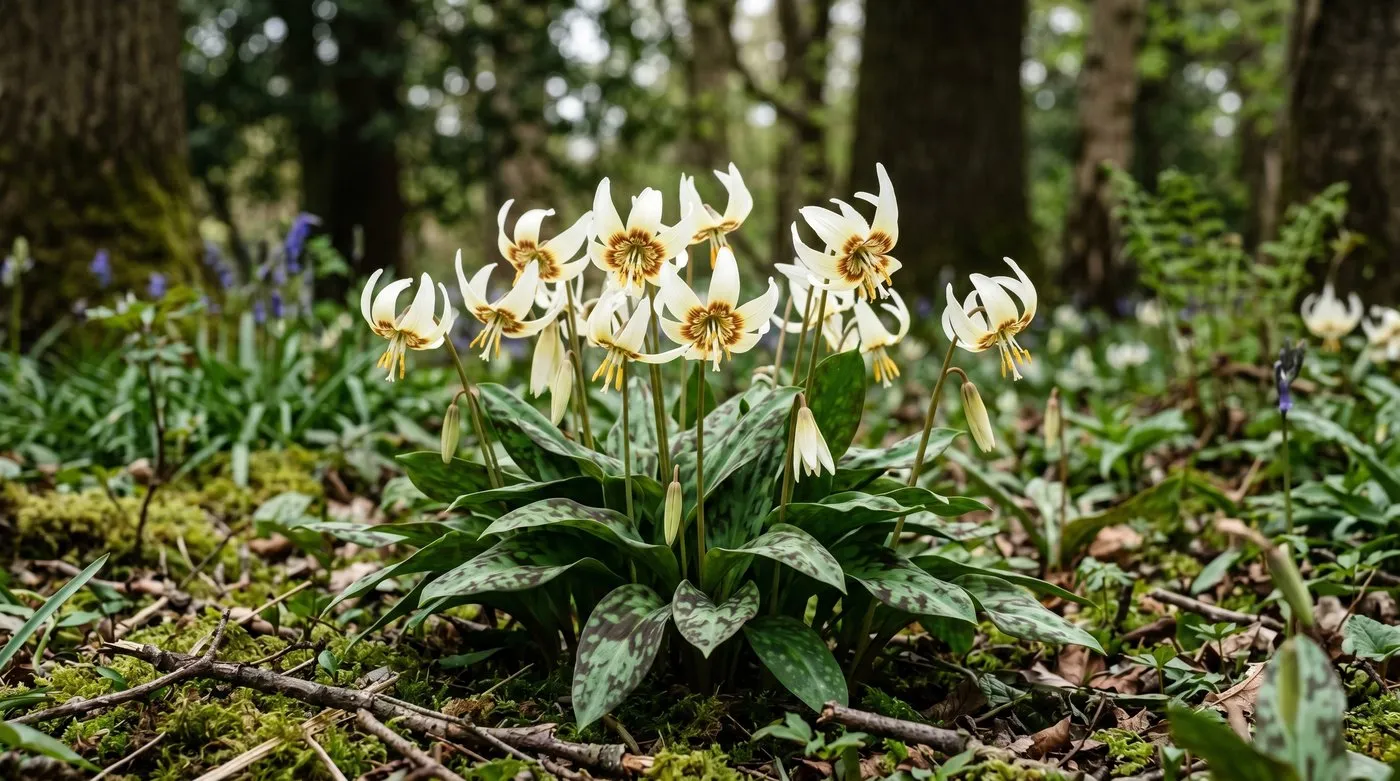 Erythronium californicum ‘White Beauty’ carries an RHS Award of Garden Merit. The brown ring at the flower centre and the mottled leaves make it a reliable choice.
Erythronium dens-canis (the true dog’s tooth violet)
The European native, 10 to 15cm tall, with pink to lilac reflexed flowers and strongly maroon-mottled leaves. It is the one species that tolerates some lime, so it suits chalky and neutral soils where others sulk. Best in short grass or at a border edge where its low flowers show.
Erythronium revolutum (self-seeder)
A deep pink species, 20 to 30cm, that self-seeds freely in cool moist leafmould. Give it the right spot and it forms drifts over time. The marbled foliage is excellent. Slower to settle than ‘Pagoda’ but rewarding once happy.
Erythronium tuolumnense and ‘Sundisc’
E. tuolumnense is a vigorous golden-yellow species, 25 to 35cm, with plain glossy green leaves. ‘Sundisc’ is a richer yellow selection with faint mottling. Both are strong growers and good for naturalising once established.
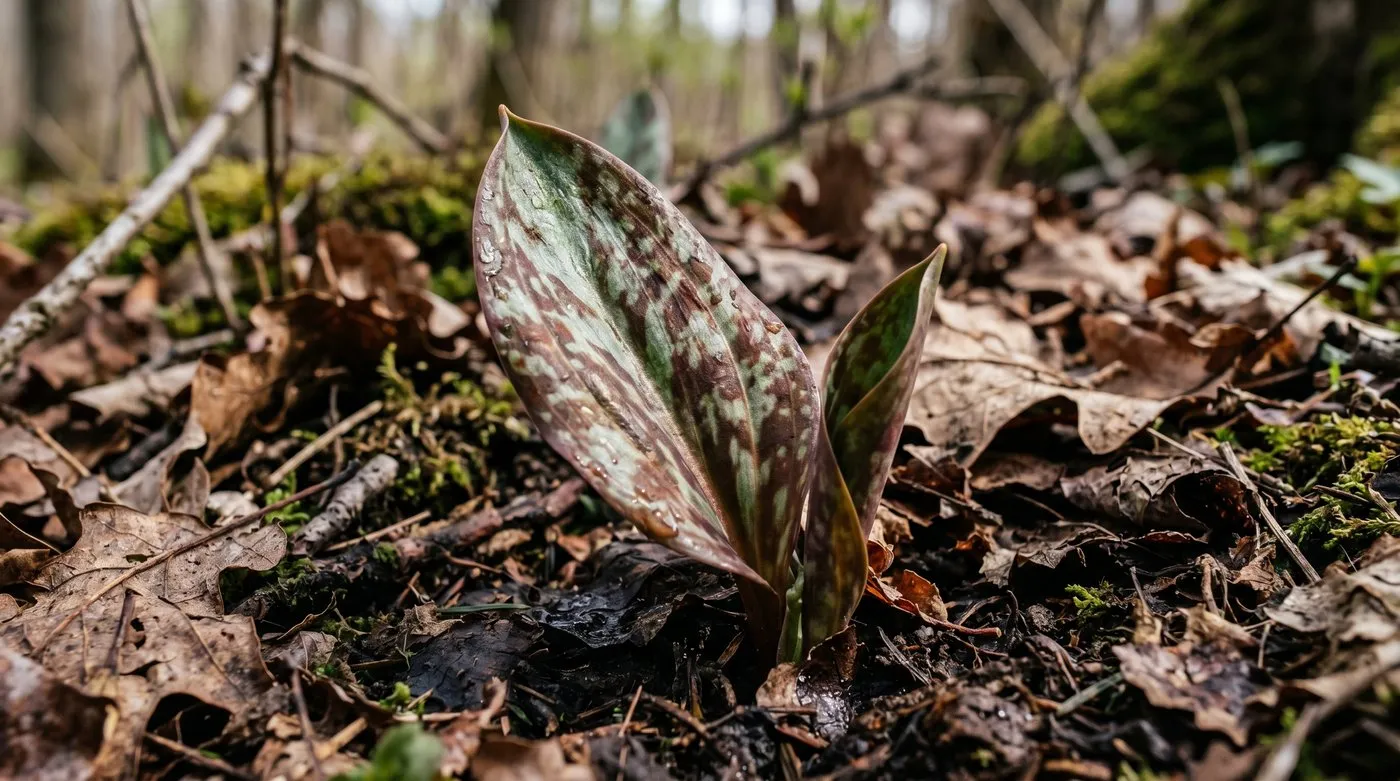 The marbled foliage of erythronium is half the appeal, emerging weeks before the flowers. This mottling helps the leaves blend into woodland leaf litter.
Species and cultivar comparison
| Name | Flower colour | Height | Leaf | Ease | Lime tolerance |
|---|---|---|---|---|---|
| ’Pagoda’ | Soft yellow | 25-35cm | Bronze-marbled | Easiest (AGM) | Moderate |
| californicum ‘White Beauty’ | Creamy white | 20-30cm | Mottled | Easy (AGM) | Low |
| tuolumnense / ‘Sundisc’ | Golden yellow | 25-35cm | Plain to faint mottle | Easy | Low |
| dens-canis | Pink to lilac | 10-15cm | Strongly maroon-mottled | Moderate | Good |
| revolutum | Deep pink | 20-30cm | Marbled | Moderate (self-seeds) | Low |
Where to plant erythroniums for the best display
Erythroniums are woodland plants, so copy the woodland floor. They want dappled or partial shade, ideally under deciduous trees or shrubs that are bare when the flowers open and shady once the leaves expand. A north or east-facing bed works well. Avoid hot, dry, full sun, which bakes the dormant corms.
They are perfect for naturalising in light woodland, under acers, or in short grass that is not mown until the foliage dies down. Pair them with snowdrops, wood anemones, and hellebores for a layered spring picture. For more shade-loving plants to grow alongside them, see our guide to the best plants for shade and the best shrubs for shade to build the canopy above.
How to plant erythronium corms and pot-grown plants
Timing and depth matter. Get both right and the corms settle quickly.
Planting fresh corms in autumn
Plant fresh corms in early to mid autumn, as soon as they arrive, while they are still plump. Set each corm 10 to 12cm deep, with the pointed end facing up. Space them 10 to 15cm apart in informal groups of five or more. Drop a handful of leafmould and a little grit into each hole. Firm gently and water in.
Depth is a balance. Too shallow and the corm dries out in summer and stays blind. Too deep on heavy clay and it risks rotting in winter wet. The 10 to 12cm range suits most UK soils.
Planting pot-grown stock in spring
Pot-grown plants in growth are the easiest route. Plant them in spring, while in leaf, at the same depth they sat in the pot. Water in well and keep moist until the foliage dies back naturally. They establish faster than dry corms because the roots are already active and undisturbed.
 Planting a fresh erythronium corm pointed end up at 10 to 12cm deep. The long white tooth shape gives the plant its common name.
Aftercare through growth and summer dormancy
Erythroniums need different care in their two phases. In spring growth keep the soil reliably moist. Drought while in leaf cuts next year’s flowering. A light feed of liquid seaweed or a balanced fertiliser as growth appears helps clumps bulk up.
The key danger is summer dormancy. Once the foliage yellows and dies back, the corm rests underground, but it must not bake bone dry. This is where many gardens fail. Plant under deciduous cover or among other plants that shade the soil, so the corms stay cool and slightly moist through July and August.
Mulch with a 3 to 5cm layer of leafmould in autumn to feed the soil and lock in moisture. Do not disturb established clumps; they resent being moved and sulk for a year or two afterwards. Leave them alone for at least three to four years to build a real display. For more on caring for spring bulbs once the flowers fade, see our notes on spring bulb care after flowering.
How to propagate erythroniums
There are two routes, and division is by far the faster.
Division of dormant clumps
Lift and divide congested clumps when fully dormant, in late summer, every four years or so. Work carefully with a hand fork; the corms snap easily and dislike disturbance. Separate the offsets, replant at once at 10 to 12cm deep, and never let the lifted corms dry out while you work. Keep them in damp coir between lifting and replanting. Replanted divisions usually flower again within a year or two.
Seed (slow but free)
Fresh seed sown in autumn in a cold frame is the cheapest way to raise many plants. Use a leafmould-rich, gritty mix and keep it cool and shaded. Germination follows the next spring. The catch is speed: seed-raised erythroniums take four to five years to reach flowering size. E. revolutum often does the job for you by self-seeding into moist leafmould.
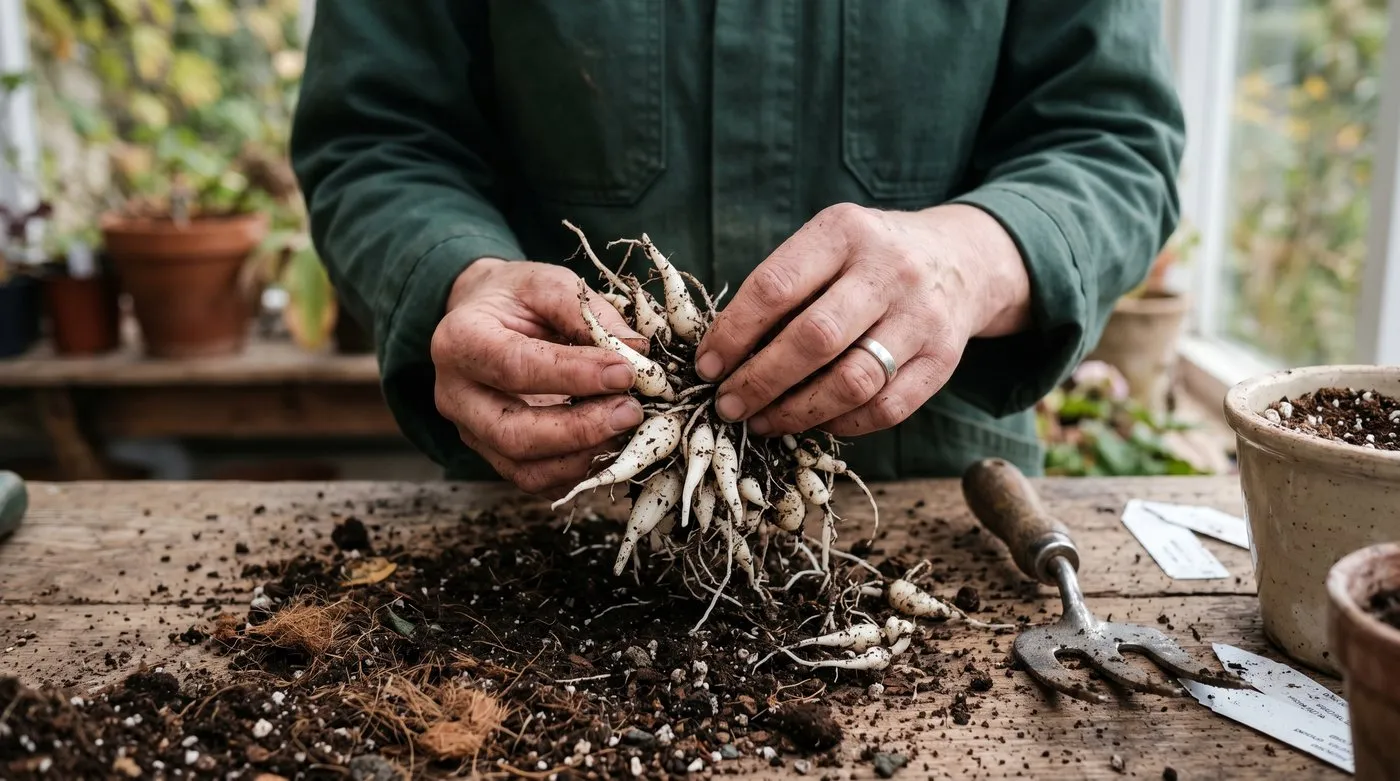 Dividing a dormant clump in late summer. Work gently: erythronium corms snap easily and resent disturbance, so replant straight away and never let them dry out.
Pests, problems and why plants stay blind
Erythroniums are largely trouble-free, but a few issues cause most failures.
Corm drying is the number one problem, covered above. Slugs and snails chew the emerging spring growth; sharp grit around the shoots and an evening patrol handle most damage. Squirrels and mice sometimes dig up newly planted corms, mistaking them for a snack. Cover fresh plantings with chicken wire pinned over the soil until growth appears.
In pots, watch for vine weevil, whose grubs eat corms over winter; a biological nematode drench in late summer is the cleanest control. Lily beetle, the scourge of true lilies, is generally not a problem on erythroniums, though it pays to check.
If a clump grows leaves but no flowers, it is almost always too dry, too deep, or too dark. Plants that bake in summer, sit too deep in cold clay, or sulk in heavy shade all go blind. Lift, improve the soil with leafmould and grit, and replant at the correct depth in dappled shade. The Royal Horticultural Society offers further woodland bulb growing advice for difficult shade sites.
Month-by-month erythronium calendar
| Month | Task |
|---|---|
| January | Plan orders. Check stored pot-grown stock stays cool and the compost stays just moist. |
| February | First marbled leaves of early clumps may push through. Clear heavy leaf litter so shoots find light. |
| March | Main flowering begins. Keep soil moist. Watch for slug damage on emerging shoots. |
| April | Peak flowering. Photograph clumps to plan gaps. Liquid feed lightly to build next year’s corm. |
| May | Flowers fade, foliage starts to yellow. Keep moist. Mark clump positions before they vanish. |
| June | Foliage dies back. Corms enter dormancy. Ensure the soil stays cool and never bakes bone dry. |
| July | Dormant. Keep the bed shaded and lightly moist. Do not disturb. |
| August | Best time to lift and divide congested clumps. Replant at once; never let corms dry out. |
| September | Order and plant fresh corms as soon as they arrive at 10 to 12cm deep with leafmould and grit. |
| October | Continue planting fresh corms. Mulch established clumps with 3 to 5cm of leafmould. |
| November | Protect new plantings from squirrels and mice with chicken wire pinned over the soil. |
| December | Dormant. Plan next year’s combinations with snowdrops, anemones and hellebores. |
Common mistakes to avoid with dog’s tooth violets
These five mistakes account for most disappointment with erythroniums in UK gardens.
Planting in dry sun. Erythroniums are woodland plants. A hot sunny border bakes the dormant corms and they rot or stay blind. Plant in dappled shade where the soil stays cool through summer.
Letting them dry out in summer. The corms must never bake bone dry while dormant. Plant under deciduous cover or among neighbours that shade the soil, and mulch with leafmould to hold moisture.
Disturbing the clumps. Erythroniums resent being moved and sulk for a season or two after lifting. Leave them undisturbed for three to four years, and divide only when truly congested and fully dormant.
Planting too shallow. Shallow corms dry out and refuse to flower. Plant at 10 to 12cm deep, not the 5cm many gardeners use for small bulbs.
These specialists understand that erythronium corms cannot be treated like tulips. They lift, pack, and despatch them at the right moment, in the right medium, so the corms reach you alive. For more on how corms differ from bulbs and tubers, our guide to bulbs, corms, tubers and rhizomes explained is a useful primer, and our notes on when to plant spring bulbs cover the wider autumn planting season.
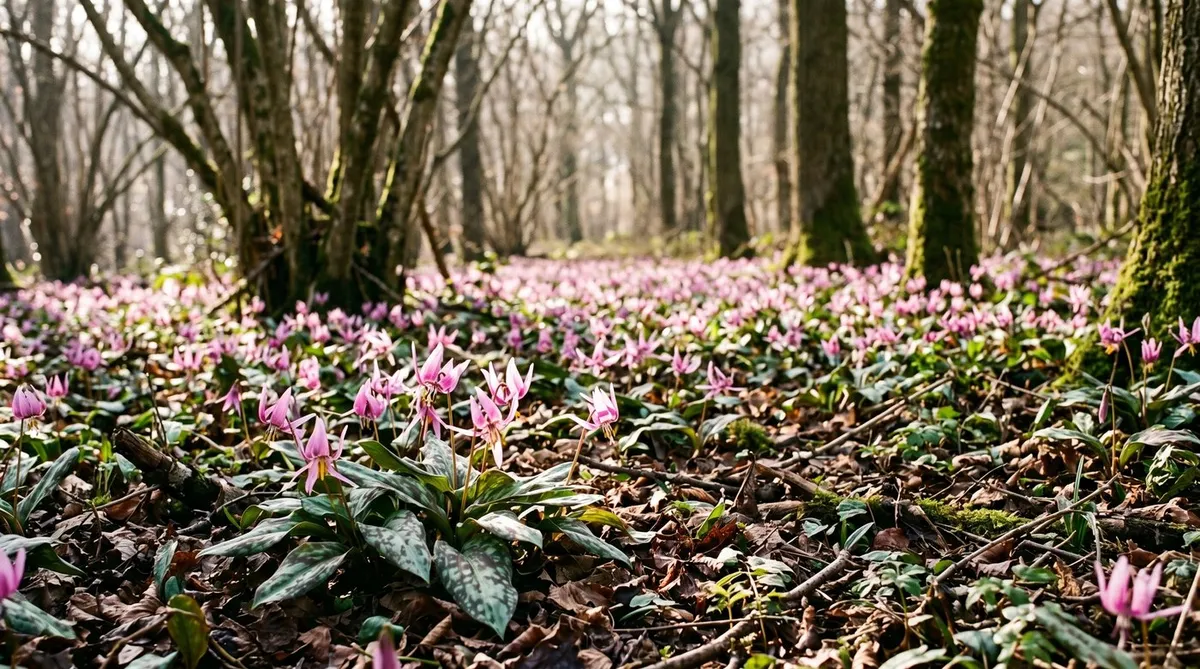
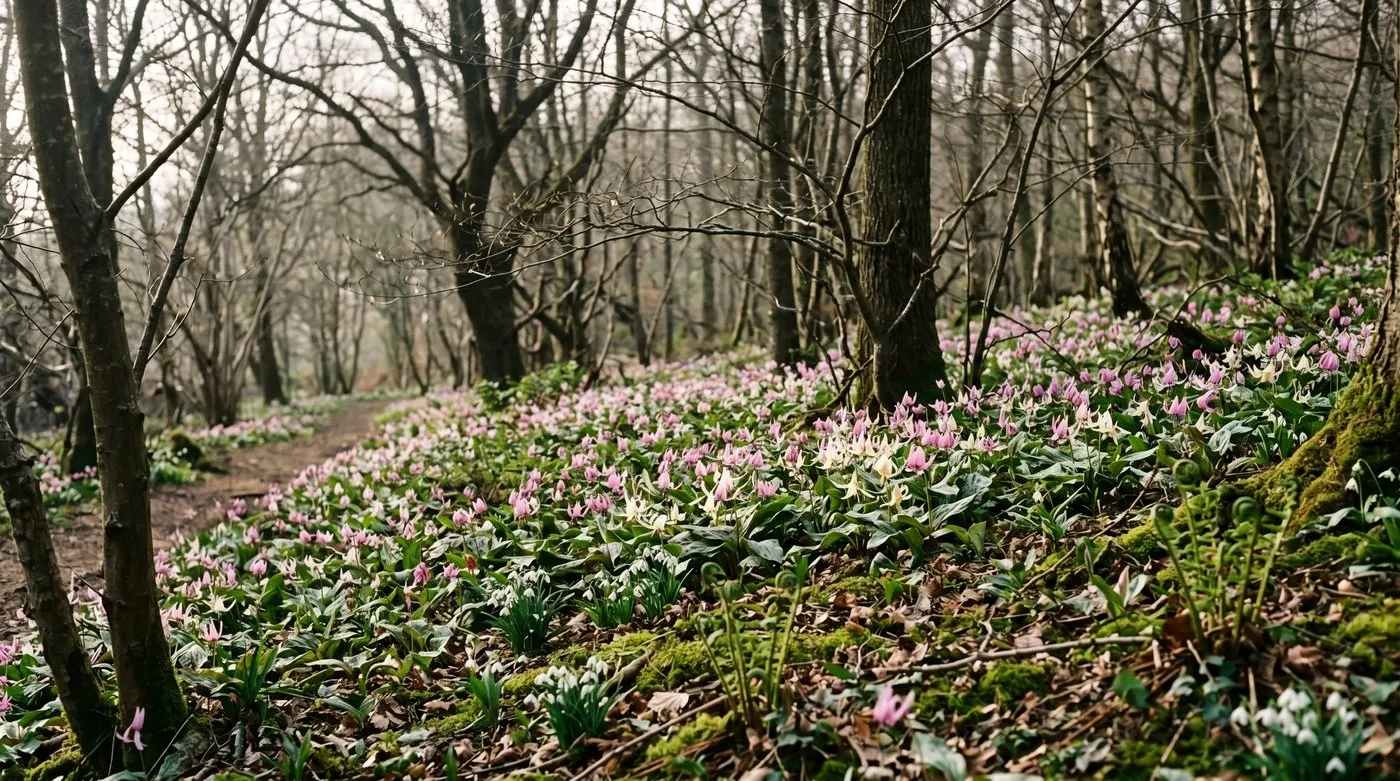 Erythroniums naturalised under deciduous trees. Left undisturbed for three to four years, a few corms become a spring drift like this.
Pair erythroniums with the right spring companions
Erythroniums earn their keep as part of a layered woodland spring picture. They flower alongside many of the classic shade bulbs, so plant them in drifts among partners that share the same cool, leafmould-rich conditions.
The natural companions are early bulbs that enjoy the same dappled shade. Underplant with snowdrops for January and February, then let the wood anemones carry the show into spring. Taller fritillaria add height and contrasting flower shape in the same March to April window. Hellebores and pulmonarias fill the gaps at ground level.
For a fuller planting plan across the season, see our roundup of the best early spring flowers for UK gardens, and browse the wider plants hub for more shade and woodland ideas.
Gardener’s tip: Plant erythroniums in generous groups of at least five corms of one kind. A single dog’s tooth violet is easily lost on a busy woodland floor. A drift of one colour reads as deliberate planting and gives the woodland-glade effect these plants do so well.
Now you have mastered erythroniums
Erythroniums reward the gardener who respects their two simple rules: never let the corms dry out, and give them cool dappled shade. Once a clump is settled it asks for almost nothing and returns every March without fail. Now you have the planting, siting, and propagation cycle in hand, the next step is to build out the rest of your shade planting. Read our guide to the best plants for shade for the full woodland palette, or expand the spring bulb display with our guide to growing fritillaria.
Our team produces practical UK gardening guidance from source research, contributor records and established horticultural practice. Editorial standards are overseen by Matt W.