Key takeaways
- Cobaea reaches 3-6m in one UK season, making it one of the fastest annual climbers you can grow
- Sow January to March at 18-21°C. A late start is the single biggest cause of failure to flower
- Set the large flat seeds on their edge in individual pots to stop them rotting
- Half-hardy: plant out only after the last frost, late May or June, in full sun and shelter
- Flowers open creamy-green and age to deep violet-purple, 5-8cm across, from August to first frost
- Use a high-potash feed, not high-nitrogen, or you get lush leaf and almost no flowers
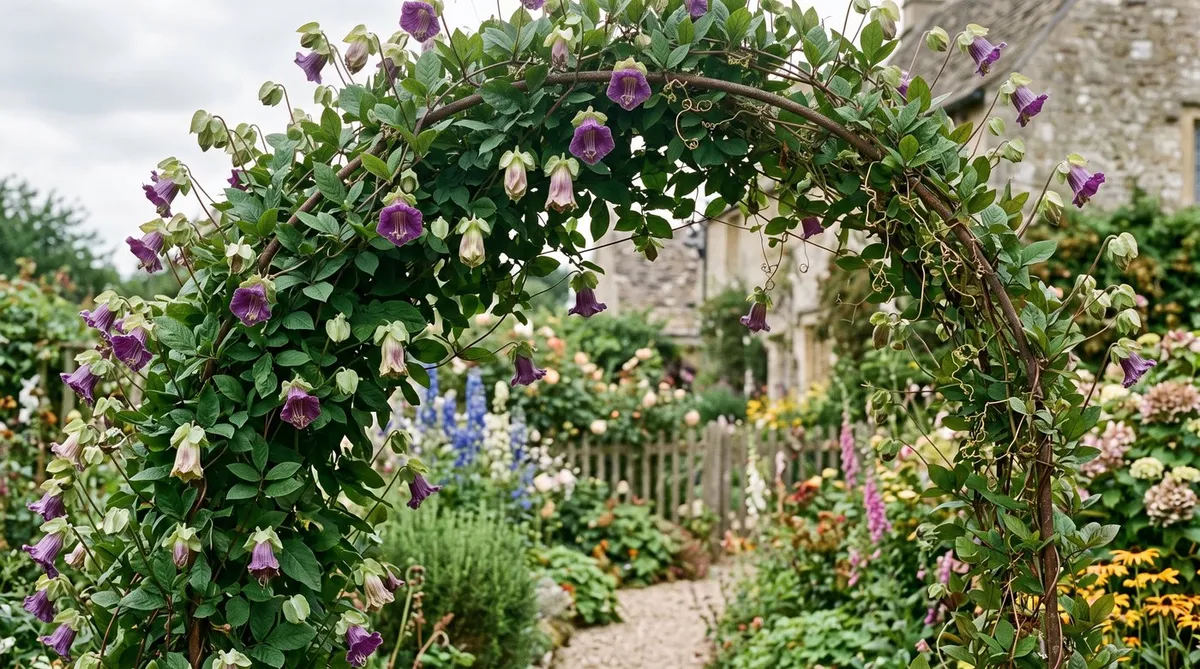
Cobaea, also called the cup-and-saucer vine, is one of the fastest half-hardy annual climbers you can grow in a UK garden. Cobaea scandens climbs 3-6m in a single season, throwing out branched tendrils that grip trellis, netting or a bare fence. The flowers are the draw: bell-shaped cups of 5-8cm that open creamy-green and age to deep violet-purple, each sitting on a leafy green saucer. That colour change gives it the common names cathedral bells and Mexican ivy. It is late to flower and needs an early start, but few plants clothe a support faster or hold their bloom longer into autumn. This guide covers conditions, sowing, support, feeding and the problems that catch people out.
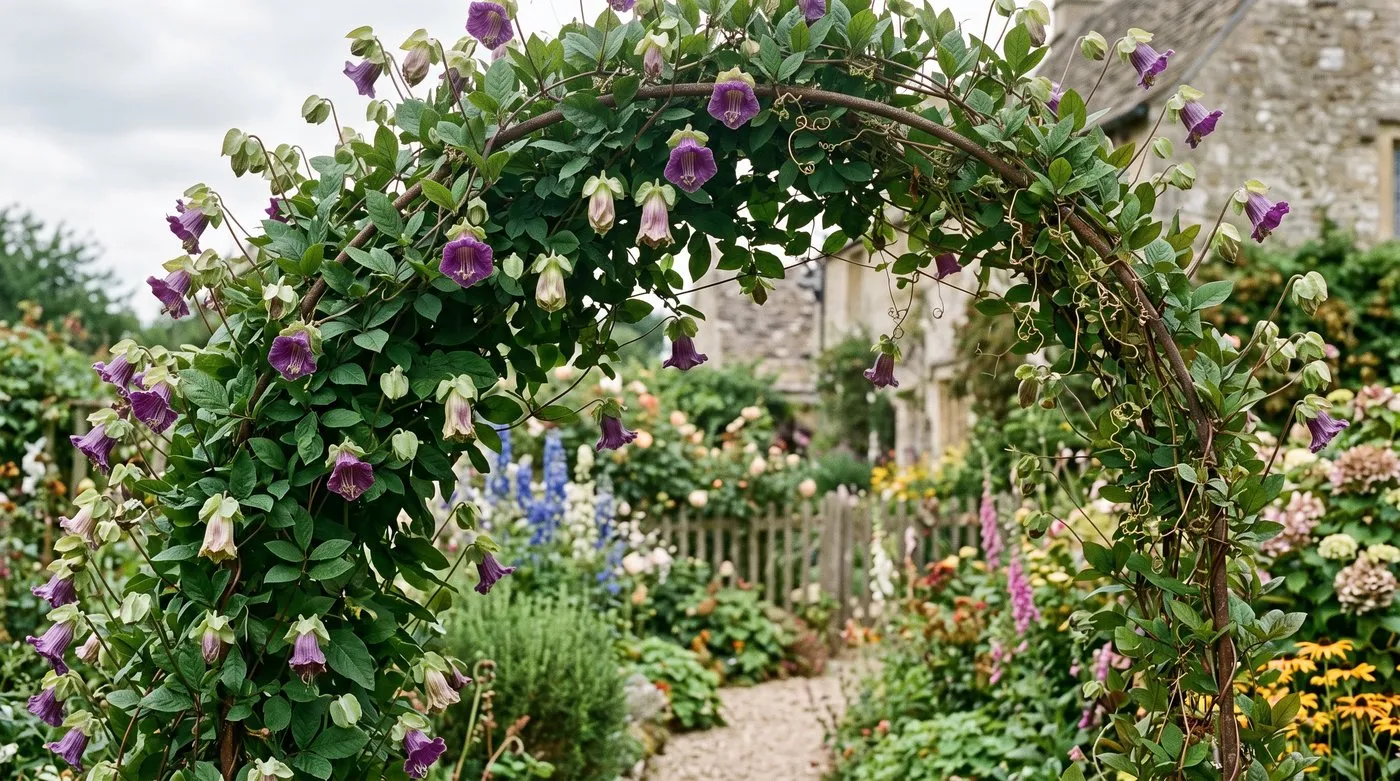 Cobaea covers a support fast, then carries cup-and-saucer flowers from August until the first frost.
What conditions does cobaea need in the UK?
Cobaea comes from Mexico and the tropical Americas, so it wants warmth, sun and a long growing season. Get those three right and the rest is easy.
Sun: Full sun, at least 6 hours a day. A warm, sheltered spot ripens growth and pushes flowering. A south-facing wall or fence is ideal, giving both heat and shelter from wind.
Warmth: This is a tender plant. Growth stalls below 10°C and any frost kills it. Do not plant out until the soil has warmed and the last frost has passed, usually late May or June.
Soil: Fertile, well-drained but moisture-retentive. Dig in a bucket of garden compost per square metre before planting. Cobaea is hungry and thirsty once it is racing away in July.
Shelter: Wind is the enemy on exposed sites. The soft, fast growth tears in a gale and tendrils lose their grip. Plant against a wall or among other planting that breaks the wind.
These are similar conditions to other tender climbers, which is why cobaea sits happily among fast-growing climbers for fences and walls.
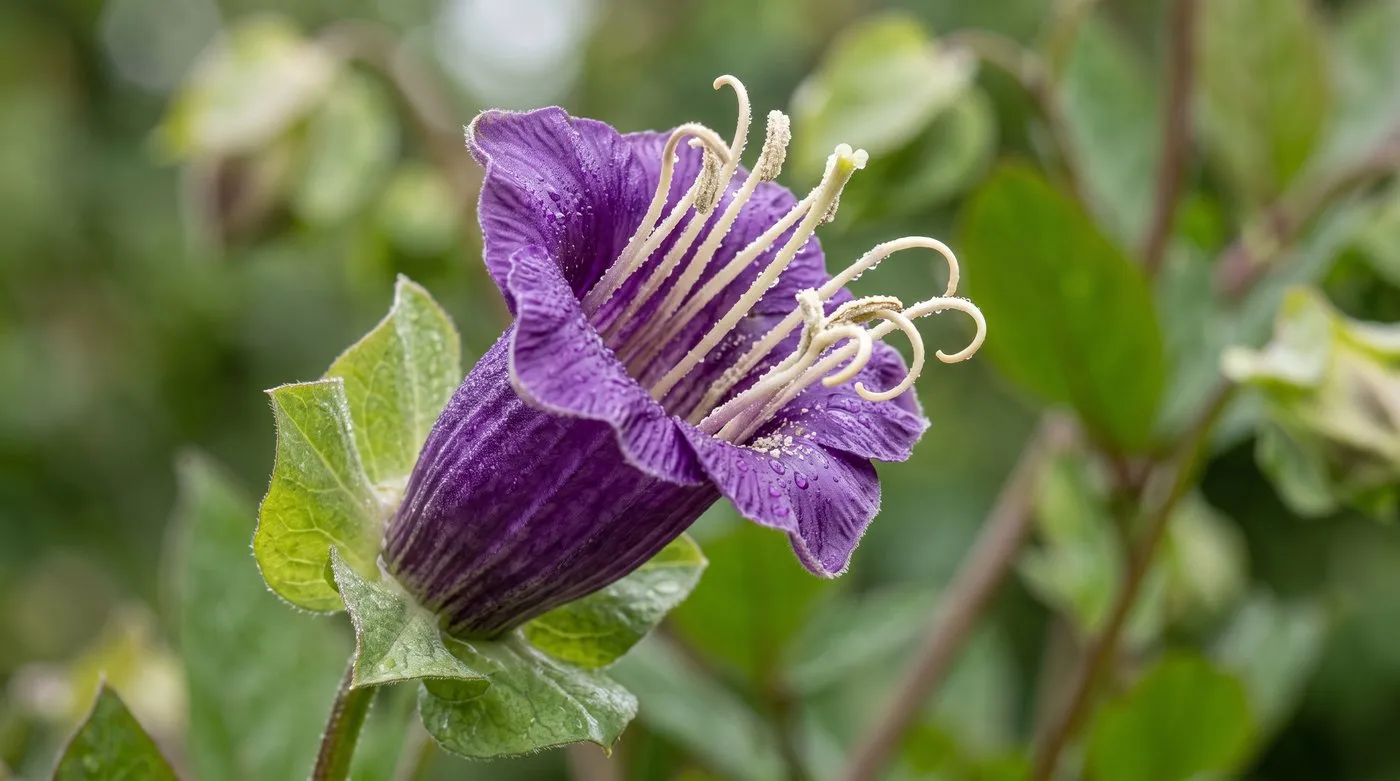 Each cobaea flower is a 5-8cm bell sitting on a green “saucer” formed by the calyx. This is the cup and saucer.
How cobaea compares to other fast annual climbers
Cobaea belongs to a small group of annual climbers grown for quick summer cover. It stands out for sheer speed and season length, but each rival has its own strength. All of these are half-hardy or tender in the UK and grow from a spring sowing.
| Climber | Speed | Height in one season | Flowering | Hardiness | Best for |
|---|---|---|---|---|---|
| Cobaea scandens (cup-and-saucer vine) | Very fast | 3-6m | August to first frost | Half-hardy | Fast cover, long late season, evening scent |
| Sweet pea (Lathyrus odoratus) | Moderate | 1.8-2.5m | June to September | Half-hardy | Strong scent and cut flowers |
| Morning glory (Ipomoea) | Fast | 2-3m | July to October | Tender | Bold blue trumpets, sunny fences |
| Canary creeper (Tropaeolum peregrinum) | Fast | 2-3.5m | July to October | Half-hardy | Frilled yellow flowers, light cover |
| Spanish flag (Ipomoea lobata) | Fast | 2-4m | July to first frost | Tender | Red-to-cream flower spikes |
| Thunbergia (black-eyed Susan vine) | Moderate | 1.5-2.5m | June to September | Tender | Pots and low trellis |
Cobaea wins on height and on how late it holds. It is still opening fresh flowers when sweet peas have long finished. The trade-off is scent: sweet peas beat it hands down for perfume, though cobaea does carry a musky evening note. For the widest colour, grow it alongside other half-hardy annuals and let each climber do its job.
There is a white form, ‘Alba’, with pale greenish-white flowers that never darken to purple. It is a little less vigorous than the species but useful where the purple would clash.
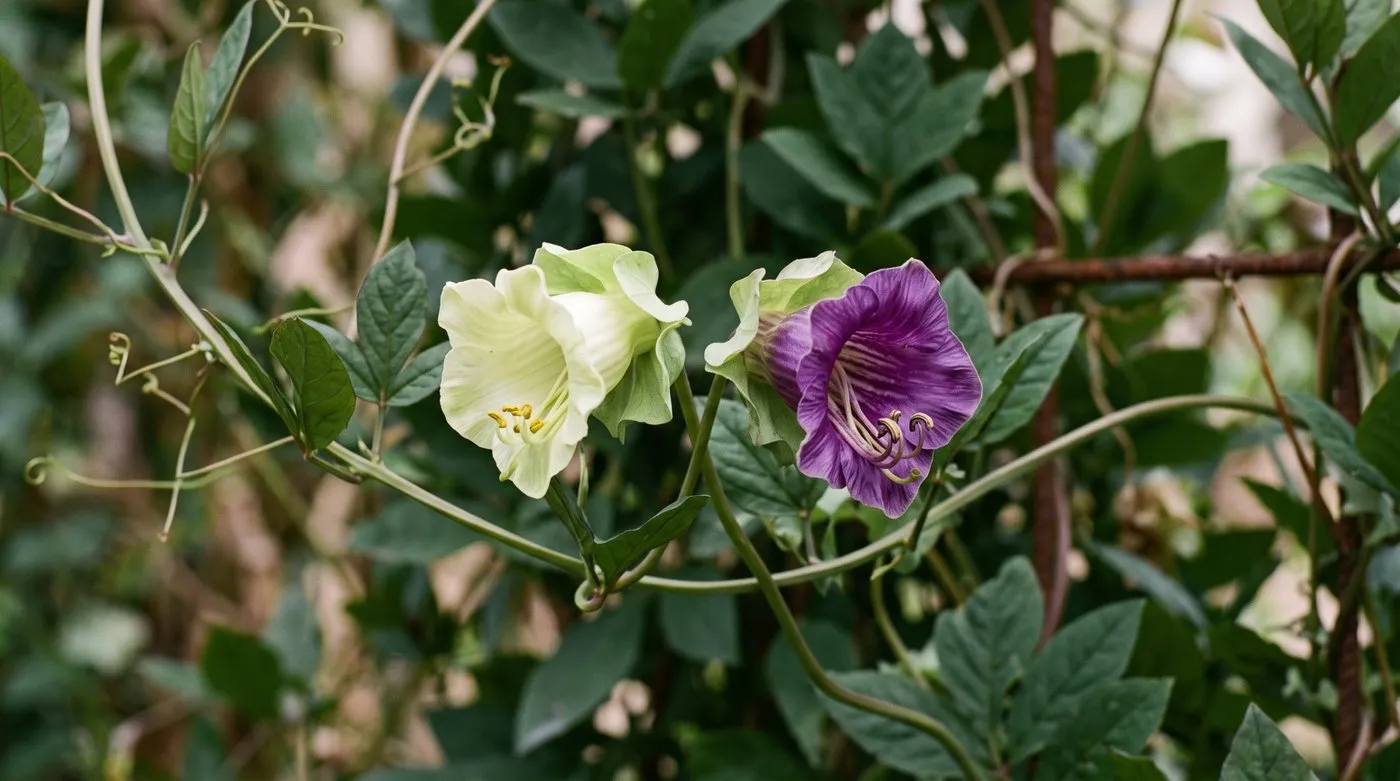 Flowers open creamy-green, then age to deep violet-purple. Both stages sit on the same vine at once.
How to grow cobaea from seed
Cobaea is grown from seed each spring, and the timing matters more than any other single factor. The plant is slow to reach flowering size, so it needs the longest possible run at the season.
When to sow: January to March, indoors with heat. A January or February sowing gives the best flowering. Anything sown after March grows plenty of leaf but often runs out of time to flower before frost.
The seed: Cobaea seeds are large, flat and papery, like a thin disc. They are prone to rotting if they sit flat on wet compost. The trick is to sow them upright.
How to sow:
- Fill individual 7-9cm pots with peat-free seed compost and firm gently.
- Push each seed in on its edge, standing it vertically with the top just showing. This stops water pooling on the flat face and rotting it.
- Cover lightly with a few millimetres of compost or vermiculite.
- Water from below by standing pots in shallow water, then drain.
- Keep at 18-21°C in a propagator or on a warm windowsill.
- Germination takes 2-3 weeks and is often erratic, so be patient.
- Pot on promptly into a 1-litre pot once the first true leaves appear, to avoid a growth check.
- Pinch out the growing tip at about 20-30cm to force side branches and more flowering stems.
Gardener’s tip: If you can only sow one packet, sow half in January and half in late February. The stagger insures against poor germination and gives you a longer flowering window. Always keep a spare seed or two back, as germination can be as low as 50%.
For the full method under glass or on a windowsill, follow our guide to sowing seeds indoors, and check your timings against the seed sowing calendar.
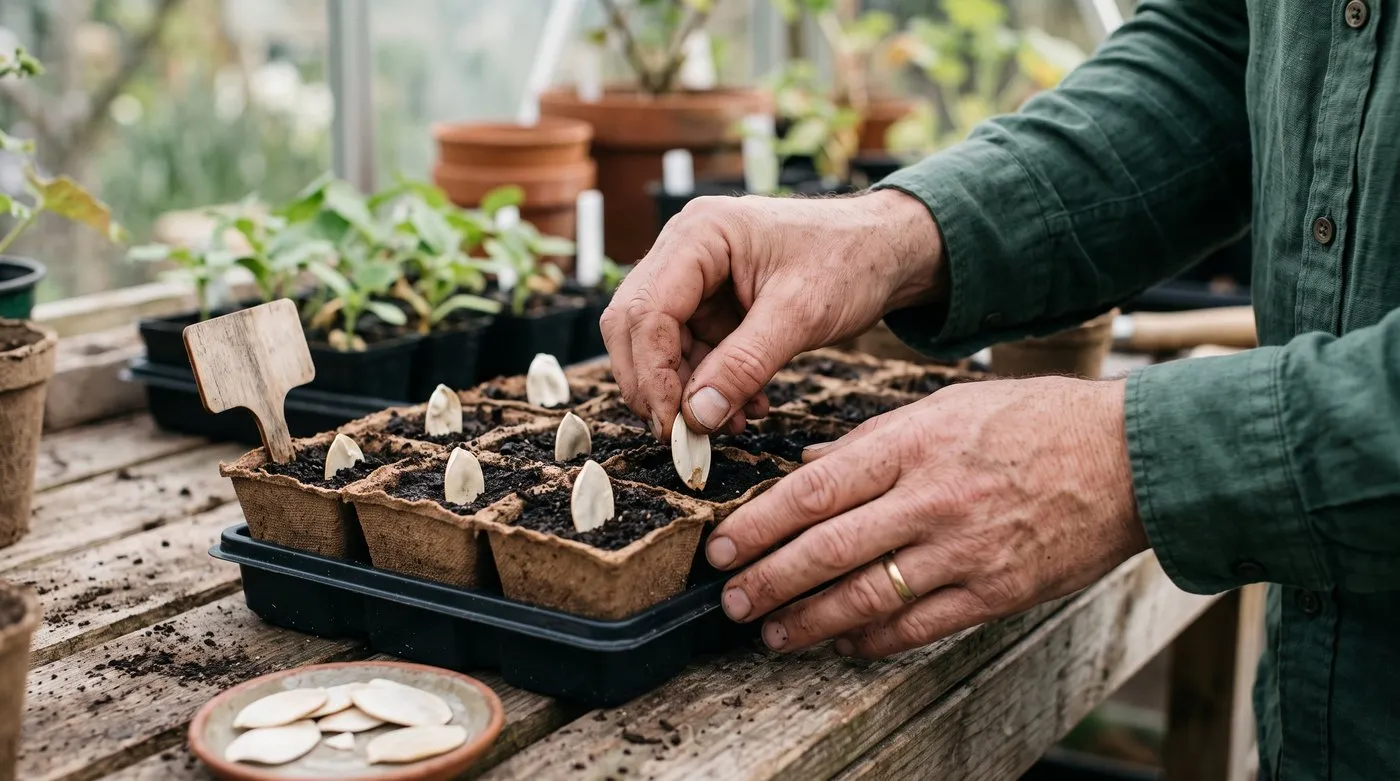 Sow cobaea seeds on their edge, standing upright, so water cannot pool on the flat face and rot them.
Planting out and giving the vine sturdy support
Cobaea is half-hardy and will not tolerate frost, so hardening off and timing are critical. Rush it outside and one cold night at -1°C ends the plant.
Harden off: Move plants to a cold frame or sheltered spot for 10-14 days from mid-May, bringing them in on cold nights. Our guide to hardening off seedlings sets out the routine.
When to plant: Late May or June, once the last frost has passed and the soil has warmed. In the north and in cold gardens, wait until early June.
Spacing: Set plants 45-60cm apart at the base of the support. One vine covers a lot of ground, so you rarely need many.
Support: This is where people underestimate cobaea. It climbs by branched tendrils with hooked tips that need something narrow to grab. Give it 2-3m of trellis, netting, wires, an obelisk or an arch. A thick post or a smooth wall gives the tendrils nothing to catch, so add wires or netting first.
Tying in: Guide the first shoots onto the support and tie them in loosely with soft twine until the tendrils take hold. After that the plant climbs on its own.
Warning: Cobaea is vigorous. A single plant can smother a small wigwam or overwhelm a neighbouring shrub by August. Give it a support of its own and keep it away from delicate plants. Never plant it out before the last frost, as even a light frost kills young plants outright.
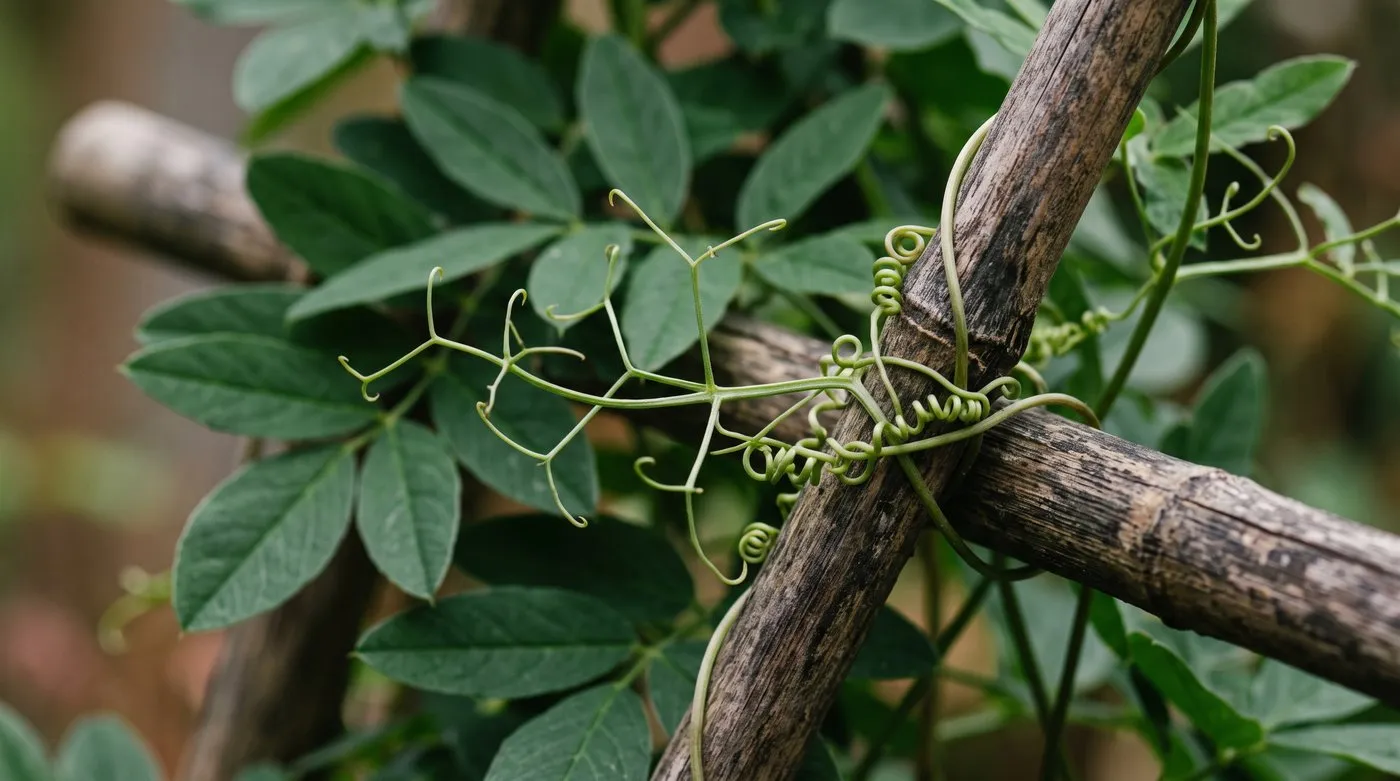 Cobaea climbs by branched tendrils with hooked tips. Give them narrow wires or netting to grip.
Month-by-month growing calendar
| Month | Task |
|---|---|
| January | Sow seed indoors at 18-21°C, on edge in individual pots. Earliest sowings flower first |
| February | Main sowing month. Keep seedlings warm and bright. Pot on as soon as true leaves show |
| March | Last chance to sow for reliable flowering. Pinch tips at 20-30cm to encourage branching |
| April | Grow on frost-free. Pot on into 1-2 litre pots. Do not let plants get pot-bound |
| May | Harden off from mid-month. Plant out only after the last frost in mild areas |
| June | Plant out in the north. Tie in shoots to the support. Water in well |
| July | Rapid growth, up to 20-30cm a week. Water regularly. Start a high-potash feed |
| August | Flowering begins. Keep feeding and watering. Guide new growth over the support |
| September | Peak flowering. Flowers open pale and age to purple. Enjoy the evening scent |
| October | Flowering continues until the first frost. Collect ripe seed on a dry day |
| November | Frost blackens the plant. Pull out spent vines and compost the top growth |
| December | Order fresh seed for next year. Overwinter any potted plants under frost-free glass |
Feeding for flowers, not lush leaf
How you feed cobaea decides whether you get a wall of leaf or a wall of flowers. This is the mistake that catches most first-time growers.
Avoid high nitrogen: A general or high-nitrogen feed pushes soft, leafy growth and delays flowering. The plant grows fast and green, then barely blooms. Do not use lawn feed or a nitrogen-rich general fertiliser.
Use high potash: Switch to a high-potash feed, such as a tomato feed, from July. Potash promotes flowering rather than foliage. Feed every 10-14 days through the flowering season.
Water steadily: Cobaea is thirsty in full growth. Dry roots in July check the plant and reduce flowering. Water deeply in dry spells, especially plants against a warm wall or in pots.
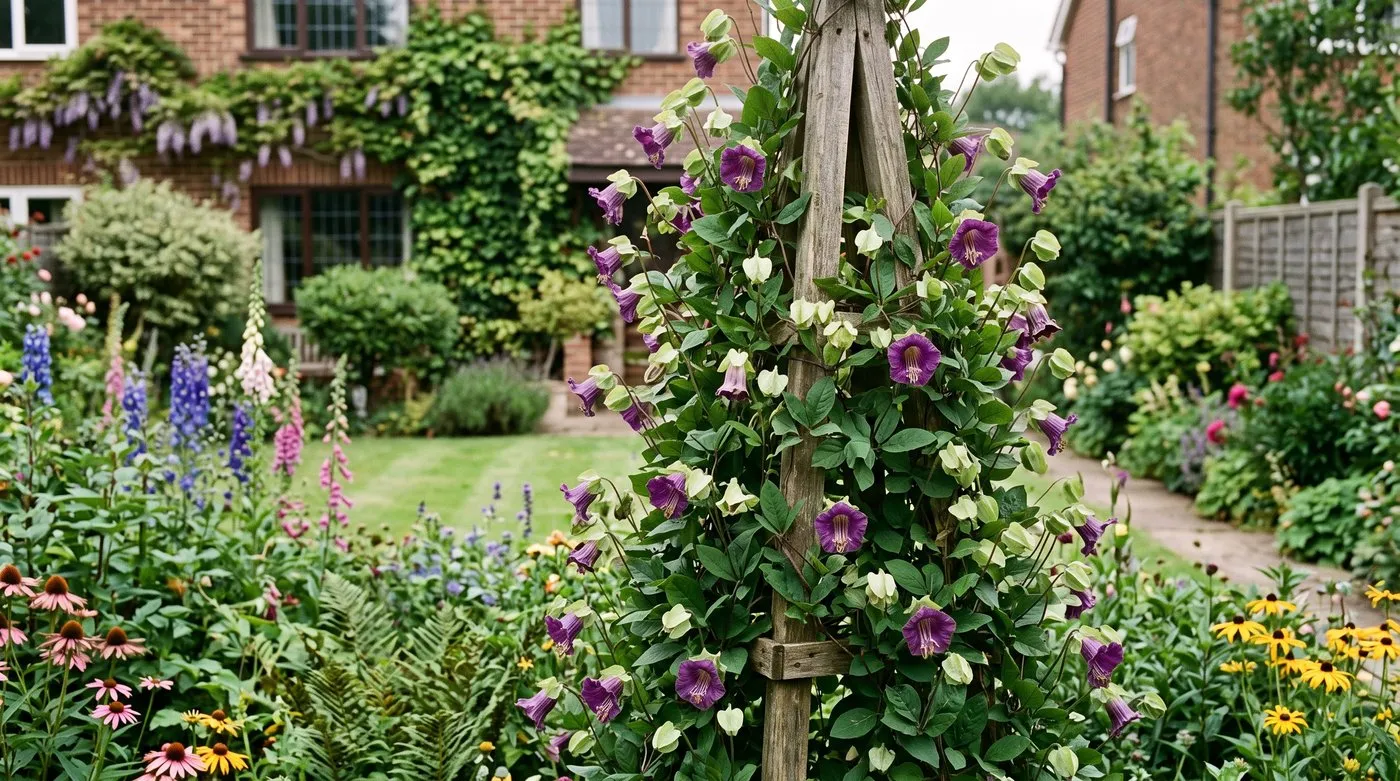 A well-fed cobaea on an obelisk, carrying dozens of flowers at once through late summer.
Common cobaea problems and how to fix them
Cobaea is easy once it is growing, but a handful of issues recur. Ranked by how often they cause real trouble in UK gardens, here is what to do.
| Problem | Cause | Effectiveness of fix | Role |
|---|---|---|---|
| Fails to flower | Sown too late, or fed too much nitrogen | 95% by sowing Jan-Feb and using high potash | Primary, timing is everything |
| Slug and snail damage | Soft young growth after planting out | 90% with nematodes and evening patrols | Primary, protect young plants |
| Wind damage | Exposed site, soft fast growth | 80% by planting against a wall or fence | Primary, choose the spot well |
| Aphids | Warm, sheltered growth under glass | 80% with a water jet or predators | Supplementary, rarely fatal |
| Red spider mite | Hot, dry air under glass or on a wall | 70% by raising humidity and watering | Maintenance, worse in heat |
Failure to flower is by far the most common complaint, and the fix is timing. Slugs and snails hammer young plants in the first weeks after planting out, so protect them until growth is away. Aphids and red spider mite mostly bother plants grown under glass, where warm still air suits both pests.
Root cause on failure to flower: gardeners blame the plant or the weather, but the real cause is almost always a late sowing. Cobaea needs months of growth to reach flowering size. A vine sown in April spends the whole summer building leaf and stem, then meets the first frost just as flower buds might have formed. The plant is not faulty. It simply ran out of time. The permanent fix is to sow in January or February, give it the earliest possible start, and never expect a late sowing to flower well in a UK season.
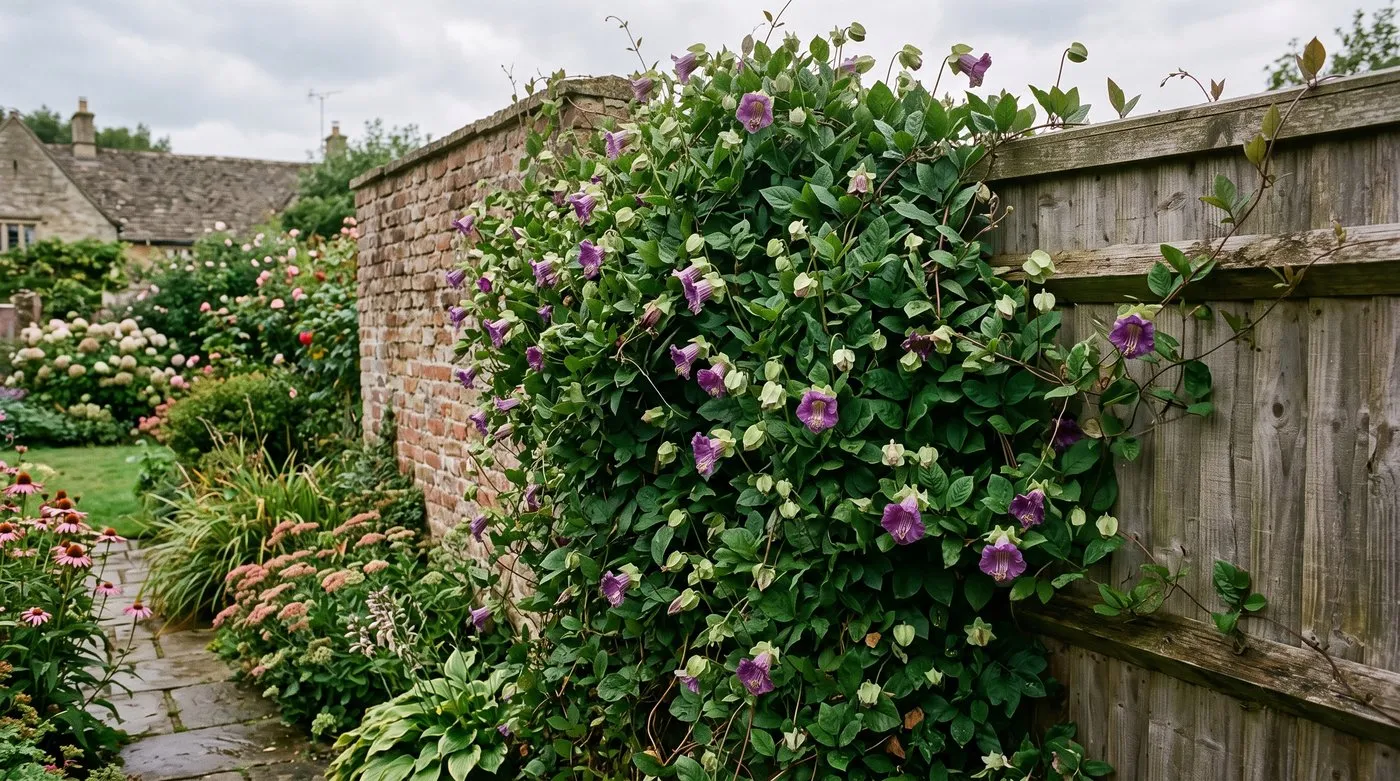 Given an early start, cobaea covers a fence fast, screening it completely by late summer.
Cobaea for pollinators and evening scent
Cobaea earns its place with bees as well as with the eye. The wide, open bells give easy access to nectar, and the flowers work through the season when much else is fading. Bumblebees and honeybees are the main visitors in a UK garden, feeding on the day flowers from August onward.
Grow it with other scented climbers for an evening-fragrant corner, and pair it with a mix of bee-friendly garden plants to keep forage coming across the whole season. The RHS Plants for Pollinators scheme is a good guide to companions that fill the gaps cobaea leaves.
Common mistakes to avoid
Sowing too late. This is the big one. Seed sown after March rarely flowers before frost. Sow in January or February for a full season of bloom.
Sowing seeds flat. The large flat seeds rot if they lie on wet compost. Set each seed on its edge, standing upright, so water runs off the face.
Feeding high nitrogen. A general feed gives lush leaf and few flowers. Switch to a high-potash tomato feed from July for a wall of bloom.
Planting out too early. Cobaea is tender and a single frost at -1°C kills it. Harden off properly and wait until late May or June.
Giving it a weak support. A vigorous vine swamps a small wigwam and finds nothing to grip on a smooth wall. Provide 2-3m of trellis, netting or an obelisk with narrow uprights for the tendrils.
Now you have mastered cobaea, read our guide on fast-growing climbers to cover an ugly fence for more quick summer screening.
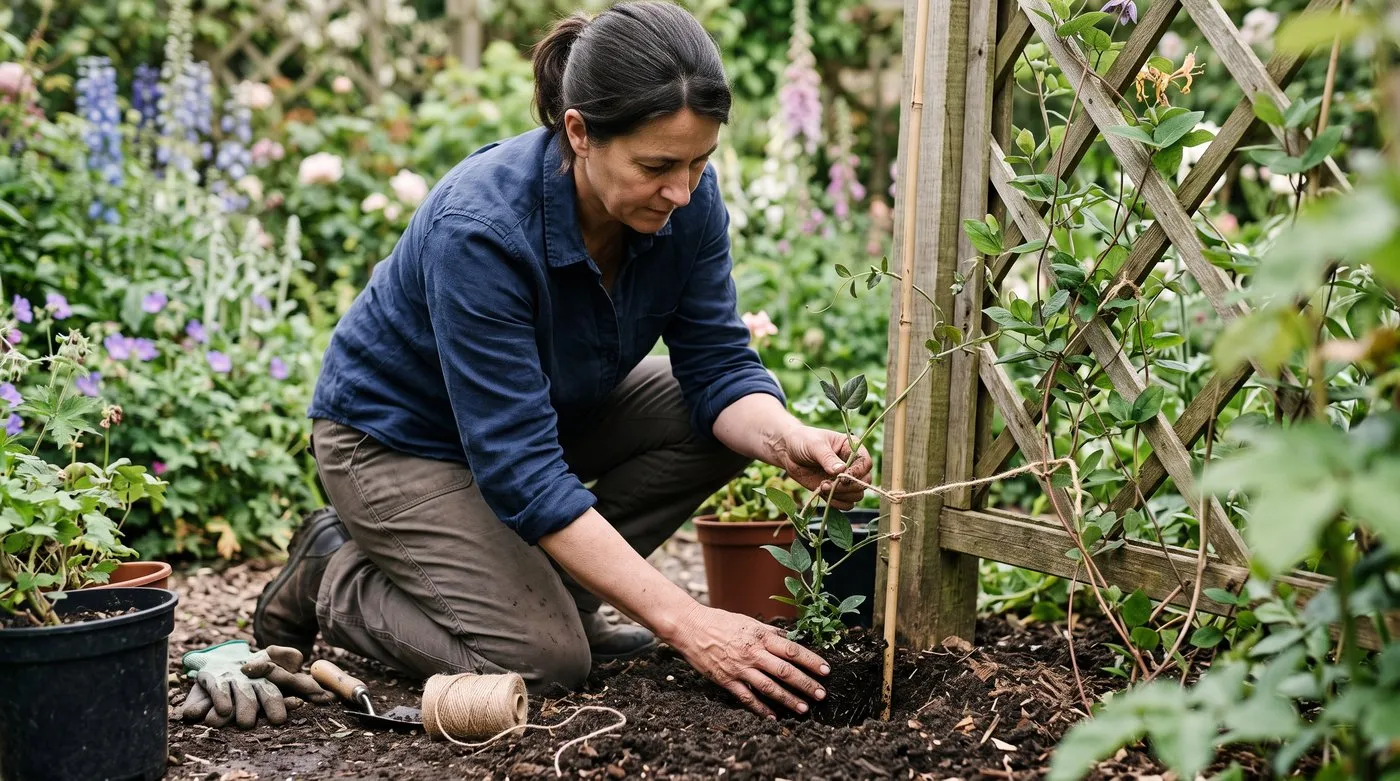 Plant out after the last frost and tie the first shoots in until the tendrils take hold.
Frequently asked questions
How fast does cobaea grow?
Cobaea grows very fast, reaching 3-6m in a single UK season. From an early indoor sowing, plants put on 20-30cm a week once summer warmth arrives. This speed makes it one of the quickest annual climbers for covering a fence or trellis. It needs an early start to reach full height and flower before autumn.
Is cobaea an annual or a perennial?
Cobaea is a tender perennial grown as a half-hardy annual in the UK. In its native Mexico it lives for years. UK frost kills it each winter, so most gardeners sow fresh seed every spring. You can overwinter a plant under frost-free glass, but growing it new each year is simpler and reliable.
Why is my cobaea not flowering?
A late sowing is the most common reason cobaea fails to flower. The plant needs months of growth before it blooms, so seed sown after March rarely flowers before frost. Too much nitrogen feed, deep shade, or a cold summer also delay flowering. Sow in January or February for the best results.
When should I sow cobaea seeds?
Sow cobaea seed indoors from January to March. Cobaea is slow to flower, so an early start is essential in the UK. Sow the large flat seeds on their edge at 18-21°C. Germination takes 2-3 weeks and can be erratic. Late sowings grow leaf but rarely flower before the first autumn frost.
What support does cobaea need?
Cobaea needs a sturdy support of 2-3m, such as trellis, netting, an obelisk or a fence. It climbs by branched tendrils with hooked tips that grip thin structures. Give the tendrils something narrow to catch, like wires or netting. A single vine can swamp a small wigwam, so allow plenty of room.
Does cobaea come back every year?
No, cobaea does not usually come back in UK gardens. It is a tender perennial that frost kills each winter. In mild coastal or urban gardens it may survive a light winter, and it sometimes self-seeds. Most gardeners treat it as an annual and sow fresh seed each year for reliable results.
Is cobaea scented?
Yes, cobaea has a musky, honey-like scent that strengthens in the evening. The flowers open pale and lightly scented, then deepen to purple as they age. The evening perfume hints at its native bat pollinators. In the UK, bees work the day flowers, making it a useful late-summer plant for pollinators.
Further reading
- How to grow annuals from seed, the basics behind raising cobaea and more
- Best half-hardy annuals for UK gardens, more tender colour raised from a spring sowing
- How to grow cut flowers in the UK, fill a cutting patch alongside your climbers
- Cottage garden planting plan, design ideas that use climbers for height
Our team produces practical UK gardening guidance from source research, contributor records and established horticultural practice. Editorial standards are overseen by Matt W.