Key takeaways
- Hardy types (H. densiflorum, H. coccineum) hold an RHS H3 rating (down to -5°C), but survive colder in sheltered, free-draining ground.
- Plant rhizomes horizontally, 10cm deep and 40cm apart, in spring once soil reaches 10°C.
- Mulch in-ground crowns 15 to 20cm deep with dry bark or straw, then peg fleece over the top from November.
- Flowering runs August to October, with 'C.P. Raffill' starting as early as July and lasting into late September.
- Tender H. gardnerianum (H1c) must be lifted or grown in a 45cm pot moved frost-free below 5°C.
- Divide congested clumps in April, cutting rhizomes into 10cm pieces each with a growing shoot.
Knowing how to grow hedychium turns a damp UK border into something that smells of the tropics by late August. These ginger lilies throw up scented spikes on stems anywhere from 1 to 2.5 metres tall. The flowers arrive when most of the garden is fading, in shades of orange, scarlet and lemon. Most gardeners assume they are too tender for British winters. The hardier species prove otherwise, given the right spot and the right protection. The trick that decides survival is not the species at all. It is the depth and dryness of the winter mulch over the crown. Get that right and a clump returns bigger every year.
Which ginger lily species suit British gardens
Not every Hedychium copes with a UK winter. Hardiness splits the genus into plants you can leave in the ground and plants you must lift or pot. Hedychium densiflorum and Hedychium coccineum are the workhorses. Both carry an RHS H3 rating, hardy down to around -5°C in coastal and mild areas. H. densiflorum reaches 1 to 1.5 metres with dense orange or yellow spikes. H. coccineum runs taller at 1.5 to 2.5 metres, with scarlet tubular flowers and prominent stamens.
Hedychium gardnerianum, the Kahili ginger, is the showstopper and the softest. It rates H1c and collapses below about 5°C. Grow it in a pot you can move under cover. Treat the species as your guide before you ever reach for a spade, because it sets the whole overwintering plan.
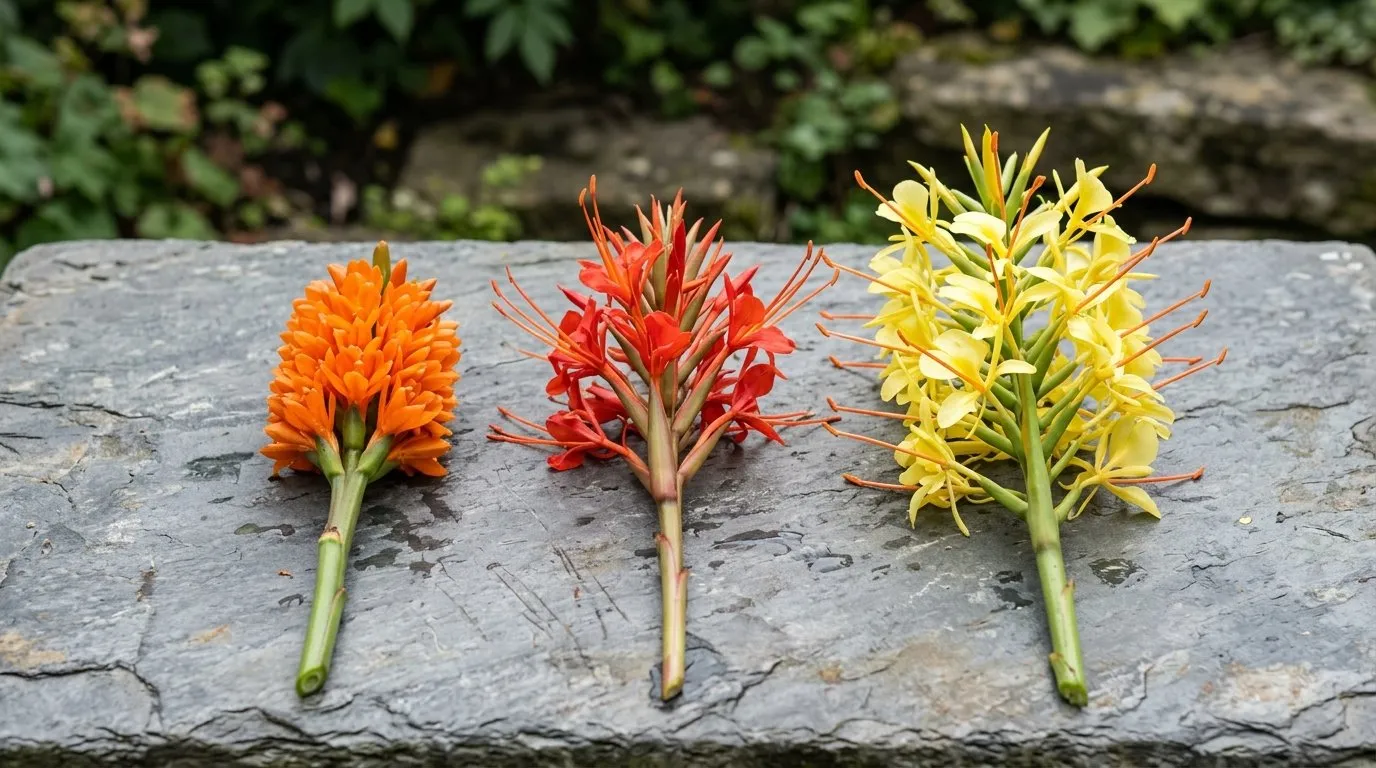 Hardier H. densiflorum and H. coccineum on the left; tender Kahili ginger on the right.
Hardiness ratings and survival temperatures by species
‘Stephen’ is the one to start with in a colder county. It was found in Nepal by Tony Schilling and is the toughest of the lot.
Where to plant ginger lilies for big late-summer growth
Ginger lilies are greedy. They want sun, shelter and a soil that never dries out but never waterlogs. Pick a south or west-facing spot against a warm wall or fence. This adds a degree or two and ripens the rhizome for winter. Dig in two bucketfuls of well-rotted manure or garden compost per square metre before planting. The richer the soil, the taller and more scented the spikes.
Avoid frost pockets and windy gaps. Wind shreds the broad leaves and topples the tall stems. A clump tucked behind shorter exotics like cannas takes the brunt off. For the full exotic look, pair them with the bold foliage in our hardy exotic and tropical plants guide. The same warm, sheltered border that suits a banana suits a ginger lily perfectly.
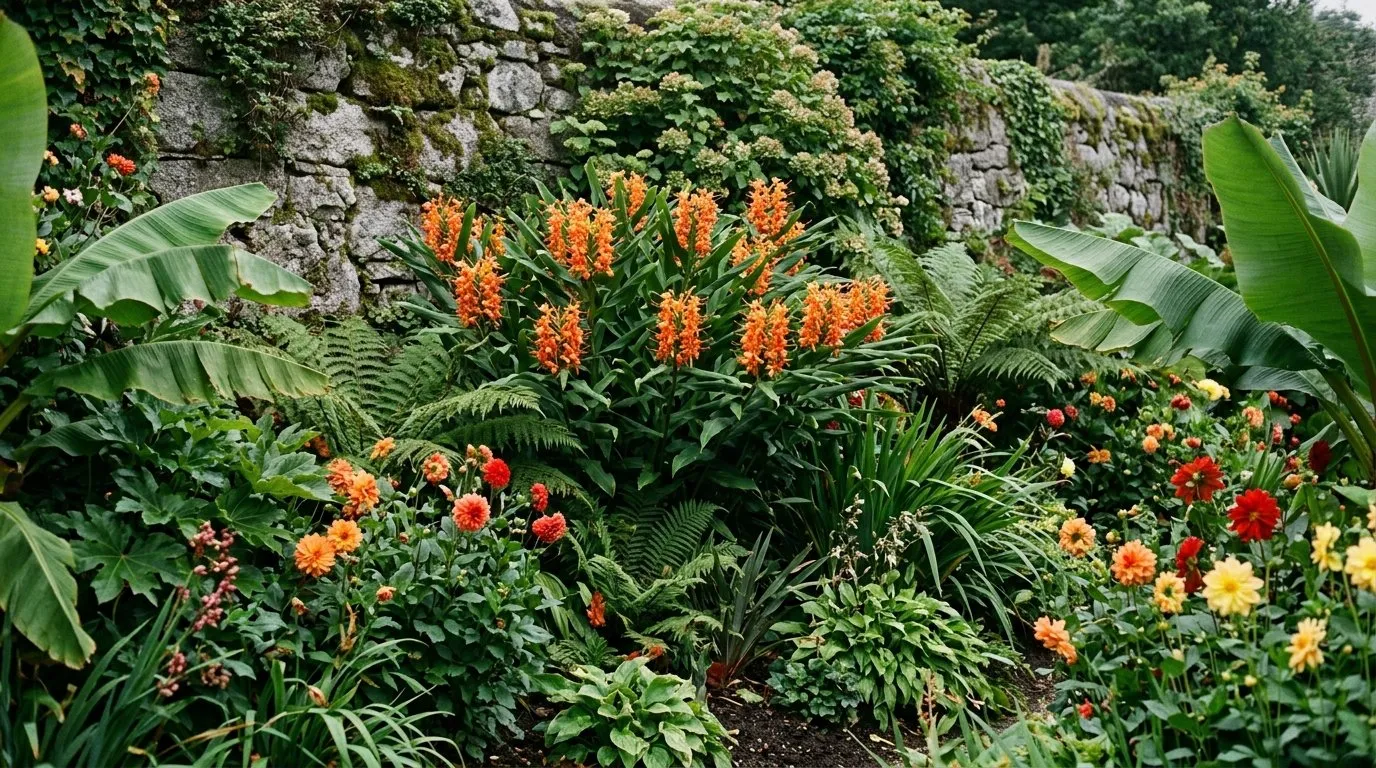 A sheltered Westcountry border lets ginger lilies reach full height by September.
How to plant Hedychium rhizomes step by step
Timing and depth decide whether a rhizome roots or rots. Plant in spring once the soil warms past 10°C, usually mid-April to May. Never plant into cold wet ground.
- Soak the rhizome for an hour in tepid water if it arrived dry and shrivelled.
- Dig a hole 30cm wide and improve the base with grit if drainage is poor.
- Lay the rhizome horizontally, growing buds pointing up, 10cm below the surface.
- Space multiple rhizomes 40cm apart to allow each clump to bulk out.
- Backfill and firm, then water in well to settle the soil around the rhizome.
- Mulch the surface with 5cm of compost to hold moisture, leaving the buds clear.
The single critical mistake is planting too deep in cold soil. A rhizome buried 20cm down in April sits in the cold and rots before it can shoot. Keep spring planting shallow at 10cm. Save the deep covering for the winter mulch instead.
 Plant rhizomes horizontally at 10cm, with buds facing upward.
Feeding and watering for tall, scented flower spikes
Hedychium build their flowers on the energy you feed them through summer. Water deeply twice a week in dry spells, soaking the root zone rather than splashing the leaves. The broad foliage loses a lot of moisture on hot days. A dry clump in July gives short, mean spikes in September.
Start feeding in June with a high-potash tomato fertiliser once a week. Potash drives flower formation; too much nitrogen gives leaf at the expense of bloom. Stop feeding in early September so the rhizome ripens and hardens before winter. Mulch the surface with compost in spring to lock in moisture. For more on choosing the right material, see our guide to what mulch is and how to use it.
The exact winter mulch depth for in-ground rhizomes
This is the part that decides everything. Once the first hard frost blackens the foliage in November, cut the stems back to 10cm. Then build the mulch. Pile dry bark, straw or bracken 15 to 20cm deep over the crown, spreading it 30cm wide. The mulch insulates the rhizome from frost driving down into the soil.
Dryness matters as much as depth. A soggy mulch freezes solid and rots the crown. Peg a sheet of horticultural fleece over the mound to keep rain off, weighting the edges with bricks. In the coldest counties, double the fleece. The table below sets the depth by region.
| Region | Mulch depth | Fleece layers | Lift tender types? | Risk if skipped |
|---|---|---|---|---|
| South-west and coastal | 15cm dry bark | 1 | No, except H. gardnerianum | Low; crown survives most years |
| South-east and Midlands | 18 to 20cm straw | 1 to 2 | H. gardnerianum, H. coccineum in cold spots | Moderate; losses in hard frosts |
| North and Scotland | 20cm plus container | 2 | Most species, lift or pot | High; ground crowns often fail |
Remove the mulch gradually in April as shoots push through, never all at once into a late frost. Leaf mould works as a top layer too; our guide to making leaf mould covers gathering it free each autumn.
 A 20cm dry mulch with pegged fleece protects the crown through a Surrey winter.
Lifting and storing tender ginger lilies
Tender species and cold-garden growers lift the rhizomes instead. The drill mirrors how you would store a dahlia tuber. Lift before the first hard frost, usually mid to late October. Cut the stems to 10cm and ease the clump out with a fork, keeping the rhizome intact.
Shake off loose soil but do not wash the rhizome; a little dry soil protects it. Pack the rhizomes in a crate of just-moist coir or sharp sand, in a frost-free shed or garage at 5 to 10°C. Check monthly and bin any soft, rotting pieces. Pot them back up in March to start into growth under glass. The principle is the same one used in our dahlia growing guide and the wider overwintering plants guide.
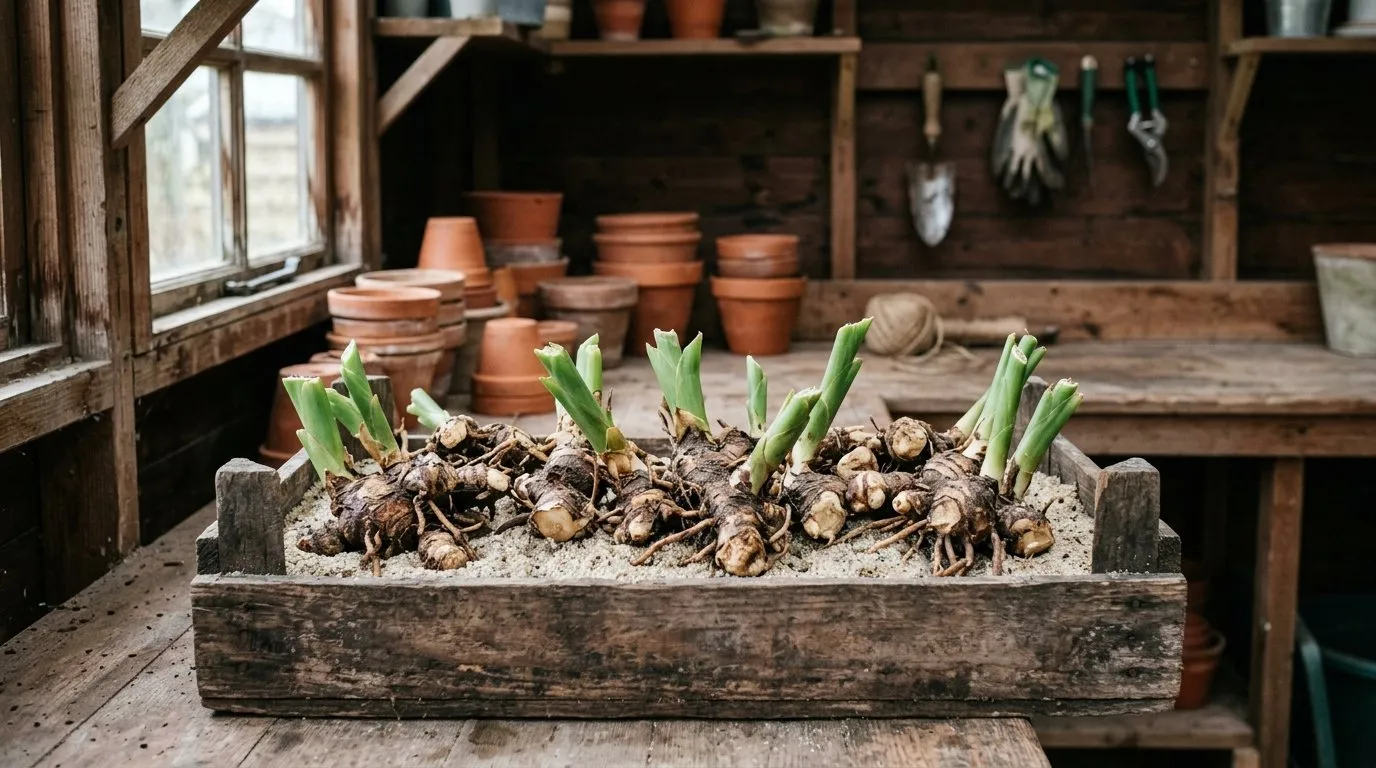 Lifted rhizomes overwinter in barely-moist sand at 5 to 10°C.
Growing ginger lilies in containers
A large pot is the safest home for tender Kahili ginger and a neat option on a paved space. Use a 45cm pot with several drainage holes. Fill with a soil-based compost like John Innes No 3 mixed with 20 percent grit. The weight steadies the tall stems and the loam holds nutrients better than peat-free multipurpose alone.
Plant the rhizome 5 to 8cm deep, water freely in summer and feed weekly. Move the pot into a frost-free greenhouse or porch before temperatures drop below 5°C. A container specimen on a city terrace gives the same scent and drama as a border clump, with none of the winter mulch faff.
 A potted Kahili ginger brings tropical scent to a London terrace, then moves under cover for winter.
Dividing ginger lilies in spring
Clumps congest after three or four years and flowering tails off. Division is the cure and your free supply of new plants. The root cause of a poor display is usually overcrowding rather than weather. A packed mass of old rhizomes shades its own buds and starves them.
Divide in April as new shoots appear. Lift the whole clump and hose off the soil to see the rhizomes. Cut the mass into 10cm sections with a clean knife, each piece carrying at least one fat growing bud. Discard the oldest, woody central portions. Replant the young sections 40cm apart at 10cm deep, or pot them on. Each division flowers within a season or two.
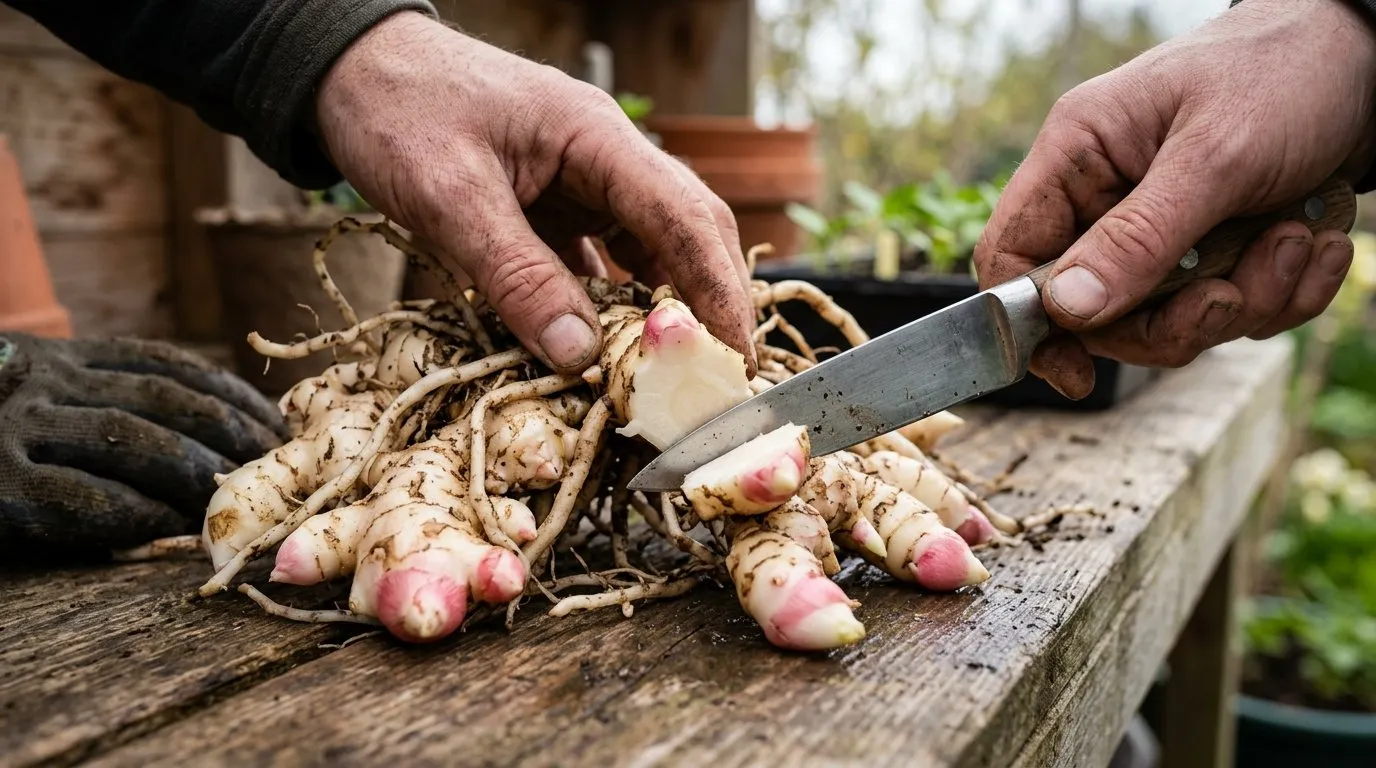 Cut each division to 10cm with a healthy bud, then replant 40cm apart.
Month-by-month ginger lily calendar
The work splits cleanly across the year. This calendar keeps a UK clump fed, flowering and protected.
| Month | Task | Detail |
|---|---|---|
| March | Start under glass | Pot stored rhizomes; uncover early shoots on mild days |
| April | Plant and divide | Plant new rhizomes 10cm deep; divide congested clumps |
| May | Settle outdoors | Plant out container specimens after the last frost |
| June | Begin feeding | Weekly high-potash feed; water deeply twice a week |
| July | Watch for spikes | ’C.P. Raffill’ opens first; keep moisture steady |
| August | Peak flowering | Main display begins; deadhead spent spikes |
| September | Late colour | Stop feeding; flowering continues on most types |
| October | Lift tender types | Lift H. gardnerianum; move pots under cover below 5°C |
| November | Mulch crowns | Cut back, pile 15 to 20cm dry mulch, peg fleece |
| December to February | Protect and check | Keep mulch dry; inspect stored rhizomes monthly |
Common mistakes when growing ginger lilies
Three errors account for most failures. Each one is easy to avoid.
Wet winter ground. A rhizome in cold clay rots no matter how deep the mulch. Wet soil is the killer, not cold alone. Plant in free-draining ground or raise the bed, and add grit at planting time.
A damp mulch. Gardeners pile on compost or leaves that soak up rain and freeze into a sodden cap. That cap rots the crown. Always keep the winter mulch dry under pegged fleece.
Feeding the wrong thing. A nitrogen-heavy feed gives lush leaf and few flowers. The plant grows tall and soft, then flops. Switch to a high-potash tomato feed from June and the spikes follow.
Gardener’s tip: Mark the crown’s position with a labelled cane before you mulch in November. The dormant rhizome vanishes under bark and straw, and it is easy to slice through it with a fork in spring. A cane saves the clump and reminds you where to lift the mulch.
Warning: Hedychium gardnerianum is an invasive weed in mild climates such as parts of New Zealand and Hawaii. In the UK cold keeps it in check, but never tip unwanted rhizomes onto open ground or compost near waterways. Bin or burn them.
Pairing ginger lilies with other exotics
Ginger lilies rarely stand alone. They earn their place at the back of a planting of bold leaves and hot colour. Cannas, bananas and dahlias all flower into autumn alongside them and enjoy the same rich, sheltered conditions. The canna growing guide and banana plant guide cover partners that lift the whole scheme. For structure that survives winter outdoors, agapanthus adds strappy foliage and June flowers before the gingers take over. The RHS holds detailed species notes on Hedychium care if you want to compare cultivars further.
Frequently asked questions
Are ginger lilies hardy in the UK?
The hardiest types survive most UK winters in sheltered, free-draining ground. Hedychium densiflorum and H. coccineum hold an RHS H3 rating, meaning -5°C. With a deep dry mulch and fleece, established crowns shrug off colder snaps in mild and coastal areas. Tender species like H. gardnerianum need lifting or a frost-free container.
How deep should I plant Hedychium rhizomes?
Lay them horizontally about 10cm below the surface. Set any visible buds pointing upwards and space rhizomes 40cm apart. In cold gardens, plant slightly deeper at 12 to 15cm to buffer the crown. Containers can sit shallower, around 5 to 8cm, because the compost warms faster.
When do ginger lilies flower?
Most flower from August to October in the UK. The earliest cultivar, ‘C.P. Raffill’, can open in July and repeat into late September. Cool, dull summers push the display later. A warm, sheltered spot and rich feeding bring the spikes on sooner and stronger.
How much winter mulch does a ginger lily need?
Pile dry bark or straw 15 to 20cm deep over the crown. Apply it once foliage is cut back in November, after the first frost blackens the leaves. Keep the mulch dry by pegging horticultural fleece over the top. The aim is insulation, not a soggy blanket that rots the rhizome.
Should I lift Hedychium gardnerianum for winter?
Yes, in most of the UK. Kahili ginger (H. gardnerianum) is tender at H1c and dies below about 5°C. Lift the rhizomes in October, trim the foliage, and store them barely moist in a frost-free shed. A large container moved into a cool greenhouse is the easier alternative.
Why is my ginger lily not flowering?
Usually too little sun, food or a cold summer. Hedychium need a warm, sheltered position and rich, moist soil to build flowering stems. Young plants and recently divided clumps often skip a year. Feed weekly with a high-potash tomato fertiliser from June to bulk up the spikes.
How do I propagate ginger lilies?
Divide the rhizomes in April as growth restarts. Lift the clump, then cut it into 10cm sections, each with at least one fat growing bud. Pot them up or replant 40cm apart. Each piece roots within weeks in warm, moist compost and flowers within a season or two.
Now you’ve mastered the winter mulch that keeps ginger lilies alive, read our guide on overwintering tender plants for the same protection across cannas, dahlias and bananas.
Our team produces practical UK gardening guidance from source research, contributor records and established horticultural practice. Editorial standards are overseen by Matt W.