Key takeaways
- Musa basjoo is root-hardy to about -10C if you wrap the pseudostem with dry straw; unwrapped it dies back to the roots below -5C
- Ensete ventricosum is NOT hardy: lift it before the first frost and store it at 5-10C, nearly dry
- A fed, watered basjoo puts on 2-4m of growth in a single UK season
- Plant in full sun in a wind-sheltered spot: exposed leaves shred into ribbons within weeks
- Feed weekly with a high-nitrogen liquid feed from May to August for the fastest growth
- Detach rooted suckers in spring to make new plants for free; bananas do not fruit outdoors in the UK
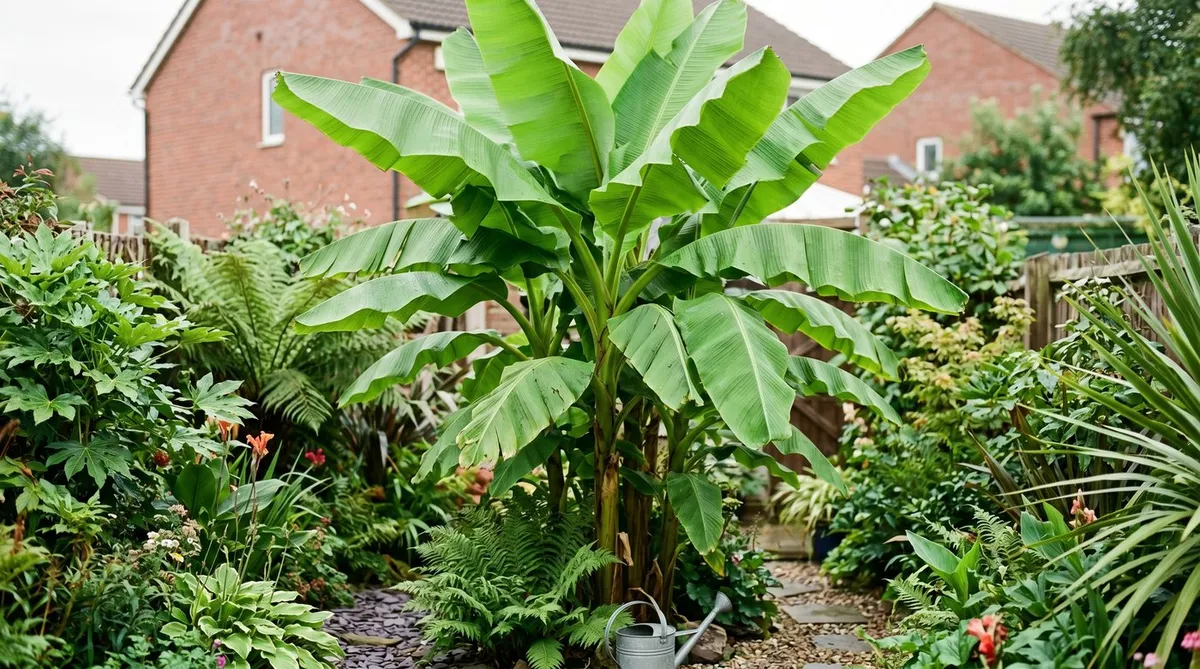
Growing banana plants outdoors in the UK is genuinely possible, and the key to it is knowing which banana you have. The hardy Japanese banana, Musa basjoo, survives British winters in the ground when you protect the stem. It is the species that makes an exotic garden look tropical from June onwards. Get it wrong, plant a tender type and leave it out, and you lose the plant at the first hard frost.
Hardy versus tender bananas: which one do you have?
The single most important decision happens before you plant anything. Musa basjoo is the only banana that reliably overwinters outdoors in most of Britain. Its roots take about -10C with stem protection. Everything else sold as a “banana” for the garden is tender and dies at the first frost unless you lift it.
Ensete ventricosum, the Abyssinian or red banana, is the dramatic burgundy-leaved plant in garden centres. It is not hardy at all. It collapses to mush at 0C and must come indoors every autumn. Musa ‘Dwarf Cavendish’ is the fruiting houseplant banana, happiest above 15C and never an outdoor plant in the UK.
Confusing these three is the commonest and costliest mistake. A basjoo wrapped for winter shrugs off a Midlands cold snap. An Ensete left out is dead by November. Check the label, check the leaf colour, and treat each by the right rule.
| Banana | Type | Hardiness | UK winter method | Mature height | Leaf feature |
|---|---|---|---|---|---|
| Musa basjoo | Hardy Japanese | Roots to -10C wrapped | Wrap stem in straw, leave in ground | 2-4m | Plain bright green |
| Ensete ventricosum ‘Maurelii’ | Tender | Dies at 0C | Lift, store frost-free at 5-10C | 2-3m in a season | Red and green |
| Musa sikkimensis | Borderline hardy | Roots to -8C wrapped | Wrap stem, heavy mulch | 3-4m | Green, red midrib |
| Musa ‘Dwarf Cavendish’ | Tender fruiting | Needs above 15C | Indoors all year | 1.5-2m | Glossy green, fruits indoors |
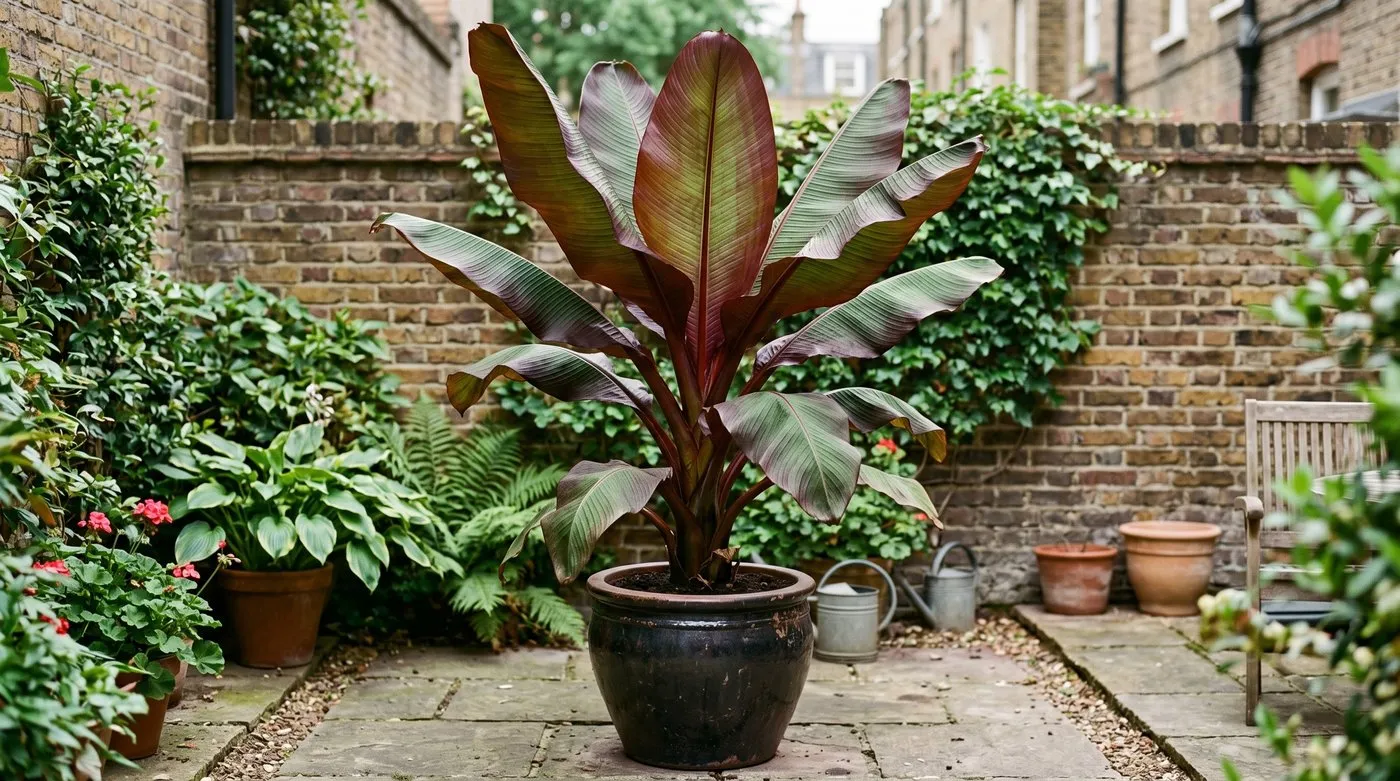 The red Ensete ventricosum ‘Maurelii’ is the showiest banana, but it is tender and must be lifted into a frost-free shed each autumn. Grow it in a pot so it lifts easily.
How fast does Musa basjoo grow in a UK season?
A well-fed Musa basjoo puts on 2-4m of growth in a single UK summer. That speed is the whole point of growing it. From a cut-back or resprouting stem in May, the plant builds a thick pseudostem and a fan of broad leaves through the warm months.
Growth is slow at first. Cool May soil below 12C holds the plant back. Once nights stay above 10C, usually from mid-June, the plant accelerates. At peak in July and August a healthy basjoo unfurls a new leaf every 7 to 10 days. Each leaf can reach 1.5m long.
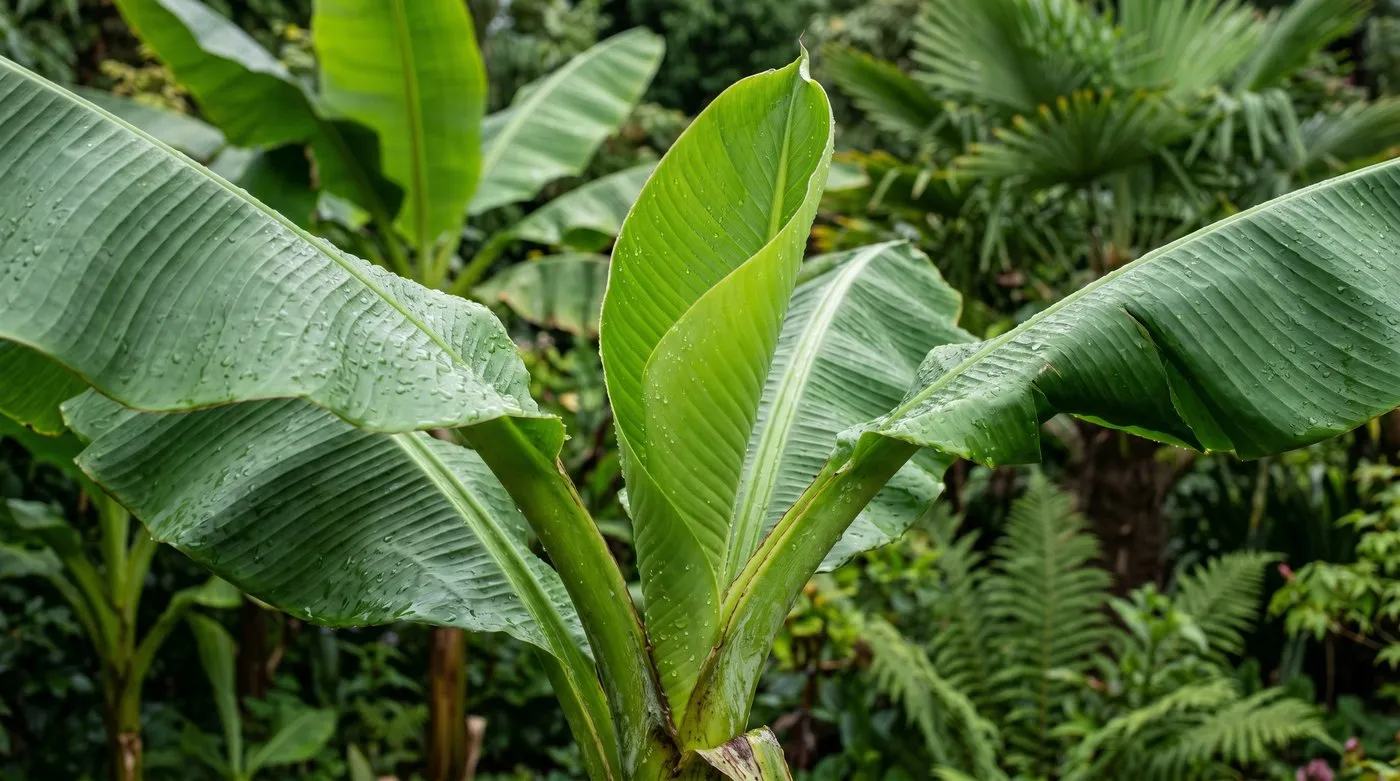 A healthy Musa basjoo throws a fresh leaf every week or two in summer. Steady feeding and water drive that pace; a hungry, dry plant stalls.
Feeding and watering for fastest growth
Bananas are gross feeders. The leaf size you want comes from heavy feeding and constant water, nothing else. Treat a basjoo like a tomato on steroids and it responds.
Water generously. A banana in full growth drinks several litres a day in hot weather. Dry plants stall and the leaf edges scorch brown. Mulch the root zone with 7-10cm of compost or well-rotted manure in spring to lock in moisture. Stop feeding by early September so soft growth firms up before frost.
Gardener’s tip: Plant your banana in rich, moist soil that never bakes dry, then mulch it thickly. A banana on poor dry ground will sulk at 1m all summer. The same plant on fed, watered, manured ground reaches 3m. Soil does most of the work.
Choosing a sheltered, sunny spot
Bananas need full sun and shelter from wind, in that order of priority. Sun drives the fast growth. Shelter keeps the leaves whole. Get the spot wrong and you grow a tattered plant that never looks tropical.
Pick a south or west-facing spot backed by a fence, wall, hedge or the house. A sun trap that warms early and stays still is ideal. Avoid wind funnels between buildings and exposed coastal or hilltop sites. If your only spot is breezy, accept some shredding or grow a smaller, more wind-tolerant clump.
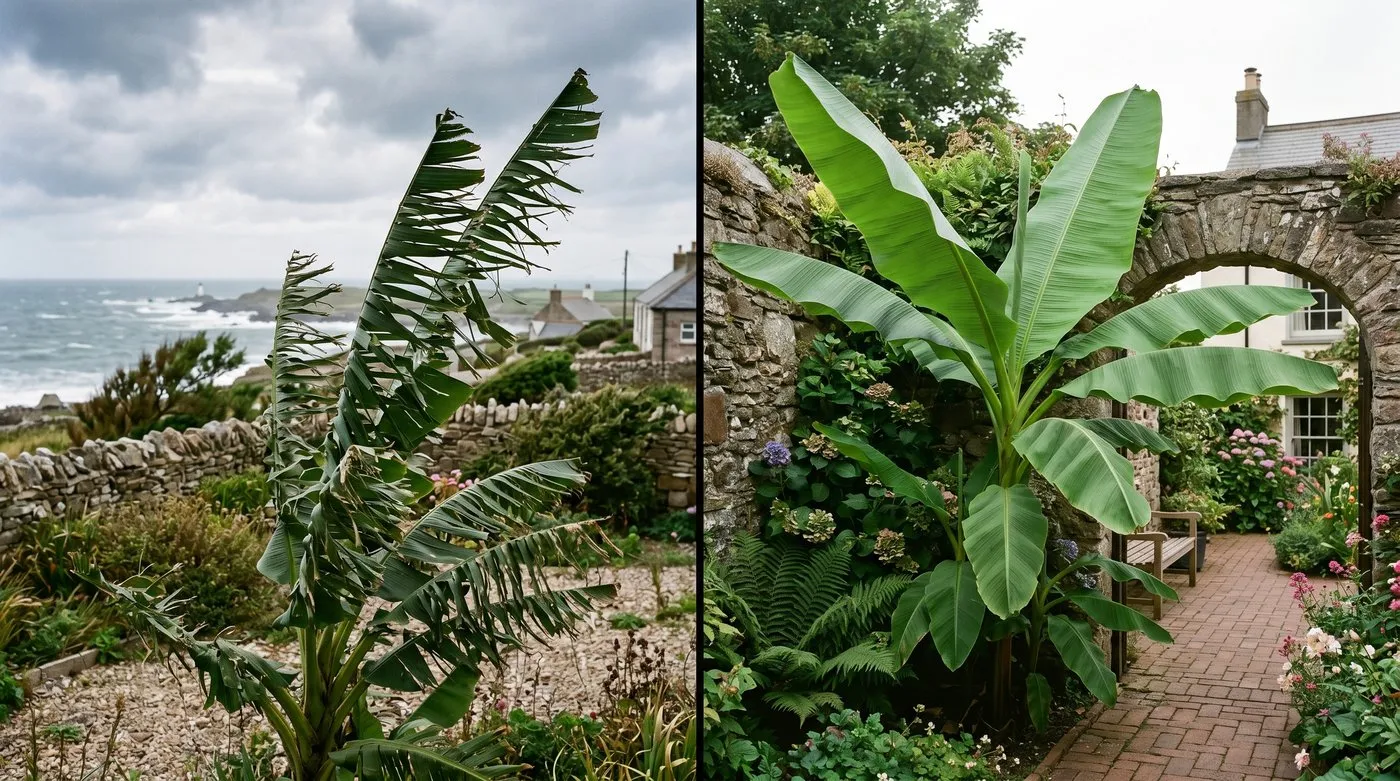 Left: leaves shredded by wind in an exposed spot. Right: intact leaves from a sheltered corner. The damage is cosmetic but ruins the tropical effect, so shelter matters.
Overwintering Musa basjoo: the straw-and-cage method
This is the method most guides gloss over, and it is the one that decides your spring. Musa basjoo roots are hardy to about -10C, but the standing pseudostem is killed bare below -5C. Protect that stem and you keep next year’s head start.
Work through these stages after the first frost blackens the leaves, usually late October to November:
- Cut back the leaves. Remove the frosted leaves, leaving the upright pseudostem standing. If a hard freeze threatens, reduce the stem height to a manageable 1-1.5m.
- Build a cage. Drive three or four canes into the ground around the stem. Wrap chicken wire round them into a cylinder a little wider than the stem.
- Pack with dry straw. Fill the cage with dry straw or bracken, packed firmly all round the pseudostem. Dry insulation is what holds off the cold; wet straw is useless.
- Cap the top. Cover the top with a tile, an upturned pot or a sheet of waterproof material so rain cannot soak the straw. Wet straw freezes and rots the stem.
- Fleece in exposed gardens. In colder or windier sites, wrap a layer of horticultural fleece round the whole cage for extra insulation.
Leave the wrap on until the worst frosts pass. Unwrap gradually through April, opening it on mild days and closing it if a late frost returns. Whip it all off too early and a sharp April frost can undo the whole winter’s protection.
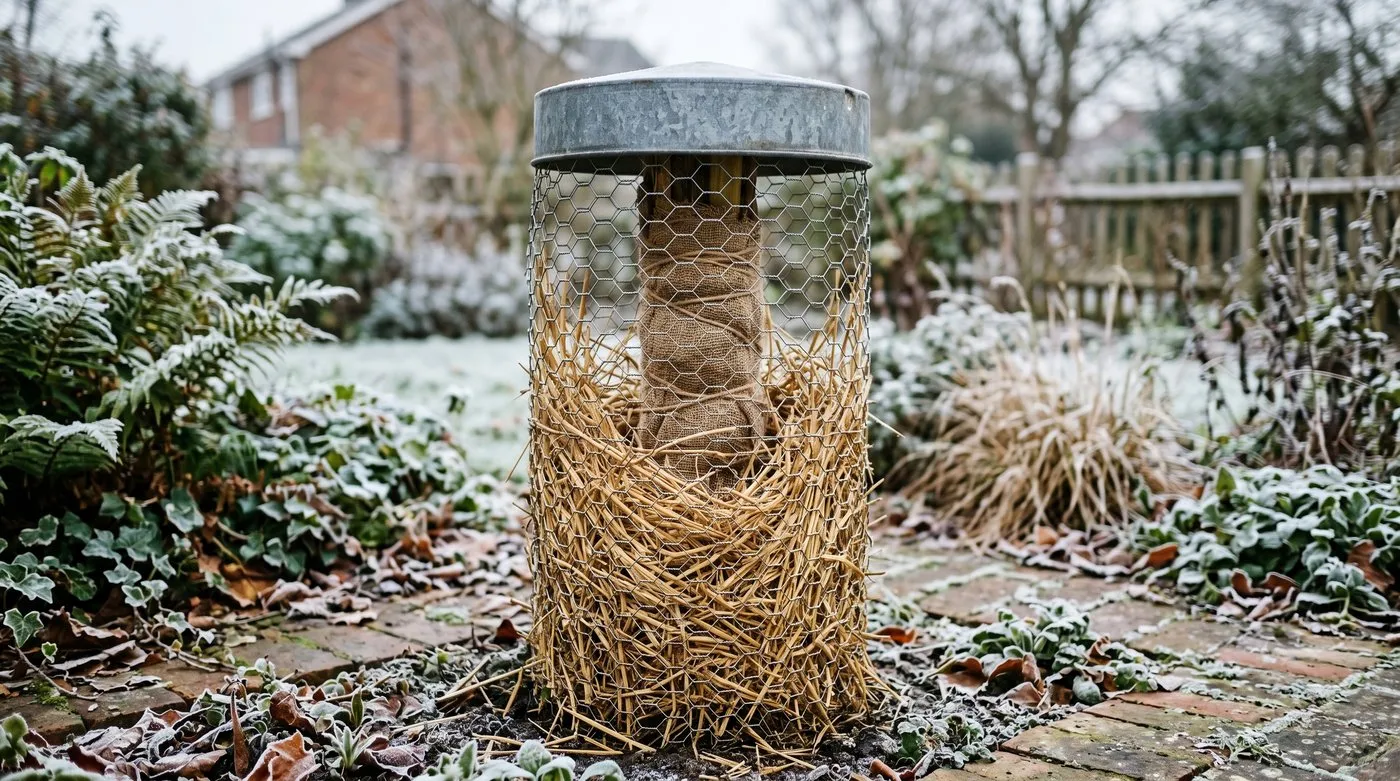 The money shot: a chicken-wire cage packed with dry straw around the pseudostem, capped to keep rain out. Dry insulation is what keeps the standing stem alive to about -10C.
Why wrapping beats leaving it bare
The proof is in the spring. After three Staffordshire winters comparing wrapped and unwrapped plants, the pattern never varied. Wrapped plants kept their standing stem and raced away. Unwrapped plants started from zero.
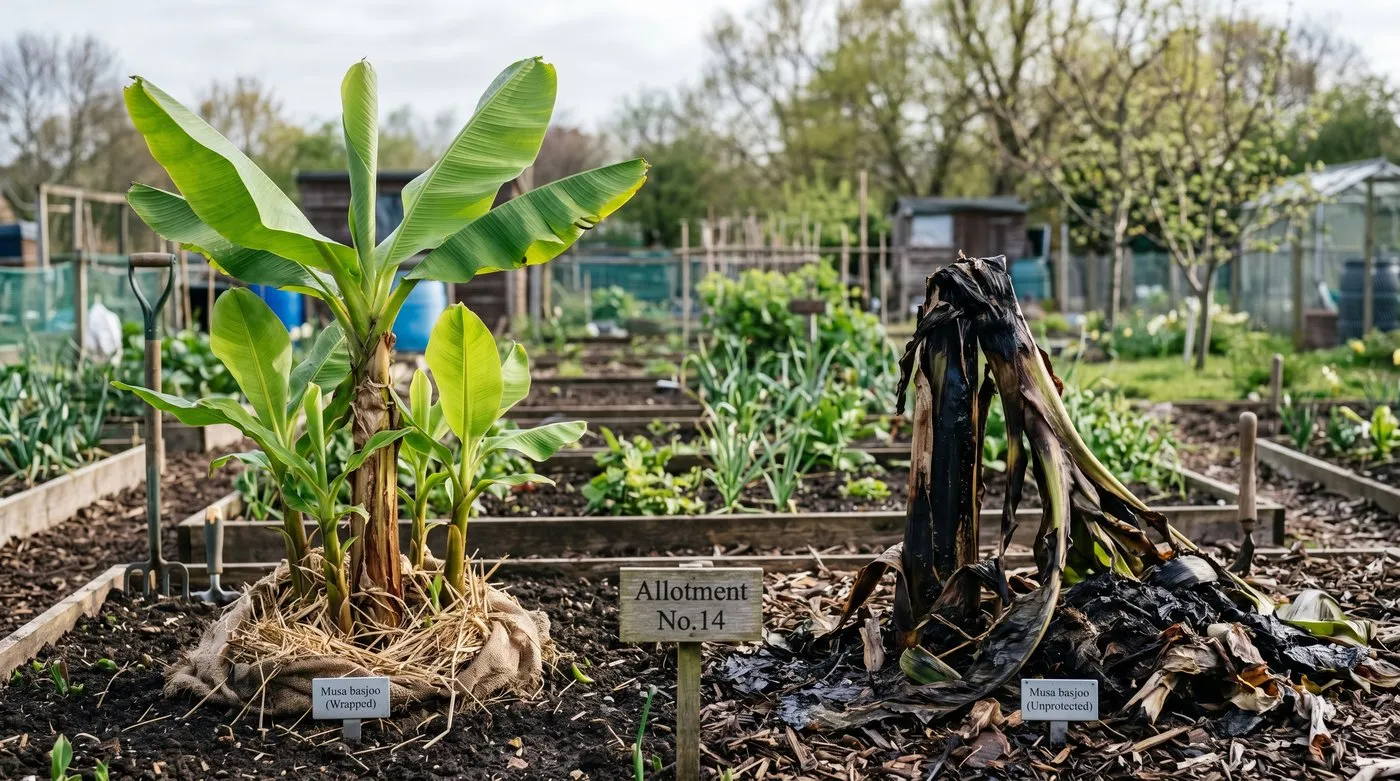 Spring proof: the wrapped plant (left) regrows from a living stem, while the unwrapped plant (right) collapsed and must start again from the root, losing a full season of height.
Lifting and storing tender Ensete ventricosum
Ensete plays by completely different rules. It is tender and dies at any frost, so there is no wrapping it in place. The red Abyssinian banana must come indoors every autumn and go back out every late spring.
Lift it before the first frost, usually mid to late October. Dig up the whole plant with as much root as you can, or simply move the pot. Cut the leaves back to reduce water loss and bulk. Move it into a frost-free space at 5-10C: a shed, garage, porch or cool conservatory all work, as long as it never freezes.
Keep it nearly dry through winter. Water only enough to stop the roots shrivelling, perhaps once a month. Wet, cold compost rots the corm, which is the usual way stored Ensete dies. In our store, plants kept dry at 6-8C came through reliably; one kept too wet rotted at the base by February. Bring it back into growth in April under cover, then plant out after the last frost in late May.
Propagating bananas from suckers
Bananas multiply themselves, so you never need to buy a second plant. A mature Musa basjoo throws several suckers, also called pups, around its base each year. Each is a baby plant with its own developing roots.
Propagate in spring once growth resumes. Scrape the soil away from the base to expose a sucker that has formed its own roots. Slice it cleanly from the parent rhizome with a sharp spade, keeping as much root as possible. Pot it into a gritty, rich compost, or replant it straight into a prepared spot.
A single basjoo can give you three or four new plants a year this way. We turned one plant into a six-metre row along a fence in four seasons, all from detached suckers. Bananas do not set viable seed outdoors here, so suckers are the only practical way to make more.
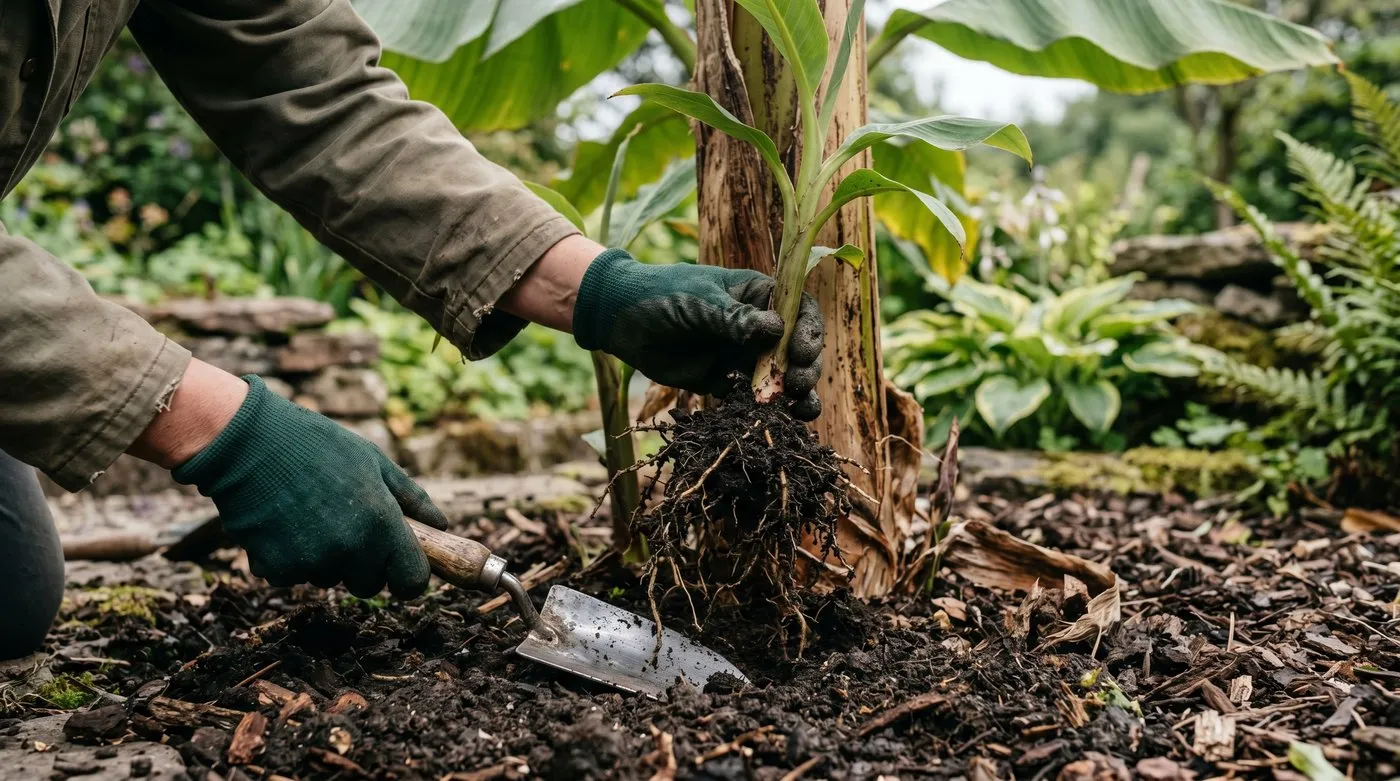 Detach a rooted sucker from the parent in spring with a sharp spade, keeping plenty of root. Each pup grows into a full new plant for free.
Month-by-month banana care calendar
| Month | What to do |
|---|---|
| January | Leave wraps on. Check caps still shed rain and straw is dry. Lifted Ensete stays at 5-10C, watered once if bone dry. |
| February | Keep basjoo wrapped. No feeding. Inspect stored Ensete corms for rot and remove any soft tissue. |
| March | Start Ensete back into growth indoors under cover. Keep basjoo wrapped if hard frosts persist. |
| April | Unwrap basjoo gradually on mild days. Mulch the root zone with 7-10cm of compost or manure. |
| May | Plant out Ensete after the last frost, late in the month. Begin weekly high-nitrogen feeds on basjoo as growth starts. |
| June | Growth accelerates. Feed weekly, water generously. Detach and pot up rooted suckers for new plants. |
| July | Peak growth. A new leaf every 7-10 days. Keep up heavy water and feed. Stake tall stems in windy sites. |
| August | Continue weekly feeds until month end. Water daily in heat. Enjoy maximum leaf size. |
| September | Stop feeding so growth firms before frost. Reduce watering gradually. Gather straw ready for wrapping. |
| October | Lift Ensete before the first frost and store frost-free. Cut basjoo leaves back as frost blackens them. |
| November | Build the straw-and-cage wrap round basjoo stems. Cap against rain and add fleece in exposed gardens. |
| December | Leave wraps in place. Check Ensete store stays above freezing and the compost is barely moist. |
Common banana-growing mistakes
Most banana failures in UK gardens trace back to a handful of avoidable errors. Each one is easy to fix once you know it.
Treating a tender banana as hardy. Leaving an Ensete or Cavendish outdoors over winter kills it. These plants die at frost. Identify your banana first, then apply the right rule: wrap basjoo, lift Ensete.
Wrapping with wet straw or no rain cap. Damp insulation freezes and rots the stem instead of protecting it. The cap that sheds rain matters as much as the straw itself. Always keep the insulation dry.
Starving and under-watering. A banana on poor dry soil stalls at a metre and looks nothing like the catalogue. Feed weekly and water hard. The dramatic size comes entirely from rich soil, heavy feed and constant moisture.
Planting in an exposed, windy spot. Wind shreds the leaves to ribbons within weeks and destroys the tropical effect. Always choose a sheltered, sun-trap corner backed by a fence, wall or hedge.
Unwrapping too early in spring. A whipped-off wrap in late March can expose a stem to a sharp April frost. Open the wrap gradually and keep it to hand until the frosts truly end.
Banana plants in the wider exotic garden
Bananas anchor an exotic planting, but they look best with company. Pair Musa basjoo with other big-leaved and tender exotics for a full jungle effect from June to October. Our guide to hardy exotic and tropical plants for the UK lists reliable partners that take the same conditions.
Cannas give hot colour at the bananas’ feet and lift for winter the same way Ensete does; see how to grow cannas in the UK. The big heart-shaped leaves of colocasia, the elephant ear, give the same jungle drama and lift for winter in exactly the same way. For lush foliage contrast, growing ginger in the UK covers another tender exotic that earns its keep in a sheltered border, and how to grow hedychium adds the scented ginger lily to the same jungle border. Underplant the front with agapanthus for blue summer flower, or stage drama with lifted dahlias through the same season.
The overwinter routine for tender exotics is broadly shared, so how to overwinter plants in the UK is worth reading alongside this guide. And because bananas are gross feeders that hate baking dry, improving the bed pays off: how to improve clay soil shows how to build the moisture-holding, free-draining ground a basjoo loves.
Now you’ve mastered hardy bananas, browse our full range of plants for the next addition to your exotic border, then pair your basjoo with the right tender companions for a jungle that peaks all summer.
Frequently asked questions about growing banana plants
Can you grow banana plants outdoors in the UK?
Yes, the hardy Japanese banana Musa basjoo survives UK winters outdoors. Its roots tolerate about -10C once the pseudostem is wrapped with straw. The plant dies back in hard winters but regrows fast each spring. Tender types like Ensete must be lifted and stored frost-free indoors instead.
How cold can Musa basjoo survive?
How do you overwinter a banana plant outside?
Cut the leaves back after the first frost, then build a straw-packed cage round the stem. Drive three canes round the pseudostem, wrap chicken wire into a cylinder, pack it with dry straw, and cap the top to shed rain. Add a fleece layer in exposed gardens. Unwrap gradually in April.
Do banana plants fruit in the UK?
No, outdoor bananas do not fruit in the UK. Musa basjoo is grown for its huge leaves and tropical look, not fruit. The growing season is too short and cool to ripen a bunch. Indoor Musa ‘Dwarf Cavendish’ can fruit in a warm conservatory but needs heat all year round.
Is Ensete ventricosum hardy in the UK?
No, Ensete ventricosum is not hardy and dies at any frost. The red Abyssinian banana must be lifted before the first frost and stored at 5-10C in a frost-free shed, garage or conservatory, kept nearly dry. Replant it outdoors in late May once frosts have passed.
How fast do banana plants grow in the UK?
A fed Musa basjoo puts on 2-4m of growth in one UK summer. Growth starts slowly in cool May soil, then accelerates through the warm months. Heavy feeding and watering drive the fastest growth. New leaves can unfurl every 7-10 days at peak in July and August.
Why are my banana leaves tearing and shredding?
How do you propagate banana plants?
Detach rooted suckers, the pups, from the parent in spring. Scrape soil away to find a sucker with its own roots, cut it free with a sharp spade, and pot it on. Each mature Musa basjoo throws several suckers a year, so one plant quickly becomes a clump or a row of free new plants.
Our team produces practical UK gardening guidance from source research, contributor records and established horticultural practice. Editorial standards are overseen by Matt W.