Key takeaways
- Trachycarpus fortunei is the only palm that thrives inland UK, down to -15C
- Wet roots in winter kill more palms than low temperature alone
- Chamaerops humilis needs a sheltered south wall; hardy to about -10C
- Phoenix canariensis is NOT reliably hardy; mild coast, pot or conservatory only
- Fleece the crown and mulch the roots below -8C for young palms
- Cordyline and tree ferns give the palm look but are not true palms
Hardy palms turn an ordinary UK garden into something that feels like the south of France. The trick is choosing the right species and getting the drainage right. Most palm failures in Britain are not killed by cold at all.
The Hardiest Palm: Trachycarpus Fortunei
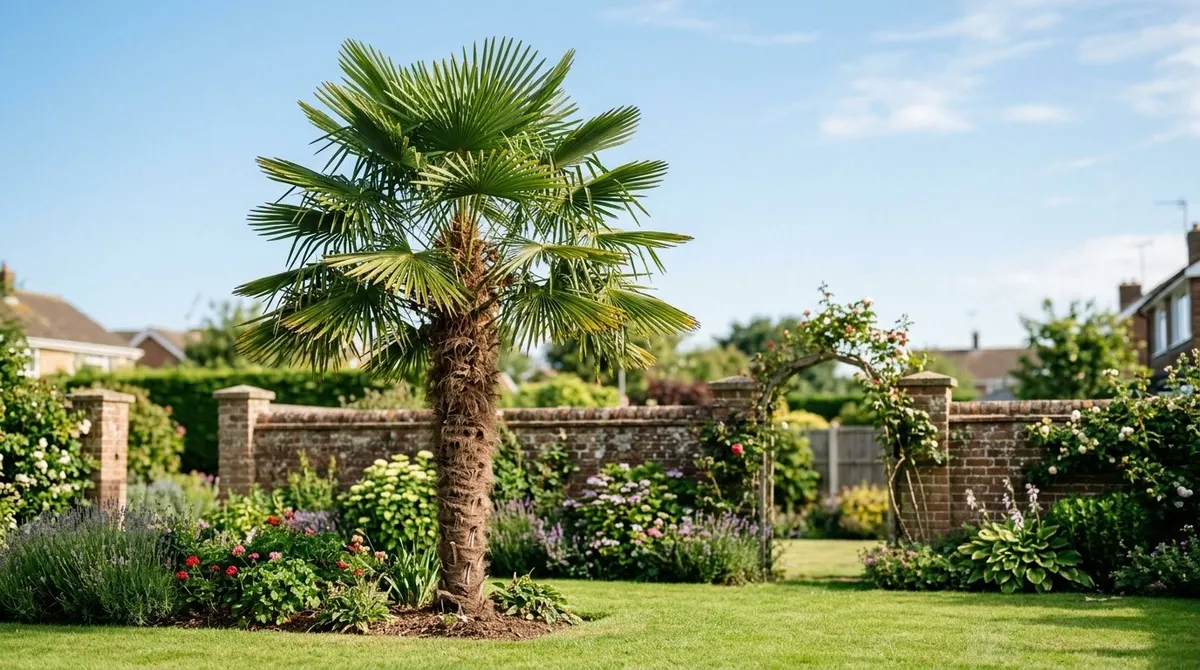
It came from the mountains of central China, so it is built for cold and wind. The trunk is wrapped in a coarse brown fibre that insulates the growing point. The fan-shaped fronds shrug off gales that shred softer palms.
This is the palm to plant if you only ever plant one. It pairs well with the wider group of hardy exotic and tropical plants for UK gardens, which is where most palm growers start building a scheme.
Why Wet Cold Kills Palms, Not Frost
Here is the thing nobody tells you. Palms in the UK rarely die of cold. They die of cold wet roots.
Standing water around the crown in winter freezes and thaws. The growing point rots from the base. The central spear loosens, smells sour, and pulls clean out. By then it is too late.
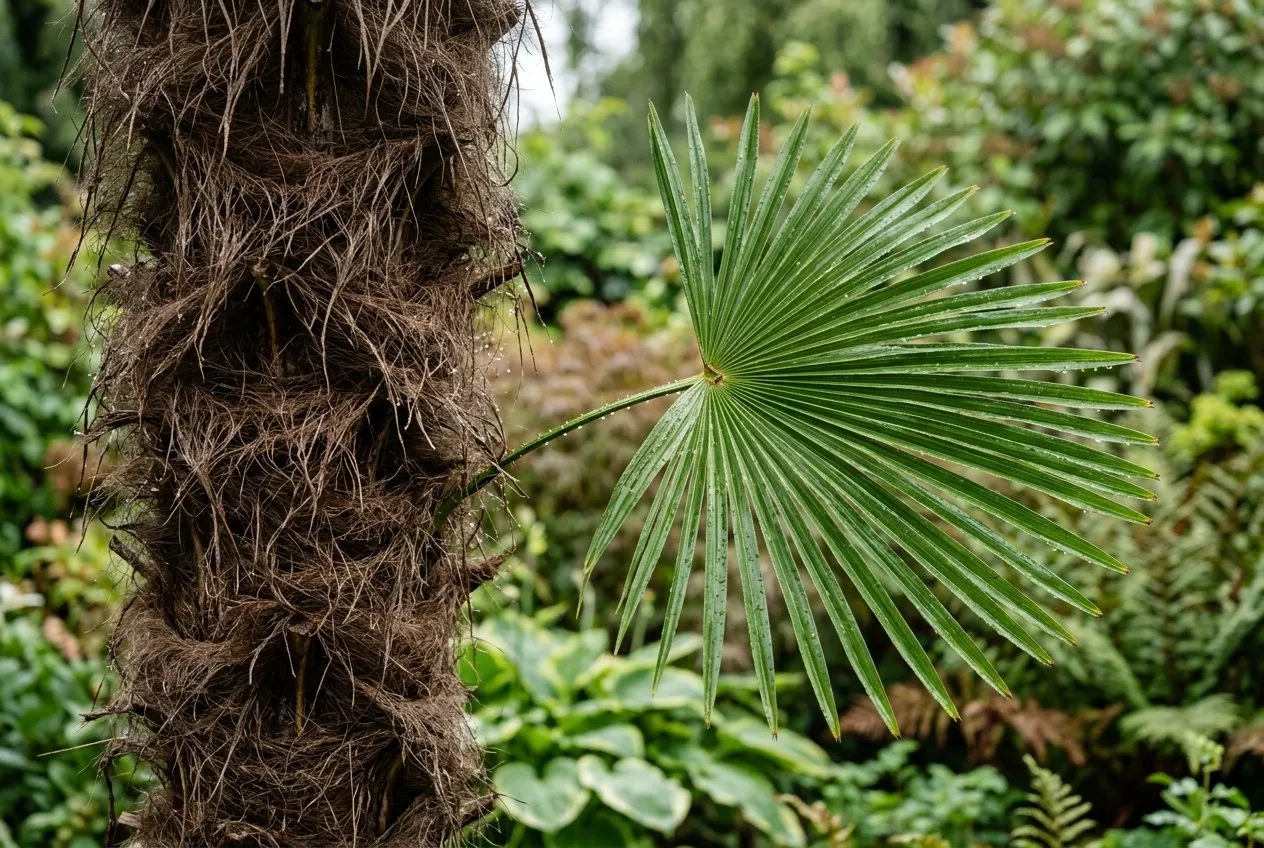 The coarse fibre on a Trachycarpus trunk sheds rain and insulates the crown. Sharp drainage at the roots matters far more than this top layer for surviving a wet UK winter.
The fix is drainage. Dig a wide pit, work in horticultural grit, and plant slightly proud so water runs off. The Royal Horticultural Society notes that most tender exotics fail on cold heavy soil, not on a single cold night. Their general growing advice sits at the RHS website. Get the drainage right and a hardy palm laughs at frost.
Ranking the 9 Best Palms for UK Gardens
Not every palm is equal. Some thrive inland. Some need a mild coast. Two of the nine are not true palms at all, but they give the same effect and earn their place.
| Species | Min temp | Mature height | Site needed |
|---|---|---|---|
| Trachycarpus fortunei (windmill palm) | -15C | 6-10m | Anywhere; sun or part shade |
| Trachycarpus wagnerianus | -15C | 4-6m | Exposed and windy gardens |
| Chamaerops humilis (European fan palm) | -10C | 2-3m | Sheltered south wall |
| Chamaerops humilis var. cerifera (blue) | -8C | 2-3m | Warm sheltered courtyard |
| Butia capitata (jelly palm) | -8C | 4-6m | Mild or coastal, sharp drainage |
| Cordyline australis (cabbage palm) | -8C | 5-8m | Coastal and milder gardens |
| Dicksonia antarctica (tree fern) | -5C | 2-4m | Shade, shelter, winter wrap |
| Jubaea chilensis (Chilean wine palm) | -10C | 8-15m | Mild, very slow, big gardens |
| Phoenix canariensis (Canary date) | -5C | 10-15m | Pot, conservatory, mild SW coast |
Plant from the top of that list inland. Save the bottom three for mild gardens, big pots, or a sheltered city courtyard.
Trachycarpus Wagnerianus and Chamaerops Humilis
Two species earn special mention for tough gardens.
Trachycarpus wagnerianus has stiffer, smaller, neater fronds than fortunei. They do not flop or tear in wind. If your garden is exposed, this is the better windmill palm. It takes the same -15C and looks tidier doing it.
Chamaerops humilis is the European fan palm and the only palm native to Europe. It stays bushy and spreads sideways rather than forming a tall trunk. It is hardy to about -10C but needs a sheltered spot against a warm south wall. The blue form, var. cerifera, is stunning but a touch more tender at -8C.
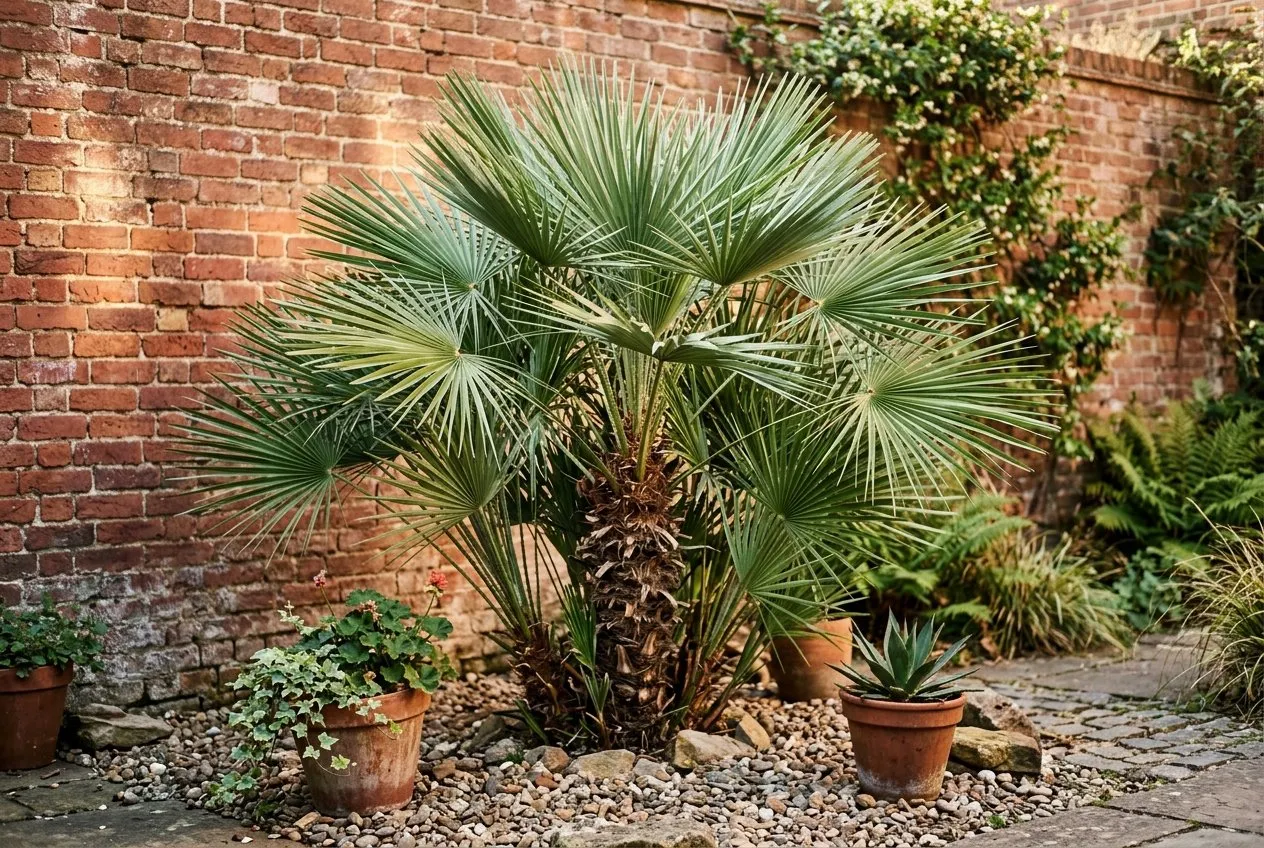 A Chamaerops humilis against a south-facing brick wall in a Birmingham courtyard. The wall stores heat and shelters this bushy fan palm through frost. It spreads sideways rather than growing tall.
Both suit a Mediterranean garden planting scheme for UK gardens, set among gravel, olives and lavender for a baked southern feel.
Coastal and Exotic Choices: Butia, Jubaea and Phoenix
Milder and coastal gardens open up more options. The sea moderates frost, so Torbay and Cornwall grow palms that would struggle in Staffordshire.
Butia capitata, the jelly palm, has arching blue-grey feather fronds and edible fruit. It is hardy to about -8C with sharp drainage, so it suits a mild coastal border or a big pot you can shelter.
Jubaea chilensis is the Chilean wine palm, hardy to around -10C but painfully slow and eventually enormous. Plant it only if you have space and patience.
Phoenix canariensis, the Canary Island date palm, is the one people want and the one that disappoints. It is NOT reliably hardy in the UK. It takes only light frost to about -5C. Grow it in a large pot, move it into a conservatory or porch for winter, or risk it only in the mildest south-west coastal gardens.
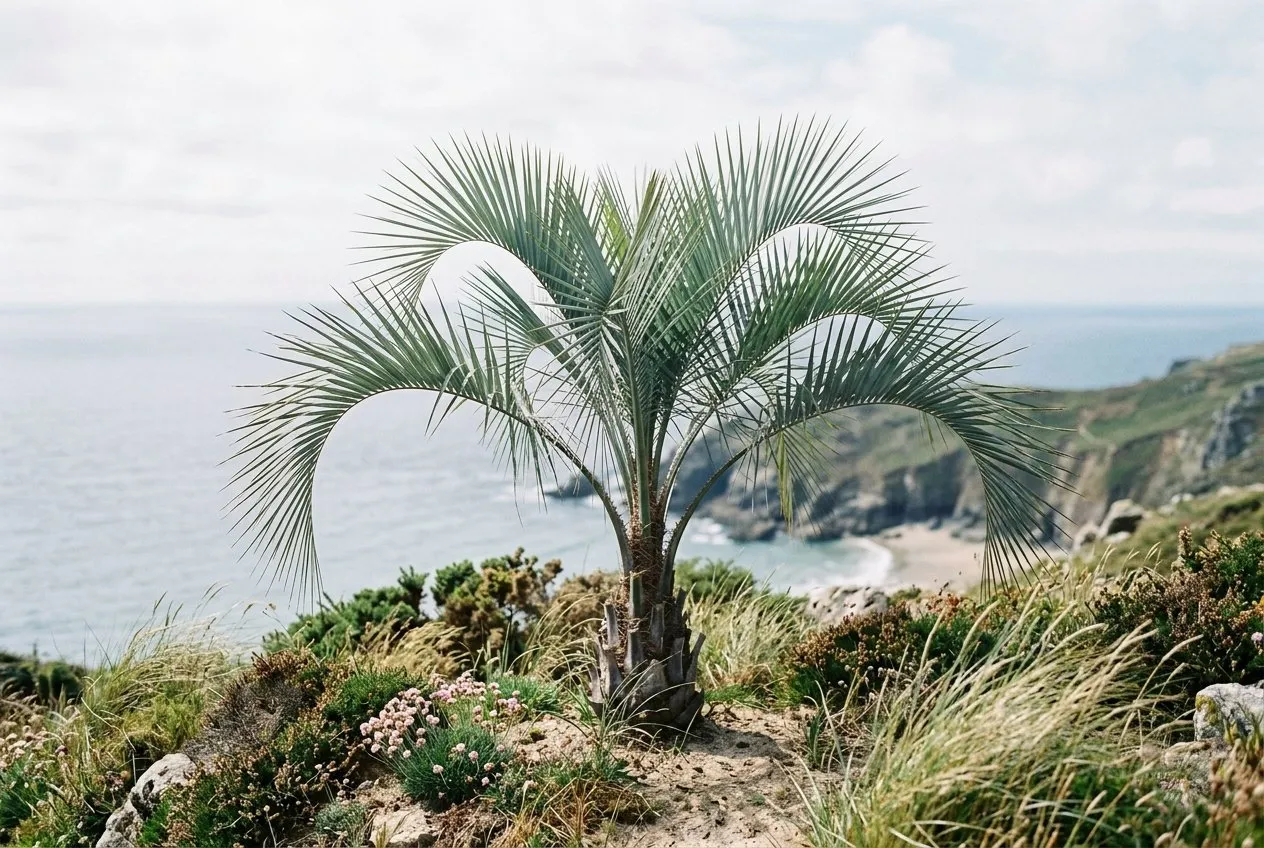 A Butia capitata jelly palm in a south Cornwall coastal garden. The arching blue-grey feather fronds need a mild, frost-light spot. The sea keeps winter temperatures above its -8C limit.
A seaside exotic border full of palms, agaves and tree ferns is the classic Torbay style. It also works inland with the hardier species, which is the basis of most tropical and tiki garden ideas for UK gardens.
The Palm-Effect Stand-Ins: Cordyline and Tree Ferns
Cordyline australis, the cabbage palm, gives an instant palm silhouette. It is not a palm; it is a member of the asparagus family. It is hardy to about -8C and thrives in coastal and milder gardens. A hard winter can cut the top growth, but it usually reshoots from the base. The fountain of strappy leaves reads as tropical from across a garden.
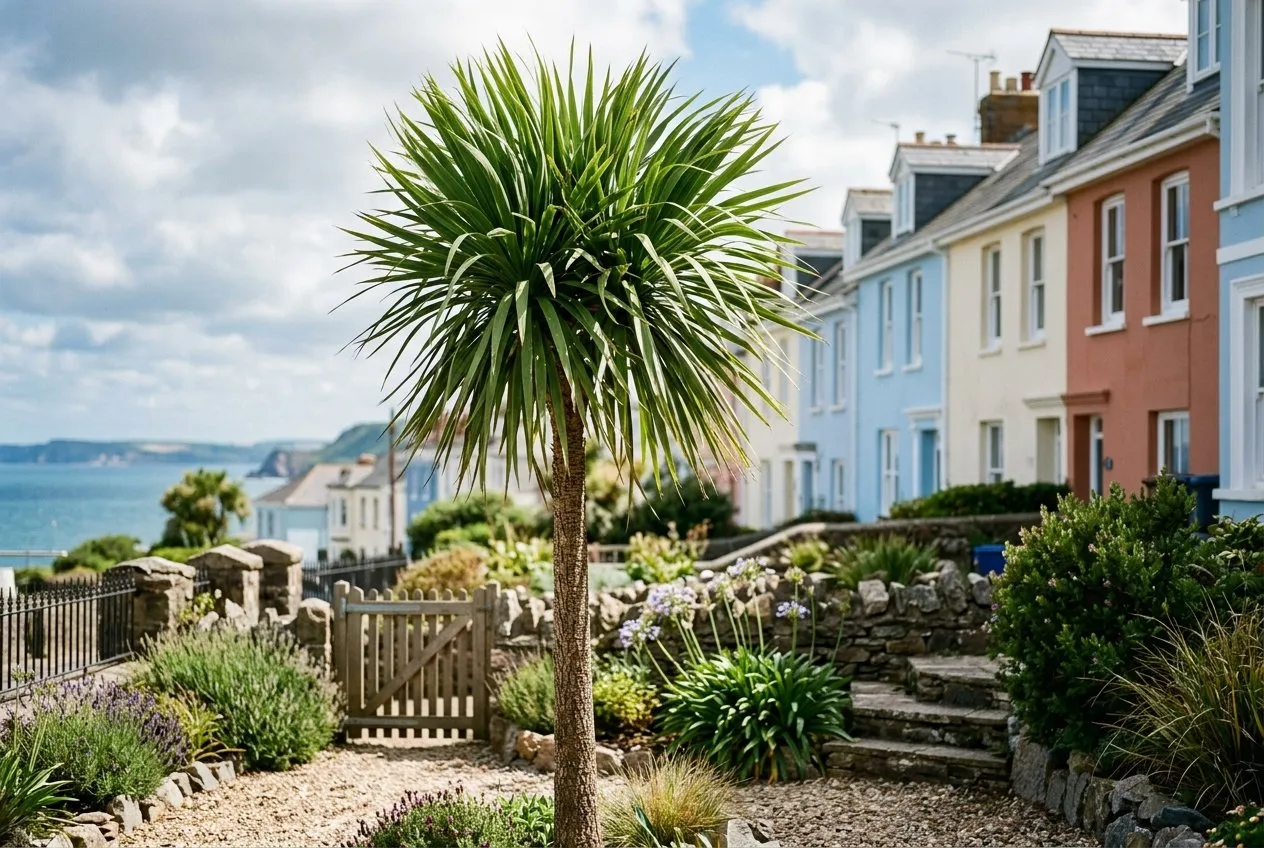 A Cordyline australis cabbage palm in a seaside front garden on the Devon coast. Not a true palm, but the strappy fountain of leaves gives the same instant exotic effect. Hardy to about -8C.
The tree fern Dicksonia antarctica is the other stand-in. It is a prehistoric fern with a soft fibrous trunk and a crown of huge fronds. It needs shade, shelter and a winter wrap. Below -5C the crown needs straw stuffed into it and the trunk fleeced. Get it through winter and it brings a Jurassic feel no palm can match.
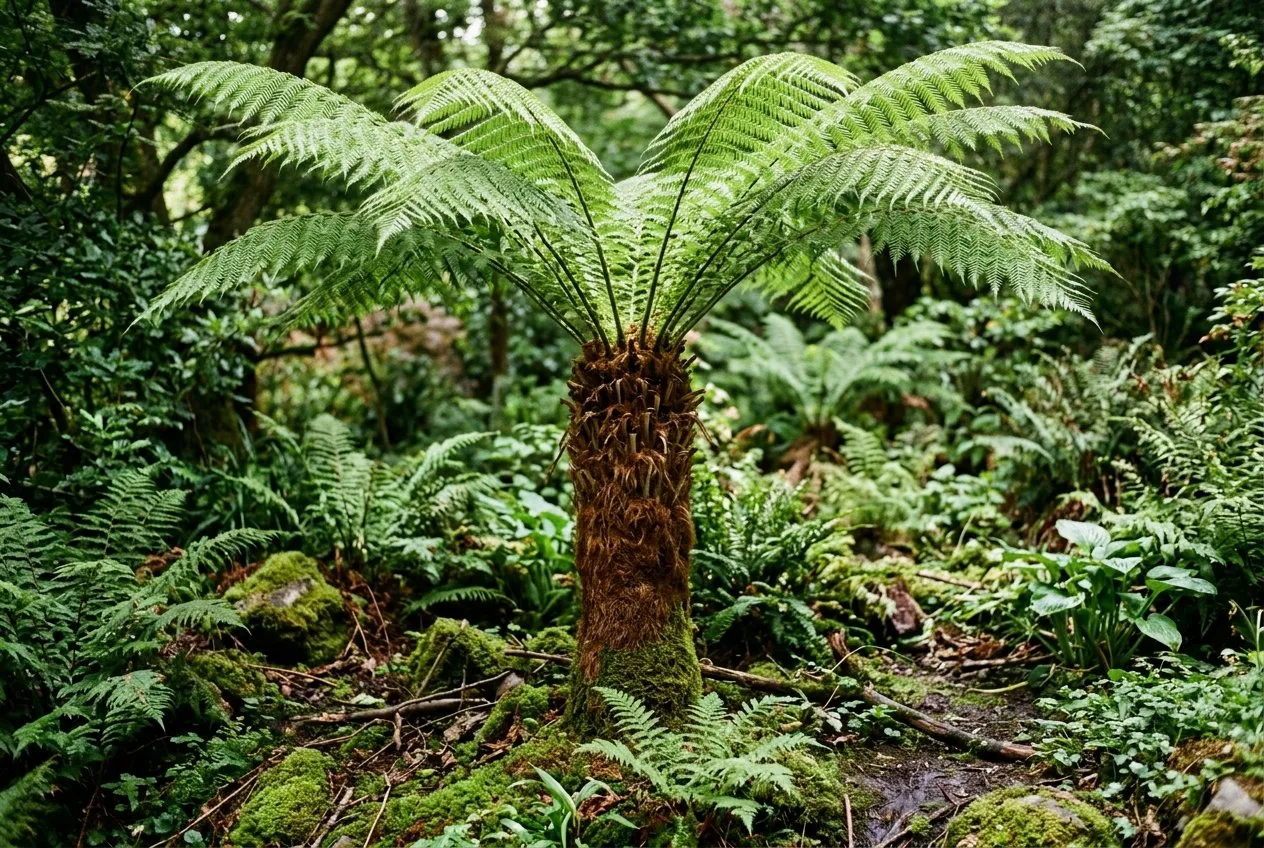 A Dicksonia antarctica tree fern in a shady, sheltered corner of an exotic UK garden. The crown needs straw packed in and a fleece wrap below -5C. It thrives in damp shade where palms would sulk.
Both partner well with low-maintenance architectural plants for UK gardens and bold evergreens. For year-round structure behind them, the best evergreen trees for UK gardens give a permanent green backdrop.
Siting and Planting a Hardy Palm
Get three things right and your palm will thrive: sun, shelter and drainage.
Sun. Most palms want full sun. Trachycarpus tolerates part shade but grows leggy. A south or west aspect is ideal.
Shelter. Cold drying wind scorches fronds and chills the crown. Plant against a warm wall, in the lee of a hedge, or within a sheltered courtyard. A wall that stores daytime heat lifts the local minimum by a degree or two.
Drainage. This is the one that kills palms. Dig a pit twice the width of the rootball. Mix two buckets of horticultural grit into the backfill on heavy soil. Plant slightly proud of the surrounding ground so winter rain drains away from the crown. Water well in the first two summers, then leave it.
Winter Protection for Young and Tender Palms
Mature hardy palms in most of the UK need nothing. Young plants and the less hardy species earn a little help below -8C.
The method is simple. Tie the fronds up into a bundle to protect the crown. Wrap the crown and upper trunk in horticultural fleece, never plastic, because plastic traps damp and rots tissue. Mulch the root zone with 10cm of bark or straw to keep the roots from freezing solid. For tree ferns, pack dry straw into the crown first.
Remove the wrapping in spring once hard frosts pass, usually late March. Do not leave fleece on into warm spells; trapped damp does more harm than the cold it prevents.
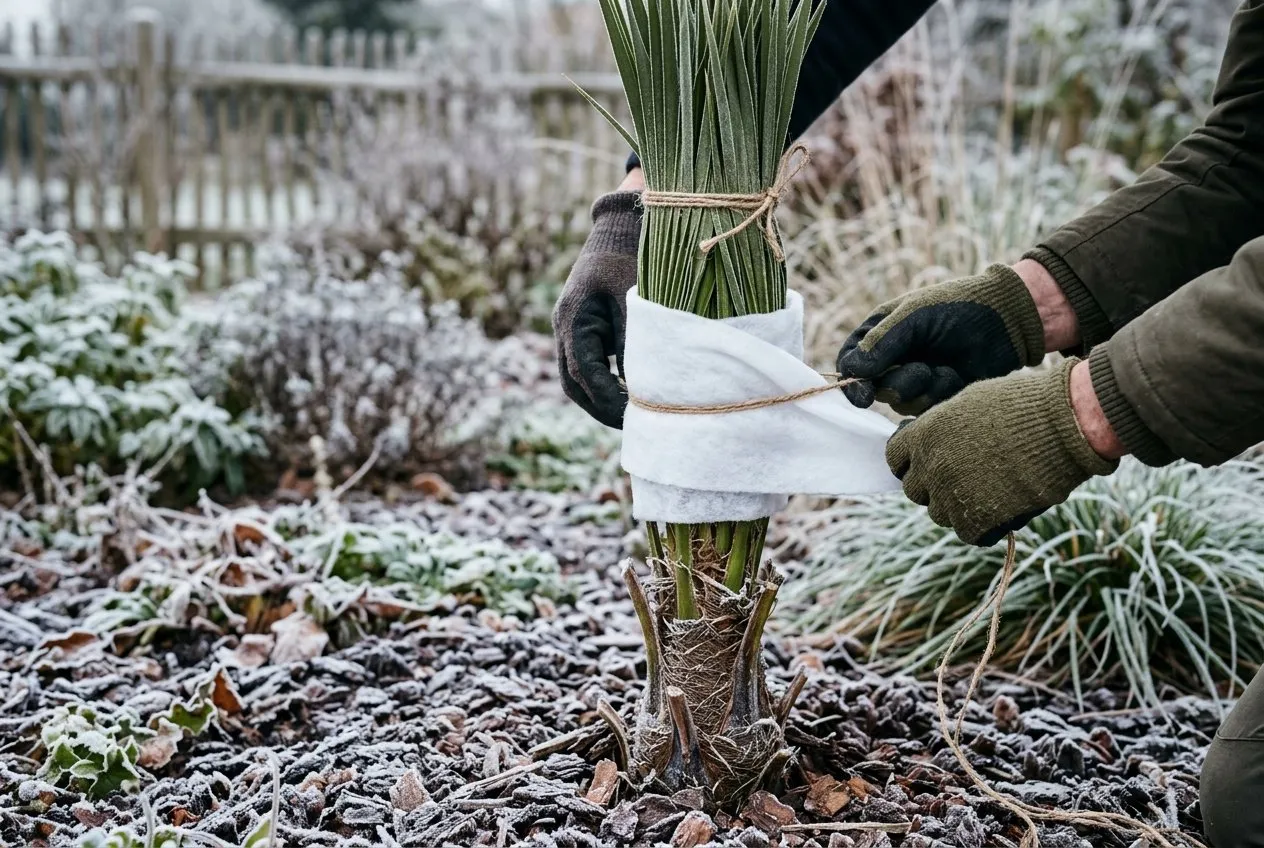 Fleecing the crown of a young palm before a hard Staffordshire frost. Fronds tied up, crown wrapped in breathable horticultural fleece, never plastic. Mulch the roots and remove the wrap by late March.
This sits inside the wider job of tree fern winter protection for UK gardens, which covers the same wrap technique in detail for the most tender of the exotic crowd.
Common Problems With UK Palms
Brown lower fronds. Normal ageing. Trim only fully dead fronds; the palm sheds them naturally.
Frond tip scorch. Cold drying wind. Move tender species to shelter or plant a windbreak.
Soft rotting crown, sour smell. Winter waterlogging. The killer. Improve drainage; lift and replant proud if you can.
Central spear pulls out. Crown rot, usually fatal. Caused by cold wet, not cold alone.
No growth. Cold dull summer, or starvation. Feed with a balanced fertiliser through the growing season and water well in dry spells.
Pair palms with other drought-tough exotics and the bed looks after itself. Many growers add hardy cacti and succulents grown outdoors in the UK at the front for a full baked-gravel scheme.
Frequently asked questions
What is the hardiest palm for a UK garden?
Trachycarpus fortunei, the Chusan or windmill palm, is the hardiest. It survives -12C to -15C and grows across most of the UK, including cold inland gardens. It tolerates wind, clay and frost better than any other palm sold here. A mature plant needs no winter protection.
Can palm trees survive a UK winter outdoors?
Yes, several palms survive UK winters outdoors. Trachycarpus fortunei and Chamaerops humilis are reliably hardy in most of Britain. Phoenix canariensis is not; it needs a frost-free spot. Sharp drainage matters more than minimum temperature, because wet cold rots the crown faster than dry cold ever does.
Do hardy palms need winter protection in the UK?
Established Trachycarpus fortunei needs none in most of the UK. Young palms and less hardy species benefit from protection below -8C. Tie the fronds up, wrap the crown in horticultural fleece, and mulch the roots with bark or straw. Remove wrapping in spring once hard frosts pass.
Why are my palm fronds going brown?
Brown fronds usually mean cold wind scorch, frost on wet tissue, or root rot from waterlogging. Trim only fully dead fronds. The lowest fronds browning with age is normal. If the central spear pulls out easily and smells sour, the crown is rotting from winter wet.
How fast do hardy palms grow in the UK?
Slowly. Trachycarpus fortunei adds roughly 15-30cm of trunk a year once established. Expect 10-15 years to reach 2m of clear trunk in UK conditions. Chamaerops humilis stays shrubby and spreads sideways. Cold summers slow all palms, so feed and water well in the growing season.
Now plan the wider exotic garden
Our team produces practical UK gardening guidance from source research, contributor records and established horticultural practice. Editorial standards are overseen by Matt W.