Key takeaways
- Monarda flowers June to September at 60-120cm tall and attracts bees, butterflies, and hoverflies
- Two main species for UK gardens: M. didyma (scarlet, needs moisture) and M. fistulosa (lavender, tolerates dry)
- Powdery mildew is the biggest problem — choose resistant varieties like Squaw or Prarienaught
- Divide clumps every 3 years in spring to control spread and maintain vigour
- Leaves are edible with an Earl Grey bergamot flavour, excellent for herbal teas
- Plant 45cm apart in full sun to part shade with good air circulation to reduce mildew risk
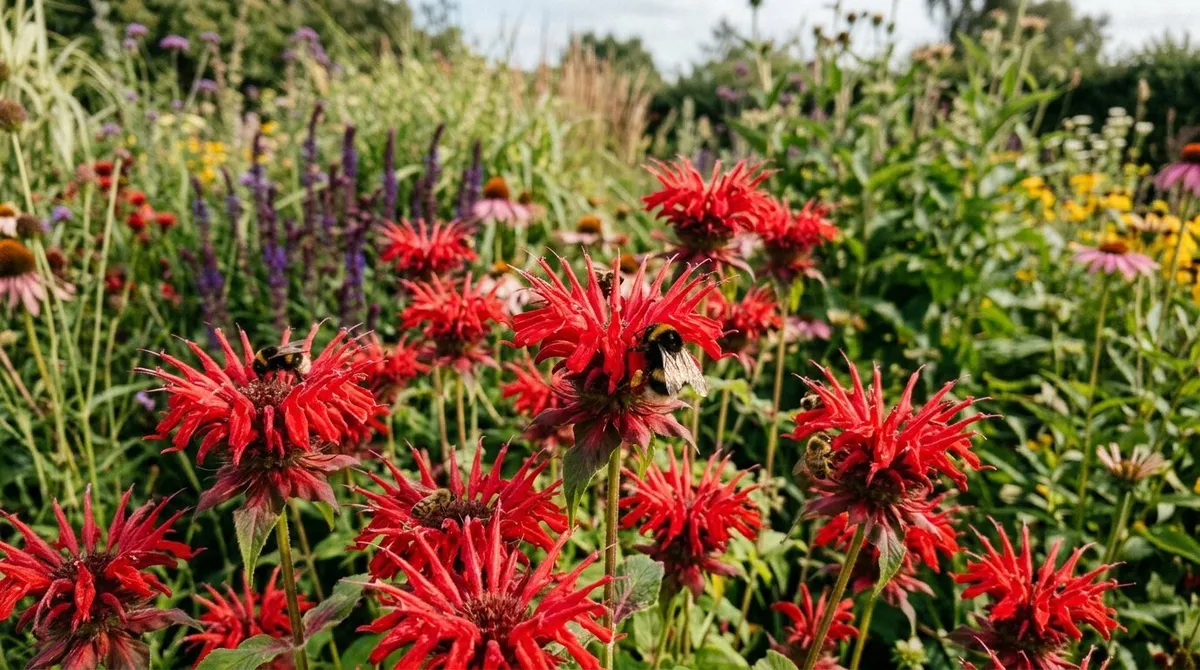
Monarda is one of those plants that makes you stop and watch the garden. From June to September, the shaggy, tufted flower heads draw in bees, butterflies, and hoverflies in numbers that few other perennials can match. Each flower head is a whorl of tubular petals arranged around a central cone, giving it an almost punk-rock appearance among more traditional border plants.
The common name bee balm tells you everything about its value to pollinators. The tubular flowers are shaped perfectly for long-tongued bumblebees, and on warm days a single clump can have a dozen bees working it at once. It is also one of the few perennials whose leaves are genuinely useful in the kitchen, with a bergamot scent that makes a fine herbal tea.
What species of monarda grow well in the UK?
Two species form the backbone of monarda growing in UK gardens. Monarda didyma, the classic scarlet bee balm, is native to eastern North America and thrives in moist, fertile soil. It reaches 90-120cm tall and produces vivid red flower heads from late June. It needs consistent moisture and is the more demanding of the two.
Monarda fistulosa, wild bergamot, is the tougher sibling. Native to prairies and dry meadows, it tolerates poorer, drier soil and reaches 60-90cm. The flowers are lavender-pink rather than scarlet. It is naturally more resistant to powdery mildew because it evolved in open, breezy habitats. Most modern garden hybrids are crosses between these two species, inheriting varying degrees of each parent’s strengths.
For UK gardens on heavy or clay soil, M. fistulosa hybrids are generally the safer bet. They cope better with the wet winters that rot M. didyma rhizomes on poorly drained ground. On lighter, moisture-retentive soils, M. didyma varieties thrive and produce the most spectacular colour.
Which monarda varieties are best for UK gardens?
Variety choice determines whether you get a striking summer display or a mildew-covered disappointment. After trialling six varieties on Staffordshire clay, the differences were stark. Some varieties never showed mildew; others were grey by mid-July.
| Variety | Height | Flower colour | Mildew resistance | Notes |
|---|---|---|---|---|
| Cambridge Scarlet | 90cm | Bright scarlet | Poor | Classic colour but mildew-prone; needs perfect conditions |
| Squaw | 100cm | Deep scarlet | Excellent | Best red for UK gardens; strong stems, reliable |
| Beauty of Cobham | 90cm | Pale pink, purple bracts | Good | Two-tone flowers; long-flowering; RHS AGM |
| Mahogany | 80cm | Dark wine-red | Moderate | Rich colour; benefits from good spacing |
| Prarienaught | 90cm | Lilac-purple | Excellent | Fistulosa hybrid; tough and disease-free |
| Scorpion | 120cm | Violet-purple | Excellent | Tallest; back of border; dramatic presence |
If you grow monarda alongside other pollinator-friendly plants, the combined effect on insect diversity is remarkable. A mixed planting of Squaw, Beauty of Cobham, and Prarienaught gives you red, pink, and purple flowers across the same season.
How do you plant monarda in the UK?
Plant monarda in spring (March to May) or early autumn (September to October). Spring planting gives the roots a full growing season to establish before winter. Choose a spot in full sun to light shade with fertile, moisture-retentive but well-drained soil.
Dig in plenty of garden compost or well-rotted manure before planting. Monarda is a hungry plant that flowers better in rich soil. On heavy clay, work in horticultural grit alongside the organic matter to prevent waterlogging. Space plants 45-50cm apart. Plant at the same depth as the pot or slightly higher on clay soils.
Water thoroughly after planting and keep the soil consistently moist through the first summer. A 5-7cm mulch of composted bark or garden compost around the base helps retain moisture and suppress weeds. Do not let the mulch touch the stems directly, as this can encourage rot. Monarda suits cottage garden planting schemes where it can mingle with other tall perennials like delphiniums and phlox.
Why does monarda get powdery mildew?
Powdery mildew is the single biggest challenge when growing monarda in the UK. The fungal disease covers leaves in a grey-white powder, distorts new growth, and can defoliate entire plants by late summer. It thrives in warm, humid conditions with poor air circulation, exactly what many UK gardens provide in July and August.
Some varieties are genetically susceptible. Cambridge Scarlet and Croftway Pink are the worst offenders. Resistant varieties carry genes from M. fistulosa, which evolved in open, windswept prairies where mildew cannot take hold.
Beyond variety choice, cultural practices reduce mildew significantly. Space plants at 45-50cm minimum. Avoid overhead watering. Water at the base in the morning so foliage dries quickly. Thin congested clumps by removing one in three stems in May, which improves airflow through the plant. Remove infected leaves at the first sign of powdery mildew and dispose of them in household waste, not the compost heap.
Organic sprays based on potassium bicarbonate can slow mildew spread but will not cure an established infection. The RHS lists monarda mildew as a common UK problem and recommends resistant varieties as the primary control.
How do you divide and control monarda spread?
Monarda spreads by underground rhizomes. In fertile soil, a single plant can colonise a square metre within two years. This vigour is useful if you want ground cover, but it can smother less assertive neighbours. Division every 3 years keeps plants healthy and contained.
Divide in early spring (March to April) when new shoots reach 5-10cm. Lift the entire clump with a fork. You will see a ring of vigorous growth around a dead, woody centre. Discard the centre and separate the outer portions into sections with 3-5 strong shoots and a good root system.
Replant divisions immediately at the original depth. Water well and mulch. Each division will flower in its first season after replanting. If you want to limit spread without dividing, sink a barrier of rigid plastic or slate edging 30cm deep around the planting area. This contains the rhizomes without affecting the plant’s health.
Division is also the best way to propagate named varieties. Monarda does grow from seed, but seed-raised plants will not come true to the parent. Only vegetative propagation guarantees you get the same variety.
Can you use monarda leaves for tea?
Monarda has a long history as a culinary herb. Native Americans made Oswego tea from M. didyma leaves centuries before European contact. The leaves contain thymol and carvacrol, the same aromatic compounds found in thyme and oregano, plus linalool, which gives them a distinctive bergamot-like citrus note.
To make monarda tea, pick fresh young leaves before the plant flowers when the essential oil content is highest. Use 4-5 fresh leaves per cup or 1-2 teaspoons of dried leaf. Pour boiling water over the leaves and steep for 5-7 minutes. The resulting tea has a warm, spicy, slightly citrus flavour reminiscent of Earl Grey.
How does monarda fit into prairie-style planting?
Monarda is a natural choice for prairie-style borders because it evolved in North American meadows and prairies. Planted in drifts with ornamental grasses, echinacea, and rudbeckia, it creates that loose, naturalistic style that peaks in late summer.
The key to successful prairie planting with monarda is matching species to conditions. M. fistulosa suits the drier, leaner soils that prairie schemes rely on. M. didyma needs more moisture and is better in damp prairie or rain garden schemes. Combine monarda with Stipa tenuissima, Panicum virgatum, and echinacea for a planting that moves in the wind and hums with insects from June to October.
Space plants more widely in prairie schemes at 50-60cm to allow grasses to weave between the perennials. Cut the entire scheme back to 10cm in late February before new growth begins. Leave stems and seedheads standing through winter for structure, frost interest, and food for visiting birds.
What problems affect monarda besides mildew?
Beyond powdery mildew, monarda is a tough plant with few serious problems. Slugs and snails can damage emerging shoots in spring, particularly in wet years. Protect new growth with copper tape, beer traps, or biological nematode controls applied in March.
Rust occasionally appears as orange-brown pustules on the undersides of leaves. It is less common than mildew and usually occurs on stressed plants in poor soil. Remove affected leaves and improve growing conditions. Spider mites can be a problem in very hot, dry summers, causing a fine stippling on leaves. Increase humidity around the plant by watering the soil regularly.
Rabbits generally leave monarda alone due to the aromatic foliage. Deer browse young shoots in spring in rural gardens but rarely cause lasting damage to established clumps. The biggest non-disease problem is overcrowding when gardeners neglect to divide. A congested, undivided clump produces fewer flowers, more mildew, and a dead centre that looks unsightly.
When should you cut back monarda?
Leave monarda stems and seedheads standing through autumn and into winter. The architectural seedheads look striking when frosted, and they provide shelter for overwintering insects. Goldfinches and other small birds sometimes pick at the seed heads, though monarda is less attractive to finches than echinacea.
Cut the entire plant back to ground level in late February or early March, just before new shoots emerge from the rhizomes. Use sharp secateurs and compost the cut stems unless they showed signs of mildew the previous year. If mildew was present, dispose of all top growth in household waste to reduce spore carry-over.
Do not cut back in autumn. The old stems help protect the crown from frost and waterlogging over winter. They also mark the plant’s position so you do not accidentally dig into the rhizomes when working the border in winter.
Frequently asked questions
When does monarda flower in the UK?
Monarda flowers from June to September in most UK gardens. The first blooms typically open in mid-June on established clumps. Deadheading spent flower heads encourages a second flush in late August. In cooler northern regions, flowering may start 2-3 weeks later. A mature clump in full sun can produce 20-30 flower stems over the season.
Is monarda the same as bergamot?
Monarda is commonly called bergamot but is unrelated to the bergamot orange. The leaves share a similar citrus-spicy scent, which is where the confusion comes from. Monarda didyma is also called bee balm, Oswego tea, and scarlet bergamot. The bergamot flavouring in Earl Grey tea comes from the bergamot orange (Citrus bergamia), not from monarda, though monarda leaves make a passable substitute in herbal teas.
How do I stop monarda getting mildew?
Choose a mildew-resistant variety as your first line of defence. Squaw, Prarienaught, and Scorpion show strong resistance in UK trials. Space plants 45-50cm apart to allow good airflow. Avoid overhead watering. Mulch the base to maintain even soil moisture. Remove and dispose of infected leaves immediately.
Can you eat monarda leaves?
Yes, monarda leaves are edible and taste of bergamot with a hint of oregano. Use fresh young leaves in salads or steep dried leaves for herbal tea. Native Americans used M. didyma to make Oswego tea. The flowers are also edible and make a colourful garnish. Harvest leaves before flowering for the strongest flavour.
How often should I divide monarda?
Divide monarda every 3 years in early spring for best results. Lift the entire clump in March or April when new shoots are 5-10cm tall. Discard the dead woody centre and replant vigorous outer sections with 3-5 shoots each. Without division, the centre dies out and flowering declines.
Does monarda grow in shade?
Monarda tolerates partial shade but flowers best in full sun. Plants receiving fewer than 4 hours of direct sun produce fewer flower stems and suffer more mildew. M. fistulosa copes better with dappled shade than M. didyma. In shady spots, increase spacing to 55-60cm to improve airflow.
Is monarda hardy in the UK?
All common monarda species are fully hardy in the UK to at least -20C. Cold is never the problem. The main winter risk is waterlogging on heavy clay, which rots the rhizomes. Add grit or organic matter to improve drainage if your soil sits wet through winter.
Our team produces practical UK gardening guidance from source research, contributor records and established horticultural practice. Editorial standards are overseen by Matt W.