Key takeaways
- Short-lived perennials grown as half-hardy annuals in UK gardens
- Compact 200-300mm plants, container and border-edge favourites
- Continuous flowering May to October with weekly deadheading
- Best varieties: Wisley Vanilla, Berries and Cream, Lady Lisa, Sunsatia
- Pinch out at planting for branched bushy growth
- Hardy to -5C; overwinter in containers under cover
Nemesias are the UK garden’s most underused container plant. Compact, continuous-flowering, scented in many varieties, and easy to grow. This guide covers the best UK varieties, the container and border care routine, the deadheading habit that keeps them flowering for 5-6 months, and the borderline-hardy question.
Best UK Nemesia Varieties
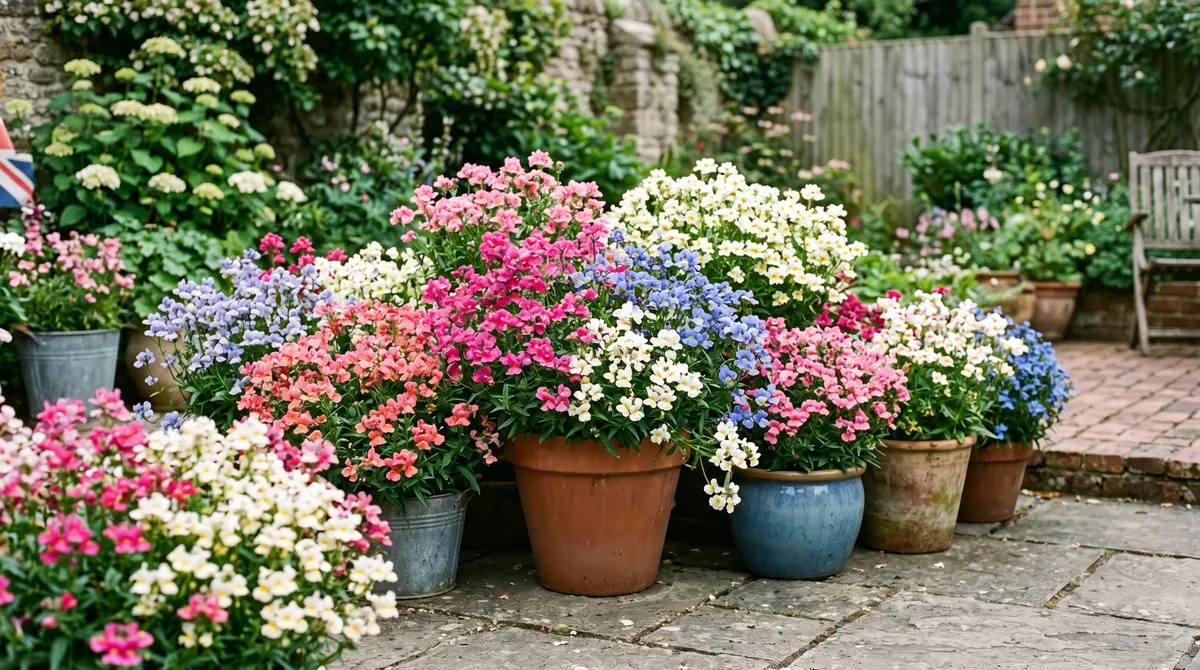
UK garden centres stock 15-25 nemesia varieties through spring and summer.
| Variety | Colour | Scent | Height | Notes |
|---|---|---|---|---|
| Wisley Vanilla | White | Vanilla, strong | 250mm | The classic scented variety |
| Berries and Cream | Pink and white | Vanilla, moderate | 250-300mm | Award-winner |
| Lady Lisa | Lavender-blue | Light | 200mm | Compact, prolific |
| Lady Plum | Deep plum-purple | Light | 200-250mm | Striking colour |
| Sunsatia Cranberry | Deep red-pink | None | 200-300mm | Bright bedding |
| Sunsatia Pineapple | Yellow | None | 200-300mm | Hot summer colour |
| Easter Bonnet White | White with yellow eye | Light | 200-250mm | Classic look |
| Easter Bonnet Lavender | Lavender | Light | 200-250mm | Soft tone |
| Karoo Plum | Magenta-pink | Strong | 200mm | Compact, very floriferous |
| Aromance Pink Lemonade | Pink-yellow bicolour | Strong vanilla | 250mm | Sought-after recent |
Wisley Vanilla is the classic UK choice. Strong vanilla scent in evening, white flowers that match any colour scheme. £4-£8 per established plant in May.
Sunsatia Cranberry is the most colourful choice for bright summer displays. £4-£7 per plant.
Container Culture: The UK Favourite
Nemesias outperform in containers compared to border plantings.
Container setup:
- 25-35cm container per 3-5 plants
- Multipurpose peat-free compost with 20% added grit
- Watering hole in the base; never use containers without drainage
- Position in full sun (4-6 hours minimum)
Planting:
- Wait until last UK frost (mid-May to early June)
- Plant 3-5 plants per 30cm pot for fast fill
- Pinch out growing tips at planting for bushy growth
- Water in gently
- Position in sun within 1-2 weeks of planting
Border Planting
For UK borders, nemesias work as front-row edging only.
- Height under 300mm limits use to bed margins
- Need full sun; underperform in any shade
- Drainage essential; clay borders need 50:50 sand added
- Plant 200-250mm apart for fast fill
For the wider UK annual bedding selection, our annual guide covers companions.
Watering and Feeding
Watering:
- Container nemesias dry fast; water daily in peak summer
- Twice daily in heatwaves above 28C
- Reduce in cooler weather
- Never wet feet; always free-draining containers
Feeding:
- Half-strength tomato feed every 14 days in containers
- No feed in border plantings (encourages soft growth, less flowering)
- Stop feeding from mid-September onwards
Over-feeding produces lush plants with few flowers. Stick to half-strength every 14 days for containers.
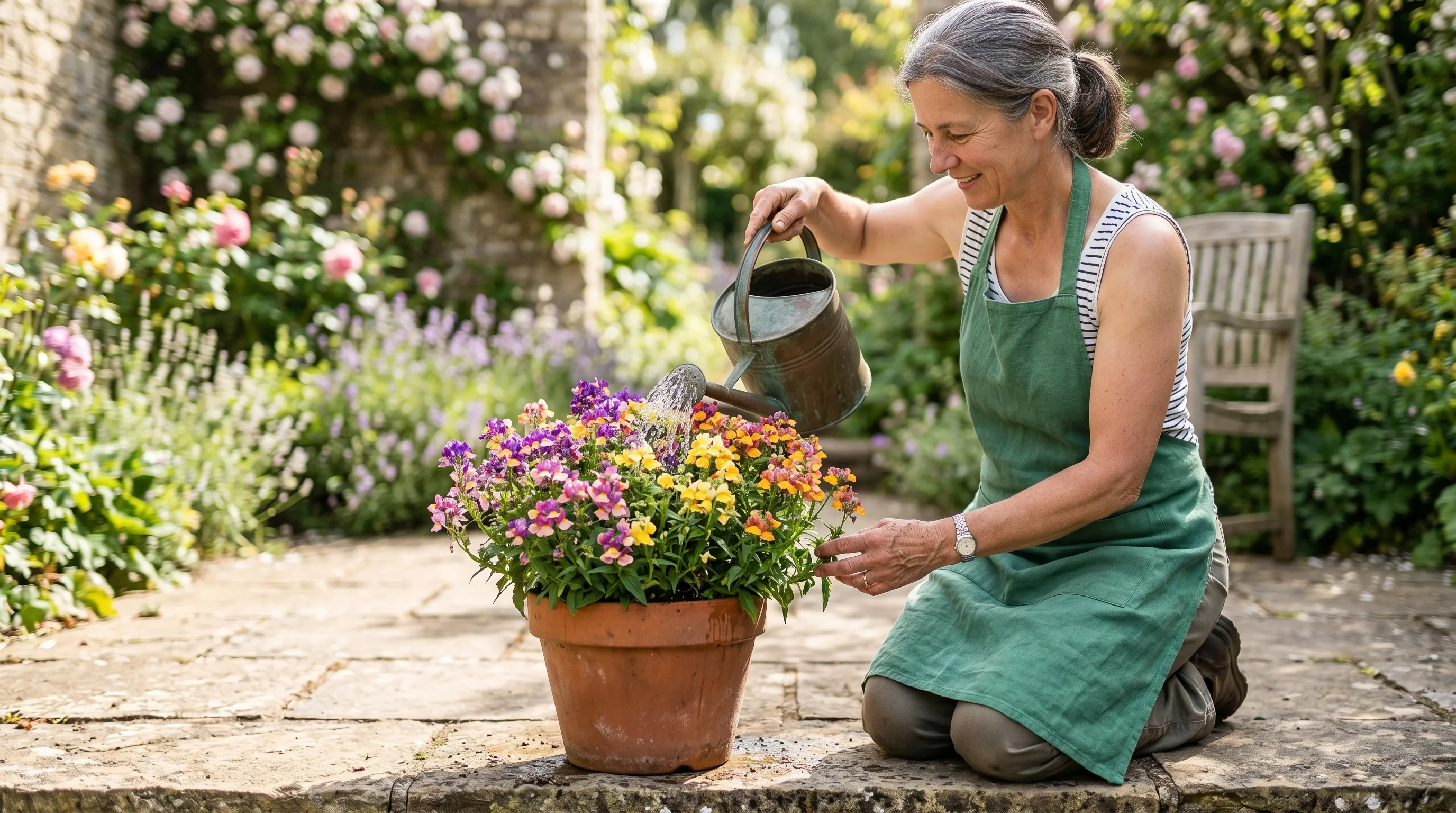 Daily watering routine on the Staffordshire patio. A 30cm container holding 5 Nemesia plants dries fast in full sun. Twice-daily watering in heatwaves above 28C.
The Pinch-Out and Deadhead Routine
The two highest-impact actions.
Pinch-out at planting:
- At planting, pinch out the central growing tip with fingernails
- Removes top 25-50mm of stem
- Forces 2-4 branched side shoots
- Produces a bushy plant rather than a tall single stem
- Repeat pinch after each major flowering wave
Weekly deadheading:
- Every 5-7 days, look across the plant for spent flower heads
- Remove with fingers or scissors at the base of the flower stem
- Takes 2-3 minutes per container
- Plant continues producing new flowers
- Without deadheading, plant stops flowering after 4-6 weeks
Overwintering: Borderline Hardy
Nemesias survive UK mild winters in sheltered containers but rarely return strong.
Best chance of overwintering:
- Move pots to a south wall against the house
- Add 50mm fleece wrap in December
- Stop watering completely in November
- Move under cover (porch, greenhouse) if forecast below -3C
Realistic UK approach: treat as annuals. Replace plants in May each year. Cost: £5-£8 per replacement plant.
Some varieties (Karoo Plum, Aromance Pink Lemonade) survive UK winters more reliably than others. Most growers plan annual replacement.
Common Mistakes With UK Nemesias
Mistake 1: planting in rich garden soil. Roots rot. Use poor well-drained compost or sandy soil only.
Mistake 2: skipping the pinch-out. Tall single-stem plants with few flowers. Always pinch at planting.
Mistake 3: not deadheading. Stops flowering at 4-6 weeks. Weekly deadhead is essential.
Mistake 4: too much shade. Less than 4 hours direct sun and the plants stop flowering. Full sun only.
Mistake 5: overwintering optimism. Most UK gardens cannot reliably overwinter outdoors. Plan to replace.
For the wider UK annual bedding selection, our annual guide covers companions.
Nemesia Calendar UK Month-by-Month
| Month | Nemesia task |
|---|---|
| January | Plan container schemes; order replacement plants |
| February | Source plants for April-May purchase |
| March | Buy first plants if mild and frost-free conservatory available |
| April | Most reliable purchase window. Plant under cover |
| May | Plant out after last frost. Pinch out at planting |
| June | First flowers. Begin weekly deadheading |
| July | Peak flowering. Twice-weekly feed |
| August | Continued flowering. Watch for spider mite in hot weather |
| September | Continued flowering. Reduce feeding from mid-month |
| October | Late flowering. Begin to move pots under cover if cold |
| November | Move overwintering pots to sheltered position |
| December | Reduce water. Monitor for hard frost |
Frequently asked questions
Are nemesias annuals or perennials in the UK?
Nemesias are short-lived perennials in their native South Africa but grown as half-hardy annuals in most UK gardens. They survive mild UK winters in containers under cover or in sheltered sunny borders but rarely return strongly after a hard winter. Plan to replace plants annually for best results.
What is the best nemesia variety for UK gardens?
Wisley Vanilla (vanilla-scented white) is the most popular UK variety. Berries and Cream, Lady Lisa, Lady Plum, Sunsatia Cranberry and the Easter Bonnet Series all win at UK garden centres. Choose for fragrance (Wisley Vanilla, Berries and Cream) or colour (Sunsatia for bright tones).
How do I keep nemesias flowering all summer?
Deadhead spent flowers weekly. Pinch out the growing tips at planting and after each flowering wave. Feed half-strength tomato feed every 14 days in containers. Water consistently but never wet feet. Plants flower continuously May to October with this routine.
Can nemesias survive UK winters outdoors?
Borderline. Hardy to about -5C in sheltered sunny positions with good drainage. Container plants survive better than border plants. Move pots under cover or against the south wall of the house through winter. Most UK gardeners replace plants annually rather than gamble on overwintering.
Do nemesias attract pollinators?
Yes. The flat-faced flowers attract honey bees, bumblebees, hoverflies and small butterflies. Vanilla-scented varieties (Wisley Vanilla, Berries and Cream) are particularly attractive to night-flying moths and hawkmoths.
 The critical pinch-out at planting. Remove the top 25-50mm of central stem. Forces 2-4 branched side shoots and a bushy plant with 3-4x more flower buds than unpinched plants.
 Weekly deadheading routine. Pinch spent flowers at the base of the stem. Takes 2-3 minutes per container. Extends flowering from 5-8 weeks (unmanaged) to 22-26 weeks (deadheaded).
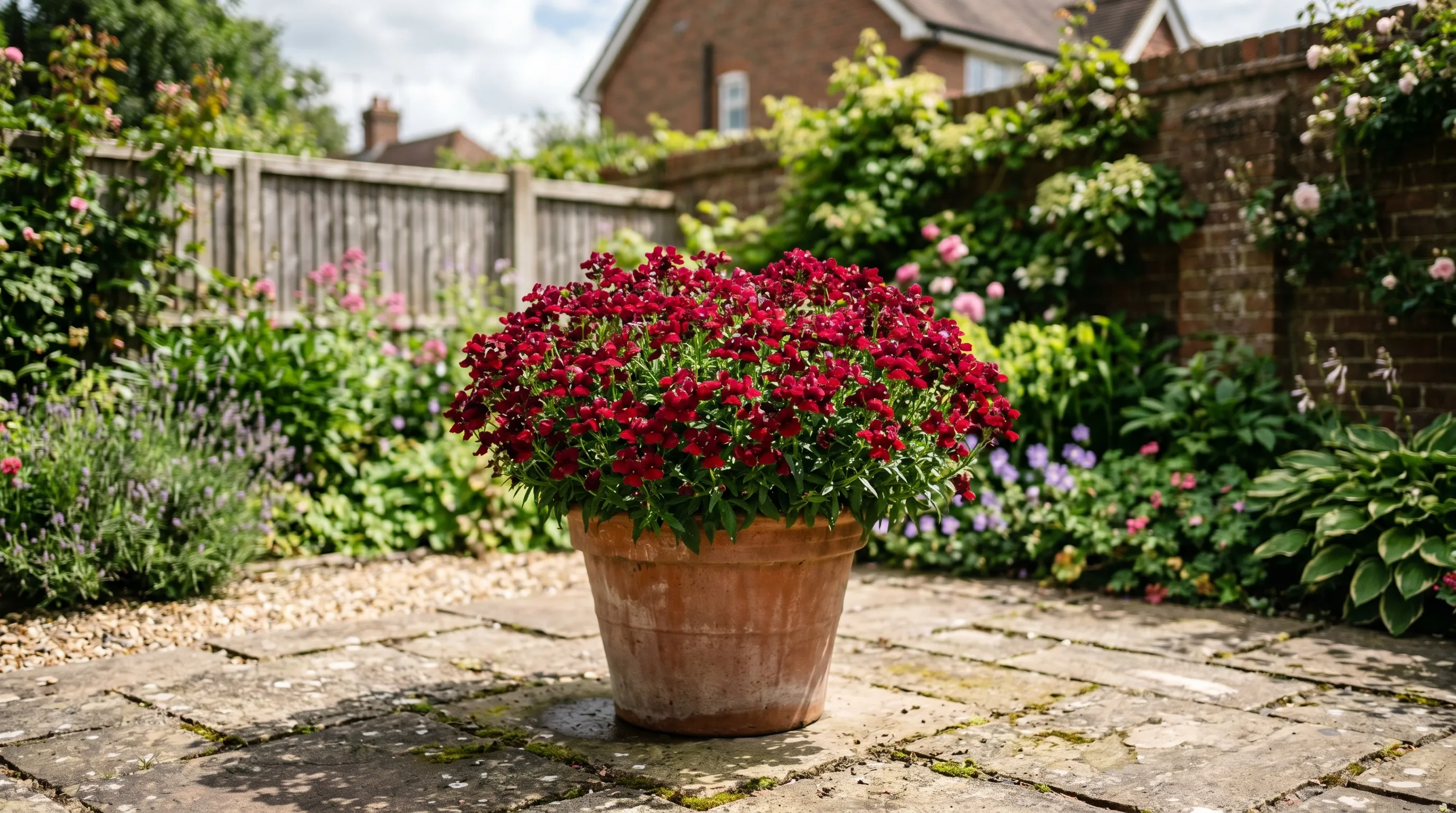 Sunsatia Cranberry in peak flowering on the Staffordshire patio. Five plants in a 30cm container produce a dense mat of deep red flowers from late May to mid-October with weekly deadheading.
Now plan the wider container display
Nemesias pair with many UK summer container plants. Our best annual bedding plants UK guide covers companions. For scented planting alongside Wisley Vanilla nemesias, our scented plants guide covers the wider palette. To extend the container season into autumn, our best autumn flowers UK guide covers asters and rudbeckia. And for matching tender annuals overwintered indoors, our hardening off bedding plants guide covers spring-out protocols.
Our team produces practical UK gardening guidance from source research, contributor records and established horticultural practice. Editorial standards are overseen by Matt W.