Key takeaways
- O. umbellatum spreads by bulbils and can produce 6 to 20 offset bulbs per plant each year, so confine it to grass.
- Tender chincherinchee (O. thyrsoides) holds in a vase for 14 to 21 days, among the longest of any cut flower.
- Plant hardy ornithogalum bulbs 8 to 10cm deep and 8 to 10cm apart in September or October.
- Lift tender species before the first frost, around late October, and store dry at 10 to 15 degrees C.
- Every part is toxic; the RHS rates several species as harmful to people, pets and grazing animals.
- O. nutans and O. magnum stay clump-forming and are safe choices for borders and long grass.
Star of Bethlehem and the species that share the name
The common name Star of Bethlehem usually means Ornithogalum umbellatum, the white six-petalled spring bulb seen across British verges and old orchards. The trouble is that gardeners use the name loosely. It covers several species with very different habits.
The hardy garden types come from Europe and western Asia. They handle cold, damp UK winters and return each year. The tender types come from South Africa. They flower in summer, will not survive frost, and earn their place as cut flowers or pot plants instead.
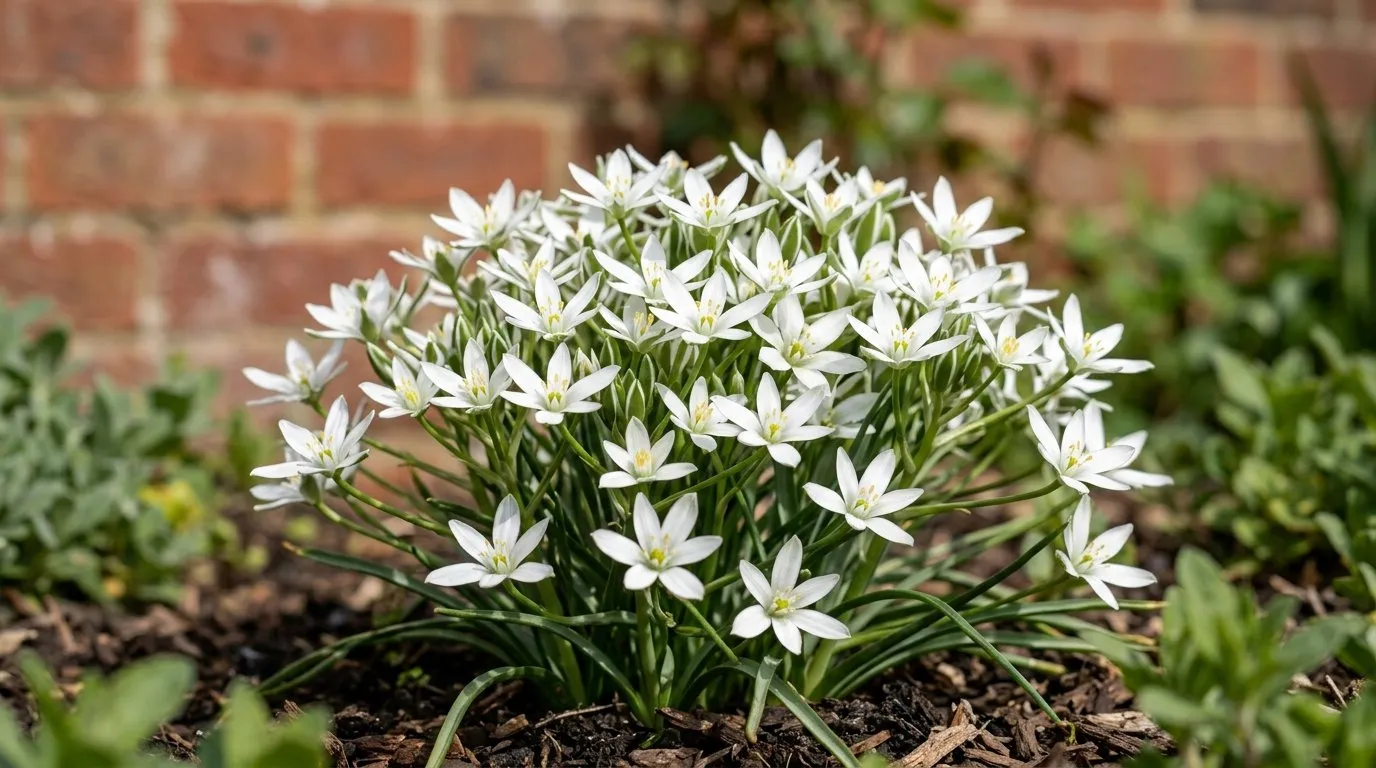 O. umbellatum opens its stars only in bright sun, then closes again by evening.
Comparing the main ornithogalum species
The fastest way to choose is to compare the species side by side. The table below ranks them by garden behaviour, from the safest border plant to the one that needs the tightest control.
| Species | Hardiness | Spread risk | Height | Cut-flower value | Best use |
|---|---|---|---|---|---|
| O. nutans | Hardy to -15C | Low, clump-forming | 30-40cm | Moderate | Borders and long grass |
| O. magnum | Hardy to -15C | Low, clump-forming | 80-120cm | Good, tall stems | Back of border |
| O. thyrsoides | Tender, lift | None in UK soil | 30-45cm | Excellent, 14-21 days | Cut-flower bed under glass |
| O. dubium | Tender, pot only | None in UK soil | 20-30cm | Good, orange spikes | Windowsill pot plant |
| O. umbellatum | Hardy to -15C | High, bulbils | 15-30cm | Low | Rough grass only |
O. nutans tops the list because it spreads slowly and looks elegant doing it. O. umbellatum sits at the bottom, not for its looks but for its appetite. Read the spread-risk column before anything else.
O. umbellatum: where it belongs and where it does not
In a border that means a tidy clump becomes a sprawling colony within three seasons. The bulbils detach when you dig nearby, so every fork of the spade scatters them further. This is why it is so hard to remove.
Warning: Never rotavate ground that contains O. umbellatum. The blades chop and scatter the bulbils, turning one colony into dozens. Always dig and sieve by hand.
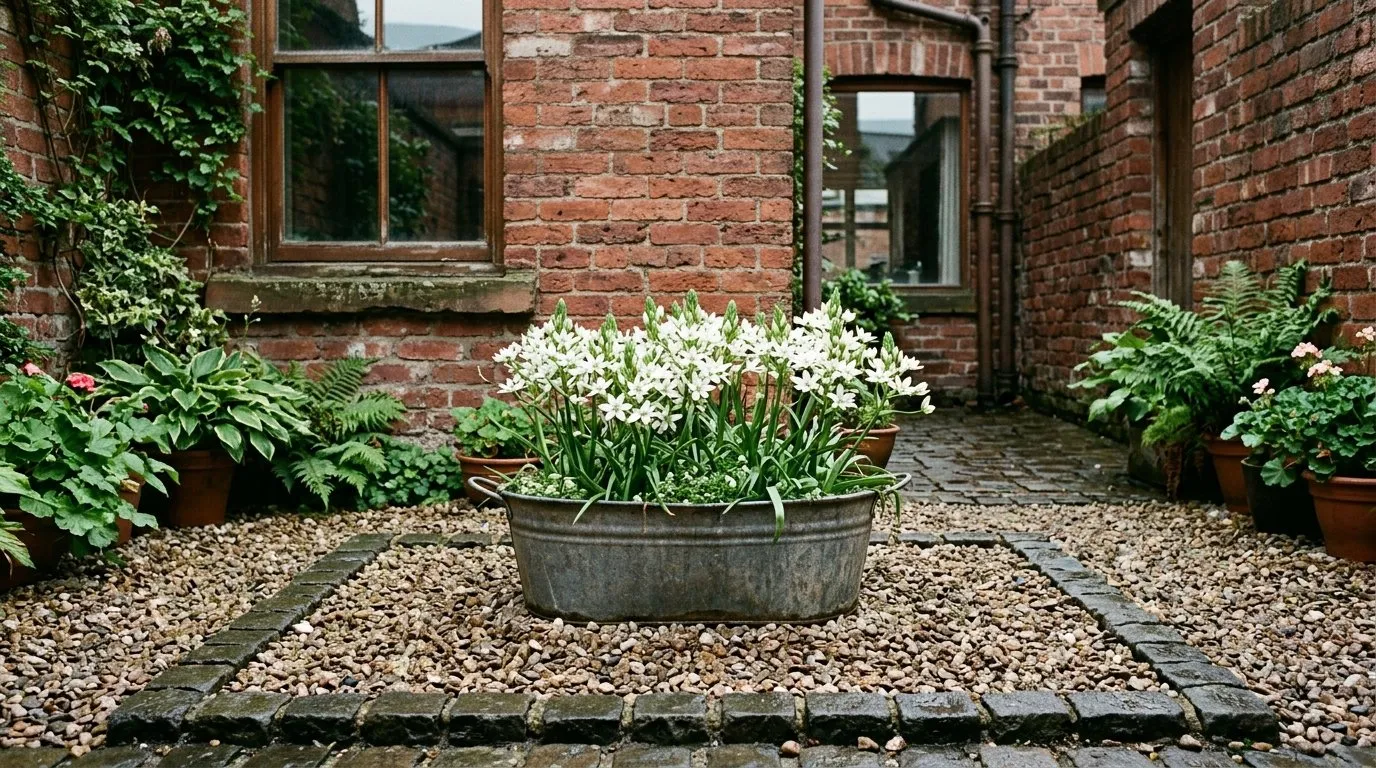 Containers keep vigorous species in check; the bulbils cannot escape a sealed trough.
O. nutans, O. magnum and the well-behaved border types
If you want ornithogalum in a border, choose a clump-forming species. O. nutans is the pick of the bunch. Its grey-green flowers droop in nodding bells rather than open flat, and the silvery sheen catches low spring light. It reaches 30 to 40cm and spreads slowly, so it stays where you put it.
It also naturalises gently in grass without the menace of umbellatum. The RHS gives it an Award of Garden Merit, which reflects its reliability.
O. magnum is the giant of the genus. It throws up flower spikes of 80 to 120cm packed with white stars, ideal at the back of a border or as a tall cut flower. It is fully hardy and clump-forming, so it offers the height of umbellatum’s worst habits with none of the spread.
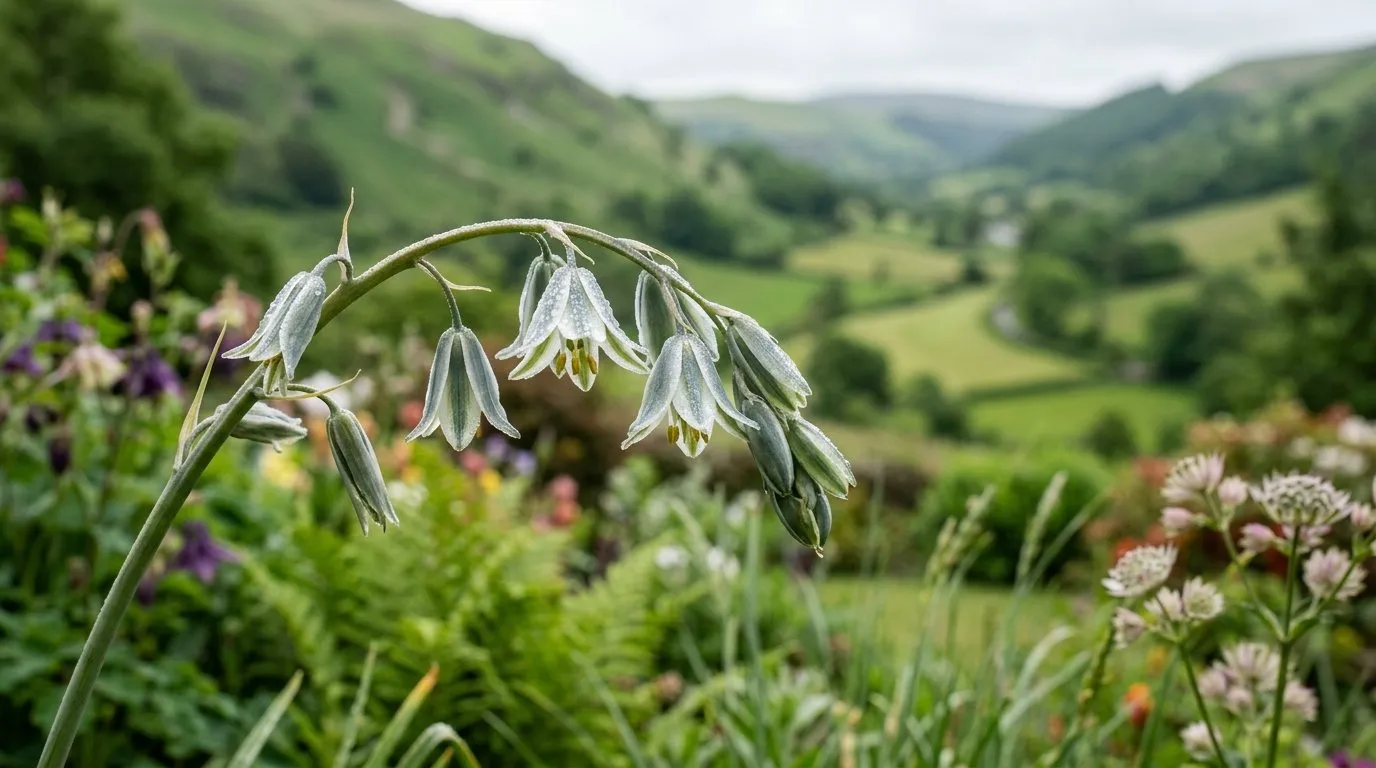 O. nutans nods rather than stares, the most refined species for a mixed border.
Chincherinchee: the cut flower that lasts three weeks
O. thyrsoides, the chincherinchee, is the species florists prize. It is tender, native to the Western Cape, and will not survive a UK winter outdoors. But as a cut flower it is hard to beat. The stems hold for 14 to 21 days in a vase, among the longest of any cut flower, which is why it travels well in the international flower trade.
The white flowers open progressively up the spike. Cut the stem when the lowest two or three flowers have opened and the rest follow over the next fortnight. Change the water every three days and recut the stem ends each time.
Grow it in pots or a raised cut-flower bed under glass. Start the bulbs in March at 15 to 18 degrees C, plant them out after the last frost, then lift and dry them before October. They flower from July to September. A bench of fifty bulbs gives a steady supply for cutting from midsummer.
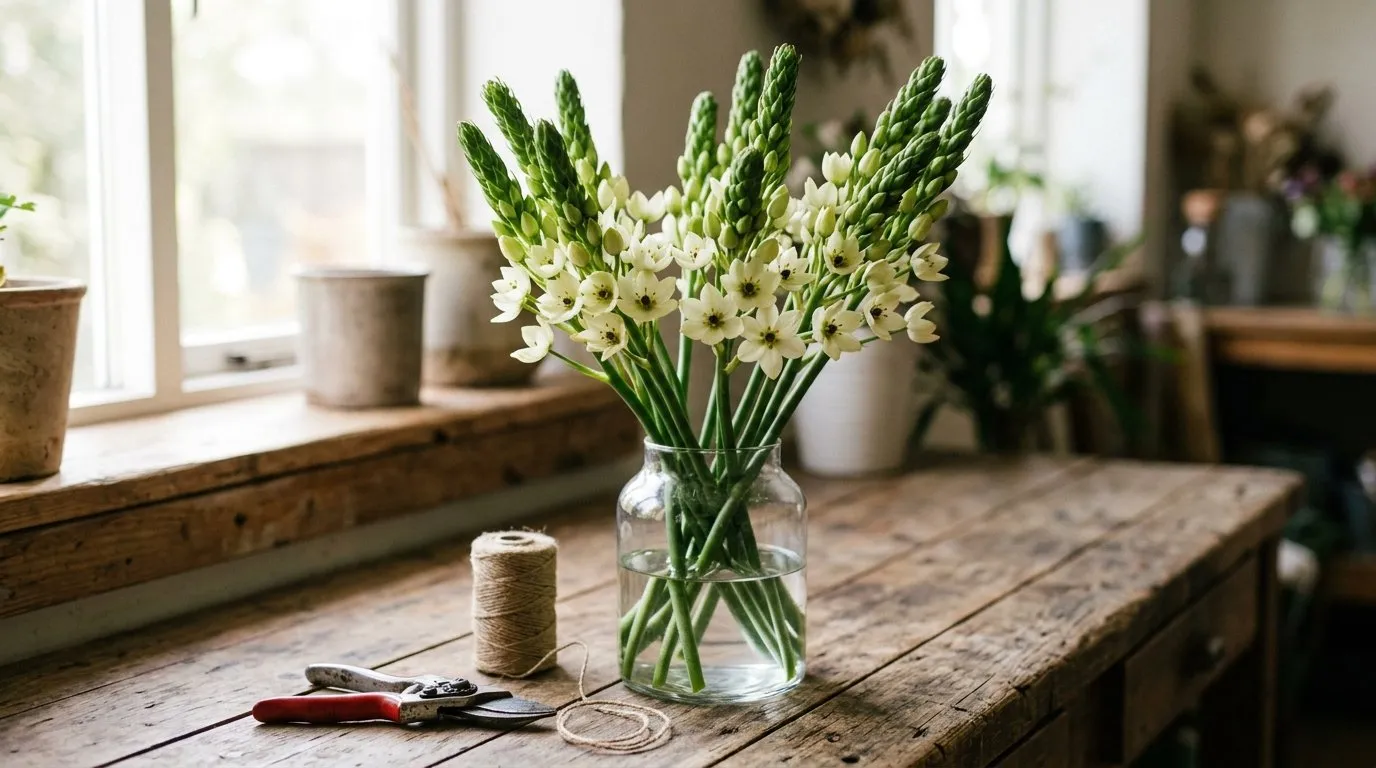 Chincherinchee opens up the spike over a fortnight, holding its display far longer than most.
O. dubium: the tender orange pot plant
O. dubium breaks the white mould. Its dense spikes carry vivid orange flowers, sometimes yellow, and it stays compact at 20 to 30cm. It is tender, so in the UK it works as a pot plant on a bright windowsill or in a frost-free greenhouse.
How to plant ornithogalum step by step
Hardy species follow the same planting routine. Work through these stages in autumn for spring flowers.
- Choose the spot. Pick full sun or light shade with free-draining soil. Avoid heavy, wet ground that sits cold in winter.
- Improve drainage if needed. Fork in horticultural grit on clay soils. A handful per planting hole is enough.
- Set the depth. Plant bulbs 8 to 10cm deep, measured to the base of the bulb. Deeper on light soils, shallower on heavy ones.
- Space them out. Allow 8 to 10cm between bulbs. Plant in odd-numbered groups for a natural drift.
- Point them up. Set each bulb with the pointed nose upward and the flat root plate down.
- Backfill and firm. Cover, firm gently, and water once to settle the soil.
- Mark the spot. Label the area so you do not dig into dormant bulbs later.
The single critical mistake people make is planting too shallow. Bulbs set at 3 or 4cm push to the surface, dry out and either fail to flower or rot. Always plant to a depth of at least three times the bulb height.
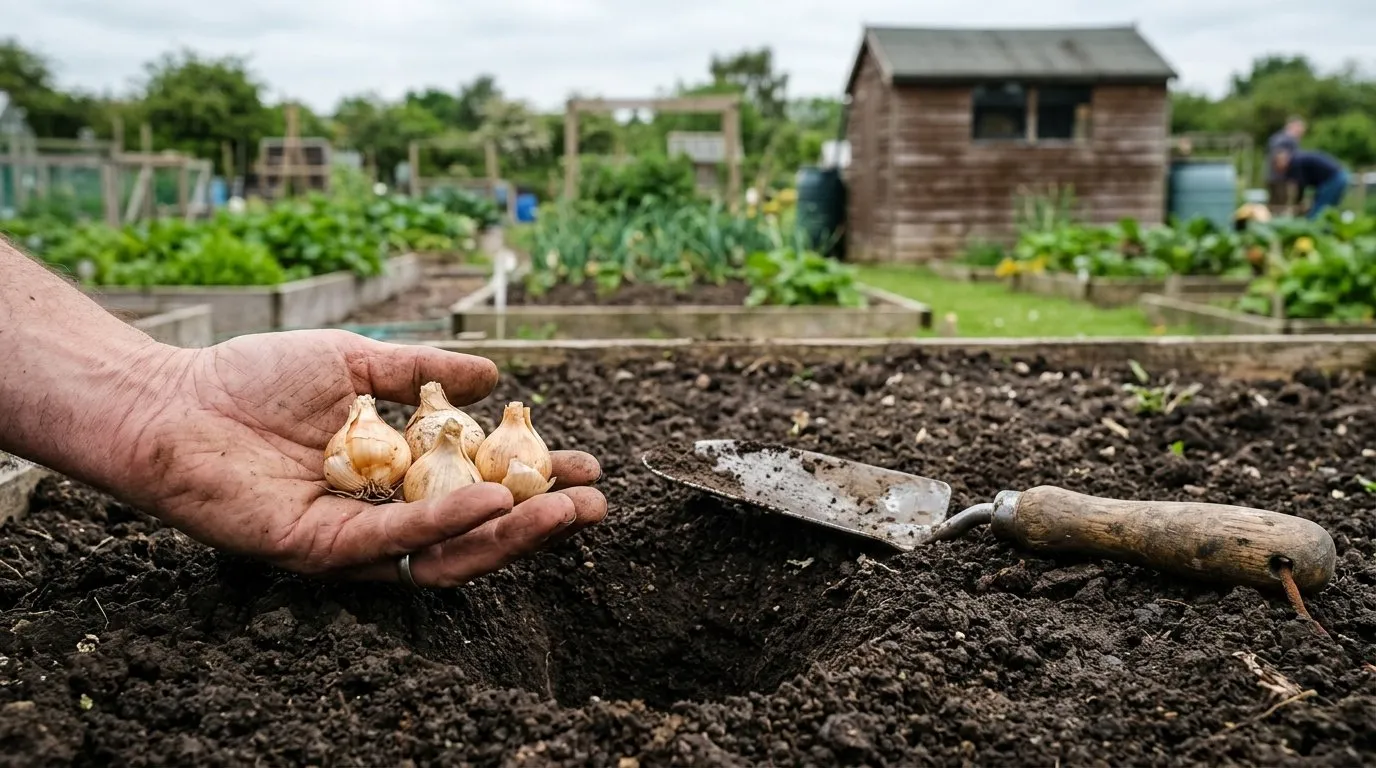 Plant to 8 to 10cm; shallow bulbs dry out, fail to flower or rot in wet ground.
Naturalising ornithogalum in grass
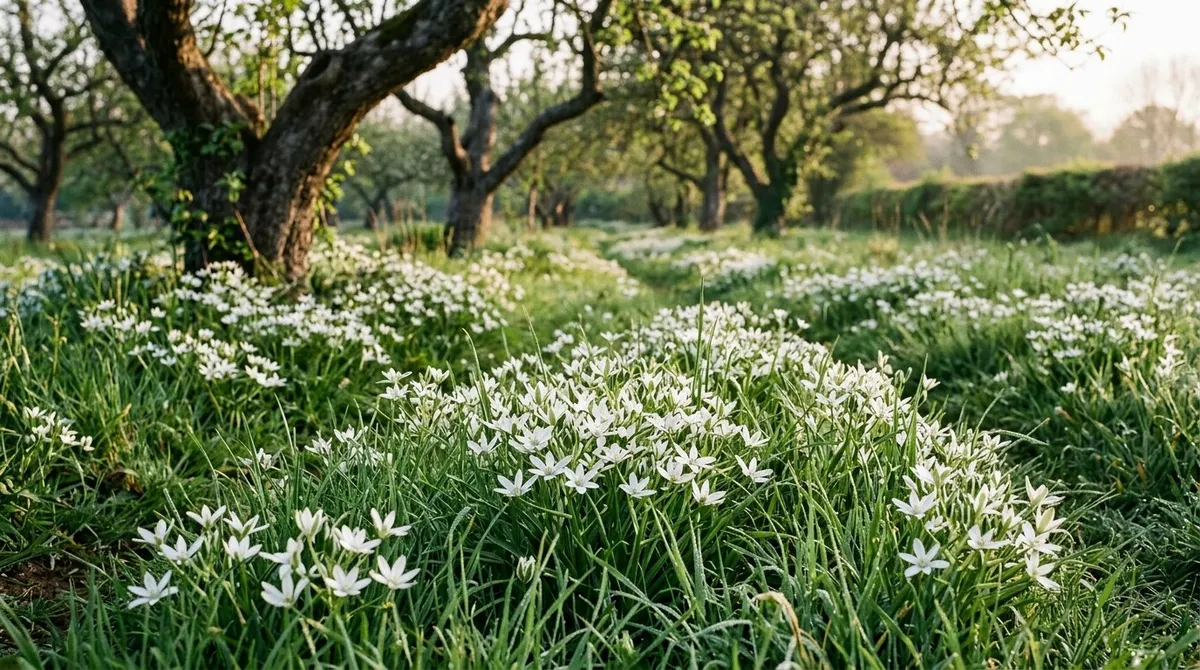
The key to naturalising is the mowing regime. Leave the grass uncut until the bulb foliage yellows, usually June. Cut too early and the bulbs cannot rebuild for next year. This is the same discipline that makes a wildflower lawn succeed. An orchard or a rough bank works best, because you can leave the long grass without it looking neglected.
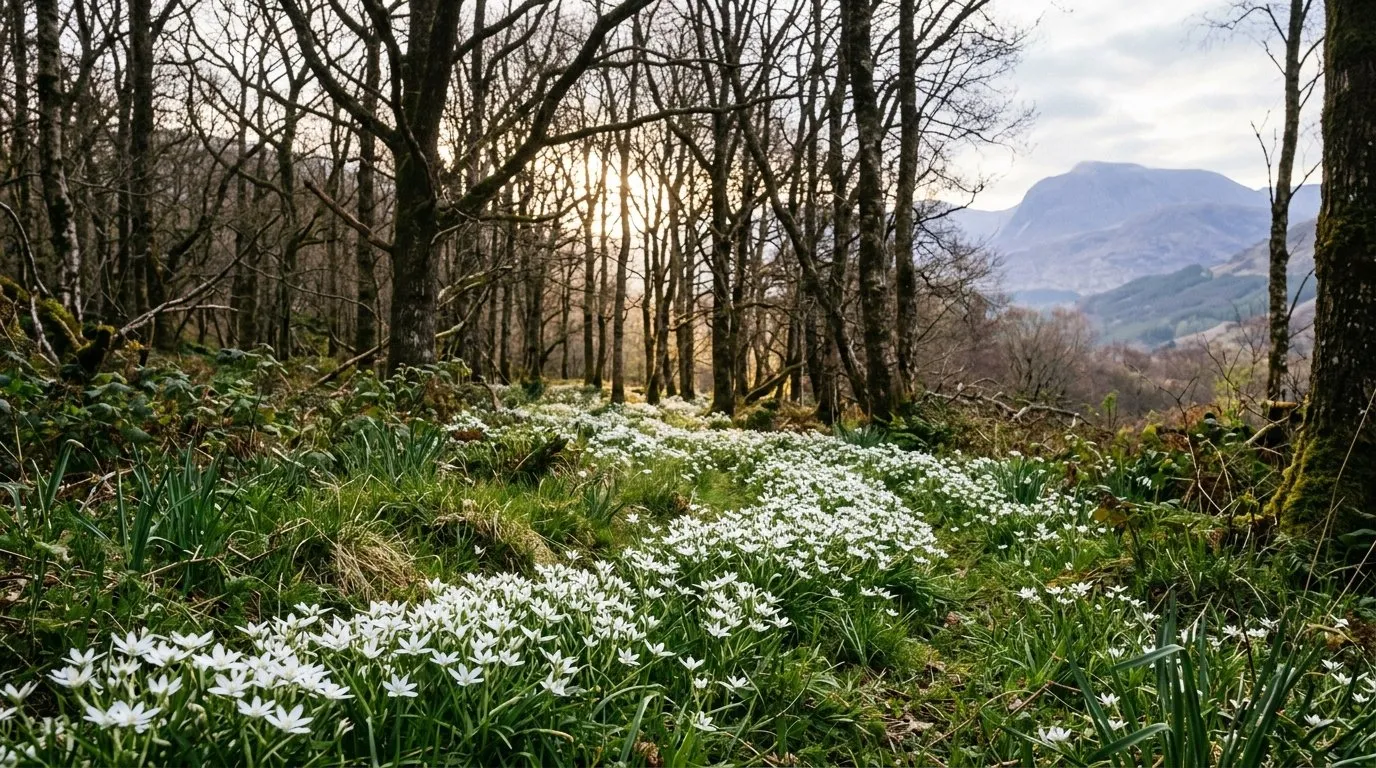 Naturalised drifts under deciduous trees catch the spring light before the canopy closes.
The root cause of an ornithogalum invasion
When ornithogalum runs out of control, the underlying cause is rarely the plant itself. It is the planting position. O. umbellatum is built to colonise open, disturbed ground. A cultivated border is exactly that. Bare soil between perennials gives the bulbils room to spread, and every time you weed or fork the bed you move them.
In grass the story changes. Dense turf roots fill the soil and leave no gaps. The bulbils still form but have nowhere to expand. So the invasion is not a fault in the bulb. It is a mismatch between a colonising plant and an open habitat. Match the species to the site and the problem never starts. This is the same logic behind choosing the right bulb for a perennial border rather than fighting one that wants to spread.
Month-by-month ornithogalum calendar for UK gardens
This calendar covers both hardy and tender species across a UK season.
| Month | Task |
|---|---|
| January | Check stored tender bulbs for rot; keep dry at 10-15C |
| February | Order bulbs; start forcing O. dubium pots indoors |
| March | Pot up tender O. thyrsoides and O. dubium under glass at 15-18C |
| April | Hardy species flower; enjoy and do not mow naturalised grass |
| May | Flowering continues; deadhead border types to limit seeding |
| June | Foliage yellows; first mow of naturalised grass is now safe |
| July | Plant out tender species; chincherinchee begins flowering |
| August | Cut chincherinchee stems; lift and divide congested hardy clumps |
| September | Plant hardy bulbs 8-10cm deep; main planting month |
| October | Finish hardy planting; lift tender bulbs before first frost |
| November | Store tender bulbs dry; mulch borders lightly |
| December | Plan next year; rest period for all species |
Common mistakes when growing ornithogalum
A few errors come up again and again. Avoiding them saves years of work.
- Planting umbellatum in a border. It spreads by bulbils and swamps neighbours within three seasons. Why it happens: gardeners buy it for the spring stars without checking the spread risk. How to avoid it: confine umbellatum to rough grass and choose O. nutans for beds.
- Leaving tender species out over winter. O. thyrsoides and O. dubium rot or freeze below 5 degrees C. Why it happens: the bulbs look like the hardy types on the bench. How to avoid it: lift them before the first frost, around late October, and store dry.
- Mowing naturalised grass too early. Cutting before the foliage yellows starves the bulbs. Why it happens: the long grass looks untidy by late spring. How to avoid it: hold the first cut until June, when the leaves have browned.
Gardener’s tip: If you inherit an umbellatum infestation, lift the soil in spring when the foliage shows, then sieve every spadeful through a 5mm riddle. The tiny bulbils are easy to miss, and one missed offset restarts the colony.
A clear warning on ornithogalum toxicity
All parts of ornithogalum are toxic. The plant contains cardiac glycosides and toxic alkaloids, concentrated most heavily in the bulbs. Eating any part can cause vomiting, drooling, abdominal pain and an irregular heartbeat in people, pets and livestock.
The RHS lists several species, including O. umbellatum, as harmful if eaten. It poses a real risk to grazing animals, because the foliage looks like wild onion or grass. If you keep horses, sheep or cattle, do not let ornithogalum colonise their pasture. Dogs and cats that dig up bulbs are also at risk.
Wear gloves when handling bulbs, wash your hands afterwards, and store spare bulbs out of reach of children and animals. If you grow it where pets roam, treat it with the same caution as other plants toxic to dogs. When in doubt, contact a vet or the Animal PoisonLine. You can confirm the toxicity rating on the RHS website before you plant.
Frequently asked questions
Is ornithogalum poisonous?
Yes, every part of ornithogalum is toxic to people, pets and livestock. The bulbs hold the highest concentration of cardiac glycosides and toxic alkaloids. Symptoms include vomiting, drooling and an irregular heartbeat. The RHS lists several species, including O. umbellatum, as harmful if eaten. Wear gloves when handling bulbs and keep them away from grazing animals and curious dogs.
Is Star of Bethlehem invasive in the UK?
O. umbellatum naturalises aggressively and can swamp borders within a few years. It spreads by underground bulbils rather than seed alone, so each plant builds a dense colony. It is not legally banned, but it is hard to remove once established. Confine it to rough grass or grow better-behaved species like O. nutans instead.
How long do chincherinchee cut flowers last?
Chincherinchee stems last 14 to 21 days in a vase, one of the longest of any cut flower. Cut the stems when the lowest two or three flowers have opened. Change the water every three days and recut the stem ends. The flowers open progressively up the spike, which extends the display. Good conditioning matters; see our guide on conditioning cut flowers.
When should I plant ornithogalum bulbs?
Plant hardy ornithogalum bulbs in September or October for spring flowers. Set them 8 to 10cm deep and 8 to 10cm apart in free-draining soil. Tender species such as O. thyrsoides and O. dubium go out in late spring after the last frost. You can also start tender types in pots under glass from March.
How do I get rid of Star of Bethlehem?
Dig out every bulb and bulbil, because any fragment left behind regrows. Work when the foliage shows in spring so you can trace the clumps. Sieve the soil to catch the small offset bulbs. Repeat for two or three seasons, as a single dig rarely clears it. Avoid rotavating, which only scatters the bulbils.
Will ornithogalum grow in grass?
Yes, several species naturalise well in grass. O. umbellatum and O. nutans both suit orchard turf and rough meadow areas. Delay the first cut until the foliage yellows, usually June. Grass competition keeps the spread of O. umbellatum in check, which is why it behaves in turf but runs riot in borders.
Is ornithogalum hardy in the UK?
Hardy species cope with normal UK winters down to about minus 15 degrees C. O. umbellatum, O. nutans and O. magnum survive outdoors year-round. O. thyrsoides and O. dubium are tender and need lifting or growing as pot plants. Cold, wet soil rots bulbs faster than frost, so drainage matters more than temperature.
Why are my ornithogalum flowers not opening?
Most ornithogalum flowers only open in bright sunlight. The petals stay shut on dull days and close again in the evening. This is normal and not a sign of poor health. Chincherinchee is the exception and stays open once cut. Site outdoor plants in full sun for the best display.
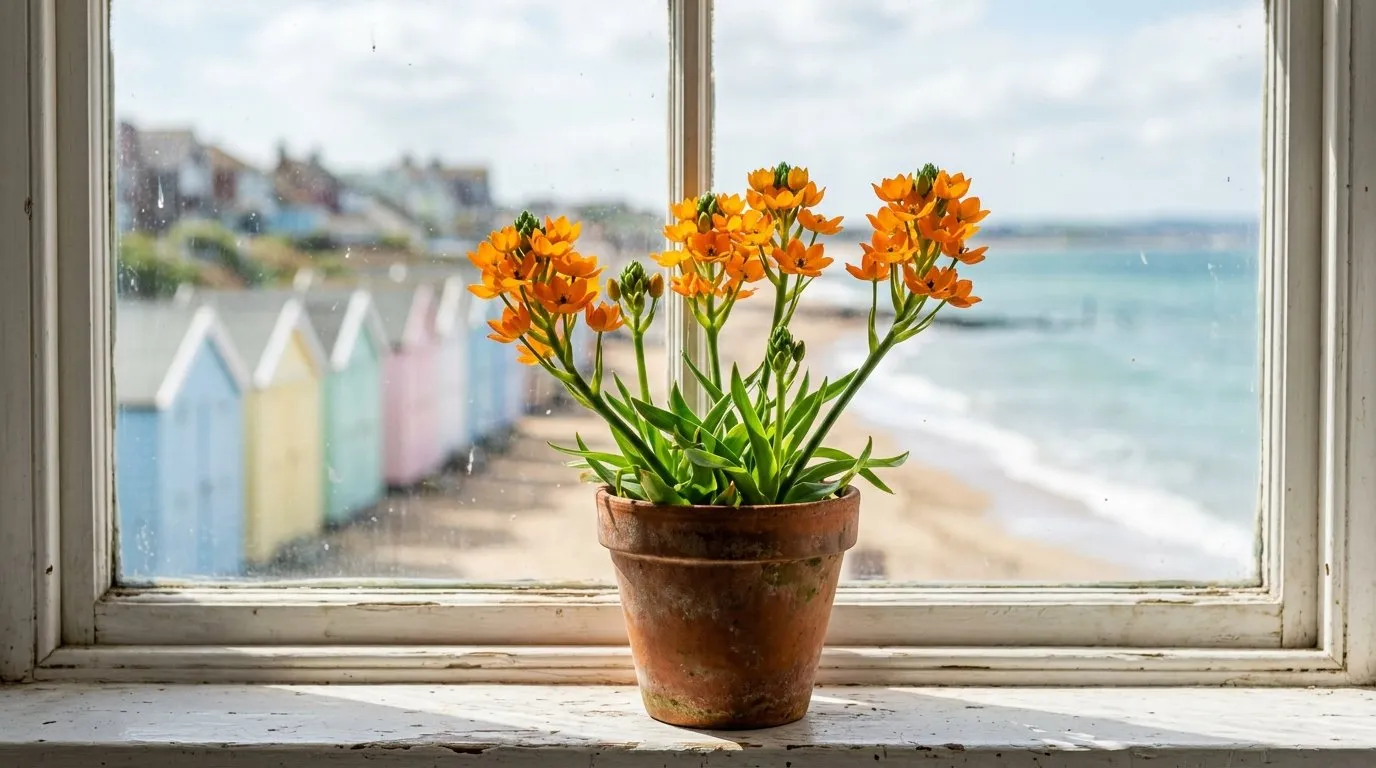 O. dubium brings rare orange to the genus and thrives as an indoor pot plant.
Now you’ve matched the right ornithogalum to the right spot, read our guide on how to grow alliums for another spring bulb that earns its place in a UK border. For more on the wider genus, explore the full plants section.
Our team produces practical UK gardening guidance from source research, contributor records and established horticultural practice. Editorial standards are overseen by Matt W.