Key takeaways
- P. alopecuroides is the hardiest fountain grass for UK gardens, surviving to -15C in well-drained soil
- P. setaceum 'Rubrum' is tender and will not survive a UK winter outdoors — grow it in containers and overwinter frost-free
- 'Hameln' is the most widely grown cultivar in the UK at 60cm tall, producing creamy-white plumes from July
- P. orientale tolerates -10C and produces the most ornamental pink flower spikes of all hardy species
- All pennisetum species demand full sun and free-draining soil — waterlogging kills them faster than cold
- Cut back deciduous hardy types to 10cm in late February before new growth emerges
Pennisetum fountain grass has a soft, tactile feel that suits most UK borders. The bottle-brush flower spikes move in the slightest breeze and look their best when low autumn sun shines through them from behind. Of the roughly 80 species in the genus, only a handful perform reliably outdoors in Britain. Pick the right one and it returns year after year. Pick the wrong one and it dies in its first winter.
This guide covers the hardy and tender species, the best cultivars for UK conditions, and how to keep even the borderline-tender types alive through a British winter. For a broader look at all grass types, see our ornamental grasses guide.
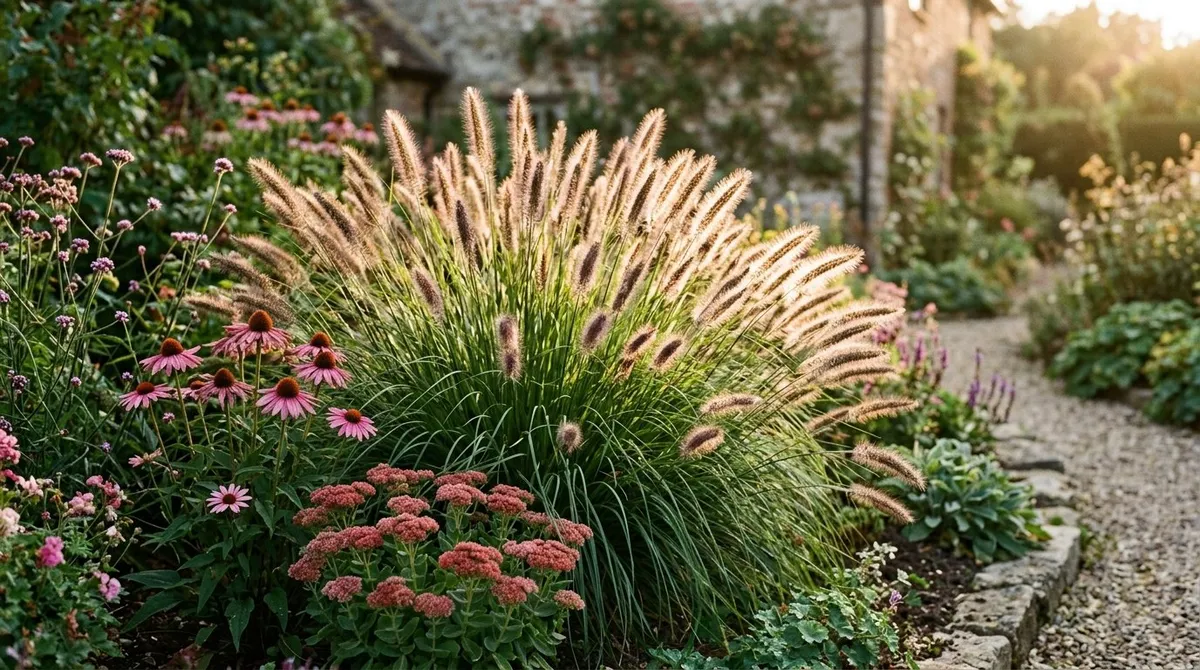
Pennisetum alopecuroides in a late-summer border, with bottle-brush plumes catching low evening light.
Which pennisetum species are hardy in the UK?
Only 3-4 pennisetum species survive UK winters reliably, and hardiness varies widely between them. The critical distinction is between the fully hardy P. alopecuroides and the tender P. setaceum, which is killed outright by the first hard frost. Getting this wrong is the single biggest cause of disappointment with fountain grass in British gardens.
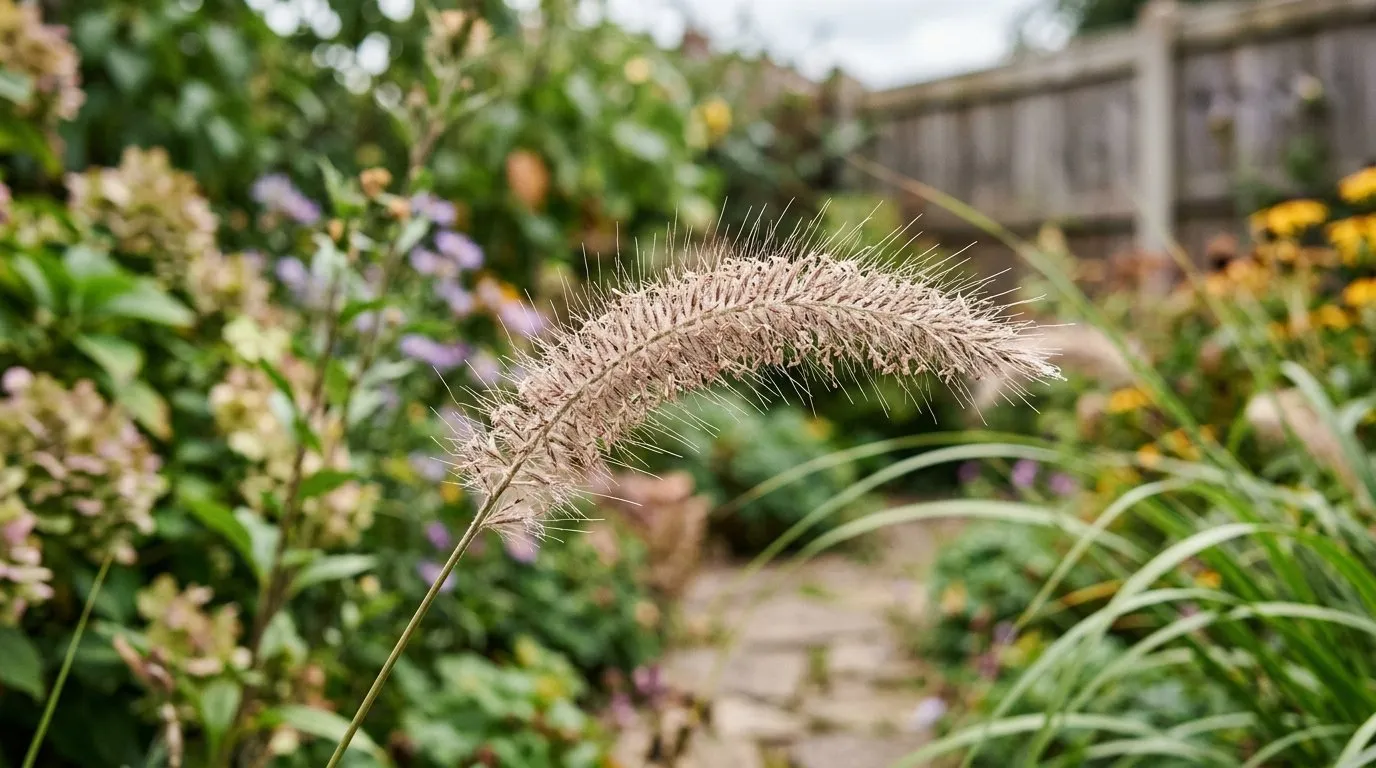
P. alopecuroides (Chinese Fountain Grass) is the toughest species, hardy to -15C across the entire UK. It forms a dense, deciduous clump 40-80cm tall depending on cultivar. Creamy-white to pinkish bottle-brush flower spikes appear from July and last well into autumn. The foliage turns golden-amber before dying back, providing good winter silhouette. This is the species to choose if you want a permanent, no-fuss garden plant.
P. orientale (Oriental Fountain Grass) is hardy to roughly -10C and performs well in southern and central England. It produces the most ornamental flower spikes of all the hardy species — soft, fluffy, pale pink plumes 10-15cm long from July. The plant reaches 50-60cm and has a more refined, wispy habit than P. alopecuroides. On heavy clay or in exposed northern gardens, it may not persist.
P. macrourum (African Feather Grass) is the tallest hardy option at 1.2-1.5m. It produces narrow, upright, cream-coloured flower spikes that arch gracefully at the tips. Hardy to -10C in a sheltered spot with excellent drainage. It spreads by short rhizomes and can form sizeable clumps over time. Best suited to large borders and prairie-style plantings.
P. setaceum (Crimson Fountain Grass) is tender and will not survive a UK winter outdoors. Temperatures below -2C kill it. In British gardens, treat it as a summer bedding plant or a conservatory specimen. The purple-leaved cultivar ‘Rubrum’ is hugely popular for container displays but must be brought indoors before the first frost.
Best pennisetum varieties for UK gardens
These six cultivars cover most garden sizes, from dwarf edging plants up to tall border grasses. The table below compares the varieties you’ll most often find in UK nurseries, with notes from growing them.
| Variety | Height | Flower colour | Hardiness | UK performance |
|---|---|---|---|---|
| P. alopecuroides ‘Hameln’ | 60cm | Creamy-white | -15C | The most reliable. Flowers freely from July. Compact, tidy clump. |
| P. alopecuroides ‘Little Bunny’ | 30-40cm | Creamy-white | -15C | Dwarf form for pots and path edges. Slow to bulk up. |
| P. alopecuroides ‘Cassian’ | 70-80cm | Pink-tinged cream | -15C | Larger plumes than ‘Hameln’. Good autumn colour. |
| P. orientale | 50-60cm | Soft pink | -10C | Beautiful plumes but shorter-lived on heavy soils. |
| P. macrourum | 1.2-1.5m | Cream | -10C | Tall, architectural. Needs space. Spreads slowly by rhizome. |
| P. setaceum ‘Rubrum’ | 90cm-1m | Deep pink-purple | -2C | Striking foliage. Tender — container only in the UK. |
‘Hameln’ is the safest bet for UK beginners. It was introduced by the German nurseryman Karl Foerster in the 1970s and has proven itself across decades of European winters. It flowers reliably from its first year and keeps a neat habit without flopping or spreading.
‘Little Bunny’ is genuinely tiny and suits the front of borders, alpine troughs, and small pots. It does take 2-3 years to build a full clump, so be patient.
If you want the showiest flowers, go for P. orientale. The pink plumes are twice the size of ‘Hameln’ and very soft and feathery. It works well with drought-tolerant perennials in gravel and Mediterranean-style plantings.
How to plant pennisetum fountain grass
Plant pennisetum in late spring (May-June) when the soil has warmed above 12C. This grass is slow to establish in cold ground and planting too early risks root rot on wet spring soils. Unlike miscanthus, which tolerates April planting, pennisetum wants warmth from the start.
Dig a hole twice the pot width and the same depth. On clay soil, excavate 40cm wide and backfill with a 50:50 mix of garden soil and sharp horticultural grit. Set the crown at soil level — burying it causes rot. Water well after planting and mulch with 3-5cm of gravel. Avoid organic mulches against the crown, as they hold moisture.
Space ‘Hameln’ and P. orientale 45-50cm apart. ‘Little Bunny’ can go at 25-30cm for a continuous edging. P. macrourum needs 60-80cm between plants to allow for rhizome spread.
Choose a position in full sun. Pennisetum needs a minimum of 6 hours direct sunlight daily to flower well. In partial shade, the plants grow taller and leaner but produce fewer spikes. A south-facing garden is ideal. Shelter from cold north and east winds improves hardiness for borderline species.
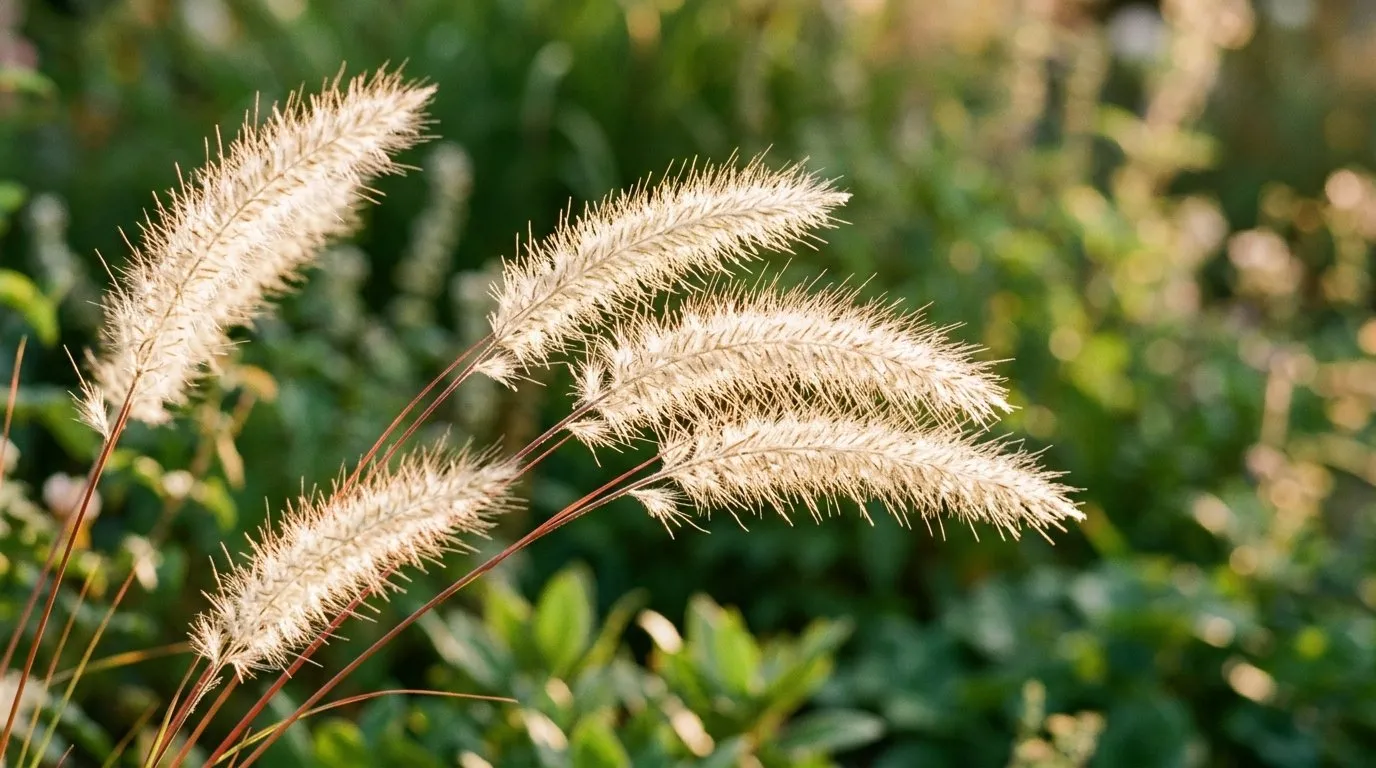
‘Hameln’ is the most widely planted pennisetum in UK gardens — compact, hardy, and reliably floriferous from July.
Can pennisetum survive UK winters?
P. alopecuroides survives UK winters reliably to -15C, but drainage is more important than temperature. Most winter losses in pennisetum are caused by waterlogged soil, not frost. A plant in free-draining gritty soil will survive temperatures that would kill the same plant in heavy, wet clay.
The key survival factors are:
- Soil drainage: Wet crowns rot in winter. Amend heavy soil with grit or grow in raised beds.
- Crown protection: Leave dead foliage standing through winter. The stems shed rain away from the crown.
- Position: South or west-facing borders hold more residual warmth. Avoid frost pockets and exposed hilltops.
- Species choice: P. alopecuroides handles the harshest UK conditions. P. orientale and P. macrourum suit milder gardens only.
For northern UK gardens (Scotland, Northumberland, Cumbria), stick to P. alopecuroides cultivars only. P. orientale is borderline at best above the Midlands.
How to overwinter tender pennisetum
P. setaceum ‘Rubrum’ and other tender species must come indoors before the first frost, typically by late September in most UK regions. Left outside, they die when temperatures drop below -2C. There is no amount of fleece or mulch that will save them.
Move container-grown plants into an unheated greenhouse, conservatory, or bright porch. They need a minimum temperature of 5C and as much light as possible. Reduce watering to once a fortnight — keep the compost barely moist, never wet. The foliage may die back partially; this is normal.
Cut off any dead or damaged foliage in April. Move plants back outdoors after the last frost, usually mid-May in most of England. Harden off gradually over a week, placing pots outside during the day and bringing them in at night for the first few days.
If you lack indoor space, take cuttings or divisions in September and overwinter small plants on a bright windowsill. They need far less room than a full-sized parent plant.
Plenty of people just treat P. setaceum ‘Rubrum’ as a bedding plant and buy fresh each May. At roughly eight to ten pounds per plant, that works out cheaper than heating a greenhouse all winter.
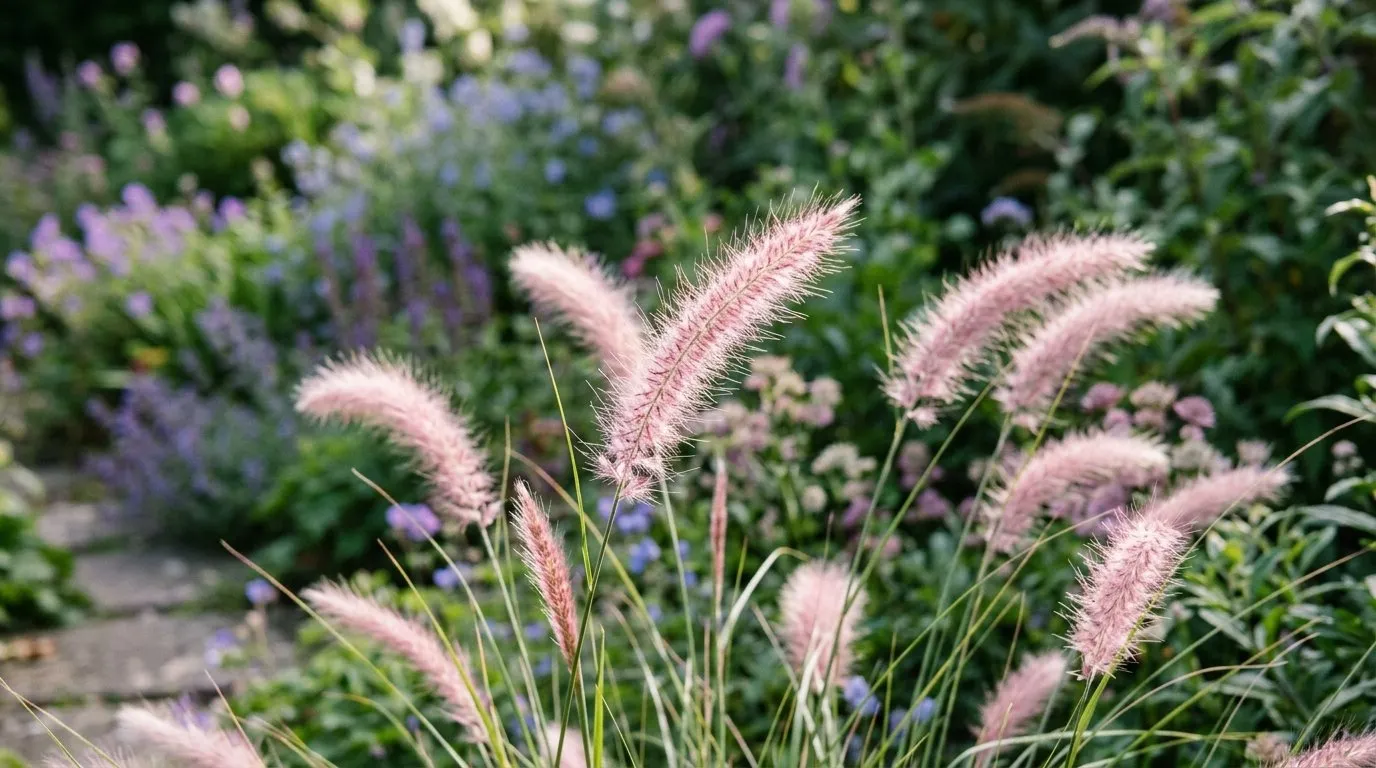
P. orientale produces the most ornamental plumes of all hardy pennisetum species — soft pink and feathery.
Cutting back and dividing pennisetum
Cut hardy pennisetum to 10cm above ground in late February, just before new growth appears. Leaving the foliage standing through winter serves two purposes: it protects the crown from excess moisture and provides shelter for overwintering insects.
Use sharp secateurs or hand shears. Gather the stems into a bundle with one hand and cut across the base with the other. Compost the dead foliage. New shoots will push through within 3-4 weeks as the soil warms.
Never cut pennisetum in autumn. Early cutting exposes the crown to winter rain and removes the insulating layer of dead stems. This is the single most common maintenance mistake with fountain grasses.
Divide established clumps every 4-5 years in April. Lift the entire plant with a fork. Use a sharp spade or two back-to-back forks to split the clump into sections, each with at least 3-4 growth points and a healthy root system. Discard dead, brown portions from the centre. Replant divisions at the original depth, water well, and mulch with gravel.
P. alopecuroides divides easily. P. orientale is more sensitive to disturbance and may take a full season to recover. P. macrourum can be divided by severing rhizome sections with a sharp spade.
Pennisetum is difficult to grow from seed in UK conditions. The seed needs sustained warmth above 20C to germinate, which is hard to achieve outdoors. Division is the most reliable propagation method for named cultivars. The RHS pennisetum growing guide covers additional propagation techniques.
Best companion plants for pennisetum
Pennisetum pairs best with late-summer and autumn-flowering perennials that share its need for sun and drainage. The soft bottle-brush plumes work as a contrast to flat-headed flowers and to plants with bold, upright leaves.
| Pennisetum species | Best companions | Planting style |
|---|---|---|
| P. alopecuroides ‘Hameln’ | Sedum, Echinacea, Rudbeckia, Aster | Prairie border, cottage garden |
| P. orientale | Lavender, Perovskia, Salvia nemorosa | Gravel garden, Mediterranean |
| P. macrourum | Verbena bonariensis, Crocosmia, Kniphofia | Tall prairie border, screening |
| P. setaceum ‘Rubrum’ | Canna, Dahlia, Agapanthus | Exotic container grouping |
In prairie-style borders, ‘Hameln’ sits perfectly between Echinacea purpurea and Sedum ‘Herbstfreude’. The fountain grass foliage softens the gap between flowering clumps, and the plumes pick up the fading pinks and creams of late-season perennials.
For gravel gardens and dry borders, combine P. orientale with Stipa tenuissima and Eryngium. The feathery pennisetum plumes set against the spiky Eryngium heads make a strong contrast.
P. setaceum ‘Rubrum’ works well in large containers with cannas and dahlias for a tropical, late-summer look. The deep purple foliage sits behind bright orange and red flowers nicely.
In mixed borders, use Hakonechloa macra on the shaded side and let pennisetum take the sunny spots. For height behind pennisetum, Stipa gigantea gives a golden backdrop from June onwards.
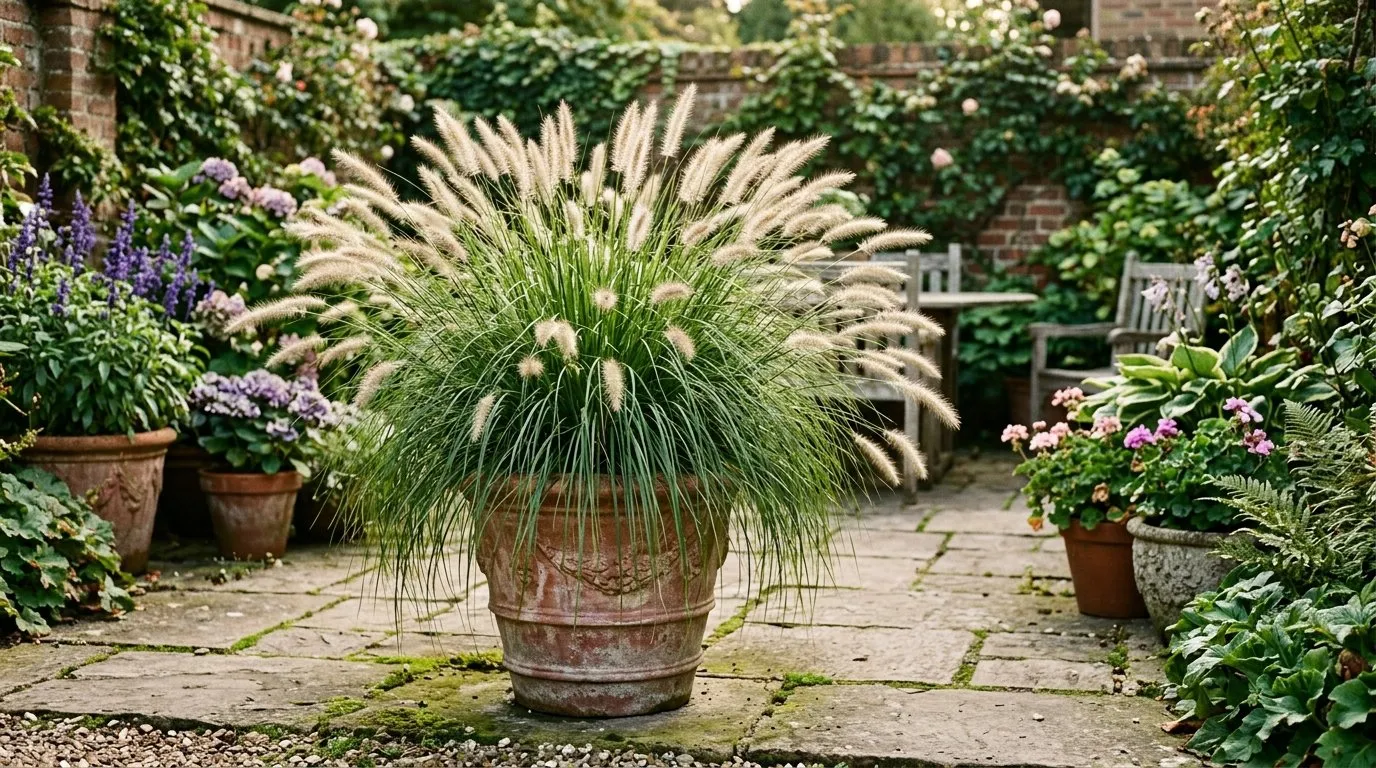
Container growing suits all pennisetum species — essential for tender types and a good option for hardy cultivars on heavy soil.
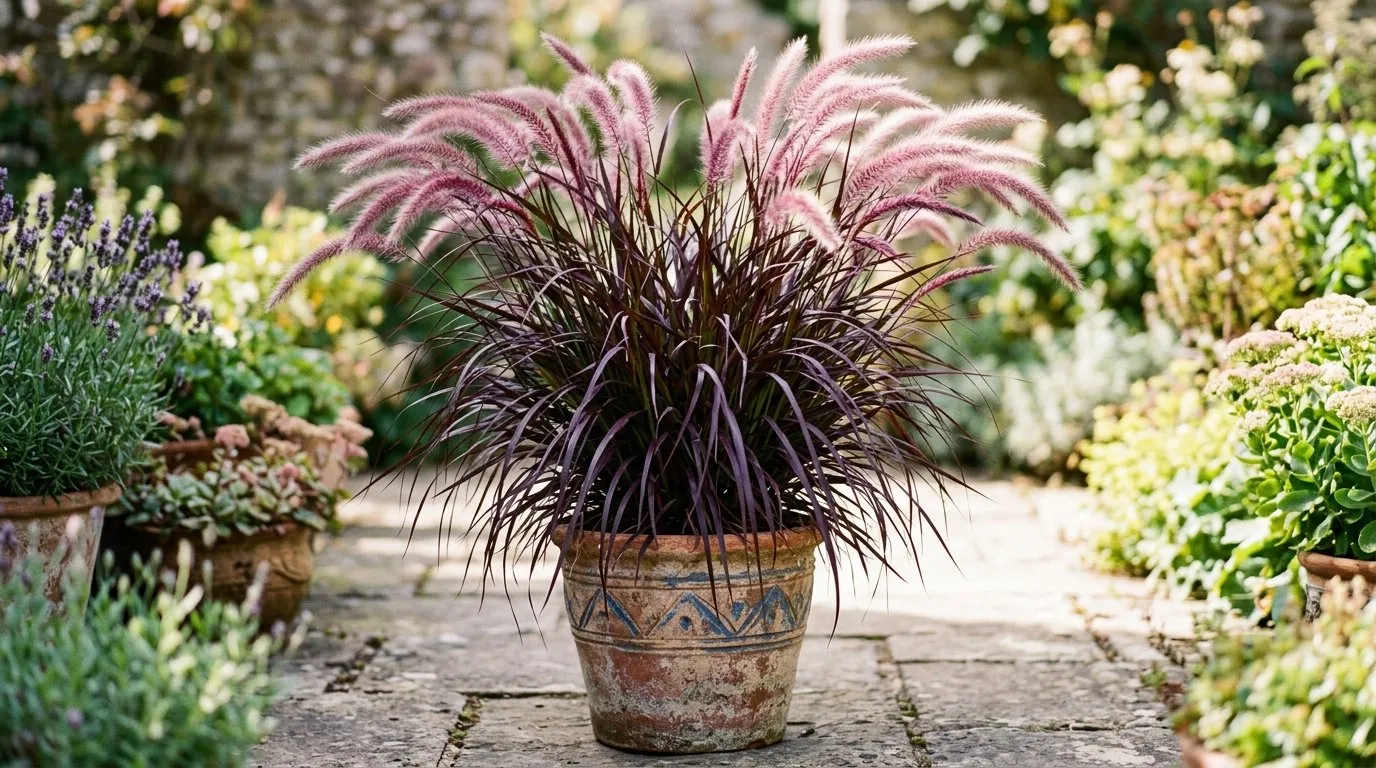
P. setaceum ‘Rubrum’ is the most striking fountain grass, but it will not survive a UK winter outdoors.
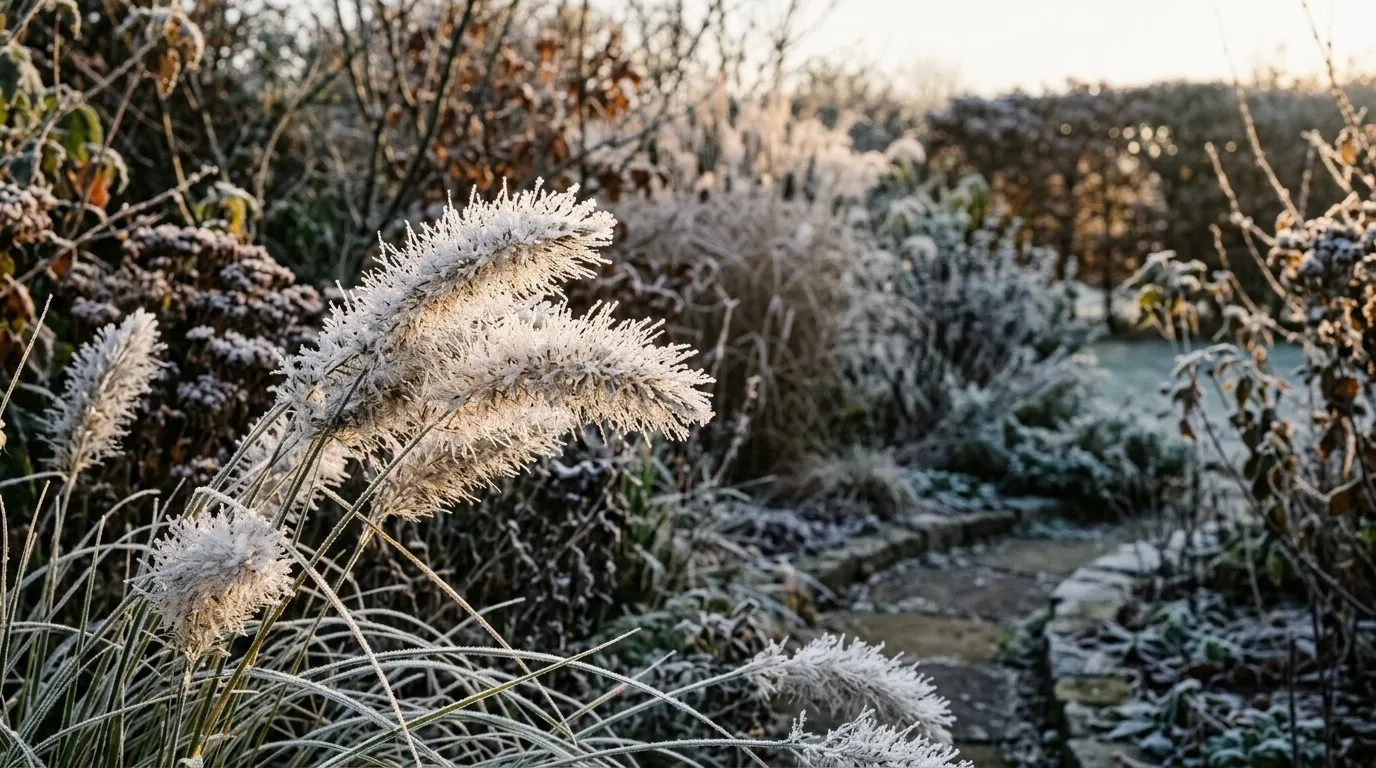 Frosted pennisetum in January. Leave the seedheads standing through winter — the frost catches them beautifully and they shelter overwintering insects.
Frequently asked questions
Is pennisetum hardy in the UK?
P. alopecuroides is fully hardy to -15C across the UK. P. orientale tolerates -10C and is reliable in southern and central England with good drainage. P. macrourum handles -10C but needs a sheltered spot. P. setaceum and its cultivar ‘Rubrum’ are tender and will not survive a UK winter outdoors. The critical factor is drainage — most winter losses are caused by waterlogged soil, not cold temperatures alone.
When should I cut back pennisetum?
Cut hardy pennisetum to 10cm above ground in late February. Leave the foliage standing through winter for structure and wildlife shelter. The dead stems also protect the crown from excessive moisture. Never cut in autumn — early cutting exposes the crown to winter wet and frost. Wait until you see the first signs of green growth at the base before cutting.
Can I grow pennisetum in pots?
Pennisetum grows well in containers using loam-based compost mixed with 30% perlite or grit. Tender species like P. setaceum ‘Rubrum’ are best grown exclusively in pots so they can be moved under cover for winter. Hardy types like ‘Hameln’ also thrive in pots but need protection from freeze-thaw cycles — wrap the pot in bubble wrap or move it against a warm wall from November.
How tall does pennisetum grow?
Height varies by species. P. alopecuroides ‘Little Bunny’ reaches just 40cm. ‘Hameln’ grows to 60cm. P. orientale reaches 50-60cm. P. macrourum is the tallest hardy species at 1.2-1.5m. P. setaceum ‘Rubrum’ reaches 90cm-1m in a single season. All heights include flower spikes and are based on established plants in their second year or later.
Why did my pennisetum die over winter?
Waterlogged soil is the most common cause of winter death in pennisetum. Even hardy species rot if the crown sits in wet ground through December and January. Improve drainage by adding grit to the planting hole or growing in raised beds. If you planted P. setaceum or its cultivars, they are tender and cannot survive UK winters outdoors regardless of drainage.
What is the difference between pennisetum and miscanthus?
Pennisetum produces bottle-brush flower spikes and stays compact at 40cm-1.5m. Miscanthus grows taller at 1.2-2.5m with feathery open plumes. Miscanthus is fully hardy to -20C across the UK, while only some pennisetum species are hardy. Miscanthus tolerates heavier, wetter soils. Choose pennisetum for smaller gardens and containers, miscanthus for bold screening and prairie borders.
Does pennisetum self-seed in UK gardens?
P. alopecuroides rarely self-seeds in UK gardens because summers are too cool for seeds to ripen fully. P. orientale occasionally produces a few seedlings in warm, sheltered spots. P. setaceum does not set viable seed in UK conditions at all. Unlike Stipa tenuissima, pennisetum poses no self-seeding risk in British gardens.
Our team produces practical UK gardening guidance from source research, contributor records and established horticultural practice. Editorial standards are overseen by Matt W.