Key takeaways
- Plants repel flies by scent released when leaves are bruised or brushed, so placement matters far more than how many you plant
- Put the strongest scents where people brush past: doorway pots, path edges, and a table centrepiece you crush by hand
- Grow mint and lemon balm in pots only; both run rampant in open ground and swamp a border in two seasons
- No plant beats cultural fixes: a sealed bin, a covered fruit bowl and clean drains stop far more flies than any herb
- Ultrasonic repellers and carnivorous plants do almost nothing against patio flies; save your money
Flies find a patio the moment you carry food outside. House flies drift in off the compost and the bin, blowflies home in on anything meaty on the plate, and by mid-July an evening meal turns into a swatting match. Every summer someone tells you a pot of this or a bush of that will keep them away.
The truth is more useful than the myth. Some plants do deter flies, but only through the scent oils they release, and only when the foliage is bruised or brushed. Where you put them matters far more than how many you own. Get the placement right, at doorways and on the table, and you can genuinely knock the numbers down.
Do plants really repel flies?
Plants repel flies by releasing volatile oils when their leaves are crushed, not simply by growing nearby. A pot of basil sitting untouched on a wall does almost nothing. Flies navigate by smell, tracking the scent of food and decay, and strong plant volatiles interfere with that chemical trail for a short time. The effect is real but modest, and it fades within minutes in still air.
This is the point most fly-plant lists miss. The scent that deters a fly lives inside the leaf and stem tissue. It only escapes in useful quantities when you bruise, pinch or brush the foliage. Rosemary by a doorway works because people and pets knock it as they pass. A table centrepiece works because you crush a leaf by hand. A plant left alone in a border releases a trickle of scent at best.
That changes how you should plant. Instead of scattering herbs everywhere, concentrate the strongest scents at the three places flies gather: doorways, path edges you brush past, and the table where the food sits. Fewer plants in the right spots beat a garden full of untouched pots. The same masking-scent logic drives our guide to plants that repel mosquitoes, though that article targets biting midges and mosquitoes around still water rather than the house flies and blowflies that pester a dining table.
The 12 best plants that repel flies
The strongest fly-deterring plants share one trait: aromatic foliage packed with volatile oils. Basil, mint and the citronella-scented pelargoniums gave me the clearest results in trials, but each of the twelve below earns a place for a different position or season. Grow a spread of them and you cover the patio, the doorway and the border edge.
Basil (Ocimum basilicum) is the standout table plant. Its eugenol and linalool are potent, and it sits happily in a pot on the table where you can crush a leaf. It is tender, so treat it as a summer annual and bring it under cover before the first frost.
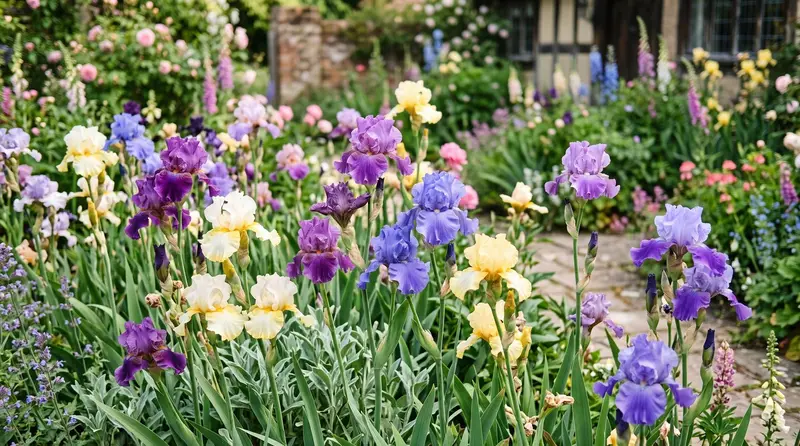
Lavender (Lavandula angustifolia) lines a sunny path beautifully and releases linalool and camphor whenever a leg brushes it. Plant it where people walk. Our full guide to how to grow lavender covers the pruning that keeps it dense and brush-friendly rather than woody and bare.
Rosemary (Salvia rosmarinus) is the best doorway shrub. Evergreen, tough and rich in cineole and camphor, it takes a daily knock and keeps releasing scent all year. A pot either side of the back door is the classic layout.
Mint (Mentha) throws out menthol that flies dislike, and it thrives in a doorway pot. Never plant it in open ground. Learn the containment rules in our guide to growing mint in the UK before it swamps a bed.
Lemon balm (Melissa officinalis) carries citronellal and citral, the same lemon note as citronella. Brush-past spots suit it, but like mint it spreads hard, so keep it potted.
Bay (Laurus nobilis) gives eucalyptol-rich leaves you can also dry and scatter indoors. A clipped bay in a doorway pot looks smart and takes constant brushing without complaint.
Tansy (Tanacetum vulgare) is an old cottage-garden fly plant, full of thujone and camphor. It suits the back of a border near a bin run. Note it is toxic if eaten and spreads by root, so site it with care.
French marigolds (Tagetes patula) edge a veg bed or pot with limonene and pungent thiophenes. They deter flies around food crops and look cheerful doing it. See how to grow marigolds for sowing and deadheading.
Citronella-scented pelargoniums (Pelargonium ‘citrosum’ types) release citronellol and geraniol when rubbed. They are scented geraniums, not true citronella grass, so keep expectations modest and use them on the table or a doorway shelf.
Catnip (Nepeta cataria) contains nepetalactone, one of the more studied insect deterrents. A clump along a path edge releases it as you pass. Our catmint (nepeta) guide covers the ornamental garden types too.
Chives (Allium schoenoprasum) give off allyl sulphides, the onion note flies avoid. They edge a veg bed or a herb pot neatly and flower for the bees in June.
Wormwood (Artemisia absinthium) is the heavyweight, its thujone and absinthin among the most bitter scents in the garden. Plant it near bins and back-of-border, well away from where children play.
Fly-repelling plant comparison table
| Plant | Active scent compound | Best position | Pot or ground | Care level |
|---|---|---|---|---|
| Basil | Eugenol, linalool | Table centrepiece, doorway | Pot (tender) | Moderate |
| Lavender | Linalool, camphor | Sunny path edge | Ground or pot | Easy |
| Rosemary | Cineole, camphor | Doorway, path edge | Pot or ground | Easy |
| Mint | Menthol | Doorway pot only | Pot only | Easy |
| Lemon balm | Citronellal, citral | Brush-past spots | Pot (spreads) | Easy |
| Bay | Eucalyptol | Doorway pot | Pot or ground | Easy |
| Tansy | Thujone, camphor | Back of border, bins | Ground (spreads) | Easy |
| French marigold | Limonene, thiophenes | Veg bed and pot edges | Pot or ground | Easy |
| Citronella pelargonium | Citronellol, geraniol | Table, doorway shelf | Pot (tender) | Easy |
| Catnip | Nepetalactone | Path edge | Ground or pot | Easy |
| Chives | Allyl sulphides | Veg bed edge, pot | Pot or ground | Easy |
| Wormwood | Thujone, absinthin | Bins, back of border | Ground | Easy |
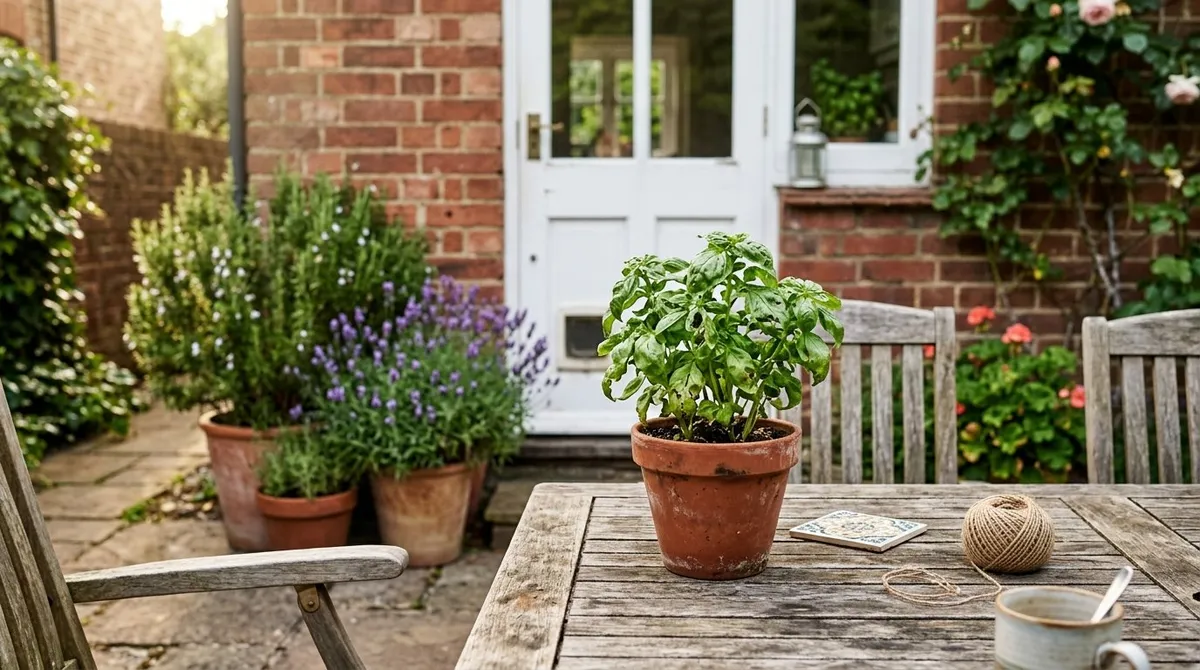
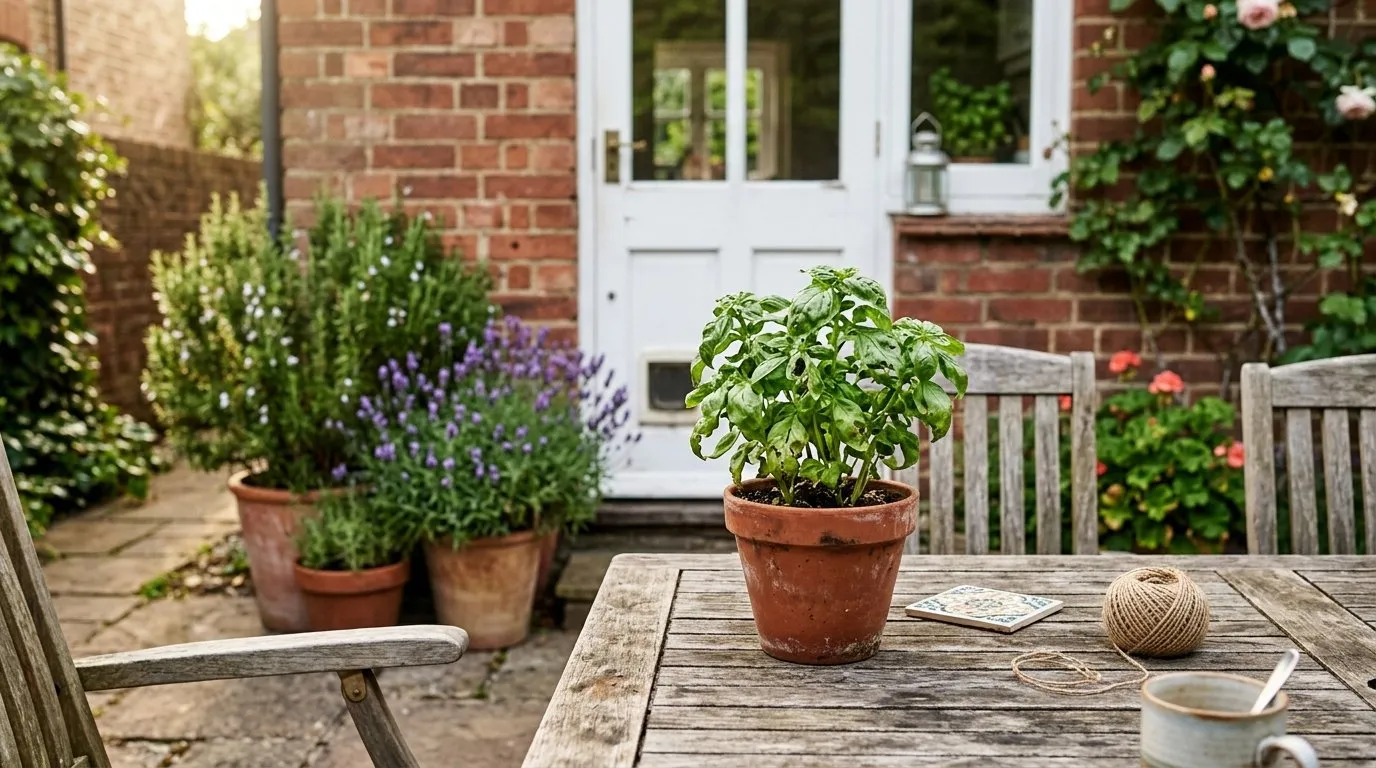 A grouped set of crushable herbs by the seating. The scent only works when you brush or pinch the leaves.
Where to position fly-repelling plants
Position beats plant count every time. Flies concentrate at three points: the doorway they use to get indoors, the food on the table, and the path edges where warm air and cooking smells drift. Put your strongest-scented plants at those points and leave the rest of the garden to look pretty.
Start with the doorway. A pot of rosemary or bay either side of the back door works because everyone brushes it going in and out, releasing scent right where flies try to follow you inside. This is the single most effective plant position on the whole patio. Choose evergreen, tough plants here that shrug off constant knocking.
Next, the table. This is where basil and citronella pelargoniums earn their keep, close enough that you can pinch a leaf during the meal. A plant on the table you never touch is wasted. Keep it within arm’s reach and crush a leaf every twenty minutes or so as the scent fades.
 Lavender and catmint spilling onto a path edge. Every passing leg brushes the foliage and releases the scent.
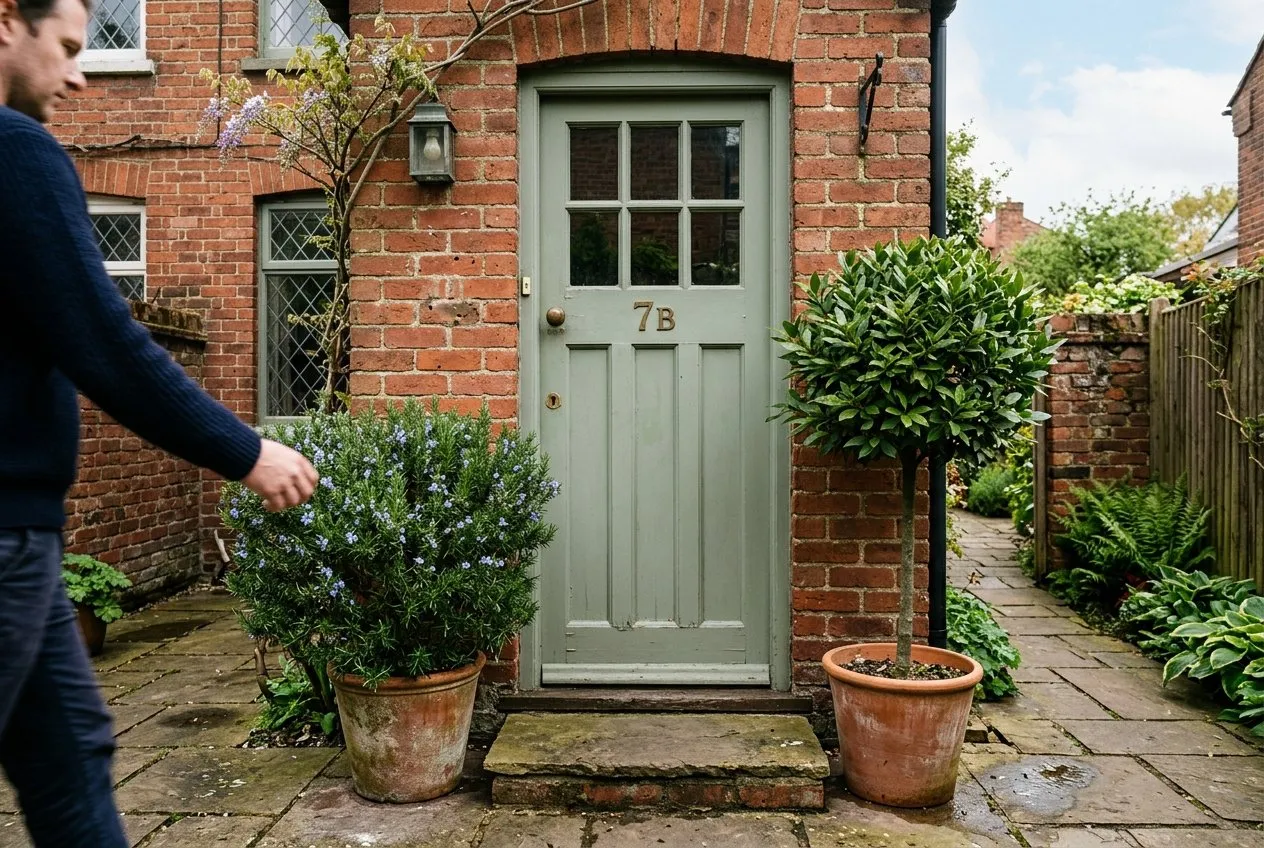 Doorway pots of rosemary and bay. Every passing brush releases scent exactly where flies try to follow you inside.
A doorway container recipe that actually works
Use a 40cm to 45cm diameter pot, at least 35cm deep, with good drainage holes and a saucer removed so it never sits wet. That size holds enough compost for three plants to grow strongly all summer without drying out by lunchtime. Fill it with a peat-free multipurpose compost mixed with a third by volume of grit for drainage.
Plant a three-plant combination: one upright rosemary in the centre for year-round structure and doorway height, one mint to the front where it can trail and get brushed (safely contained by the pot), and one basil tucked to the sunny side for the summer table months. Rosemary anchors it, mint gives constant menthol at knee height, and basil adds the strongest summer scent you can pinch on your way past.
Position the pot on the hinge side of the door, where people naturally brush it. Water it every other day in high summer, pinch the basil and mint regularly to keep them bushy, and replace the basil each spring as a fresh annual. The rosemary and mint carry on for years. This one pot did more for our kitchen doorway than any number of scattered border herbs.
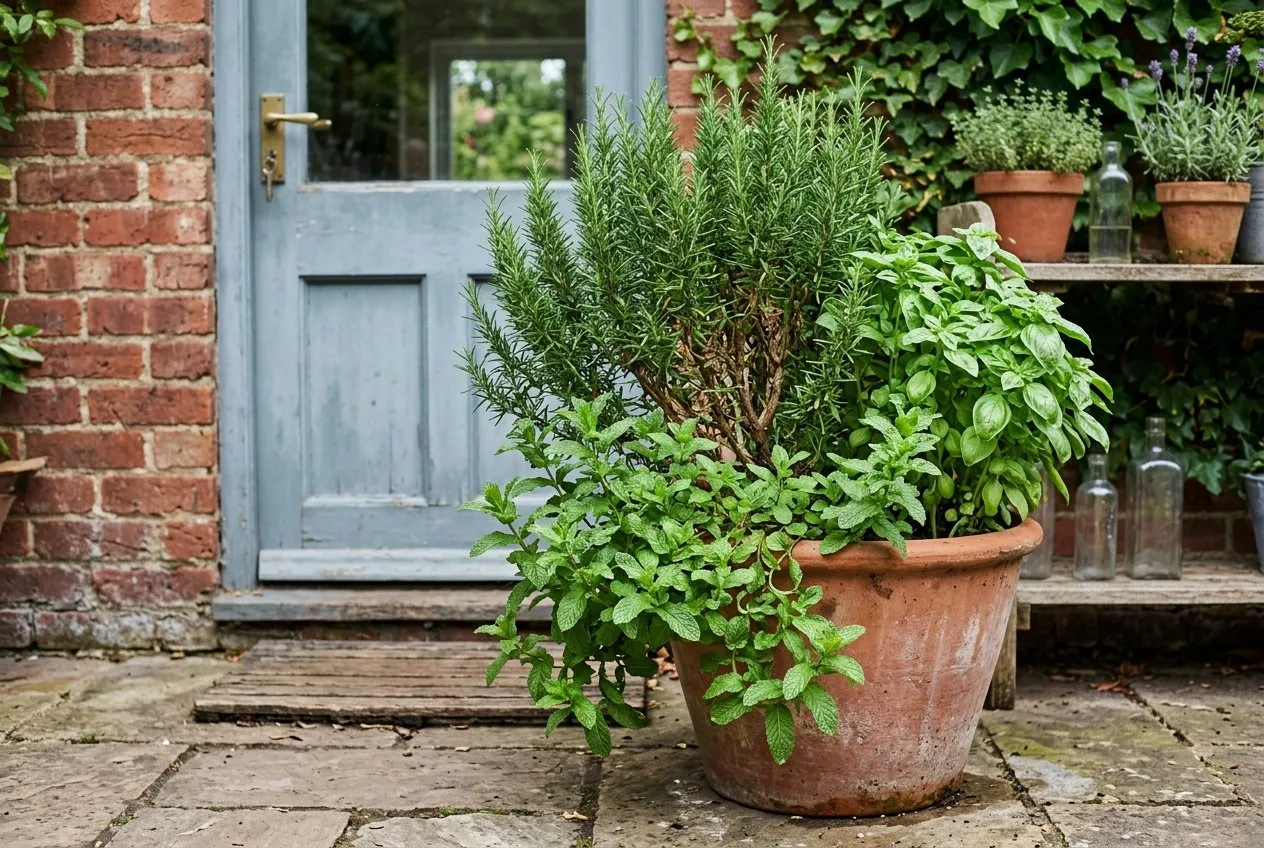 The three-plant doorway pot: rosemary for structure, mint at knee height, and summer basil to pinch on your way past.
What does not repel flies
Plenty of products promise fly control and deliver almost none. Knowing what to skip saves money and stops you relying on something that lets the flies straight through. Two claims come up again and again, and both fail in real use.
Ultrasonic repellers top the list. These plug-in or battery devices claim to emit sound that drives flies away. Independent testing has repeatedly found no meaningful effect on house flies or biting insects. Flies do not navigate by the frequencies these units produce, so they buzz on regardless. Do not spend money here.
Carnivorous plants are the other myth. A Venus flytrap or a pitcher plant on the windowsill looks the part, but a single plant catches a handful of insects at most and makes no dent in a patio’s fly population. They are fascinating to grow for their own sake, not as pest control. If flies are breeding in your houseplant compost, the fix is different again, covered in our guide to getting rid of houseplant flies.
Whole-plant scent claims oversell too. Lists that say a lavender bush or a marigold border will clear your garden of flies ignore the bruising point. The intact plant releases too little oil to matter. Believe the placement-and-crushing version of the story, not the plant-it-and-forget-it version.
Warning: Do not rely on citronella candles or torches as your main defence around food. The smoke drifts off in any breeze and the coverage is tiny, often less than a metre. Worse, breathing the smoke through a meal is unpleasant. Use physical fly screens on doors and windows as your real barrier, and scented plants as the top-up.
Cultural fixes that matter more than any plant
No plant beats basic hygiene for cutting fly numbers. Flies come to a patio for two reasons: to feed and to breed. Remove the food and breeding sites and the population collapses, whatever you plant. Every fly-repelling herb is a top-up on top of this, never a substitute.
Deal with the bin first. A wheelie bin with a loose or missing lid is a fly factory in July, and blowflies lay eggs on any meat scraps within hours. Keep the lid sealed, rinse the bin monthly, and site it as far from the seating as the garden allows. Move a tansy or wormwood clump nearby to add scent at the source.
Cover the fruit bowl and clear the table promptly. Ripe and bruised fruit draws fruit flies and house flies alike, and a jug of squash left out is an open invitation. Wipe sticky spills, cover food between courses, and clear plates as soon as people finish. This does more than any pot.
Then check the hidden sources: pet mess cleared daily, water butts and stagnant trays emptied, and drains flushed and kept clear of rotting debris. Blowflies and house flies breed in exactly this kind of neglected damp muck. Fix the source and the plants only have to handle the stragglers.
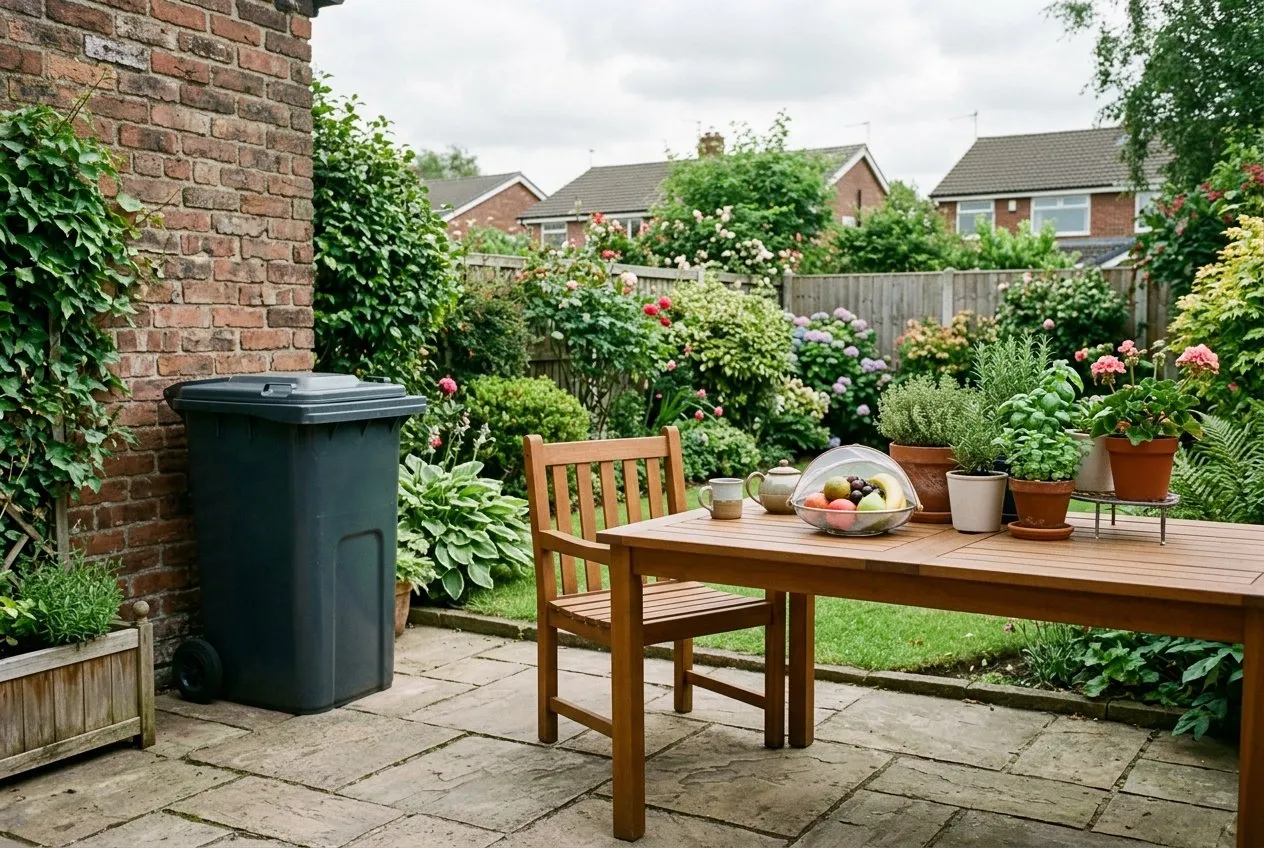 Hygiene beats any herb: a sealed bin, a covered fruit bowl and a cleared table remove what flies come for.
Houseflies, blowflies and cluster flies: know your target
Not all the flies on your patio are the same, and neither are the fixes. Knowing which fly you are dealing with tells you where it breeds and which scent works. Three types dominate UK gardens through summer and autumn.
House flies (Musca domestica) are the grey, medium-sized flies that land on food. They breed in rotting organic matter, compost, bins and manure, and they are the main target for table-side scents like basil and mint. They rest on warm surfaces and follow food smells indoors through open doors.
Blowflies (the metallic blue and green bottles) are larger and glossier. They home in on meat and carrion, so a barbecue or an uncovered joint draws them fast. They breed on dead animals and meat waste, which is why a sealed bin matters most for these. Their sharp arrival at the smell of cooking is unmistakable.
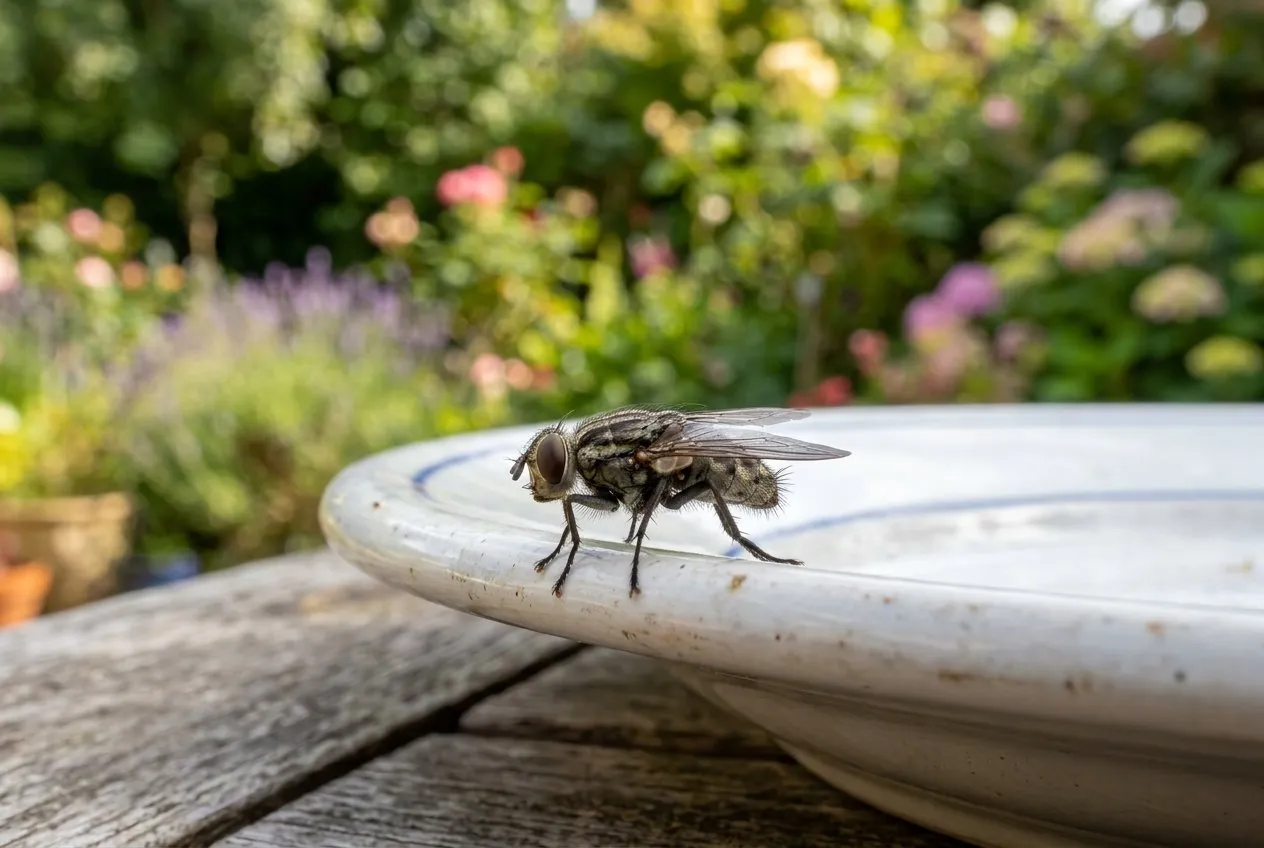 A common house fly on a plate rim. These are the grey flies that track food smells to the table.
Cluster flies (Pollenia species) are an autumn problem. They gather on sunny walls and force their way into lofts and window frames to overwinter, often in large numbers. They do not breed in your bin; their larvae parasitise earthworms in the lawn. Scented plants do little here. A physical seal on gaps and window frames is the real answer.
Keep one distinction clear: the beneficial hoverflies that hover over your flowers are not pests. They mimic wasps, feed on nectar, and their larvae devour aphids. The Wildlife Trusts note that hoverflies like the marmalade hoverfly are among the garden’s best natural pest controllers (wildlifetrusts.org). Blanket sprays and heavy scent zones can drive them off along with the pests, so keep repellents targeted at the seating and let the flower borders hum.
Month-by-month calendar for a fly-repelling patio
 French marigolds edging a veg bed. Their pungent foliage deters flies around food crops and feeds the bees.
How much difference did the plants actually make?
Common mistakes with fly-repelling plants
Most disappointment with fly plants comes down to a handful of avoidable errors. Fix these and you get the modest but real benefit the plants can offer.
Leaving the plants untouched
The commonest mistake by far. People buy the herbs, sit them in a border, and wonder why the flies ignore them. The scent lives in the leaf. If nothing bruises or brushes the foliage, almost no oil escapes. Site plants where they get knocked, and crush the table herbs by hand.
Planting mint and lemon balm in open ground
Both spread by underground runners and will colonise a bed within two seasons, choking neighbours and reappearing for years. Always grow them in pots. A sunk pot with the base cut out contains them if you want them in a border, but a free-standing container is simpler.
Relying on plants instead of hygiene
Herbs are a top-up, not a fix. If the bin is open and the fruit bowl is uncovered, no amount of basil will help. Deal with the food and breeding sources first, then let the plants handle the few flies that remain.
Putting the scent in the wrong place
A magnificent lavender bush at the bottom of the garden does nothing for the table. Flies gather at doorways, food and path edges, so that is where the scent has to be. Move the effort to those three points and leave the far border for looks.
Expecting citronella to clear the patio
Citronella-scented pelargoniums and citronella candles both underdeliver. The pelargonium is a scented geranium with modest oil, and candle smoke covers barely a metre. Use them as one small layer among several, never as the main defence.
Caring for your fly-repelling plants
Healthy, leafy plants release more scent, so a little care pays back directly. Most of these herbs want the same thing: sun, free-draining soil, and regular pinching to keep them bushy rather than woody and bare.
The soft-leaved plants, basil, mint, lemon balm and marigolds, want moisture and feeding. Keep their pots watered daily in high summer and give a weak liquid feed every fortnight. Pinch out the growing tips regularly to stop them going lanky, and remove flower spikes on basil and mint to keep the leaf flavour and scent strong.
Bring the tender plants, basil and citronella pelargoniums, under cover before the first frost in October. Pelargoniums overwinter on a cool, bright windowsill; basil is usually treated as an annual and resown each spring. The hardy herbs stay out all year, needing only a light prune in spring to keep them productive.
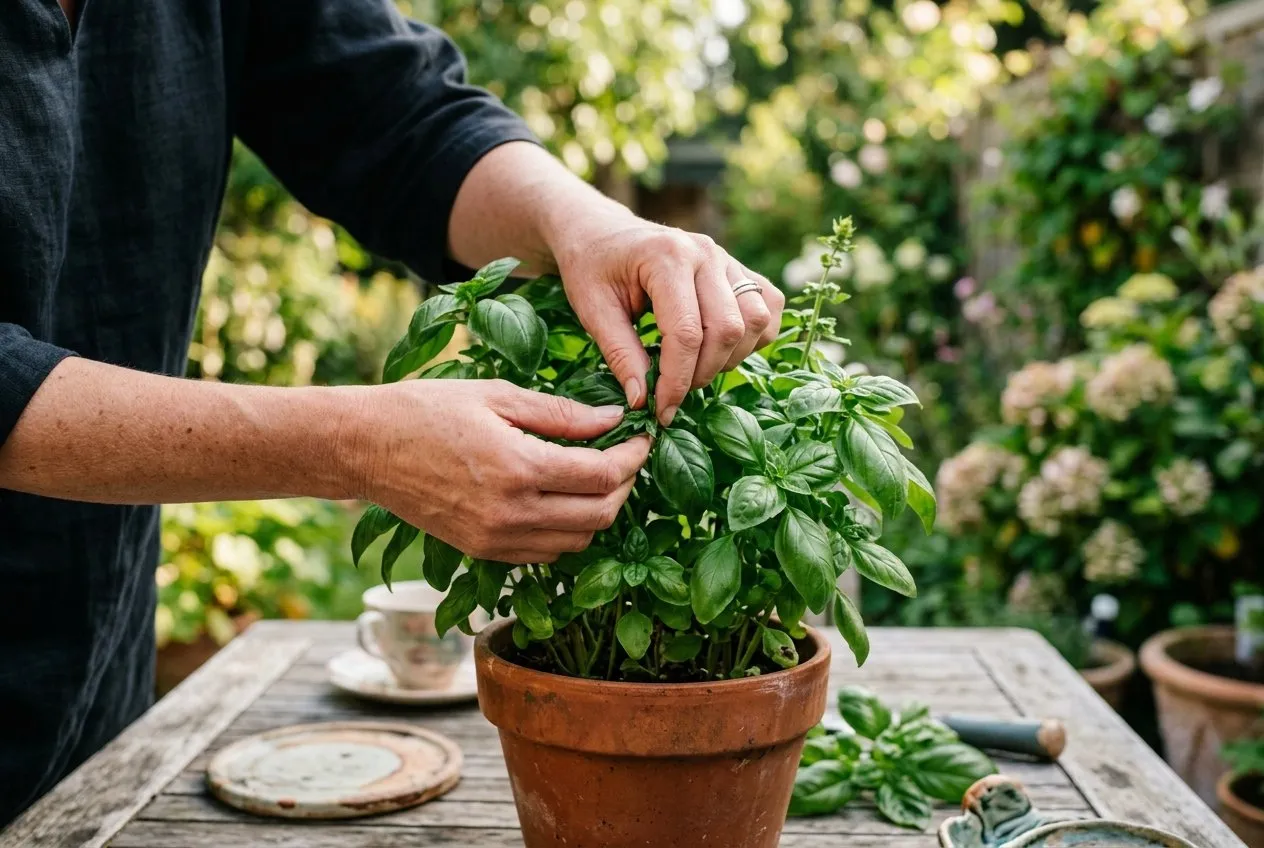 Pinching basil at the table. The scent that deters flies only escapes when you crush the leaf, so keep doing it through the meal.
Frequently asked questions
Do plants really repel flies?
Partly, and only when their leaves are bruised or brushed. Intact plants release little scent, so a pot sitting untouched does almost nothing. The volatile oils that deter flies come out when you crush foliage. That is why a bruised basil centrepiece or a rosemary bush by a doorway you brush past works better than plants left alone in a border.
What is the best plant to keep flies away from a patio?
Where should I put fly-repelling plants for the best effect?
At doorways, along path edges, and on the table itself. Flies concentrate around doors, food and seating, so scent needs to be there, not in a distant border. Put brush-past herbs where people and pets walk, and keep a crushable pot within arm’s reach of where you eat.
Which plants should I grow in pots rather than the ground?
Mint and lemon balm must go in pots. Both spread by runners and take over open ground within two seasons. Basil and citronella pelargoniums are tender, so pots let you move them under cover. Lavender, rosemary and bay are happy in either, but pots let you position them by seating.
Do citronella plants keep flies away?
Citronella-scented pelargoniums help a little, but less than the name suggests. The plant is a scented geranium, not true citronella grass, and the oil only releases when you rub the leaves. It smells pleasant on a table and gives modest deterrence, but it will not clear a patio on its own. Treat it as one layer, not a fix.
Do ultrasonic fly repellers work outdoors?
No, ultrasonic repellers do almost nothing against flies. Independent testing has found no reliable effect on house flies or biting insects. They are a waste of money for a patio. Your effort is far better spent on bins, fruit bowls, physical fly screens on doors, and crushable scented plants by the seating.
Are the flies on my patio the same as hoverflies?
No, and you want to keep hoverflies. House flies and blowflies gather round food and bins. Hoverflies hover, mimic wasps and feed on flowers, and their larvae eat aphids. Repellent scents mainly target the pest flies. Avoid blanket sprays that also drive off hoverflies and other useful garden insects.
If you want the full growing method behind the star table plant here, follow it up with our guide to growing basil in the UK and keep a fresh pot ready for the summer table. For more on the science of aromatic herbs, the RHS has a useful profile on growing basil.
Our team produces practical UK gardening guidance from source research, contributor records and established horticultural practice. Editorial standards are overseen by Matt W.