Key takeaways
- Most listed plants are safe to grow: the danger is eating seeds, berries or roots
- Monkshood (Aconitum napellus) is one of the UK's most poisonous plants and toxic through skin
- Yew arils are harmless but the single seed inside each red berry is deadly
- Laburnum seed pods are a leading cause of UK child plant-poisoning enquiries
- A low fence of 1m keeps most under-fives away from a risky border
- If a child eats a plant, ring 111, or 999 if serious, and never make them sick
Poisonous plants grow in nearly every UK garden, and most of them are perfectly safe to keep. The risk from poisonous garden plants is almost never touching them. It is a small child eating a berry, a seed or a mouthful of root. Foxglove, yew and laburnum sit in thousands of borders and cause no harm at all, right up until a toddler treats a berry like a sweet.
Which garden plants are actually dangerous to children
Almost every case that matters involves eating, not touching. A child can walk through a foxglove border safely every day. The problem starts when a toddler picks a berry, chews a seed pod, or pulls up a root and puts it in their mouth. Under-fives explore with their mouths, which is why they account for most garden plant enquiries to poison services.
Many of these plants harm animals too. Our guides to plants toxic to cats and plants toxic to dogs cover the pet side, and the overlap is large. If a plant is on both lists, treat it as a priority for fencing or removal.
The most poisonous plants in UK gardens
Eight plants sit at the top of the UK garden danger list. Learn to recognise these first.
Monkshood (Aconitum napellus) is one of the most poisonous plants in Britain. Every part holds aconitine, and the roots hold the most. It is the rare plant that can poison through unbroken skin, so wear gloves near it.
Foxglove (Digitalis purpurea) carries cardiac glycosides in all parts. These affect the heart. Foxglove self-sows freely, so new plants appear each year in fresh spots. It features in our guide to easy self-seeding plants for UK gardens, worth reading if you let it wander near a play area.
Yew (Taxus baccata) holds taxine alkaloids in its foliage and seeds. The red flesh of the berry is harmless, but the seed inside is deadly.
Laburnum (Laburnum species) fills its seeds and pods with cytisine. The hanging pods look like pea pods, which is exactly why children open them.
Deadly nightshade (Atropa belladonna) produces shiny black berries loaded with atropine. A few berries can be dangerous.
Hemlock (Conium maculatum) contains coniine and can be fatal. Its purple-blotched stems and mousy smell set it apart from cow parsley.
Lily of the valley (Convallaria majalis) holds cardiac glycosides in every part, including its autumn berries.
Cherry laurel (Prunus laurocerasus) leaves and seeds release cyanide when crushed. The RHS list of potentially harmful garden plants is the best reference for checking anything else you grow.
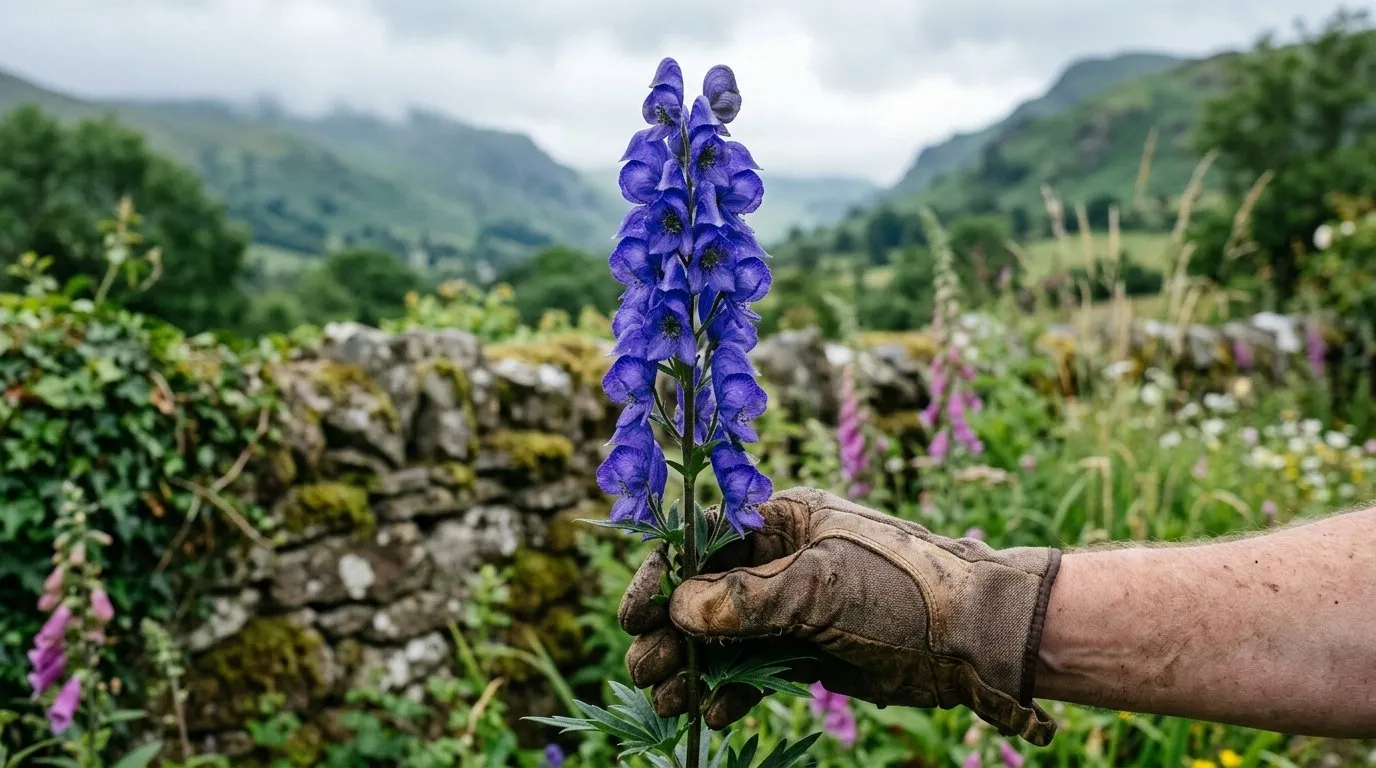 Monkshood (Aconitum napellus), one of the UK’s most poisonous plants. Wear gloves near it: aconitine absorbs through skin, and the roots are the most toxic part.
Sap and skin irritants: euphorbia, rue and giant hogweed
Some plants harm through sap on skin rather than through eating. These matter most when a child grabs or snaps a stem.
Euphorbia species bleed a milky white latex when cut or broken. The sap burns skin and is very dangerous in the eyes. A child who snaps a spurge stem and rubs an eye needs rinsing at once, then medical advice.
Rue (Ruta graveolens) is phototoxic. Its sap makes skin blister in sunlight, so brushing past it on a bright day can cause a rash.
Giant hogweed (Heracleum mantegazzianum) is the worst of the sap plants. It grows to 3 to 5m, and its furanocoumarin sap causes severe burns that flare in sunlight for months or years. It is rare in gardens but spreads along rivers and waste ground.
Warning: Never cut giant hogweed or monkshood without gloves, covered arms and eye protection. Hogweed sap causes blistering burns that react to sunlight for years. It is an offence to plant giant hogweed or cause it to spread in the wild under the Wildlife and Countryside Act 1981, Schedule 9.
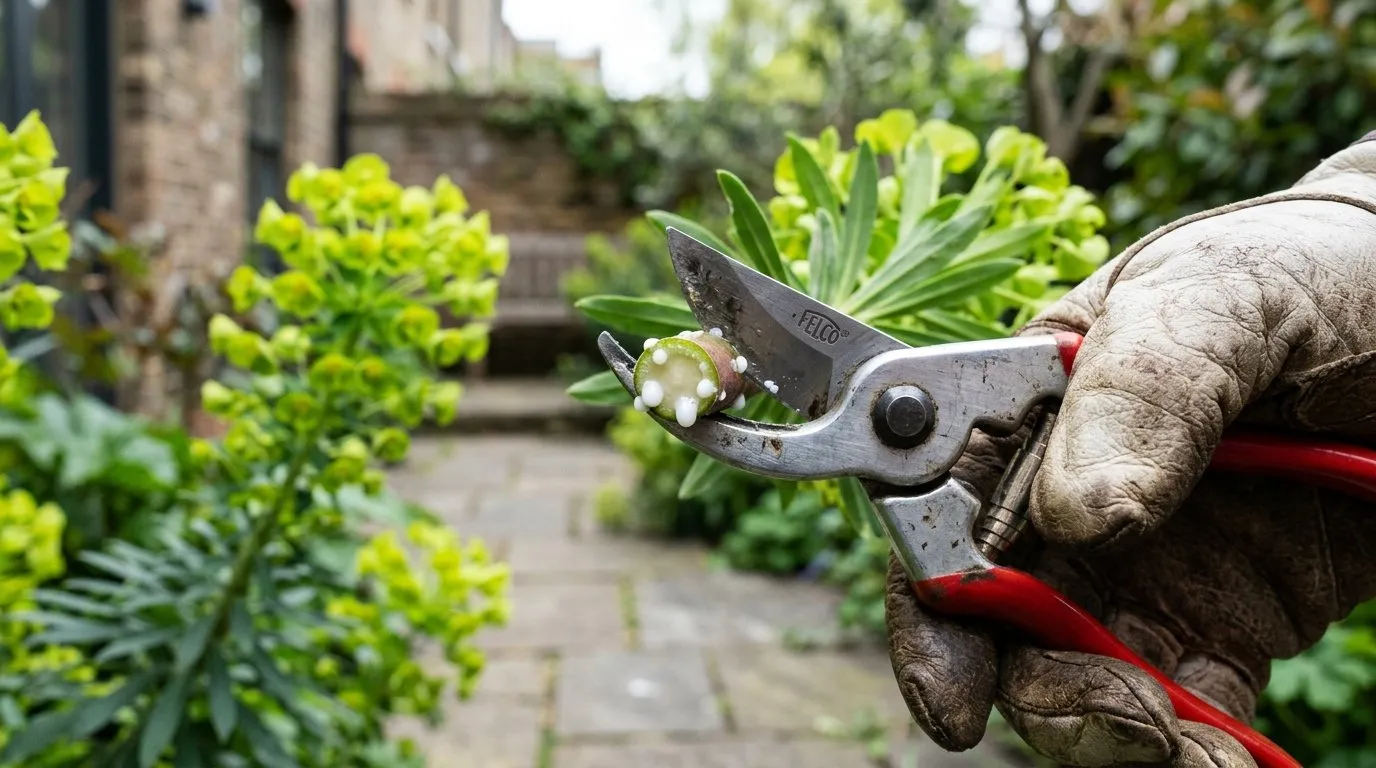 Milky latex beading from a cut euphorbia stem. This sap burns skin and eyes, so always prune spurges in gloves and keep the cut ends away from children.
Berries children mistake for sweets
Bright berries are the single biggest trap in a family garden. To a toddler, red and shiny means food. The dangerous berries and the mild ones look alike, so the safest approach treats them all as off-limits.
The high-risk berries are yew arils with their hidden seed, deadly nightshade black berries, laburnum seed pods, and the red autumn berries of lily of the valley. These are the ones to fence off or clear.
The lower-risk berries are far more common. Cotoneaster and pyracantha carry masses of small red or orange berries that cause mild stomach upset if a child eats a real handful. Holly (Ilex aquifolium) berries bring on vomiting after several, and the spiny leaves usually stop children first. Ivy (Hedera helix) berries and sap cause mild upset and the odd skin rash.
None of the lower-risk berries is worth removing a whole plant for. They feed birds through winter and earn their place. The answer is a rule, not a chainsaw. Teach children never to eat any berry from the garden, and sweep fallen berries off paths and lawns in autumn, where the youngest children crawl and play.
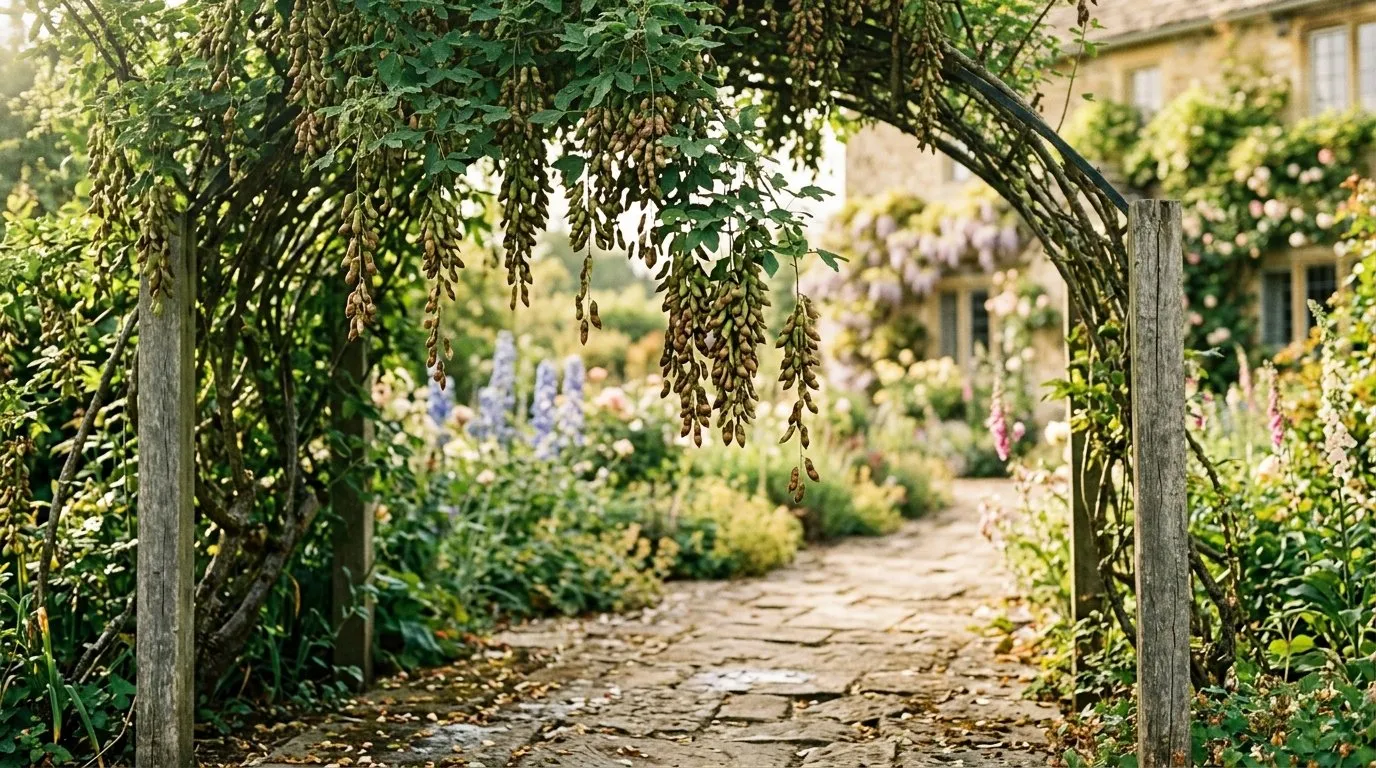 Laburnum pods hang like pea pods, which is why children open them. The cytisine-rich seeds are a leading cause of UK child plant-poisoning enquiries each summer.
Poisonous plant severity table for family gardens
This table ranks the plants worth knowing by severity and shows the right action for each. Severity reflects how much harm a small dose can do to a young child. Action tells you whether to remove the plant, fence it, or simply teach the never-eat rule.
| Plant | Toxic part | Effect if eaten | Severity | Child-garden action |
|---|---|---|---|---|
| Monkshood (Aconitum napellus) | Whole plant, roots worst, sap too | Heart rhythm, numbness, can be fatal | High | Remove or fence, wear gloves |
| Foxglove (Digitalis purpurea) | All parts | Nausea, slow or irregular heartbeat | High | Fence off, teach not to touch flowers |
| Yew (Taxus baccata) | Foliage and seed inside the aril | Heart failure, can be fatal | High | Fence hedges, sweep fallen berries |
| Deadly nightshade (Atropa belladonna) | Black berries, whole plant | Dilated pupils, delirium, dangerous | High | Remove entirely from family gardens |
| Hemlock (Conium maculatum) | Whole plant, roots | Paralysis, can be fatal | High | Remove, do not confuse with cow parsley |
| Laburnum (Laburnum spp.) | Seeds and pods | Vomiting, drowsiness, rarely serious | Moderate to high | Remove low pods, fence young trees |
| Lily of the valley (Convallaria majalis) | All parts, red berries | Heart rhythm upset, vomiting | Moderate to high | Fence off, remove autumn berries |
| Cherry laurel (Prunus laurocerasus) | Leaves and seeds (cyanide) | Stomach upset, dizziness in quantity | Moderate | Keep clippings off the ground |
| Cotoneaster / Pyracantha | Berries | Mild stomach upset in quantity | Low | Teach the never-eat rule |
| Holly (Ilex aquifolium) | Berries | Vomiting if several eaten, spines | Low | Teach, sweep fallen berries |
| Ivy (Hedera helix) | Berries and sap | Mild upset, skin rash from sap | Low | Wear gloves for pruning |
Print this and walk your garden with it once. Most families find only three or four plants in the high-severity rows, and often just one or two within a toddler’s reach.
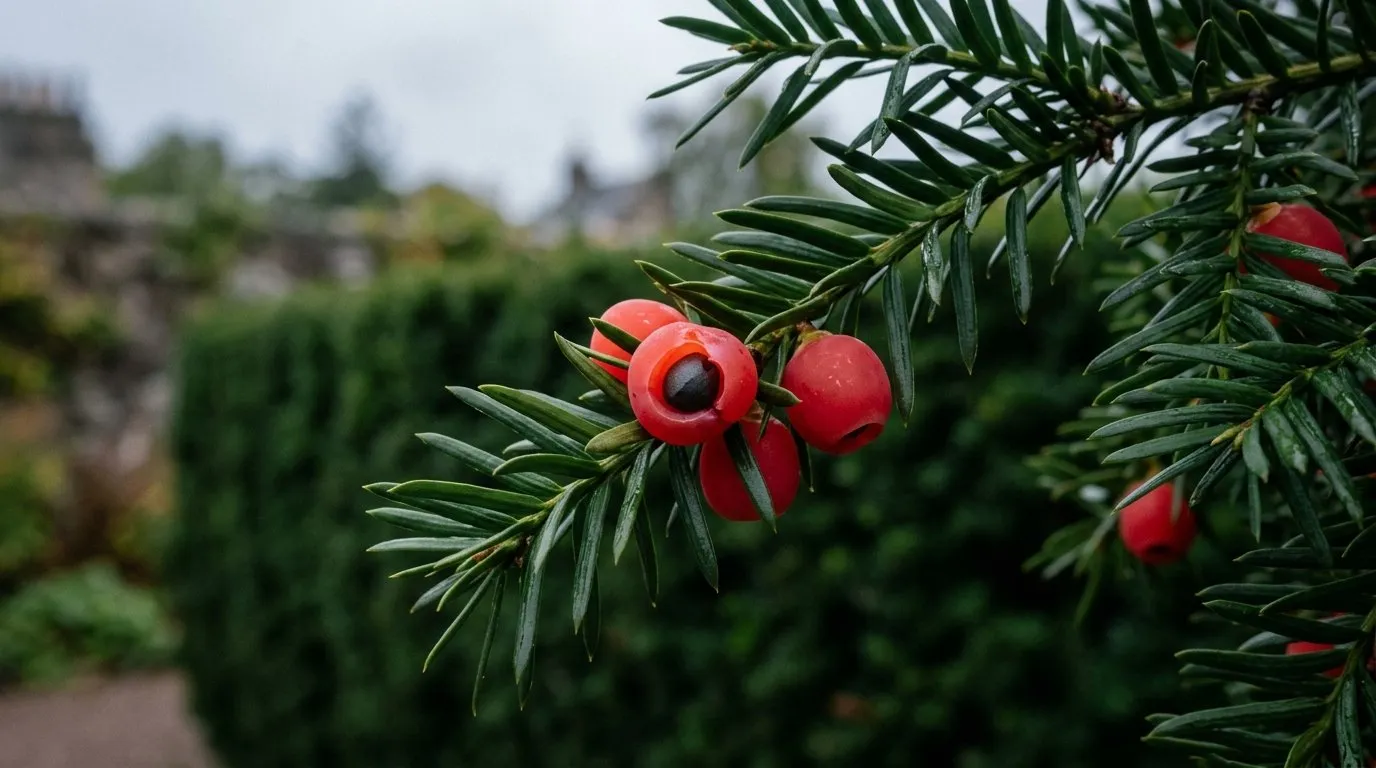 A yew aril opened to show the seed inside. The red flesh is harmless, but that single hard seed holds taxine alkaloids and is the deadly part.
Why seeds, berries and roots carry the real poison
Plants concentrate their strongest chemicals where they most need defending: seeds, roots and berries. This is the root cause behind almost every serious case. A leaf brushed in passing rarely delivers a dose. A chewed seed or pulled root can deliver a lot.
Several chemical groups do the damage. Cardiac glycosides in foxglove, lily of the valley and yew disturb the heart’s rhythm. Aconitine in monkshood blocks nerve signals and hits the heart, and it absorbs through skin. Tropane alkaloids like atropine in deadly nightshade cause dilated pupils, a racing heart and delirium. Cytisine in laburnum seeds acts like nicotine, causing vomiting and drowsiness.
Two more groups work differently. Cyanogenic glycosides in cherry laurel and cherry stones release hydrogen cyanide when the tissue is crushed or chewed. This is why wilting cherry laurel clippings are more dangerous than the living hedge. Furanocoumarins in giant hogweed and rue are phototoxic: they make skin react to sunlight rather than poisoning through the gut.
The critical mistake is fearing the wrong thing. Most parents worry about touching plants. The real risk is a mouthful of the most concentrated part. Understand that, and your effort goes where it counts: keeping seeds, berries and roots out of small hands, not banning every plant with a warning label.
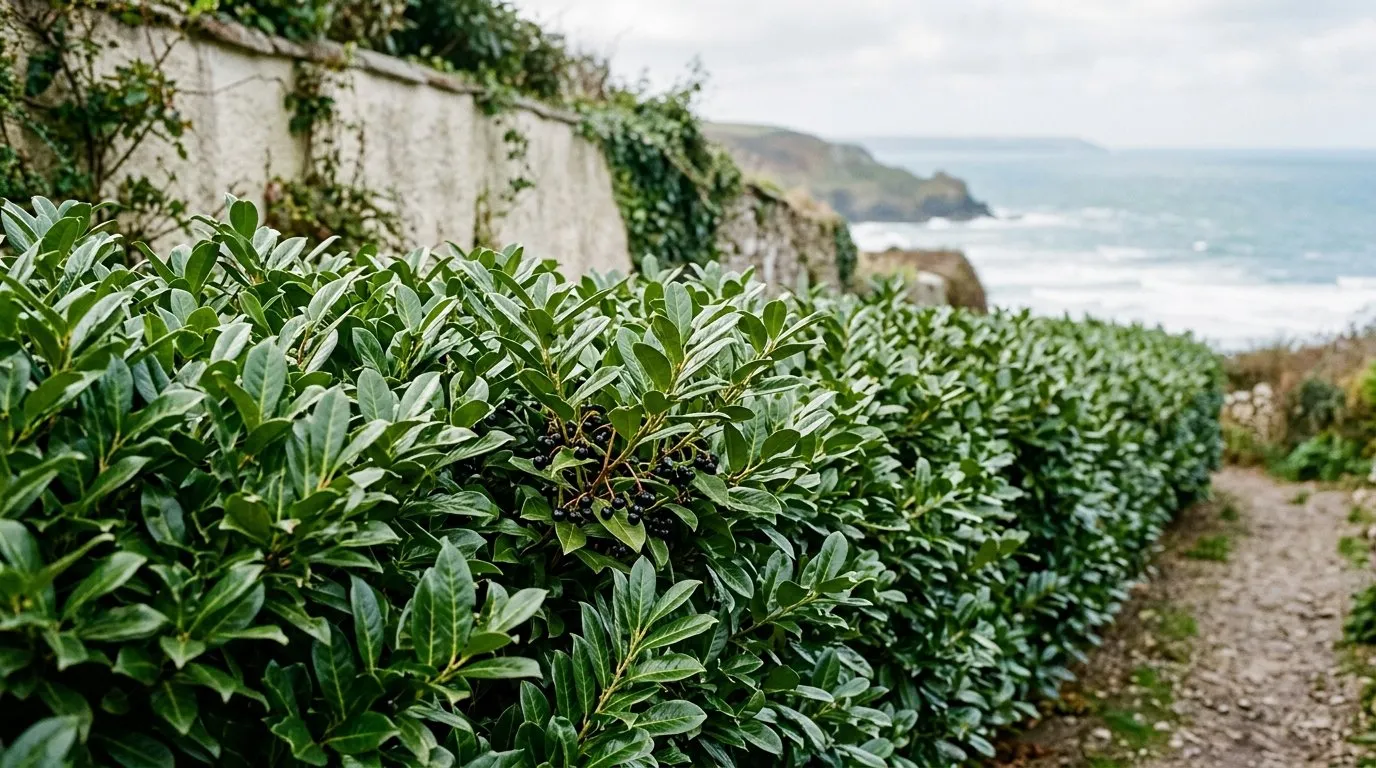 A cherry laurel hedge. The living leaves are low-risk, but wilting clippings release cyanide, so bag prunings and keep them off the lawn.
How to make a child-safe garden without stripping the borders
A child-safe garden is a plan, not a demolition. Work through four steps in order.
1. Identify what you grow. Walk the garden and list every plant. Check each against the RHS harmful plants list and the severity table above. Most gardens hold a handful of toxic plants and dozens of harmless ones.
2. Remove the pointless dangers. Dig out plants that are high-risk and offer nothing a family needs. Deadly nightshade and hemlock come out. Both are dangerous, and neither earns its place in a garden with children.
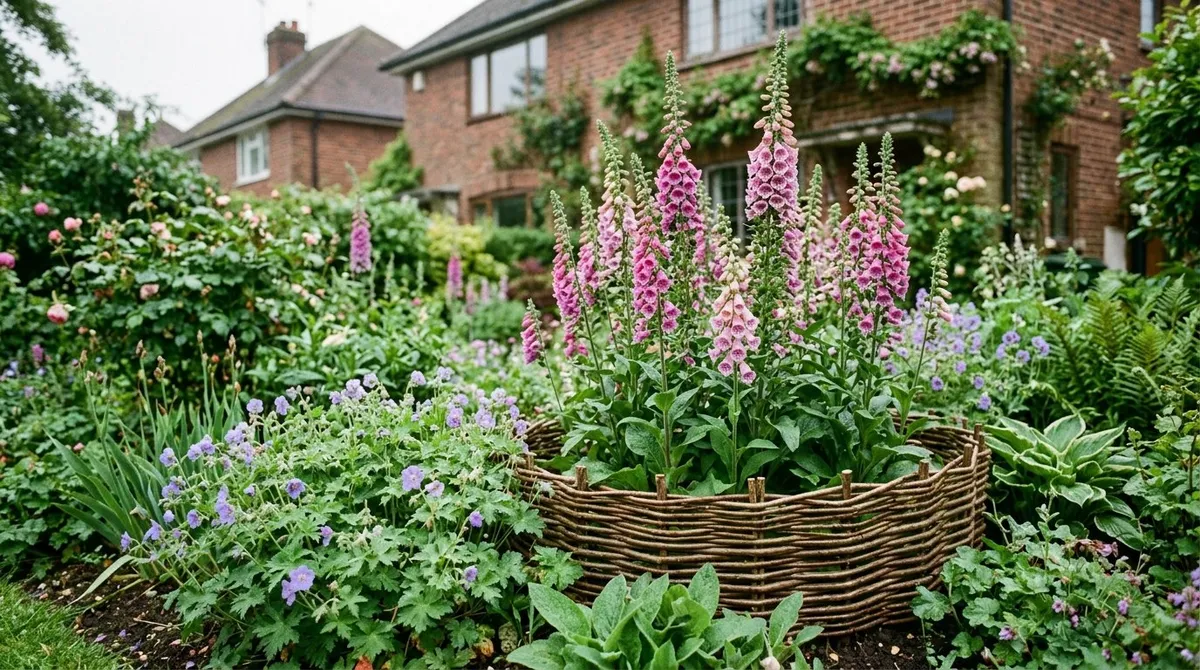
3. Fence the useful high-risk plants. Foxglove, yew, monkshood and laburnum all earn their keep for pollinators, structure or spring colour. A 90cm low fence keeps most under-fives out of a border. Site the fence so a child cannot reach through.
4. Teach the never-eat rule. From age three, children can learn one clear rule. It works better than any list of names.
Gardener’s tip: Teach one simple rule from age three: nothing from the garden goes in your mouth unless a grown-up hands it to you. A single clear rule beats a list of plant names a small child cannot remember.
If you would rather replace a risky plant, safe options are easy to find. Our guide to drought-tolerant plants for UK gardens lists tough, non-toxic choices like lavender, catmint and hardy geraniums.
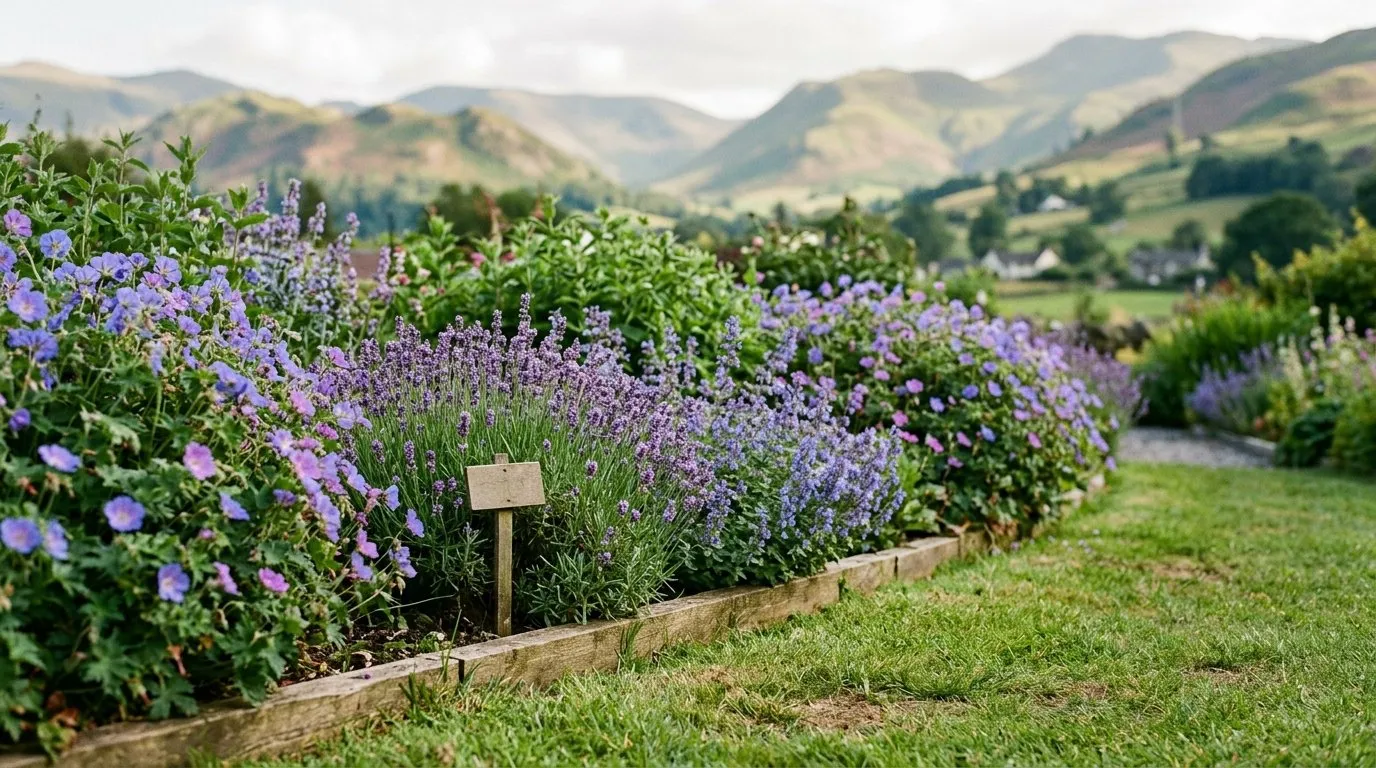 A child-safe border built from non-toxic lavender, catmint and hardy geraniums. Labelling what you grow makes the yearly safety walk quick and reliable.
A month-by-month child-safe garden calendar
Risk shifts through the year. Flowers dominate in summer, berries and pods in autumn. This calendar shows what to check each month in a UK family garden.
| Month | What to check |
|---|---|
| January | Check winter berries still on cotoneaster, holly and ivy. Sweep any within a child’s reach. |
| February | Prune cherry laurel. Bag the clippings and keep them off the lawn, as wilting leaves release cyanide. |
| March | Foxglove and monkshood push up. Mark and fence the clumps before children play out. |
| April | Laburnum comes into leaf. Plan to net or remove pods before they set seed. |
| May | Laburnum and lily of the valley flower. Note where the lily berries will follow. |
| June | Foxglove in full flower. Teach children the flowers are look-only. Deadly nightshade flowers in hedges. |
| July | Peak play season. Walk the garden weekly, checking for new self-sown foxgloves near paths. |
| August | Yew arils start to colour. Begin daily sweeps under yew hedges. |
| September | Berries everywhere: yew, cotoneaster, deadly nightshade, laburnum pods ripen. The highest-risk month. |
| October | Clear fallen yew arils and laburnum pods. Lift monkshood roots in gloves if removing. |
| November | Cut back died-down foxglove and lily of the valley. Label where they will return. |
| December | Holly and ivy berries at their brightest. Keep cut berries off the floor indoors too. |
Common mistakes parents make with garden plants
- Digging out every plant on a list. This comes from panic after a scary headline. Avoid it: most listed plants are safe to grow. Identify the few within reach, and fence or remove only those.
- Composting cherry laurel clippings on an open heap. The leaves look harmless once cut. Avoid it: wilting foliage releases cyanide, so bag the clippings and bin them, or hot-compost in a closed bin.
- Handling monkshood or giant hogweed bare-handed. Both look like ordinary plants. Avoid it: wear gloves and long sleeves, because aconitine crosses skin and hogweed sap burns in sunlight.
- Assuming pretty berries are safe. Red and shiny reads as edible to a toddler. Avoid it: teach one flat rule, never eat any garden berry or seed, whatever the colour.
- Making a child sick after they eat a plant. This is old first-aid folklore. Avoid it: never induce vomiting, ring 111, and take a plant sample for identification.
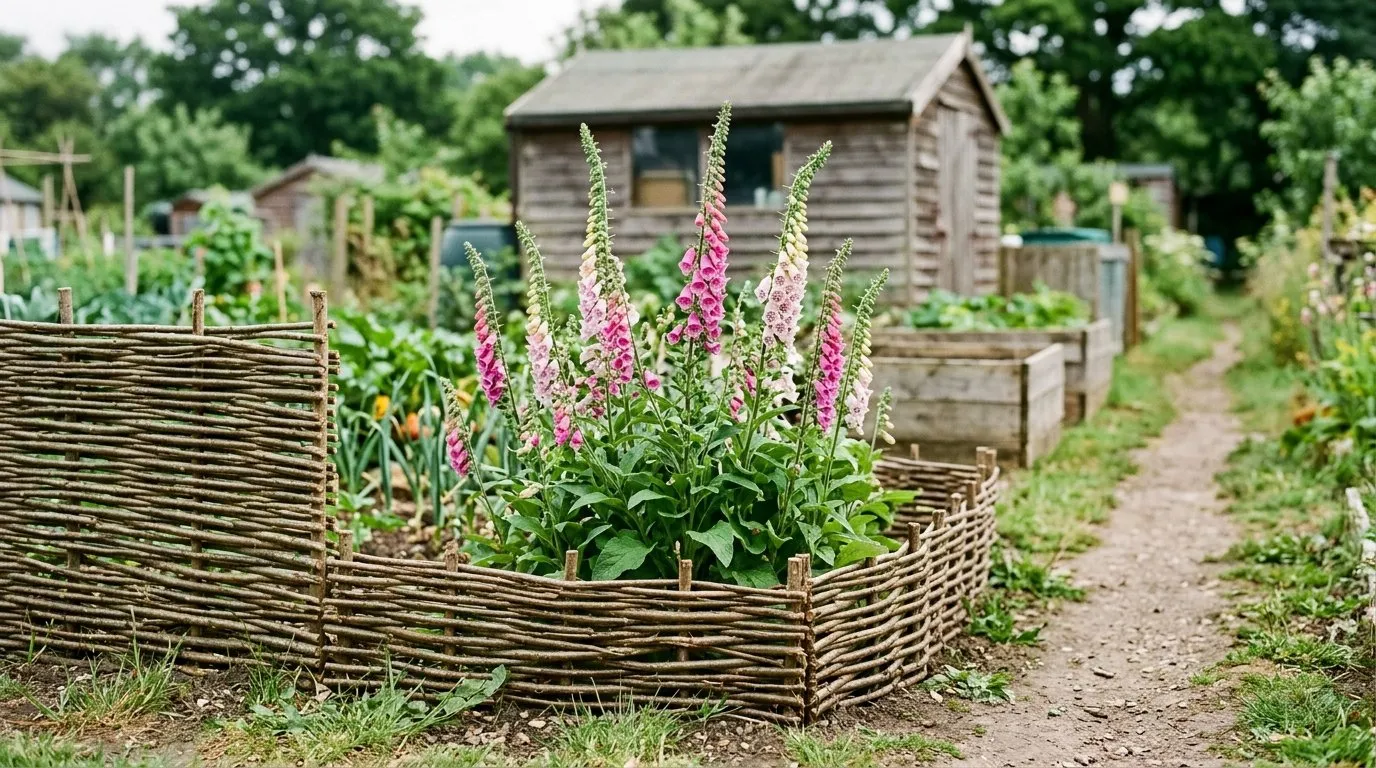 A 90cm willow hurdle around a foxglove clump. Fencing keeps a useful plant in the garden while putting a clear barrier between it and small children.
What to do if a child eats a garden plant
Act calmly and quickly. Most plant nibbles cause nothing worse than an upset stomach, but a few need fast help.
Follow these steps. First, remove any plant material from the child’s mouth and keep it. Second, do not make the child sick, and do not give milk or salt water. These old remedies can make things worse. Third, ring 111 for advice on what the child has eaten. The NHS can check the plant against the National Poisons Information Service database.
Call 999 at once if the child is drowsy, struggling to breathe, fitting, or has swallowed berries from deadly nightshade, yew or laburnum. Take a photo and a cutting of the plant to the phone or the hospital. Identifying the exact species changes the treatment.
Keep the plant list from your garden survey somewhere handy. The Child Accident Prevention Trust has clear advice for parents on garden and home hazards, and it is worth a read before the summer holidays.
Frequently asked questions
What is the most poisonous plant in a UK garden?
Monkshood (Aconitum napellus) is one of the UK’s most poisonous plants. Its roots hold the most aconitine, which can affect the heart and even cross unbroken skin. Deadly nightshade, hemlock and yew are the other top-tier dangers. All four are best fenced off or removed from a garden used by young children.
Which garden berries are poisonous to children?
Yew, deadly nightshade, laburnum and lily of the valley berries are the dangerous ones. Cotoneaster, pyracantha, holly and ivy berries are far milder and mostly cause stomach upset in quantity. Teach children one rule: never eat any garden berry. Sweep fallen berries from paths and lawns in autumn.
Are foxgloves poisonous to touch?
Foxgloves are safe to brush past but toxic to eat. The cardiac glycosides in Digitalis purpurea sit in the leaves, flowers and seeds. Handling the plant will not poison a child. Wash hands after cutting the flowers, and never let a child chew any part.
Do I need to remove poisonous plants if I have young children?
No, most can stay if you fence and teach. Only deadly nightshade and hemlock are worth digging out completely. Useful plants like foxglove, yew and monkshood can be fenced with a 90cm barrier. Removal is a last resort, not a first response.
What should I do if my child eats a garden plant?
Stay calm, ring 111, and never make them sick. Call 999 instead if they are struggling to breathe, drowsy or fitting. Do not induce vomiting or give anything to drink beyond a sip of water. Take a photo and a sample of the plant to help identify it.
Is yew poisonous to children?
Yes, yew is highly poisonous, but the red flesh is not. The taxine alkaloids sit in the foliage and the single hard seed inside each berry. Children who suck off the red aril and spit the seed are usually fine. Swallowing the seeds or eating foliage is the real danger, so sweep fallen berries.
Can you get burned by giant hogweed in a UK garden?
Yes, giant hogweed sap causes severe blistering burns in sunlight. The furanocoumarins in Heracleum mantegazzianum make skin react to UV for months. Cover up, wear gloves, and wash any contact immediately. It is also an offence to plant it or let it spread in the wild.
Our team produces practical UK gardening guidance from source research, contributor records and established horticultural practice. Editorial standards are overseen by Matt W.