Key takeaways
- Erigeron karvinskianus flowers May to November, up to 7 months of daisies
- Flowers open white, age to pink then magenta, carrying all three shades at once
- Grows 15 to 30cm tall and spreads 30 to 60cm in a low mounding habit
- Needs full sun and sharp drainage; self-seeds into walls, gravel and paving joints
- Sow seed on the surface and never cover it: the seed needs light to germinate
- Hardy to about -10C (RHS H4) in free-draining soil, holds an RHS Award of Garden Merit
Learning how to grow Erigeron is one of the easiest wins in a UK garden. Erigeron karvinskianus, the Mexican fleabane, is a low daisy that seeds itself into walls, gravel and paving cracks. Once it settles, it flowers for seven months and asks for almost nothing. The plant carries white, pink and magenta daisies at the same time, so a single clump reads as three colours at once.
This guide draws on seven years of growing ‘Profusion’ on a dry-stone wall in Staffordshire. It covers where the plant wants to live, how to sow it, and how to keep it flowering from May to November. The order matters. Get the position and drainage right, and the self-seeding does the rest for you.
The three-colour daisy that flowers for seven months
Erigeron karvinskianus is a spreading perennial daisy from Mexico and Central America. In the UK it goes by several names: Mexican fleabane, Santa Barbara daisy, wall daisy, or simply fleabane. The most common garden form is the cultivar ‘Profusion’, which holds an RHS Award of Garden Merit for reliable performance.
The plant makes a low mound of thin, branching stems. It reaches 15 to 30cm tall and spreads 30 to 60cm wide in a season. The leaves are small, grey-green and slightly hairy. What draws the eye is the flower. Each daisy opens pure white, then ages through soft pink to deep magenta over a few days.
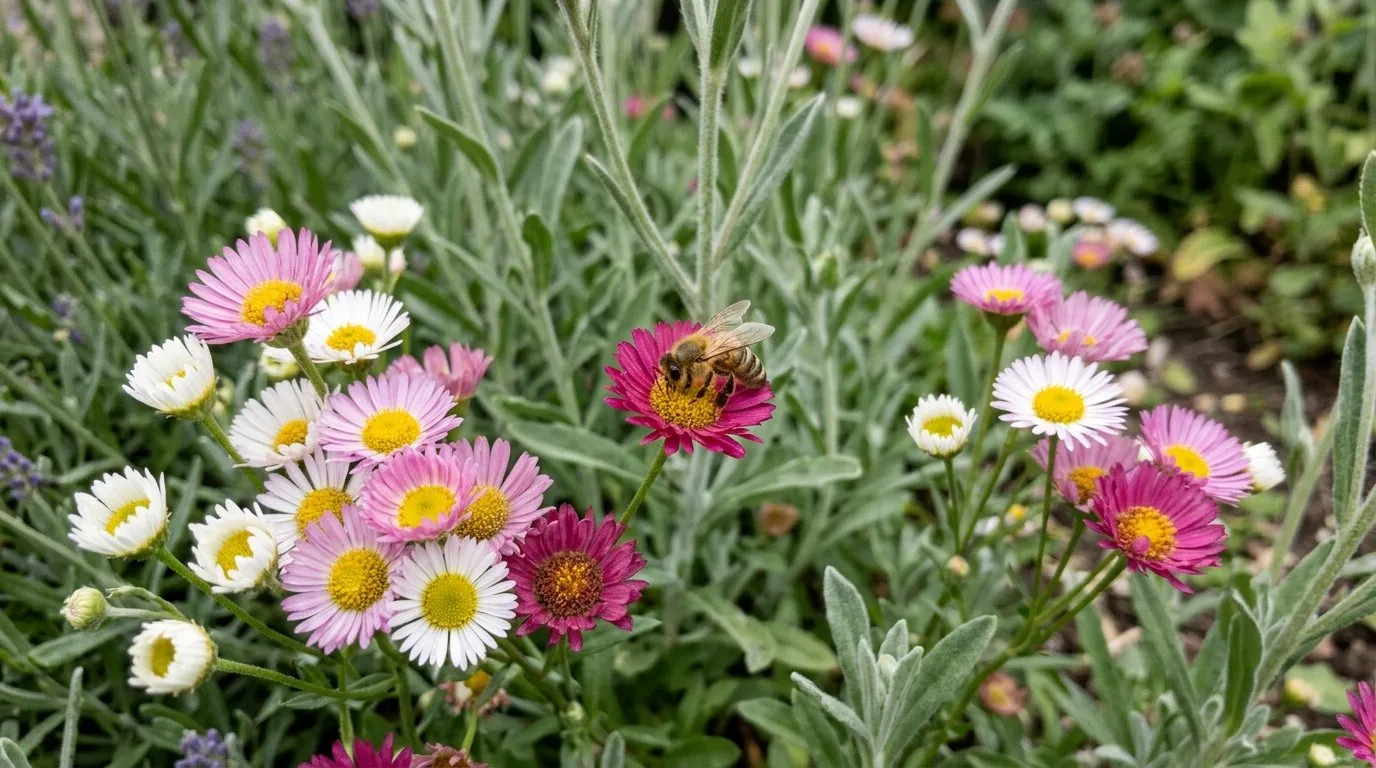 The three-colour trick: each daisy opens white, ages through pink to magenta, so the plant carries all three shades at once. A honeybee works the fresh flowers.
Where Mexican fleabane grows best: walls, gravel and paving
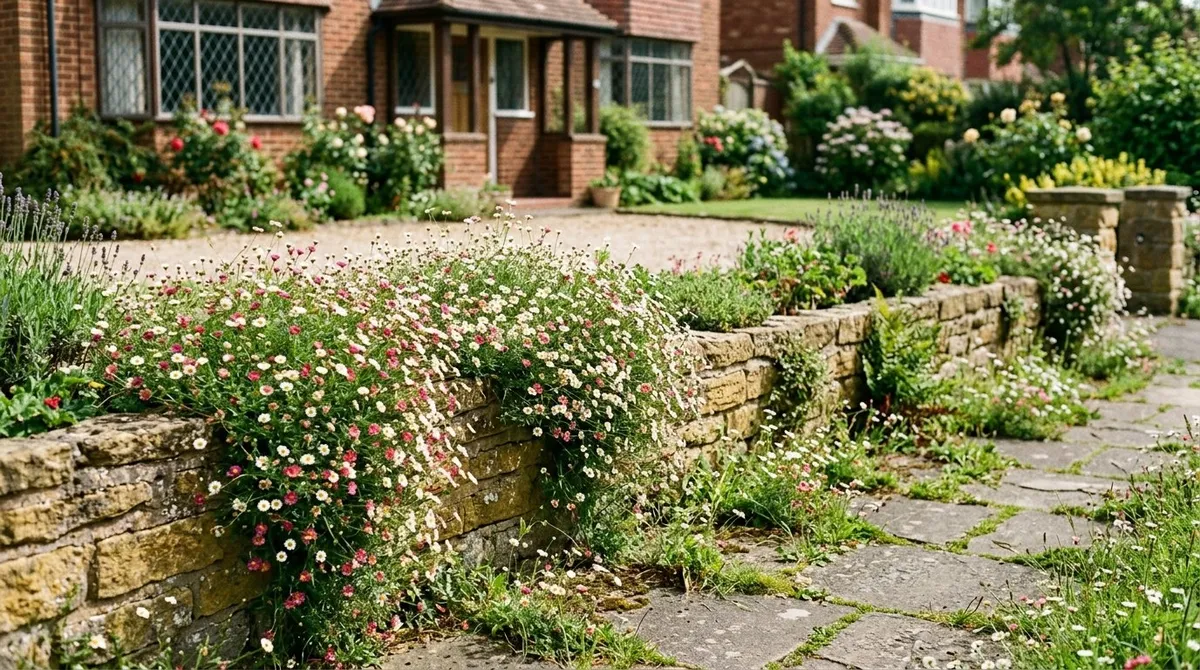
Erigeron wants the spots most plants hate. It thrives in poor, lean, free-draining soil and full sun. The worse the drainage looks, the better it performs. This is why it colonises dry-stone walls, gravel, steps and the joints between paving slabs.
The roots need air and grit, not rich compost. In a fed border it grows soft, flops, and often rots off in a wet winter. On a gritty wall top or a gravel path it stays tight, wiry and long-lived. It shrugs off drought once established, drawing on deep cracks for moisture.
Full sun is the other requirement. In shade the plant stretches, flowers thinly, and sulks. Give it six or more hours of direct sun a day. A south or west-facing wall is ideal.
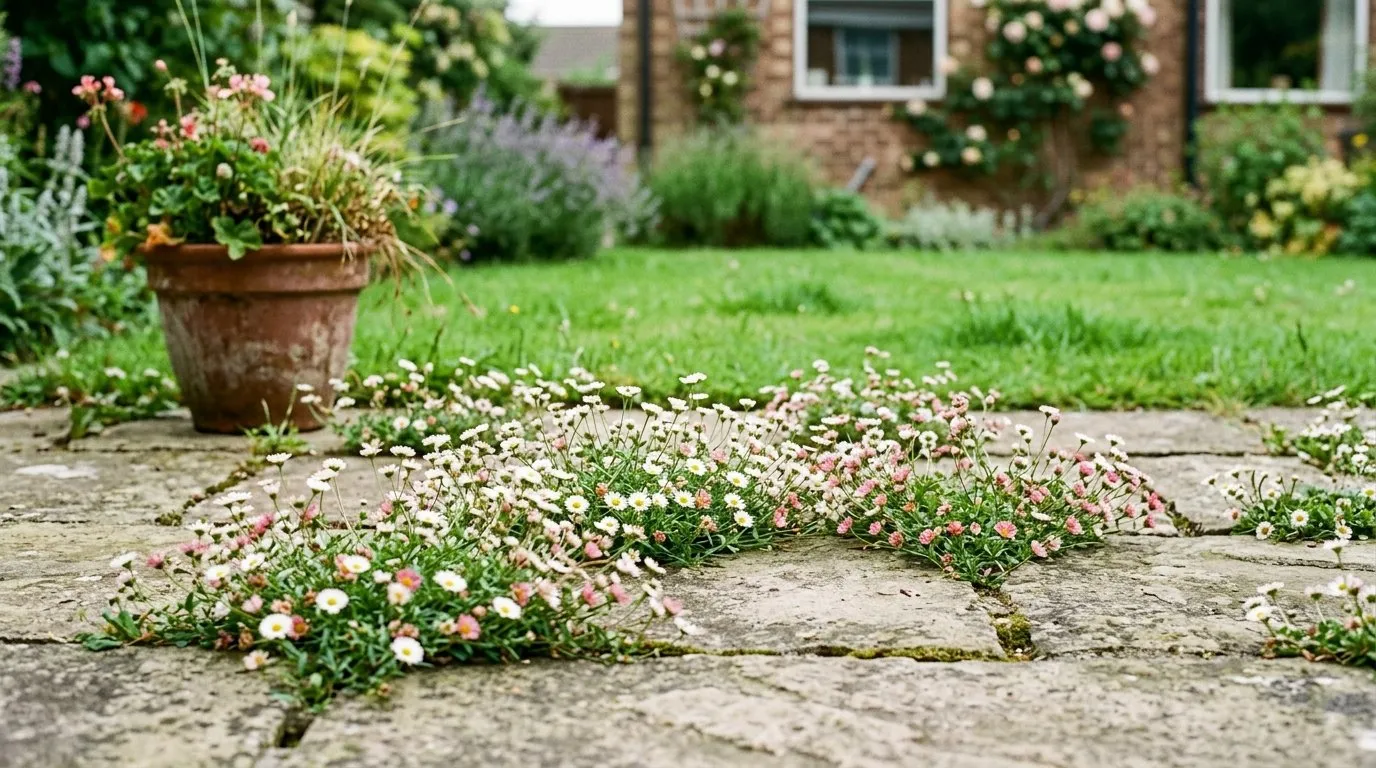 Mexican fleabane seeding itself into the joints of an old sandstone patio. It softens hard paving without any planting effort from you.
How to grow Erigeron from seed
Erigeron is simple to raise from seed, and this is the cheapest way to start a colony. The one rule that matters: the seed needs light to germinate, so never cover it.
Sow in spring, from March to May, once the worst frosts pass. Scatter seed thinly onto the surface of gritty, free-draining compost or straight onto a prepared gravel bed. Press it down gently to make contact, then water with a fine rose. Do not cover with compost. Germination takes two to three weeks at around 15 to 20C.
Prick out or plant young plants 30cm apart. They fill the gap fast. You can also buy plug plants or a single pot from most garden centres for £4 to £8, then let that plant seed the rest for free.
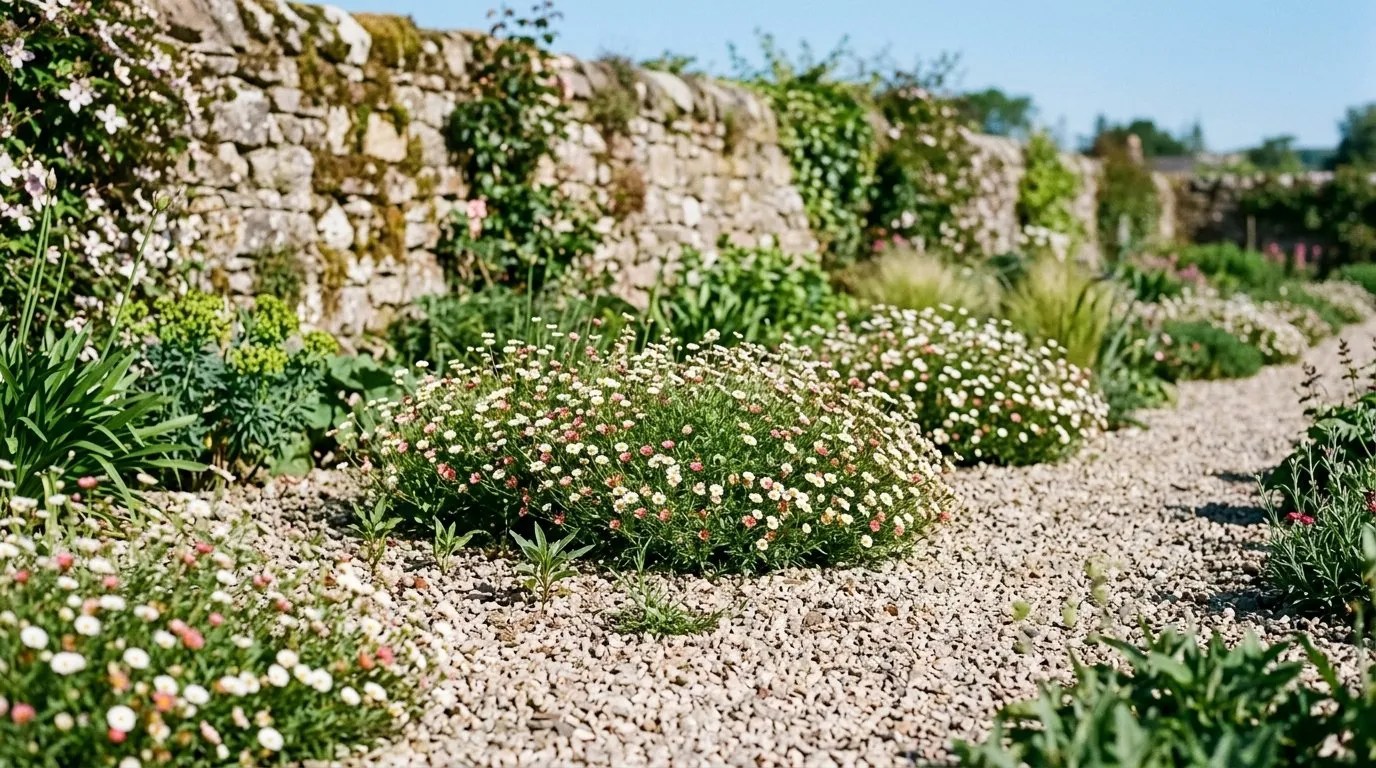 Self-sown Erigeron colonising a gravel bed in a Scottish walled garden. Sow direct onto the gravel and the plant takes it from there.
Why it self-seeds so freely (and where it will not)
The self-seeding that makes Erigeron so useful comes down to seed biology. The seed is tiny, light and wind-blown, tipped with a small parachute of hairs like a mini dandelion. It travels on the breeze and lodges in cracks.
Germination is light-dependent. The seed only sprouts where it lands on a bare, open surface with light hitting it. Gravel, wall mortar and paving joints give exactly that: a bright, warm, competition-free mineral seedbed. This is the root cause of its wall-hugging habit. It is not choosing walls for romance. It is germinating where the seed rule is satisfied.
This also explains where it will not spread. In a dense border, thick mulch or a lawn, the seed is shaded out and never germinates. Bark mulch, in particular, smothers it. So the plant self-seeds into paths and walls but rarely invades planted beds.
If you like plants that fill gaps for free, our roundup of easy self-seeding plants for UK gardens pairs Erigeron with other reliable self-sowers. Together they colonise the awkward, dry, sunny corners nothing else will hold.
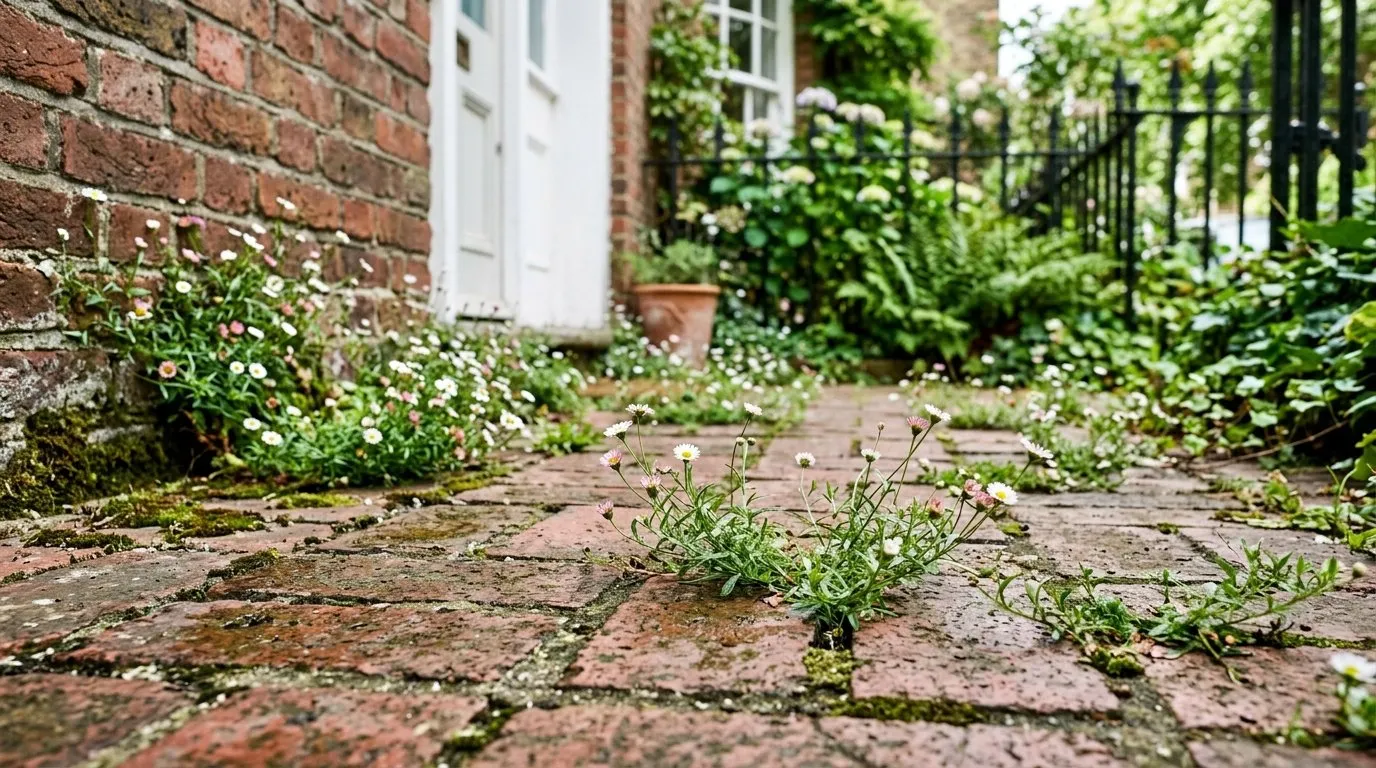 Seedlings emerging from mortar joints and path cracks in a London townhouse garden. Erigeron germinates only on open, sunlit surfaces, so it stays out of the borders.
Erigeron compared with other crevice self-seeders
Erigeron is not the only plant that colonises walls and gravel. It sits in a small group of crevice self-seeders, each with a different scale and season. The table ranks them by how they perform in a typical UK sunny wall or gravel bed.
| Plant | Flowering | Height x spread | Aspect | Best use | Self-seeding vigour |
|---|---|---|---|---|---|
| Erigeron karvinskianus | May to November | 15-30cm x 30-60cm | Full sun | Wall tops, paving joints, gravel | High but easy to control |
| Centranthus ruber (red valerian) | May to August | 60-90cm x 60cm | Full sun | Big walls, banks, rubble | Very high, can dominate |
| Aubrieta | March to May | 10-15cm x 45-60cm | Full sun | Wall faces, spring colour | Moderate, spreads by mat |
| Corydalis lutea (yellow corydalis) | April to October | 20-30cm x 30cm | Sun or part shade | Shady wall cracks | High, shade-tolerant |
| Cymbalaria muralis (ivy-leaved toadflax) | May to September | 5cm trailing x 60cm | Sun or shade | Damp wall faces | High, tiny scale |
Erigeron wins on flowering length and control. Red valerian flowers hard but seeds so freely it can swamp a wall. For a long, tidy, low display, Mexican fleabane is the pick of the group.
Month-by-month care through the UK year
| Month | Task |
|---|---|
| January | Leave the plant standing. The tired mound protects the crown from frost. Do not cut yet. |
| February | Order seed or plug plants. Clear fallen leaves off gravel so next season’s seed can reach light. |
| March | Cut established plants back hard to about 5cm to refresh them. Sow seed on the surface. |
| April | Sow direct into gravel and wall joints. New growth begins from the cut-back crowns. |
| May | First flowers open. Water new plants until roots take hold. Established plants need nothing. |
| June | Full flush. Do not deadhead, the plant is self-cleaning. Enjoy the three-colour show. |
| July | Peak flowering. Drought-tolerant now, so no watering is needed on established clumps. |
| August | Keeps flowering through heat. Let some flowers set seed for next year’s colony. |
| September | Still in bloom. Lift and pot up self-sown seedlings if you want them elsewhere. |
| October | Last main flush. Leave the seedheads in place for self-sowing. |
| November | Final flowers fade. Leave all top-growth standing over winter for frost protection. |
| December | Semi-evergreen in mild areas. Do not cut back now. Wait for the spring trim. |
Feeding the pollinators: bees, hoverflies and butterflies
Erigeron earns its place as a pollinator plant through sheer flowering length. From May to November it offers open, shallow daisies that almost every insect can feed from. That seven-month season bridges the hungry gaps most nectar plants miss.
The long season matters most in autumn. When many borders have finished, Erigeron still carries flowers into November, feeding late butterflies and queen bumblebees building reserves. Butterfly Conservation highlights late-season nectar as a real help for species heading into hibernation.
For a fuller pollinator patch, combine Erigeron with other easy sowers. Our guide to self-seeding plants for UK gardens lists partners that extend the nectar season either side of it.
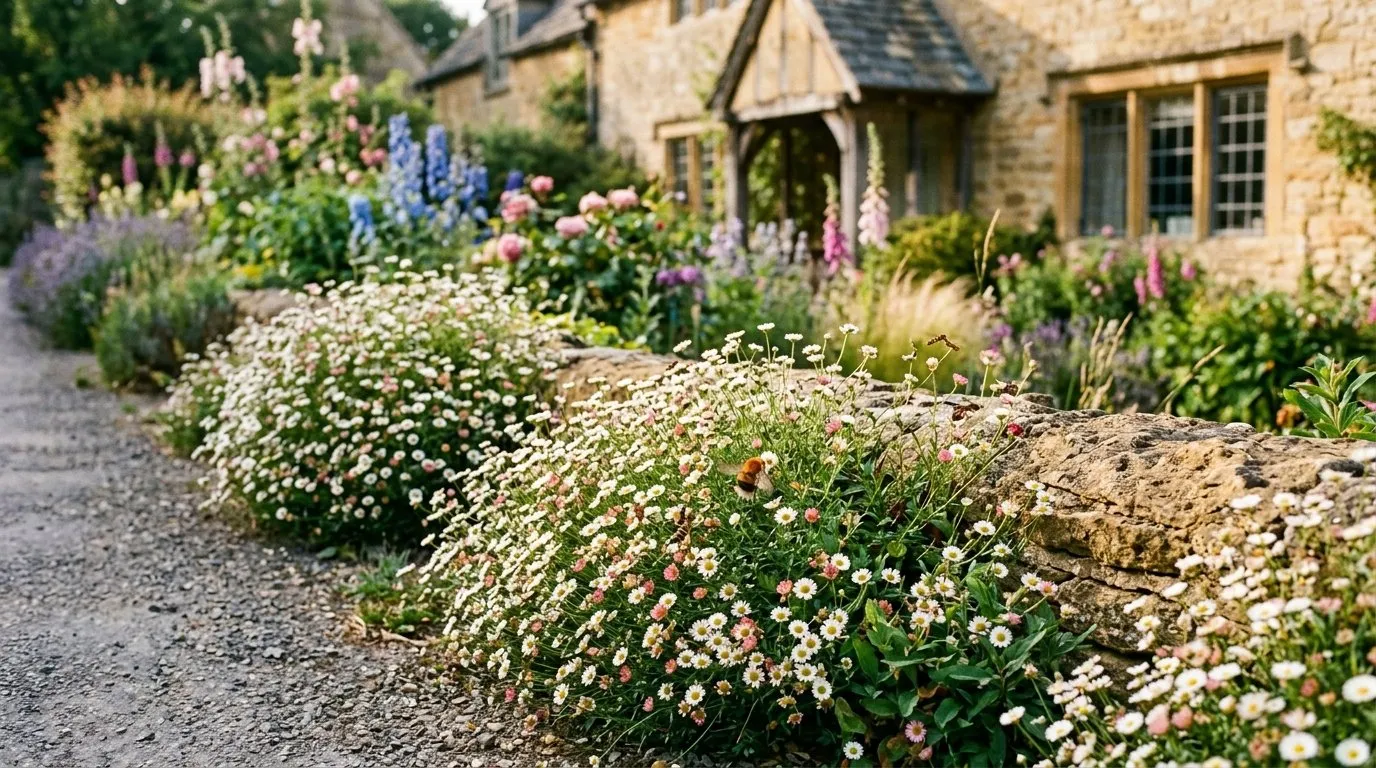 A Cotswold cottage path edge softened with Mexican fleabane. The long flowering season feeds bees, hoverflies and late butterflies from May to November.
Cutting back and keeping it looking fresh
Erigeron needs almost no upkeep, but one job keeps it looking good. Cut the whole plant back hard in early spring, to around 5cm, before new growth starts. This clears the tired, woody old stems and forces fresh, dense growth for the new season.
Do not deadhead through summer. The plant is self-cleaning, dropping spent flowers on its own. Constant deadheading also removes the seed you want for next year’s colony. Leave it be and enjoy the flowers.
You can propagate by division in spring, lifting an established clump and splitting it. In practice, most gardeners never bother. The self-sown seedlings give all the free plants you need. Simply pot up or move seedlings in spring or autumn.
Gardener’s tip: Do the hard spring cut-back on a dry day in March, then scatter a thin layer of horticultural grit around the crown. The grit keeps the collar dry, cuts winter rot, and gives fresh seed a perfect place to germinate.
Warning: Never mulch Erigeron with bark or rich compost. It smothers the light-dependent seed, rots the crown in wet weather, and the plant slowly disappears. Use grit or gravel around the base only.
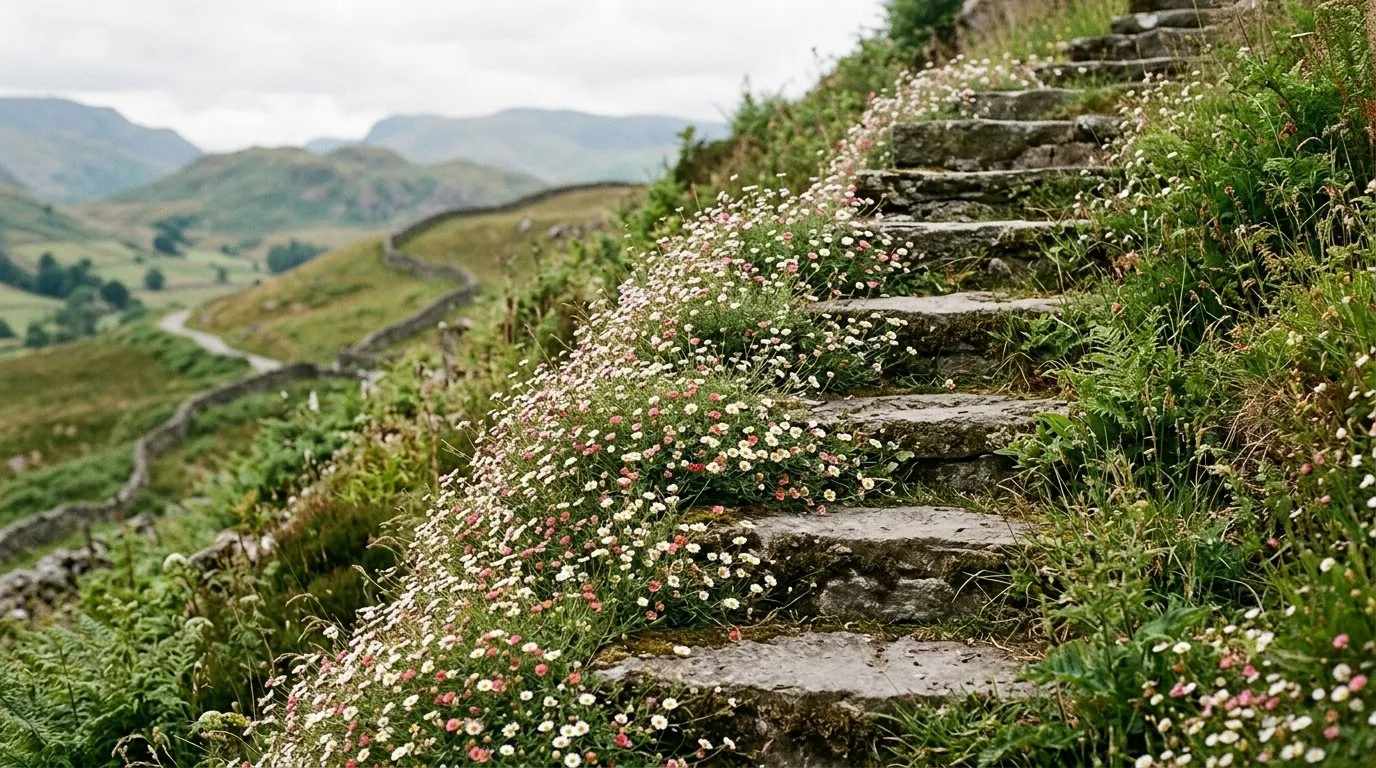 Mexican fleabane softening a flight of stone steps on a Lake District hillside. One hard cut in early spring keeps it this dense and tidy.
Common mistakes when growing Erigeron
- Covering the seed. Erigeron seed needs light to germinate. Gardeners bury it out of habit and nothing comes up. Sow on the surface, press down for contact, and never cover with compost.
- Planting in rich soil. Fed, moist borders make the plant soft and floppy. It then rots in the first wet winter. Grow it lean, in grit, gravel or a wall, and it lives for years.
- Growing it in shade. In low light the plant stretches, flowers thinly and looks miserable. Give it six-plus hours of direct sun. A shaded spot is the commonest cause of a poor display.
- Mulching with bark. A bark mulch smothers both the crown and the self-sown seed. The colony fades within two seasons. Use grit or gravel around the base instead.
- Cutting back in autumn. The old top-growth protects the crown from winter frost. Cut it off in October and you expose the plant to cold and wet. Always leave the trim until early spring.
Erigeron glaucus for coastal and seaside gardens
For a seaside garden, there is a close relative worth knowing: Erigeron glaucus, the seaside daisy. It comes from the Californian coast and handles salt spray and wind better than Mexican fleabane. The flowers are larger, lilac-blue with a yellow centre, and it makes a tougher, more succulent mound.
Erigeron karvinskianus still grows well by the coast in a sheltered, sunny wall. But on an exposed cliff-top or a wall taking direct salt spray, E. glaucus is the more reliable choice. It flowers from May to August, spreads to about 45cm, and hardly notices sea wind.
Both share the same needs: full sun, sharp drainage and lean soil. Grow either in a gravel bed, a raised sunny bank, or the top of a stone wall. In coastal Cornwall and west Wales, self-sown Erigeron along harbour walls and cottage steps is a familiar summer sight. For hardiness detail on both, the RHS entry for Erigeron karvinskianus is a useful cross-check.
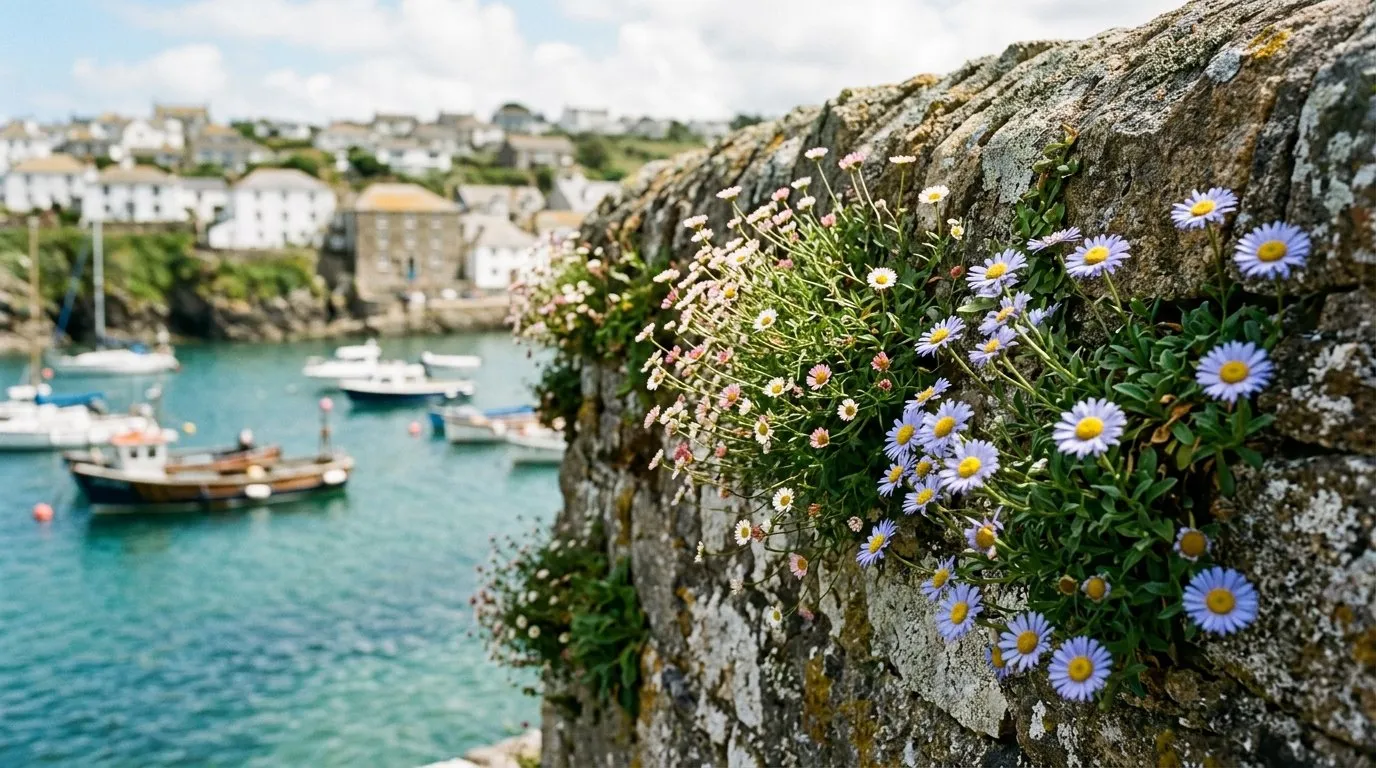 Erigeron and its coastal cousin Erigeron glaucus growing from a salt-weathered wall in a Cornish fishing village. The seaside daisy takes wind and spray in its stride.
Now you have Erigeron seeding itself through every crack, read our guide to drought-tolerant plants for UK gardens for the next step in a low-water, low-effort planting scheme.
Frequently asked questions
How do you grow Erigeron karvinskianus in the UK?
Sow seed on the surface in full sun with sharp drainage. Never cover the seed, as it needs light to germinate. Grow it in gravel, a wall top or paving joints, not in rich border soil. Once one plant flowers, it self-seeds a whole colony for free.
Is Mexican fleabane invasive in the UK?
No, Mexican fleabane self-seeds freely but is not listed as invasive. It germinates only on bare, open surfaces like gravel and walls, so it rarely spreads into planted beds, mulch or lawns. Most gardeners welcome the seedlings and pull out any they do not want in seconds.
Does Erigeron come back every year?
Yes, Erigeron is a short-lived perennial that self-seeds to persist. Individual plants may live three to five years, longer on lean, well-drained ground. New seedlings appear every season, so a colony carries on indefinitely even as older plants fade.
When does Erigeron flower?
Erigeron flowers from May to November in most UK gardens. That gives roughly seven months of bloom, one of the longest seasons of any hardy perennial. In a warm, sheltered spot the odd flower can open even earlier or hang on past the first frosts.
Why are my Erigeron flowers three different colours?
The flowers open white, age to pink, then magenta. Each daisy changes colour over a few days as it matures. Because the plant flowers in waves, it carries fresh white, mid-pink and deep magenta blooms all at the same time.
Where should I plant Mexican fleabane?
Plant it in full sun with sharp drainage, in walls or gravel. It also thrives in paving joints, on steps and along dry, sunny banks. Avoid shade, heavy wet soil and rich borders, where it grows soft and rots off in a wet winter.
How do you stop Erigeron getting leggy?
Cut the whole plant back hard in early spring. Take it down to about 5cm before new growth starts, which forces fresh, dense stems. Do not deadhead through summer, as the plant is self-cleaning and drops its own spent flowers.
Our team produces practical UK gardening guidance from source research, contributor records and established horticultural practice. Editorial standards are overseen by Matt W.