Key takeaways
- Plant oxygenators at 5 bunches per square metre of pond surface for fast clearing
- Native hornwort (Ceratophyllum demersum) is the top UK oxygenator and grows without roots
- Five species are banned from sale in England and Wales since April 2014 and are illegal to plant
- Oxygenators clear green water by stripping the nitrate and phosphate that suspended algae need
- Submerged plants should cover about a third of the water surface, no more
- Oxygen peaks by day and drops at night, so overcrowding can suffocate fish by dawn
Oxygenating pond plants are the cheapest fix for green water in a UK pond. These submerged plants live under the surface, feed on the same dissolved nitrate and phosphate that algae need, and pump out oxygen through the day. Get the planting right and a pea-green pond clears in four to six weeks with no chemicals. Get the species wrong and you can break the law, because five common oxygenators are banned from sale in England and Wales.
How oxygenating plants clear a green pond
Green water is caused by billions of single-celled algae suspended in the water column. A single litre of pea-green pond water can hold over 10 million algal cells. They bloom because the water is rich in dissolved nitrate and phosphate, and they get bright light with nothing to shade or outcompete them.
Submerged oxygenating plants break that cycle two ways. First, they photosynthesise underwater and release oxygen straight into the water column through daylight hours. Second, and more usefully, they absorb nitrate and phosphate directly through their leaves. Hornwort has no roots at all and feeds entirely this way. When the plants strip the nutrients, the free-floating algae starve.
Blanketweed is different. That is a filamentous algae that clings to plants and sides, and oxygenators slow it rather than clear it outright. For the pea-soup green-water bloom, though, submerged plants are the permanent answer. Our full method for the murky-water case sits in the guide to clearing green pond water.
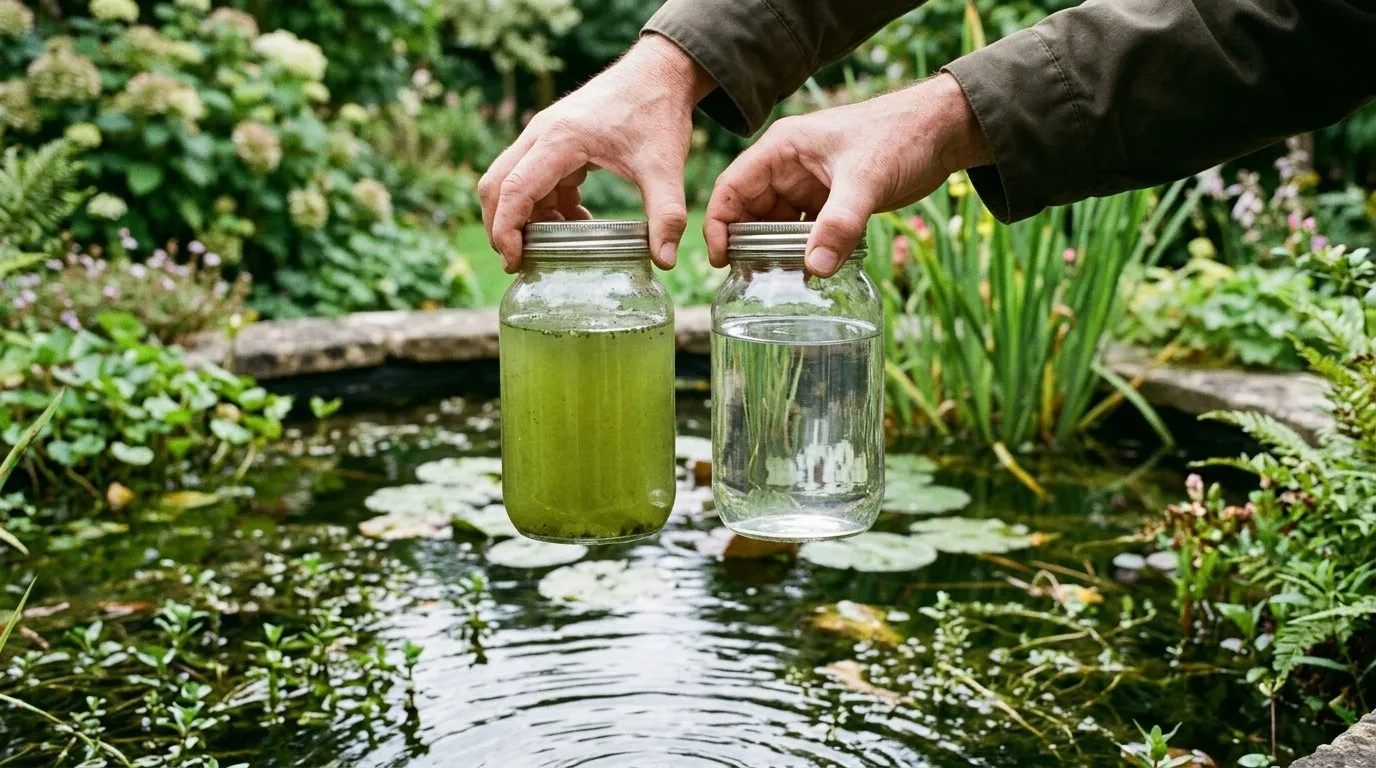 The same pond, six weeks apart. Oxygenators strip the nitrate and phosphate that the green-water algae depend on.
The five oxygenators banned from sale in England and Wales
Five popular oxygenators are invasive and illegal to sell in England and Wales. They escape into rivers and canals, smother native plants, and cost millions to clear. The ban on sale has run since April 2014 under the Wildlife and Countryside Act 1981 Schedule 9 and the related 2014 order. Never buy or plant these.
Warning: These five species are banned from sale in England and Wales and must never go in a pond: New Zealand pygmyweed (Crassula helmsii), parrot’s feather (Myriophyllum aquaticum), floating pennywort (Hydrocotyle ranunculoides), water fern (Azolla filiculoides) and water primrose (Ludwigia grandiflora). Reputable UK nurseries no longer stock them, but they still turn up on auction sites and in swapped plant bags. Check every label and refuse anything unlabelled.
The riskiest of the group is New Zealand pygmyweed. A fragment the size of a fingernail can start a new infestation, and once in a wild pond it is nearly impossible to remove. Freshwater Habitats Trust logs the damage these plants do to ponds across Britain: freshwaterhabitats.org.uk. The safe rule is to buy only native oxygenators from a named UK supplier.
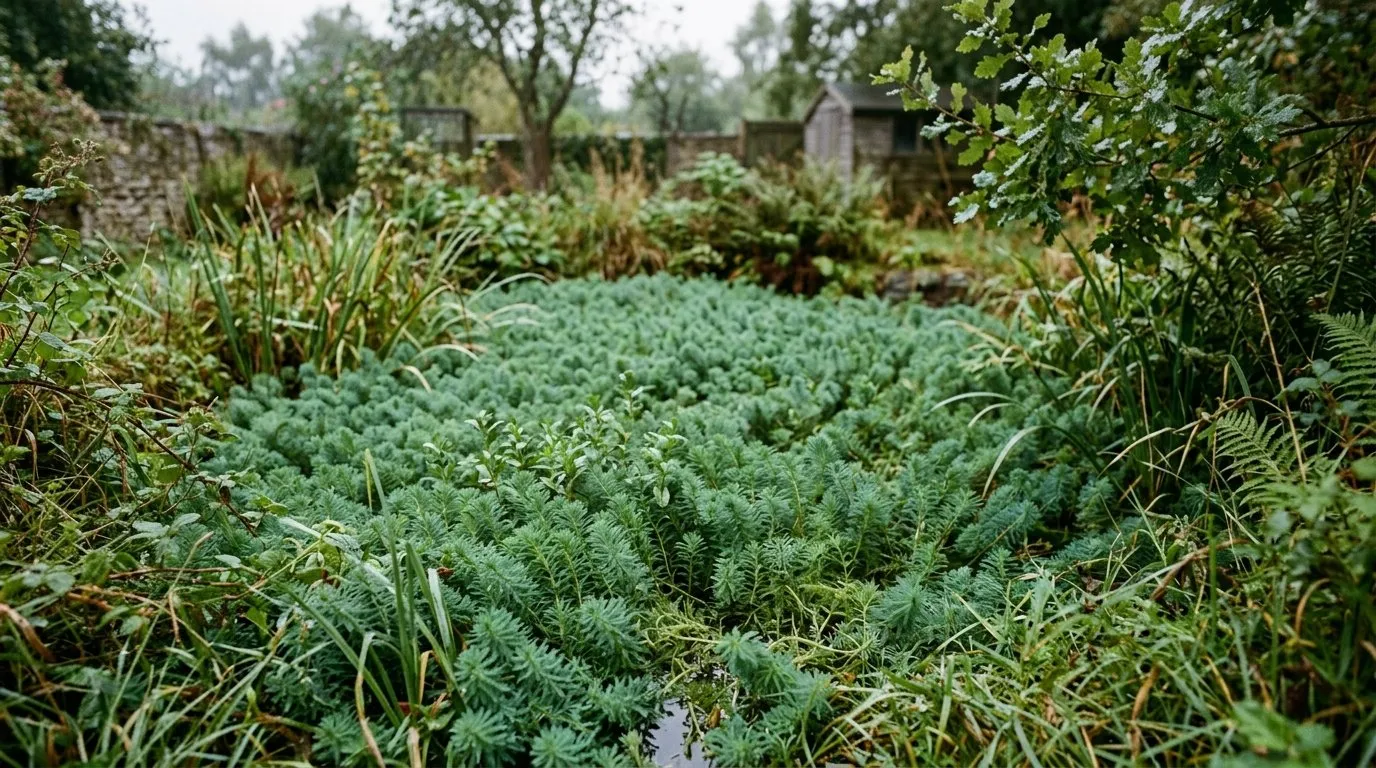 Parrot’s feather choking a pond surface. This is one of the five species banned from sale, not a plant to buy.
The best native oxygenating pond plants for UK ponds
Six native or fully legal oxygenators do the job in a UK pond. Choose two or three, not one, so the pond keeps producing oxygen across the seasons as each species peaks at a different time.
Hornwort (Ceratophyllum demersum) is the standout. It floats free with no roots, works at any depth from 30cm to 150cm, and grows fast in summer. Spiked water-milfoil (Myriophyllum spicatum) is a true UK native, feathery, and prized by fish and newts for laying eggs. Do not confuse it with the banned Myriophyllum aquaticum. Water starwort (Callitriche) forms soft green rosettes in the shallows and oxygenates well in spring. Willow moss (Fontinalis antipyretica) clings to stones, tolerates shade, and suits moving water. Water crowfoot (Ranunculus aquatilis) throws up white flowers in May and gives an early oxygen boost. Curled pondweed (Potamogeton crispus) works in deeper water and holds up when others fade.
| Species | Oxygenating power | Spread rate | Planting depth | Hardiness | Role |
|---|---|---|---|---|---|
| Hornwort (Ceratophyllum demersum) | Very high | Fast | 30-150cm, floats free | Fully hardy | Primary, all-depth |
| Spiked water-milfoil (Myriophyllum spicatum) | High | Moderate | 30-100cm | Fully hardy | Primary, fish spawning |
| Water crowfoot (Ranunculus aquatilis) | High in spring | Moderate | 20-60cm | Fully hardy | Early-season oxygen |
| Curled pondweed (Potamogeton crispus) | Moderate to high | Moderate | 30-120cm | Fully hardy | Deep water cover |
| Water starwort (Callitriche) | Moderate | Slow to moderate | 10-50cm | Fully hardy | Shallow margins |
| Willow moss (Fontinalis antipyretica) | Moderate | Slow | 20-100cm, on stones | Fully hardy | Shade and moving water |
For the wider planting scheme, our guide to the best pond plants for a UK pond covers marginals and floaters that pair with these oxygenators.
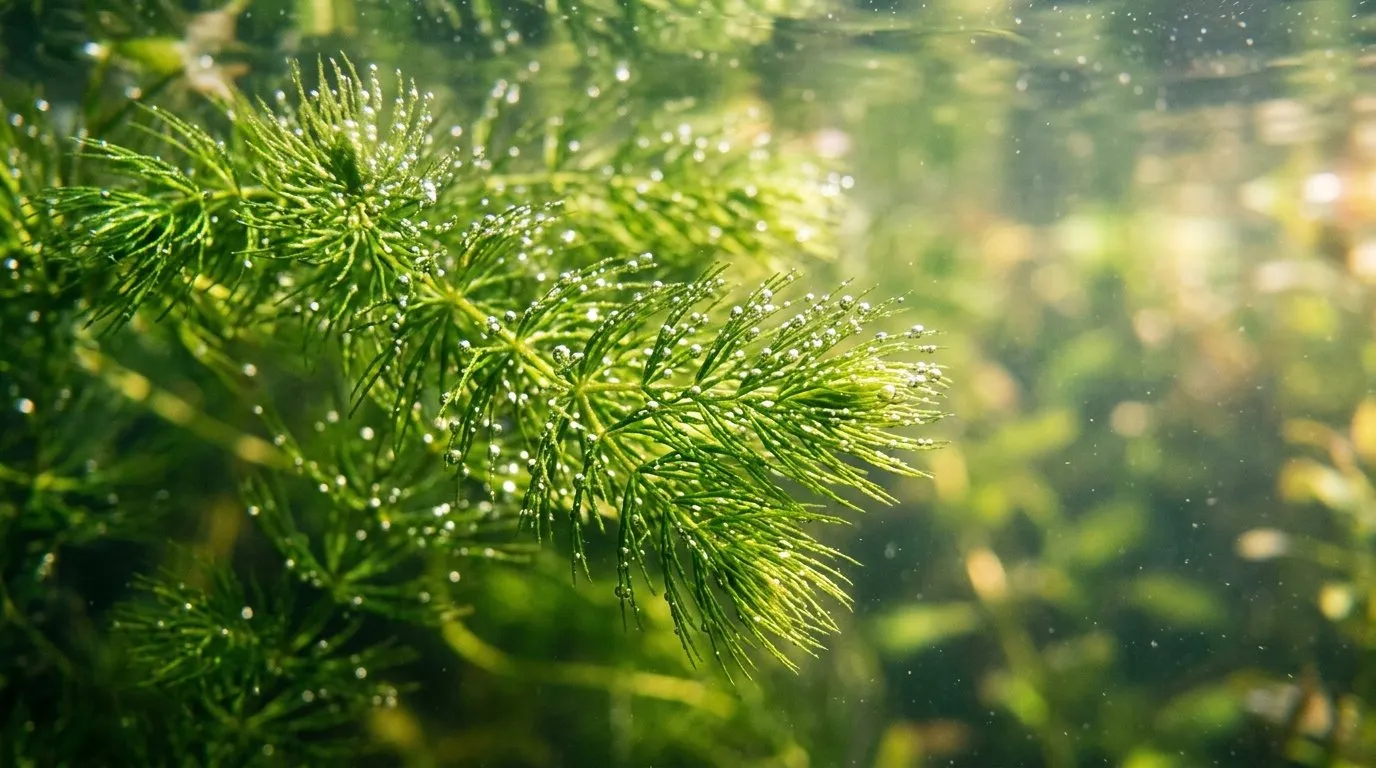 Hornwort underwater. It has no roots and feeds through its leaves, which makes it the fastest nutrient sink in a UK pond.
How many oxygenators to plant and how deep to set them
Plant oxygenators at 5 bunches per square metre of pond surface. A typical bunch holds 5 to 8 stems and costs £3 to £5 from a UK aquatic nursery. For a 9 square metre pond like ours, that is around 45 bunches, roughly £150 to £200 of planting. Aim for submerged growth to fill about a third of the water volume once established, no more.
Most oxygenators go into planting baskets of aquatic compost topped with 3cm to 5cm of washed gravel. The gravel stops fish stirring up the soil and clouding the water. Set baskets on the pond floor or on shelves at 20cm to 50cm deep. Hornwort is the exception. It needs no basket. Drop weighted bunches in and let them drift, or leave them loose to float.
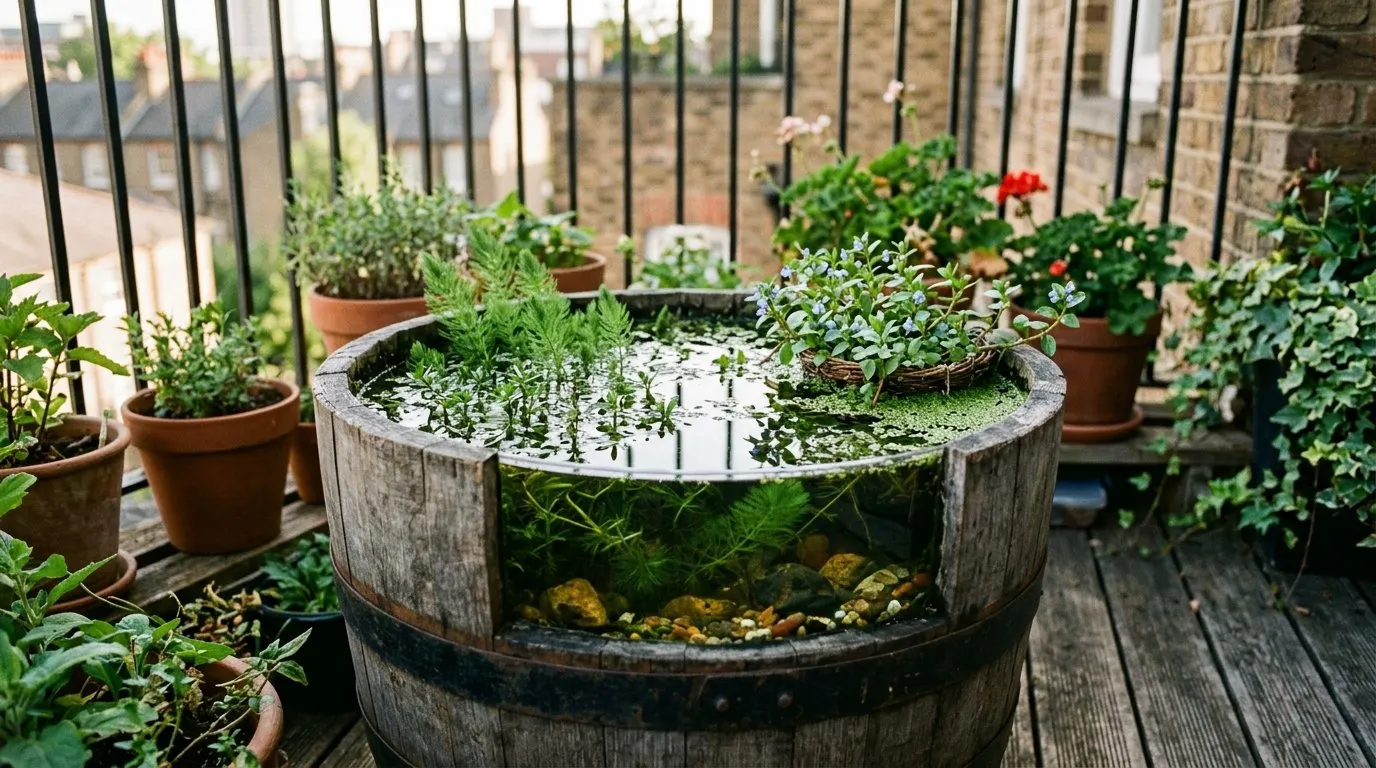 A half-barrel container pond on a balcony. Two bunches of hornwort oxygenate a pond this size all summer.
Why oxygenators starve algae of nutrients
The real cause of green water is not sunlight. It is an overload of dissolved nutrients, mainly nitrate and phosphate. These come from fish waste, uneaten fish food, decaying leaves, lawn runoff and even tap water used to top up. Phosphate levels above 0.05mg per litre are enough to trigger a bloom in warm weather.
A UV clarifier treats the symptom. It kills algae passing through the unit, so the water clears while the lamp runs. It does nothing about the nutrient load, so the bloom returns the moment the lamp fails or is switched off. Oxygenating plants attack the root cause. They act as a living nutrient sink, locking up nitrate and phosphate in leaf and stem growth all season.
The permanent fix is to lower the nutrient input. Feed fish sparingly and only what they clear in two minutes. Net fallen leaves off in autumn before they rot. Top up with rainwater, not nutrient-rich tap water, where you can. Do that alongside dense oxygenator planting and the pond stays clear. For the blanketweed strands that plants alone will not shift, see our fixes for pond algae and blanketweed.
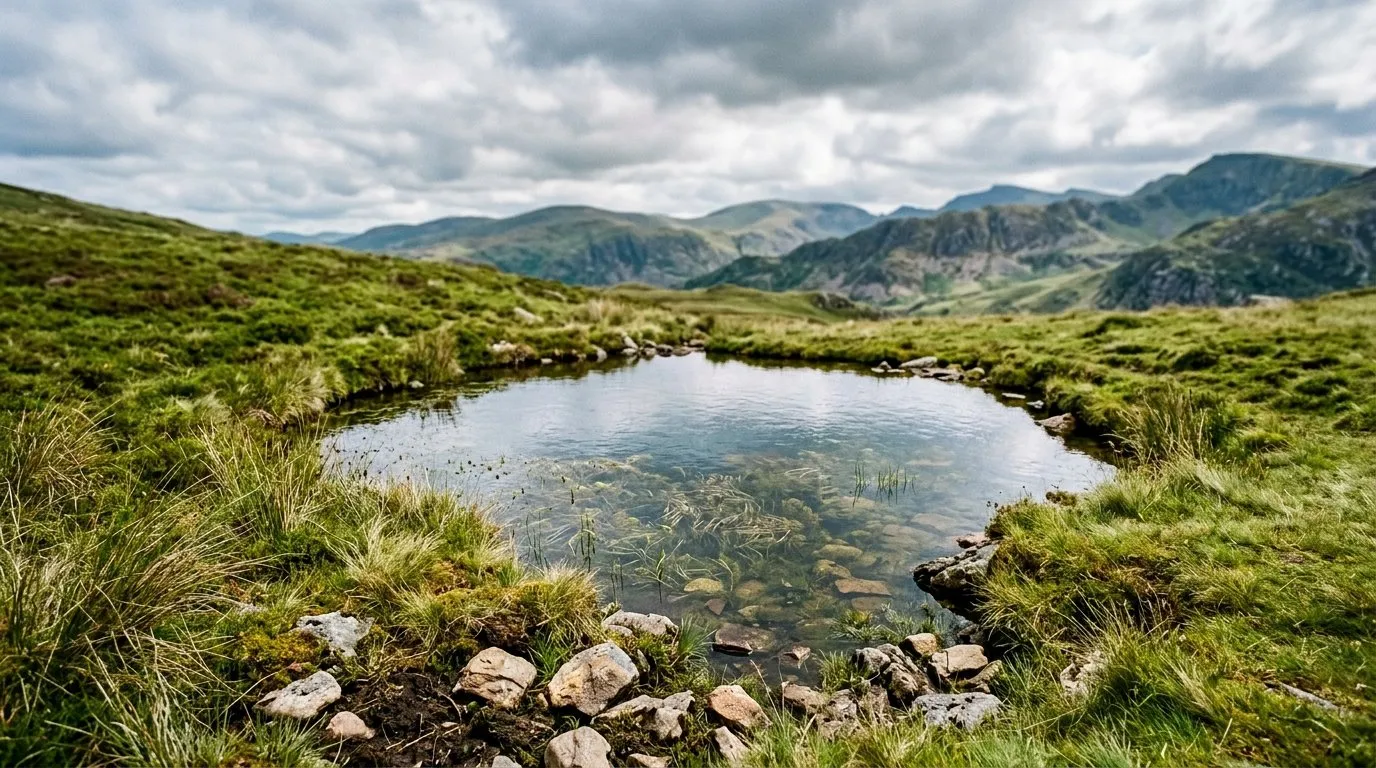 A natural hillside pond in Wales. Wild ponds stay clear because plants, not chemicals, hold the nutrient balance.
Day and night oxygen: the swing that can suffocate fish
Oxygenating plants do not add oxygen around the clock. By day they photosynthesise and release oxygen, pushing dissolved oxygen well above 8mg per litre in a healthy pond. After dark the plants stop photosynthesising and start respiring, taking oxygen back out of the water. Dissolved oxygen falls through the night and hits its lowest point at dawn.
This matters because warm water holds less oxygen than cold. Water at 25C holds only around 8mg per litre at saturation, against 11mg at 10C. On a hot, still July night, a pond packed with plants and fish can see dissolved oxygen fall below 4mg per litre by first light. That is when fish rise to the surface and gulp air.
The fix is restraint. Keep submerged cover to about a third of the water, not a solid mat. Thin hornwort and milfoil hard in July and August by lifting out great handfuls. A running fountain or small waterfall also lifts night oxygen by breaking the surface. Never let oxygenators become the problem they were planted to solve.
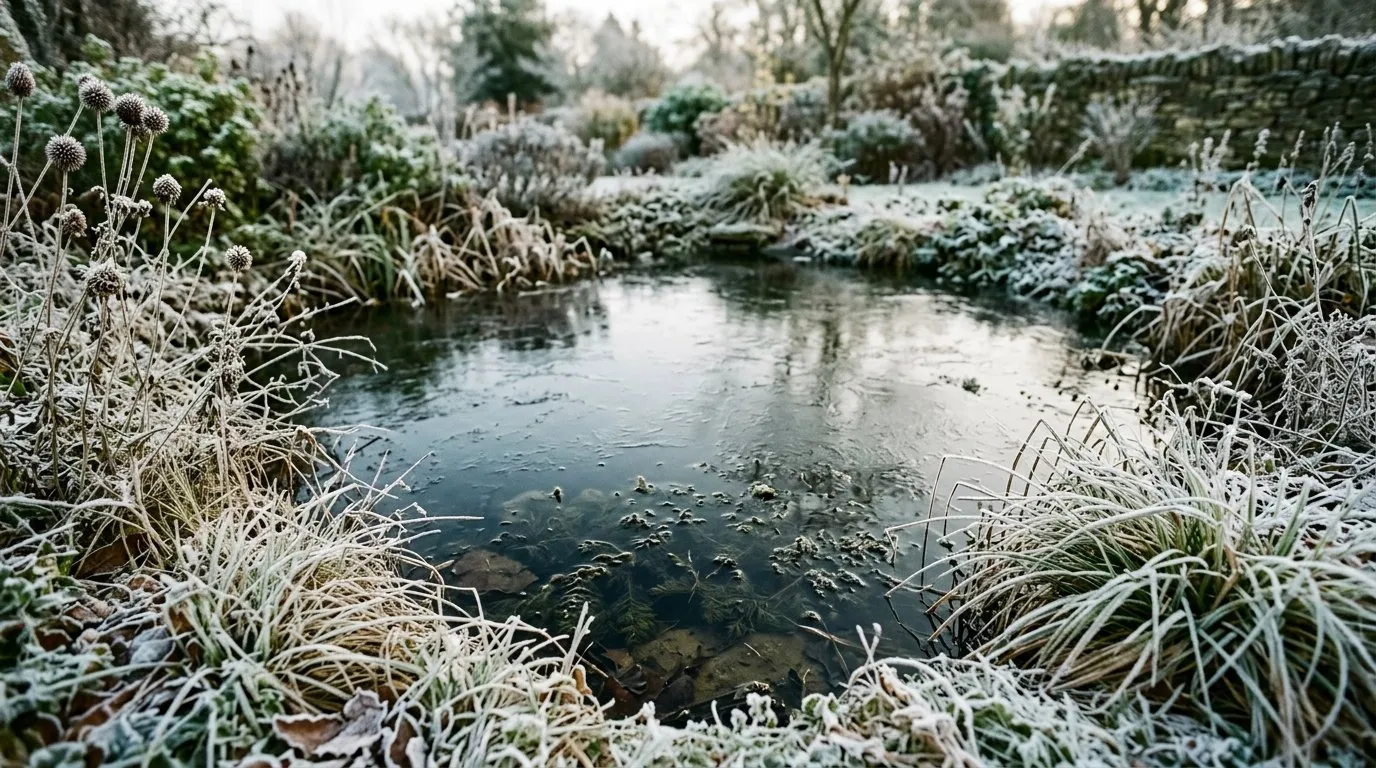 A frosted pond in January. Hornwort has sunk to the floor as winter buds and will rise again when the water warms in April.
Planting weighted bunches without losing them to the bottom
Bought oxygenator bunches often come tied with a thin metal strip. Remove any lead weight and replace it with a lead-free plant weight or a strip of old tights tied round the base. Lead leaches into pond water and is bad for fish and amphibians. This one check takes seconds and is easy to forget.
Work in this order:
- Rinse the bunch in a bucket of pond or rainwater to wash off snails and unwanted algae.
- Weight the base with a lead-free ring, or push the stems into a small basket of aquatic compost topped with gravel.
- Set baskets on shelves at 20cm to 50cm, spaced evenly across the pond.
- Drop hornwort loose, weighted or free-floating, since it needs no soil at all.
- Space bunches a hand’s width apart so they knit together within a month.
Plant into water above 10C, from April onward, so the stems root and spread before the summer algae bloom. A pond planted in April is usually clear by June. A pond planted in July still works, but the algae get a head start.
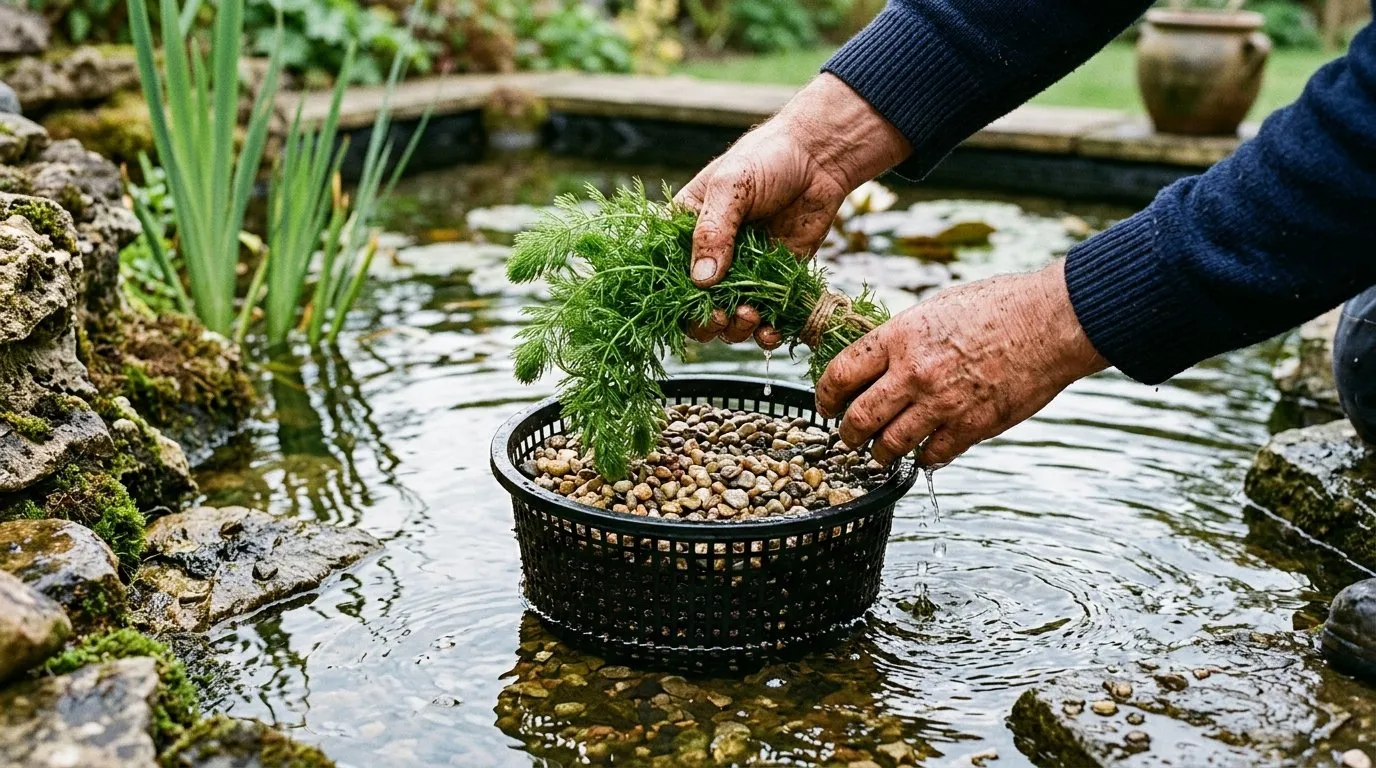 Lowering a weighted bunch into a gravel-topped basket. Swap any lead weight for a lead-free ring first, then set the basket on a pond shelf.
Gardener’s tip: Keep three or four spare hornwort bunches floating in a bucket of pond water through the season. When you thin the main pond in high summer, the spares are ready to plug any bare patches or start a second container pond for free.
Month-by-month UK pond plant calendar
| Month | Task |
|---|---|
| January | Leave hornwort resting on the floor. Keep a small area ice-free for gas exchange. |
| February | Order native oxygenators from UK nurseries before the spring rush. Do not plant yet. |
| March | Clear any rotting leaves off the bottom. Water still too cold for planting. |
| April | Prime planting month. Set baskets once water passes 10C. Plant at 5 bunches per m². |
| May | Water crowfoot flowers. Growth speeds up. Watch for the first algae bloom and let plants catch up. |
| June | Peak clearing. Top up with rainwater. Check submerged cover is reaching a third of the water. |
| July | Thin hornwort and milfoil hard. Run a fountain on hot, still nights to protect fish. |
| August | Keep thinning. Lift excess growth onto the bank overnight so trapped creatures crawl back in. |
| September | Last chance to plant. Divide and replant crowded bunches. Start netting the pond for autumn leaves. |
| October | Cut back dying top growth. Remove fallen leaves weekly to cut next year’s nutrient load. |
| November | Lift out most decaying oxygenator matter. Leave a little for overwintering invertebrates. |
| December | Minimal work. Float a ball on the surface to keep an ice-free patch in a freeze. |
Common mistakes with oxygenating pond plants
- Buying a banned species by accident. Unlabelled bags from swaps and auction sites often hide Crassula helmsii or parrot’s feather. It happens because the plants look harmless and green. Buy only labelled native oxygenators from a named UK nursery.
- Overplanting the pond. A pond crammed with hornwort looks lush but crashes night-time oxygen. It happens because gardeners want instant cover. Stick to 5 bunches per square metre and thin in summer.
- Using ordinary potting compost. Rich multipurpose compost leaches nutrients straight into the water and feeds the algae. It happens because it is what people have to hand. Use low-nutrient aquatic compost capped with gravel.
- Planting into fresh tap water. A brand-new pond filled from the mains carries chlorine and a nutrient spike. It happens because people plant on filling day. Let a new pond stand two weeks, or fill with rainwater, before planting.
- Never thinning the plants. Left alone, oxygenators fill the pond and rot into the very nutrients they removed. It happens because the pond looks fine until it does not. Lift out excess growth every summer.
Bringing it all together
A clear pond is not about chemicals or clever gadgets. It is about letting native submerged plants win the fight for nutrients that would otherwise feed algae. Choose two or three legal oxygenators, plant at 5 bunches per square metre in spring, keep cover to a third, and thin each summer. Refuse the five banned species without exception. Do that and the water clears itself within weeks and stays clear for years. A pond planted this way also pulls in frogs, newts and dragonflies, which is where our guide to building a wildlife pond takes over, and you can even grow edible aquatic plants alongside the oxygenators once the water is stable.
Frequently asked questions
What are the best oxygenating pond plants for a UK pond?
Native hornwort, water starwort and spiked water-milfoil are the best UK oxygenators. Hornwort (Ceratophyllum demersum) leads because it grows without roots and works at any depth. Water crowfoot, willow moss and curled pondweed round out a reliable native mix. All six are fully hardy in a UK pond.
How many oxygenating plants do I need per square metre?
Plant about 5 bunches per square metre of pond surface. That gives fast cover without overcrowding. Aim for submerged plants to fill roughly a third of the water volume once established. Thin them back each summer so night-time oxygen does not crash.
Which pond plants are banned in the UK?
Five invasive species are banned from sale in England and Wales. They are New Zealand pygmyweed, parrot’s feather, floating pennywort, water fern and water primrose. The sale ban has run since April 2014. Check every plant label and buy native oxygenators instead.
Do oxygenating plants clear green pond water?
Yes, oxygenators clear green water by starving algae of nutrients. They absorb the same nitrate and phosphate that single-celled algae feed on. Starved of food, the suspended algae die and the water clears. In our pond this took four to six weeks with no chemicals.
When should I plant oxygenating pond plants?
Plant oxygenators from April to September while the water is warming. Spring is best because the plants establish before the algae bloom. Water above 10C gets them rooting and spreading fast. Avoid planting into freezing winter water when growth has stopped.
Can you have too many oxygenating plants in a pond?
Yes, dense oxygenators can drop night-time oxygen and harm fish. Plants add oxygen by day but consume it after dark. A packed pond on a warm night can leave fish gasping by dawn. Keep submerged cover to about a third and thin as needed.
Does hornwort die back in winter in the UK?
Yes, hornwort sinks to the pond floor over winter. It sheds its top growth, forms dense buds called turions, and rests on the bottom. From April it rises and regrows as the water warms. This natural dieback is normal, not a sign the plant has died.
Our team produces practical UK gardening guidance from source research, contributor records and established horticultural practice. Editorial standards are overseen by Matt W.