Key takeaways
- A Christmas cactus is a jungle epiphyte from Brazil, not a desert cactus: it wants moisture and shade, not drought and glare
- Trigger flowering with 12-14 hours of nightly darkness and cool 12-15C nights for six weeks from mid-September
- Water when the top 2-3cm of compost dries; never let the roots go bone dry like a desert cactus
- Bud drop comes from moving the plant, temperature swings, dry air or erratic watering
- Most plants sold as Christmas cactus are really Thanksgiving cactus, told apart by pointed stem teeth
- Propagate free from Y-shaped cuttings of 2-3 segments; they root in three to four weeks
- Repot every 3-4 years into gritty compost; plants can live 20-30 years and are pet-safe
A Christmas cactus rewards you with dozens of flowers in the darkest week of the year, but only if you treat it as the jungle plant it really is. Get its autumn routine right and a healthy Schlumbergera throws 50 to 100 blooms across December. Get it wrong and you get bare green segments, or a heartbreaking carpet of dropped buds on the windowsill.
Most care advice fails because it copies desert cactus rules. This plant is the opposite. It comes from shady, humid Brazilian forest, and it wants moisture, dappled light and a cool autumn. This guide covers watering, light, the exact bud-set trigger, why buds drop, repotting, free propagation, and how to tell it apart from its Thanksgiving and Easter cousins.
What is a Christmas cactus and is it really a cactus?
A Christmas cactus is a jungle cactus, not a desert one, and that single fact governs everything about its care. Botanically it is Schlumbergera, an epiphyte that grows perched on tree branches and mossy rocks in the coastal Serra dos Orgaos mountains of south-east Brazil. It sits in shade, drinks frequent rain, and never sees the drought a desert cactus survives.
So forget the gritty windowsill and the fortnightly thimble of water. This plant has flattened green stems made of leaf-like segments called cladodes, no spines, and no swollen water-storing body. It photosynthesises through those segments and expects the compost to stay lightly moist.
The confusion runs deep because garden centres file it with the desert cacti. It shares almost none of their needs. If you already grow desert types, our guide to caring for succulents indoors explains that dry, sunny regime, and a Schlumbergera wants close to the reverse of it.
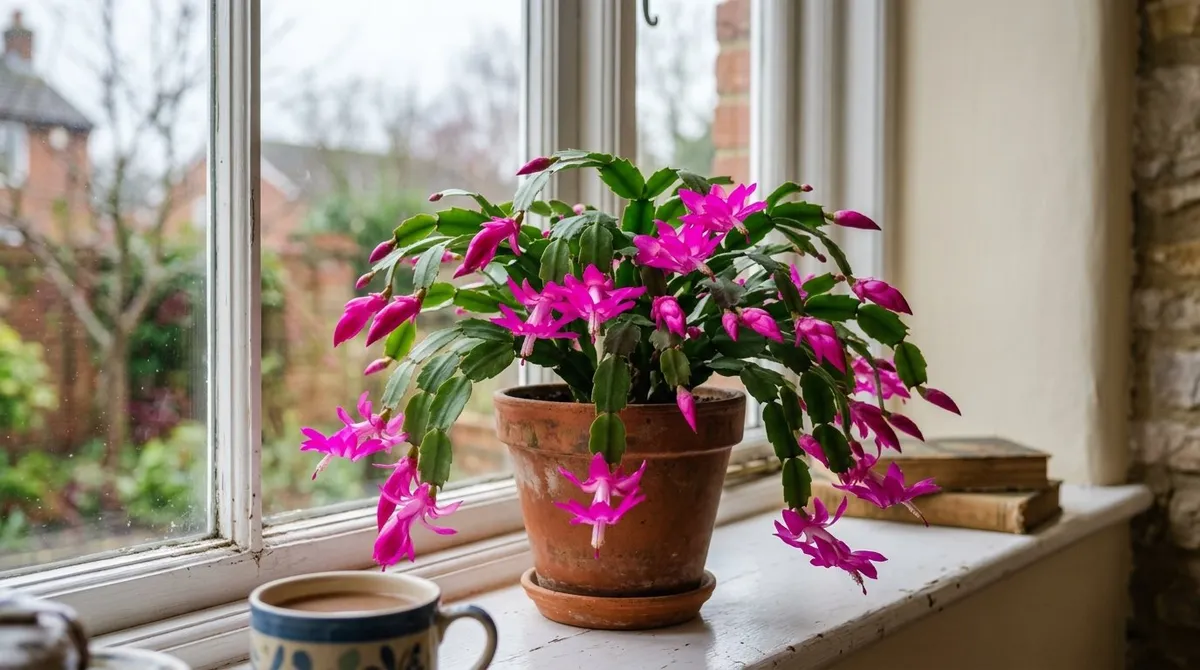
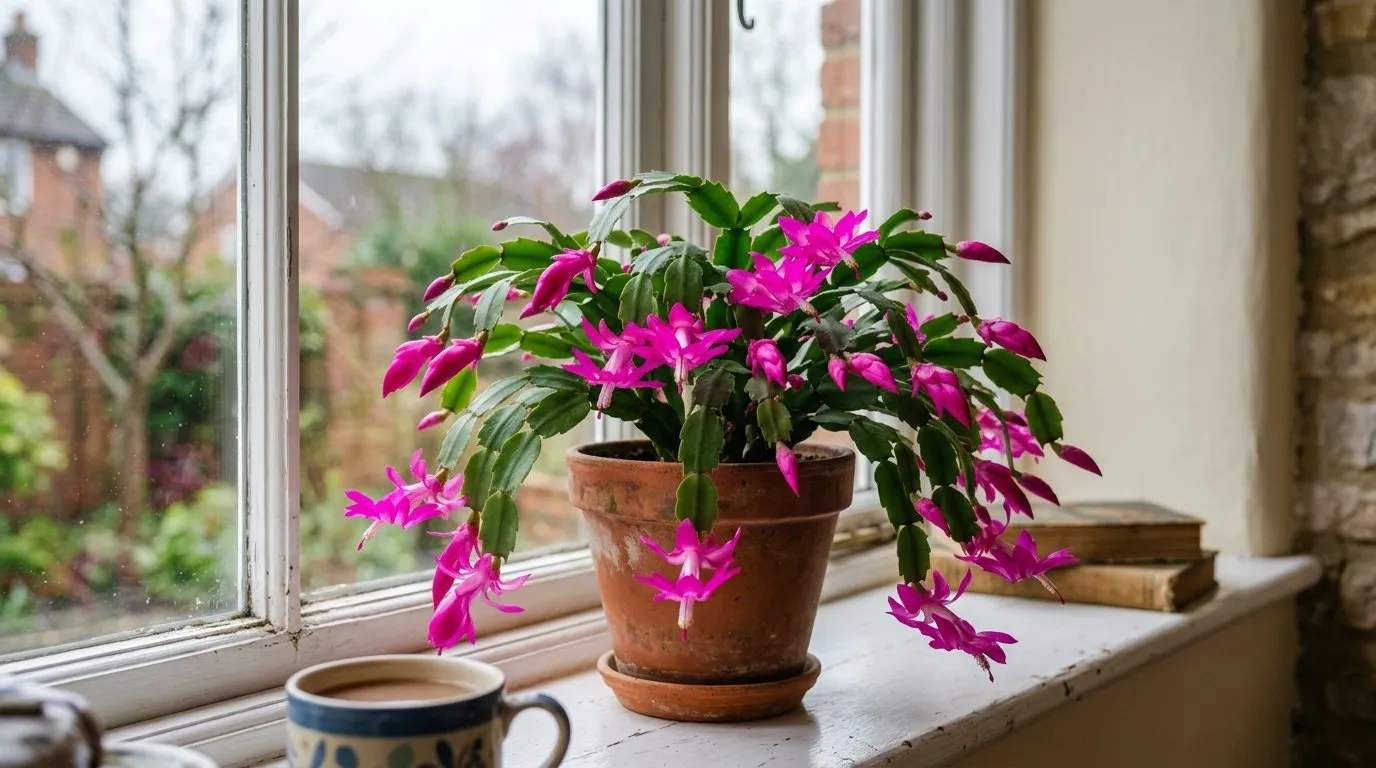 A well-flowered Christmas cactus in December. Bright indirect light, steady moisture and a cool autumn produce this display.
Treated well, a Christmas cactus is one of the longest-lived houseplants you can own. Plants of 30, 40 or even 100 years are passed down through families. A young plant in a 12cm pot costs £8-15 at a garden centre, and a large specimen £20-30, but the one on your gran’s windowsill is priceless and easy to copy.
Christmas cactus vs Thanksgiving vs Easter cactus
The three “holiday cacti” look similar but flower at different times, and telling them apart starts with the stem segments. This matters because their care and, above all, their flowering trigger differ. Here is the honest position: most plants sold in UK shops as Christmas cactus are actually Thanksgiving cactus.
True Christmas cactus is Schlumbergera x buckleyi. Its segments have smooth, rounded, scalloped edges, and its flowers hang down fairly symmetrically. It peaks in December and January.
Thanksgiving cactus is Schlumbergera truncata. Its segments carry two to four sharp, pointed teeth on each side, like tiny claws. Flowers are held more horizontally and it blooms earlier, in November. This is the one filling shop shelves each autumn.
Easter cactus is Rhipsalidopsis gaertneri, now often placed in Schlumbergera. Its segments have rounded edges with tiny bristles at the tips, and its star-shaped flowers open in April and May, triggered differently from the winter pair.
| Feature | Christmas cactus | Thanksgiving cactus | Easter cactus |
|---|---|---|---|
| Botanical name | S. x buckleyi | S. truncata | R. gaertneri |
| Segment edges | Rounded, scalloped | Sharp pointed teeth | Rounded with tip bristles |
| Flowering time | December-January | November | April-May |
| Flower shape | Hanging, symmetrical | Horizontal, asymmetrical | Star-shaped, upright |
| Anther colour | Pinkish | Yellow | Yellow |
The good news is that the winter care in this guide works for both the Christmas and Thanksgiving types. The Easter cactus wants the same watering and light but sets its buds in cool late winter instead of autumn.
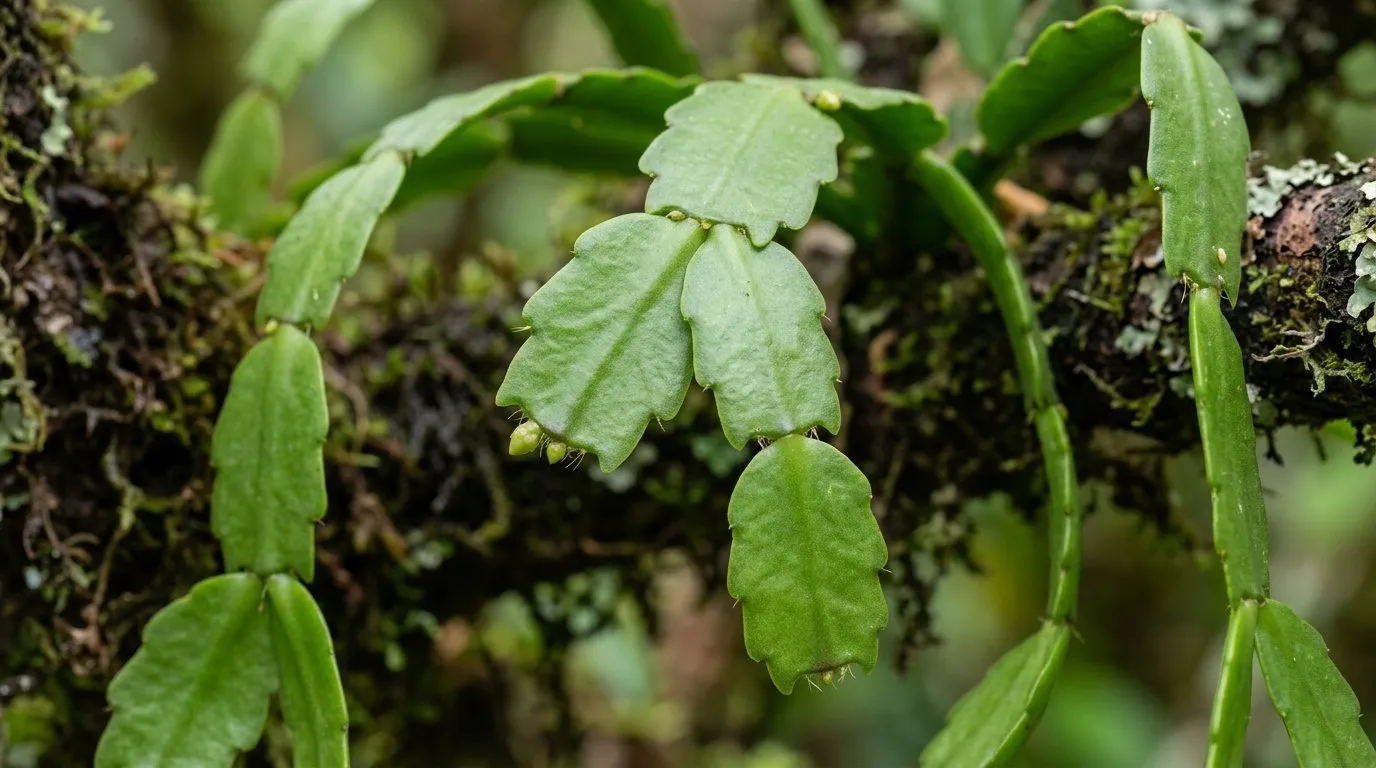 The rounded, scalloped segment edges of a true Christmas cactus. Sharp pointed teeth would mark it as a Thanksgiving cactus.
How do you water a Christmas cactus?
Give a proper soak until water runs from the drainage holes, then drain the saucer after ten minutes. Never leave the pot standing in water, because the epiphyte roots rot fast in a saturated mix. Tepid water suits it better than a cold shock from the tap.
Reduce watering through the winter rest after flowering, down to a splash every 10-14 days. Even then, do not let the compost bake bone dry, or the segments wrinkle and drop. Because it comes from humid forest, it also likes moisture in the air. Stand the pot on a tray of damp gravel, or group it with other plants, in a centrally heated room.
Gardener’s tip: Weigh your watering by the segments, not the calendar. Plump, glossy segments mean the plant is happy. Slightly limp, wrinkled segments in summer mean it is thirsty, so water at once. The same wrinkling in a cold, wet December pot means the opposite: the roots are drowning, so hold off and move it somewhere warmer.
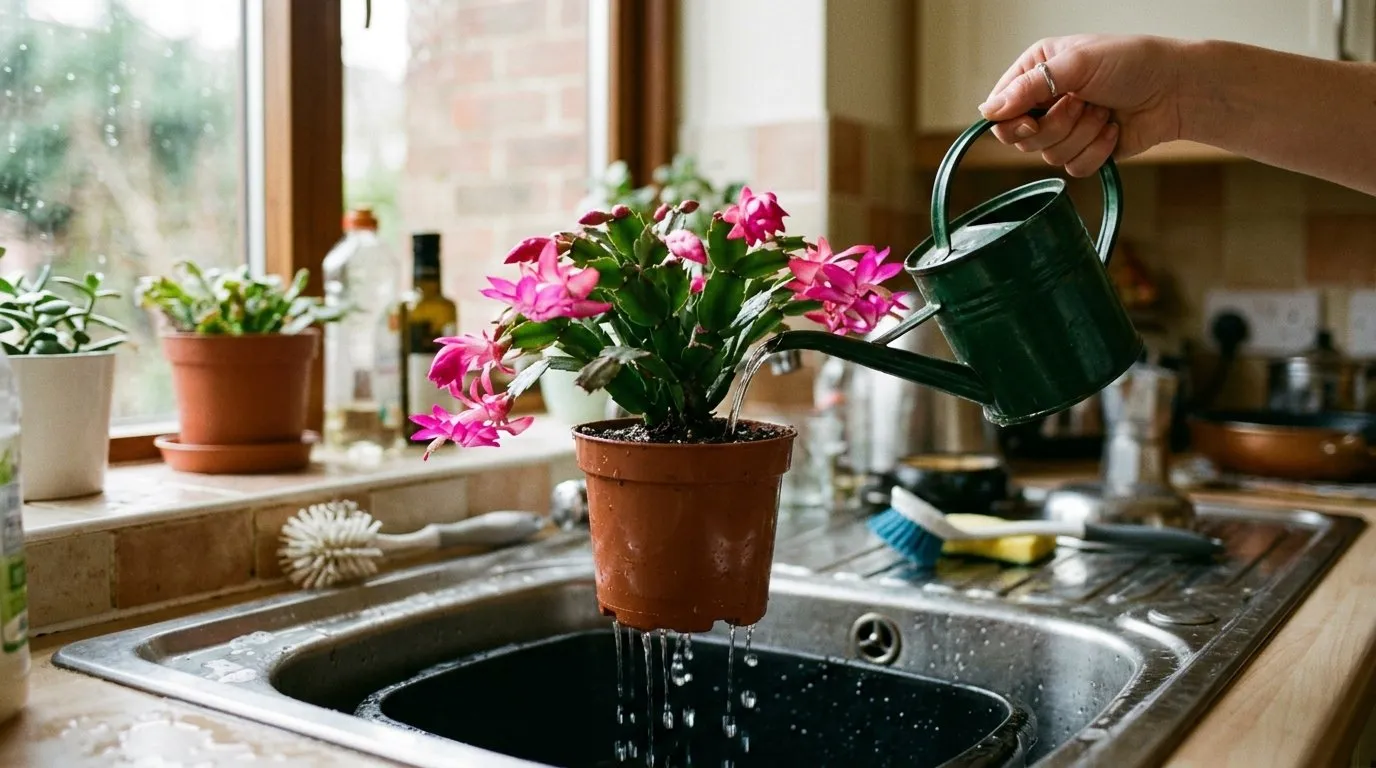 Water until it runs from the drainage holes, then drain the saucer. Far more water than a desert cactus wants.
How much light does a Christmas cactus need?
A Christmas cactus wants bright but indirect light for most of the year. An east-facing windowsill is close to perfect, giving gentle morning sun without the fierce midday glare that scorches the segments red, purple or yellow.
Through the dark UK winter, move it to your brightest spot to fuel the flowers, a south or west window is fine at that season. In summer, pull it back from hot glass or filter the light with a net curtain. Like an orchid, it evolved under a leaf canopy and burns in full sun, a point our guide to caring for orchids indoors makes about those other shade-loving epiphytes.
The one time light becomes critical is autumn, when daylength itself controls whether the plant flowers at all. That is the trigger most people miss.
How do you get a Christmas cactus to flower?
To make a Christmas cactus flower, give it long nights and cool temperatures from mid-September. This is a short-day plant: it only sets flower buds when the nights grow long enough, and cool nights reinforce the signal. Miss this window and you get a healthy green plant with no flowers.
The reliable recipe is 12-14 hours of complete darkness every night, at 12-15C, for about six weeks from mid-September. An unheated spare bedroom, a cool porch or a frost-free garage window all work. During those weeks, any artificial light in the evening, a lamp, a television, even a bright street light, can interrupt the dark period and delay or prevent budding.
Cool temperature alone can do much of the job. Nights around 10-13C will set buds even in longer days, which is why plants left in a chilly conservatory often flower without any effort. Keep watering light but steady through this period. The RHS growing guide confirms this cool, dark autumn is the key to reliable flowering.
Once buds appear and reach pea size, move the plant to its display spot and then leave it completely alone. A weak high-potash feed, like tomato feed at half strength, every two weeks supports the flowers, and our houseplant feeding guide covers the timing.
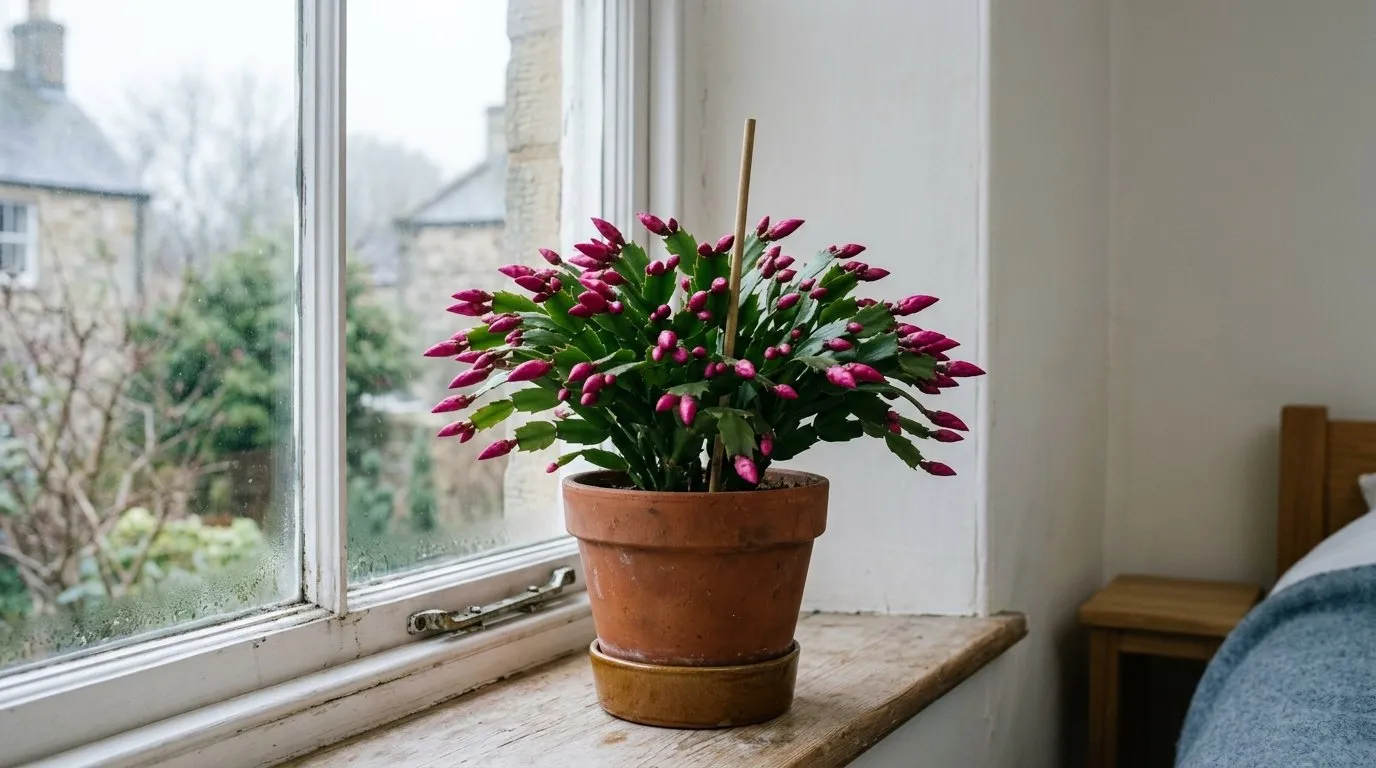 Buds set in a cool spare room after six weeks of long, dark nights from mid-September. This is the step most people skip.
Why is my Christmas cactus dropping buds?
Bud drop is caused by sudden change, and it is the most frustrating problem this plant throws at you. The plant sets dozens of buds, then sheds them overnight, leaving a scatter on the windowsill. Every cause traces back to stress.
The usual culprits are moving or turning the plant, a swing in temperature, cold draughts from a door or window, hot dry air from a radiator, and erratic watering that goes from bone dry to soaking. Any one of them tells the plant to abort its flowers and protect itself.
The fix is stability. Once buds form, decide where the plant will flower and do not move it or even rotate it. Keep it away from radiators, open doors and cold glass at night. Water evenly so the compost stays lightly moist, never swinging between extremes. If the room is dry, raise the humidity around it.
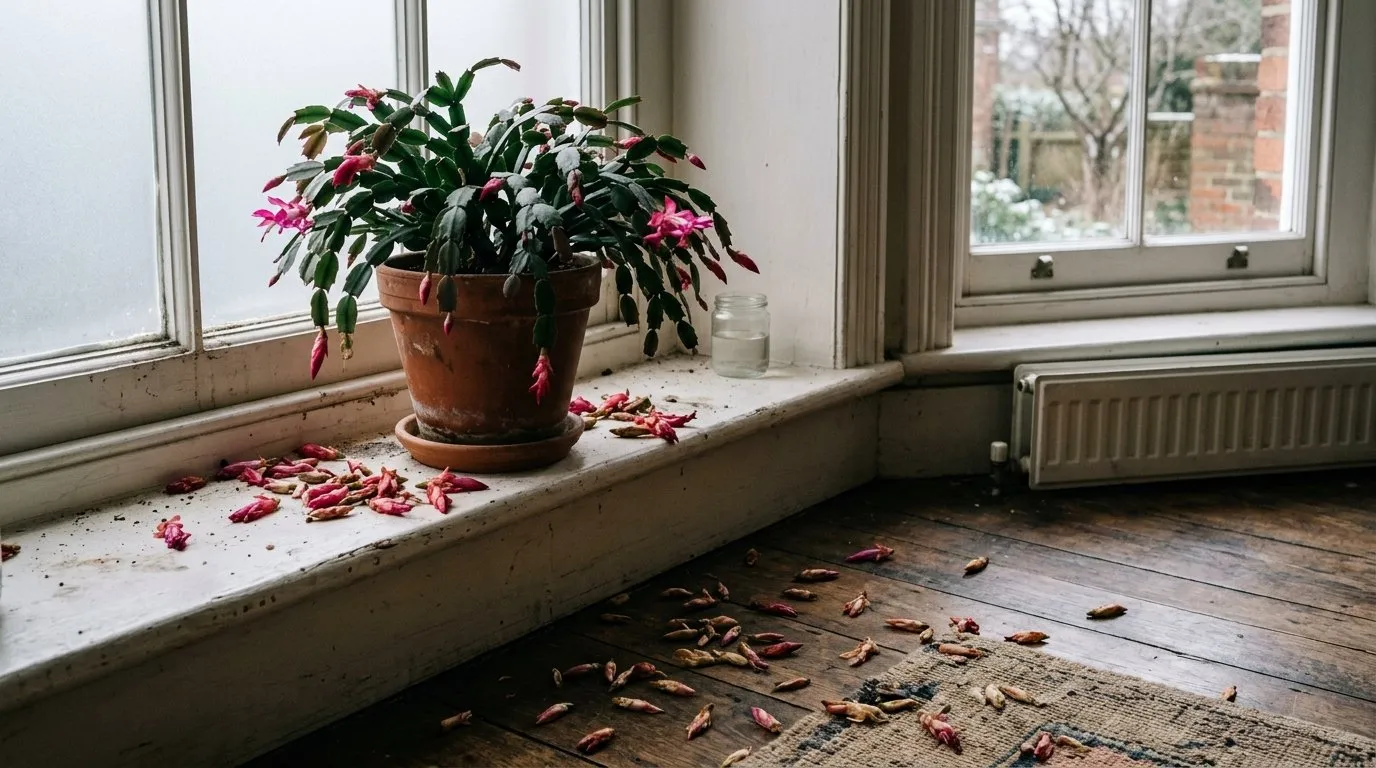 Dropped buds after the plant was moved and sat near a radiator. Stability, steady moisture and cool air prevent this.
When and how to repot a Christmas cactus
Repot a Christmas cactus only every three to four years, because it flowers best when slightly pot-bound. A plant crammed with roots is under gentle stress that actually encourages flowering, so resist the urge to give it a bigger home too soon.
Do the job in late winter or early spring, once flowering has finished and before new growth starts. Move up just one pot size, from a 12cm to a 14cm pot for example. Use a free-draining, peat-free mix: multipurpose compost cut with a third of grit or perlite, or a proper cactus and orchid blend, mimics the airy medium its roots grip in the wild.
If the plant has grown top-heavy, a shallow half-pot or pan gives better balance and drainage than a deep pot. Handle the brittle segments gently, as they snap off easily, though any that break become free cuttings. The general method in our houseplant repotting guide applies, and if roots are circling the pot our advice on root-bound houseplants will help you decide when it is genuinely time.
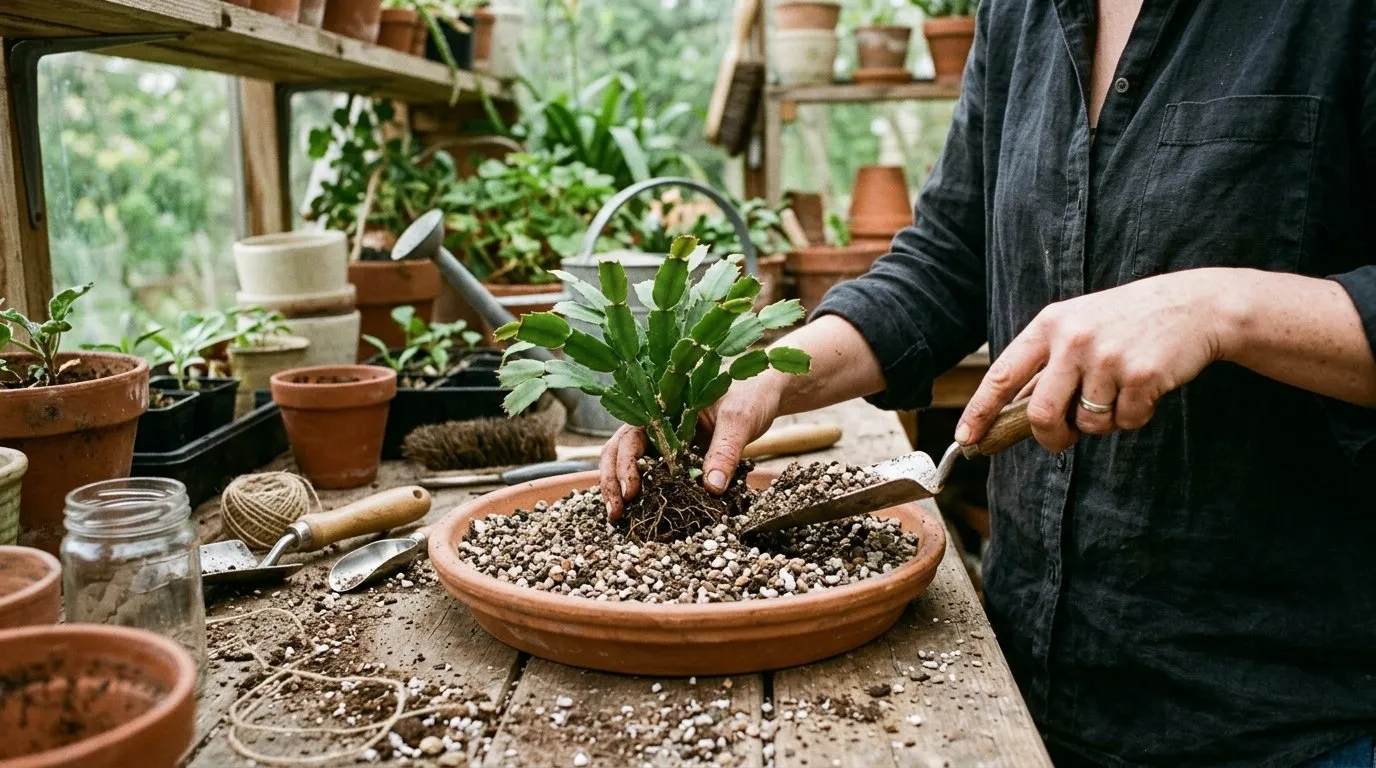 Repotting into a shallow pan with a gritty, free-draining mix. Do it in spring, and only every three to four years.
How do you propagate a Christmas cactus from segments?
Christmas cactus is one of the easiest houseplants to propagate, rooting readily from short lengths of stem. Every broken segment is a potential new plant, so it costs nothing to build up a collection or raise gifts.
Twist off a Y-shaped cutting of two or three joined segments in late spring or summer. Leave it on the windowsill for a day or two so the cut end dries and calluses, which stops it rotting. Then push the base about 1cm into a small pot of moist, gritty compost, three or four cuttings to a 9cm pot.
Keep them warm at around 18-20C, in bright indirect light, and barely moist. Roots form in three to four weeks, and new segment growth shows within a couple of months. Our houseplant propagation guide covers the same callus-and-insert method for other fleshy plants. A cutting taken this summer can be flowering by its second Christmas.
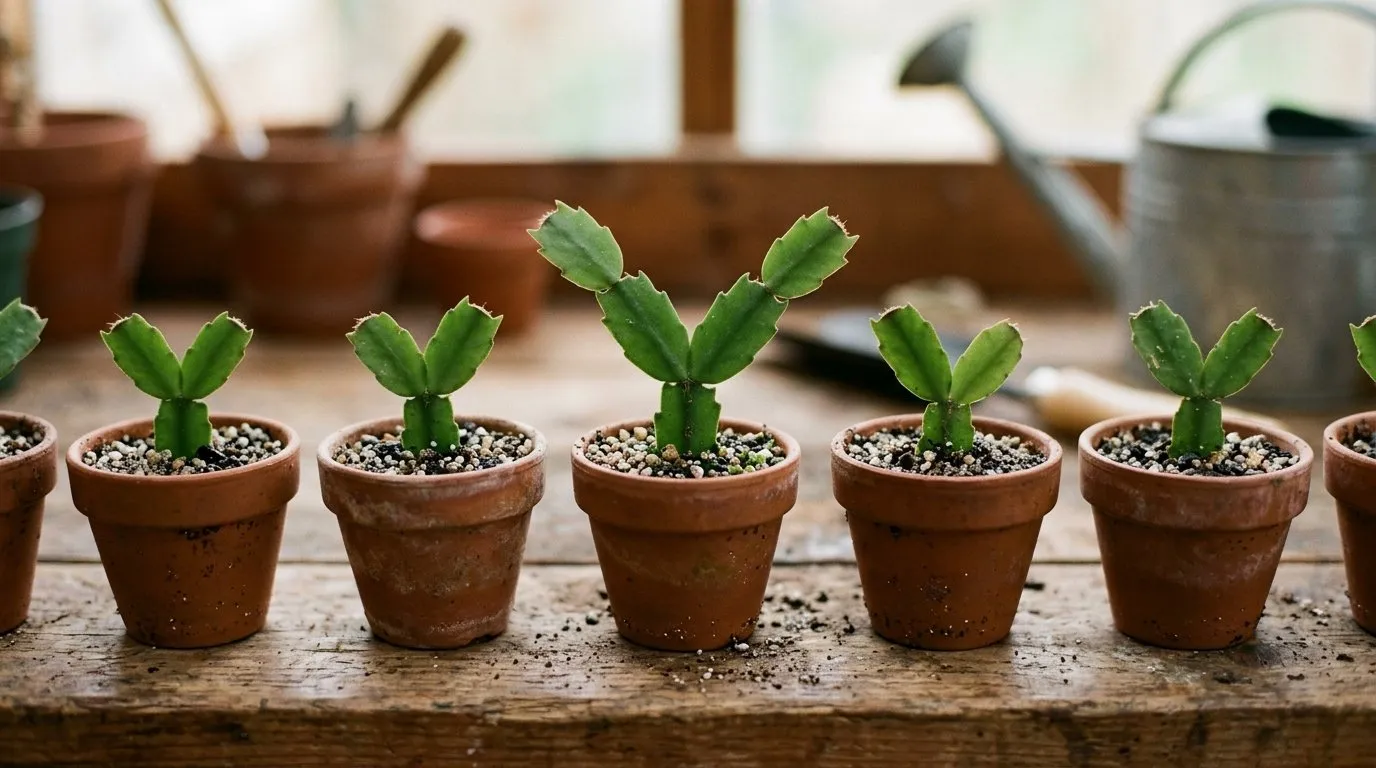 Y-shaped cuttings of two to three segments, callused for a day then inserted. They root in three to four weeks.
Common problems and long-term care
Most Christmas cactus troubles come from watering, light or air, and nearly all are quick to fix. Limp, wrinkled segments signal either drought in summer or waterlogging in a cold winter pot, so check the compost before you act. Reddish or purple segments mean too much direct sun, so move the plant into shade.
Mealybugs sometimes appear as white fluff in the segment joints. Dab them with a cotton bud dipped in dilute washing-up water, and check weekly until clear. Basal rot, where the plant collapses at soil level, means the compost has stayed too wet and cold, and is usually fatal, so prevention through good drainage is everything.
The long-term reward is remarkable. Give a Schlumbergera steady care and it lives 20 to 30 years easily, often far longer, becoming a genuine family heirloom. It is also pet-safe, listed as non-toxic to cats and dogs, unlike poinsettia. For more festive-season colour indoors, pair it with the plants in our guide to the best winter-flowering plants.
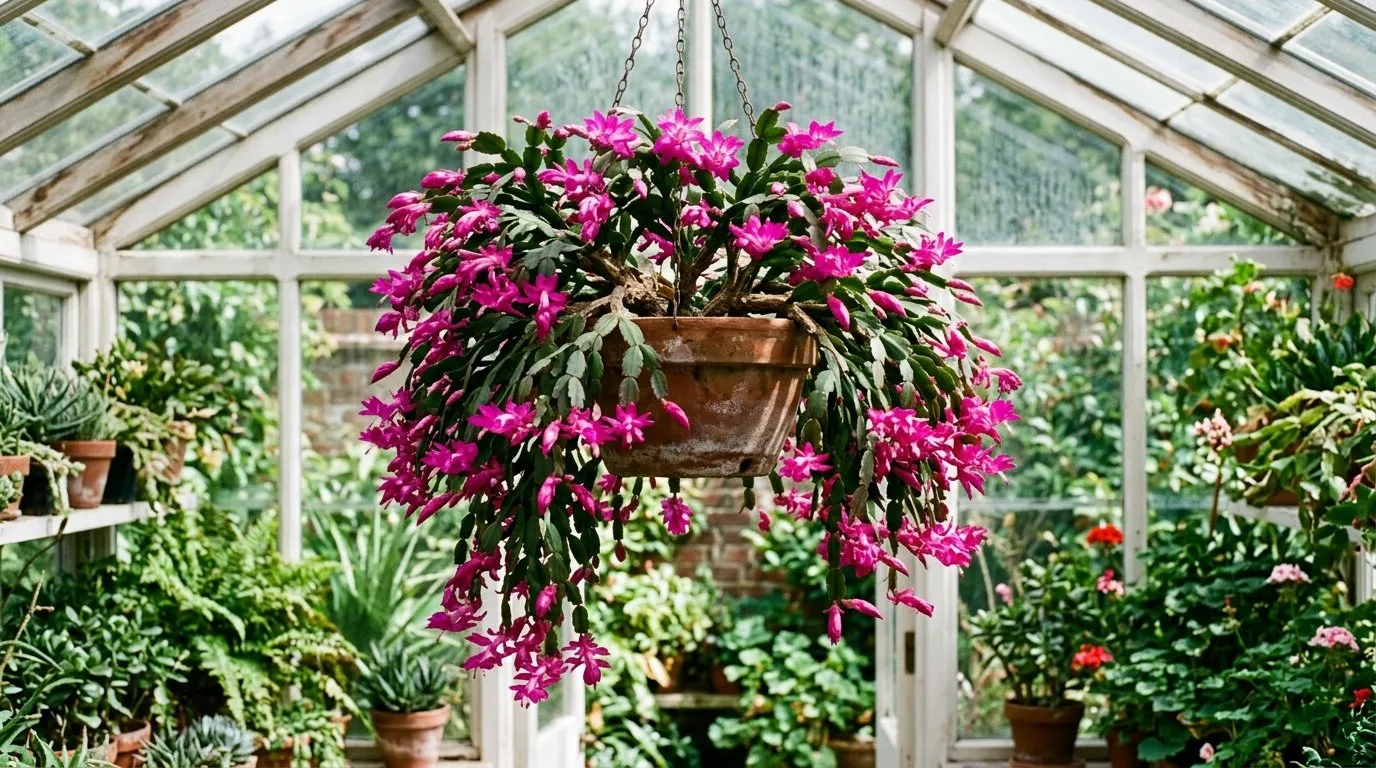 A decades-old specimen cascading from a hanging pot. Given the right autumn, this plant flowers every winter for a lifetime.
Frequently asked questions
Is a Christmas cactus a real cactus?
Yes, but it is a jungle cactus, not a desert one. Schlumbergera grows as an epiphyte on trees and mossy rocks in the coastal mountains of south-east Brazil. It has no spines and no water-storing body like a desert cactus. That is why it wants shade, humidity and steady moisture rather than baking sun and drought.
How often should I water a Christmas cactus?
Water when the top 2-3cm of compost feels dry, roughly weekly in growth. Give enough to run from the drainage holes, then tip away any water left in the saucer after ten minutes. Cut back to a splash every 10-14 days through the winter rest, but never let the compost dry out completely or the segments will shrivel.
Why won’t my Christmas cactus flower?
It has not had the cool, dark autumn nights that set buds. From mid-September give it 12-14 hours of complete darkness each night and temperatures of 12-15C for about six weeks. A spare room, porch or unheated bedroom is ideal. Warm rooms with lamps or a television on in the evening keep it in leaf and stop buds forming.
Why is my Christmas cactus dropping its buds?
Bud drop is a stress response to sudden change. Moving or turning the plant, a swing in temperature, cold draughts, dry radiator air or letting the compost dry out will all make buds fall. Once buds form, leave the plant exactly where it is, water evenly, and keep it away from heat sources until the flowers open.
Is a Christmas cactus poisonous to cats and dogs?
No, Schlumbergera is listed as non-toxic to cats and dogs. It is a safe choice for homes with pets, unlike poinsettia or amaryllis, which are both toxic. A cat that chews the fleshy segments may get mild stomach upset from the fibre, but there is no poison in the plant itself.
Can a Christmas cactus go outside in summer?
Yes, a shady sheltered spot outdoors from June suits it well. The cooler nights of early autumn help set buds naturally before you bring it in. Keep it out of direct midday sun, which scorches the segments red or yellow. Bring it back indoors before the first frost, usually mid-October in most of the UK.
How do I tell a Christmas cactus from a Thanksgiving cactus?
Look at the stem segments. A true Christmas cactus has rounded, scalloped edges, while a Thanksgiving cactus has sharp, pointed teeth like tiny claws. Thanksgiving types flower in November, Christmas types in December and January. Most plants sold in shops as Christmas cactus are in fact Thanksgiving cactus, Schlumbergera truncata.
Give your Christmas cactus the cool, dark autumn it asks for, then leave it in peace to flower, and it will light up your windowsill every December for decades.
Our team produces practical UK gardening guidance from source research, contributor records and established horticultural practice. Editorial standards are overseen by Matt W.