Key takeaways
- RHS research found cotoneaster franchetii around 20% more effective at trapping particulates over 7 days
- Hairy, rough and waxy leaves trap most PM2.5 (under 2.5 microns) and PM10 (under 10 microns)
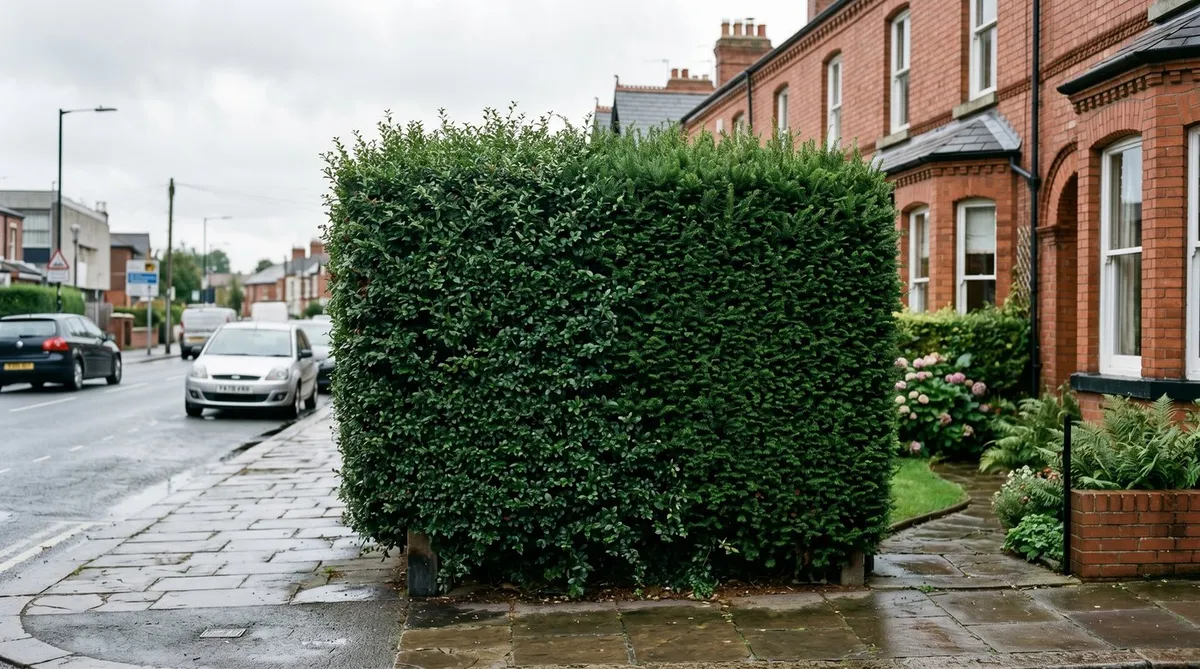
- A roadside barrier should be dense, gap-free and 1.5 to 2 metres or taller
- Evergreen species keep filtering through winter, when UK roadside pollution often peaks
- A hedge filters and slows polluted air but does not remove it; ventilation still matters
- A dense hedge also cuts traffic noise by several decibels alongside trapping particulates
Pollution-busting plants and hedges are one of the few honest, low-cost defences a UK gardener has against roadside air. If your garden backs onto a busy road, a dense hedge of pollution-busting plants physically traps fine soot before it drifts across your boundary. This is not marketing. It rests on real research from the Royal Horticultural Society and Lancaster University, led by Dr Tijana Blanusa. Their trials showed certain hairy, rough-leaved species pull a measurable share of particulate matter out of passing air. This guide explains which species work, why their leaves matter, and how to plant a barrier that genuinely filters.
It also stays honest about the limits. A hedge is a filter, not a cure. Knowing what it can and cannot do is the difference between a useful barrier and false comfort.
How leaves actually trap pollution from the air
A hedge cleans air through simple physics, not biology. As wind carries particulate matter towards the hedge, the leaves act like a filter mesh. Particles strike the leaf surface and stick. The rougher and hairier the leaf, the more it catches. Smooth, glossy leaves shed particles back into the air, so leaf texture decides everything.
The particles that matter most are tiny. PM10 is particulate matter smaller than 10 microns, about a seventh the width of a human hair. PM2.5 is finer still, under 2.5 microns, and it lodges deepest in the lungs. Both come from exhausts, brake dust, and tyre wear. A leaf cannot stop a gas, but it can intercept these solid specks as the air moves through the canopy.
Four leaf traits do the work. Hairs on the surface snag particles like a brush. Ridges and rough texture increase contact area. A waxy cuticle holds particles that land on it. And needles, packed densely on conifers, give a huge total surface area in a small space. The more complex the leaf, the better the trap.
Rain then resets the system. A downpour washes the trapped soot off the leaves and down into the soil, where it is locked away. The clean leaf is ready to catch more. This is why a hedge keeps working year after year rather than clogging up. For homes near heavy traffic, this filtering works best alongside good indoor airflow, since outdoor planting and indoor ventilation tackle different parts of the same problem.
Winter is when this matters most. UK roadside pollution often peaks in cold, still winter weather, when exhaust fumes sit low and air does not mix. That is exactly when deciduous hedges stand bare and stop filtering. An evergreen barrier keeps catching particulates through the worst months, which is why evergreen species earn their place at the front line.
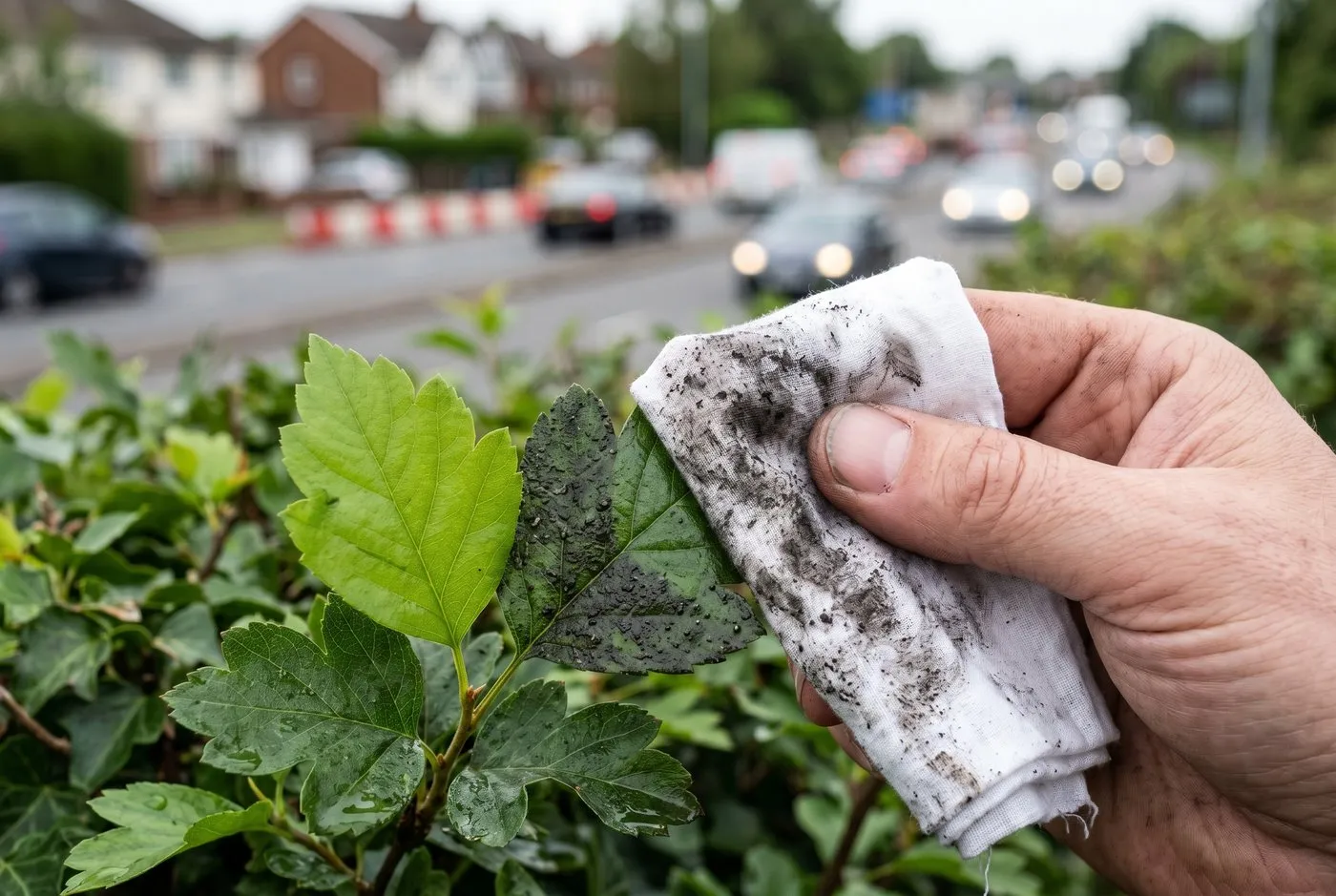
Which pollution-busting species trap the most particulates
Not all hedge plants filter equally. The species below are ranked by how well their leaves trap particulate matter, drawing on the RHS and Lancaster University research and on what holds up beside real UK roads. Effectiveness comes down to leaf texture, density, and whether the plant holds its leaves in winter.
The clear standout is cotoneaster franchetii. Its small leaves are hairy on the underside and rough on top, a texture that catches fine soot well. It is fast to establish, tolerant of pollution, and semi-evergreen in most of the UK. Behind it, yew and thuja bring dense, year-round evergreen cover, while hawthorn offers a thick native option that loses its leaves in winter.
| Species | Leaf trait | Evergreen? | Height / role | Trapping effectiveness | Role |
|---|---|---|---|---|---|
| Cotoneaster franchetii | Small, hairy, rough leaves | Semi-evergreen | 1.5-3m hedge | Highest, ~20% above others | Front-line barrier |
| Yew (Taxus baccata) | Dense flat needles, waxy | Evergreen | 1.5-4m hedge | Very high | Front-line barrier |
| Western red cedar / Thuja | Dense scale-like sprays | Evergreen | 2-5m hedge | Very high | Front-line barrier |
| Hawthorn (Crataegus monogyna) | Lobed, slightly rough | Deciduous | 2-4m hedge | High in leaf | Infill, native mix |
| Ivy (Hedera helix) | Waxy, lobed, dense mat | Evergreen | Wall cover | High per area | Wall cover |
| Silver birch (Betula pendula) | Small, ridged, mobile | Deciduous | 8-15m tree | High in leaf | Infill tree |
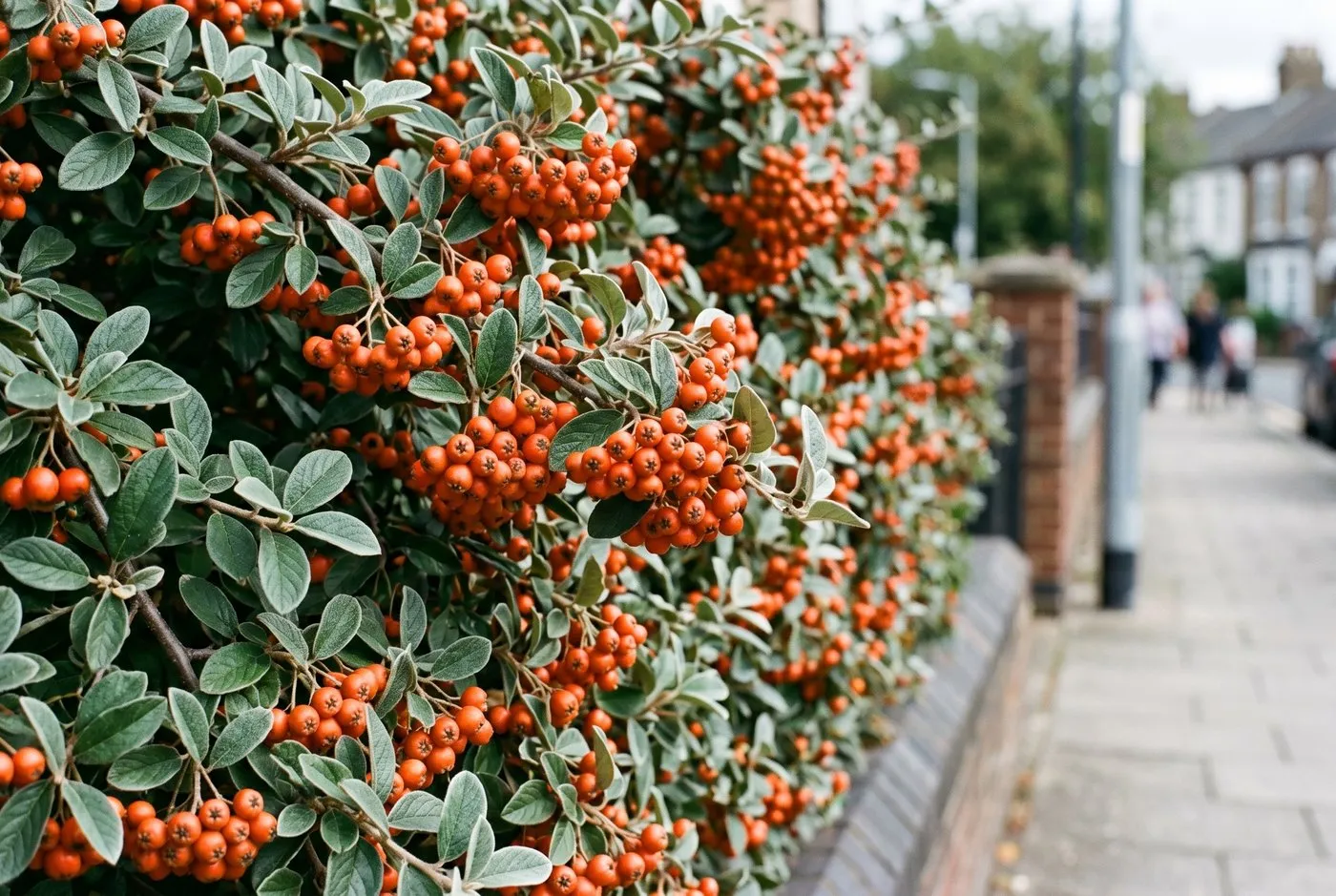 Cotoneaster franchetii, the RHS standout. Its small, hairy, rough leaves trapped around 20% more particulate than other hedges in the research.
Why leaf texture beats leaf size for trapping particulates
The detail that surprises people is that big leaves are not the best filters. A large, smooth leaf has area but little grip. Particles bounce off and rejoin the airflow. A small, hairy, ridged leaf holds onto far more per square centimetre, so density of texture matters more than raw size.
This is why conifer needles punch above their weight. A single yew or thuja plant carries thousands of tiny needles, each with a waxy surface and packed tightly together. The total trapping surface in a metre of dense yew hedge dwarfs that of a few broad leaves. The same logic makes silver birch, with its small mobile leaves, an effective tree filter despite its open shape.
Hairs are the real prize. Under a microscope, the underside of a cotoneaster franchetii leaf is felted with fine hairs that act like a particle trap. Smooth-leaved hollies, by contrast, look glossy and shed soot. When choosing pollution-busting plants, run your fingers over the leaf. If it feels rough, hairy, or waxy, it will trap more than a slick, shiny one.
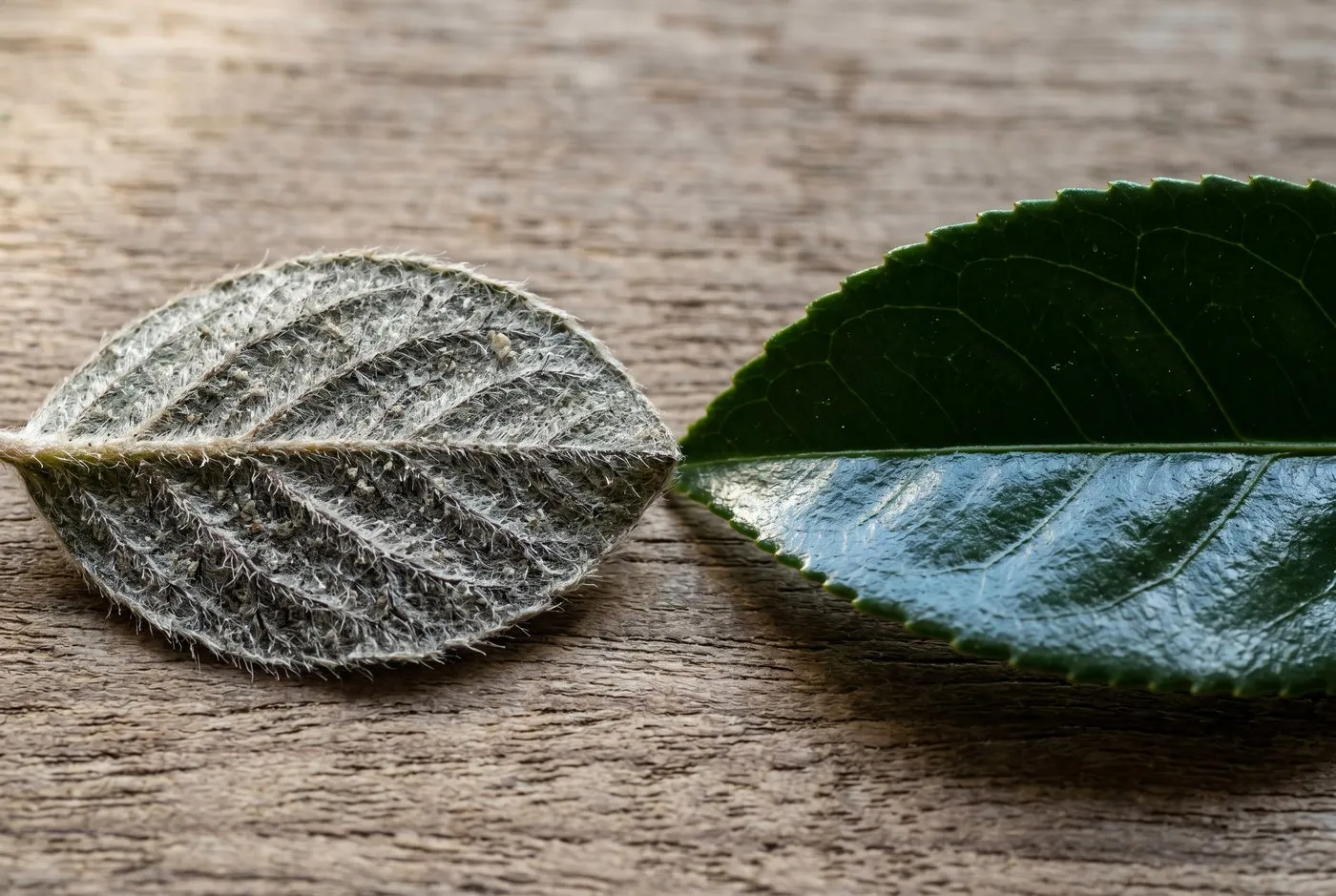 Texture decides the trap. The hairy, felted leaf on the left catches fine soot; the smooth glossy leaf on the right sheds it back into the air.
Hedge, single tree, or green wall: which barrier filters best
The form of the barrier matters as much as the species. A continuous hedge is the strongest performer for a garden boundary. It runs unbroken along the pollution source, sits at breathing height, and filters air across its whole length. This is the layout the research supports for a roadside front garden.
A single tree filters less for a boundary, because air flows around it. A street tree still helps the wider area and shades the road, but it does not screen a specific garden the way a hedge does. Use trees as infill behind a hedge, or where you want height and dappled shade rather than a solid screen. Our guide to the best trees for privacy covers species that double as tall filters.
How to plant a roadside pollution barrier that works
A pollution barrier only filters if it is dense, tall, and continuous. Get any of those wrong and polluted air slips past. The specification below is what makes the difference between a working filter and a decorative row of shrubs.
Plant for density first. Set cotoneaster franchetii or yew at five plants per metre for a fast, solid screen, or three per metre for a slower, cheaper hedge. The aim is a barrier with no daylight visible through it. Build height to at least 1.5 to 2 metres so the hedge rises above head height and filters the air you breathe. Taller is better near heavy traffic.
Keep the barrier gap-free from the ground up. A hedge that is bare at the base lets polluted air rush underneath and through, undoing the filtering above. Choose species that stay dense low down, and plant a staggered double row if the boundary is wide enough. On distance from the road, plant as close to the source as the boundary allows, then leave usable garden behind the hedge. The hedge does its work at the front edge.
For the full planting method, spacing, and aftercare, follow our hedge planting guide. It covers soil prep, watering in the first two summers, and the trimming that keeps a young hedge thickening rather than going leggy.
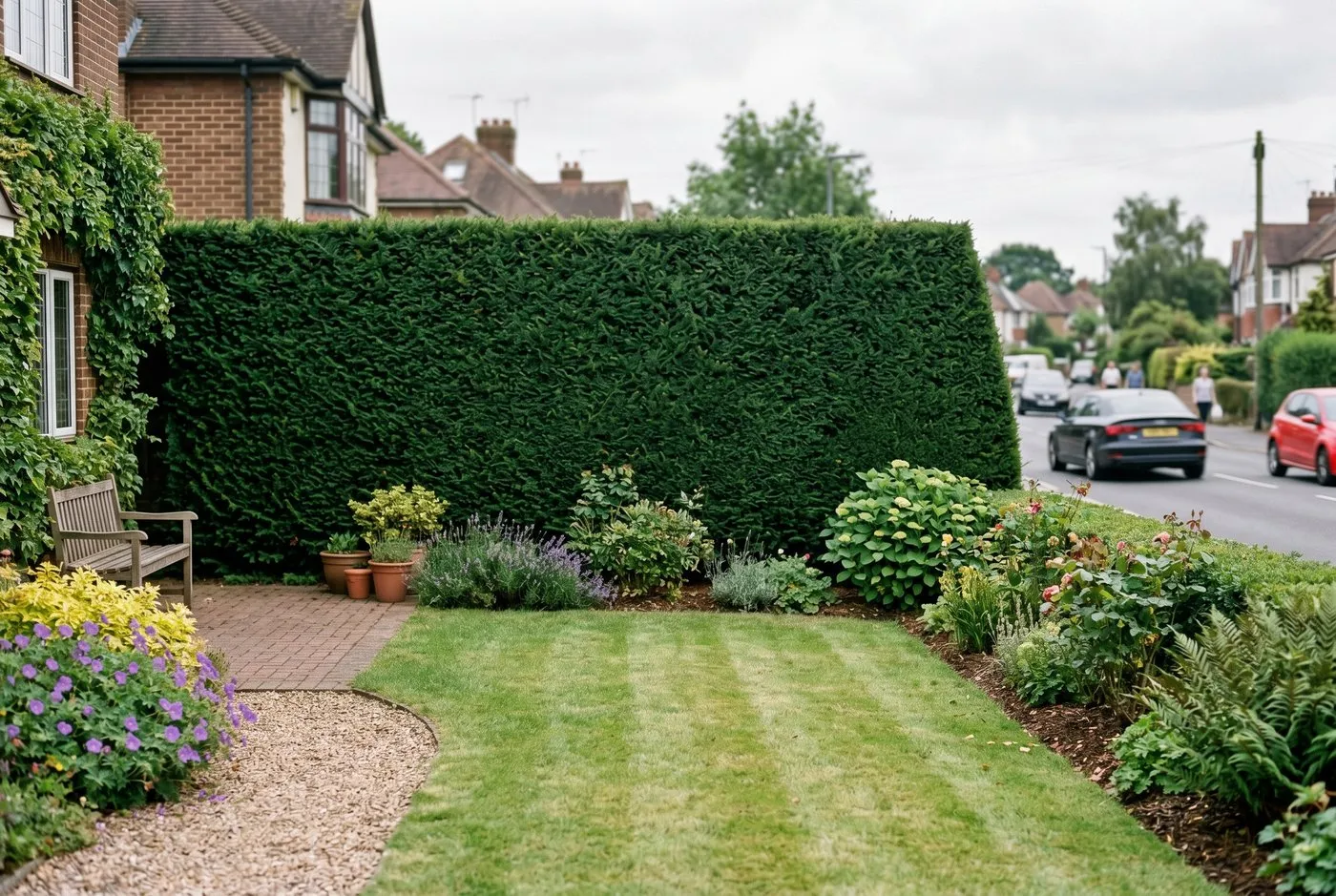 A dense, gap-free yew hedge clipped to two metres. Evergreen cover keeps it filtering through winter, when UK roadside pollution often peaks.
Why a thin or gappy boundary fails to filter pollution
The most common reason a roadside boundary does nothing for air quality is that it is too thin, too short, or full of gaps. Understanding why these fail points straight at the permanent fix.
Gaps channel polluted air. A hedge with holes does not just filter less, it can make things worse. Air takes the path of least resistance, so it funnels through the gaps at speed, carrying particulates straight into the garden behind. A patchy hedge concentrates pollution rather than spreading and filtering it. The fix is a continuous, gap-free barrier with no daylight through it.
Bare winter is peak pollution. A deciduous-only boundary, such as beech or hawthorn alone, stands leafless from November to April. That is exactly when UK roadside pollution tends to be worst, in cold, still air. A boundary that switches off for the dirtiest months of the year is the wrong tool. The root cause is relying on plants that drop their cover when you most need it.
The permanent fix is a dense, evergreen, gap-free hedge of the right height. Lead with evergreen cotoneaster franchetii, yew, or thuja so the barrier filters all year. Plant tightly, keep it trimmed to thicken the base, and patch any gap the moment it appears. A barrier built to these rules filters every day of the year, not just in summer.
What a pollution-busting hedge cannot do
A hedge is a filter, not a cure, and it is worth being plain about this. The research shows hedges trap a meaningful share of particulates, but they do not clean roadside air to clean-air standards. Treating a hedge as a complete fix gives false comfort.
A hedge cannot remove gases. Nitrogen dioxide and carbon monoxide from exhausts pass through the leaves untouched, because a leaf can only trap solid particles, not gas molecules. It also cannot stop all particulate matter. It catches a portion of what passes through, not the lot, and the finest PM2.5 is the hardest to trap.
Indoor air still depends on ventilation, not the hedge. A barrier outside reduces what reaches your windows, but it does not replace airing rooms or, near very heavy traffic, a HEPA filter indoors. Think of the hedge as the first line of three: hedge outside, ventilation through, and a purifier if you have asthma or live on a main road. It lowers the load. It does not erase it.
Common mistakes when planting a pollution barrier
Most pollution barriers underperform because of a few repeated errors. Avoid these and your hedge filters as the research promises.
- Choosing smooth, glossy leaves over textured ones. A shiny laurel or holly looks dense but sheds soot. Pick hairy, rough, or needled species like cotoneaster franchetii, yew, or thuja that actually grip particulates.
- Planting too sparsely. A hedge set at one plant per metre takes years to close and leaves gaps that channel polluted air. Plant at three to five per metre for a barrier that closes fast.
- Letting the base go bare. A leggy hedge with a clear gap at the bottom lets air rush underneath. Trim from young to thicken the base, and choose ground-dense species.
- Relying on a single deciduous species. Beech or hawthorn alone goes bare in winter, the worst pollution season. Always include an evergreen front line.
Gardener’s tip: When you plant a roadside hedge, water it through its first two summers without fail. A hedge that establishes fast closes its gaps fast, and a closed hedge is the only one that filters. The first two years decide how good a barrier you get for the next thirty.
Warning: Do not plant yew where horses, cattle, or curious pets can reach it from the road or a neighbouring field. Yew foliage and berries are highly toxic if eaten. Use cotoneaster, thuja, or hawthorn on any boundary backing onto grazing land or a school route.
Noise reduction: the co-benefit of a dense pollution hedge
A barrier dense enough to trap particulates also dampens traffic noise, so one planting delivers two wins. The same density and height that filter air also block and absorb sound. A thick, tall, gap-free hedge can soften traffic noise by several decibels, and the rustle of leaves masks the drone of passing cars.
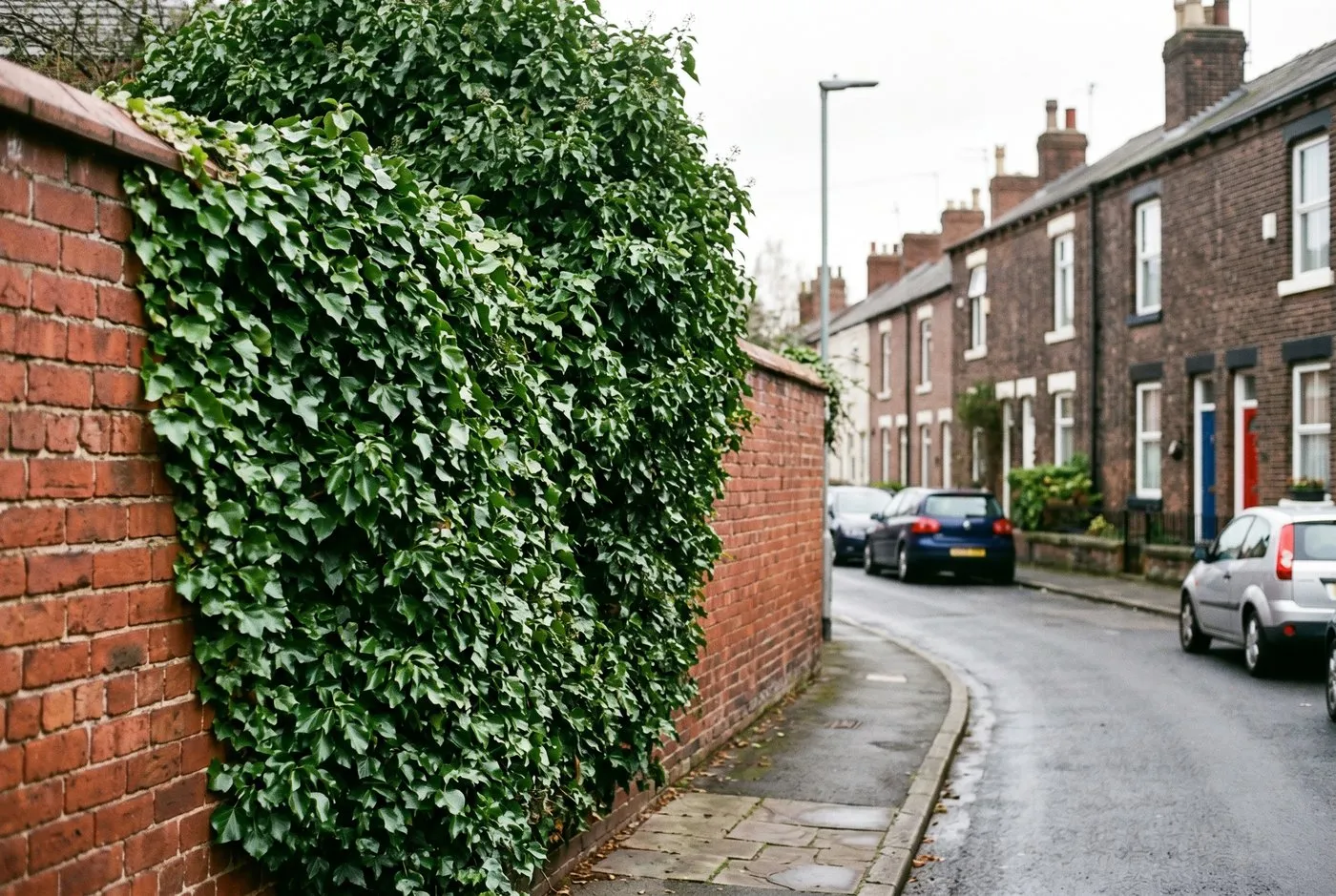 A green wall of ivy traps particulates on a thin vertical footprint. It is the answer in narrow city plots where a wide hedge will not fit.
Front-garden and boundary uses for pollution-busting plants
The front garden is where pollution-busting plants earn their keep, because it sits between the road and the house. A hedge along the front boundary filters the air before it reaches your windows and door. Even a modest 1.5 metre cotoneaster or yew hedge across a terraced front garden makes a measurable difference to what drifts inside.
Keep the barrier dense by trimming little and often rather than once a year. A hedge clipped twice a season stays thick and gap-free, which is what filtering depends on. If box blight or slow growth is a worry, our guide to box hedge alternatives lists tougher dense-leaved species for low front-garden hedging.
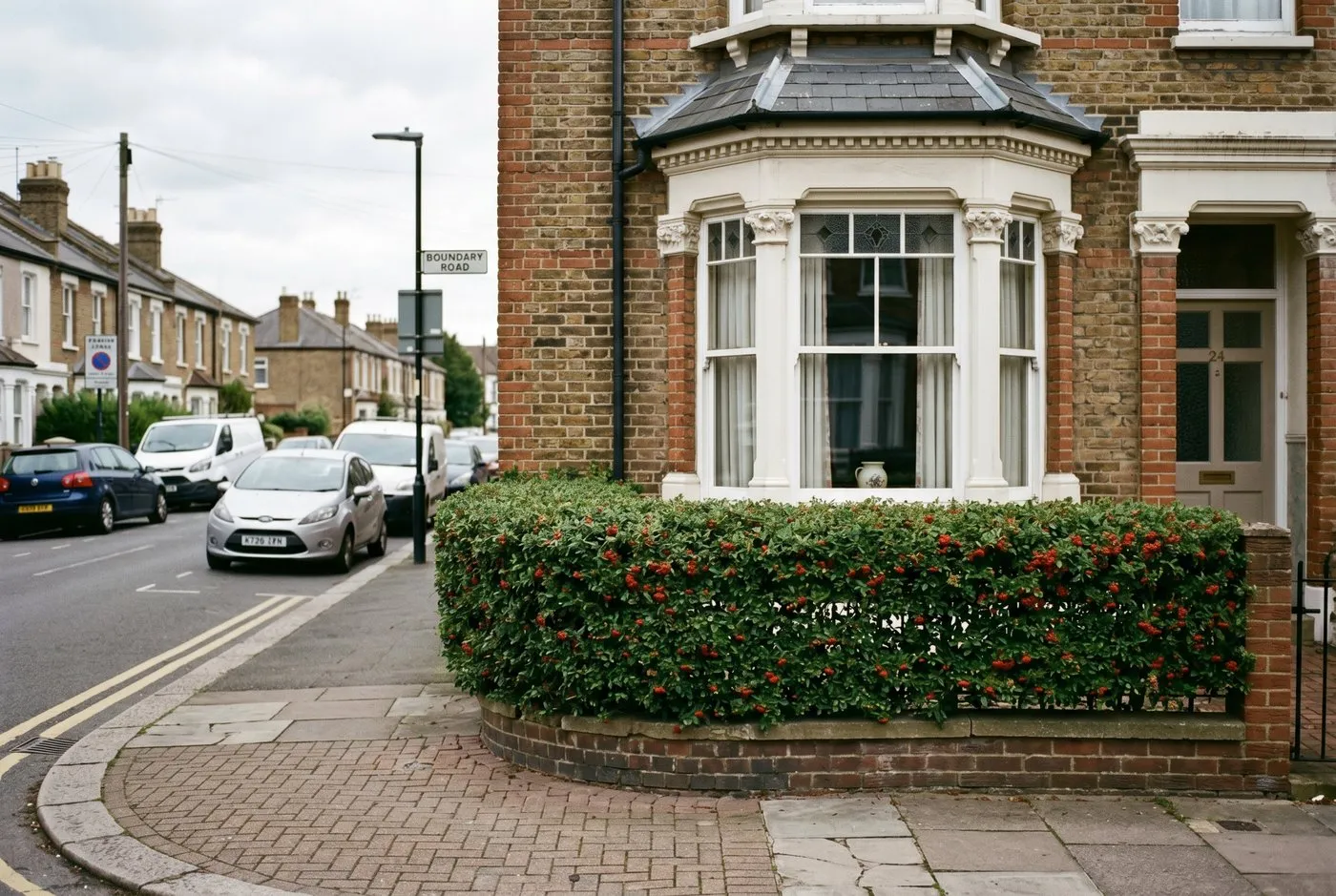 A cotoneaster hedge along a terraced front boundary filters air before it reaches the house. The front garden is where pollution-busting plants work hardest.
Maintaining density so the barrier keeps filtering
A pollution barrier is only as good as its density, and density needs maintenance. A neglected hedge thins, gaps open, and the filtering drops away. The trimming routine is simple but it cannot be skipped.
Trim twice a year for a formal evergreen hedge, once in late spring and again in late summer, staying within the wildlife nesting rules. Cut the sides slightly tapered, wider at the base than the top, so light reaches the bottom and the base stays dense. A hedge that is starved of light at the base goes bare there, which is the worst place for a gap on a pollution barrier.
Feed and mulch in spring to keep growth vigorous, especially on the poor, compacted soil common beside roads. Replace any plant that dies before a gap establishes, matching the species so the barrier stays even. Check the road-facing side each autumn for dieback from salt spray or exhaust scorch, and prune it out. The Royal Horticultural Society’s hedge advice and the research behind cotoneaster franchetii are sound, non-commercial references for species choice and care. For the wider picture on UK air quality near you, Defra’s air quality data maps roadside pollution by area.
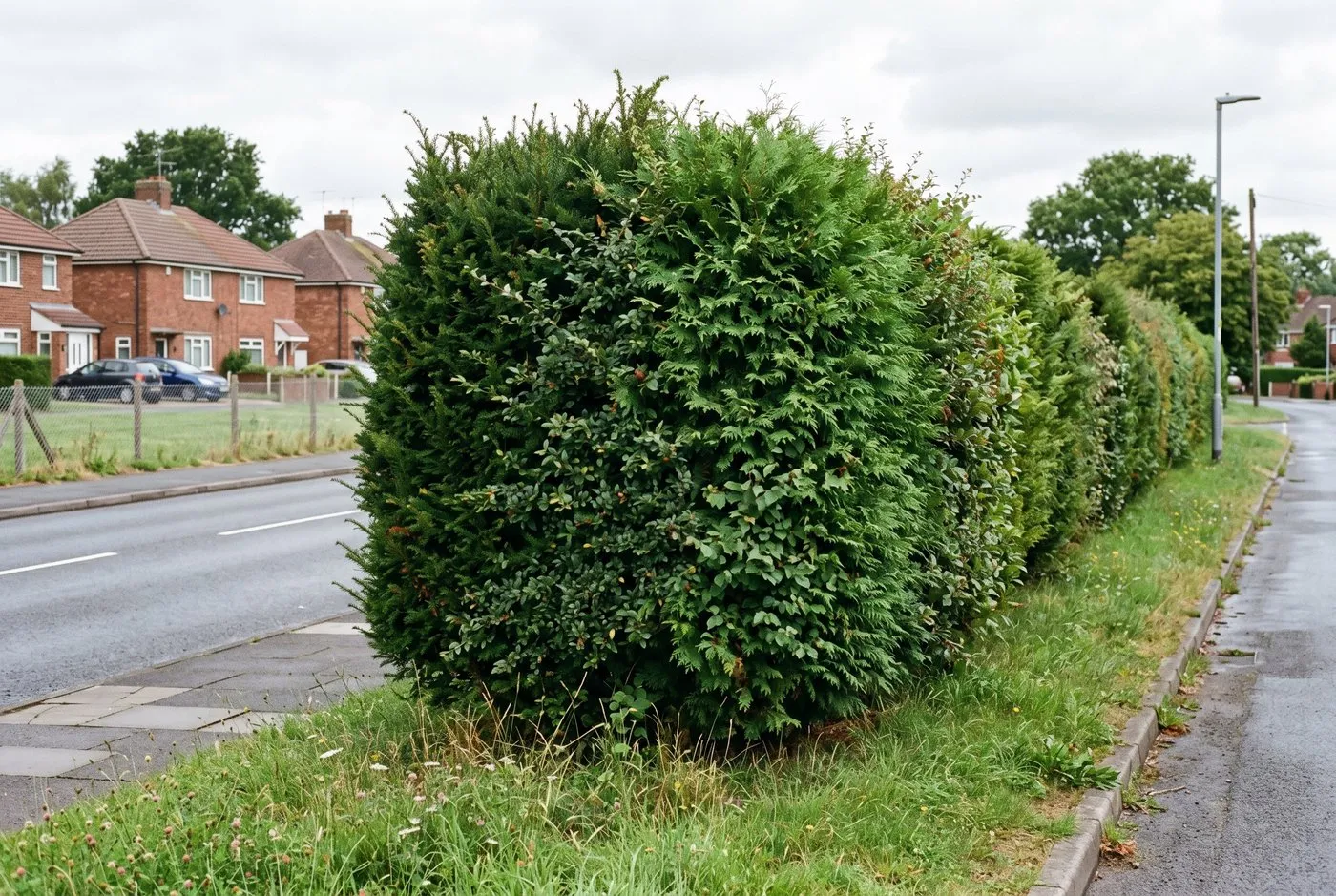 A layered mixed barrier, dense from the ground to two metres. Tapered sides and twice-yearly trimming keep the base thick, which is what filtering depends on.
Related reading: Ivy traps roadside particulates well, though it needs managing, as our guide to English ivy explains.
Frequently asked questions
What are the best pollution-busting plants for UK gardens?
Cotoneaster franchetii leads, with yew, thuja and hawthorn close behind. RHS and Lancaster University research found cotoneaster franchetii around 20% more effective at trapping particulates than comparison hedges. Its small, hairy, rough leaves catch fine soot. Mixing it with yew and ivy on walls builds a dense, all-year barrier near a busy road.
How do hedges reduce air pollution near roads?
Their leaves physically trap airborne particulates as the air passes through. Hairy, rough and waxy leaf surfaces snag PM2.5 and PM10 particles, which are smaller than 10 microns. A dense, gap-free hedge slows and filters the air. Rain then washes the trapped soot down into the soil, clearing the leaf to catch more.
How tall should a pollution barrier hedge be?
At least 1.5 to 2 metres, and taller is better. The hedge needs to rise above head height to filter the air you breathe. It must also be dense and gap-free from the ground up, because gaps channel polluted air straight through. An evergreen species keeps the barrier working through winter.
Is cotoneaster franchetii really the best pollution plant?
Yes, in the RHS trials it was the standout performer. Researchers led by Tijana Blanusa found its hairy, rough leaves trapped around 20% more particulate than smoother hedge species over a week beside traffic. It is semi-evergreen in the UK, fast to establish and tolerant. The RHS now lists it as a top air-cleaning hedge plant.
Can a hedge completely clean roadside air?
No, a hedge is a filter, not a cure. It traps a meaningful share of passing particulates but cannot remove all pollution or clear gases like nitrogen dioxide. It reduces what reaches the garden behind it. You still need good ventilation indoors and should not treat a hedge as a complete fix for living beside heavy traffic.
Do pollution-busting hedges also reduce traffic noise?
Yes, a dense hedge cuts noise as well as trapping particulates. A thick, tall, gap-free barrier can soften traffic noise by several decibels and masks it with leaf rustle. The noise benefit needs the same density and height as the air-cleaning benefit, so one planting delivers both. Solid fencing behind the hedge adds more noise reduction.
Now you know which pollution-busting plants trap the most and how to plant a barrier that works, browse our full range of plants and start with a dense, evergreen, gap-free hedge along your roadside boundary. It filters the air, cuts the noise, and screens the garden, all from one planting that pays you back for thirty years.
Our team produces practical UK gardening guidance from source research, contributor records and established horticultural practice. Editorial standards are overseen by Matt W.