Quick answer
The Sir David Beckham rose (Ausa34b16) is a white English shrub rose from David Austin, launched at RHS Chelsea in May 2026. It grows about 1.2m tall and 90cm wide, repeat flowers from late spring to early winter and suits sun or part shade, borders or a 45cm pot. Plant bare-root roses from November to March, with the graft 5cm below the soil.
Key points6 at a glance
- Plant bare-root from November to March, or potted at any time the ground isn't frozen or waterlogged
- Set the graft union about 5cm below the soil and soak bare roots for two hours first
- It grows to roughly 1.2m by 90cm, so it fits a border or a 45cm (60 litre) pot
- Feed in March and again after the first flush of flowers in June, then stop by August
- Prune in January or February: lightly in year one, then by a third to a half
- Bare-root plants cost £27.50 from David Austin, and £2.50 of each sale goes to The King's Foundation
In this article12 sections
The Sir David Beckham rose is a white English shrub rose that’s easy to grow in almost any UK garden. Give it sun or part shade, decent soil and a yearly prune. It then flowers from late spring until the frosts. It grows about 1.2m tall, so it fits a border or a big pot.
David Austin Roses launched it at the RHS Chelsea Flower Show in May 2026. The idea came from his daughter Harper, who wanted a rose to mark his 50th birthday. Plenty has been written about the story, but very little about how to grow it.
This guide fixes that. You’ll find how to plant it bare-root this winter and how to grow it in a pot. You’ll also learn when to feed and prune, and what to plant with it. There’s also a month-by-month plan and the dated story behind the rose at the end.
What does the Sir David Beckham rose look like?
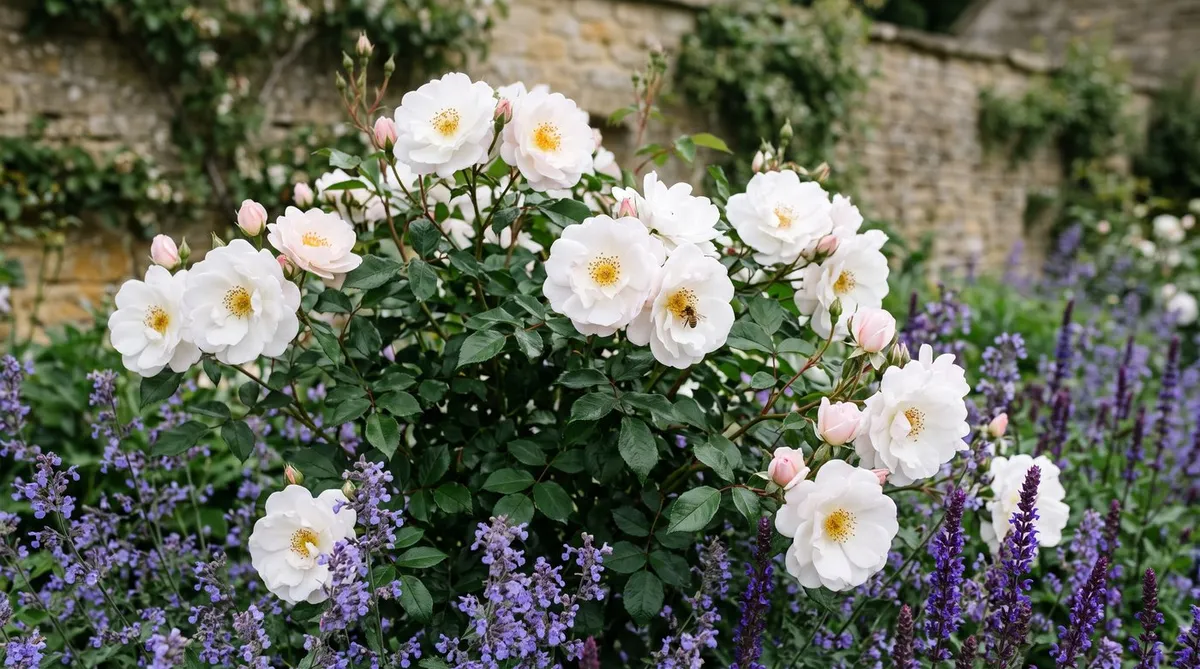
The Sir David Beckham rose has white, semi-double flowers with a starburst of golden stamens. The buds start soft blush-pink. As each flower opens, it shows a hint of yellow, then fades to clear white. Each bloom is about 5 to 9cm across and gently cupped.
The flowers come in generous clusters on dark, glossy leaves and red-tinged stems. That dark foliage makes the white flowers glow, especially at dusk. The stems carry very few thorns, which makes pruning and picking much kinder on your hands.
It’s a repeat-flowering rose. David Austin lists flushes of flowers from late spring right through to early winter. If you stop deadheading in autumn, you also get rose hips.
What does it smell like?
It has a medium musk fragrance that changes as the flower opens. David Austin describes fresh green banana notes at first. These give way to honeyed musk, with nougat and clove. The RHS adds a hint of myrrh.
The open, pollen-rich flowers are a favourite with bees. That’s a neat link, because Sir David keeps bees at his Cotswolds home.
Where to plant the Sir David Beckham rose
Plant it in sun or part shade, in any soil that doesn’t sit wet. David Austin lists it for north, east, south and west-facing spots. It’s also listed for every soil type, so clay, chalk and sand are all fine with a little preparation.
Give it at least four to five hours of direct sun for the best flowering. A north-facing spot works, but expect fewer flowers than in full sun. Good air flow around the plant helps keep leaf diseases at bay.
It suits three main uses:
- Mixed borders, towards the middle, where its 1.2m height sits nicely
- A flowering hedge, planted about 60cm apart in a row
- A specimen plant or a large pot by a door, where you can enjoy the scent
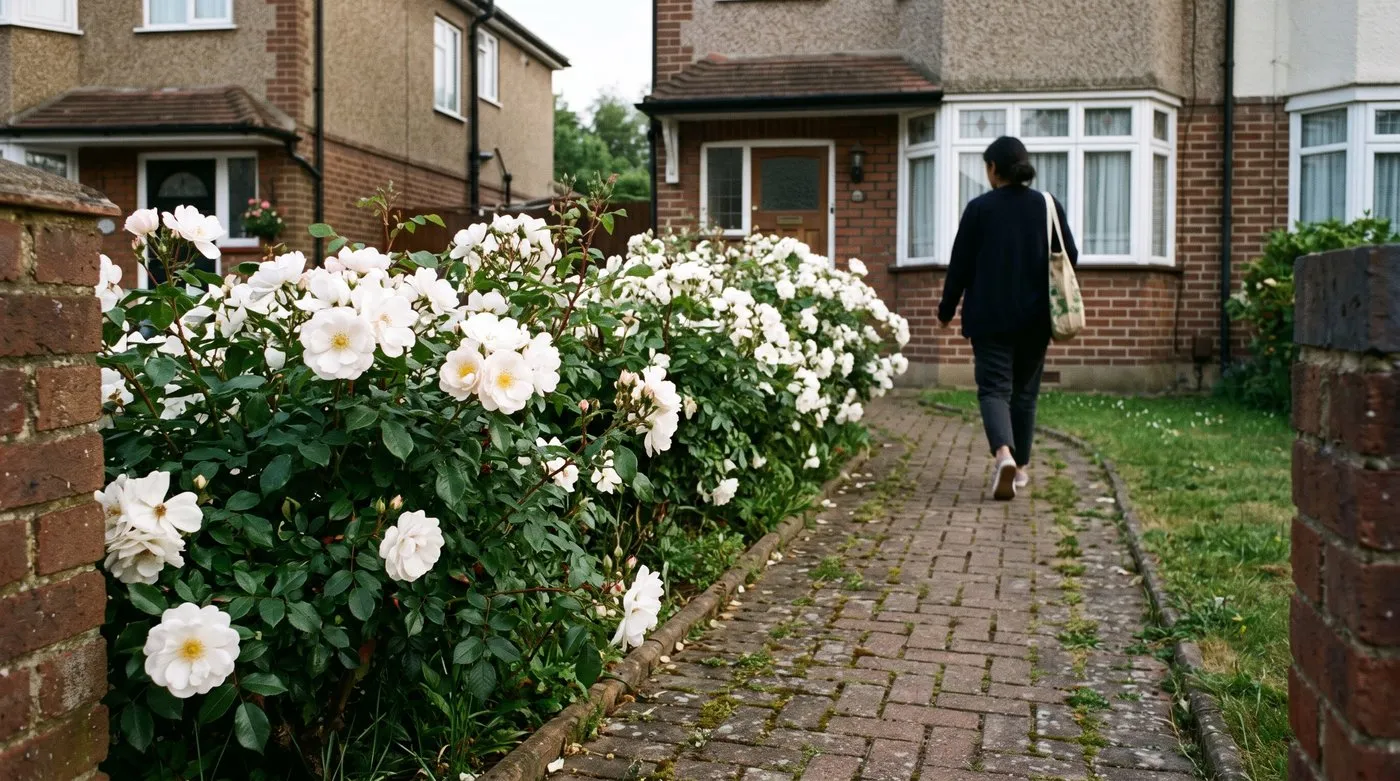 Illustrative image: white shrub roses planted about 60cm apart make a low, scented flowering hedge.
Gardener’s tip: Don’t plant a new rose where an old rose grew. Roses planted in tired “rose soil” often sulk, a problem called replant disease. Choose a fresh spot. Or dig out a hole about 45cm wide and deep, and refill it with fresh soil from elsewhere.
How to plant a bare-root Sir David Beckham rose
Plant bare-root roses between November and March, whenever the ground isn’t frozen or waterlogged. Bare-root plants are dormant roses lifted from the field, sent with no pot or soil. They’re the cheapest way to buy roses, and they settle in quickly. Our step-by-step guide to planting bare-root roses covers every type, from shrubs to climbers.
David Austin is sending bare-root plants of this rose from mid-November. Can’t plant straight away? Keep the rose in its packaging somewhere cool and frost-free for up to three weeks.
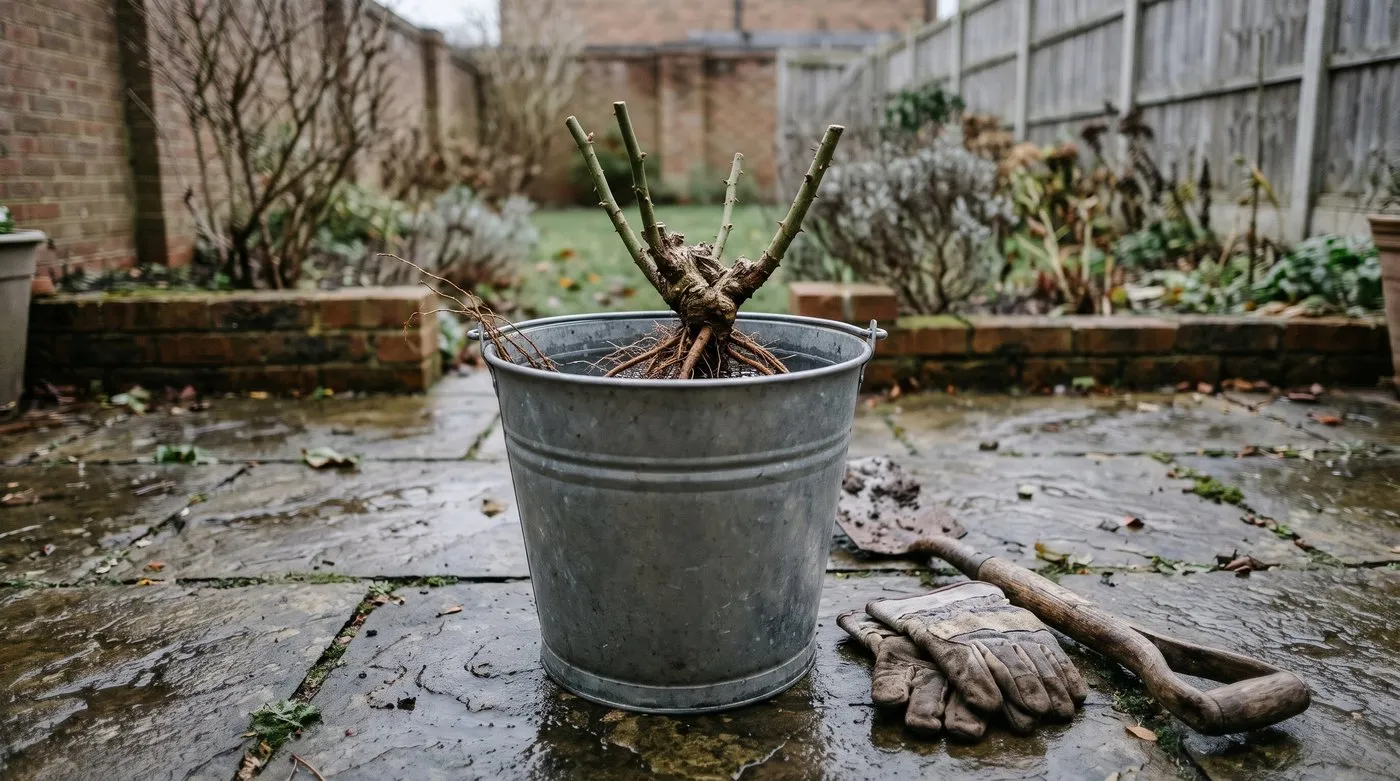 Illustrative image: soak bare roots in a bucket of water for about two hours before planting.
Here’s how to do it:
- Soak the roots in a bucket of water for about two hours.
- Dig a hole about 40 to 45cm wide and deep. Fork over the bottom.
- Mix in well-rotted manure or garden compost with the soil you dug out.
- Sprinkle mycorrhizal fungi onto the roots, if you have some. It helps the roots get going.
- Set the graft union about 5cm below the soil. The graft is the knobbly bit where the stems meet the roots. Lay a cane across the hole to check the level.
- Backfill and firm gently with your heel. Don’t stamp hard.
- Water well, with a full watering can, even if it’s raining.
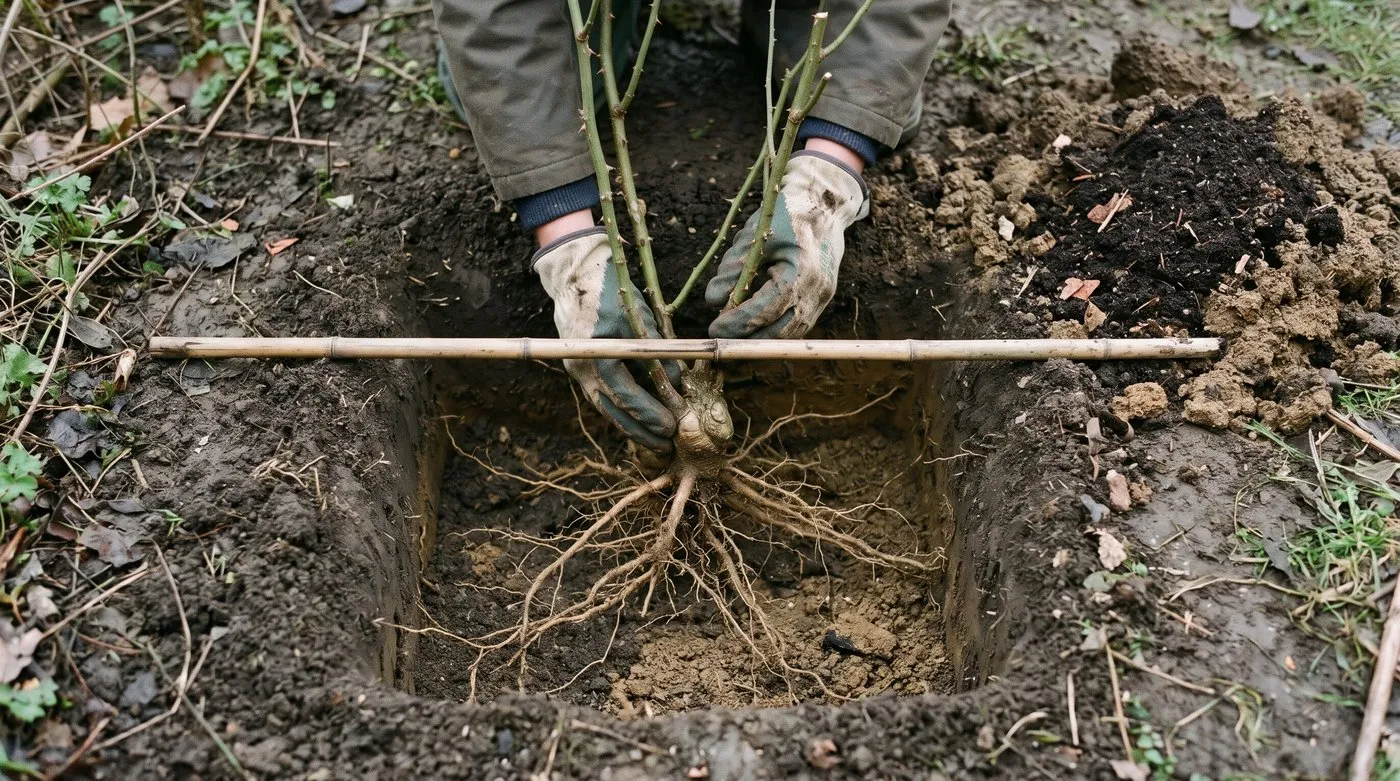 Illustrative image: a cane across the hole shows the soil level. The knobbly graft union should sit about 5cm below it.
Planting a potted rose is the same, but skip the soaking. Water the pot well an hour before, and you can plant potted roses at any time of year. Our guide to when to plant roses compares bare-root and potted plants in more detail.
Bare-root or potted: which should you buy?
Bare-root is cheaper and best for winter planting. Potted is for planting at any time.
| Bare-root | Potted | |
|---|---|---|
| Price from David Austin | £27.50 | £38.50 |
| When to plant | November to March | Any time the ground isn’t frozen or waterlogged |
| Delivery | From mid-November | In stock now |
| Best for | Planting this winter, gifts | Instant impact, summer planting |
| Watch out for | Must be planted within three weeks | Water well through the first summer |
David Austin gives a five-year guarantee on roses bought direct. If a rose fails to thrive, they replace it free of charge.
Growing the Sir David Beckham rose in a pot
Yes, it grows well in a pot, as long as the pot is big enough. David Austin recommends at least 45cm wide and 45cm deep for shrub roses. That holds about 60 litres of compost.
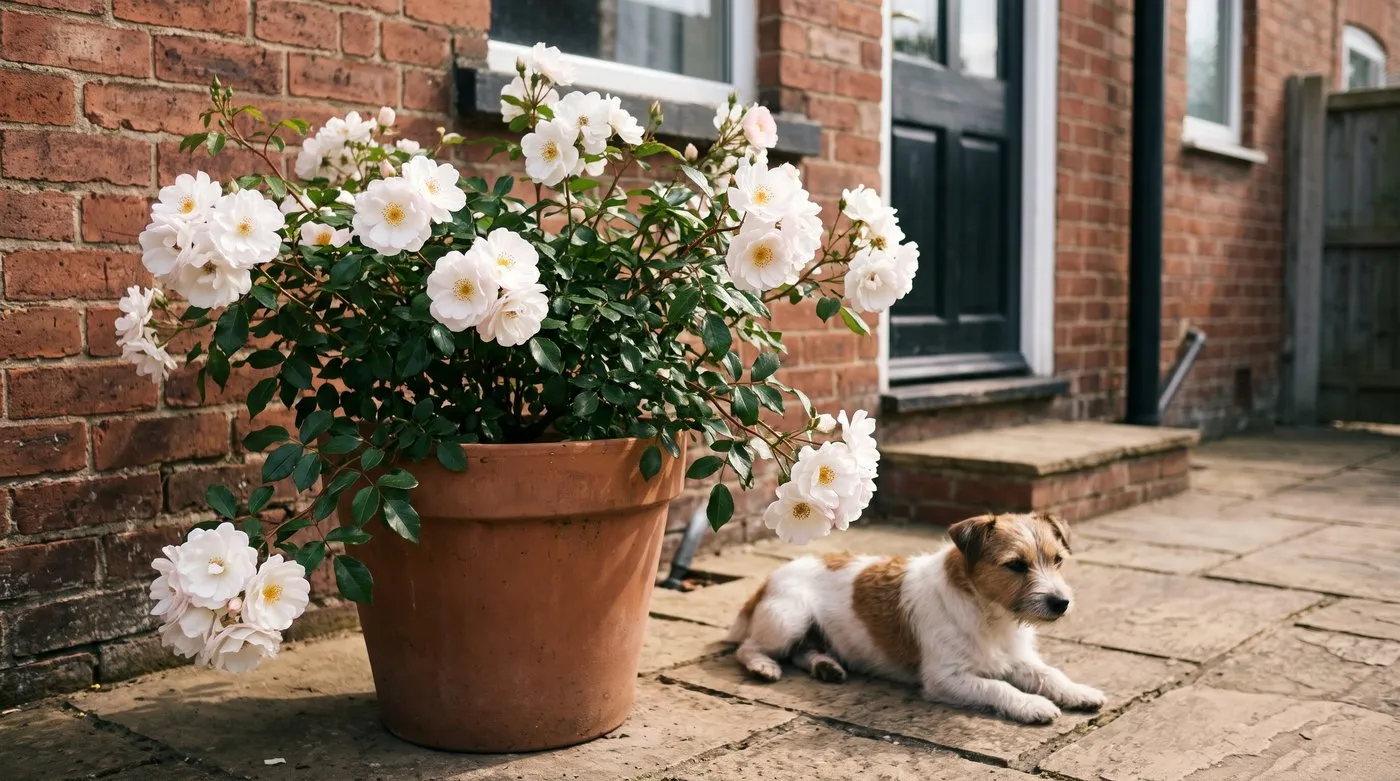 Illustrative image: a shrub rose in a pot at least 45cm wide, placed near the house to enjoy the scent.
Follow these steps for a happy potted rose:
- Use a pot with drainage holes, and put crocks or gravel in the base.
- Fill with peat-free compost mixed with John Innes No. 3. The soil-based John Innes gives weight and holds nutrients.
- Keep the graft union 5cm below the surface, just as in the ground.
- Water often in summer. Pots dry out fast, sometimes daily in hot spells.
- Feed every spring, as potted roses can’t hunt for food.
Dark pots heat up in the sun, so choose a pale or terracotta one for a sunny patio. Our guide to growing roses in containers covers repotting and winter care.
How to feed, water and mulch it
Feed twice a year, water deeply in dry spells and mulch every spring. That’s the whole routine.
- Feeding: give a rose fertiliser in March or April, after pruning. Feed again after the first flush of flowers in June. Stop feeding by early August, so soft new growth doesn’t get caught by frost.
- Watering: in its first summer, give a full watering can (about 10 litres) once a week in dry weather. Water the soil, not the leaves. Established roses in the ground rarely need watering, except in a long drought.
- Mulching: spread a 5cm layer of compost or well-rotted manure around the base in spring. Keep it a hand’s width away from the stems.
Our guide to what mulch is and how to use it explains the best materials.
How to prune the Sir David Beckham rose
Prune in January or February, while the rose is dormant. The aim is a healthy, open shrub that flowers well all summer. How hard you cut depends on the rose’s age, following David Austin’s pruning advice.
- Year one: prune lightly. Cut stems back to about 30 to 45cm. Remove any dead, damaged or diseased stems.
- Year two: prune more firmly, cutting the whole shrub back by about half.
- Year three and beyond: reduce the height by a third to a half. Take out weak, spindly stems and one or two old stems if the centre is crowded.
Cut just above a bud with clean, sharp secateurs. Angled cuts aren’t essential. After pruning, pull off any old leaves left on the plant and clear fallen ones from the ground. This removes a lot of black spot spores.
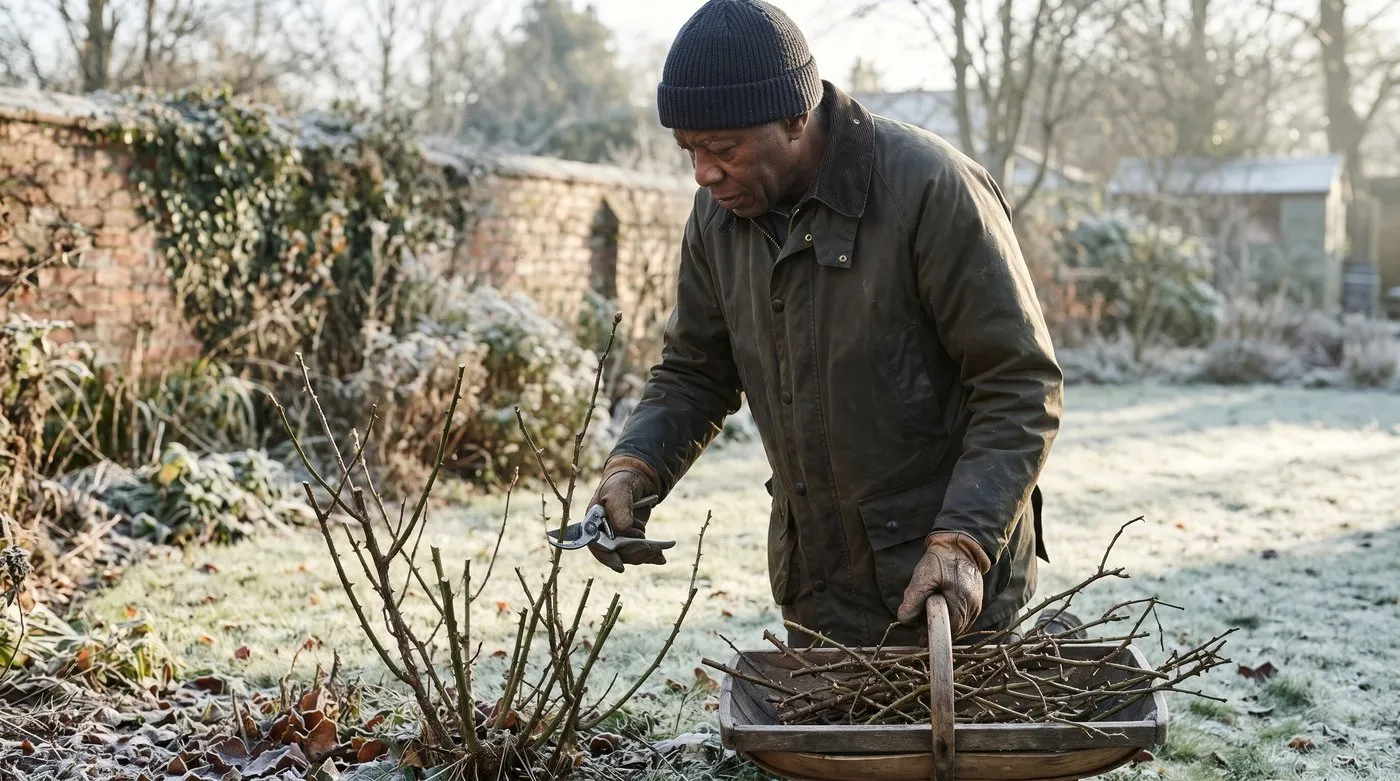 Illustrative image: winter pruning a shrub rose. Cut back by a third to a half once the rose is established.
Deadhead through summer to keep new flowers coming. Snip each faded flower back to the next leaf. From October, stop deadheading and let the hips form for birds and winter interest. See our rose pruning guide for more detail on cuts.
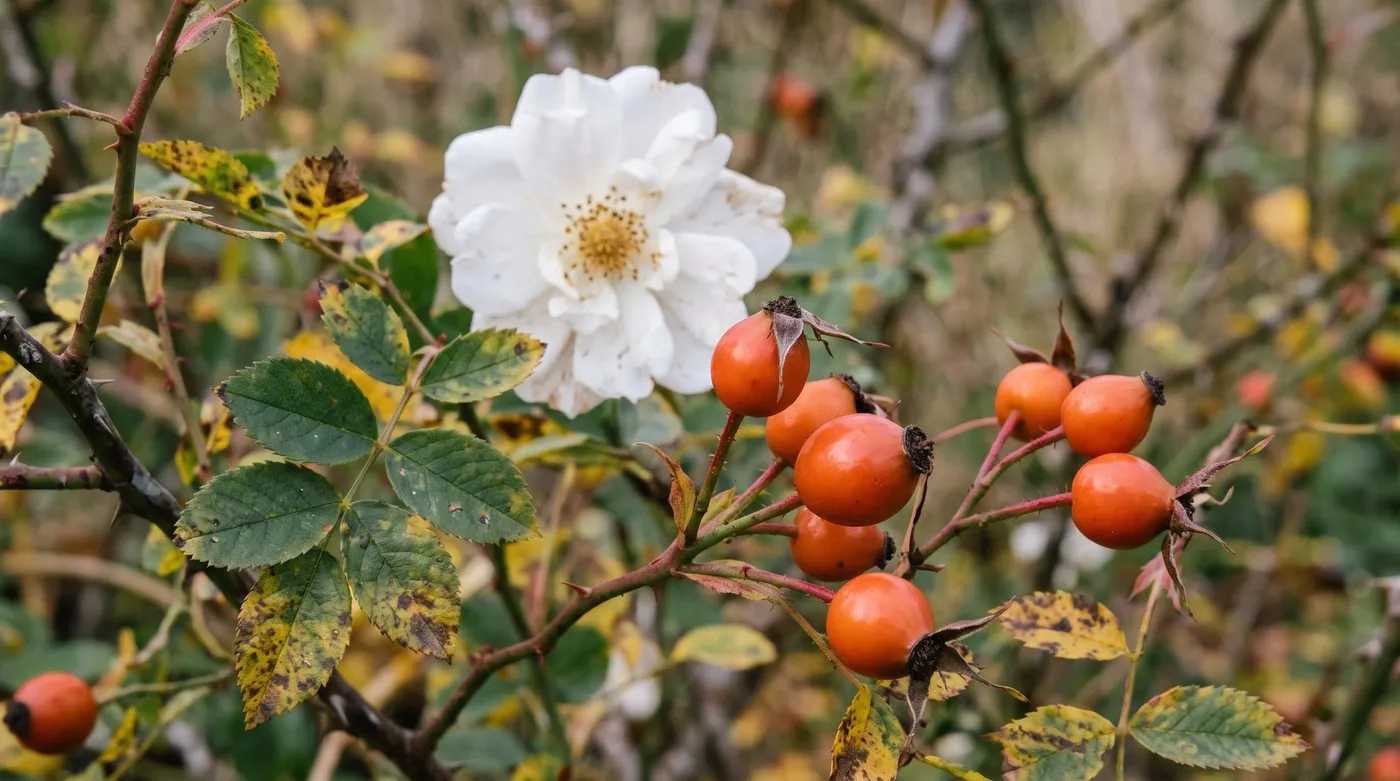 Illustrative image: stop deadheading in October and a repeat-flowering shrub rose sets hips like these for the birds.
Best companion plants for the Sir David Beckham rose
Pair it with soft blues, purples and silvers that bees love. White roses look fresh next to cool colours. Pollinator-friendly partners also suit a rose named after a beekeeper.
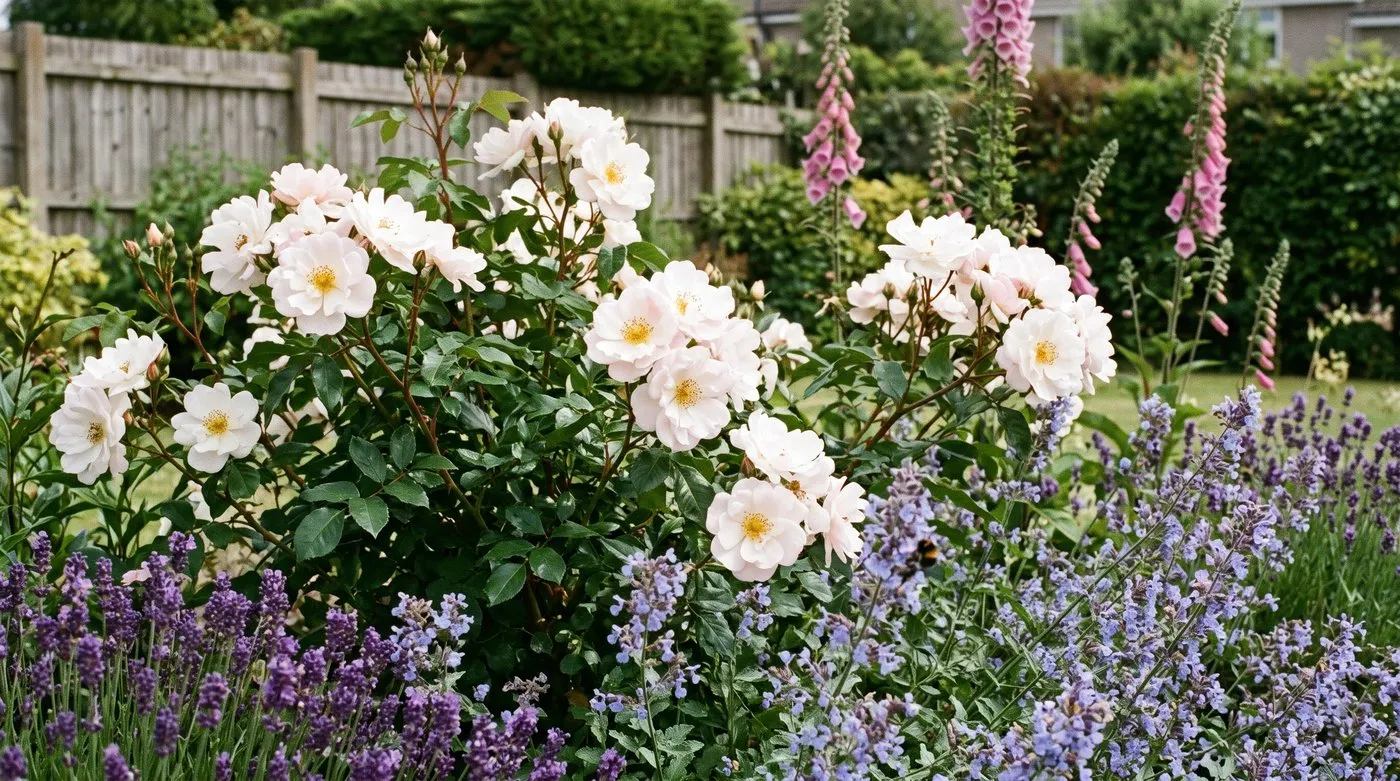 Illustrative image: a white shrub rose with catmint, lavender and foxgloves, a bee-friendly mix.
| Companion | Why it works | Flowers |
|---|---|---|
| Catmint (Nepeta ‘Walker’s Low’) | Soft blue haze that hides bare rose stems | May to September |
| Lavender (Lavandula angustifolia ‘Hidcote’) | Purple, scented and loved by bees | June to August |
| Hardy geranium ‘Rozanne’ | Long-flowering blue ground cover | June to October |
| Alliums (Allium ‘Purple Sensation’) | Purple globes between the roses in late spring | May to June |
| Foxgloves (Digitalis purpurea) | Tall spires for a cottage-garden look | June to July |
| Salvia ‘Caradonna’ | Deep purple spikes and a magnet for bumblebees | June to September |
Leave about 30cm between the rose and its neighbours, so air flows and the rose gets its share of water. Our companion plants for roses guide has more ideas. For more bee-friendly ideas, try our list of plants for bees.
Common problems with the Sir David Beckham rose
Like most roses, it can get black spot, aphids and rust. David Austin hasn’t published a disease-resistance rating for this rose yet. So treat it like any garden rose and keep it healthy.
- Black spot: dark spots on the leaves, which then yellow and fall. Clear fallen leaves and avoid wetting the foliage. Our black spot guide has the full fix.
- Aphids: greenfly on new shoots in spring. Squash them by hand or blast them off with water. Blue tits and ladybirds soon help out.
- Rust: orange spots under the leaves in late summer. Pick off affected leaves and give the plant more space.
- Few flowers: usually too much shade, too little food or pruning too timidly. Our guide to a rose not flowering explains each cause.
Common mistakes to avoid
- Planting the graft too high. A graft left above the soil can rock in the wind and sprout suckers. Keep it 5cm below the surface.
- Planting where an old rose grew. Replant disease stunts new roses. Choose a fresh spot or replace the soil.
- Letting the roots dry out. Bare roots die quickly in wind and sun. Keep them wrapped or in water until the moment you plant.
- Using a small pot. Anything under 45cm wide dries out too fast and the rose struggles. Go big from the start.
- Feeding late in summer. Feeding after July pushes soft growth that frost damages. Stop by early August.
Month-by-month care for the Sir David Beckham rose
| Month | What to do |
|---|---|
| January | Prune while dormant. Clear old leaves from the ground |
| February | Finish pruning. Plant bare-root roses if the soil isn’t frozen |
| March | Feed with rose fertiliser. Mulch 5cm deep. Last month for bare-root planting |
| April | Watch for aphids on new shoots. Water new roses in dry spells |
| May | First buds appear. Plant companions such as catmint and salvia |
| June | First big flush of flowers. Feed again after it. Deadhead faded blooms |
| July | Deadhead regularly. Water pots daily in hot weather |
| August | Stop feeding. Keep deadheading for later flowers |
| September | Flowers continue. Pick off any leaves with rust or black spot |
| October | Stop deadheading and let hips form. Order bare-root roses |
| November | Plant bare-root roses. Bare-root deliveries start mid-month |
| December | Plant bare-root roses on mild days. Give one as a Christmas gift |
The story behind the Sir David Beckham rose
The rose was Harper Beckham’s idea, to mark her dad’s 50th birthday in May 2025. David Austin says she wanted it to reflect his love of the British countryside. It also marks the time they spend together in the family garden. The breeding work behind the rose stretches back more than a decade, according to the RHS.
Here’s how it unfolded:
- October 2025: David Austin announced the new English rose, named Sir David Beckham (Ausa34b16).
- 18 May 2026: the rose went on sale and was unveiled at the RHS Chelsea Flower Show. Sir David showed it to King Charles at the show.
- 19 May 2026: Sir David thanked Harper on Instagram, calling the rose a gift from his “little rose”.
- Chelsea 2026: he was also an ambassador for the RHS and The King’s Foundation “Curious Garden”, designed by Frances Tophill.
- November 2026: bare-root plants start shipping from mid-November.
For every rose sold, £2.50 goes to The King’s Foundation, where Sir David is an ambassador. Full details are on the David Austin Sir David Beckham rose page.
David Austin’s own posts tell the story best. The first is the launch film from Chelsea week. The second is the original announcement from October 2025, shared with The King’s Foundation.
View this post on Instagram
View this post on Instagram
Is the Sir David Beckham rose a good Christmas present?
Yes, it makes a thoughtful gift for a gardener or a Beckham fan. Bare-root plants arrive in the right season for planting, and the charity donation adds something extra. Order early in December, as popular roses can sell out.
If you’re not sure the person has space, a potted plant is easier. It can wait on the patio until a mild day for planting. Our Christmas gifts for gardeners guide has more ideas.
Frequently asked questions
What colour is the Sir David Beckham rose?
It’s white, opening from soft blush-pink buds. Young flowers carry a hint of yellow, then fade to clear white. The open, semi-double blooms show a ring of golden stamens in the middle.
Does the Sir David Beckham rose smell?
Yes, it has a medium musk fragrance. David Austin describes green banana notes at first, then honeyed musk, nougat and clove as the flower opens. Sniff it in the morning, when the scent is usually strongest.
How big does the Sir David Beckham rose grow?
About 1.2m (4ft) tall and 90cm (3ft) wide. That’s the size after three years with a yearly prune. It has an upright, open shape, so it doesn’t sprawl over its neighbours.
Can you grow the Sir David Beckham rose in a pot?
Yes, David Austin lists it for pots and containers. Use a pot at least 45cm wide and deep, holding about 60 litres. Fill it with peat-free compost mixed with John Innes No. 3.
Where can you buy the Sir David Beckham rose?
Direct from David Austin Roses and from selected garden centres. Bare-root plants are £27.50 and potted plants £38.50 from David Austin. Garden centres such as Dobbies and Burford Garden Company stock it too.
Why is the rose named after David Beckham?
His daughter Harper asked for it to mark his 50th birthday. David Austin named the rose for him and launched it at RHS Chelsea in May 2026. He showed it to King Charles at the show.
Does the Sir David Beckham rose support a charity?
Yes, £2.50 from each rose sold goes to The King’s Foundation. Sir David is an ambassador for the charity. It works on sustainable communities, heritage crafts and nature.
Now you’ve mastered this rose, read our guide on how to grow roses in the UK for the next step. You’ll find more rose and plant guides in our plants section.
Our team produces practical UK gardening guidance from source research, contributor records and established horticultural practice. Editorial standards are overseen by Matt W.