Quick answer
Winter jasmine, Jasminum nudiflorum, is a tough wall shrub with bright yellow flowers on bare green stems from November to March. It grows in sun or shade, including a cold north-facing wall, and in almost any soil. It doesn't climb on its own, so tie it to wires or trellis, or let it tumble over a bank. Prune it straight after flowering in spring.
Key points6 at a glance
- Winter jasmine flowers on bare green stems from November to March
- It's fully hardy and happy on a north or east-facing wall
- It doesn't twine or cling, so tie the stems to wires or trellis
- Prune straight after flowering, never in autumn, or you'll cut off the buds
- An overgrown plant can be cut hard in spring and will bounce back
- Stems root where they touch the soil, so free plants are easy
In this article12 sections
Winter jasmine is one of the cheeriest plants you can grow in a UK garden. From November to March, bright yellow flowers open along its bare green stems, just when everything else looks grey. It’s tough, happy on a cold north-facing wall and needs very little from you. Tie it in, prune it after flowering, and it’ll flower for years.
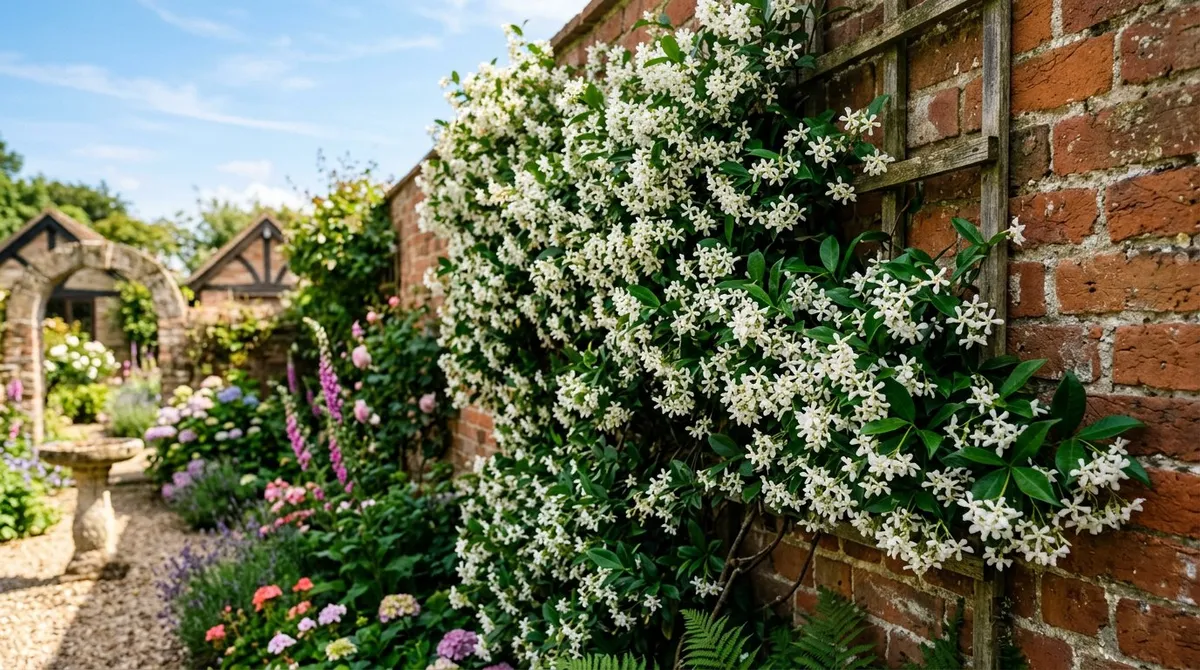
This guide covers winter jasmine on its own. For summer jasmine and the other types, see our guide to growing jasmine.
What is winter jasmine?
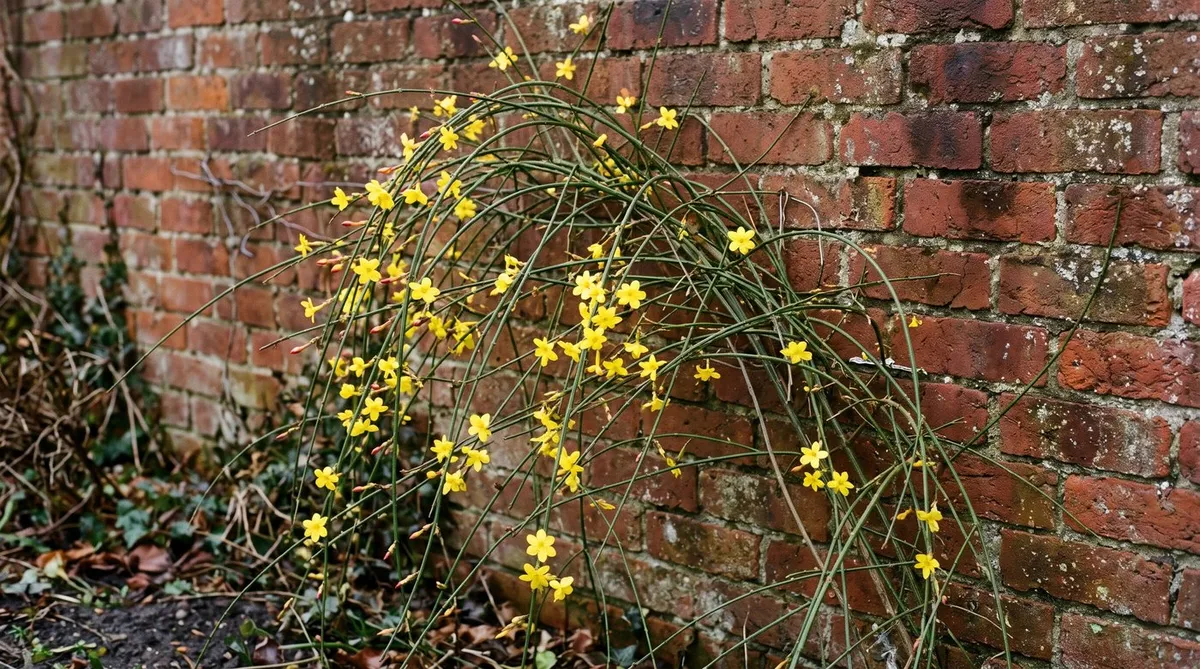
Winter jasmine, Jasminum nudiflorum, is a deciduous shrub with long, arching green stems. The small, star-shaped yellow flowers appear on the bare stems in winter, before the leaves. The leaves are small, dark green and split into three.
Despite the name, it doesn’t smell like summer jasmine. It has little or no scent. It’s grown for colour, and it’s one of the most reliable flowers of midwinter.
Left alone, it makes a loose mound about 1m tall. Tied to a wall, it can reach about 3m tall and wide.
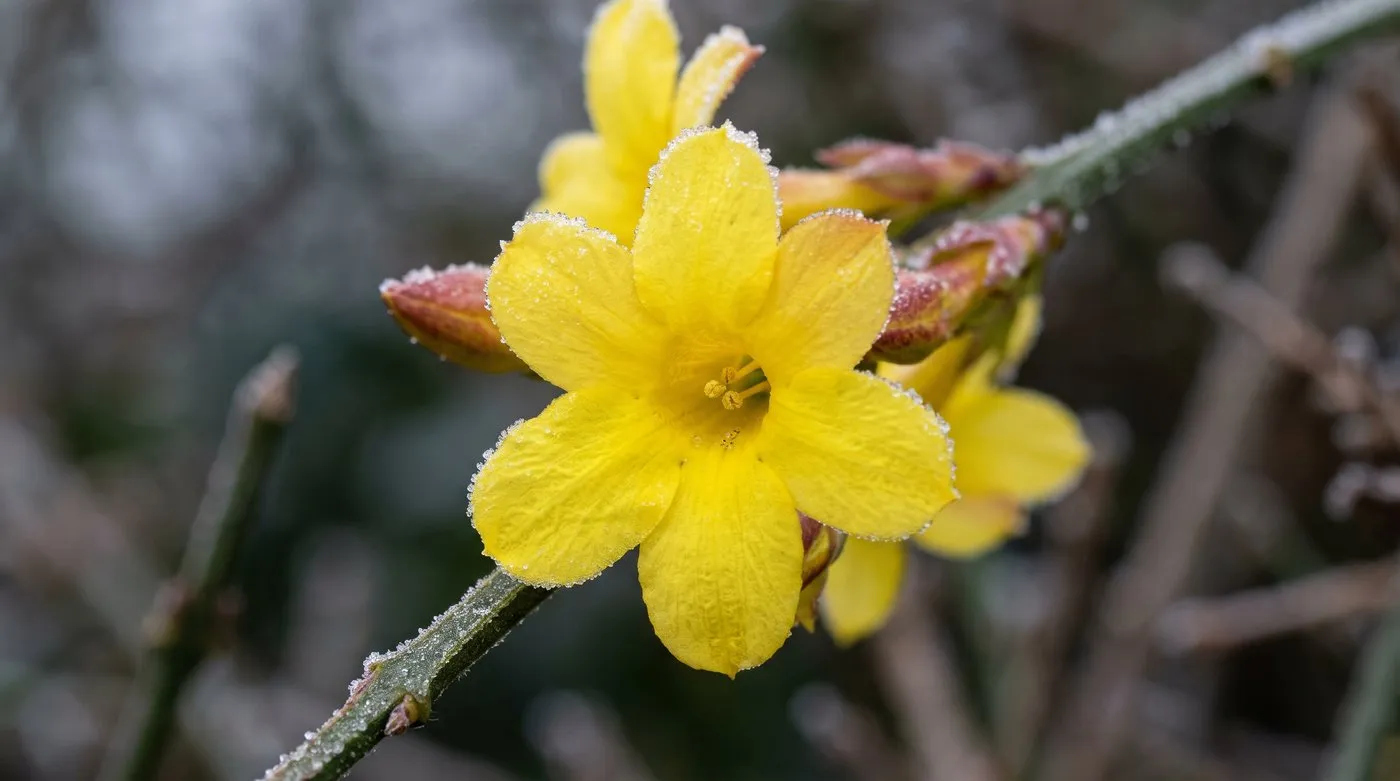
The flowers open on bare green stems and shrug off frost. Any frosted flowers are soon replaced by new buds.
Where to plant winter jasmine
Winter jasmine is very easy to please. It grows in sun or shade. It’s one of the best plants for a north or east-facing wall, where little else flowers in winter. It flowers best with a few hours of sun.
It grows in almost any soil, including clay and chalk, as long as it isn’t waterlogged. It’s fully hardy across the UK, so there’s no need to protect it.
Good spots include:
- A shady wall or fence by the back door, where you’ll see the flowers every day
- A bank or slope, where the stems can tumble down and root as they go
- The top of a low wall, so the stems cascade over the edge
- A large pot by the front door
For more ideas for a shady side of the house, see our guide to north-facing garden ideas.
How to plant winter jasmine
Plant pot-grown winter jasmine at any time the ground isn’t frozen or waterlogged. Autumn and spring are best.
- Dig a hole twice as wide as the pot, about 30cm from the wall or fence. The soil right at the base of a wall is often dry.
- Mix some well-rotted compost into the soil you dug out.
- Plant it at the same depth it was in the pot, leaning it slightly towards the wall.
- Firm the soil and water well.
- Untie the stems from the cane and tie them to wires or trellis in a fan shape.
Water it in dry spells for the first year. After that, it rarely needs watering in the ground.
How to train winter jasmine
Winter jasmine doesn’t twine or cling like a true climber. To grow it up a wall, you’ll need to tie it in.
Fix horizontal wires to the wall about 30 to 45cm apart, or put up a trellis. Spread the main stems out in a fan and tie them on with soft twine. Fill in the gaps by tying in new shoots as they grow. The side shoots hang down and carry the flowers.
Our guide to training climbing plants shows how to fit wires and trellis.
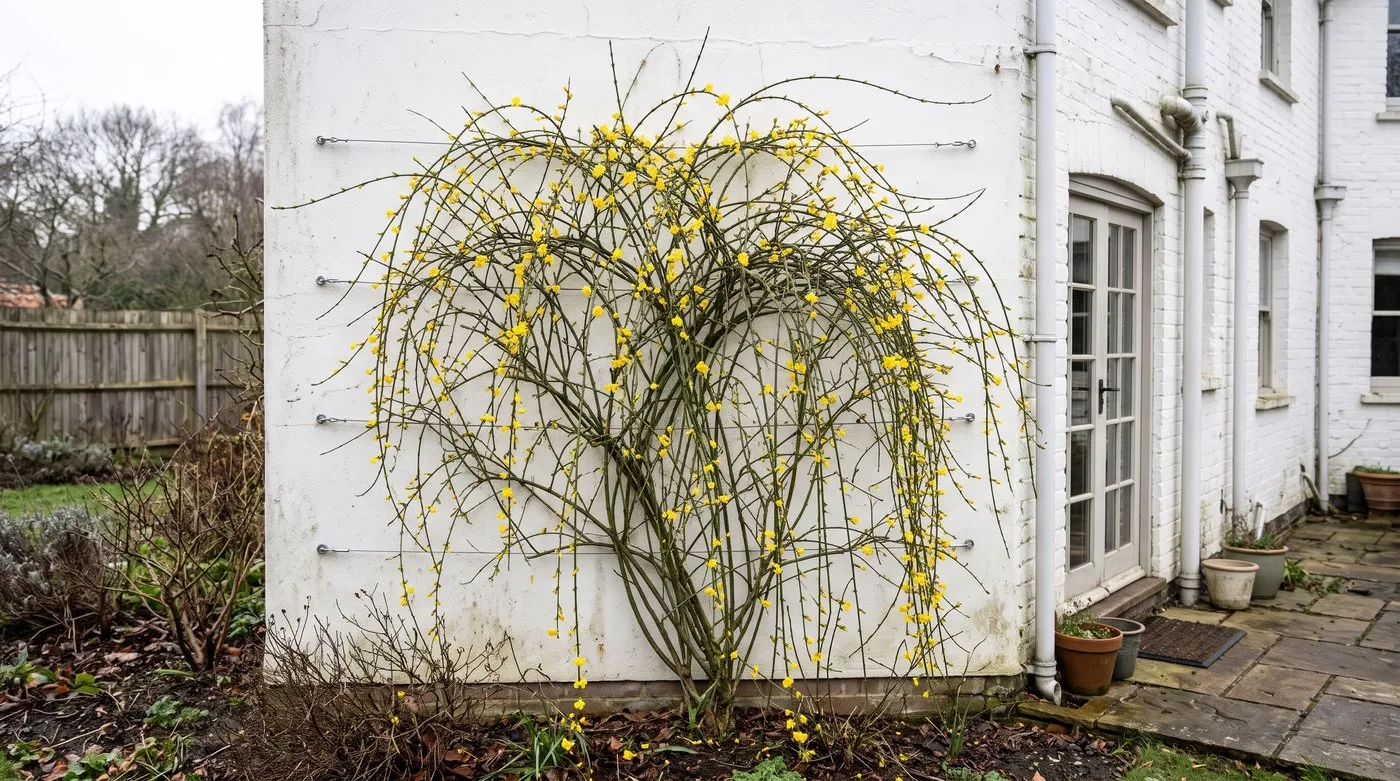
Tie the main stems in a fan shape. The side shoots hang down and carry the flowers.
When and how to prune winter jasmine
Prune winter jasmine straight after flowering, in late March or April. The flowers form on the shoots that grow over the summer. If you prune in autumn or early winter, you’ll cut off the flower buds.
- Cut back flowered stems. Cut each one back to a pair of strong buds, about 5cm from the main framework.
- Remove dead and weak growth. Take out dead, damaged or very thin stems at the base.
- Thin out old stems. Every three or four years, cut about a third of the oldest stems to the ground.
- Tie in new shoots. Tie the strongest young shoots into the fan.
- Feed and mulch. Scatter a general fertiliser and add a layer of compost or bark.
Gardener’s tip: If you’re tidying a plant in a hurry, just trim the long stems back after flowering. Even a quick trim at the right time keeps it flowering well.
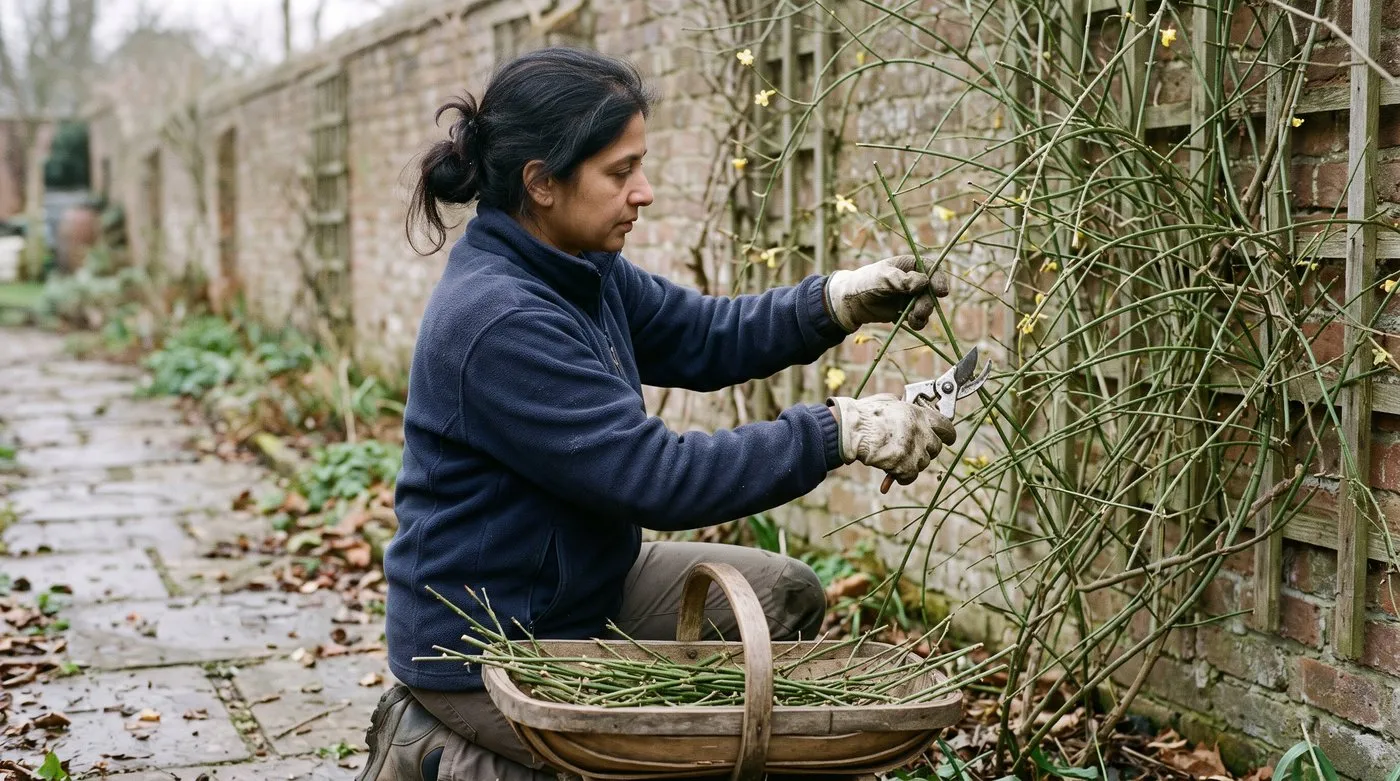
Prune as soon as the flowers fade, cutting each flowered stem back to a pair of strong buds.
How to rescue an overgrown winter jasmine
Old plants often turn into a tangle of brown, bare stems with flowers only at the edges. Winter jasmine is very forgiving, so don’t be afraid to cut it back.
In spring, after flowering, cut the whole plant down to about 60cm from the ground. Feed it, water it and mulch it well. It’ll send up lots of new green shoots over summer. Tie in the best ones and remove the rest. It may flower lightly the next winter, then fully the year after.
To keep some flowers each year, cut a third of the old stems each spring over three years instead.
Free plants by layering
Winter jasmine practically propagates itself. Its stems root wherever they touch the soil. This is called layering, and it’s the easiest way to get a new plant.
- In spring or summer, bend a low, flexible stem down to the soil.
- Scrape a little bark off the underside where it touches the ground.
- Peg it down with a bent wire or a stone, and cover that part with soil.
- Keep it watered. By the next spring, it should have roots.
- Cut it from the parent plant, dig it up and replant it.
You can also take cuttings in late summer or winter. Our guides to propagating by layering and cuttings and hardwood cuttings explain how.
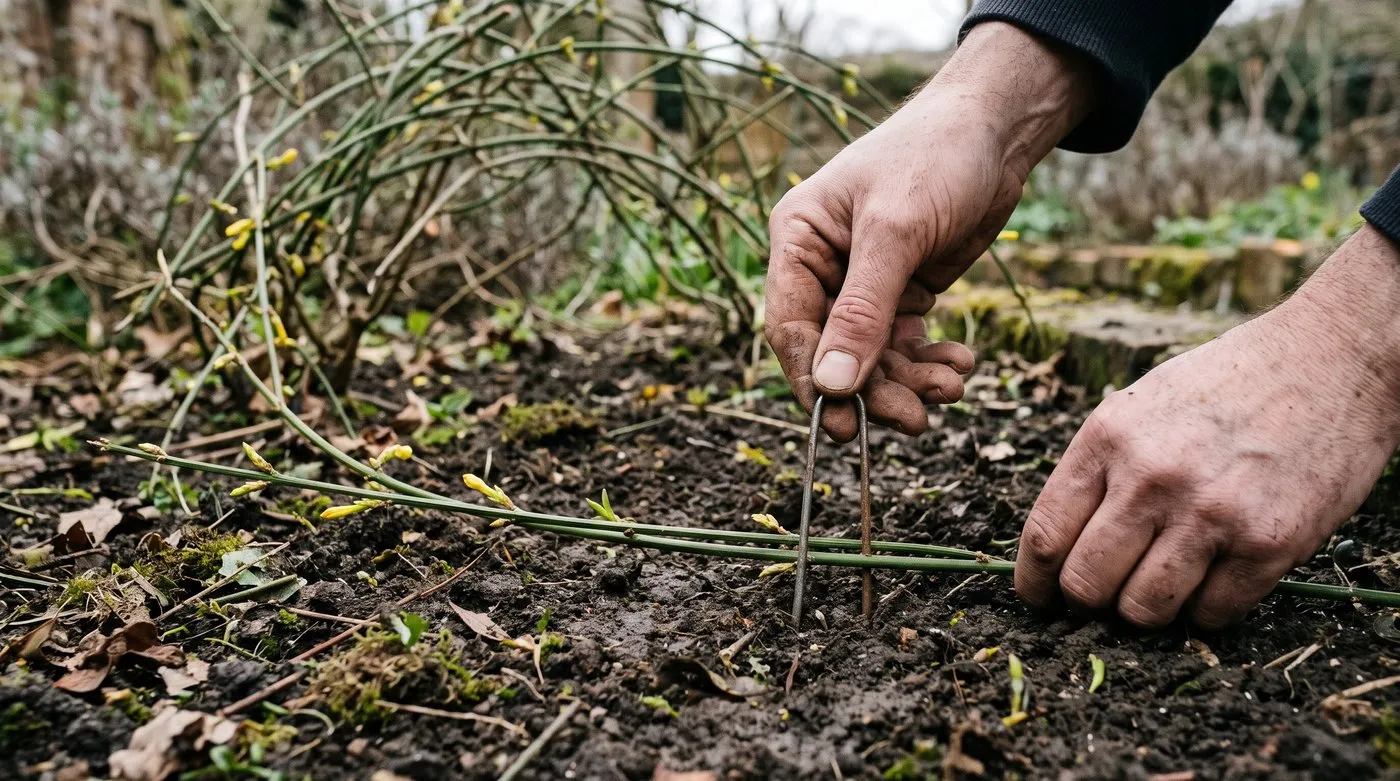
Peg a low stem into the soil and it’ll root by next spring, giving you a free plant.
Why is my winter jasmine not flowering?
| Problem | Likely cause | What to do |
|---|---|---|
| Few or no flowers | Pruned in autumn or winter | Prune only after flowering, in spring |
| Lots of leaves, few flowers | Too much high-nitrogen feed | Switch to a general or high-potash feed |
| Thin, weak flowering | Deep, dark shade | Move it somewhere with a few hours of sun |
| Bare, brown, woody stems | Old and never pruned | Cut back hard in spring |
| No flowers on a new plant | Still settling in | Give it a year or two |
Brown, dead-looking stems after a hard winter are usually just old wood. Scratch the bark with a fingernail. If it’s green underneath, it’s alive.
Winter jasmine calendar
| Month | What to do |
|---|---|
| November to March | Enjoy the flowers |
| Late March to April | Prune after flowering, feed and mulch |
| April to June | Tie in new shoots. Peg down stems to layer |
| July to September | Tie in long shoots. Water pot-grown plants |
| October | Plant new winter jasmine. Don’t prune |
Common mistakes with winter jasmine
Pruning in autumn is the biggest mistake. It looks untidy then, but the flower buds are already on the stems. Wait until spring.
Expecting it to climb on its own leaves it slumped at the base of the wall. Put up wires or trellis and tie it in.
Planting right at the foot of a wall leaves it in dry soil. Plant about 30cm out and lean it in.
Never thinning it out lets it turn into a woody tangle. Cut out a few old stems every few years.
Buying it for scent leads to disappointment. It has little or no smell, so choose common jasmine for that.
Good partners for winter jasmine
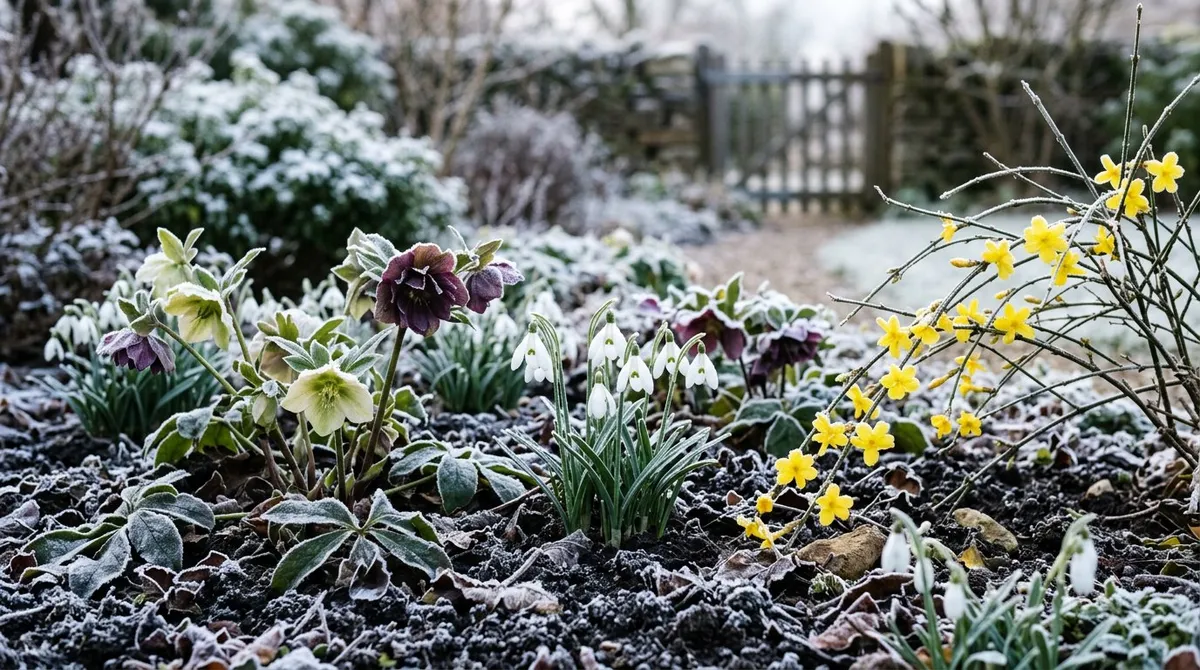
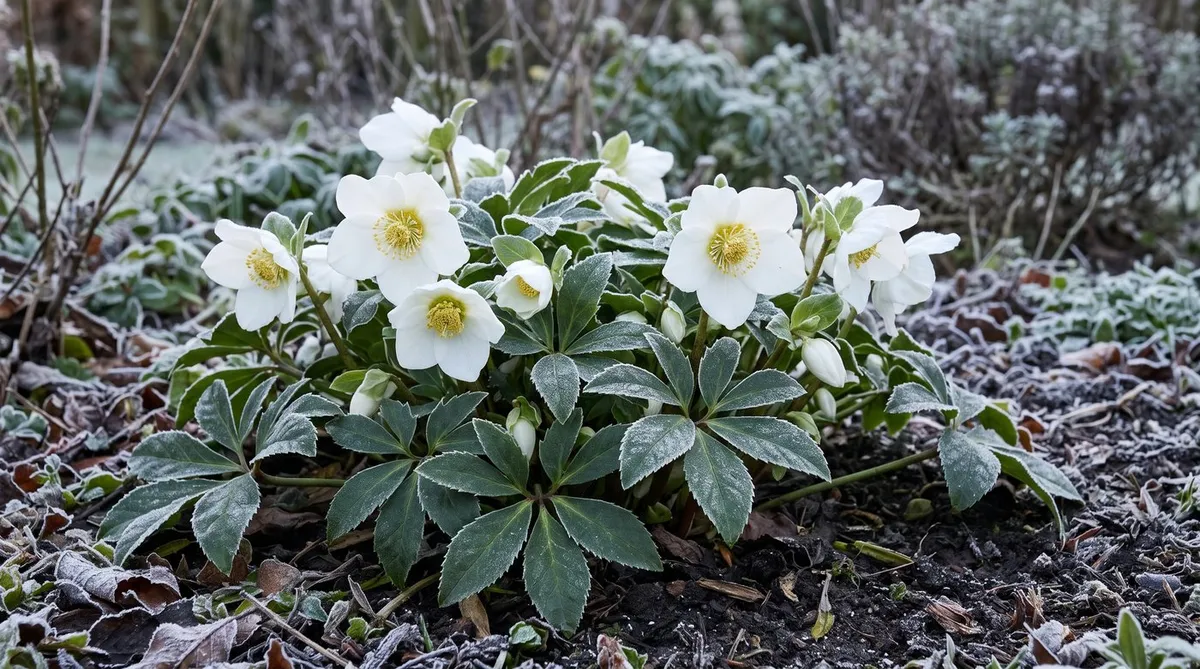
Winter jasmine looks lovely with other plants that flower in the cold months. Try it with sweet-scented sarcococca, red-stemmed dogwoods, hellebores or snowdrops at its feet. Our guide to winter-flowering shrubs has more ideas.
It’s often mixed up with forsythia, which also has yellow flowers on bare stems. Forsythia flowers later, in March and April, and its flowers have four petals. See our guide to growing forsythia to tell them apart.
Warning: Winter jasmine stems root where they touch the soil, so it can creep across a border. Lift any rooted stems you don’t want each spring.
Frequently asked questions
When does winter jasmine flower in the UK?
Winter jasmine flowers from about November to March, on bare green stems before the leaves appear. The main show is usually in January and February. A few flowers may open in a mild autumn too.
When should you prune winter jasmine?
Prune winter jasmine straight after flowering, in late March or April. Cut flowered stems back to a pair of strong buds. Next winter’s flowers form on the shoots that grow over summer, so pruning in autumn cuts them off.
Why is my winter jasmine not flowering?
The most common reason is pruning at the wrong time, in autumn or early winter. Deep shade, a very young plant and too much high-nitrogen feed can also stop flowers. Prune only after flowering and feed with a general or high-potash fertiliser.
Does winter jasmine smell?
Winter jasmine has little or no scent, unlike summer jasmine. It’s grown for its cheerful yellow colour in the darkest months. Plant a scented winter shrub such as sarcococca nearby if you want fragrance too.
Is winter jasmine a climber?
Not really. It’s a wall shrub with long, arching stems that don’t twine or cling. Tie the stems to wires or trellis on a wall. Or let it spill over a bank or low wall.
Can you grow winter jasmine in a pot?
Yes. Use a pot at least 40cm wide, filled with peat-free, soil-based compost. Water it in dry spells, even in winter, and feed it in spring. It looks lovely trailing over the edge of a tall pot.
Is winter jasmine safe for pets?
Winter jasmine is generally thought to be safe around dogs and cats. Any plant can cause a mild tummy upset if a pet eats a lot of it. If you’re worried, call your vet.
What is the difference between winter jasmine and forsythia?
Both have yellow flowers on bare stems, but winter jasmine flowers much earlier, from November to March. Forsythia flowers in March and April. Winter jasmine flowers have five or six petals, and forsythia flowers have four. Winter jasmine stems stay green.
Looking for more colour in the cold months? Browse our guide to winter-flowering plants. Then pick up a winter jasmine this autumn and give that bare, shady wall something to smile about.
Our team produces practical UK gardening guidance from source research, contributor records and established horticultural practice. Editorial standards are overseen by Matt W.