Key takeaways
- White rot is the most destructive onion disease in the UK, persisting in soil for 20+ years with no approved chemical treatment
- Downy mildew causes purple-grey patches on leaves and is worst in wet, cool springs below 15C
- Neck rot appears in storage 4-8 weeks after harvest and spreads from bulb to bulb through grey mould
- Rust produces orange pustules on leeks and garlic but rarely kills plants outright
- Four-year minimum crop rotation reduces disease pressure, though it cannot eliminate established white rot
- Growing from sets rather than seed avoids soil-borne smut infection during the vulnerable seedling stage
Onion diseases UK growers face cause more allotment heartbreak than almost any pest. Six fungal pathogens account for the vast majority of onion, garlic, and leek losses across Britain. Some attack leaves in the field. Others wait until bulbs are in storage before destroying months of work. The worst one, white rot, makes soil unusable for alliums for two decades.
This guide covers all six diseases with identification details, lifecycle information, and every practical control available to home gardeners. No chemicals are approved for most of these pathogens, so prevention through good growing practice is everything.
What are the main onion diseases in the UK?
Six fungal diseases cause the overwhelming majority of allium crop failures in British gardens and allotments. Each pathogen targets a different part of the plant at a different growth stage, so understanding which disease you are dealing with determines the correct response.
White rot and fusarium basal rot attack from the soil upward through the roots. Downy mildew and rust attack foliage from above via airborne spores. Onion smut infects seedlings at germination. Neck rot enters through the cut neck at harvest and destroys bulbs in storage.
All six affect the broader allium family to varying degrees. Onions, garlic, leeks, shallots, chives, and spring onions can all fall victim. Our vegetable pests and diseases guide covers the wider context of disease management across the kitchen garden.
| Disease | Pathogen | Primary target | Soil persistence | Chemical cure? |
|---|---|---|---|---|
| White rot | Sclerotium cepivorum | Bulb base and roots | 20+ years | No |
| Downy mildew | Peronospora destructor | Leaves | 2-4 years | No (fungicide limited) |
| Neck rot | Botrytis allii | Neck and bulb in storage | Seed-borne | No |
| Rust | Puccinia allii | Leaves | 1 year (on debris) | No |
| Onion smut | Urocystis cepulae | Seedlings and leaves | 10-15 years | No |
| Fusarium basal rot | Fusarium oxysporum | Base plate and roots | 10+ years | No |
The absence of chemical cures for home gardeners makes this table sobering. Prevention and cultural controls are the only tools available.
How do I identify white rot on onions and garlic?
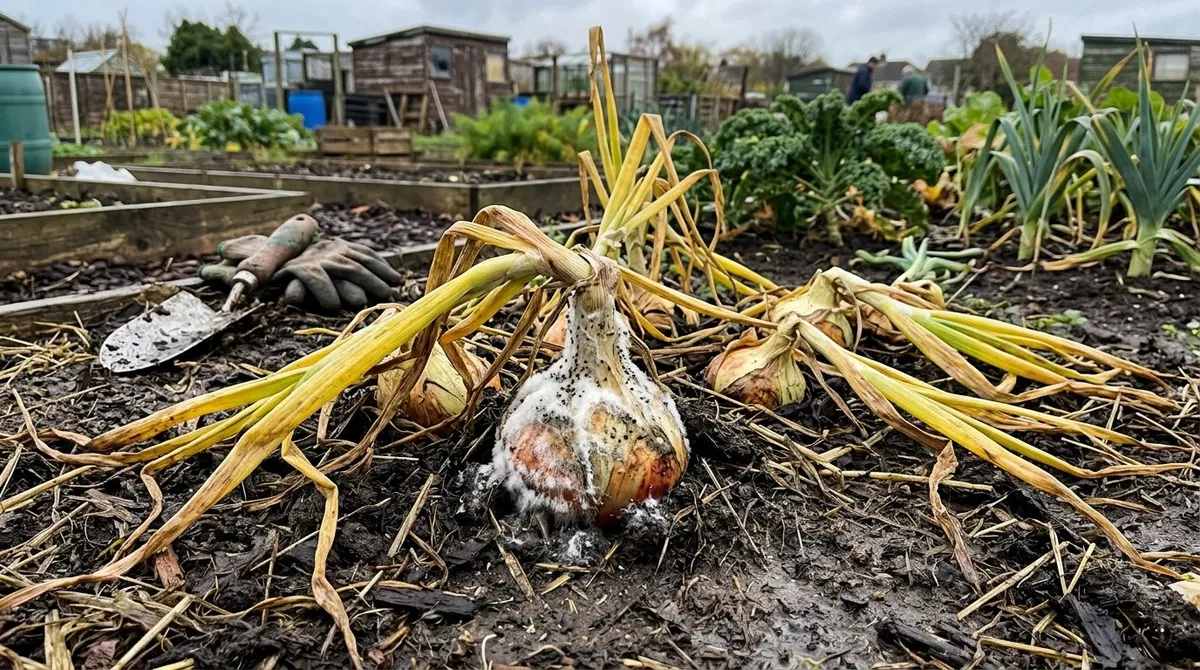
White rot (Sclerotium cepivorum) is the most feared allium disease in the UK. It kills plants during the growing season and makes contaminated soil effectively permanent allium-free land.
The first visible symptom is yellowing and wilting of the outer leaves, progressing inward. Plants look drought-stressed despite adequate moisture. Pull an affected plant and the roots are largely destroyed. Dense white fluffy mycelium covers the base plate and lower stem. Within this white growth, tiny black sclerotia form. Each sclerotium is roughly 0.5mm in diameter, resembling a poppy seed.
White rot is most active at soil temperatures between 10C and 20C, peaking around 15C. This makes spring and autumn the high-risk periods in UK conditions. The pathogen thrives in moist soil but can infect in surprisingly dry conditions too.
The sclerotia are the survival structures. They remain viable in soil for 20 years or more without a host plant. Each time an allium root grows nearby and releases natural sulphur compounds, dormant sclerotia germinate and attack. This chemical trigger is what makes white rot so effective and so difficult to manage. The RHS white rot advisory provides additional diagnosis photographs.
What causes downy mildew on onions?
Downy mildew (Peronospora destructor) is the most common foliage disease of onions in the UK. It thrives in the cool, humid springs that are typical of British weather and can devastate entire crops within weeks.
Symptoms start as pale, oval-shaped lesions on the leaves. In humid conditions, a grey-purple fuzzy growth appears on the leaf surface. This is the sporulating fungus producing airborne spores that spread to neighbouring plants. Leaves yellow from the tips downward and eventually collapse. Infected plants produce undersized bulbs that store poorly.
The fungus overwinters in bulb tissue, crop debris, and self-sown volunteer onions. Spring rains splash spores onto new growth. Temperatures between 4C and 25C support infection, with the optimum around 12C. Heavy dews and foggy mornings accelerate spread dramatically.
Prevention centres on air circulation. Space onions at 15cm minimum in rows 30cm apart. Avoid overhead watering. Remove volunteer onions that sprout from last year’s dropped bulbs, as these act as reservoirs. Growing onions from sets rather than seed gives plants a head start, producing stronger foliage that withstands infection better.
How do I stop neck rot ruining stored onions?
Neck rot (Botrytis allii) is a storage disease. It does almost no visible damage in the field. Instead, it enters through the cut neck at harvest and slowly destroys bulbs during winter storage. The first sign is a soft, grey-brown area at the neck that gradually spreads downward through the scales.
The fungus is primarily seed-borne. Infected seed or sets carry the pathogen into the crop without any visible symptoms during growth. The spores enter the neck wound when foliage is cut back at harvest. Warm, humid storage conditions accelerate the rot.
Prevention starts at harvest. Lift onions when the foliage has naturally fallen and started to yellow. Lay them on a rack or dry ground in full sun for 2-3 days, then move to a warm, airy shed for 2-3 weeks of curing. The neck must be completely dry and papery before storage. Store at 1-4C in nets or trays with good ventilation.
Why do leeks and garlic get rust?
Rust (Puccinia allii) produces the distinctive orange pustules that UK leek growers know all too well. It is the most visible allium disease, though rarely the most damaging.
The bright orange spore masses (uredinia) erupt through the leaf surface on both sides. In severe cases, leaves become covered in pustules and lose their green photosynthetic tissue. Plants survive but produce smaller leeks or undersized garlic bulbs. Rust is most active in humid weather between 10C and 20C and is particularly severe on autumn and overwintering leeks.
The fungus overwinters on crop debris and perennial alliums including chives and wild garlic. Spores travel on wind currents over considerable distances. Complete prevention is impossible where alliums are grown widely in the neighbourhood. However, cultural controls reduce severity significantly.
Wide spacing at 15-20cm between plants improves air circulation and reduces the humid microclimate that spores need to germinate. Avoid high-nitrogen feeds after midsummer, as lush, soft growth is more susceptible. Remove and destroy the worst-affected outer leaves. Some leek varieties show better tolerance: Bandit, Apollo, and Lancaster have performed well in UK trials. For a full treatment guide, see our rust disease article.
What is onion smut and how does it spread?
Onion smut (Urocystis cepulae) is a soil-borne disease that specifically targets onion seedlings during germination. Once established, the dark spores persist in soil for 10-15 years.
Symptoms appear as dark, raised blisters or streaks on seedling leaves and bulb scales. These burst to release masses of black powdery spores. Severely infected seedlings die within weeks. Older plants that survive initial infection develop distorted, thickened leaves with dark lines running along their length. Affected bulbs show black streaking in the outer scales.
The critical point is that onion smut only infects plants during the seedling stage. The fungus penetrates the young coleoptile as it pushes through contaminated soil. Once onion plants are past the 3-4 leaf stage, new infection cannot occur. This biology dictates the single most effective prevention: grow from sets, not seed.
Onion sets bypass the vulnerable seedling stage entirely. The bulbs are already established when planted, so the smut fungus cannot penetrate. If growing from seed, start in modules filled with clean, bagged compost indoors and transplant when seedlings have 4-5 true leaves. This approach also works for leeks, which are less commonly affected by smut but benefit from the same transplanting method.
How do I recognise fusarium basal rot?
Fusarium basal rot (Fusarium oxysporum f.sp. cepae) attacks onions and garlic through the base plate, causing progressive rotting from the bottom upward. It is a warm-weather disease, most active when soil temperatures exceed 25C.
The first field symptom is yellowing and wilting of the outer leaves during mid to late summer. The base plate turns brown and soft when cut. Roots are sparse and discoloured. A pinkish-white mould may be visible at the base. Internally, the rot progresses upward through the scales, turning them brown and watery.
Fusarium is primarily a problem in warm summers and on light, sandy soils that heat up quickly. UK gardens with heavy clay soil see it less often because clay stays cooler. The pathogen persists in soil for 10+ years as chlamydospores.
Prevention requires a combination of approaches. Maintain a four-year rotation at minimum. Avoid planting alliums in soil that has recently held fusarium-susceptible crops. Choose varieties with known resistance where available. Handle bulbs carefully at harvest to avoid base plate damage, which creates entry points. If your soil is heavy clay, the good news is that fusarium basal rot is less likely to be a problem. Our tomato fusarium wilt guide covers the related but host-specific Fusarium pathogen affecting greenhouse tomatoes.
Which onion diseases affect garlic and leeks too?
All six diseases in this guide affect the broader allium family, but not equally. Understanding which crops face the highest risk from each pathogen helps you plan rotations and prioritise prevention.
| Disease | Onion | Garlic | Leek | Shallot | Chives |
|---|---|---|---|---|---|
| White rot | High | Very high | Moderate | High | Moderate |
| Downy mildew | Very high | Moderate | Low | High | Low |
| Neck rot | High | Moderate | Low | Moderate | Rare |
| Rust | Low | High | Very high | Low | High |
| Onion smut | High (seedlings) | Low | Low | Low | Rare |
| Fusarium basal rot | High | High | Low | Moderate | Low |
Garlic is particularly vulnerable to white rot because its strong sulphur compounds actively trigger sclerotia germination in surrounding soil. This means garlic can worsen white rot contamination more than any other allium. Our garlic growing guide covers how to manage this risk through raised bed isolation and certified clean stock.
Leeks escape many bulb diseases because they are harvested fresh and not stored. However, they are the primary UK host for rust and the main victim of allium leaf miner, which is a pest rather than a disease. See our allium leaf miner guide for details on that separate threat.
How do I prevent onion diseases without chemicals?
No chemical fungicides are approved for amateur gardeners to use against any of the six diseases covered in this guide. Prevention through cultural practice is the only option.
Four-year minimum rotation is the foundation. Never grow onions, garlic, leeks, or shallots in the same bed within four years. This reduces inoculum levels for downy mildew, fusarium, and smut. It does not eliminate white rot, but slows the build-up of sclerotia. Keep a written rotation plan. Our crop rotation planner provides a printable four-bed template.
Raised beds with clean compost bypass contaminated soil entirely. This is the only reliable strategy where white rot or fusarium has been confirmed. Fill beds with multipurpose compost on top of a weed membrane. Do not let contaminated soil splash into them. Replace or refresh the compost every 2-3 years. A raised bed guide covers construction and filling.
Sets over seed eliminates smut risk and gives plants a stronger start against downy mildew. Buy heat-treated sets where available, as the heat treatment kills internally carried Botrytis neck rot spores.
Thorough drying before storage prevents neck rot. Cure bulbs for at least two weeks in warm, moving air. Store below 4C in nets.
Wide spacing and good drainage reduce the humid microclimate that downy mildew and rust need. Avoid overhead watering. Remove crop debris promptly after harvest. The RHS allium disease page provides additional diagnosis photographs and current advisory notices.
Can I grow disease-resistant onion varieties in the UK?
Partial resistance to specific diseases exists in several commercially available onion and garlic varieties. No single variety resists all six pathogens, but choosing wisely reduces risk considerably.
Downy mildew resistance: Santero F1 and Hylander F1 show strong field tolerance in UK trials. Both are yellow-skinned maincrop onions suitable for storage. Centurion F1 shows moderate tolerance and is widely available as sets.
Fusarium tolerance: Red Baron, Stuttgarter Riesen, and Hytech F1 perform better than average in fusarium-contaminated soil. They still succumb under heavy pressure but produce harvestable crops where susceptible varieties fail.
Rust tolerance in leeks: Bandit, Apollo, Lancaster, and Porbella show lower rust severity than older varieties. No leek is fully immune, but these varieties maintain more green leaf area through autumn.
White rot resistance: No commercially available onion, garlic, or leek variety carries meaningful white rot resistance. This disease must be managed through soil avoidance, not variety choice.
For shallots, choose firm, certified disease-free sets from reputable suppliers. Longkeeper and Golden Gourmet varieties store well and show reasonable disease tolerance across multiple pathogens.
Frequently asked questions
What is the most common onion disease in the UK?
Downy mildew is the most widespread onion disease in UK gardens. Caused by Peronospora destructor, it thrives in the cool, wet springs that are typical of British weather. Symptoms include pale oval patches on leaves that develop a grey-purple fuzzy coating in humid conditions. Leaves yellow, collapse, and die back prematurely. Bulbs fail to size up properly. It affects onions, shallots, and spring onions across all UK regions every year.
How do I identify white rot on onions and garlic?
White fluffy fungal growth around the bulb base is the definitive sign. The foliage yellows and wilts even when soil is moist. Pull the plant up and you will see dense white mycelium covering the roots and base. Small black spherical structures called sclerotia, each about 0.5mm across and resembling poppy seeds, are visible in the white mould. The bulb feels soft and waterlogged. White rot affects all alliums and is most active in soil temperatures between 10C and 20C.
Can I eat onions with neck rot?
Mildly affected bulbs can be eaten after cutting away all rotted tissue. Neck rot (Botrytis allii) produces grey mould and softening at the neck end of stored bulbs. If the rot has penetrated less than a third of the bulb, trim away all discoloured and soft flesh and use the rest immediately. Discard any bulb where the rot has reached the centre or produces a sour smell. Never store partially affected bulbs alongside healthy ones.
Why do my leeks get orange spots?
Orange pustules on leek leaves are caused by rust fungus (Puccinia allii). Rust is extremely common on leeks and garlic in UK gardens, especially in humid autumn weather. The bright orange spore masses appear on both leaf surfaces. Severely rusted leaves lose photosynthetic capacity, reducing the size of the finished leek. Rust rarely kills leek plants outright. Remove the worst-affected outer leaves, improve air circulation by wider spacing, and avoid overhead watering.
Does crop rotation prevent onion diseases?
Rotation reduces disease but cannot eliminate all soil-borne pathogens. A four-year gap between allium crops on the same soil significantly lowers downy mildew, fusarium, and smut inoculum levels. However, white rot sclerotia survive 20+ years, making rotation alone ineffective against this disease. Combine rotation with raised bed growing, clean sets, and good drainage for the best protection.
How do I prevent neck rot in stored onions?
Thorough drying before storage is the single most effective prevention. Cure onions in a warm, airy place for 2-3 weeks after lifting until the neck is papery dry and the outer skins rustle. Store in nets, trays, or string braids in a cool, dry, well-ventilated shed at 1-4C. Check stored bulbs every 2-3 weeks and remove any showing soft necks immediately. Neck rot spreads from infected bulbs to neighbours through contact.
Are there onion varieties resistant to disease?
Several UK-available onion varieties carry partial downy mildew resistance. Santero F1 and Hylander F1 show good tolerance to downy mildew in UK trials. Red Baron and Stuttgarter Riesen have some resistance to fusarium basal rot. No commercially available onion variety resists white rot. For garlic, softneck varieties like Solent Wight generally store better and show lower neck rot incidence than hardneck types.
Our team produces practical UK gardening guidance from source research, contributor records and established horticultural practice. Editorial standards are overseen by Matt W.