Key takeaways
- Fasciation is flattened, fused or ribbon-like growth from a faulty growing tip
- It is usually harmless and the rest of the plant grows normally
- Causes include random mutation, frost, damage and a soil bacterium
- Forsythia, euphorbia and delphinium fasciate most in UK gardens
- Cut out affected stems if you dislike them, the plant is fine either way
- Do not propagate from bacterial cases, and sterilise tools after cutting
Fasciation is one of the strangest sights in the garden, and one of the most misunderstood. A stem suddenly grows flat and ribbon-like, several flowers fuse into a single crested mass, or a normal flower spike widens into a fan. The instinct is to fear a disease. In almost every case there is nothing to fear. Fasciation is a quirk of growth, usually a one-off, and the rest of the plant carries on as normal. This guide explains what fasciation is, what triggers it, which plants get it most, and when it is worth cutting out. You will learn to recognise it and to tell the harmless cases from the rare ones that matter.
The word looks technical but the thing itself is simple. A growing point goes wrong for a season, and the plant produces a curiosity rather than a crisis.
What fasciation is and how it forms
Fasciation is abnormal growth where a plant’s stems or flowers become flattened, widened, fused or curled. The name comes from the Latin for a band or ribbon, which describes the flattened stems well.
The cause sits in the growing tip, or meristem, the cluster of dividing cells that should form a single neat point of growth. In fasciation, that point spreads sideways into a line instead of staying a dot. The stem it produces is flat and ribbon-like, sometimes fanning out at the top. Where flowers are affected, several can fuse into a single crested head, or a spike can broaden into a strange flattened mass.
The important point is that fasciation is local. It affects the growing tip where the fault occurred, not the whole plant. One stem may be fasciated while every other shoot is normal. The plant’s roots, leaves and other stems work as usual, which is why fasciation rarely does any real harm. This sets it apart from the systemic colour faults in our guide to chlorosis and yellow leaves.
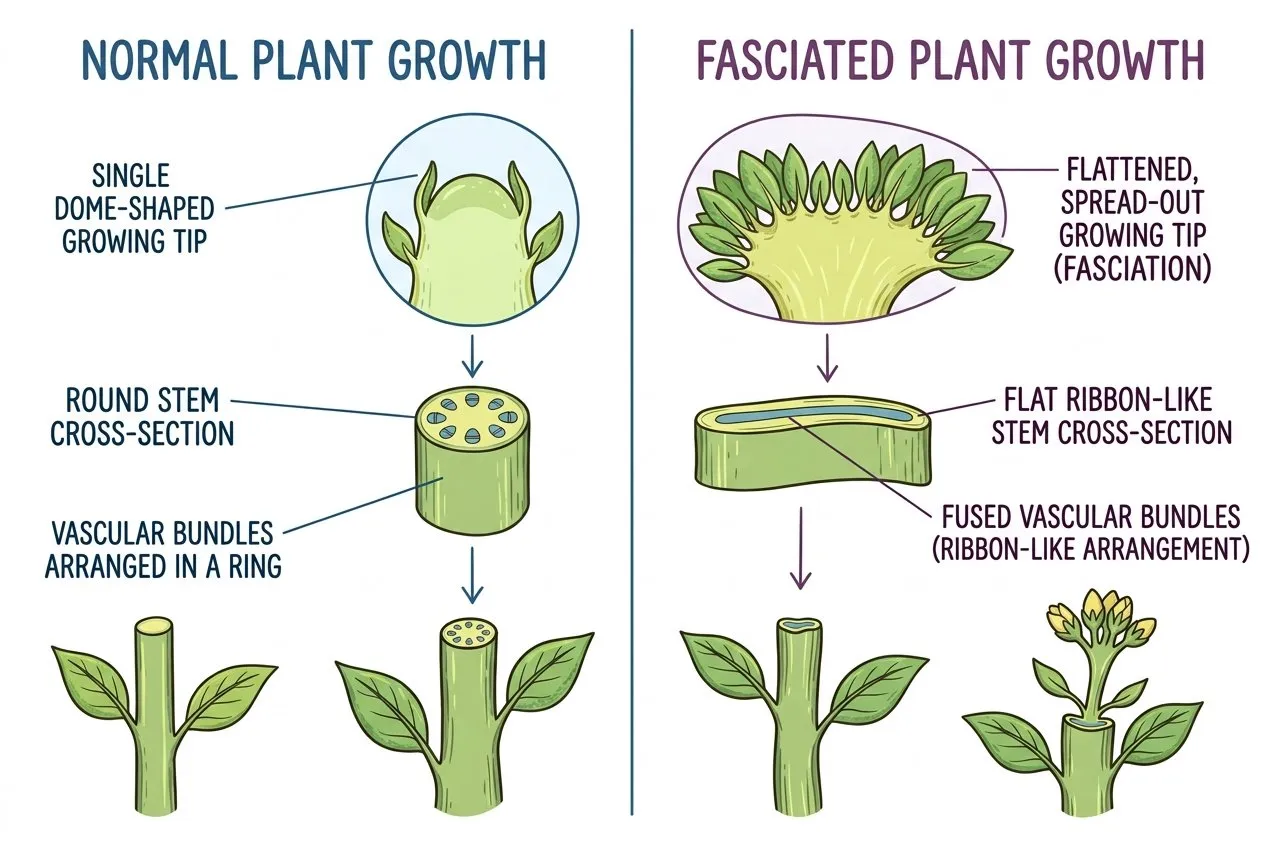 How fasciation forms. A normal growing tip stays a single point, while a fasciated one spreads sideways into a flat ribbon.
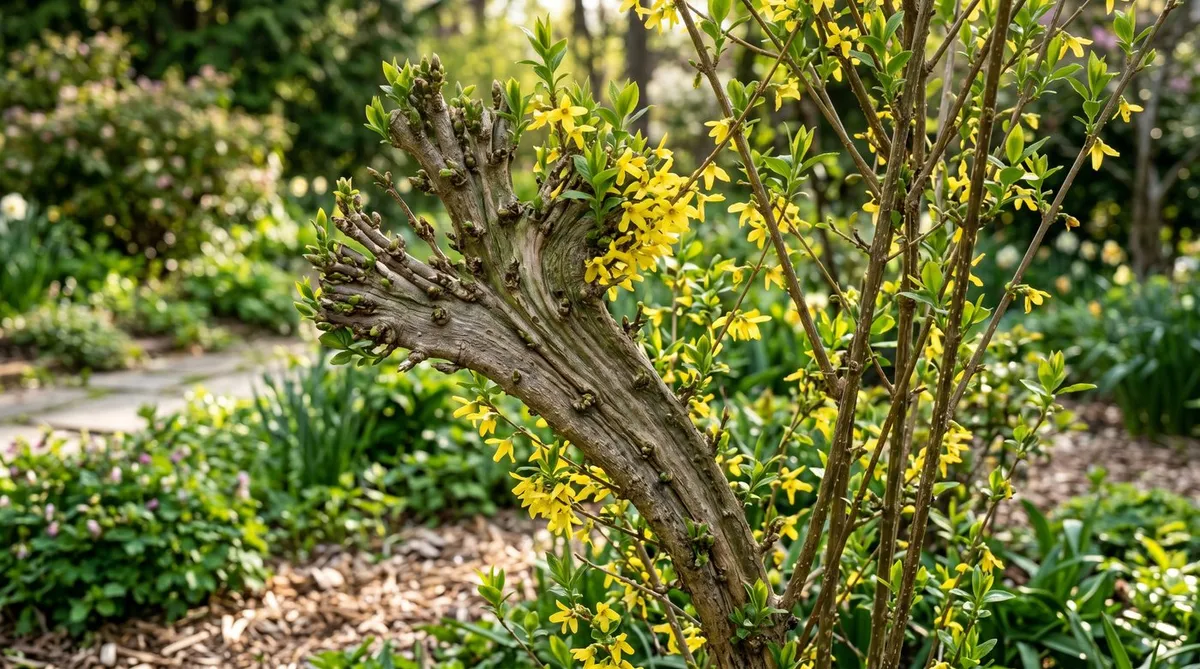
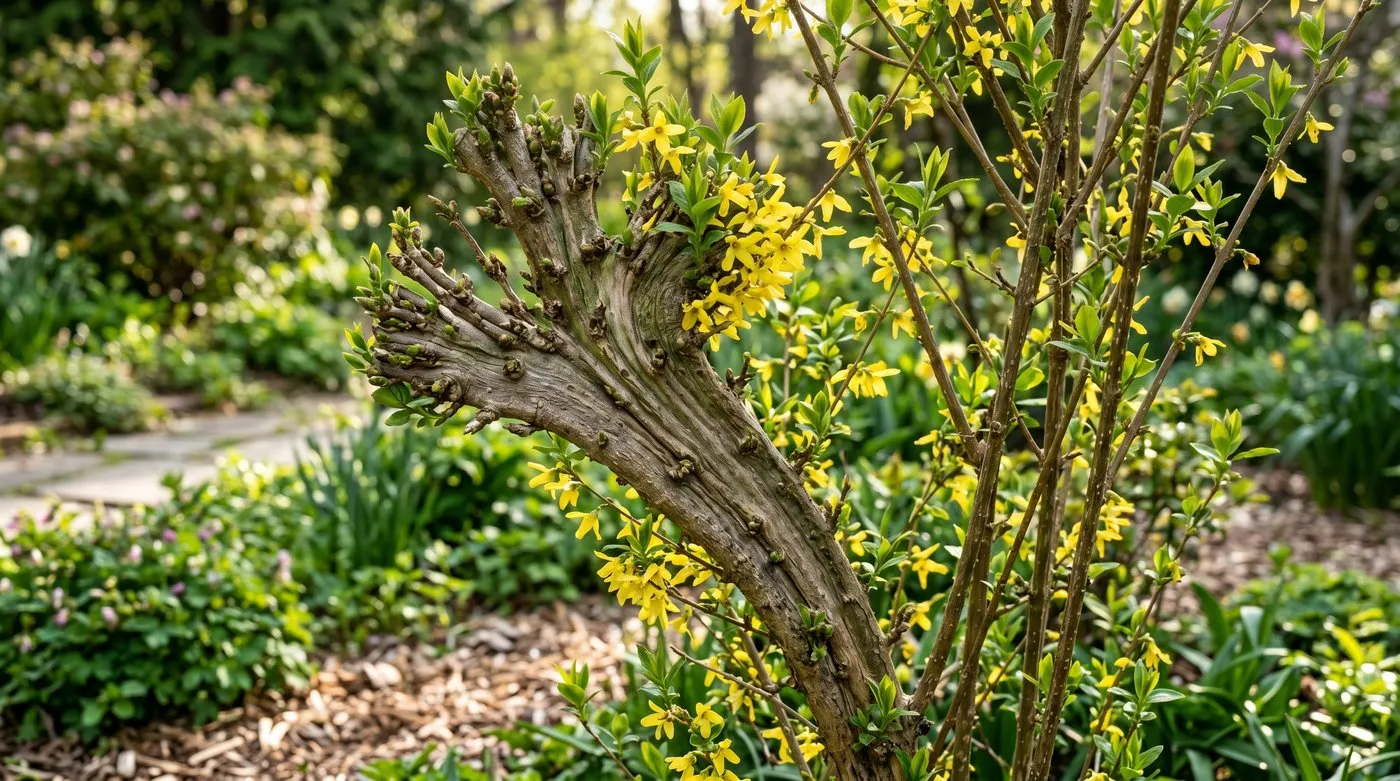 Classic fasciation. The growing tip has spread into a flat ribbon instead of a single point, while nearby stems grow normally.
What causes fasciation in UK gardens
The single most useful thing to know is that fasciation has several possible causes, and most are harmless. Working out which applies tells you whether to worry.
The commonest cause is a random mutation in the growing tip. It happens by chance, affects one shoot, and usually never recurs. The second is physical or environmental damage. A late frost, a knock, insect or mite feeding, or slug damage to a growing point can disrupt its development. The RHS guide to fasciation also lists bacterial infection and chemical or mechanical injury among the possible causes.
The third cause is bacterial. Rhodococcus fascians lives in soil and can infect growing points, producing clusters of distorted shoots near the plant base. This form, unlike the others, can recur and spread on tools or through cuttings. Chemical causes, such as herbicide damage, can also distort growth in a way that resembles fasciation. Damage from sap-sucking pests is one route in, which is why our guide to getting rid of aphids is worth a read where distortion appears with insects.
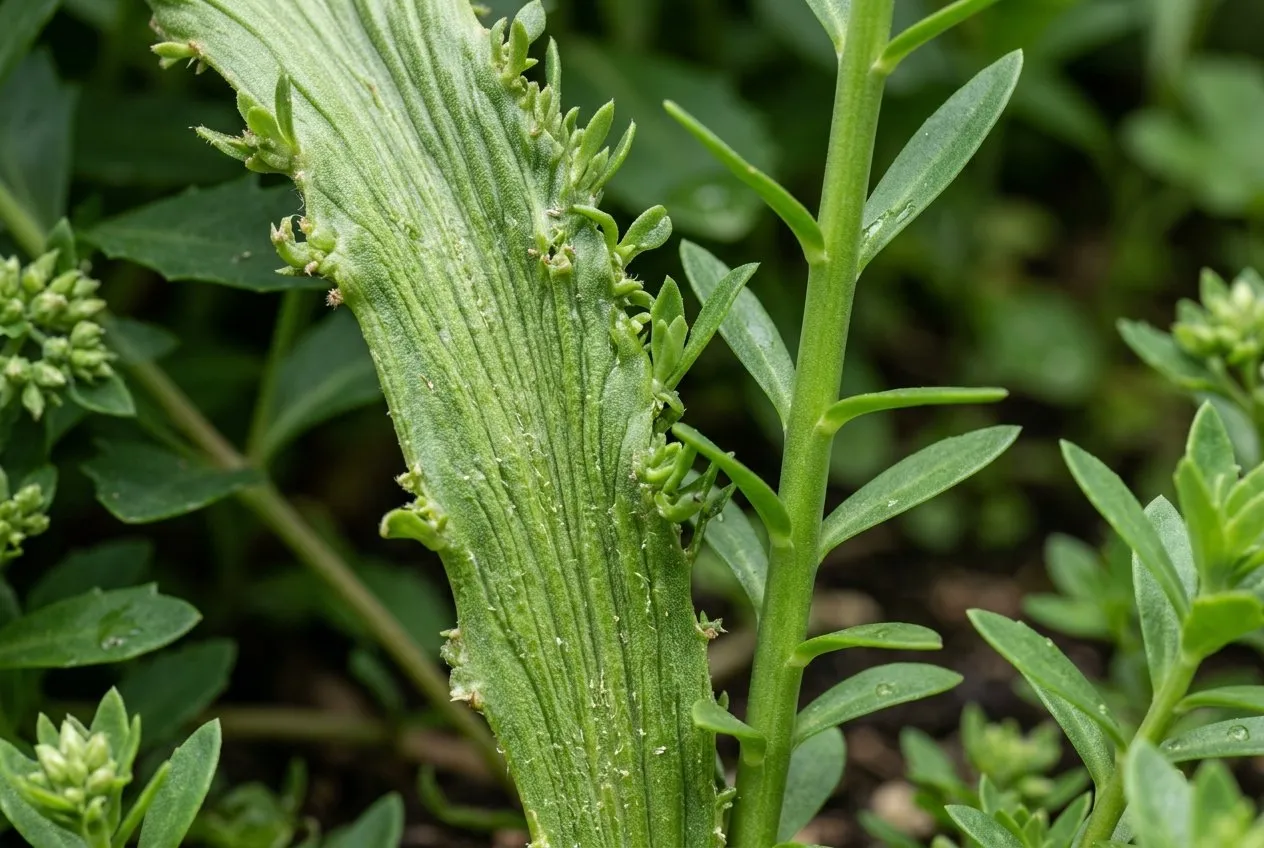 A close look shows the flattened, multi-grooved stem of fasciation beside a normal round one, both on the same healthy plant.
Which plants fasciate most often
Some plants fasciate far more than others. Knowing the usual candidates helps you recognise it quickly and judge whether it matters.
Forsythia and Euphorbia, especially Euphorbia characias, are frequent examples in UK gardens. Delphinium and Veronicastrum can throw a dramatically broadened flower spike. Acer, Prunus, lily and echinacea also show fasciation occasionally.
Some plants are even grown for stable fasciation. Fantail willow, Salix udensis Sekka, is prized for its curling flattened stems used in flower arranging. Crested celosia, the cockscomb, is a bedding plant bred for its permanently fasciated velvety flower heads. These show that fasciation is not inherently bad, just unusual. Our guides to growing forsythia, growing delphiniums and growing echinacea cover three of the plants that fasciate most.
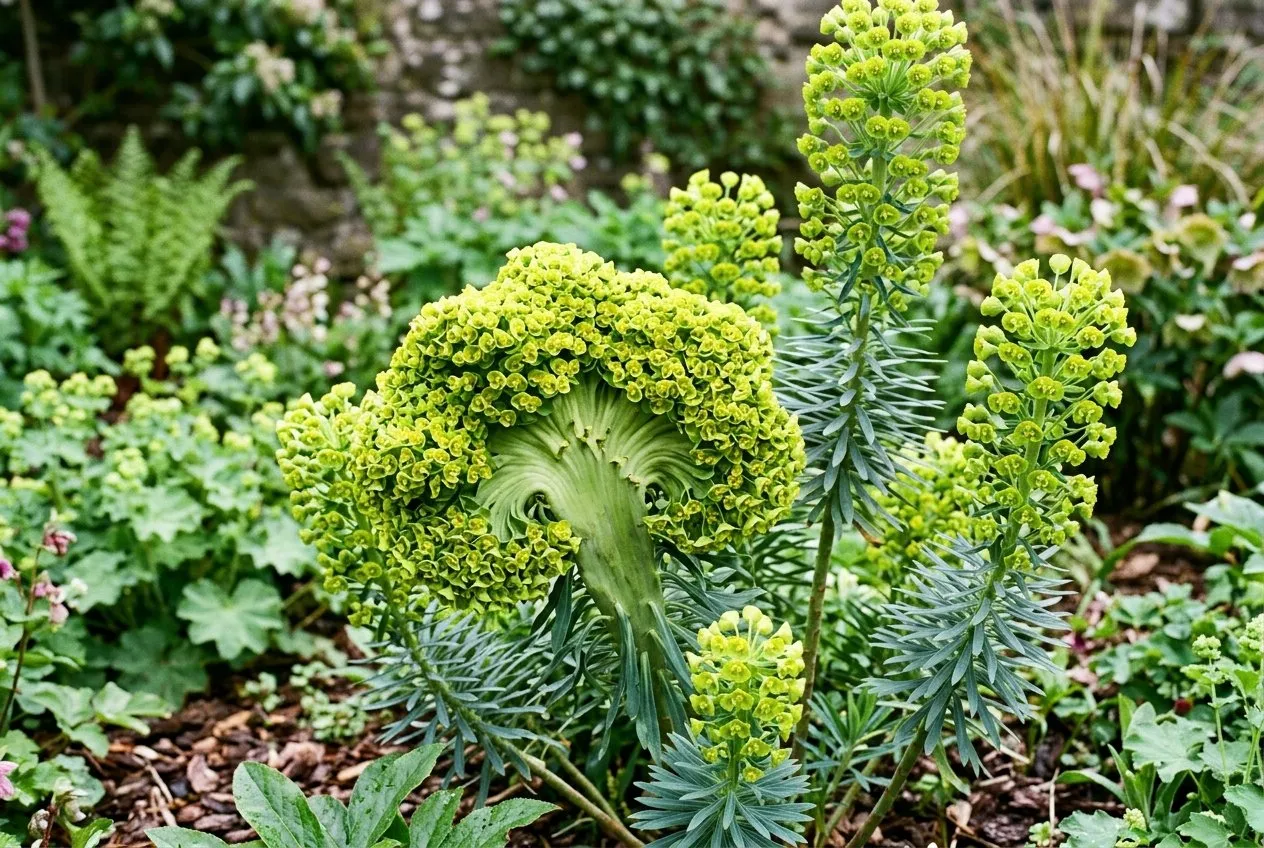 Euphorbia is one of the commonest to fasciate. The broad flattened flower head is a curiosity, not a sign of disease.
Fasciation causes compared by likelihood and risk
This table ranks the causes of fasciation by how common they are and how much they matter. Use it to judge whether a case is a harmless one-off or the rare type worth acting on.
| Cause | How common | Does it spread | Risk to plant | What to do |
|---|---|---|---|---|
| Random mutation | Very common | No | None | Leave or cut for looks only |
| Frost damage to tips | Common | No | None | Leave, protect tips in cold springs |
| Physical or pest damage | Common | No | None | Fix the damage source, leave the stem |
| Herbicide or chemical | Occasional | No | Low | Trace and stop the chemical exposure |
| Rhodococcus bacteria | Uncommon | Yes | Low to moderate | Cut out, sterilise tools, do not propagate |
The gold standard response is to identify the cause before acting. For the four common, non-spreading causes, fasciation needs no treatment at all. Only the uncommon bacterial form calls for care, and even then the risk is low. The single rule that covers every case is simple: never propagate from a fasciated stem, in case the cause was bacterial. Beyond that, the decision is purely about how it looks.
 A fasciated delphinium spike, broadened into a flattened crest. Striking, harmless, and unlikely to appear on the same plant again.
A seasonal plan for spotting and managing fasciation
Fasciation appears with the flush of growth and flowering, mostly spring and summer. This calendar keeps you on top of it through the UK year.
| Month | Action |
|---|---|
| January | Note any fasciated stems left on shrubs over winter for spring removal |
| February | Plan frost protection for tender growing tips on prone plants |
| March | Watch new growth on forsythia and euphorbia as buds break |
| April | Protect growing tips during late frosts, the common UK trigger |
| May | Inspect delphinium and veronicastrum spikes as they extend |
| June | Decide which fasciated stems to keep for interest and which to cut |
| July | Cut out unwanted fasciation, sterilise tools afterwards |
| August | Photograph and record cases to track patterns over the years |
| September | Leave fantail willow and ornamental fasciation for autumn interest |
| October | Cut fasciated willow stems for indoor arrangements |
| November | Tidy spent fasciated growth, never compost suspected bacterial cases |
| December | Review the year’s records against the spring weather |
Record fasciation before cutting it out
Photograph the affected stem, its base and the surrounding healthy growth before making a cut. A dated record makes it easier to tell a harmless one-off from distortion that returns at the same point in a later season.
A photo log also helps you tell a one-off from a recurring case. A stem that fasciates once and never again is almost certainly mutation or damage. Clustered, distorted shoots returning at the base year after year point to the bacterial form, which is the only type worth removing on health grounds.
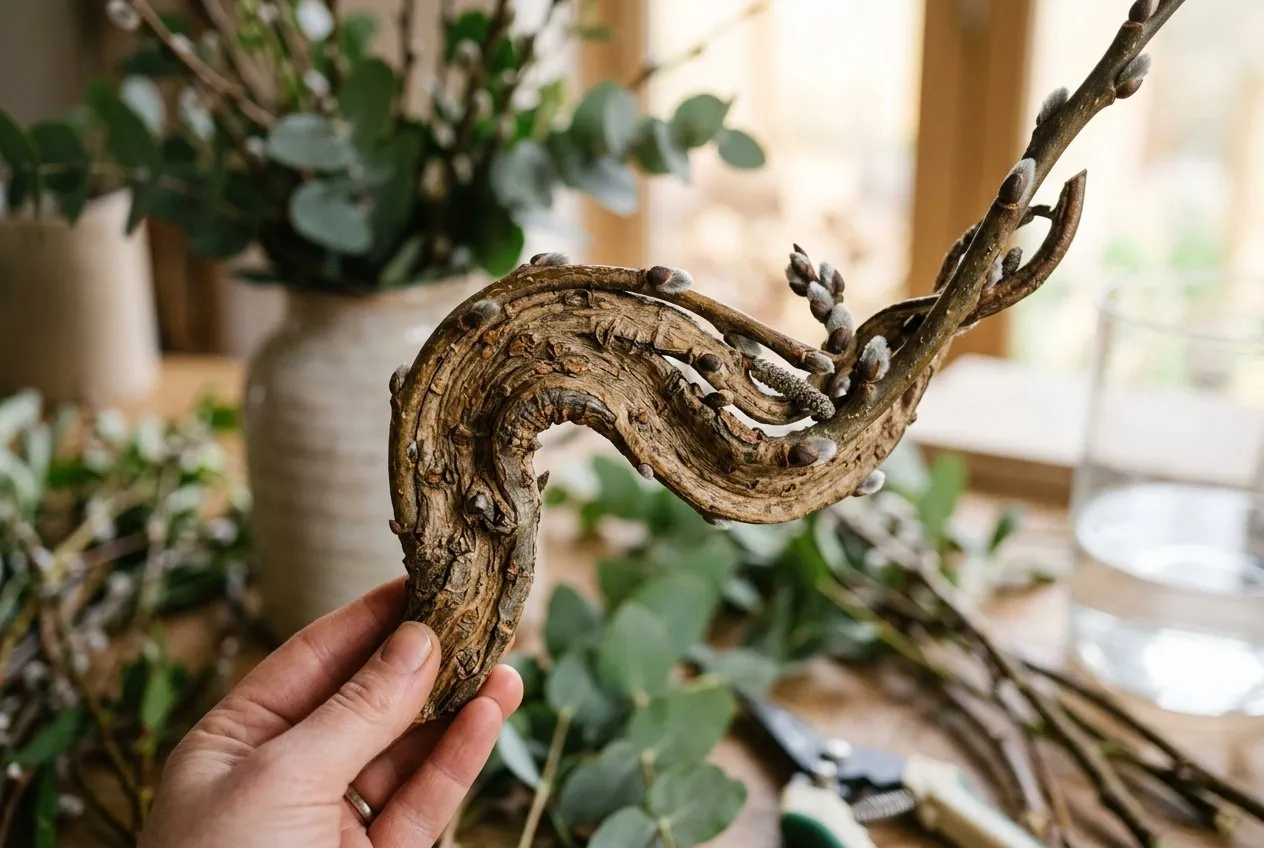 Fasciation can be desirable. Fantail willow is grown deliberately for its curling, flattened stems prized by flower arrangers.
How to cut out fasciation if you choose to
Removing fasciation is straightforward and optional. The plant does not need it gone, so this is about appearance unless you suspect the bacterial form.
Cut the fasciated stem back to normal growth, just above a healthy bud or where the stem returns to its usual round shape. Use clean, sharp secateurs. Afterwards, sterilise the blades with a garden disinfectant or alcohol wipe, in case the cause was Rhodococcus, which can transfer on tools. For the technique on woody plants, see our guide to pruning shrubs.
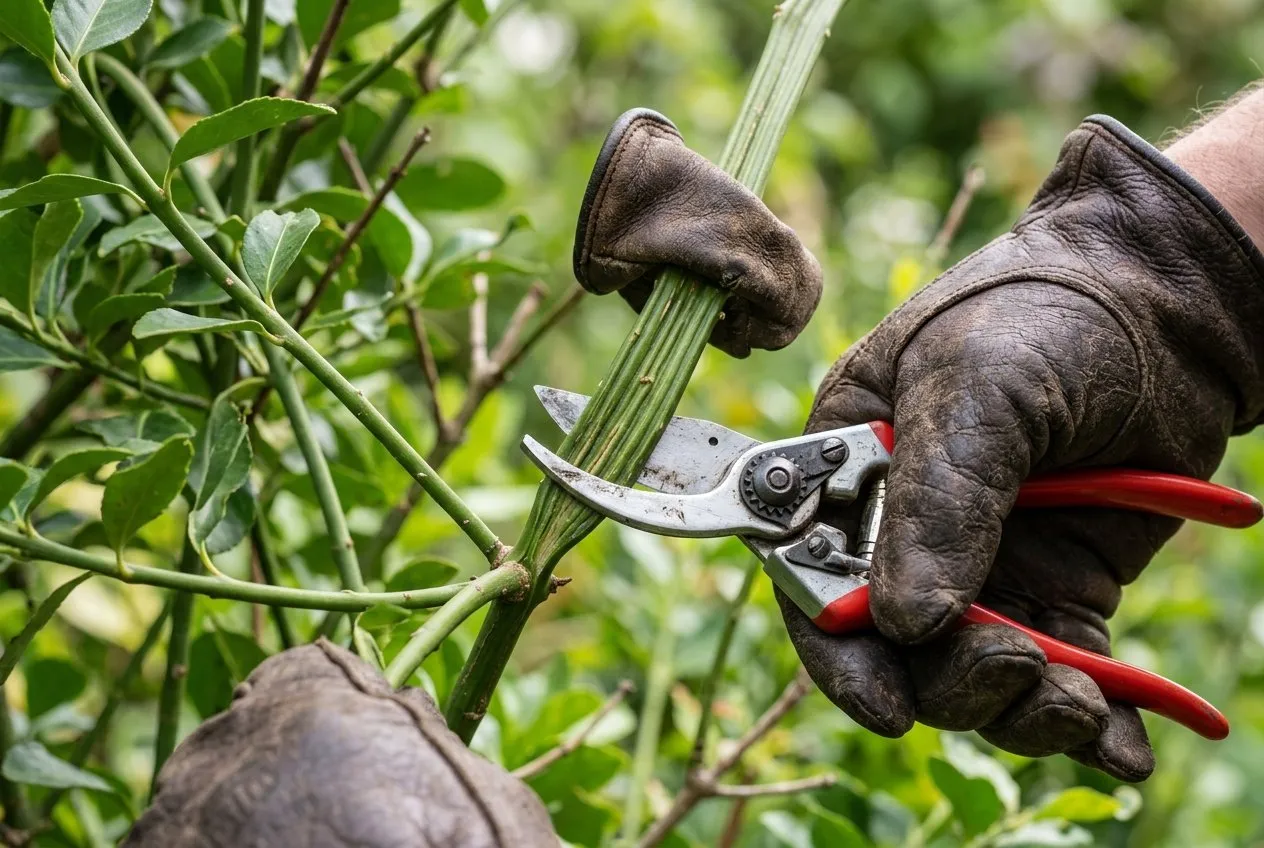 Cutting out fasciation is optional. Take the flattened stem back to normal growth and sterilise the blades afterwards.
Where you see clustered distorted shoots at the base of a plant, returning each year, treat it as a likely bacterial case. Cut out the affected growth, bin rather than compost it, and do not take cuttings or divisions from that plant. On willow grown for its fasciated stems, do the opposite and cut the curling stems for arrangements. The same growth quirk is a fault in one plant and a feature in another.
Common mistakes when dealing with fasciation
Most worry about fasciation comes from misreading a harmless quirk. These are the errors to avoid.
- Treating it as a disease. Most fasciation is a one-off mutation or damage. Spraying fungicide or insecticide does nothing for it.
- Pulling up the whole plant. Fasciation affects one growing tip, not the plant. There is no reason to remove a healthy plant.
- Propagating from affected stems. If the cause was bacterial, cuttings carry it on. Never propagate from a fasciated stem.
- Not cleaning tools. Cutting a bacterial case then pruning elsewhere can spread it. Sterilise secateurs after cutting any fasciation.
- Cutting out ornamental fasciation. Fantail willow and crested celosia are grown for it. Know your plant before you remove the very thing that makes it interesting.
Frequently asked questions
What is fasciation in plants?
Fasciation is abnormal flattened or fused growth from a faulty growing tip. Stems widen into ribbons or fans, and flowers can merge into crests. It is usually harmless and affects only part of the plant. The rest grows normally and the plant is not at risk.
Is fasciation harmful to my plant?
No, fasciation is almost always harmless and often a one-off. The affected stem looks odd but the plant stays healthy. Only rare bacterial cases can recur and spread. You can leave it for interest or cut it out, and the plant will be fine either way.
What causes fasciation?
A fault in the plant’s growing tip causes fasciation. Triggers include random mutation, frost, physical or insect damage, and the bacterium Rhodococcus fascians. Most cases are a single random event. Frost damage to growing tips is a common trigger after a cold UK spring.
Should I cut off fasciated growth?
Only if you dislike how it looks, as the plant does not need it removed. Cut the affected stem back to normal growth. Sterilise your tools afterwards in case the cause was bacterial. Many gardeners leave fasciation on euphorbia and willow for its curious form.
Does fasciation spread to other plants?
Usually no, since most fasciation is a one-off mutation or damage. Only the bacterial form, Rhodococcus fascians, can spread on tools or through propagation. To be safe, do not take cuttings from affected stems and clean your secateurs after cutting them out.
Which plants get fasciation most?
Forsythia, euphorbia and delphinium fasciate most in UK gardens. Veronicastrum, acer, willow, lily and echinacea also show it. Some plants, like fantail willow and crested celosia, are grown for stable fasciation. Any plant can fasciate occasionally from a chance mutation.
Now you can recognise fasciation and judge whether to act. For another odd-looking but treatable problem, read our guide to chlorosis and yellow leaves, or browse the full problems section for more plant diagnosis.
Our team produces practical UK gardening guidance from source research, contributor records and established horticultural practice. Editorial standards are overseen by Matt W.