Key takeaways
- The leaf pattern names the cause: new leaves vs old, veins green or yellow
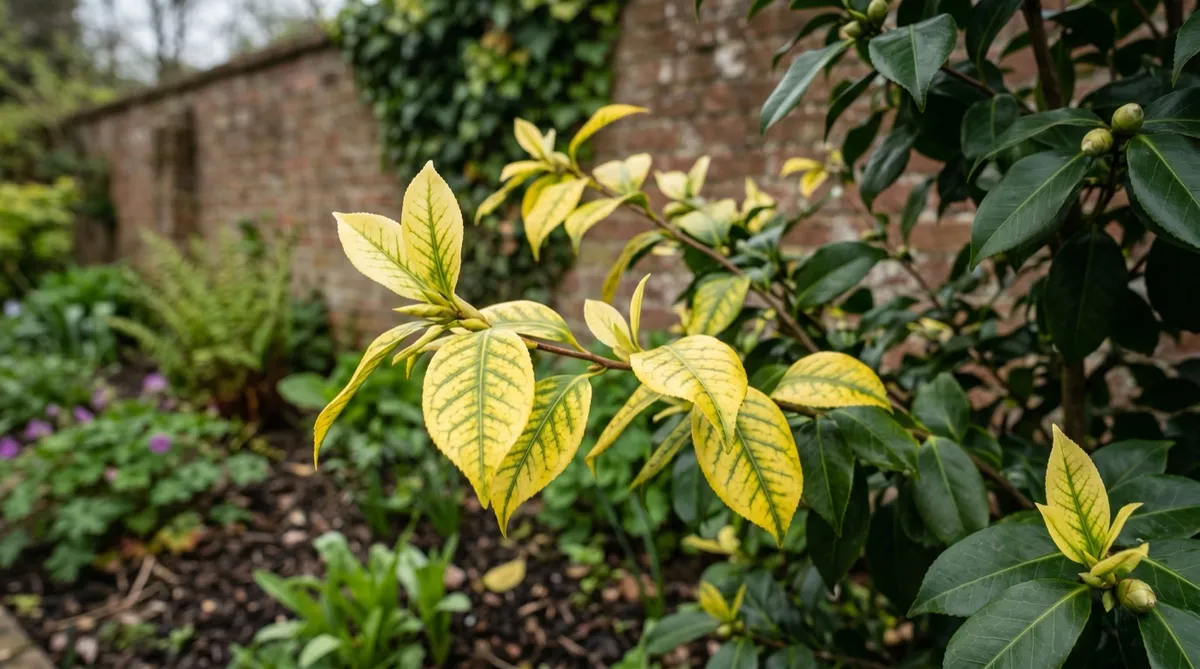
- Iron chlorosis hits new leaves first, veins stay green, soil pH usually above 7
- Magnesium chlorosis hits old leaves first because the plant moves it to new growth
- 9 in 10 iron cases are lock-up at high pH, not a real shortage of iron in soil
- Sequestered iron greens leaves in 10-14 days but cannot fix the underlying pH
- Permanent fix: correct pH, improve drainage, water acid lovers with rainwater
Chlorosis is yellow leaves, and the single most useful skill is reading the pattern to find the cause. The word describes any loss of chlorophyll, the green pigment that drives photosynthesis, but a yellow leaf is a symptom, not a diagnosis. The same colour can mean four very different problems, and the wrong fix wastes a season. This guide shows you how to read which leaves yellowed, whether the veins stayed green, and what that tells you. You will learn the quick fixes that buy time and the permanent fixes that actually solve it, with UK timings and real test-bed results.
Most yellowing on UK plants is not a missing nutrient at all. It is a nutrient the roots cannot reach, usually because the soil pH is wrong or the ground is waterlogged. Get that distinction right and you stop treating the symptom.
What chlorosis is and why leaves go yellow
Chlorosis is the failure of a leaf to make or keep enough chlorophyll. Chlorophyll is the molecule that makes leaves green and converts light into sugars. When it breaks down or never forms, the yellow and orange pigments underneath show through, so the leaf pales to yellow, then sometimes to cream or white.
The build of chlorophyll needs several nutrients in the right place at the right time. Iron and manganese act as catalysts the leaf uses to assemble it. Magnesium sits at the centre of every chlorophyll molecule. Nitrogen forms part of its structure too. Take any of these away and the leaf cannot stay green.
Here is the key point most guides miss. A shortage in the leaf does not prove a shortage in the soil. Iron may be plentiful in the ground yet completely unavailable because the pH is too high. The leaf goes yellow while the soil test reads fine. Diagnosis means matching the symptom pattern to the cause, which is what the rest of this guide does.
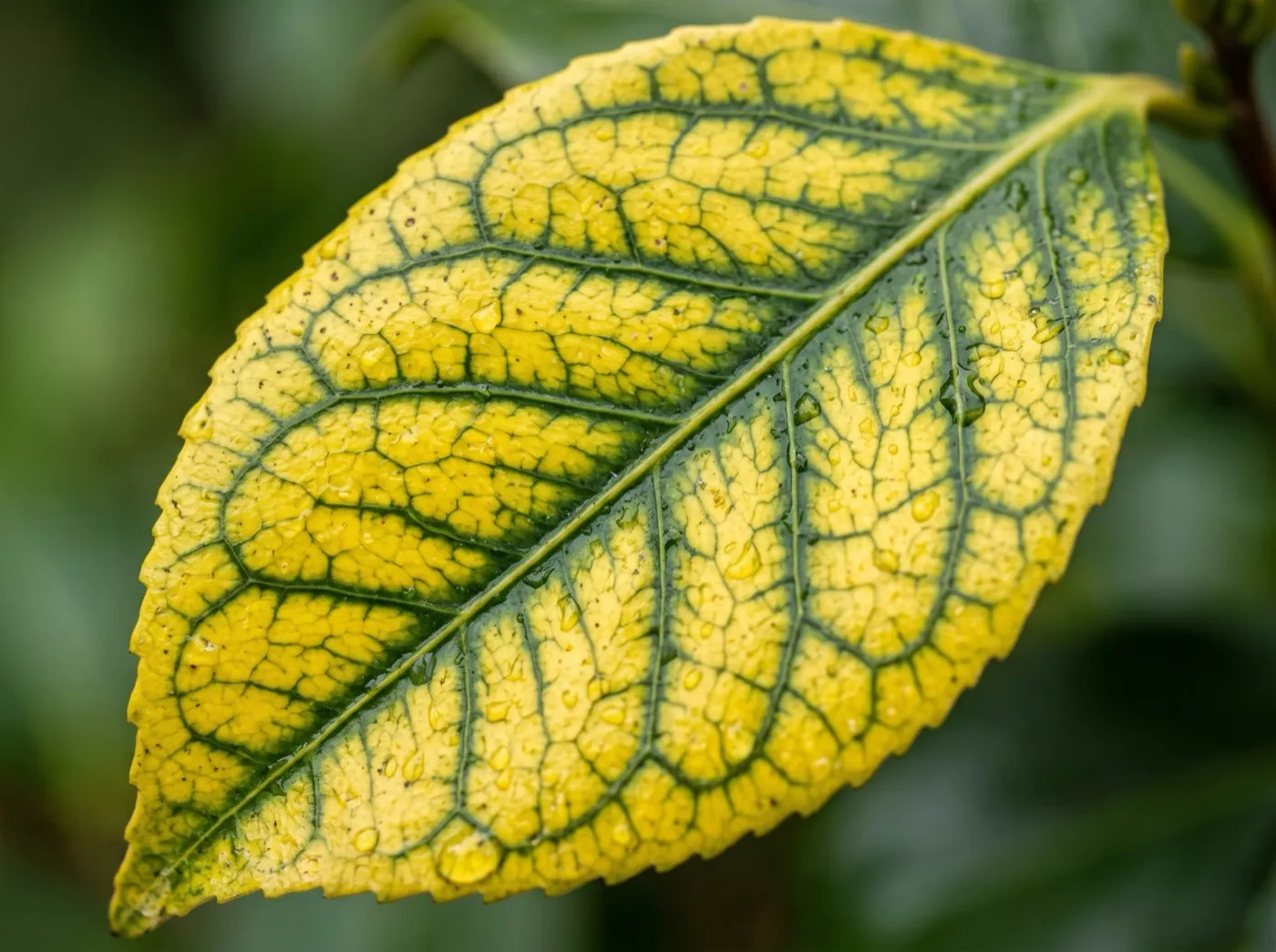 Classic interveinal chlorosis on a camellia. Yellow tissue, sharp green veins, newest leaves worst hit. This is iron lock-up.
How to read the pattern and diagnose the cause
Diagnosis turns on two questions. Which leaves yellowed first, the new growth at the tips or the old leaves at the base? And did the veins stay green while the tissue between them yellowed, or did the whole leaf fade evenly? Answer those and you have narrowed five possible causes down to one.
The reason leaf age matters is nutrient mobility. Some nutrients move freely inside the plant and some do not. Magnesium and nitrogen are mobile, so a short plant robs its old leaves to feed new growth, and the oldest leaves yellow first. Iron and manganese are immobile, so they get stuck in old leaves and the newest leaves starve, yellowing first at the tips.
Follow this order every time.
- Look at the newest leaves. Yellow with green veins on new growth points to iron, the most common cause on UK shrubs.
- Look at the oldest leaves. Yellow with green veins on old leaves points to magnesium.
- Check for even yellowing. A whole old leaf fading uniformly, no green veins held, points to nitrogen.
- Check the soil and roots. Soggy soil, a sour smell, or dark mushy roots point to waterlogging or root rot, which mimics any deficiency.
- Test the pH. A reading above 7 explains most iron and manganese chlorosis on acid-loving plants.
Gardener’s tip: Photograph the worst leaf next to a healthy one before you treat anything. Pattern is everything in chlorosis, and a photo lets you compare new growth a fortnight later to confirm the fix worked.
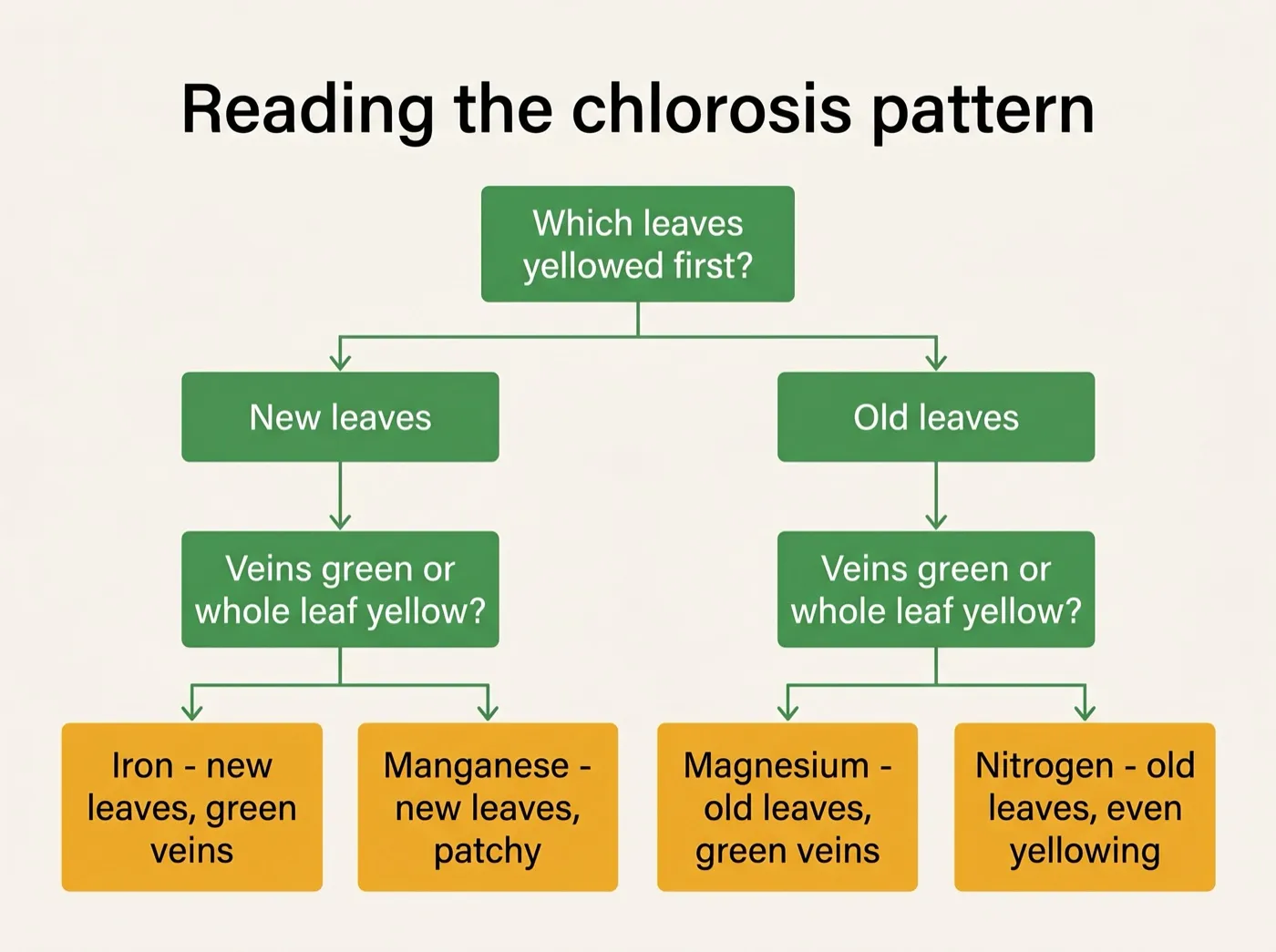 The diagnostic decision guide: start with leaf age, then vein colour, to reach the cause in two questions.
Chlorosis causes compared by symptom pattern
The gold standard fix is correcting the cause, not dosing the deficient element. For the most common case, iron lock-up, that means lowering pH and improving drainage so the iron already in the soil becomes available. A sequestered iron drench is the fastest quick fix and greens a plant in 10-14 days, but it cannot change the soil pH and cannot stop the chlorosis returning next spring. Treat the quick fix as first aid while the permanent fix takes hold.
Why iron chlorosis is almost never a real iron shortage
The single biggest misunderstanding with yellow leaves is this. Iron chlorosis is rarely caused by a lack of iron in the soil. Most UK soils hold plenty. The problem is availability, and availability collapses for two reasons.
The first is high pH. Above about pH 7, iron in the soil converts to forms plant roots cannot absorb. The iron is there, locked in chemical compounds the plant cannot use. This is why acid-loving plants such as rhododendron, camellia, pieris and blueberry yellow so badly on chalky or limy ground. They evolved for acid soil below pH 6 and cannot pull iron from alkaline conditions.
The second is waterlogging. Saturated soil drives out oxygen, and roots need oxygen to take up iron. Even on acid soil, a plant sitting in winter wet goes chlorotic because the roots simply stop working. Compacted clay does the same.
Warning: Never lime around acid-loving plants to “improve” the soil. Lime raises pH, locks up more iron, and turns a mild yellowing into a severe one. Camellias and rhododendrons need the opposite, an acidic regime.
Hard tap water makes both worse over time. UK tap water in hard-water areas runs alkaline and carries dissolved lime, so every watering nudges the soil pH up. Rainwater sits near neutral to slightly acidic and carries no lime, which is why it suits acid lovers far better.
Fixing each type of chlorosis the right way
The fix follows the cause. Match your diagnosis from the table above, then apply both a quick fix to recover the plant and a permanent fix so it does not recur.
Iron deficiency
For iron chlorosis, drench the root zone with sequestered iron, also sold as chelated iron. It holds iron in a form roots absorb even at high pH, and treated plants green up in 10-14 days. Repeat in autumn for the first year. The permanent fix is to drop the pH and keep it down: plant in ericaceous compost, mulch yearly with composted bark or ericaceous matter, water with rainwater, and add sulphur chips to acidify slowly over a season. On waterlogged ground, improve drainage first or no feed will help.
Magnesium deficiency
For magnesium, which strikes old leaves first, spray the foliage with Epsom salts at 20g per litre of water. Leaves green within a week because foliar magnesium bypasses the roots. It is common in tomatoes, especially after heavy potash feeding, since potassium and magnesium compete at the root. On acid sandy soil that leaches fast, apply dolomite lime in winter to top up magnesium for the long term, but only where pH is genuinely low.
Nitrogen deficiency
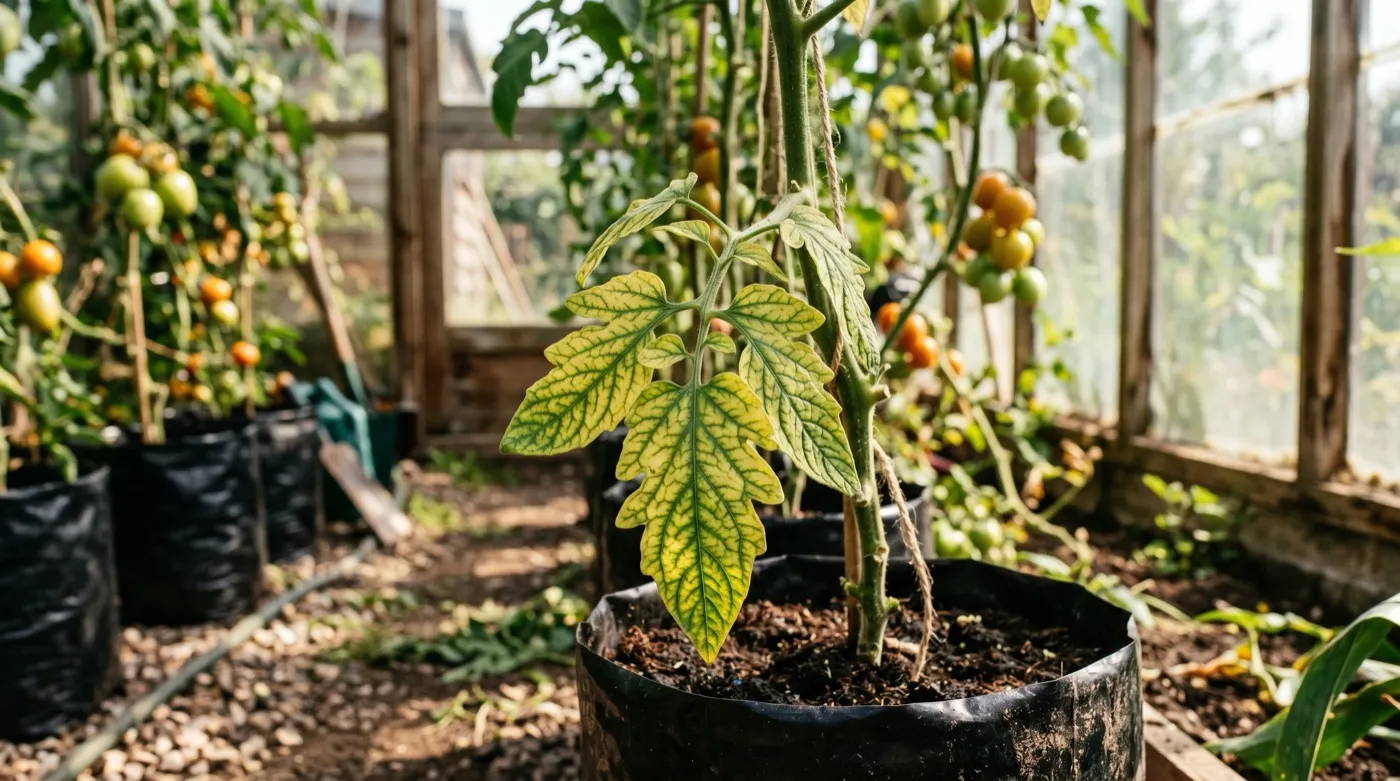 Magnesium chlorosis on a tomato. It strikes the oldest leaves first because the plant moves magnesium up to new growth.
A month-by-month plan for chlorosis-prone plants
Yellowing follows the seasons. Iron chlorosis flares in spring as new growth outpaces root uptake on cold, wet, or alkaline soil. This calendar keeps prone plants ahead of it.
| Month | Action |
|---|---|
| January | Check drainage around acid lovers, clear standing water, plan raised beds if needed |
| February | Test soil pH while beds are bare, target below 6 for acid lovers |
| March | Mulch acid lovers with ericaceous compost before the flush of new growth |
| April | Apply first sequestered iron drench to any plant chlorotic last year |
| May | Watch new growth for yellowing, spray Epsom salts on magnesium-short tomatoes |
| June | Switch acid lovers to rainwater fully as butts fill, feed nitrogen-hungry crops |
| July | Foliar feed any persistent cases, keep ridged or potted plants evenly watered |
| August | Top up rainwater storage, avoid late high-potash feeds that block magnesium |
| September | Second sequestered iron drench for severe cases before growth slows |
| October | Add sulphur chips to acidify slowly over winter, refresh mulch |
| November | Lift and improve drainage on waterlogged beds, never lime acid lovers |
| December | Review the year’s notes, plan to move repeat offenders to better soil |
What causes yellow leaves underneath, and how to stop it for good
Treating the leaf without treating the cause means the same yellowing returns every season. The root cause of most chlorosis is the wrong growing conditions, not a missing bag of feed. Two underlying problems sit behind the majority of cases.
The first is soil pH mismatch. An acid-loving plant in alkaline soil will always lock up iron, no matter how much you feed it. The permanent answer is to match plant to soil, the right plant in the right place, or to commit to an acidic regime with ericaceous compost, rainwater, and acidifying mulch. Sequestered iron is a sticking plaster over a pH problem.
The second is poor drainage. Roots in waterlogged soil cannot absorb nutrients, so the plant goes chlorotic even with plenty in the ground. The fix is structural: open up the soil, add grit and organic matter, and raise the bed if water sits after rain. Our guide on soil drainage and structure sets out the methods. The wider garden problems section covers related disorders worth ruling out.
Sequestered iron is worth keeping on the shelf for spring rescues, costing around £8-12 a bottle. Just never mistake it for a permanent solution.
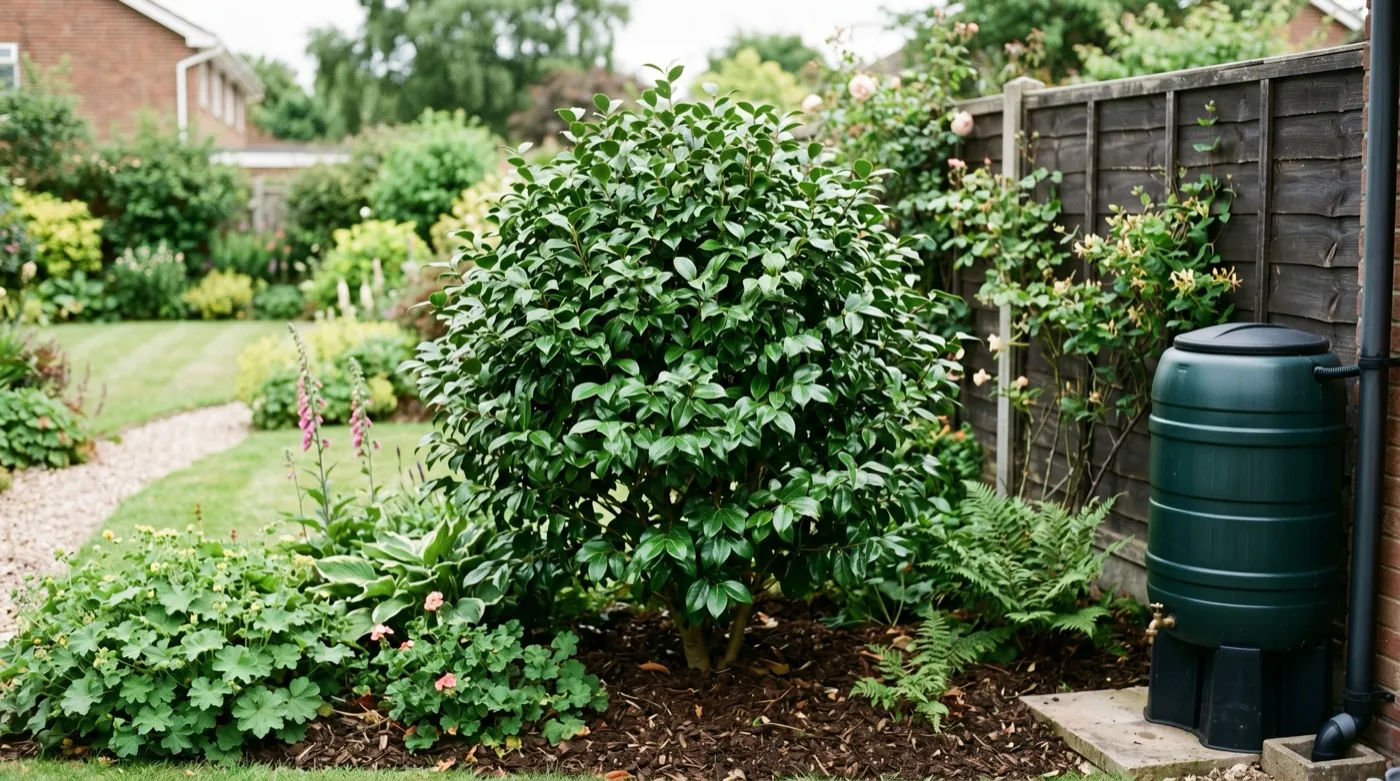 Proof of life: the same camellia a season on, holding deep-green colour on rainwater and ericaceous mulch, no further iron needed.
Common chlorosis mistakes to avoid
Most failed treatments come from misreading the pattern or fixing the symptom alone. These are the errors that waste a season.
- Feeding before diagnosing. Reaching for a general feed when the cause is high pH or wet roots does nothing. Read the leaf pattern first, then choose the fix that matches.
- Liming around acid lovers. Adding lime to “sweeten” soil near rhododendrons and camellias locks up more iron and deepens the yellowing. Acid lovers want the opposite.
- Using Epsom salts for iron chlorosis. Epsom salts supply magnesium, useless when the problem is iron. Check whether old or new leaves yellowed first before reaching for it.
- Relying on tap water for acid lovers. Hard tap water raises soil pH slowly with every can. Store and use rainwater for camellias, blueberries, and pieris.
- Treating once and stopping. A single iron drench greens the plant but the pH problem remains. Pair every quick fix with a permanent change to drainage, mulch, or water.
For another change in leaf colour, read why variegated plants revert to green.
Frequently asked questions
What does chlorosis look like on a plant?
Leaves turn pale yellow while the veins often stay green. The yellowing between the veins is called interveinal chlorosis. In severe cases the whole leaf bleaches to near-white, edges scorch brown, and growth stalls. The pattern and the leaf age tell you which nutrient is short.
Why are my plant leaves yellow but the veins still green?
Green veins with yellow between them point to iron or magnesium. Iron deficiency shows on the newest leaves first. Magnesium shows on the oldest leaves first because the plant moves it to new growth. Check which leaves yellowed first to tell them apart.
How do I fix iron chlorosis quickly?
Apply sequestered iron, a chelated iron feed, as a soil drench. Leaves usually green up within 10-14 days. This is a rescue, not a cure. Without correcting soil pH and drainage, the chlorosis returns the following season.
Does Epsom salts cure yellow leaves?
Only when the cause is magnesium deficiency, not iron. Dissolve 20g of Epsom salts per litre and spray the foliage. You should see greening on treated leaves within a week. It does nothing for iron, nitrogen or overwatering, so diagnose first.
Why do my rhododendrons and camellias get yellow leaves?
They are acid lovers grown in soil that is too alkaline. High pH locks up iron so roots cannot absorb it. Hard tap water raises pH further over time. Use ericaceous compost, rainwater, and an acidic mulch to keep iron available.
Can overwatering cause yellow leaves?
Yes, waterlogged roots cannot take up iron or nitrogen properly. Saturated soil starves roots of oxygen and they stop functioning. The leaves yellow even when the nutrients are present. Improve drainage and let the soil dry before watering again.
Now you can read the pattern and name the cause, fix the conditions underneath. Read our guide on how to improve drainage in clay soil and lawns to stop the waterlogging that locks up iron in the first place.
Our team produces practical UK gardening guidance from source research, contributor records and established horticultural practice. Editorial standards are overseen by Matt W.