Key takeaways
- Creeping thistle (Cirsium arvense) spreads by brittle creeping roots and by wind-blown seed
- Root fragments as small as 6mm can regrow, so incomplete digging makes it worse
- It is one of five injurious weeds under the Weeds Act 1959, so spread can be a legal issue
- Cutting repeatedly before flowering starves the roots over two to three seasons
- Never let it flower and seed: one plant sheds thousands of wind-blown seeds
- Its flowers feed bees and its seeds feed goldfinches, so tolerate it in a wild corner
If your lawn, border or verge is filling with prickly, colony-forming plants topped by small lilac-purple flowers, that is almost certainly creeping thistle. Creeping thistle, Cirsium arvense, is the commonest perennial thistle weed in Britain, and it is a determined one. It spreads two ways at once: by brittle creeping roots that regrow from the smallest fragment, and by wind-blown seed carried on thistledown. That double strategy is what makes it so persistent, and it is also the key to beating it, because you have to shut down both routes.
This guide covers how to identify creeping thistle, why it keeps coming back, the legal duty around it, and the control programme that actually works: repeated cutting to exhaust the roots, careful digging where it is feasible, and never, ever letting it seed. It also covers why you might choose to tolerate a clump.
How to identify creeping thistle
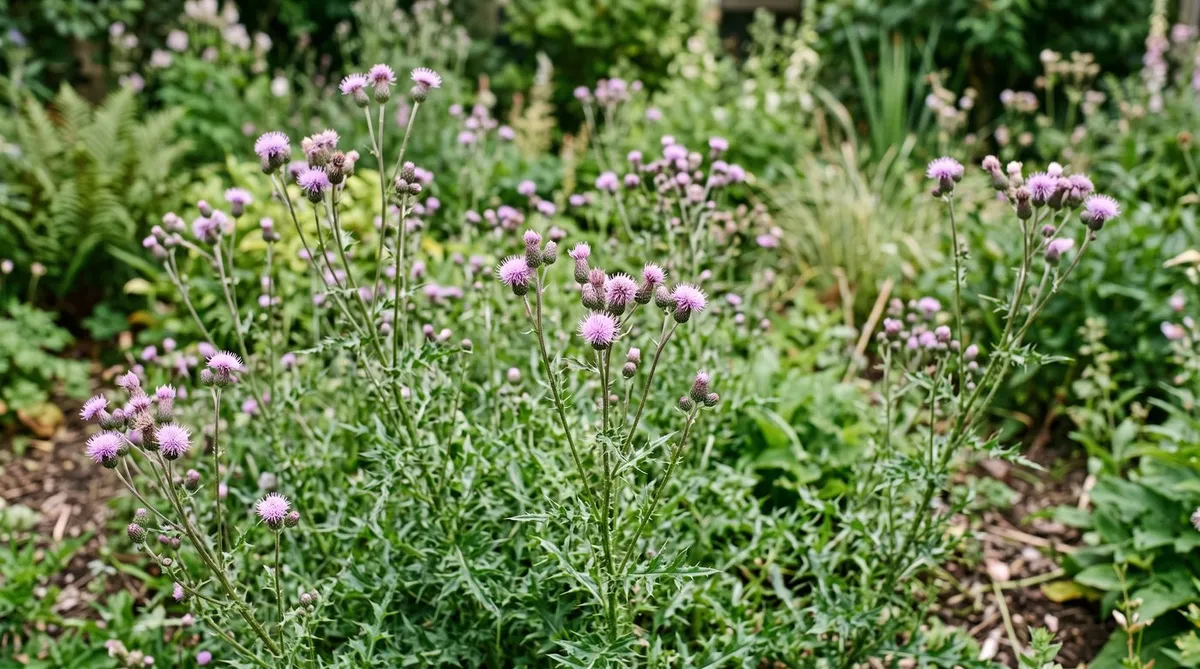
Creeping thistle is a perennial that grows 30-120cm tall and usually appears in patches or colonies because it spreads underground. The leaves are lance-shaped, deeply lobed and spiny along wavy margins, mid-green above and slightly paler below. The stems are slender and, unlike some thistles, mostly without spiny wings.
The flowers are the clincher. Creeping thistle carries small lilac to pale-purple flower heads, each only about 15-25mm across, in loose clusters at the tops of the stems from July to September. After flowering, each head produces seeds attached to fluffy white thistledown that carries them on the wind.
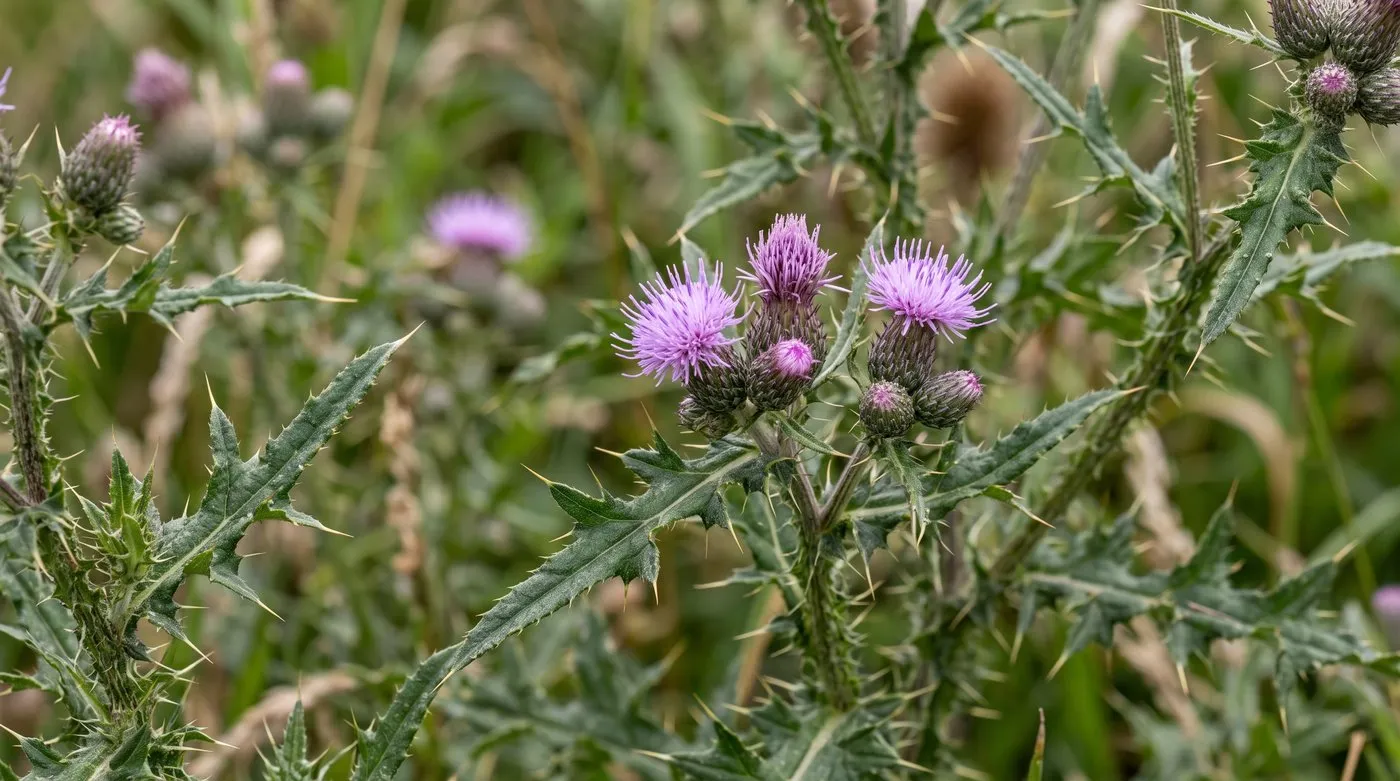 Creeping thistle: spiny lobed leaves and small lilac-purple flower heads 15-25mm across, growing in a spreading patch rather than as single plants.
Why creeping thistle keeps coming back
Understanding the root system explains every frustration with this weed, and points straight to how to beat it.
Creeping thistle spreads underground by horizontal creeping roots that run widely through the soil, sometimes extending several metres from the parent plant in a season. These roots store energy and throw up new shoots along their length, which is why the weed appears as a spreading colony. That is the first problem.
The second is that the roots are brittle, and every fragment is a new plant. A broken piece of root as small as 6mm can regenerate. This single fact changes everything about control. When you dig and inevitably snap the roots, or worse, rotavate a patch, you are not destroying the weed. You are chopping it into dozens of new plants and distributing them through the soil. Countless gardeners have made a thistle problem far worse with a fork or a cultivator, because the plant treats being broken up as propagation.
So there are only two honest routes. Either remove every scrap of root, which is realistic only on light soil with young, small plants, or exhaust the roots by repeated cutting, forcing the plant to keep regrowing from its reserves until they run out. There is no quick dig-it-out fix for an established stand. Our guides to couch grass and ground elder describe the same brittle-root challenge in other perennial weeds.
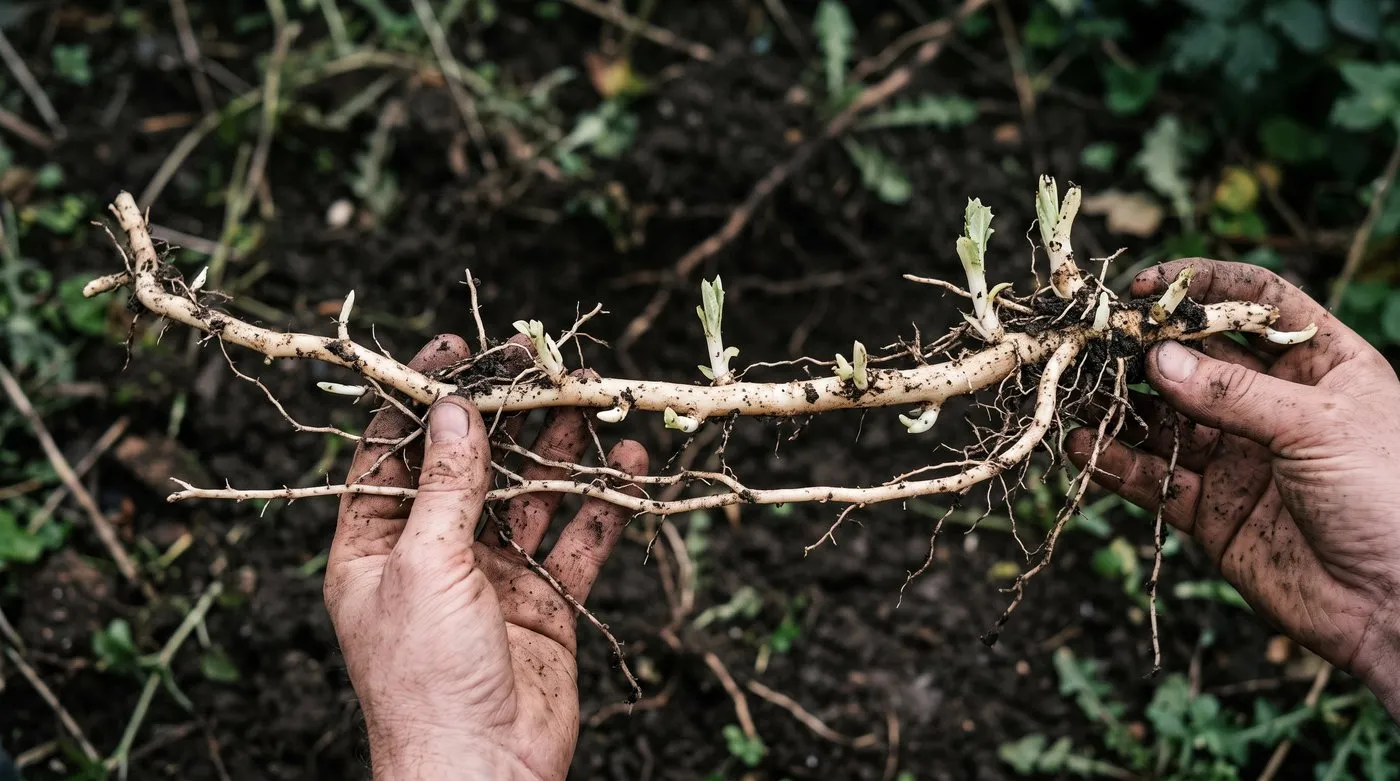 The brittle creeping roots spread widely and regrow from fragments as small as 6mm. Snapping them by digging or rotavating multiplies the weed.
Repeated cutting: the method that actually works
For an established stand, the most reliable control needs no chemicals and no back-breaking digging. It is repeated cutting, and it works by starving the roots.
A plant makes its food in its leaves. Every time you cut the thistle to the ground, it has to spend stored root energy to grow new leaves. If you cut it again before those leaves can repay the debt, the roots get weaker. Keep this up and the root reserves are eventually exhausted and the plant dies. The rule is to never let the thistle get above about 150mm and to cut it back to the ground every two to three weeks through the growing season.
Repeated cutting works by stopping the leaves from replenishing the underground root reserves. Cut every three weeks while growth is active. Continue through successive growing seasons until shoots stop returning. Avoid rotavating established patches because chopped root fragments can produce new plants.
Cutting works whether you use shears, a strimmer, or simply mow. In a lawn, regular close mowing keeps creeping thistle in check on its own, because it cannot tolerate constant cutting, and any survivors can be spot-treated. Our guide to lawn weed identification and control covers the wider lawn picture. The key discipline is consistency: miss a few weeks in summer and the roots recover.
 Cutting to the ground every two to three weeks starves the roots. Consistency is everything: a plant never allowed to build leaves eventually exhausts its reserves.
Digging out, and when it is worth trying
Digging has a place, but a narrow one, and doing it wrong makes things worse.
Digging out creeping thistle only works if you remove the entire root system, including the fine horizontal runners, because any fragment left behind regrows. This is realistic in three situations: young plants that have not yet built a big root network, light, sandy or loose soil where the roots pull cleanly, and isolated plants rather than a dense colony. In those cases, loosen the soil widely around the plant with a fork and tease out the whole root, following the runners rather than snapping them.
On heavy clay or in an established stand, honest advice is not to bother trying to dig it clean, because you cannot, and every broken root you leave becomes a new plant. Cut instead. If you must clear ground quickly, dig what you can, then keep cutting the regrowth to exhaust whatever root remains.
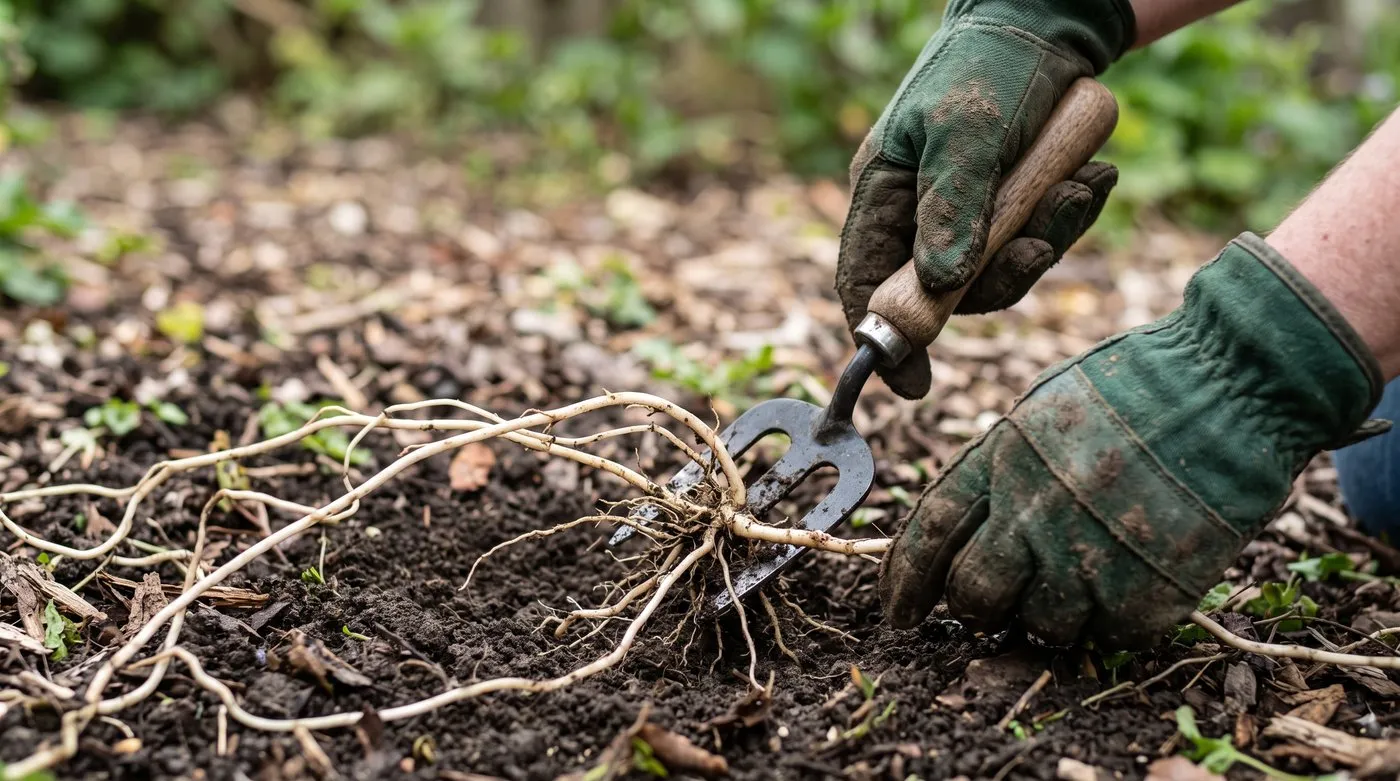 Digging works only on young plants in light soil, where the whole brittle root lifts cleanly. Follow the runners out rather than snapping them.
Warning: Never rotavate ground infested with creeping thistle. A rotavator chops the brittle roots into hundreds of fragments and spreads them evenly through the soil, turning a patch into a field of thistles. This is one of the commonest and most damaging mistakes in weed control. Clear the thistle first, by cutting or careful digging, before any cultivation.
Never let it seed
Whatever else you do, the one absolute rule is to stop creeping thistle flowering and setting seed. A single plant can produce thousands of seeds, each carried on fluffy thistledown that the wind takes far across your garden and your neighbours’.
This means cutting off or mowing down every flower head before the purple fades to fluffy white seed, from July onwards. Even if you are not yet controlling the roots, cutting the flowers stops the weed colonising new ground by seed and stops it spreading to neighbouring land. A plant you are slowly starving by cutting will not seed anyway, which is a further advantage of the cutting method.
If you spot thistledown already forming, cut and bag the seed heads rather than leaving them to shed or composting them in an open heap. Seeds can ripen even on cut heads left lying, so remove them from the site.
The legal side: an injurious weed
Creeping thistle is one of five injurious weeds listed under the Weeds Act 1959, alongside spear thistle, broad-leaved dock, curled dock and common ragwort. It is worth understanding what that does and does not mean.
Being an injurious weed does not make it illegal to have creeping thistle in your garden, and no ordinary gardener is prosecuted for a thistle in the border. What the Act allows is for authorities to require a landowner to control the weed where it is spreading and causing a problem, particularly onto agricultural land where it competes with crops and pasture.
Weedkillers and organic options
Chemical control has a place on heavy infestations, and the timing matters more than the product.
A systemic weedkiller based on glyphosate is the most effective chemical against established creeping thistle, because it is carried down into the roots. The critical point is timing: apply it at the bud to early-flower stage, when the plant is actively moving sugars down to the roots and will carry the weedkiller with them. Spraying young spring growth is far less effective, because the flow is upward then. Expect to need a repeat treatment, as one application rarely kills the whole root network.
In a lawn, a selective lawn weedkiller controls thistle without harming the grass, and repeated mowing does much of the work anyway. For those avoiding chemicals, the honest answer is that repeated cutting is the organic method, and it works, given patience. Our guides to organic weedkillers and preventing weeds without chemicals cover the non-chemical toolkit, though none beats persistent cutting for this particular weed.
The wildlife case for tolerance
Before you declare total war, it is worth remembering that creeping thistle is valuable to wildlife, which is why many gardeners tolerate a clump in the right place.
The purple flower heads are rich in nectar and are worked hard by bees, butterflies and hoverflies through late summer, a period when garden flowers can be scarce. After flowering, the seeds are a favourite food of goldfinches, whose flocks descend on thistle heads in autumn, along with other seed-eating birds. A thistle patch is a genuine wildlife asset.
The sensible approach is zoning. Control creeping thistle ruthlessly in lawns, beds and anywhere it can seed onto farmland, but consider tolerating a clump in a wild corner, a rough bank, or a dedicated wildlife area where you can enjoy the pollinators and finches and cut the heads before they seed too widely. Our guide to making a wildflower meadow covers managing such areas. Wildlife value is a reason to site and time your control thoughtfully, not a reason to let it run.
 The seed heads open into wind-blown thistledown. Goldfinches feed on the seeds, but cut the heads before this stage if you need to stop it spreading.
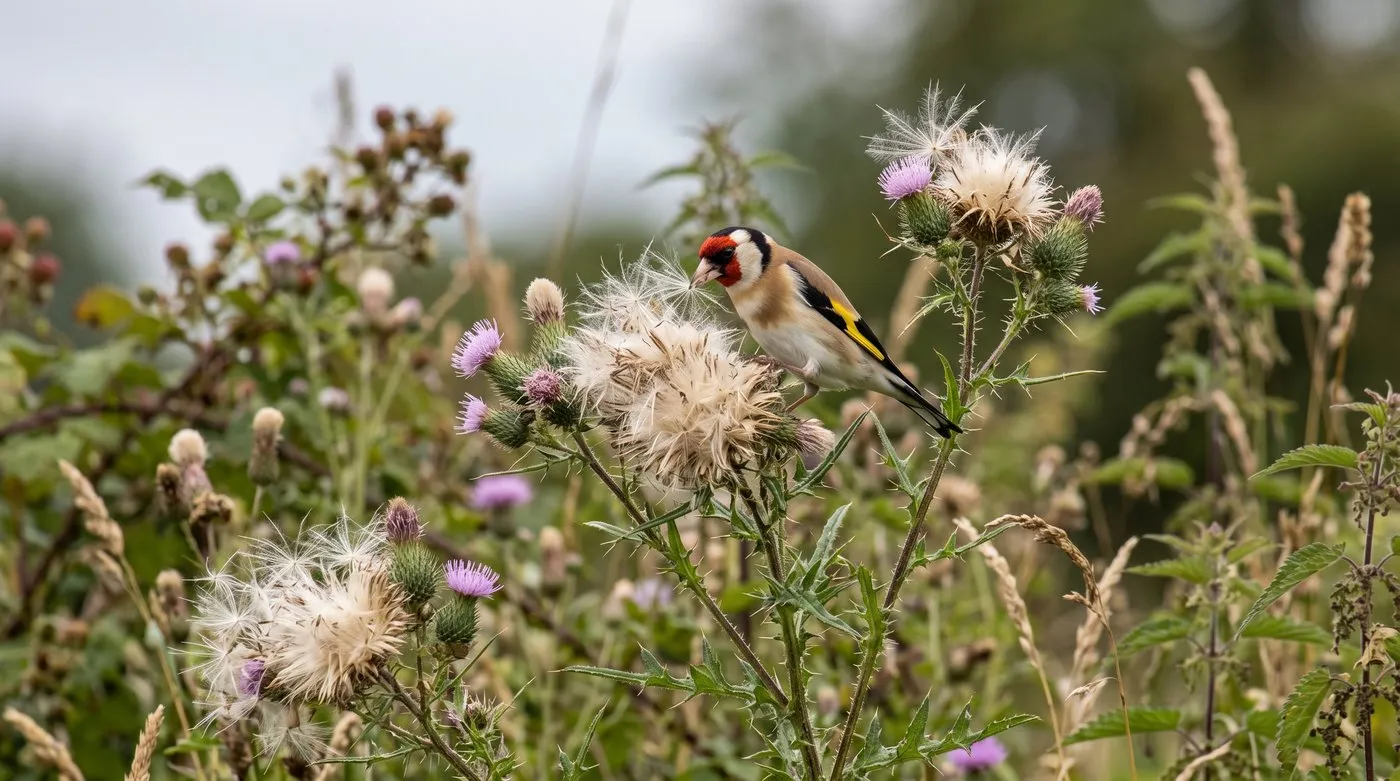 Goldfinches prize mature thistle seed. Keep a controlled clump only where it cannot spread into beds, allotments or farmland.
Control methods ranked by effectiveness
Treating these as equal is how people rotavate a patch and create a field. Ordered by what each actually delivers on creeping thistle.
| Method | Role | Effectiveness | What it cannot do |
|---|---|---|---|
| Repeated cutting every 2-3 weeks | Primary | Gradually exhausts the root system | Slow; needs consistency over several seasons |
| Cutting flowers before seed | Preventive | Stops spread by seed to new ground | Does nothing to the existing roots |
| Complete root removal (young plants, light soil) | Primary where feasible | Kills the plant outright if every fragment is out | Impossible in established stands or clay |
| Systemic weedkiller at bud stage | Chemical | Best chemical kill; reaches the roots | Needs repeats; wrong timing wastes it |
| Regular lawn mowing | Maintenance | Keeps thistle down in turf indefinitely | Only works in a mown lawn |
| Digging an established clay stand | Not recommended | Makes it worse by fragmenting roots | Every snapped fragment regrows |
The gold standard is the top two rows together: cut the plant to the ground repeatedly and never let it flower. Do both and you starve the roots while blocking the seed, closing off both routes the weed uses. Everything else supports that, and the bottom row is on the list only to warn you off it.
 Check treated patches every three weeks. Cut fresh shoots before they rebuild enough leaf area to replenish the roots.
Month-by-month creeping thistle calendar
| Month | What to do |
|---|---|
| March-April | First shoots appear. Start cutting to the ground as growth emerges. Dig isolated young plants if soil is light. |
| May | Cut regrowth every 2-3 weeks. Never let leaves build above 150mm. |
| June | Continue cutting. Buds begin to form on unchecked plants. Best time to start a weedkiller programme. |
| July | Flowering begins. Cut every flower head before the purple fades. Systemic weedkiller at bud/early flower. |
| August | Peak flowering and first seed. Keep cutting heads and regrowth. Bag any seeding heads. |
| September | Seed dispersal on thistledown. Cut and remove any remaining heads. Repeat weedkiller if needed. |
| October | Growth slows. Final cut. Note patches for next spring’s early attack. |
| November-February | Roots dormant. Plan; clear light-soil plants by careful digging while dormant if feasible. |
Common mistakes with creeping thistle
- Rotavating an infested patch. This chops the brittle roots into hundreds of new plants and spreads them evenly. Never cultivate thistle-infested ground before clearing it.
- Digging and leaving fragments. Every 6mm of root left behind regrows. On clay or in a colony, digging usually makes it worse. Cut instead.
- Letting it flower. One plant sheds thousands of wind-blown seeds. Cut every head before the purple turns to fluffy white.
- Spraying at the wrong time. Systemic weedkiller works when applied at the bud stage, as sugars move to the roots. Spraying young spring growth largely wastes it.
- Giving up after one season. Exhausting the roots by cutting takes two to three seasons. Consistency, not intensity, wins.
The short version on creeping thistle
Creeping thistle is beatable, but only if you respect how it works. It spreads by brittle creeping roots that regrow from the tiniest fragment, and by wind-blown seed from its purple flowers. So the two things that fail are digging it carelessly, which multiplies it, and letting it flower, which sows it far and wide. The two things that work are cutting it to the ground again and again until the roots starve, and never letting a single head go to seed.
Be patient, be consistent, and never take a rotavator to it. And where it is not in your way, in a wild corner or a rough bank, consider leaving a clump for the bees in summer and the goldfinches in autumn, cutting the heads before they seed too widely. For the rest of the persistent weeds, work through the garden problems section, and the RHS guidance on creeping thistle is a sound second reference.
Frequently asked questions
How do I identify creeping thistle?
Look for spiny, deeply lobed leaves and lilac-purple flower heads. Creeping thistle grows 30-120cm tall. It has slender, mostly unwinged stems and flower clusters about 15-25mm across. It spreads into patches from underground roots, unlike the single-stemmed spear thistle. The leaves are prickly along the wavy margins and the whole plant appears in colonies rather than as isolated plants.
How do I get rid of creeping thistle permanently?
Cut it before flowering every three weeks for two or three growing seasons. Because it regrows from root fragments, digging often makes it worse unless you remove every scrap. Persistent cutting every three weeks starves the root system. For heavy infestations a systemic weedkiller applied at the bud stage, when the plant moves sugars to the roots, gives the most reliable kill.
Why does creeping thistle keep coming back?
Because it regrows from its brittle creeping roots. The horizontal roots spread widely underground and store energy, and even a 6mm fragment left in the soil can grow a new plant. Pulling the top off does nothing to the root. This is why chopping or rotavating spreads it, and why either total root removal or repeated cutting to exhaust the roots is needed.
Is creeping thistle illegal to have in my garden?
No. Creeping thistle is an injurious weed, but possession is not illegal. The law allows authorities to require control where it is spreading to agricultural land and causing a problem. In practice, a gardener is not prosecuted, but you have a moral and neighbourly duty not to let it seed onto adjoining land, especially near farmland or grazing.
Should I dig or cut creeping thistle?
Cut repeatedly unless you can remove every root fragment. Digging is effective only if you extract the entire brittle root system, which is very hard in established stands, and every fragment left behind regrows. Repeated cutting to ground level every few weeks exhausts the roots over a couple of seasons. In light soil with young plants, careful complete digging can work.
Is creeping thistle good for wildlife?
Yes, its flowers feed pollinators and its seeds feed goldfinches. Bees and butterflies work the purple flower heads, and goldfinches and other birds eat the seeds. This is why many gardeners tolerate a clump of thistle in a wild corner while controlling it in beds and lawns. Cut the flowers before they seed if you need to stop it spreading, but value it where you can.
When should I treat creeping thistle?
Cut from spring onwards and treat with weedkiller at the bud-to-early-flower stage. Repeated cutting should start as soon as growth appears in spring and continue through summer. If using a systemic weedkiller, the best time is when flower buds form, because the plant is then moving energy down to the roots and carries the chemical with it. Always act before the seed sets.
Our team produces practical UK gardening guidance from source research, contributor records and established horticultural practice. Editorial standards are overseen by Matt W.