Key takeaways
- UK native annual; explosive seed dispersal up to 7m
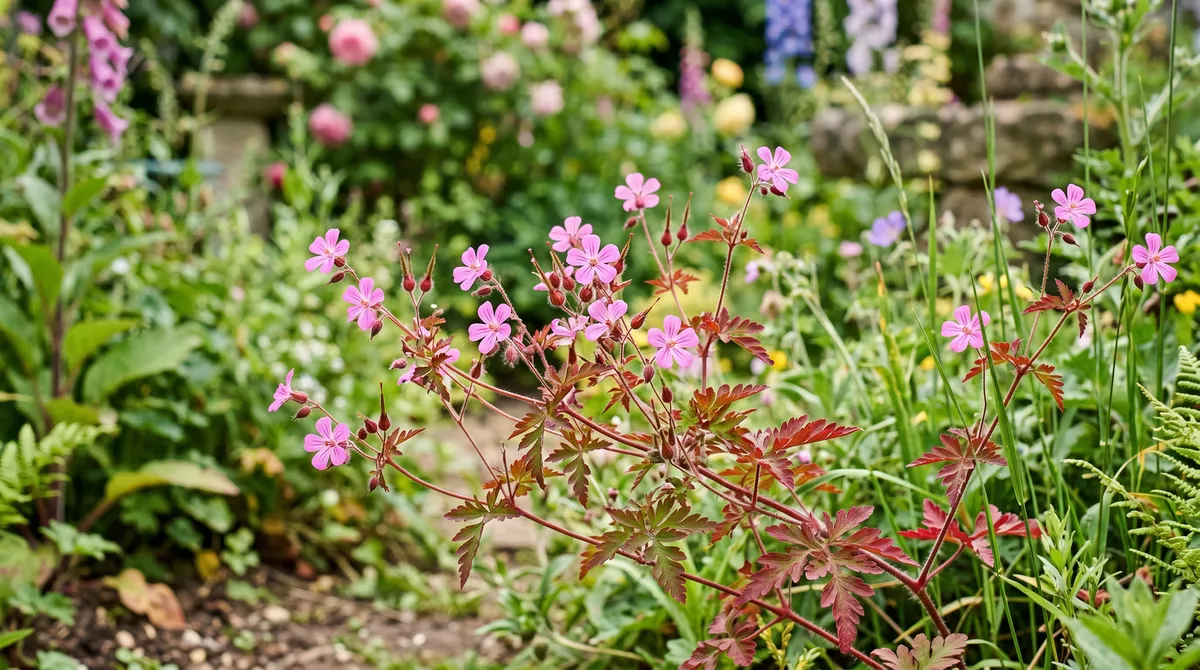
- Identify: deeply divided red-tinged leaves, pink 5-petal flowers
- Pull before seed pods explode (April-June)
- Each plant produces 200-400 seeds; pods catapult them
- Distinct smell when crushed (the diagnostic plus visual ID)
- Three years of consistent pulling clears most populations
Herb Robert (Geranium robertianum) is the UK’s most common annual garden geranium weed. Pretty pink flowers and lacy red-tinged leaves make it look like a wildflower, but the explosive seed dispersal (up to 7m per pod) means a small patch becomes a takeover within 2-3 years. This guide covers identification, the autumn rosette-pull window, and the three-year plan that clears UK populations.
After 6 years of management at Staffordshire, the patterns are clear. Autumn rosette pulls are the easiest intervention. Explosive seed dispersal makes spring-summer pulls risky. Three-year cycle clears most UK populations.
Identifying Herb Robert
UK herb Robert is unmistakable once known.
Diagnostic features:
- Deeply divided ferny leaves with 5 main lobes, each further divided
- Often red or pink-tinged on stems and leaf undersides
- Small pink flowers (10-15mm) with 5 petals and 10 stamens
- Distinctive strong smell when crushed (some find unpleasant)
- Sprawling habit, 100-400mm tall
- Long pointed seed pods 15-25mm that split explosively when ripe
- Active October-June in UK; flowering April-September
The leaf shape and the smell are the unmistakable double check. UK herb Robert has the strongest “geranium” smell of any wild Geranium species.
Plants commonly confused with herb Robert:
| Plant | Key differences |
|---|---|
| Cut-leaved cranesbill (G. dissectum) | Less divided leaves, less smell, smaller flowers |
| Dove’s-foot cranesbill (G. molle) | Round-lobed leaves, hairier |
| Shining cranesbill (G. lucidum) | Glossy leaves, less divided |
For the wider UK Geranium identification across cultivated and wild species, our perennials guide covers the ornamental cousins.
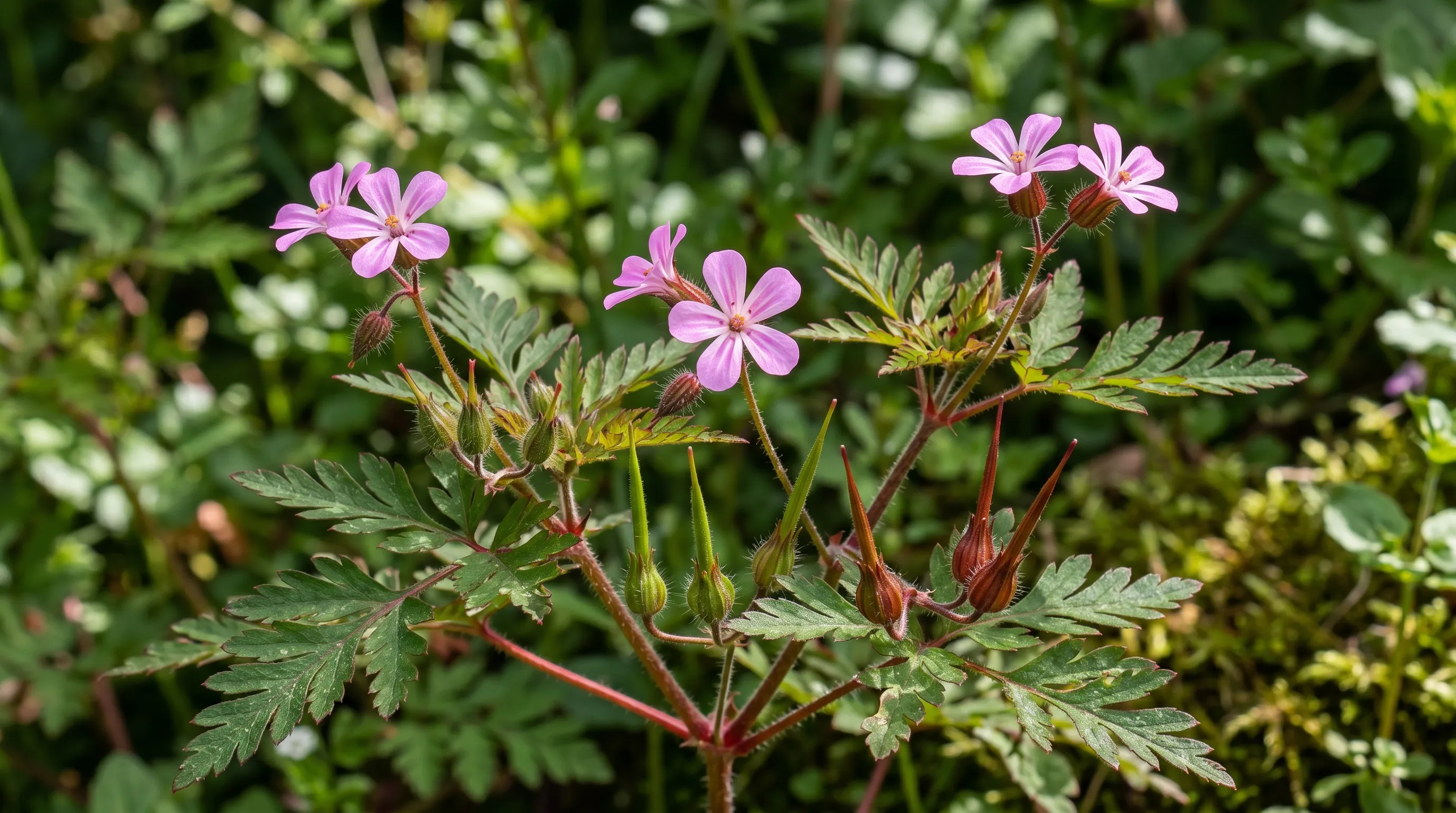 Herb Robert in a Staffordshire shaded border. Deeply divided ferny leaves with red-tinged stems. Small pink 5-petal flowers. The long pointed seed pods (top right of frame) will catapult seeds up to 7m when fully ripe.
The Lifecycle and Pull Windows
UK herb Robert is annual or biennial depending on conditions.
September-October: Seeds germinate; first true leaves appear. Rosette stage begins.
November-February: Plants overwinter as small rosettes 50-100mm wide. Pull window opens.
March-April: Spring growth; plants extend to 150-250mm. Best second-window pull.
May-June: Flowering and seed-pod development. Risky pull window (pods may explode).
July-August: Peak seed dispersal. Old plants die. Avoid handling.
The best UK pull window is October-November at the rosette stage. Taproots lift cleanly. No seed pods exist. Plants are easy to spot before their leaves blend with autumn leaf litter.
The Pull Technique
Equipment:
- Gardening gloves
- Trowel or hand fork for taprooted plants
- Bucket or sealed bag for collection
Method (autumn rosette stage):
- Identify rosettes in October-November (smell-check confirms)
- Insert trowel beside the plant, 50-75mm deep
- Lever the rosette out with the taproot intact
- Shake soil off the root over the bed
- Drop the plant into a bucket
- Continue across the bed
A 4m² heavily-infested bed takes 15-30 minutes to clear of autumn rosettes.
Method (spring pre-flowering stage):
Same as above but at 150-250mm plant size. Roots are slightly more branched but still pull cleanly. Time investment: 20-40 minutes per 4m².
Avoid May-June pulls unless plants are very young and pod-free. Pre-pod plants pull safely; pods cause seed scatter.
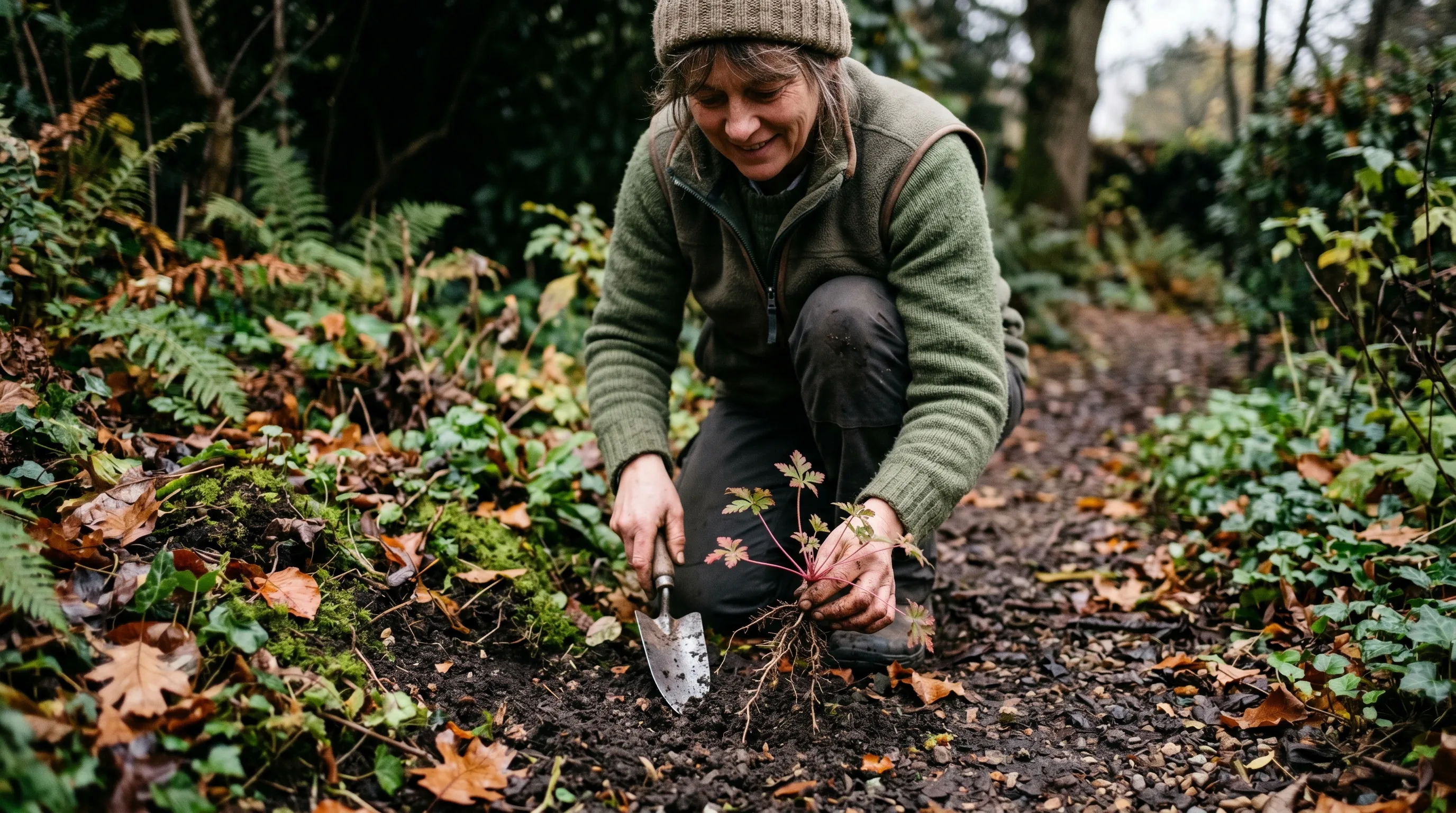 November rosette pulls on a Staffordshire shaded border. Small trowel inserted 50-75mm depth, plants lift cleanly with taproot intact. The single most effective UK herb Robert intervention.
Mulch Suppression
Herb Robert seeds need light to germinate. Heavy mulch reduces germination by 65-80%.
Effective UK mulches:
- Bark chip 75mm (75-85% suppression)
- Leafmould 50mm (65-75%)
- Cardboard plus grass clippings (85-95%)
- Garden compost 50mm (60-70%)
Apply autumn mulch in September-October, before the herb Robert germination window. For the cardboard plus grass mulch technique, our mulching guide covers the layer method.
Herb Robert often colonises shaded areas where bark chip lasts longest (2-3 years). One application of 75mm bark chip can hold a shaded border clear for 18-24 months.
The 3-Year Clearance Plan
Year 1:
- October-November: pull every rosette
- March-April: pull any spring-emerged plants
- May-June: hand-pull only pod-free plants
- Expect 70-80% reduction
Year 2:
- Same routine, less work
- Mulch apply autumn
- Expect 90-95% reduction
Year 3:
- Spot-pull any emergence
- Boundary inspection
- Expect 95-99% reduction
Wildlife Garden Compromise
Some UK gardeners want to keep herb Robert as a wildlife plant.
Compromise approach:
- Allow herb Robert in one dedicated 1-2m² wild patch
- Edge with timber 50mm deep to limit lateral spread
- Cut all plants back hard in late May before pod set
- Inspect surrounding beds monthly for escapes
- Pull any escape rosettes in October
For the broader UK wildlife garden approach, our wildlife guide covers habitat planning beyond herb Robert.
Common Mistakes With UK Herb Robert Control
Mistake 1: pulling at the pod stage. Pods explode during pulling, spreading seeds 5-7m. Stop pulling once pods are visible.
Mistake 2: leaving the taproot. Plants regrow from the taproot within 4-6 weeks. Lift the whole root.
Mistake 3: composting flowering plants. Pods continue ripening on the heap. Sealed-bag disposal of any pod-bearing plants.
Mistake 4: ignoring autumn rosettes. Most UK gardeners pull herb Robert in May-June at full size. Autumn pulls at rosette stage are 3-5x easier.
Mistake 5: assuming wildlife value justifies takeover. A 1m² patch contained is enough wildlife habitat. A 10m² spread smothers ornamentals.
For the wider chemical-free weed control, our weedkillers guide covers UK options. For the mulch suppression technique, our mulching guide covers the cardboard plus grass method.
Herb Robert Calendar UK Month-by-Month
| Month | Herb Robert task |
|---|---|
| January | Spot-pull any winter rosettes |
| February | Plan March-April spring pulls |
| March | Begin spring pulls before flowering |
| April | Continue pulls; watch for first flowers |
| May | Pull only pod-free plants |
| June | Avoid handling; allow plants to die back |
| July | No action; pods dispersing |
| August | Plan autumn mulch and pull schedule |
| September | Apply autumn mulch; new rosettes emerging |
| October | Peak rosette pull window |
| November | Continue autumn rosette pulls |
| December | Final autumn pulls before frost |
Frequently asked questions
How do I identify herb Robert in the UK?
Small pink flowers with 5 petals on slender stems. Deeply divided ferny leaves that often go red-tinged in cool weather. Sprawling plant, 100-400mm tall. Strong distinctive smell (some find unpleasant) when crushed. Native UK plant found in shaded woodland, hedge bottoms and garden beds.
Is herb Robert a wildflower or a weed?
Both. Herb Robert is UK native and supports small bee species. In wild settings it’s a wildflower. In flowerbeds and vegetable plots it’s a weed because of aggressive self-seeding. The classification depends on context. Wildlife gardeners often keep a small patch; ornamental gardeners typically remove all of it.
When should I pull herb Robert in the UK?
October-November at the rosette stage, before winter slowdown. Taproots lift cleanly and no seed pods exist. Alternative window: March-April before flowering begins. Avoid pulling May-June when ripe pods may explode during handling, scattering seeds across the garden.
How far do herb Robert seeds travel?
Up to 7 metres from the parent plant. Mature seed pods build up tension and split explosively when ripe or disturbed, catapulting seeds across the garden. This explains how one plant can colonise a whole bed within 2-3 years. Always handle ripe-pod plants gently.
Does herb Robert have any uses?
Yes. Traditional UK herbal medicine used herb Robert tea for digestive complaints and as a mild diuretic. The plant is also a magnet for small solitary bees and hoverflies. Modern uses are limited to small wildlife garden patches; rarely cultivated deliberately.
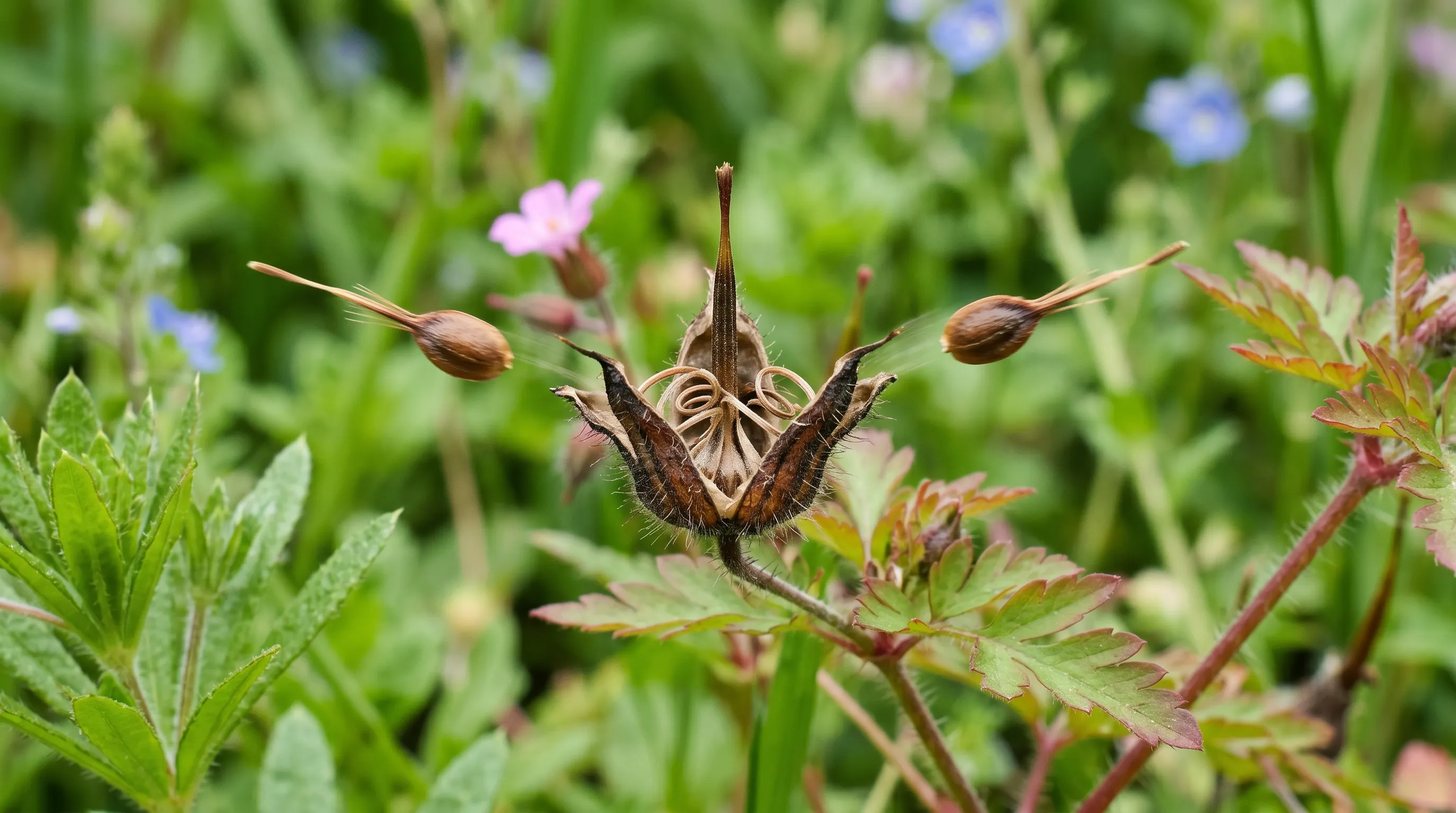 The explosive seed dispersal mechanism. Each pod splits suddenly when ripe, catapulting seeds up to 7m from the parent plant. Handling pods triggers premature explosion and seed spread.
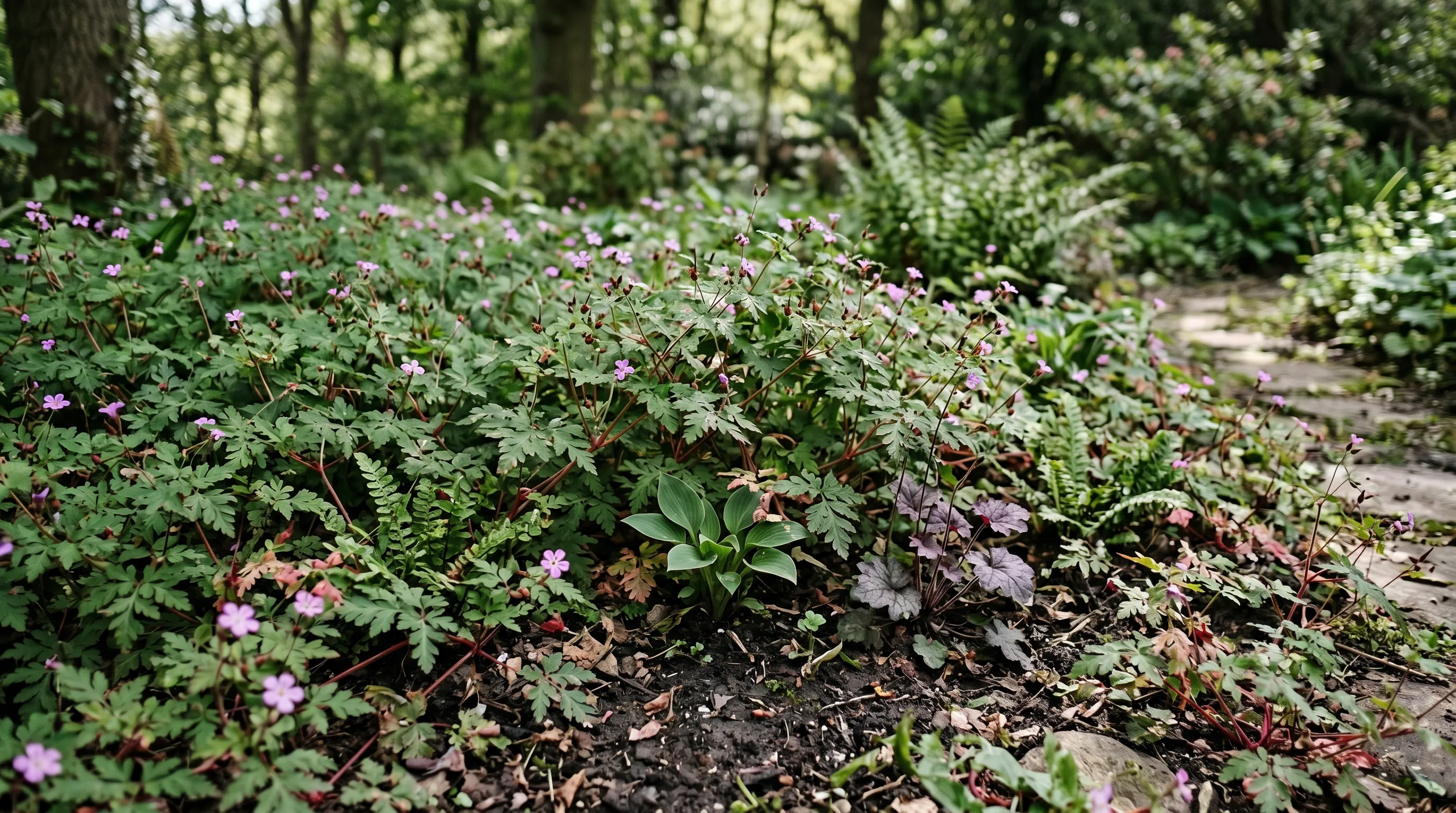 Year 3 of an unmanaged herb Robert population on the Staffordshire boundary. Dense ground cover smothering smaller ornamentals. A 1m² patch reached 10m² within 4 years before clearance began.
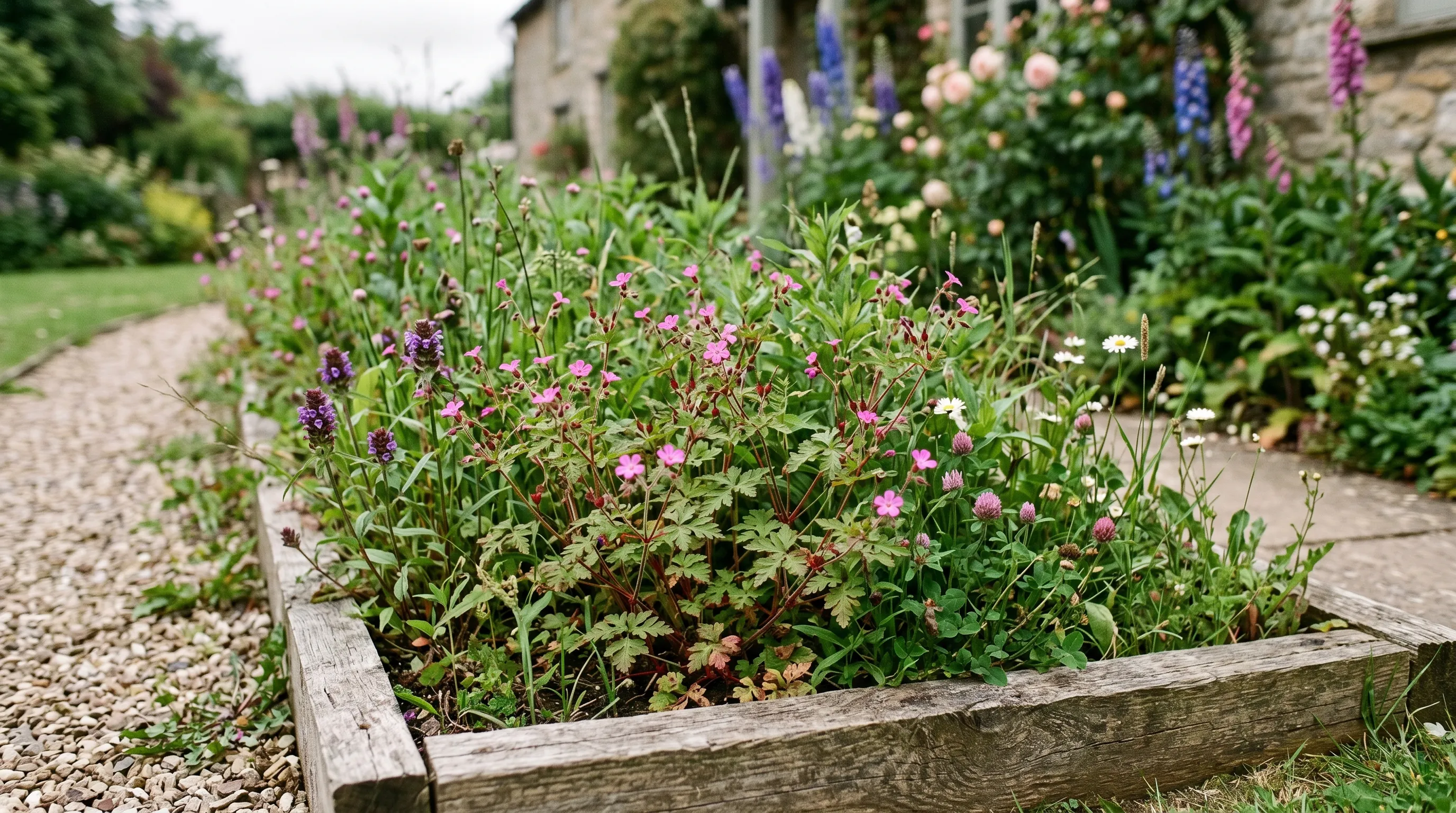 The contained wildlife approach. A 1m² edged patch of herb Robert plus other UK natives in a dedicated corner. Timber edge limits lateral spread. Surrounding beds inspected monthly for escaped rosettes.
Now plan the wider annual weed defence
Our team produces practical UK gardening guidance from source research, contributor records and established horticultural practice. Editorial standards are overseen by Matt W.