Key takeaways
- Schedule 9 listed: illegal to plant or cause to grow in the wild
- Identification: pink helmet flowers, hollow red-tinged stems 1.5-2.5m tall
- Shallow roots; pull-and-snap before seeds form
- Seeds shoot 7m from explosive seed pods; act before late July
- Compost in sealed bags or burn; never put in council green waste
- Three seasons of pulling clears typical UK colonies
Himalayan balsam (Impatiens glandulifera) is one of the most damaging invasive plants in the UK. Listed under Schedule 9 of the Wildlife and Countryside Act 1981, it spreads along riverbanks and damp ground at 20-30m per year, smothering native flora. This guide covers identification, the legal position, the pull-and-snap removal method, the timing window that prevents seed spread, and the three-season plan that clears typical UK colonies.
After 6 years of balsam-bashing volunteer work on a Staffordshire river corridor, the patterns are clear. Timing decides success. Sealed disposal prevents next year’s seed bank. Three seasons of annual pulls clear typical UK colonies.
Identification: What Himalayan Balsam Looks Like
UK Himalayan balsam is unmistakable at peak season but small plants can be missed in May and early June.
| Feature | Description |
|---|---|
| Height | 1.5-2.5m at peak (rare to 3m in deep shade with moisture) |
| Stem | Hollow, jointed, red-tinged or pale green, succulent, brittle |
| Leaves | Lance-shaped, 80-200mm long, sharply serrated, in whorls of three |
| Flowers | Pink, purple or white; helmet or bonnet shape; 25-40mm |
| Flowering | June to October |
| Seed pods | 25-40mm long, green ripening to yellow; explosive |
| Roots | Shallow, fibrous, 50-150mm deep |
| Habitat | Riverbanks, damp ditches, woodland edges, neglected gardens |
The diagnostic features are the hollow red-tinged stem, the helmet-shaped flowers, and the whorled leaves of three. The plant looks superficially like a bedding impatiens but is much taller and produces explosive seed pods.
UK plants to confuse balsam with:
- Indian balsam (same species, alternative name)
- Small balsam (Impatiens parviflora, much smaller, yellow flowers)
- Touch-me-not balsam (Impatiens noli-tangere, native, yellow flowers)
- Orange balsam (Impatiens capensis, naturalised, orange flowers)
Of these, only Himalayan balsam carries the Schedule 9 listing and is the dominant invasive across UK riverbanks.
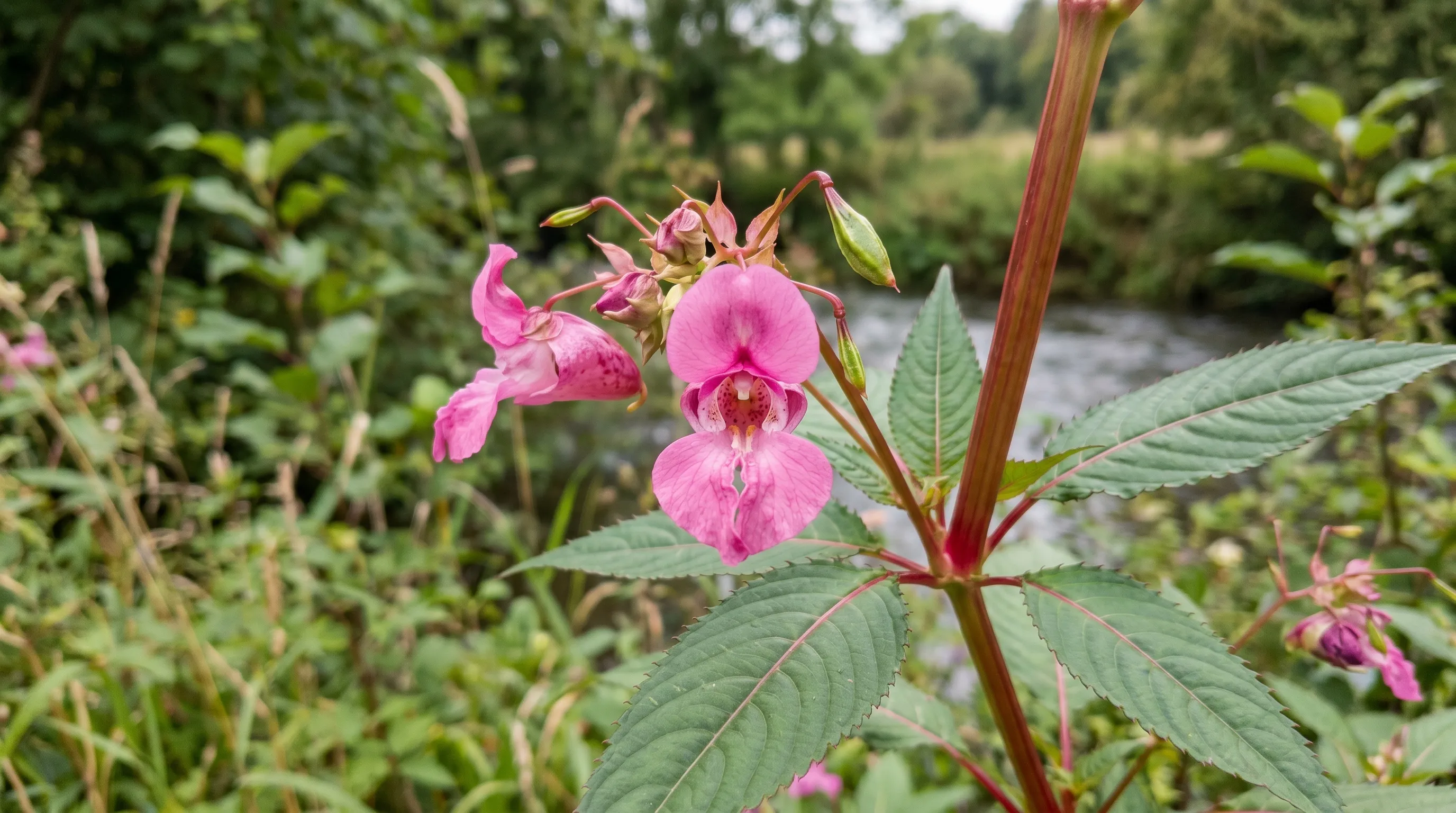 Classic UK Himalayan balsam identification: pink helmet-shaped flowers, hollow red-tinged stem, lance-shaped serrated leaves in whorls of three. Often found along UK riverbanks from June to October.
The Schedule 9 Legal Position
Under Schedule 9 of the Wildlife and Countryside Act 1981 (as amended), Himalayan balsam is a controlled invasive species. The legal duties for UK landowners and gardeners:
Section 14(2) of the Act makes it an offence to plant or otherwise cause to grow in the wild any plant listed on Schedule 9. Penalties include fines up to £5,000 or 2 years imprisonment.
What this means for gardeners:
- It is not illegal to have Himalayan balsam on your own land
- It is illegal to plant it in the wild (including neighbouring land you do not own)
- It is illegal to dispose of it in council green waste (which is composted and spread on farmland)
- It is illegal to allow it to spread from your land into the wild via seeds
Practical implications:
- Pulled plants must go in sealed black plastic bags to landfill, not council green waste
- Boundary gardens beside rivers, ditches or wild land must control balsam
- Garden plants that escape into wild land may create the offence even unintentionally
Read the UK government’s invasive non-native species guidance for the full legal framework.
The neighbouring Schedule 9 species include giant hogweed, Japanese knotweed, and Indian balsam. Identification is critical because Schedule 9 species require different removal methods and disposal routes. Giant hogweed is the one to treat with most care; our giant hogweed identification and removal guide explains how to recognise it and stay safe.
When to Pull: The Critical Window
Himalayan balsam removal is one of the most timing-sensitive UK garden jobs. Pull at the wrong moment and you scatter seeds for next year.
| Period | Plant stage | Pull effect | Notes |
|---|---|---|---|
| April-May | Seedlings 50-150mm | Easy pulls, low impact | Slow work, easy to miss |
| Early June | Established 300-900mm | Good pull, no seed | Best for novices |
| Late June-mid July | Flowering 1.5-2.5m | Best window | Plants fully formed, no seeds |
| Late July-August | Seed pods forming | Risky pulls | Pods can explode during handling |
| September-October | Seed pods mature | Disastrous | One touch scatters 800-1500 seeds |
| November-March | Dead foliage | No effect | Roots dead, foliage decomposes naturally |
The late June to mid July window is the sweet spot for UK balsam-bashing. Plants are fully grown but seed pods have not yet formed. A single pulling session removes the plant cleanly and prevents any seed return.
If you must pull plants after pod formation, use the bag-pull method: place a clear plastic bag over the plant top covering all visible pods, then pull. The bag catches any pods that detonate during handling. Slow but safe.
The Pull-and-Snap Method
Himalayan balsam has a shallow root system. Pulls clear in seconds.
Method for novices:
- Walk the colony from the most established plants outward
- Grasp the plant low on the stem at soil level
- Pull straight up; the whole root system lifts cleanly
- Snap the stem at the base just above the root
- Break or snap the stem into two pieces (prevents re-rooting)
- Pile pulled plants in a designated collection point
- Bag and remove at the end of the session
Method for established balsam-bashers:
The “snap-and-drop” technique used by UK conservation volunteers:
- Snap the stem at the base with one hand
- Drop the plant on the spot (snapped stem prevents re-rooting)
- Move to the next plant
- Cover 100-200 plants per hour at peak speed
The snap-and-drop method works because balsam stems are hollow and brittle. A clean snap below the lowest leaf node prevents the plant from continuing to grow. Useful on large infestations where pulling and carrying every plant would slow the work.
Equipment:
- Heavy-duty gardening gloves (essential; the stems are slick)
- Wellington boots or stout walking shoes (often wet ground)
- Large rubble sacks or green builders’ bags
- Long-handled hook for hard-to-reach plants
A single volunteer working the snap-and-drop method can clear 0.05-0.1 hectares per hour on dense balsam. Five volunteers clear half a hectare in a 4-hour session.
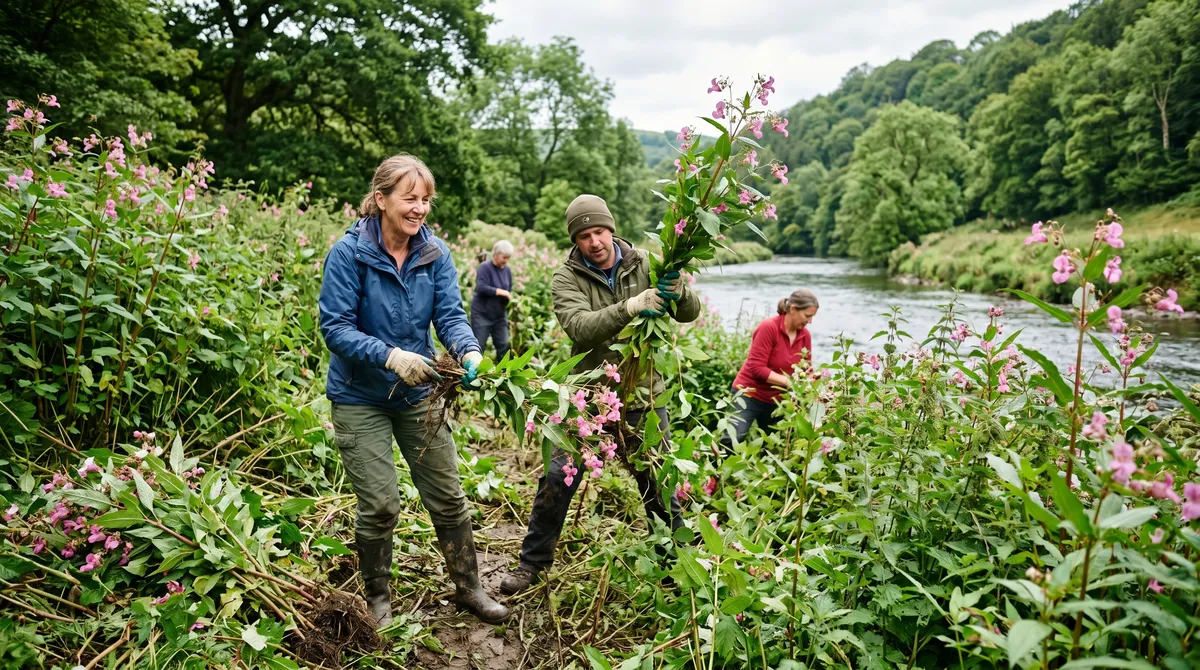
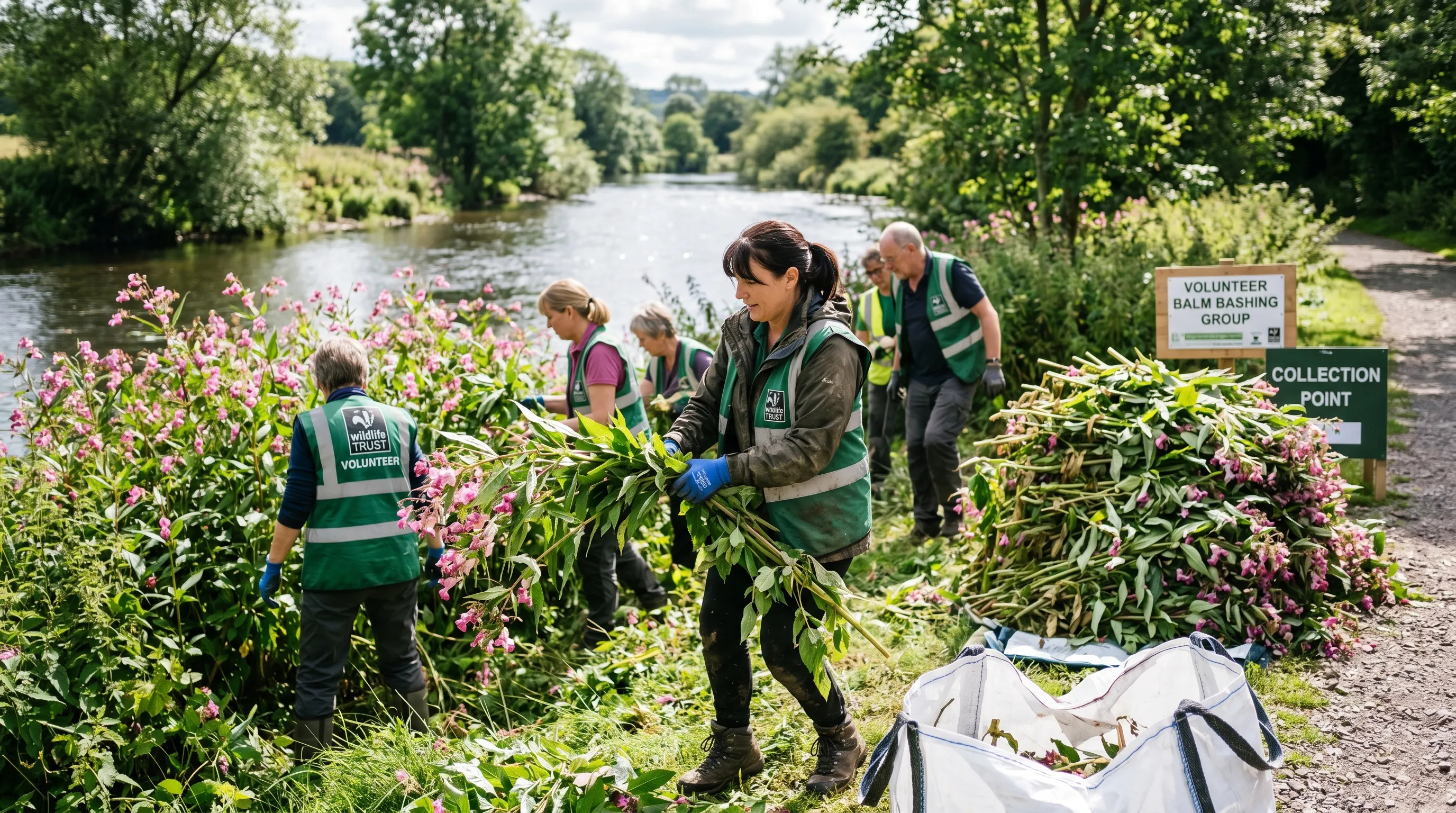 A typical UK balsam-bashing session in late June. Volunteer group works the riverbank corridor, snapping stems at the base. Plants pile at designated collection points for sealed disposal.
Disposal: Sealed Routes Only
UK Himalayan balsam must be disposed of through legal sealed routes.
Approved disposal:
- Sealed black plastic bag to landfill (most common). Double-bag if pods are present. Mark bags clearly. Council household waste depot accepts.
- Hot bonfire (rural plots only). Burn dry plants on a hot fire. Stir to ensure all pods burn through.
- Sealed black plastic bag composting. Leave bag sealed for 12-24 months in a sunny spot. Heat and decomposition kill the seeds. Open and use as compost only after 24 months.
- Specialist waste contractor (for large infestations). Sealed transit to a registered waste site. Cost: £80-£150 per tonne.
Banned disposal:
- Council green waste collection (composted and spread on farmland)
- Open garden compost heaps (does not reach kill temperatures)
- Leaving on the ground after pulling (plants re-root or seeds mature)
- Throwing back into the river (spreads downstream)
For legal disposal context across other invasive UK species, the UK government guidance covers Japanese knotweed, giant hogweed and other Schedule 9 species with similar legal requirements.
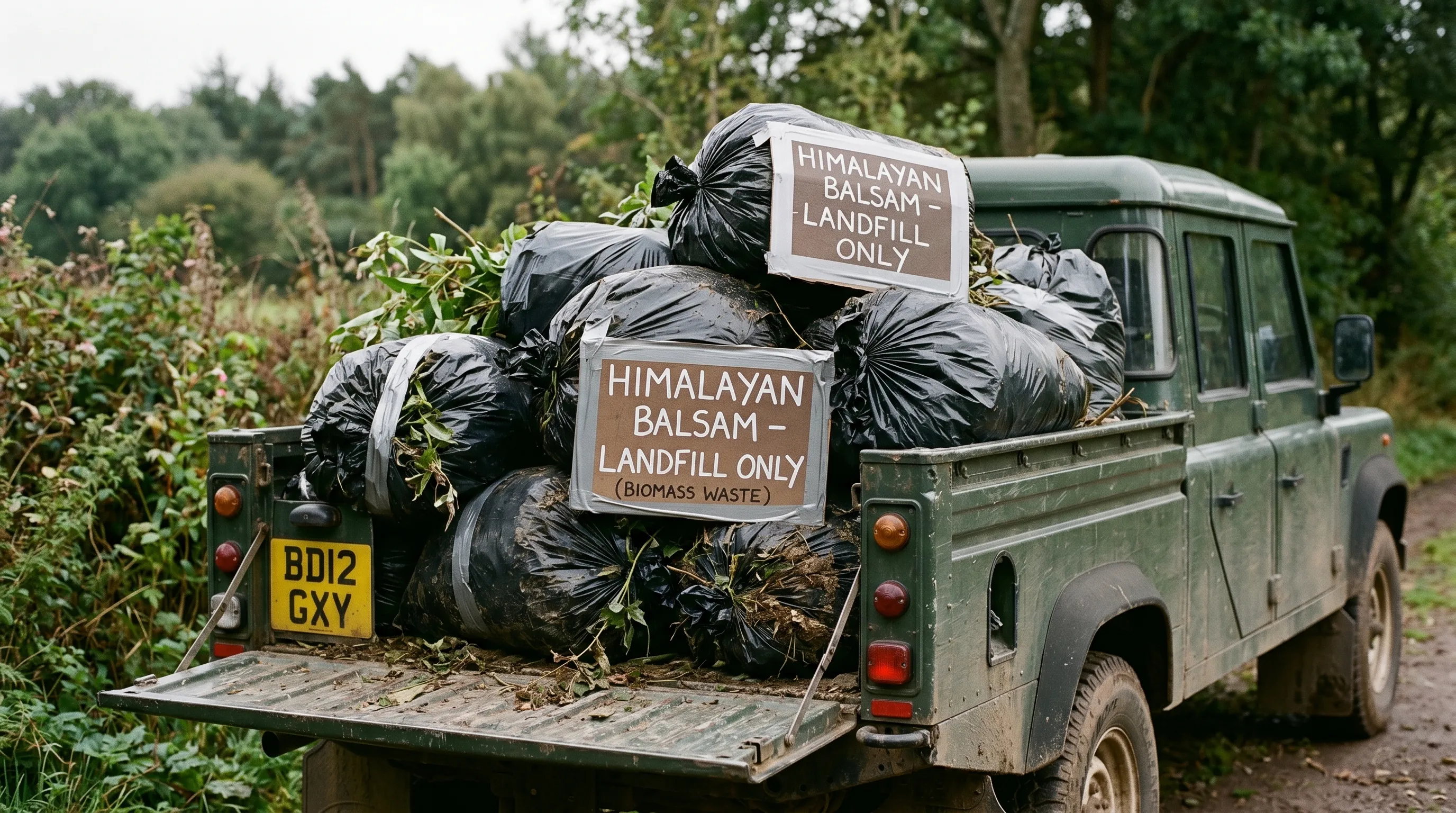 Approved disposal: sealed black rubble sacks marked clearly for landfill route. Never council green waste, never composted in open heaps, never thrown back into the river.
The 3-Season Clearance Plan
UK Himalayan balsam clears in 3 years of annual pulls.
Year 1 (heavy infestation):
- Pull main colony in late June/early July
- Walk the same area weekly through August for missed plants
- Watch for late-season seedlings into September
- Begin riverbank or boundary edge inspections
- Expected reduction: 70-85% from baseline
Year 2 (medium remaining infestation):
- Walk the area every 2 weeks from May to August
- Pull plants at any stage on sight
- Beat the seed bank: pull seedlings in May and June before they get established
- Expected reduction: 90-95% from baseline
Year 3 (light residual):
- Walk monthly from May to August
- Pull occasional seedlings on sight
- Check for upstream-source reinfestation
- Expected reduction: 95-99% from baseline
Year 4 and beyond:
- Annual inspection in June and August
- Pull any seedlings on sight
- Watch for new sources upstream or from neighbouring land
For the wider invasive plant guide, our organic control guide covers the wider Schedule 9 species across UK gardens. The bindweed removal guide covers the related deep-rooted perennial weed.
Why UK Balsam Spreads So Fast
Himalayan balsam advances at 20-30m per year along UK riverbanks. The three drivers:
1. Explosive seed pods. Mature pods explode when touched, animal contact, or even temperature change, scattering seeds up to 7m. A single plant produces 800-1500 seeds.
2. Water dispersal. Seeds float and remain viable in water for 18-24 months. UK rivers carry seeds 5-50km downstream in spring floods.
3. Outcompeting natives. Balsam grows faster than UK natives, shading them out by July. Native flora (cow parsley, willowherb, meadowsweet) cannot establish under balsam shade.
The combination produces UK riverbank monocultures: 1m² infestations becoming 100m² infestations within 3 years and 1km² infestations within a decade.
The species was introduced to UK gardens in 1839 by Royal Botanic Gardens Kew. It escaped to the wild by 1855 and was listed as invasive by 1900. Modern UK river corridors carry seed banks of 18-25 generations of escaped plants.
Common Mistakes With Himalayan Balsam Removal
Mistake 1: pulling after seed pods form. Pods explode during pulling, scattering 800-1500 seeds across 7m. Always check pods before touching. If swollen, bag-pull or wait until next year and start earlier.
Mistake 2: disposing in council green waste. Council composting does not reach kill temperatures. Seeds survive and spread to farmland and gardens through the council compost cycle. Always sealed-bag to landfill.
Mistake 3: leaving pulled plants on the ground. Snapped stems can re-root in wet conditions within 48 hours. Always collect and remove pulled plants the same day.
Mistake 4: pulling only the obvious mature plants. Small seedlings missed in May produce mature seed-bearing plants by July. Walk every visit for plants at all sizes.
Mistake 5: stopping after one season. The seed bank persists 18-24 months. Plants emerging in Year 2 must be pulled or the cycle restarts. Plan 3-4 seasons minimum.
For the wider organic weed control across UK plots, our organic weedkillers guide covers the chemical-free options.
Himalayan Balsam Calendar UK Month-by-Month
| Month | Balsam control task |
|---|---|
| January | Plan next season’s bashing schedule with local volunteer group |
| February | No visible balsam; monitor any garden plants |
| March | Check for early seedlings on garden boundaries |
| April | Seedlings start to emerge. Easy pulls on small plants |
| May | Active growth period. Pull established plants on sight |
| June | Main season begins. Pulls from mid-month forward |
| July | Peak removal window. Maximum effort here |
| August | Watch for late plants and missed seedlings. Risk of seed pods |
| September | Avoid disturbing mature plants (pods detonate) |
| October | Plants die back naturally with first frost |
| November | Dead foliage decomposes. Note infestation patches for next year |
| December | Plan next year’s bashing schedule and disposal arrangements |
The late-June to mid-July window is the cornerstone of UK Himalayan balsam control. Get this 3-week period right and the rest of the year is observation and follow-up.
Frequently asked questions
Is it illegal to have Himalayan balsam in a UK garden?
No, it is not illegal to have it on your own land. Under Schedule 9 of the Wildlife and Countryside Act 1981, it is an offence to plant or cause it to grow in the wild. Garden plants that spread to wild land create the offence. Removal is recommended even on private land.
How do I identify Himalayan balsam in the UK?
Tall (1.5-2.5m) with hollow red-tinged stems, lance-shaped leaves in whorls of three with serrated edges, and pink to purple helmet-shaped flowers from June to October. Often grows in dense colonies along UK riverbanks, damp ditches and woodland edges.
When should I pull Himalayan balsam?
Pull between late June and mid July, after flowering starts but before seed pods form. The 3-week window is the sweet spot. Earlier and you miss small plants; later and seeds may scatter during pulling. Plants pulled at this stage cannot regrow or set seed.
How do I dispose of Himalayan balsam?
Bag and bin in sealed black plastic bags for landfill (not council green waste). Or burn on a hot bonfire. Or compost in a sealed black plastic bag for 12-24 months. Never leave pulled plants on the ground; they can re-root and set seed from the cut stem.
Will Himalayan balsam come back next year?
Yes, for 2-3 years from existing seed bank even after perfect removal. Each plant sets 800-1500 seeds that remain viable in soil for 18-24 months. Three full seasons of annual pulling clears most UK colonies. Continuing inspection beyond year 3 catches the last 5-10% of seed bank emergence.
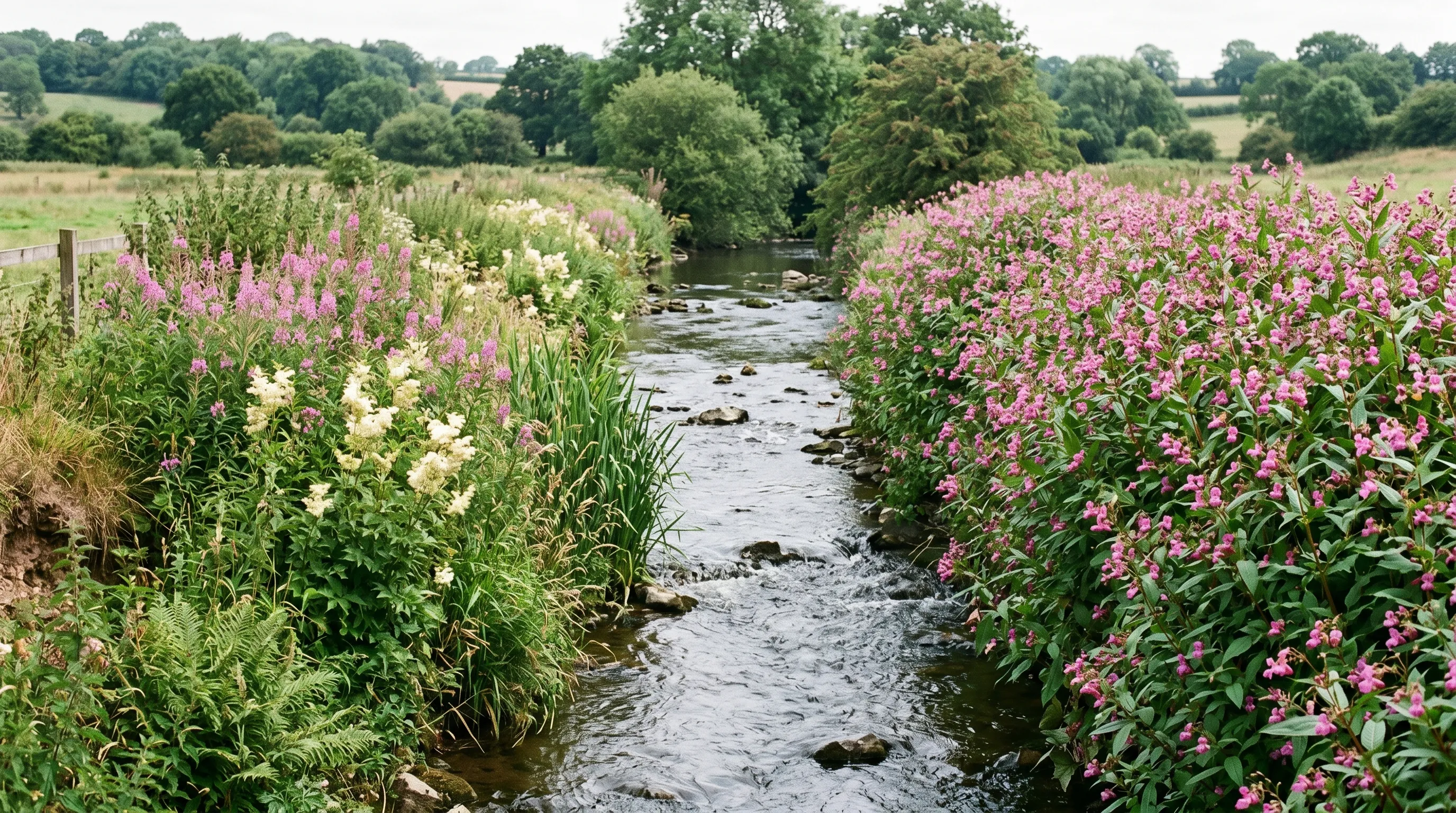
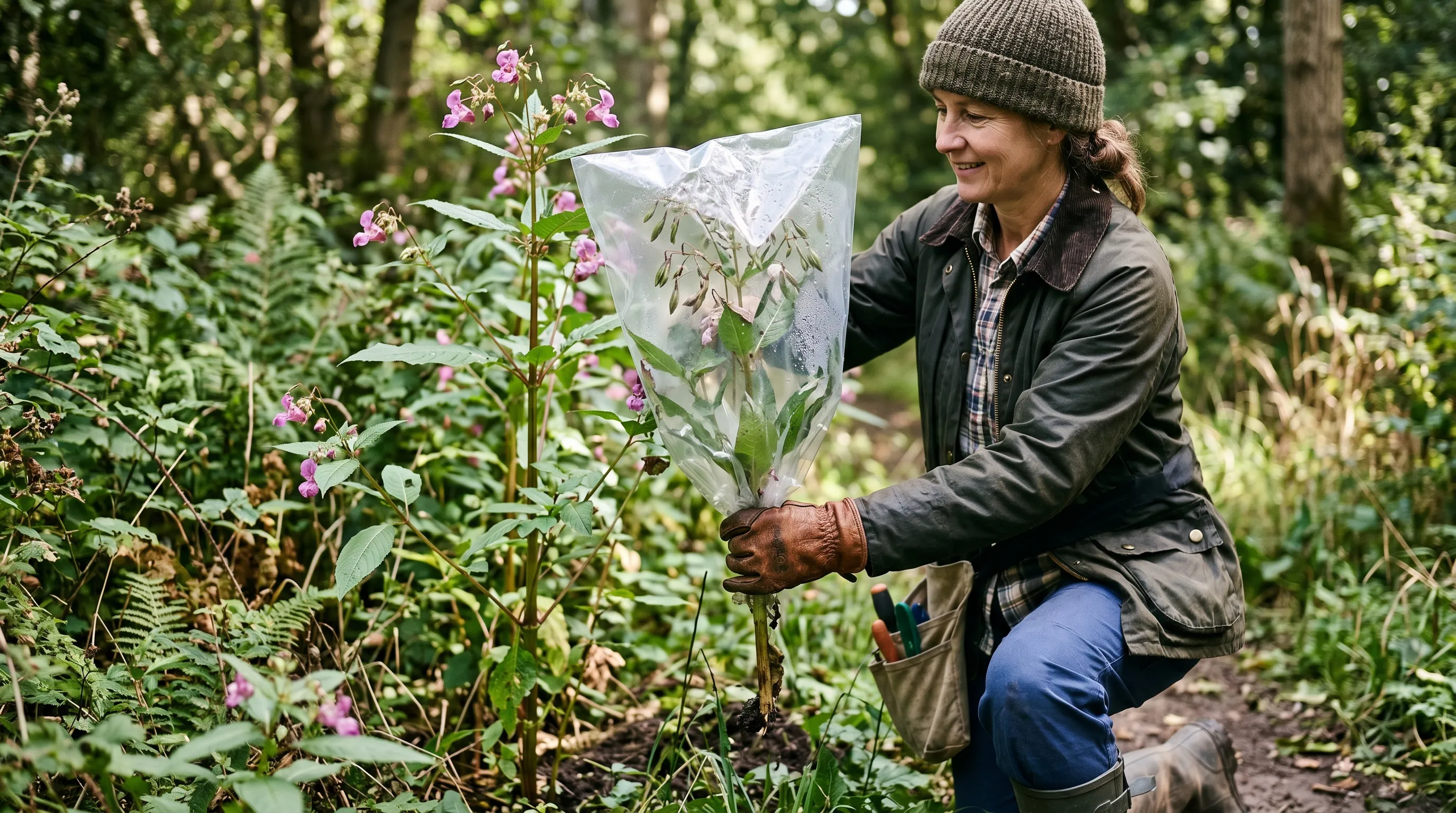 The bag-pull method for late-season balsam where seed pods are visible. Clear plastic bag covers the plant top before pulling. Bag catches any pods that detonate during handling. Slow but safe.
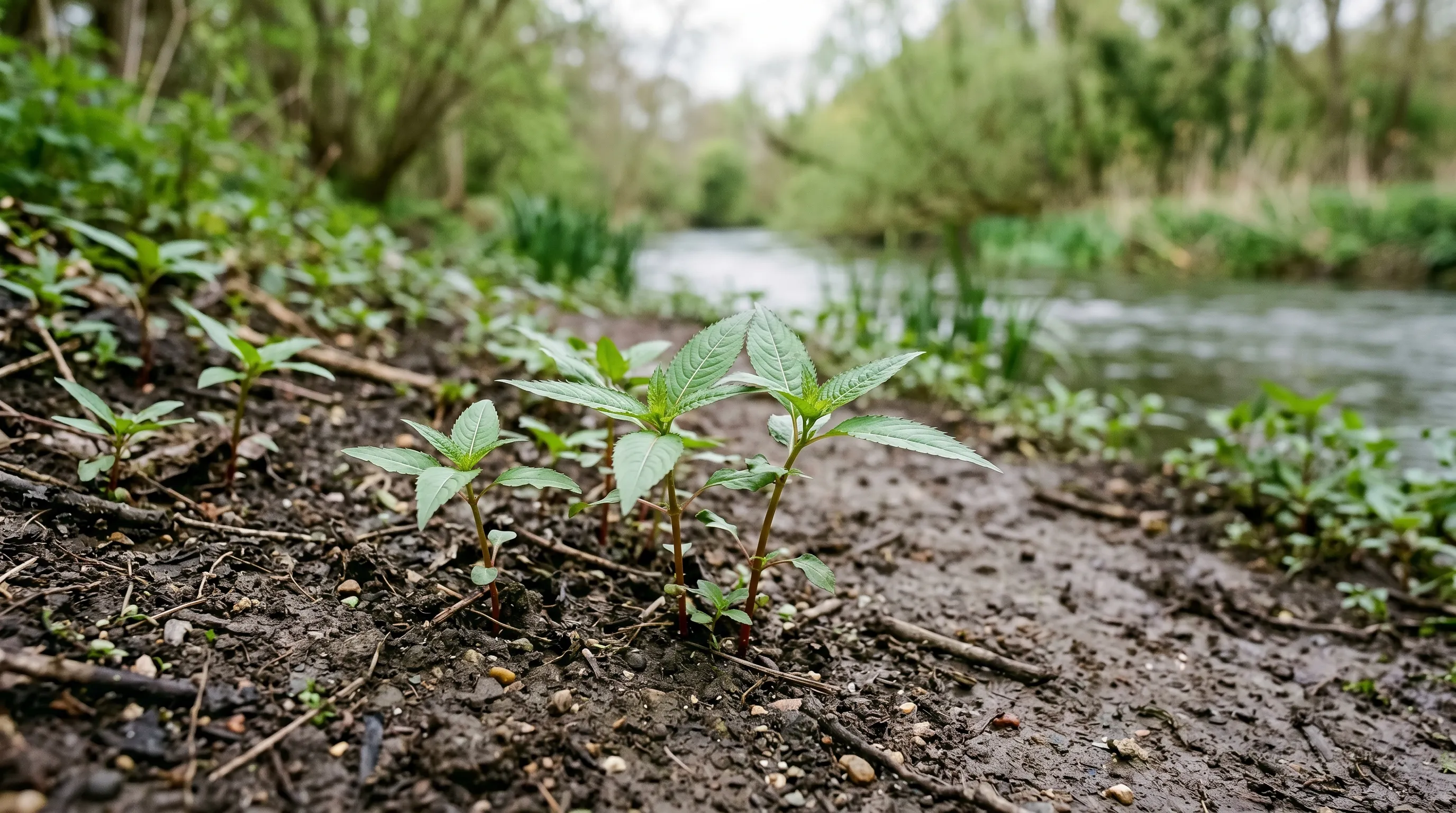 Year-2 seedlings emerging in May. The seed bank persists 18-24 months even after perfect adult-plant removal. Spotting and pulling small seedlings in May saves the bigger pull in July.
Now plan wider riverbank and weed control
Our team produces practical UK gardening guidance from source research, contributor records and established horticultural practice. Editorial standards are overseen by Matt W.