Key takeaways
- Homemade sprays are legal for personal use, never for sale or sharing
- Soap spray (5ml washing-up liquid per litre) is the most-tested DIY remedy
- Garlic spray repels caterpillars but does not kill them
- Neem oil works on scale and red spider mite but is slow-acting
- Never describe homemade sprays as pesticides under UK law
- Test every recipe on one leaf, wait 24 hours, then treat whole plant
Every UK gardener facing an aphid outbreak at 6pm on a Sunday has thought about reaching for the washing-up liquid. This guide covers which homemade plant sprays are legal in the UK, which actually work, and which can land you in trouble. It also covers the specific UK laws that separate “making a spray for your own plants” (legal) from “describing it as a pesticide” (illegal).
UK Pesticide Law and Homemade Sprays
UK pesticide use is governed by the Plant Protection Products Regulations 2011 and the EU Regulation 1107/2009 (retained in UK law post-Brexit). The headline rule:
Any substance offered for sale, advertised or described as controlling plant pests, weeds or diseases must be approved by the Health and Safety Executive (HSE) Chemicals Regulation Division.
This means:
- Legal: making a soap spray at home and spraying it on your own plants. No description as “pesticide” is involved.
- Legal: writing about a recipe in a private context (this article being a current example of a journalist describing methods, not a vendor advertising a product).
- Illegal: selling a “homemade aphid killer” at a car boot sale or allotment gate.
- Illegal: labelling a bottle as “pest spray” and giving it to a neighbour even if free.
- Illegal: describing any unapproved substance as having pesticide properties on a commercial website that recommends purchase.
The penalty for selling unapproved pesticides under the 2011 Regulations is an unlimited fine and up to 2 years imprisonment. Enforcement is rare for garden-scale individuals but consistent for repeat sellers.
Approved products carry an MAPP or HSE number on the label. These can be sold and described as pesticides. Everything else is regulated.
For full context, the HSE pesticide register lists every approved product and the legal background. Read it before making any commercial decisions involving homemade sprays.
The practical takeaway for UK home gardeners: make for yourself, never sell, never describe as pesticide. Within that boundary, the recipes below are legal and effective.
Soap Spray Recipe and Effectiveness
The washing-up liquid soap spray is the most-tested DIY plant spray on the UK market. It works by dissolving the waxy outer cuticle of soft-bodied insects, causing dehydration within 4-24 hours.
Recipe:
- 5ml plain washing-up liquid (Fairy Original or equivalent, no antibacterial, no fragrance)
- 1 litre of cold tap water
- Mix gently in a hand-pump sprayer immediately before use
Application:
- Spray in early morning (06:00-09:00) or evening (after 18:00) to avoid leaf scorch in summer sun
- Cover both leaf surfaces, especially the undersides where aphids cluster
- Repeat after 5-7 days to catch newly hatched eggs
- Do not store; mix fresh for every application
Cautions:
- Test on a single leaf first. Wait 24 hours. If leaf yellows or wilts, discontinue.
- Avoid on plants with waxy or hairy leaves: brassicas (cabbage, kale) and pelargoniums sometimes react badly.
- Antibacterial washing-up liquids contain triclosan or benzalkonium chloride. Both damage leaf tissue.
- Never spray flowering plants when pollinators are active; soap kills bees.
The cost of one litre of finished soap spray is 3-5p. The cost of one litre of approved insecticidal soap from a garden centre is £3.50-£4.50. The effectiveness is identical for soft-bodied pests.
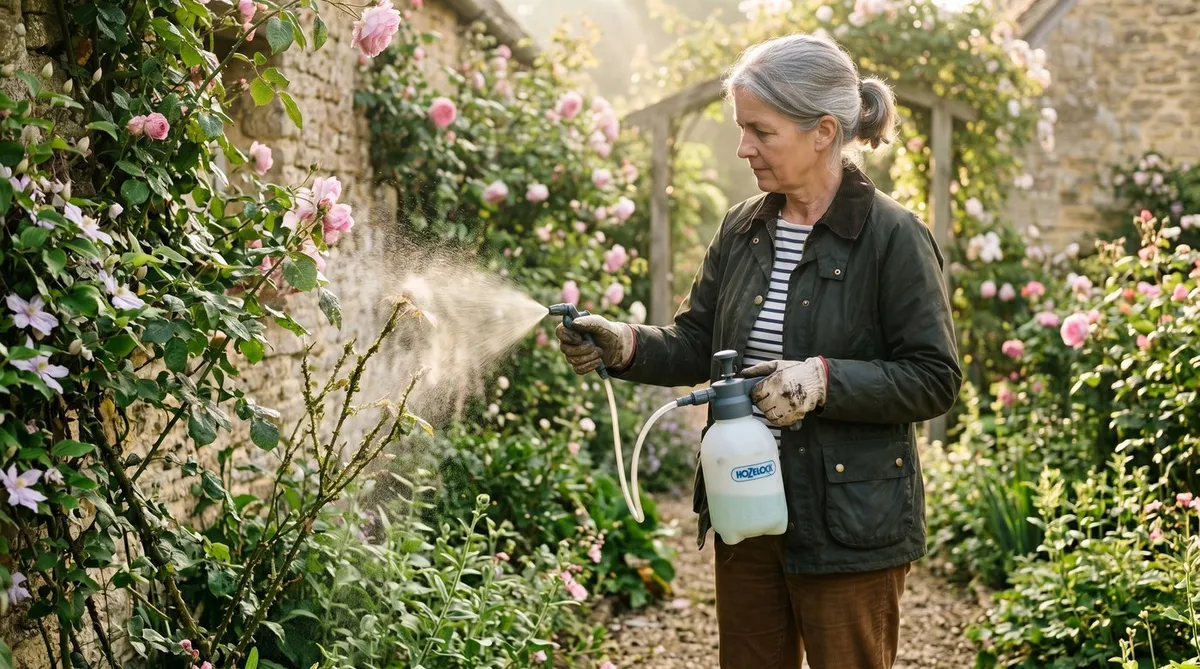
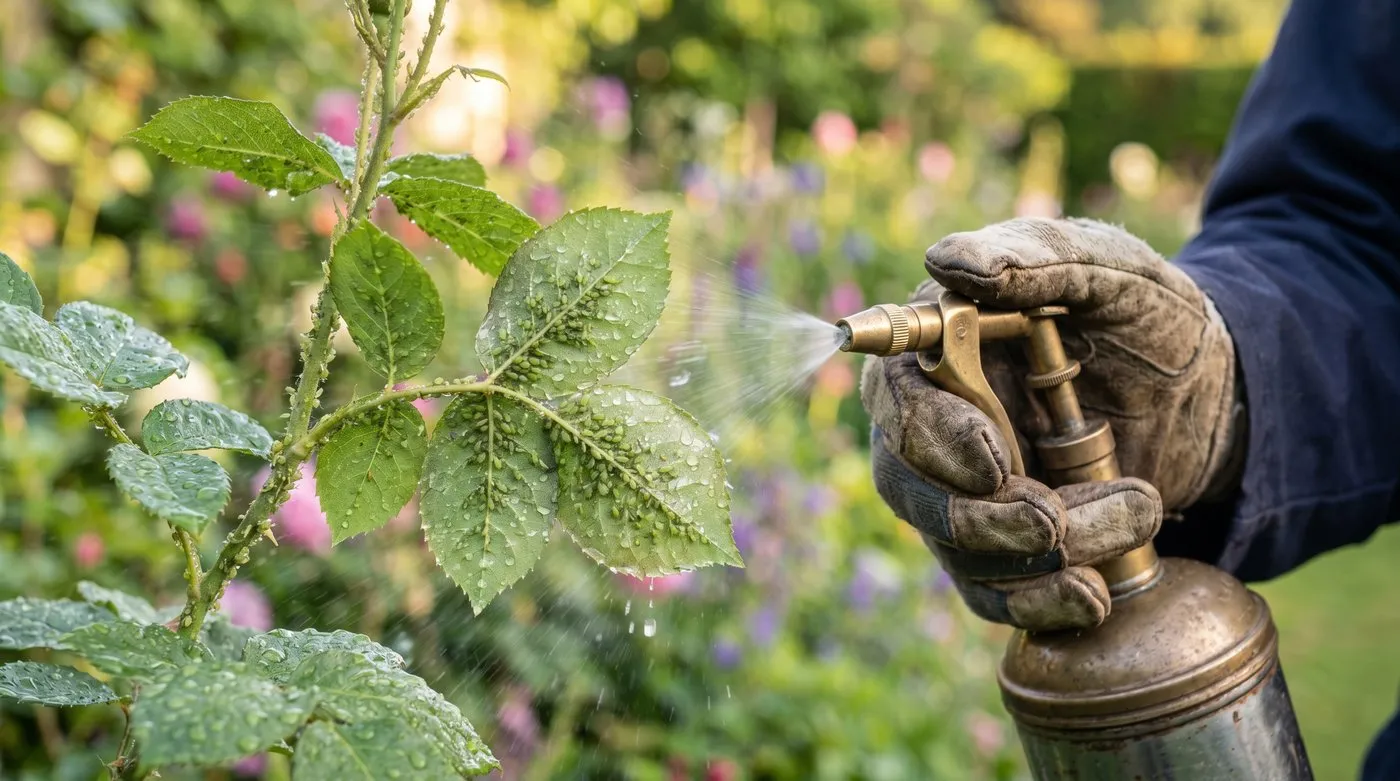 Soap spray application to aphid-infested rose leaves. Coverage of the leaf undersides is essential because that is where the colony lives. Spray to runoff, then move to the next leaf cluster.
Garlic Spray Recipe and Effectiveness
Garlic spray is a deterrent, not a killer. It works by masking the plant’s scent and producing volatile sulphur compounds that disrupt pest feeding behaviour.
Recipe:
- 5 large garlic cloves, crushed
- 1 litre boiling water
- 5ml washing-up liquid (added once cooled)
- Steep 24 hours, strain through coffee filter
- Spray weekly, more often after rain
Garlic spray takes 2-3 weeks of weekly application to show effects. It does not produce overnight results. Best deployed in April-May as prevention before pest populations establish.
Cautions:
- Garlic spray has a strong smell that lingers 24-48 hours on the plant
- Some garden visitors find it unpleasant near patios and seating
- Strong garlic spray can repel beneficial insects too, including ladybirds and lacewings
Neem Oil Recipe and Effectiveness
Neem oil is extracted from the neem tree (Azadirachta indica) and contains azadirachtin, a compound that disrupts insect feeding, growth and reproduction.
In the UK, neem oil is sold as a leaf shine, cosmetic ingredient, or pet care oil. It cannot be sold as a pesticide. Importation for personal use is legal; commercial pesticide sale is not.
Recipe:
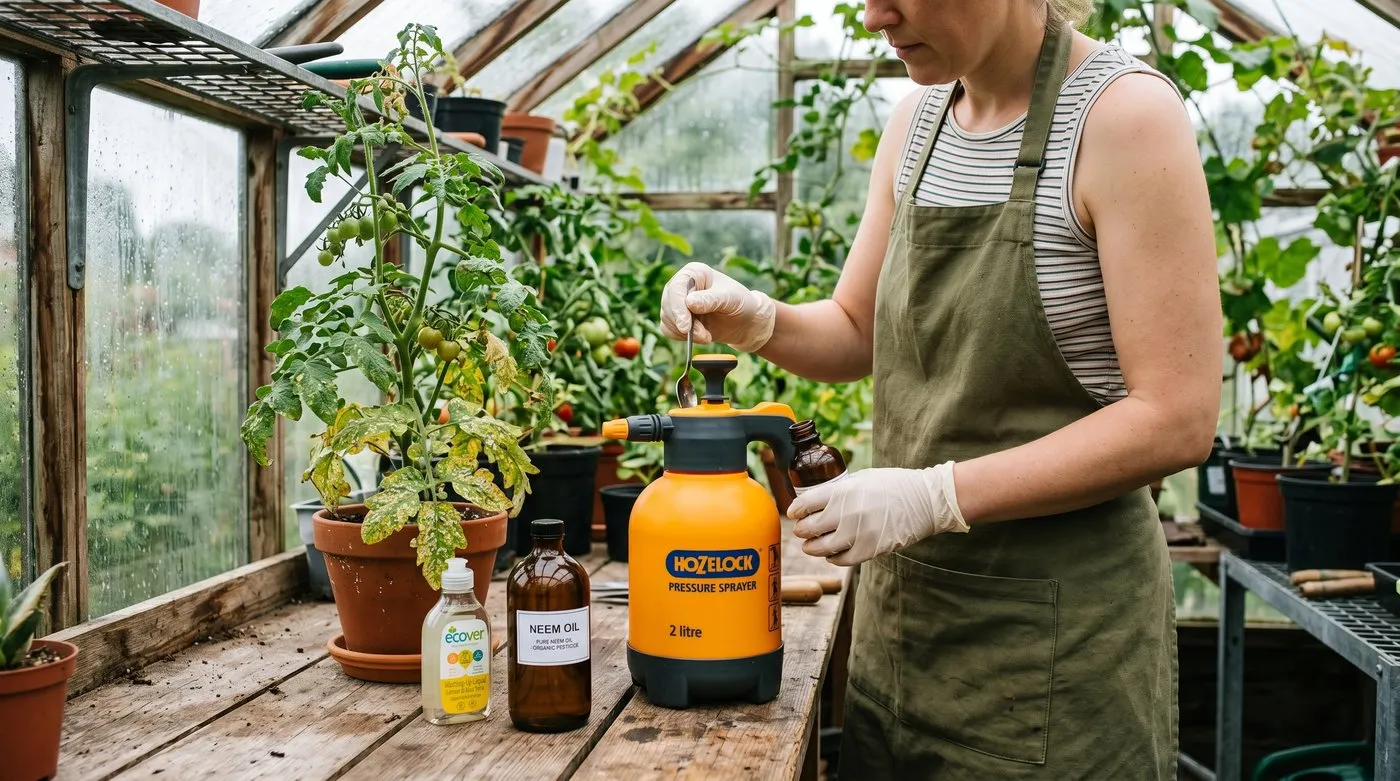
- 5ml cold-pressed neem oil
- 2ml washing-up liquid (as emulsifier)
- 1 litre lukewarm water
- Mix vigorously immediately before use
Neem oil works through feeding deterrence and growth disruption, not direct kill. Effects take 7-14 days to appear. It is the right choice for chronic, established infestations where soap spray has reduced numbers but residual colonies persist.
Cautions:
- Neem oil leaves an oily residue. Avoid spraying within 48 hours of harvest on edible crops.
- Apply only in cool conditions (under 25C) to avoid leaf scorch.
- Never apply to flowering plants visited by pollinators.
- Buy cold-pressed, organic neem oil from health food shops (Holland & Barrett, independent organic shops). Cheap diluted neem from online sellers often contains less than 1% azadirachtin and does not work.
A 250ml bottle of cold-pressed neem oil costs £8-£15 and makes 50 litres of finished spray.
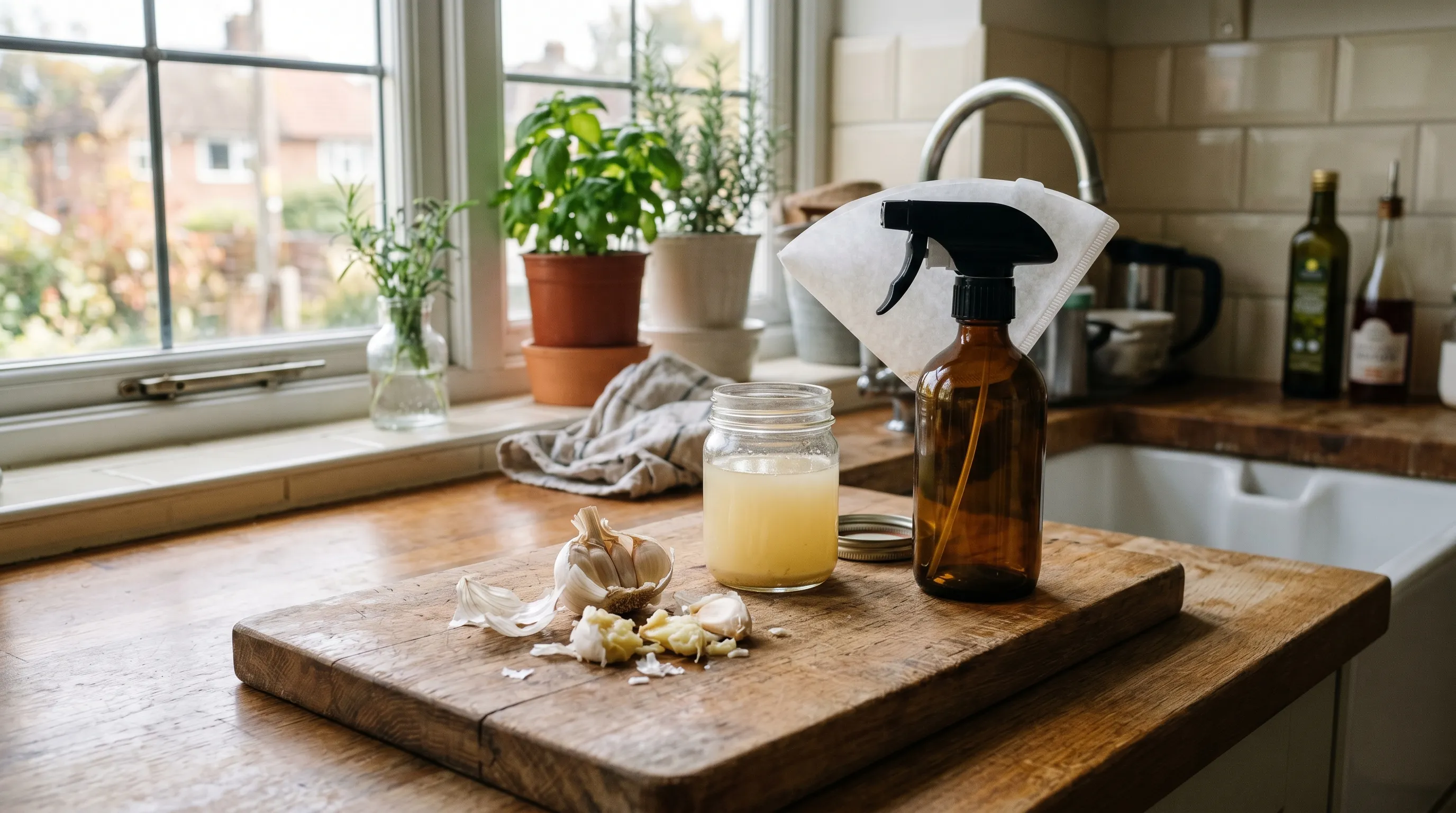 Garlic spray prep. Five crushed cloves per litre, steeped for 24 hours in cooled boiling water, strained through a coffee filter, then sprayed weekly on brassicas as a caterpillar deterrent.
Other Homemade Recipes That Work
Chilli spray (caterpillar deterrent). Steep 2 hot chillies in 1 litre boiling water for 24 hours, strain, add 5ml washing-up liquid. Spray brassicas weekly. Reduces caterpillar damage by 30-40% but does not kill. Wear gloves; the spray irritates eyes and skin.
Tomato leaf spray (aphid deterrent). Soak 500g chopped tomato leaves in 2 litres water for 24 hours, strain, dilute 1:5 with water before spraying. The tomatine alkaloids in the leaves repel aphids. Effective on roses and beans. Toxic to bees; avoid flowering plants.
Egg shell collar (slug barrier). Crush dry egg shells into 3-5mm pieces. Sprinkle a 100mm-wide collar around the base of seedlings and salad crops. Reduces slug damage by 50-65% on dry surfaces. Lose effectiveness in heavy rain.
These four recipes are deterrents and barriers, not killers. They reduce pest pressure but never eliminate established infestations. Combine with soap spray for direct killing where pressure is high.
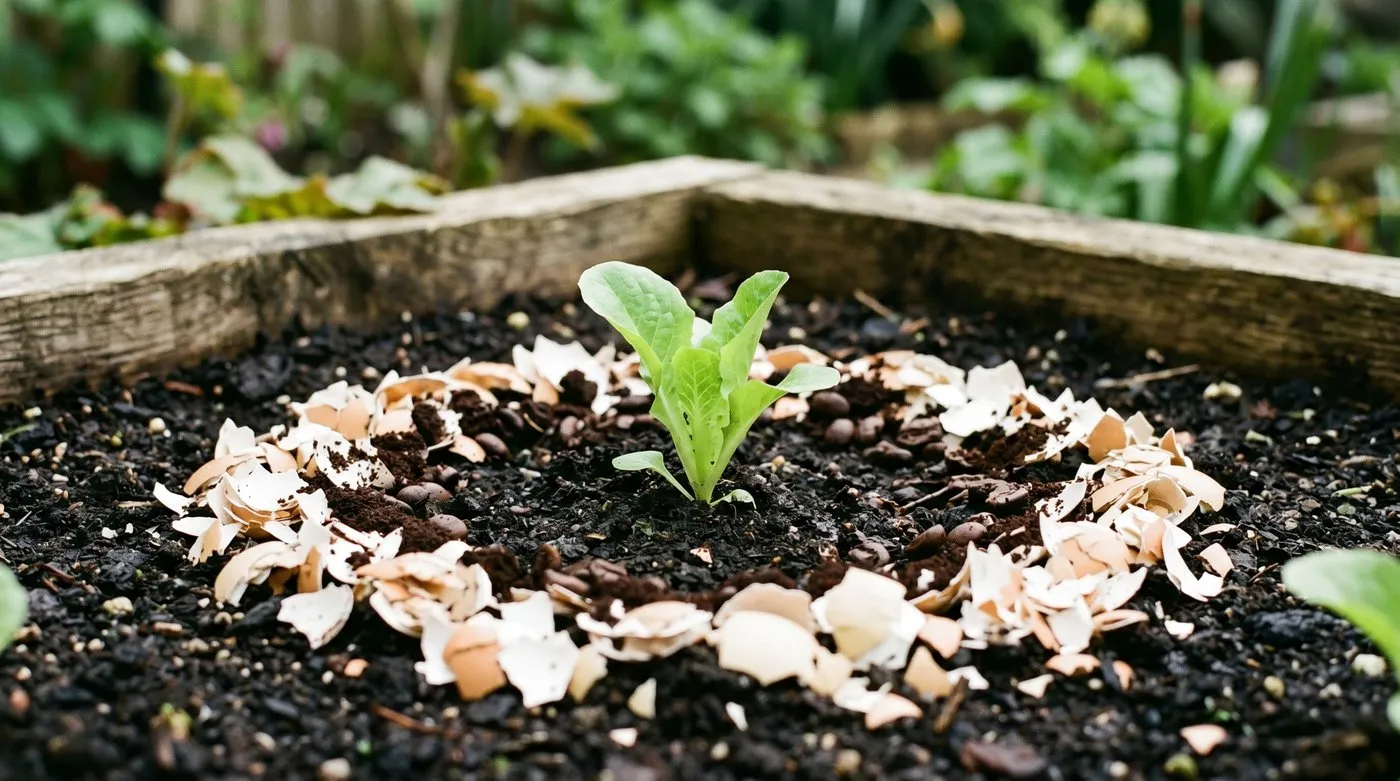 An eggshell and coffee ground barrier around a young lettuce seedling. The combined ring reduces slug visits by 50-65% on dry surfaces and adds a mild deterrent for aphid colony formation.
Recipes to Avoid
Bleach-based sprays. Damage soil microbiome for months. Kill plants. Illegal to apply to soil that drains to watercourses.
Salt-based weedkillers. Sterilise soil for 2-5 years. Lethal to nearby crops via root run. Illegal under environmental regulations near drains.
Vinegar spray (white vinegar). Acidic burn temporarily wilts pests but damages plant tissue equally. Permanent soil pH damage if applied repeatedly.
Petrol or paraffin sprays. Highly toxic, illegal to apply outside specific approved product formulations, contaminate soil for 5-10 years.
Mothballs (naphthalene) for slugs or rabbits. Naphthalene is a restricted pesticide. Use outside its approved domestic application is illegal under COSHH 2002.
WD-40 for ants or pests. Petroleum distillates damage soil and plants. No insecticidal value beyond direct contact.
Diesel for wasp nests. Illegal, contaminates soil for years, fire hazard. Use approved wasp control products only.
If a recipe involves a household product not designed for gardens (cleaning chemicals, fuels, industrial solvents), assume it is either illegal or damaging.
When to Use Homemade vs Approved Products
A practical decision tree for UK gardeners:
| Situation | Best response |
|---|---|
| Small, fresh aphid colony spotted today | Homemade soap spray, repeat at 7 days |
| Established whitefly in greenhouse | Approved insecticidal soap or biological control (Encarsia formosa) |
| Caterpillars on brassicas | Hand pick + Bt spray (approved Bacillus thuringiensis product) |
| Slug pressure on hostas | Approved ferric phosphate pellets, beer traps, or nematodes |
| Scale insect on conservatory plants | Homemade neem oil over 6-week treatment cycle |
| Red spider mite in dry greenhouse | Raise humidity + soap spray + biological predator (Phytoseiulus) |
| Aphid epidemic across whole garden | Ladybird release + approved pyrethrum spray |
| Carrot root fly | Fleece barrier 600mm tall, no spray needed |
Homemade sprays are the right choice for small, fresh, manageable outbreaks on crops near to harvest, where chemical residues are unwanted. Approved products are the right choice for established, large or commercial-scale problems, especially in greenhouses where biological controls and HSE-approved products both work better than DIY.
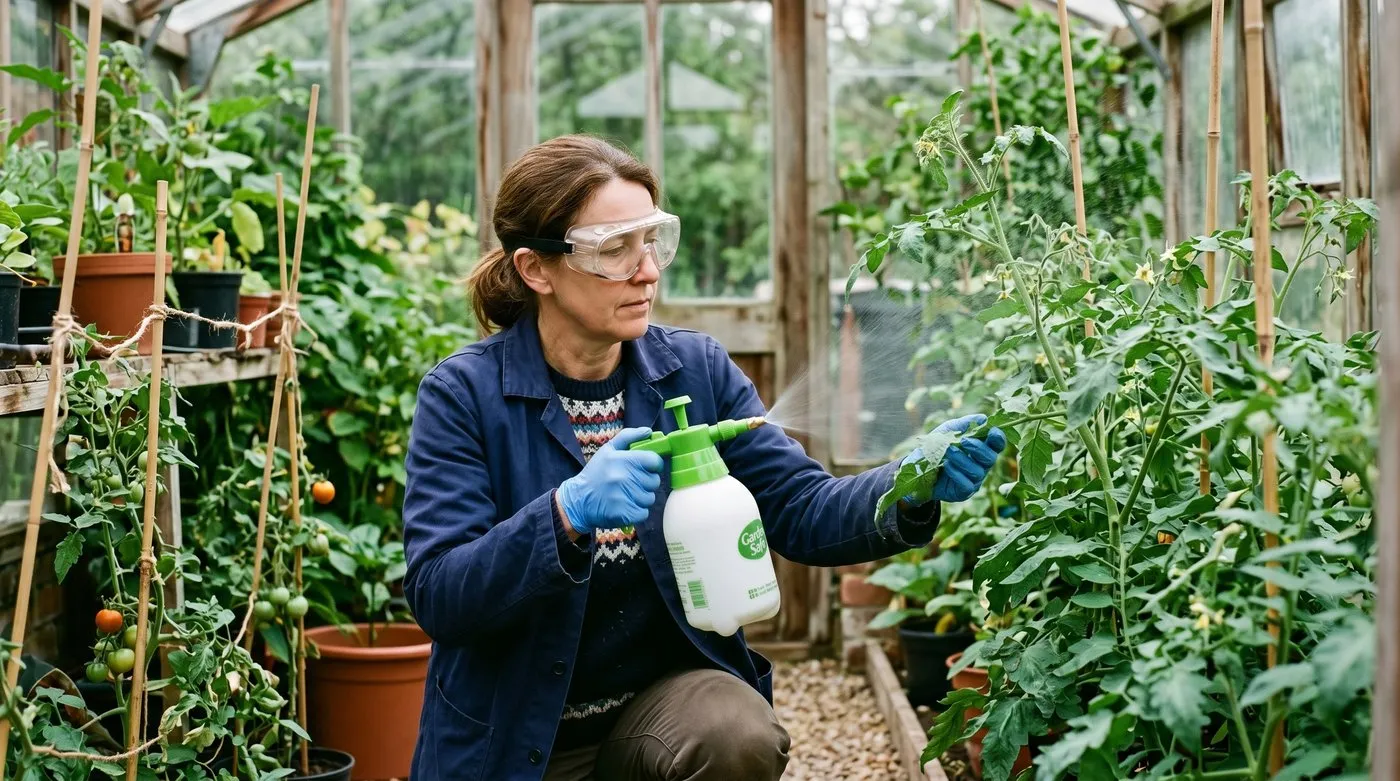 Correct application technique: gloves, eye protection, hand-pump sprayer set to fine mist, targeting leaf undersides, applied before 09:00 to avoid leaf scorch. Coverage decides effectiveness more than recipe.
Read our organic pest control guide for the full DIY-vs-approved comparison across every UK garden pest. The biological pest control with nematodes guide covers the living-organism options. For greenhouse-specific advice, our organic greenhouse pest control guide covers the indoor-only pests.
Common Mistakes With Homemade Pesticides
Mistake 1: storing mixed sprays. Soap, garlic and neem mixes all degrade within 4-24 hours of mixing. Yeasts and bacteria grow. The spray loses effectiveness and may damage plants. Mix fresh every application.
Mistake 2: spraying in midday sun. Any soap or oil spray on a leaf in direct sun causes scorch within minutes. Always spray before 09:00 or after 18:00.
Mistake 3: targeting the wrong pest. Soap spray does nothing to caterpillars, slugs, or beetles. Match recipe to pest before applying. Wrong-target spraying wastes time and harms beneficial insects.
Mistake 4: skipping the leaf test. Some plants react badly to soap (ferns, succulents, hairy-leaved varieties). Always test on one leaf, wait 24 hours, check for damage before treating the whole plant.
Mistake 5: sharing or selling homemade sprays. The 2011 Regulations apply to gifts as well as sales. Sharing a bottle of “aphid spray” with a neighbour is technically illegal. Share the recipe instead; let them mix their own.
Homemade Pesticide Month-by-Month Calendar UK
| Month | Homemade spray task |
|---|---|
| January | Order neem oil and stock washing-up liquid for the season |
| February | Plant garlic for use in summer sprays (and the kitchen) |
| March | First soap spray on indoor seedling aphid outbreaks |
| April | Begin weekly garlic spray on brassica beds |
| May | Soap spray rose aphids as colonies appear. Egg shell collars on lettuce |
| June | Peak spray season. Watch greenhouse whitefly and apply neem mix |
| July | Daily monitoring. Hand pick caterpillars to avoid mass spraying |
| August | Coffee ground deterrents around late-season salad crops |
| September | Final neem applications on conservatory plants before bringing indoors |
| October | Strip and clean sprayers. Wash nozzles |
| November | Plan next year’s prevention schedule |
| December | Review what worked. Order seeds and biological controls for spring |
Frequently asked questions
Are homemade pesticides legal in the UK?
Yes for personal use, no for sale or sharing. Under the Plant Protection Products Regulations 2011, only approved products can be sold or described as pesticides. You can make and use a soap spray at home, but selling ‘aphid spray’ at the allotment gate or sharing recipes commercially is illegal.
What is the best homemade pesticide for aphids?
A 5ml washing-up liquid per litre of water soap spray kills 80-90% of aphids in 24 hours. Spray in early morning, cover leaf undersides, repeat after 5-7 days. Avoid antibacterial or fragranced washing-up liquids; both damage leaves.
Does garlic spray actually work as a pesticide?
Garlic spray repels caterpillars and weakens aphids but rarely kills them. Crush 5 cloves into 1 litre boiling water, steep for 24 hours, strain, spray weekly. Works as a deterrent for new infestations, not a cure for established ones.
Can I use neem oil legally in the UK?
Neem oil is sold in the UK as a leaf shine or pet care product, but cannot legally be sold as a pesticide. You can buy it and use it on your own plants for personal use. It is effective against scale insects, red spider mite, and whitefly larvae at 5ml per litre with 2ml of soap as an emulsifier.
What homemade recipes should I avoid?
Avoid bleach (damages soil microbiome), salt (kills plants and soil), vinegar (sterilises soil), petrol or paraffin (toxic and illegal), and any ‘weedkiller’ recipe using household chemicals. These cause more harm than the pest they target.
Now build the wider pest defence
Homemade sprays are one layer of pest defence. A full UK garden plan also uses biological controls, companion planting, and physical barriers. Now you’ve sorted the spray side, read our biological pest control with nematodes guide for the living-predator options. For prevention rather than cure, our companion planting guide covers which plant pairings reduce pest pressure naturally. For the wider organic approach across every pest, our organic pest control guide covers approved products, traps and exclusion. And for under-glass pest problems specifically, our organic greenhouse pest control guide tackles the whitefly and spider mite issues that dominate UK greenhouse seasons.
Our team produces practical UK gardening guidance from source research, contributor records and established horticultural practice. Editorial standards are overseen by Matt W.