Key takeaways
- Leek moth runs two generations a year: adults fly in April to May, then a bigger brood in August to September
- The tell-tale sign is window-pane grazing, then tunnels packed with green-brown frass in the leaves and shaft
- 0.8mm insect-proof mesh is the single reliable defence; fit it before each flight, not after damage shows
- Mesh on mid-April to late June, off in July, back on for August and September in most of England
- Southern and coastal counties suffer worst; the moth is spreading north and now reaches north Wales
- Damaged leeks are usually still edible once you trim out the tunnelled centres and frass
The good news is that this pest is beatable without a single spray. Once you know when the two generations fly, a length of fine mesh fitted at the right moment keeps a leek bed almost clean. This guide covers how to spot the damage, the flight calendar for UK gardens, the exact mesh on and off dates, and how to tell leek moth from the pest it is most often confused with.
What leek moth looks like at every stage
Leek moth shows itself through three separate signs: the adult, the caterpillar, and the damage. The adult (Acrolepiopsis assectella) is a slim, mottled reddish-brown moth about 5 to 6mm long with a small white triangular mark on each folded wing. It flies at dusk and hides by day, so most gardeners never notice it. That is why the damage almost always shows up before the culprit does.
The caterpillar is the stage that does the harm. Newly hatched larvae are tiny and grey-green. As they feed they turn creamy-white with a pale brown head and three pairs of small legs, reaching about 11mm when fully grown. Those legs and the distinct head matter, because they are the quickest way to separate leek moth from allium leaf miner, whose grubs have neither. If you grow the whole family, our guide to growing leeks in the UK covers the wider care that keeps plants strong enough to shrug off light attacks.
The damage runs in two phases. First the young caterpillars graze the leaf surface from inside, leaving translucent, pale patches often called window-paning. Then, as they grow, they bore into the folded central leaves and down into the shaft, leaving tunnels packed with green-brown frass. On leeks the heart leaves rot; on onions and garlic the larvae reach the bulb. Secondary bacterial rot usually follows, and young plants can collapse entirely.
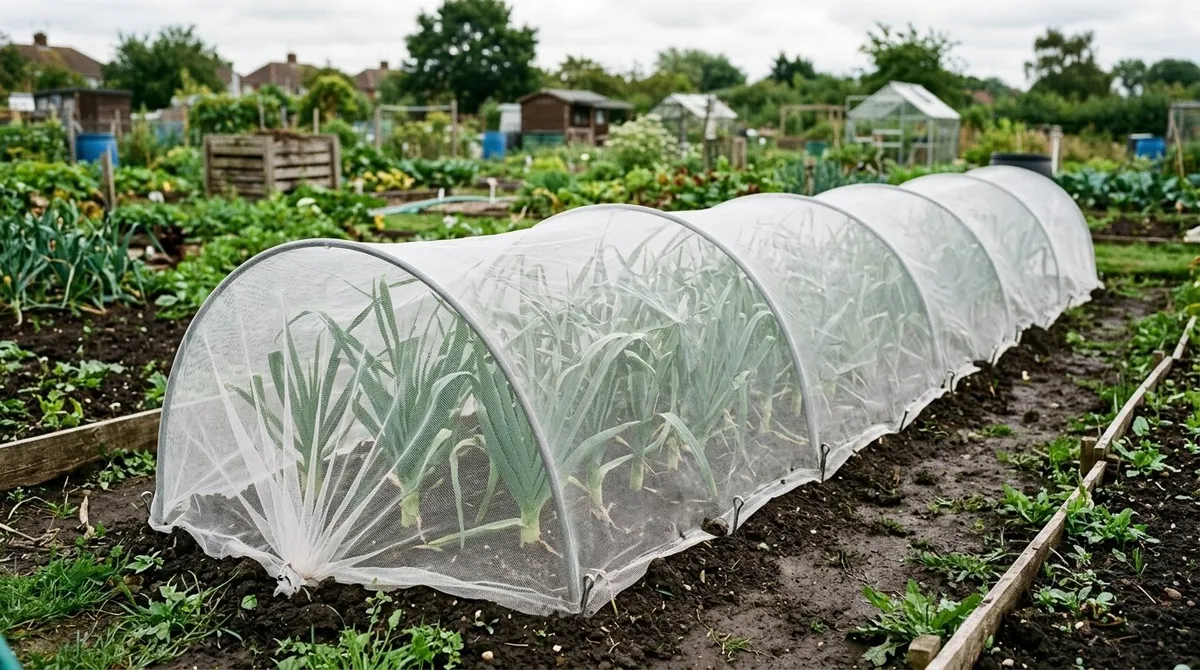
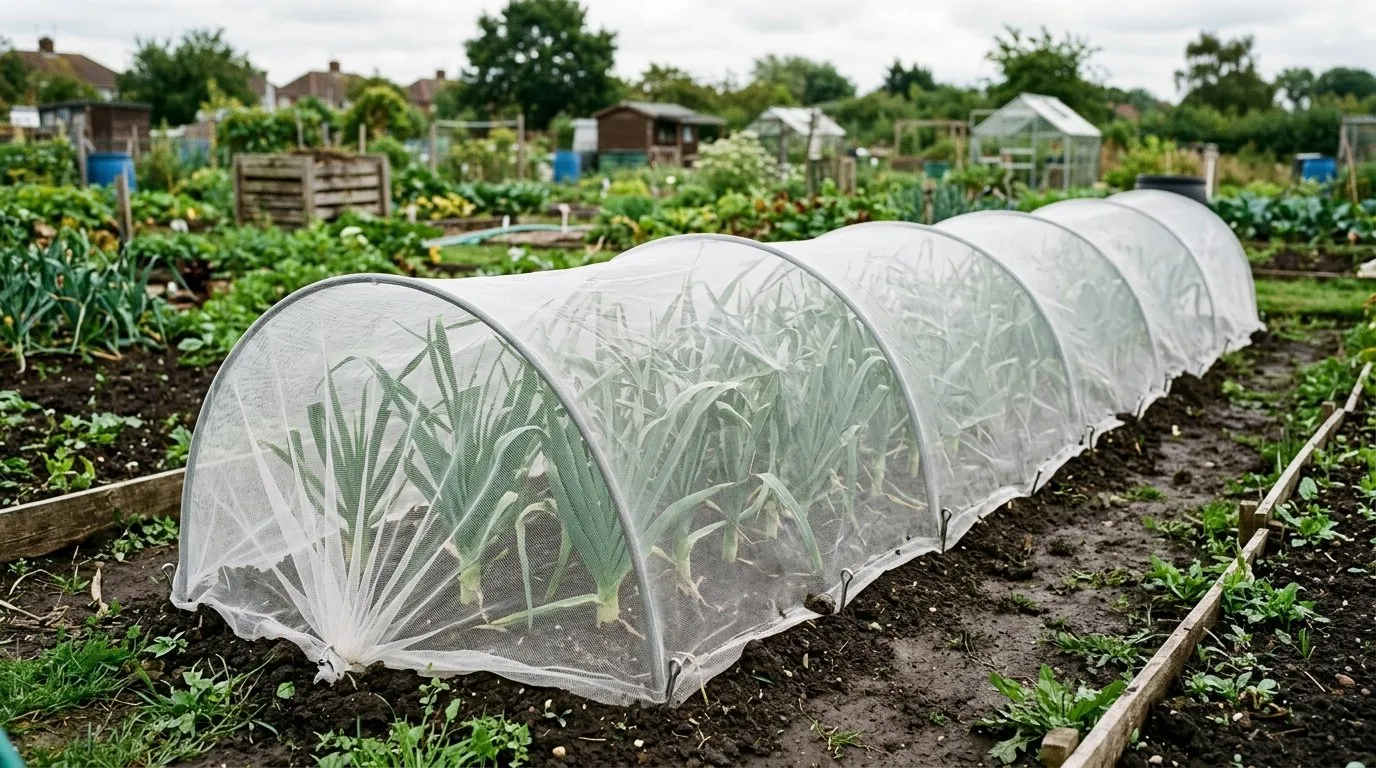 Fine mesh fitted over a leek bed at the right time is the single most reliable defence against leek moth.
How to tell leek moth from allium leaf miner
The fastest test is the larva: leek moth caterpillars have a head and legs, allium leaf miner maggots have neither. This matters because the two pests need different mesh dates, so getting the identification right changes your whole defence plan. People confuse them constantly because both tunnel alliums and both leave rotting hearts.
Look at the entry damage. Leek moth starts with surface window-paning and leaves silky, net-like cocoons on the foliage later in the season. Allium leaf miner announces itself with neat vertical rows of small white dots down the leaves, where the female punctures the leaf to feed. When you slice the plant open, leek moth leaves a soft caterpillar and frassy tunnels, while allium leaf miner leaves hard, brown, rice-grain pupae embedded in the stem and bulb. For the full picture on that pest, read our allium leaf miner control guide.
Their calendars differ too, which is the practical reason to tell them apart. Allium leaf miner flies in early spring and again in autumn, roughly March to April and October to November. Leek moth flies later in spring and through late summer. If you net for the wrong pest, you cover at the wrong time and still lose the crop.
| Feature | Leek moth | Allium leaf miner |
|---|---|---|
| Culprit | Small brown moth, 5-6mm | Small grey fly, 3mm |
| Larva | Creamy-white caterpillar, head and legs, to 11mm | Legless white maggot, no head capsule |
| First clue | Pale window-pane grazing on leaves | Rows of white dots down the leaves |
| Tunnels | Leaves and shaft, packed with frass | Straight mines down into stem and bulb |
| Pupae | Net-like silk cocoons on the foliage | Hard brown rice-grain pupae inside the plant |
| Main flights | April-May and August-September | March-April and October-November |
| Worst-hit crops | Leeks, onions, garlic | Leeks, onions, chives, garlic |
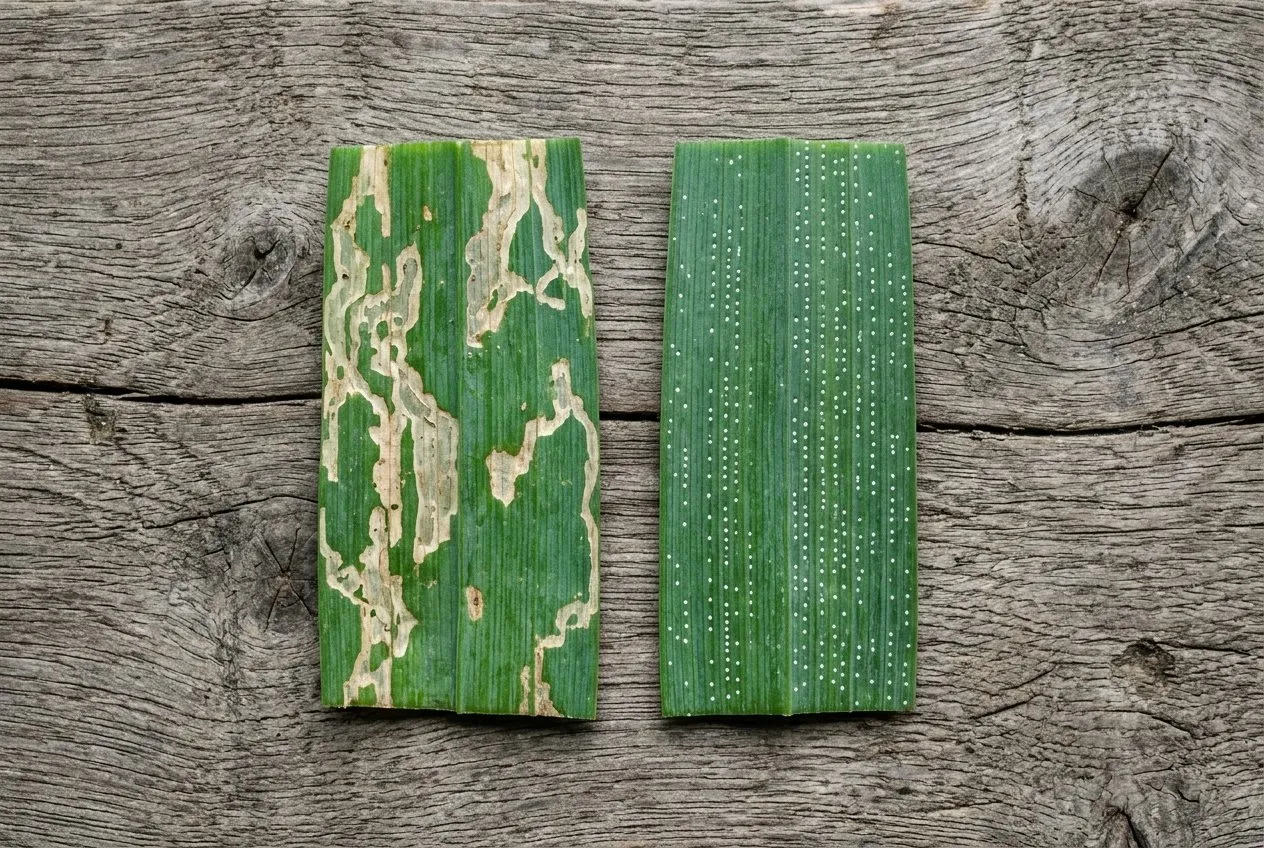 Leek moth leaves window-pane grazing and frassy tunnels; allium leaf miner leaves neat rows of white egg-laying dots.
The leek moth lifecycle and two-generation flight calendar
Leek moth completes two generations a year in Britain, and knowing the timing is the whole game. Adults overwinter in sheltered spots such as sheds, hedge bases and leaf litter. They emerge in spring, and the first flight runs through April and May. Females lay tiny white eggs singly on the leaves, and the first brood of caterpillars feeds through May and June before pupating.
Pupation happens in a distinctive net-like silk cocoon spun on the foliage or nearby debris. The insect passes winter as an adult in the far south and as a late pupa or adult further north. Warmer springs pull the first flight forward, and mild autumns stretch the second brood later, so the exact dates drift by a couple of weeks year to year and by region.
| Month | Leek moth stage | Action |
|---|---|---|
| January | Adults hibernating | Winter-dig empty allium beds to expose pupae |
| February | Adults hibernating | Clear old allium debris and mulch |
| March | Adults stirring in far south | Prepare mesh and hoops; watch southern beds |
| April | First flight begins | Fit 0.8mm mesh from mid-month |
| May | Peak first flight, eggs laid | Keep mesh sealed to the soil |
| June | First brood caterpillars feeding | Mesh stays on; check edges after wind |
| July | Between generations, few adults | Lift mesh to weed, earth up and inspect |
| August | Second flight begins | Mesh back on by the 1st; this brood is worst |
| September | Peak second flight, most eggs | Keep mesh sealed; crush any cocoons found |
| October | Second brood still feeding | Leave mesh on early month in the south |
| November | Adults seeking winter shelter | Lift, clear debris, dig over the bed |
| December | Adults hibernating | Rotate next year’s allium bed away from this one |
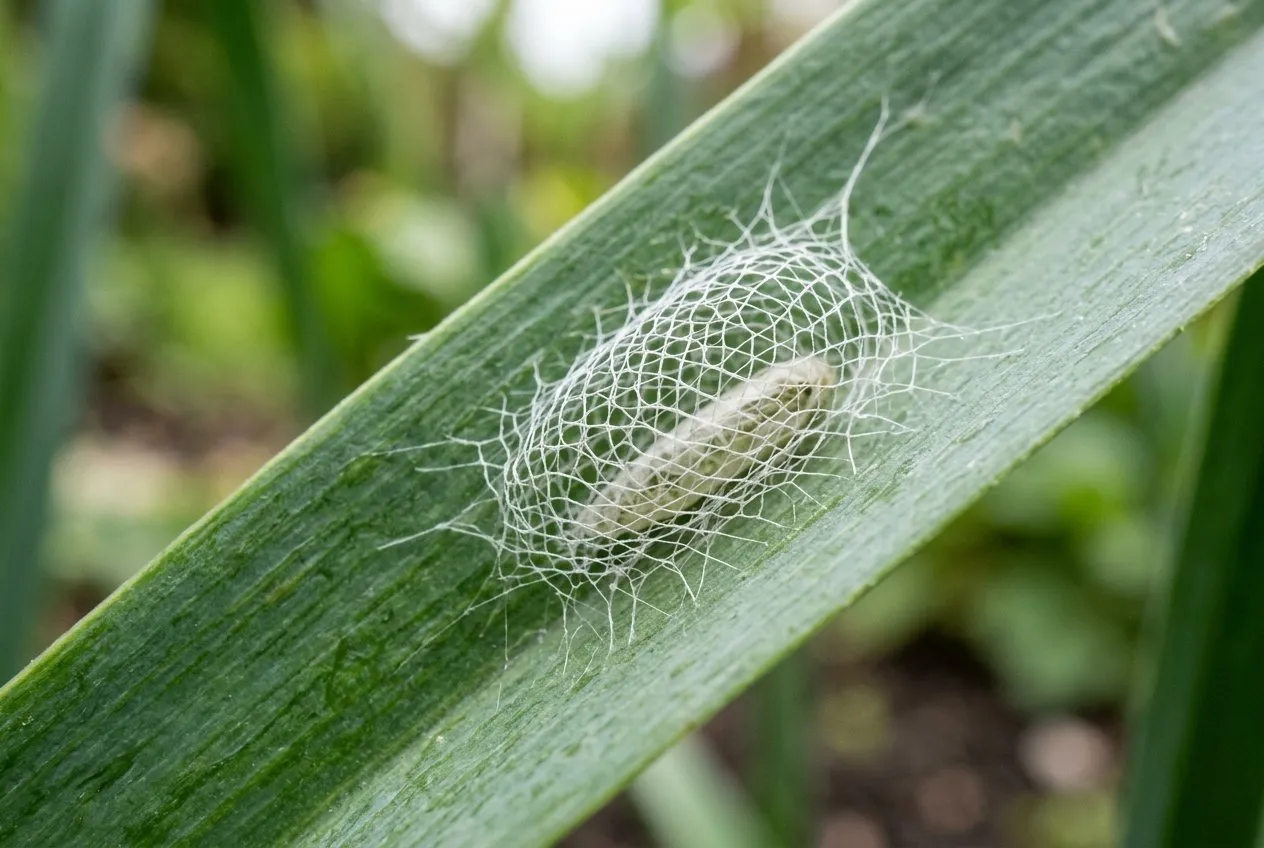 Leek moth pupates in a distinctive net-like silk cocoon on the foliage. Crush any you find to stop the next flight.
When to put insect-proof mesh on and take it off
Fit mesh from mid-April and again from the start of August, and lift it in the July gap between broods. Those two windows sit over the adult flights when females are laying eggs, and covering the crop physically stops them reaching the leaves. Mesh is the only defence that reliably works, because there is no effective home spray once caterpillars are inside the tunnels.
Use insect-proof mesh with a hole size around 0.8mm. The adult is only 5 to 6mm long but slender enough to pass through fleece and coarse butterfly netting, so ordinary covers do not stop it. Drape the mesh over hoops or a low frame, leave slack for the leeks to grow, and bury or weight the edges into the soil all the way round. A moth that crawls under a loose edge lays just as many eggs as one that flies in.
The July lift is worth taking. Between the two broods there are few adults flying, so you can safely uncover for two or three weeks to hoe off weeds, water, and earth up the leeks for longer white shafts. Get the mesh back on by 1 August without fail. In the far north of England, Scotland and upland Wales, push both start dates back by roughly two weeks, because the flights run later there than in the south.
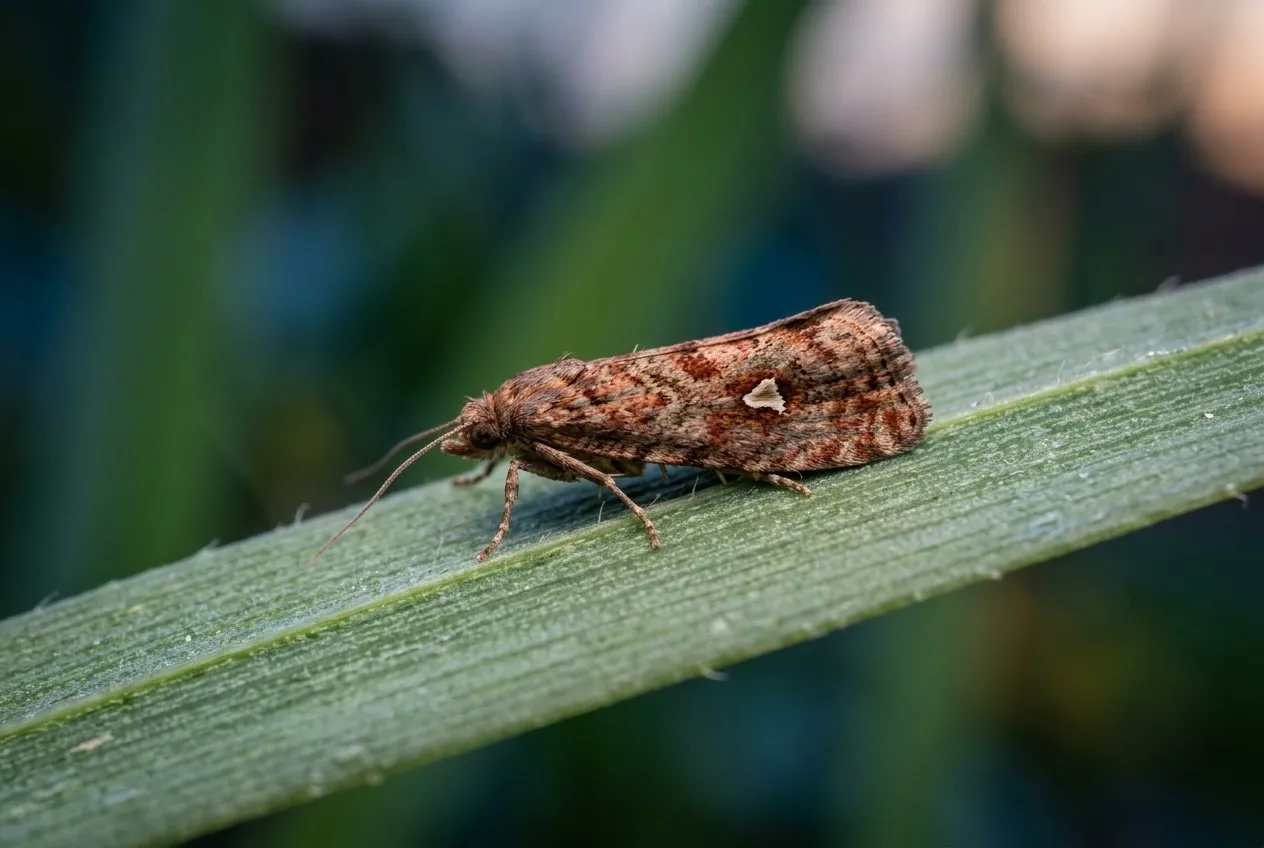 The adult leek moth is only 5 to 6mm long and flies at dusk, which is why the damage usually shows before the moth does.
Why southern and coastal Britain suffers worst
Leek moth thrives in warmth, so the south and coastal counties get hit hardest. The moth needs heat to complete two full generations, and the milder, sunnier climate of southern England lets both broods finish and breed on. Coastal plots add a second advantage: the sea moderates winter cold, so more adults survive hibernation to start the spring flight.
What this means in practice is that your risk depends on where you garden. A grower in Kent or Cornwall should treat leek moth as a near certainty and net every year. In the north of England and Scotland it is patchier, so watch for the first window-pane damage before committing to a full mesh regime. The RHS notes the same southern concentration and northward spread in its leek moth profile.
Non-chemical controls that actually work
Mesh at the right time does most of the work, but a handful of other measures cut the pressure further. Stacked together they starve the local population and reduce how many moths turn up in the first place. None of this needs a pesticide, which matters given how few products even touch a pest that lives inside the plant.
The proven non-chemical controls are:
- Insect-proof mesh (0.8mm) fitted over the two flight windows. This is the one that changes the outcome; everything else is support.
- Crushing pupae and cocoons. Inspect leaves through summer and squash the white net-like cocoons by hand. Each one removed is a moth that never flies.
- Clearing crop debris. Lift and compost or burn old leek and onion leaves in autumn. Adults and pupae shelter in the litter over winter.
- Winter digging. Turn over empty allium beds in November and January. Exposed pupae are eaten by ground and rove beetles or killed by frost.
- Encouraging predators. Ground beetles, rove beetles and parasitic wasps all take leek moth stages. Keep some undug edges and log piles nearby as beetle habitat.
Timing still trumps everything. A grower who nets from mid-April and 1 August and does nothing else beats one who crushes cocoons and clears debris but leaves the crop open during the flights. For a wider view of the pests that share your veg beds, our vegetable pests and diseases guide puts leek moth in context alongside the rest.
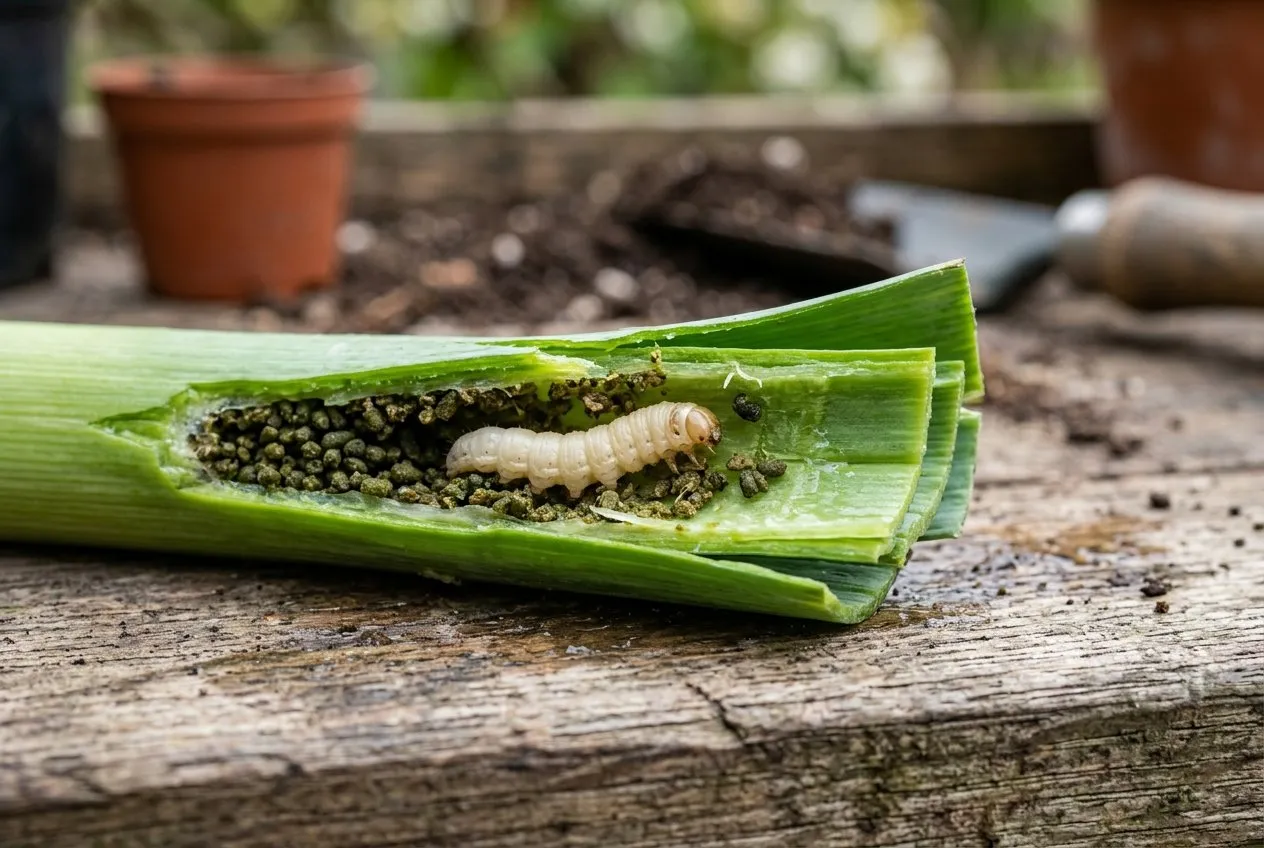 The caterpillar bores into the folded central leaves and shaft, packing the tunnel with green-brown frass.
What window-pane grazing tells you and when to act
Window-pane grazing is the first warning, and it means the moth is already on your plot. The young caterpillars feed inside the leaf and eat away everything but the thin outer skin, leaving pale, papery patches you can see light through. Spotting this early, before the larvae reach the shaft, is your cue to check the mesh and crush any eggs or cocoons you find.
Act the moment you see it. Once caterpillars tunnel into the heart of the leek there is nothing you can spray or wipe that reaches them, so control shifts entirely to stopping the next generation. If you find window-paning in June, that is the first brood, and the priority becomes having mesh sealed and ready before the far worse August flight arrives.
Do not confuse light window-paning with the rows of white egg-laying dots left by allium leaf miner or the orange pustules of leek rust. Each has its own treatment window. If your leaves carry rusty streaks rather than tunnels, our guide to leek rust covers a different problem with a different fix.
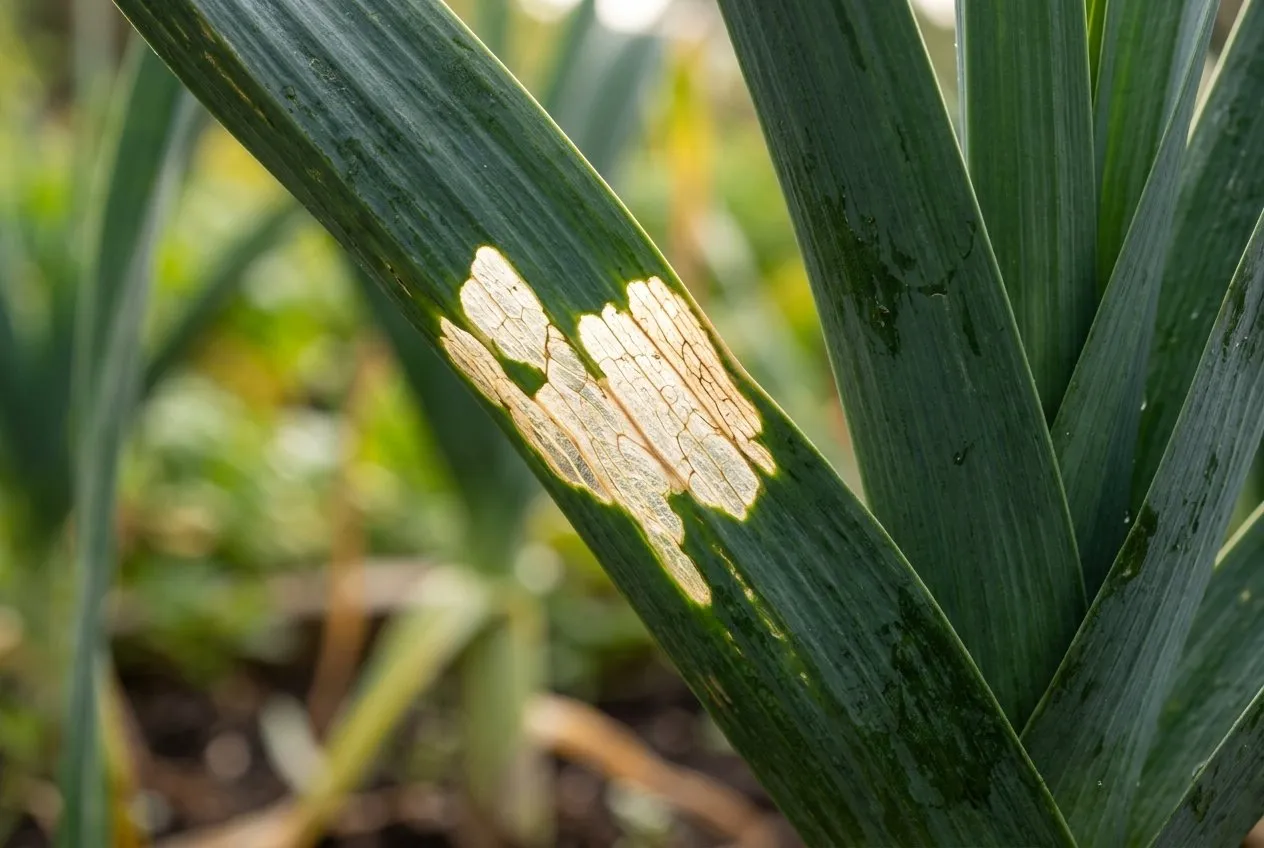 Window-pane grazing is the first sign: young larvae eat the inner leaf, leaving thin, papery patches that let light through.
Are leek moth-damaged leeks still safe to eat
Most leeks with leek moth damage are still perfectly edible once trimmed. The caterpillars attack the outer and central leaves, but the solid white shaft below is usually clean. Strip off the tunnelled leaves, cut away any section packed with frass, and rinse the heart thoroughly under the tap.
The one thing to reject is secondary rot. Where the tunnelling has let in bacteria, the leek turns soft, slimy and foul-smelling, and that plant is spoiled through. Cut into a suspect leek before cooking. If the core is firm and white with only surface damage, use it. If it is mushy or smells sour, compost it.
Warning: Do not compost tunnelled leek leaves onto an open heap next to your allium bed. Any pupae in that material can complete their cycle and the adults fly straight back onto next year’s crop. Bin, burn or hot-compost infested foliage instead.
 A trimmed leek from a meshed bed beside a tunnelled one. The clean white shaft below the damage is still good to eat.
Crop rotation and its limits against leek moth
Crop rotation helps against soil problems but does little on its own against leek moth. The moths are strong flyers that arrive from neighbouring gardens and allotments, so moving your alliums a few metres across the plot does not put them out of reach. Anyone relying on rotation alone to stop this pest will be disappointed.
Rotation still earns its place for other reasons. Shifting alliums onto fresh ground each year breaks the build-up of soil-borne diseases like white rot and rust, and it does reduce the number of local pupae overwintering in the exact spot you grow next season. Think of it as one layer that lowers pressure, not a standalone defence. Our crop rotation planner sets out a workable three or four-year cycle for the whole plot.
Where rotation and mesh combine well is around the July uncovering. If your new allium bed sits well away from last year’s, there are fewer pupae in the immediate soil to emerge and lay while the cover is off. It is a small gain, but on a pest this persistent every small gain counts. The same logic applies to the wider allium family, covered in our guide to how to grow alliums.
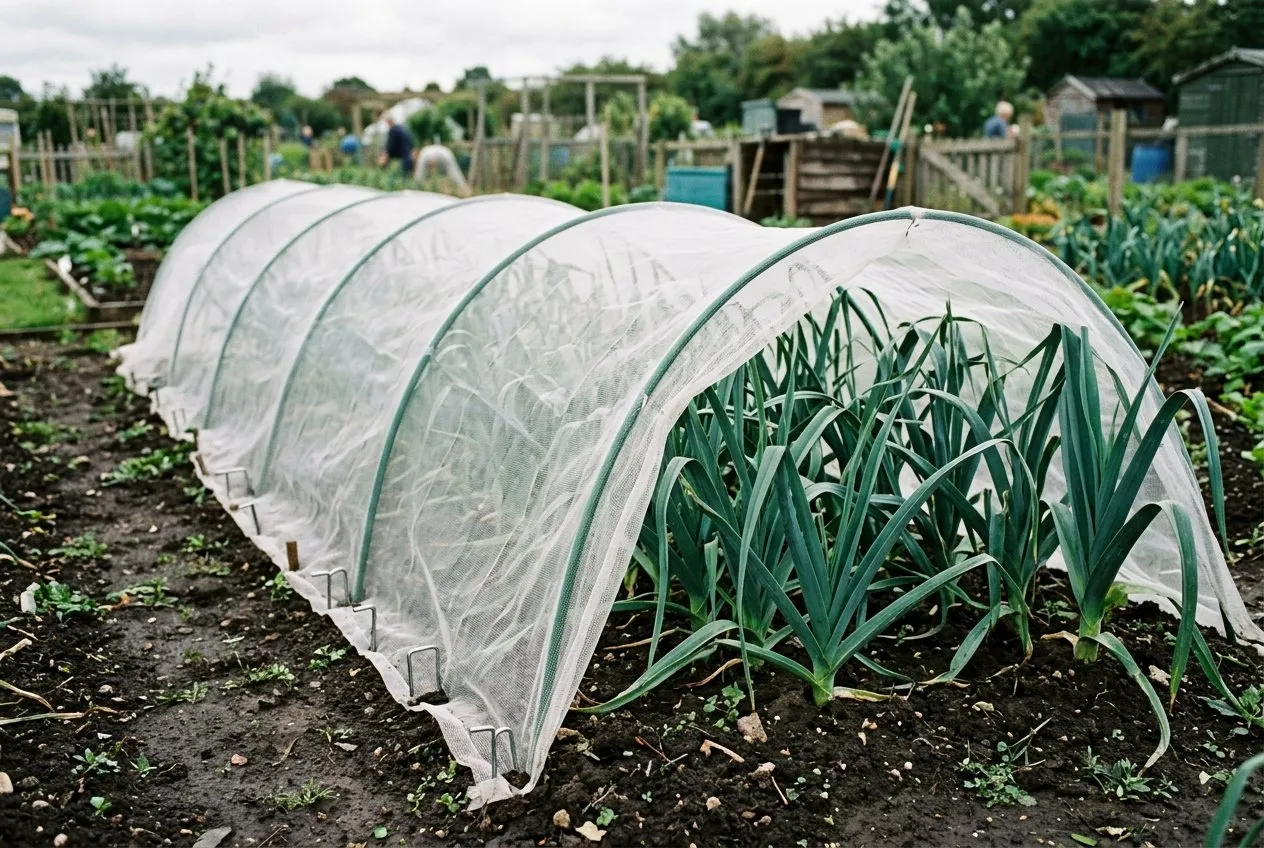 Mesh draped over 60cm hoops with slack edges pinned to the soil stops egg-laying females reaching the leaves.
Common mistakes when fighting leek moth
Most failed leek crops come down to a handful of avoidable errors, and nearly all of them are about timing or a poorly fitted cover.
Netting too late, after damage shows
By the time you see window-paning, eggs have already been laid. Fit mesh before each flight starts, from mid-April and 1 August, not as a reaction to the first damage. Prevention is the only mode that works with a pest that lives inside the plant.
Only covering for the spring flight
The first generation gets the attention because it comes first, but the August brood is larger and does far more harm to bulking leeks. If you net only once, net for August. Better still, cover both windows and lift the mesh only in the quiet July gap.
Using the wrong mesh or fleece
Ordinary fleece and butterfly netting have gaps wider than the moth’s body, so it walks straight through. Buy insect-proof mesh rated around 0.8mm. Anything coarser is a waste of a summer’s effort.
Leaving gaps at the edges
A moth that crawls under a loose hem lays as many eggs as one that flew in. Weight or bury every edge into the soil, and check the cover after every windy night. One flapping corner undoes the whole bed.
Composting infested leaves next to the crop
Tunnelled foliage often carries pupae. Piling it on an open heap beside the allium bed simply breeds next year’s moths. Burn, bin or hot-compost anything you strip off damaged plants.
Managing leek moth alongside other allium pests
Leek moth rarely turns up alone, so plan your defences for the whole allium family at once. The same beds that draw leek moth also attract onion root fly, allium leaf miner and, in wet years, rust and white rot. A single well-sealed mesh cover, fitted to the leek moth calendar, happens to block several flying pests at the same time, which is one reason it is such good value.
The catch is that the flight windows do not all line up. Allium leaf miner flies earliest, from March, and onion root fly is active from late spring. If you garden somewhere all three are a problem, you may need mesh on from March straight through to autumn, lifting only briefly to weed. Our guide to onion root fly sets out that pest’s own timing so you can build one combined cover schedule.
Watch, record and adjust. Keep a simple note each year of when you first see damage and which pest caused it. After two or three seasons you will know your own plot’s flight dates better than any general guide, and you can fine-tune your mesh on and off dates to match. That local record is worth more than any national average, because leek moth timing shifts by weeks between Cornwall and Cumbria. The Garden Organic advice on managing allium pests is a useful starting point before you build your own calendar.
Frequently asked questions
What does leek moth damage look like?
Pale window-pane patches on leaves, then tunnels packed with frass. The young caterpillars graze the leaf surface, leaving translucent windows. Older larvae bore into the folded central leaves and the shaft, filling the tunnels with green-brown droppings. Secondary rot often sets in, and small plants may collapse and die.
When should I put mesh on leeks for leek moth?
Cover from mid-April and again from the start of August. Those two windows match the adult flights when females lay eggs. In most of England you can lift the mesh through July, between the generations. In the far north add roughly two weeks to both start dates, as the flights run later.
How do I tell leek moth from allium leaf miner?
Leek moth caterpillars have a head and legs; leaf miner maggots have neither. Leek moth tunnels the leaves and shaft and leaves silky cocoons on the foliage. Allium leaf miner leaves neat rows of white dots and brown rice-grain pupae inside the stem. Their flight seasons differ too, so the mesh dates differ.
Are leeks with leek moth damage safe to eat?
Yes, most damaged leeks are still safe once trimmed. Strip off the tunnelled outer leaves and cut away any frass-filled or rotting centre. The clean white shaft below is fine to cook. Discard only leeks that are soft, slimy or rotten through, as secondary bacterial rot spoils the whole plant.
Does crop rotation stop leek moth?
No, rotation alone will not stop it. The adults fly in from surrounding gardens and allotments, so moving your alliums a few metres does little. Rotation still helps by breaking soil-borne allium diseases and reducing local pupae. Combine a three or four-year rotation with mesh for real protection.
How many generations of leek moth are there in a year?
Two generations a year in the UK. The first flies in April and May, with caterpillars feeding through May and June. The second, larger flight is in August and September, feeding into October. The second generation causes most crop damage. Adults then overwinter in sheltered spots and emerge the following spring.
What mesh size keeps leek moth out?
Use insect-proof mesh with holes around 0.8mm. The adult moth is only 5 to 6mm long but slips through standard fleece gaps and butterfly netting. A fine 0.8mm mesh blocks egg-laying females while still letting light, rain and air through. Seal the edges to the soil so moths cannot crawl underneath.
Once your leeks are safely under mesh, put the same care into the rest of the family with our guide to growing onions in the UK for a clean, well-timed allium crop.
Our team produces practical UK gardening guidance from source research, contributor records and established horticultural practice. Editorial standards are overseen by Matt W.