Key takeaways
- Chafer grubs are C-shaped, cream, 15-18mm larvae with an orange-brown head and three pairs of legs
- The garden chafer, Phyllopertha horticola, is the main UK lawn pest; adults fly in May and June
- Grubs feed on grass roots from August to April, with peak damage in late summer and autumn
- Birds, badgers and foxes ripping turf apart to eat grubs cause more damage than the feeding itself
- Nematodes (Heterorhabditis bacteriophora) are the one effective control, applied late July to September above 12C soil temperature
- No chemical pesticides remain for gardeners since imidacloprid and chlorpyrifos were withdrawn
- A single nematode treatment costs about £12-20 and covers 100 square metres
Chafer grubs are the fat, C-shaped larvae that turn a healthy UK lawn into a patchwork of yellow and torn turf. Most people never see the grubs themselves. They see the symptoms first: spongy dead patches, then whole strips of lawn rolled back overnight by badgers, foxes or crows hunting the grubs beneath.
That secondary damage is the real story. The grubs chew grass roots, but the digging done by animals hunting them wrecks far more turf. Get the identification and the timing right, and you can break the cycle in a single autumn.
This guide covers how to identify chafer grubs, the species that attack UK lawns, why the damage looks so dramatic, the one treatment that still works, and how to repair the mess afterwards.
What do chafer grubs look like?
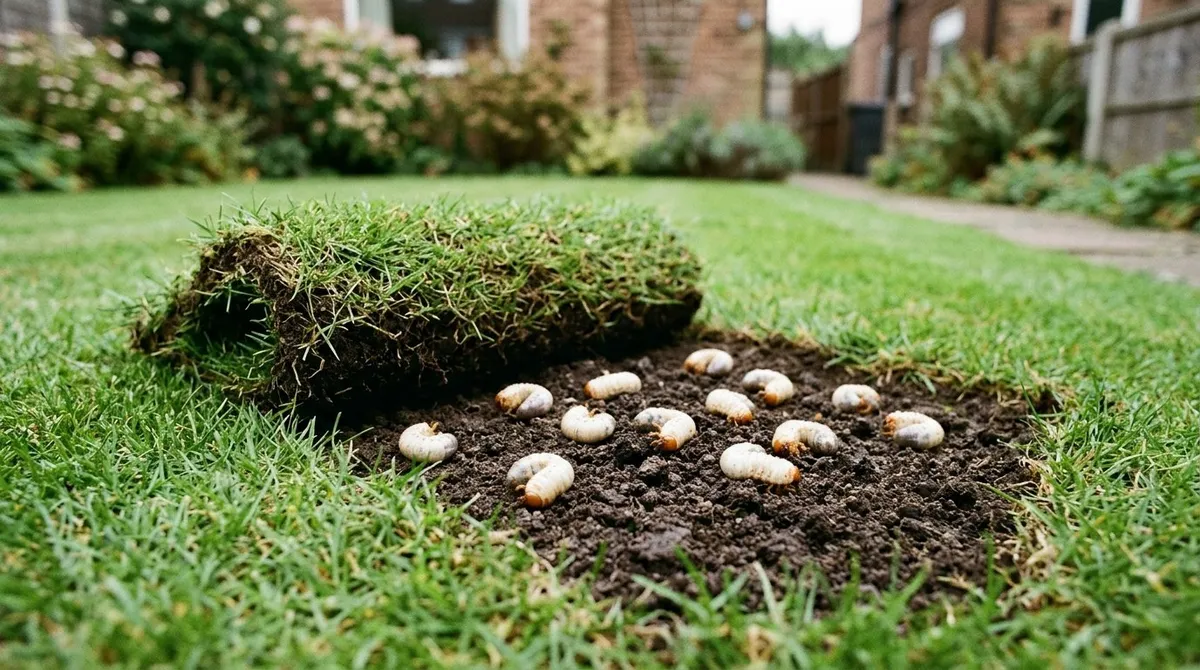
Chafer grubs are creamy-white, C-shaped larvae with an orange-brown head and three pairs of legs near the front. Turn one out of the soil and it curls into a comma. That curl is the quickest field test you have.
Garden chafer grubs reach 15-18mm long when fully grown. The body is soft and plump, translucent enough that the dark rear end shows through. The head capsule is hard and shiny, a warm tan to orange colour. Six short legs sit just behind it.
Cockchafer grubs are much bigger, up to 30-40mm long, and take years to reach that size. Whatever the species, the shape and the legs stay the same. If your larva is straight and legless, it is a leatherjacket, not a chafer grub.
You find them in the top 5cm of soil, right under the turf, feeding on the root zone. Peel back a suspect patch of lawn like a carpet and they are easy to spot against the dark soil.
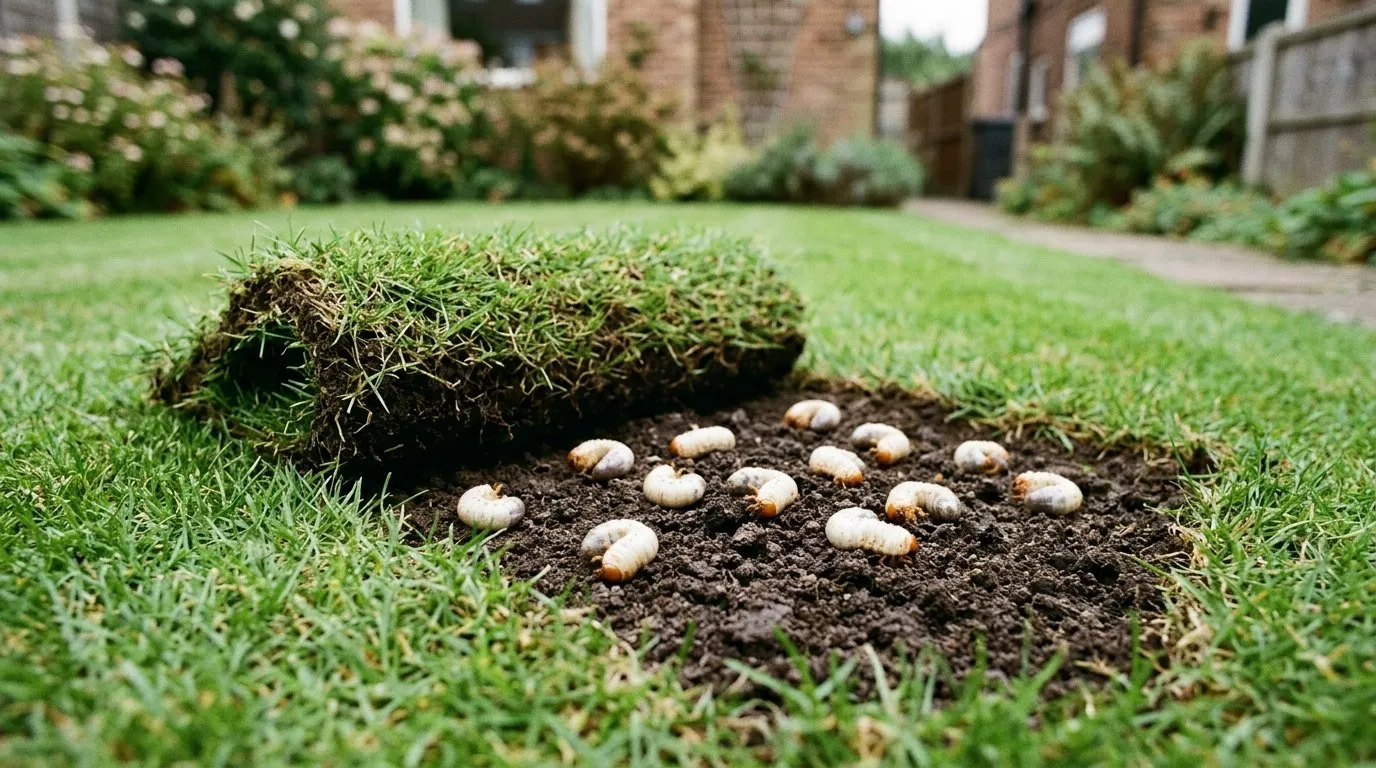 Peel back a loose patch of turf and chafer grubs show as pale C-shapes against the soil. Six legs and an orange head confirm the identification.
Gardener’s tip: Cut three sides of a 30cm turf square with a spade and fold it back like a book. Count the grubs in that square foot. Fewer than five and you can usually leave the lawn alone; more than five and it is worth treating before the birds and badgers find them.
What damage do chafer grubs cause to lawns?
The worst chafer grub damage is not the root feeding, it is the digging done by animals hunting the grubs. That is the point most gardeners miss.
The grubs themselves chew through grass roots from August to April, worst in late summer and autumn. Affected turf yellows, then browns, and feels spongy underfoot. You can often lift it away in handfuls because the roots have gone. Small patches join into larger dead areas.
Then the predators arrive. Badgers, foxes, crows, magpies and rooks all eat chafer grubs. Badgers and foxes rip the loosened turf back like carpet, sometimes clearing several square metres in a night. Birds leave neat little peck holes and scattered soil.
This is why a chafer problem seems to explode overnight. The grubs work quietly for weeks, then a badger finds the patch and the lawn is shredded in hours. If you have woken to turf rolled back or small holes appearing in the lawn overnight, chafer grubs are a prime suspect.
Damage shows up in dry spells too. Grass with its roots eaten cannot draw water, so chafer patches are the first to brown in a summer drought while the rest of the lawn stays green.
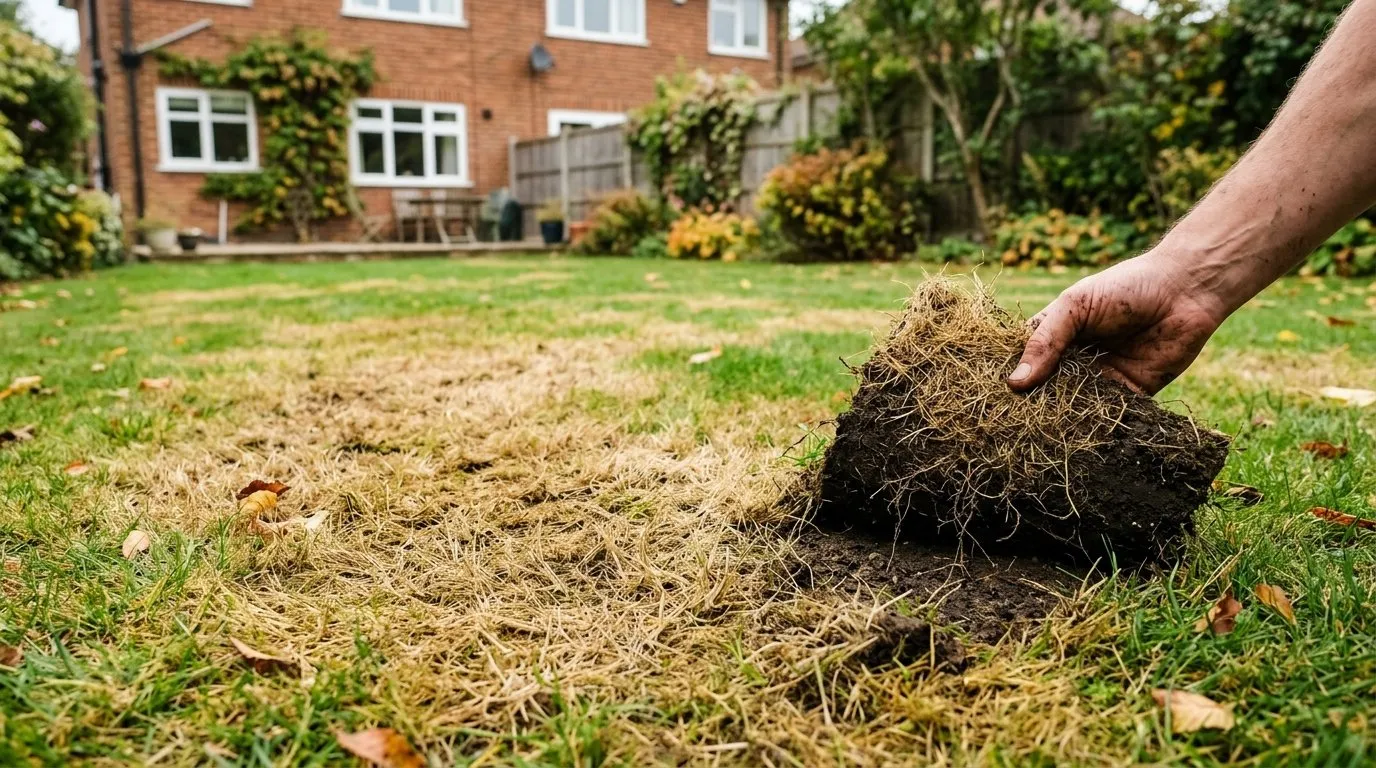 Yellowing, spongy patches on a suburban lawn are the first sign. The turf lifts easily because chafer grubs have eaten the roots underneath.
Chafer grubs vs leatherjackets: how to tell them apart
Chafer grubs curl into a C and have legs; leatherjackets are straight, legless and grey. Both eat grass roots, so telling them apart matters before you treat.
Leatherjackets are the larvae of crane flies, the daddy-long-legs that swarm in autumn. They are tough, grey-brown, tube-shaped and up to 30mm long, with no visible head or legs. Chafer grubs are pale, plump, curled and clearly legged. Our full guide to leatherjackets and crane fly larvae covers that pest in detail.
The controls overlap but the species and timing differ. Both respond to nematodes, but the exact nematode species and the best application month are not identical. Correct identification saves you buying the wrong product.
| Feature | Chafer grubs | Leatherjackets |
|---|---|---|
| Shape | Fat, curled into a C | Straight, tube-like |
| Legs | Three pairs near the head | None |
| Head | Hard, orange-brown, obvious | No visible head |
| Colour | Creamy-white | Grey to greyish-brown |
| Length | 15-18mm (garden chafer) | Up to 30mm |
| Adult | Chafer beetle, flies May-June | Crane fly, flies Aug-Oct |
| Nematode | Heterorhabditis bacteriophora | Steinernema feltiae |
| Best treatment month | Late July to September | September to October |
The other giveaway is movement. Chafer grubs are sluggish and stay curled. Leatherjackets wriggle actively when handled. Once you have seen both, you never confuse them again.
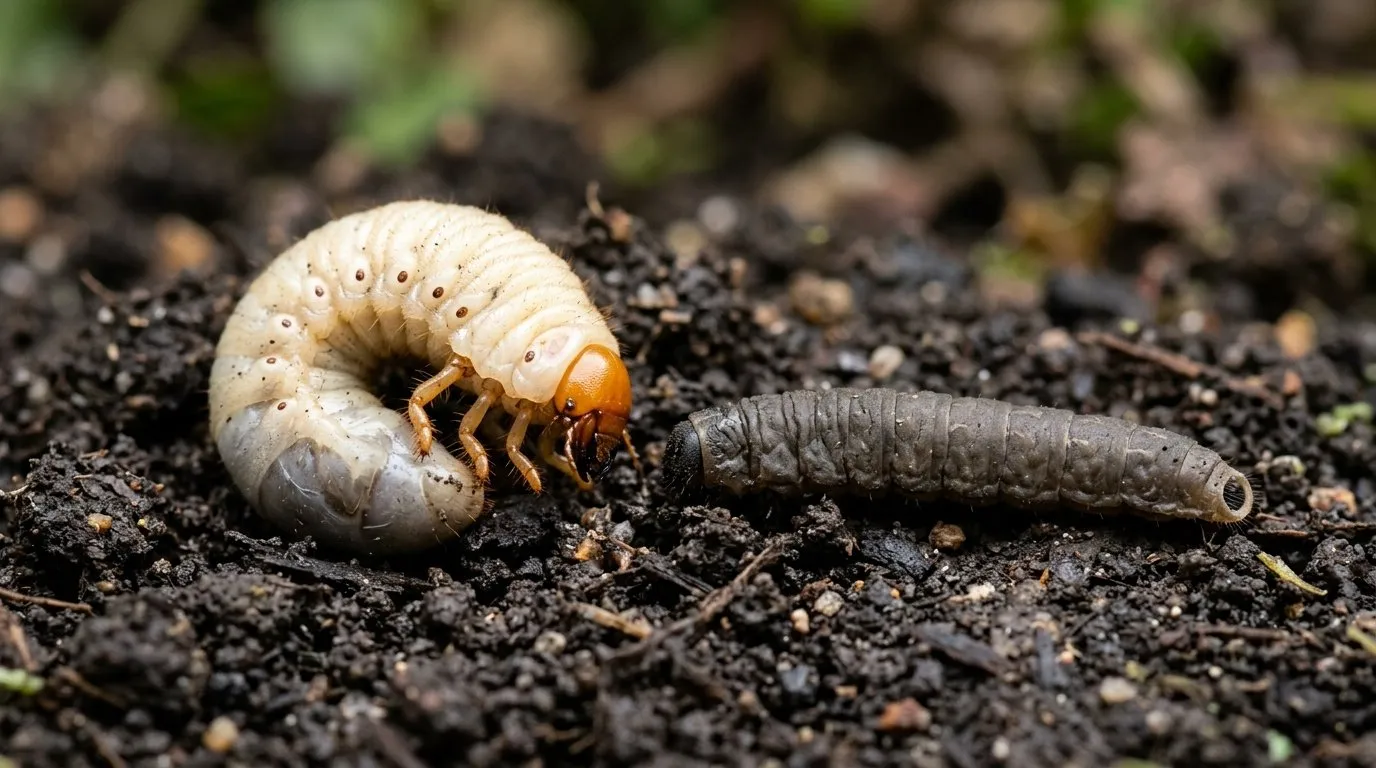 Left, the curled, legged chafer grub. Right, the straight, legless leatherjacket. The C-shape is the fastest way to tell them apart.
Which chafer species attack UK lawns?
The garden chafer, Phyllopertha horticola, is by far the commonest chafer in UK lawns. A handful of other species turn up, and their life cycles differ in ways that affect timing.
Garden chafer (Phyllopertha horticola). The main lawn pest. Adults are about 9mm long, with a metallic green head and thorax and light-brown wing cases. They fly in May and June, lay eggs in turf, and the grubs feed through one autumn before pupating. This one-year cycle is why garden chafer damage can flare up fast.
Welsh chafer (Hoplia philanthus). Similar in size, with a black head and reddish-brown wing cases. Also a one-year cycle, common on lighter soils in the west.
Cockchafer (Melolontha melolontha), the May bug. The big one. Adults reach 25-30mm, brown and clumsy, blundering into windows on May evenings. Its grubs grow to 30-40mm and take three to four years to develop, feeding on roots the whole time. Fewer grubs, but each does far more damage over its long life.
Summer chafer and Welsh chafer appear locally but rarely reach lawn-wrecking numbers.
For lawns, the garden chafer drives nearly all the trouble. Its predictable one-year cycle is also what makes nematode timing so reliable: treat the young grubs in late summer, every year, and you stay ahead of it. The RHS profile on chafer grubs in lawns gives the full species breakdown.
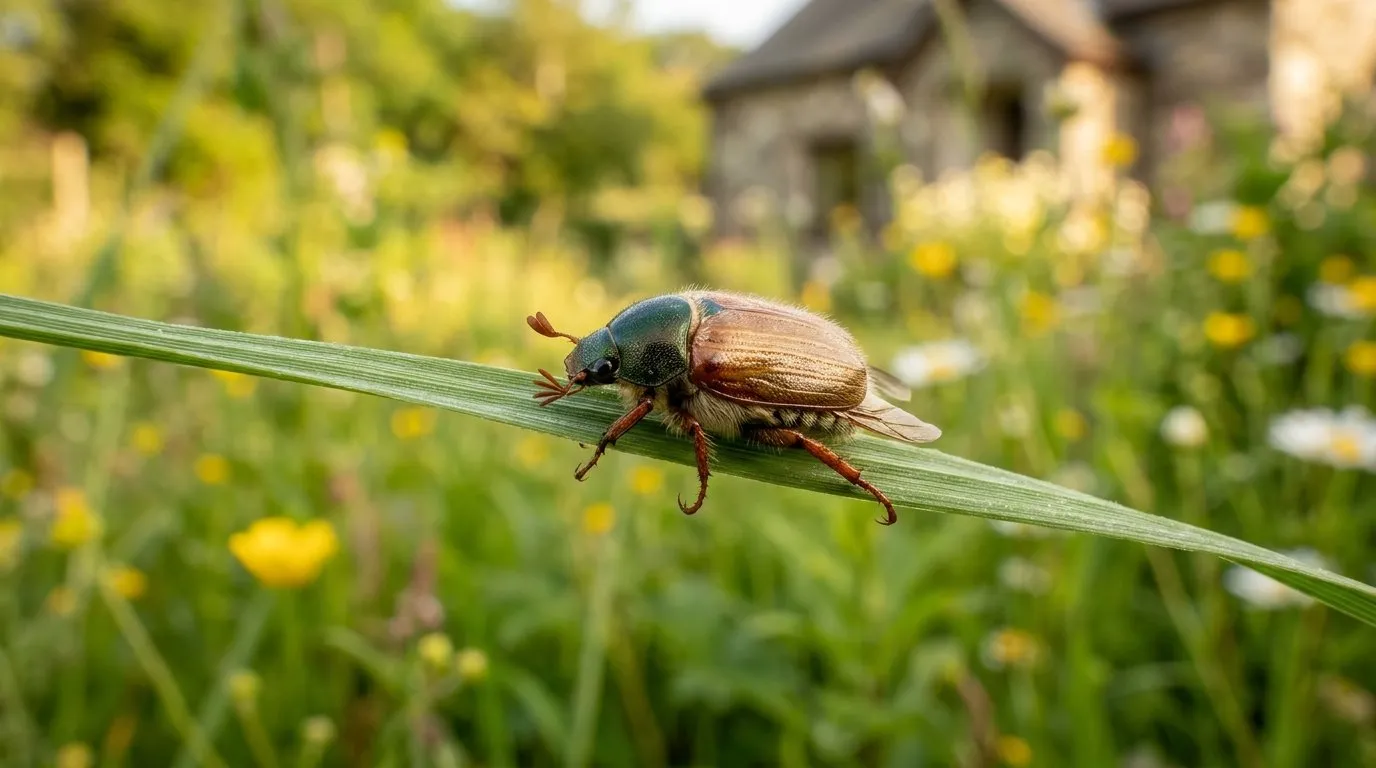 The adult garden chafer, about 9mm long, flies on warm evenings in May and June before laying eggs in the turf.
How do you get rid of chafer grubs in a lawn?
Water on Heterorhabditis bacteriophora nematodes between late July and September, while the grubs are young and near the surface. This is the only effective control now available to UK gardeners, and it works well when the timing is right.
Nematodes are microscopic worms that hunt the grubs, enter through natural openings, and release bacteria that kill the larva within a few days. They are harmless to pets, birds, worms, bees and people. One pack treats around 100 square metres and costs roughly £12-20.
The timing rules are strict:
- Apply from late July to September, when this year’s grubs are small and feeding in the top few centimetres.
- Soil temperature must be above 12C for the nematodes to stay active. Below that they do nothing.
- The soil must be moist before and after. Water the lawn first if it is dry.
- Keep the area damp for at least two weeks after applying, so the nematodes can move and find the grubs.
- Apply on a dull, cool day or in the evening. Sunlight and drying kill nematodes fast.
Mix the pack with water and apply through a watering can with a coarse rose, or a hose-end feeder, over pre-moistened turf. Our guide to biological pest control with nematodes covers the mixing and watering-in detail for every garden nematode.
The common failure is treating too late. By the time badger damage appears in October or November, the soil is often below 12C and the grubs are large and deep. Treat on the calendar, in late summer, not in reaction to damage. A repeat application each year keeps a known chafer lawn under control.
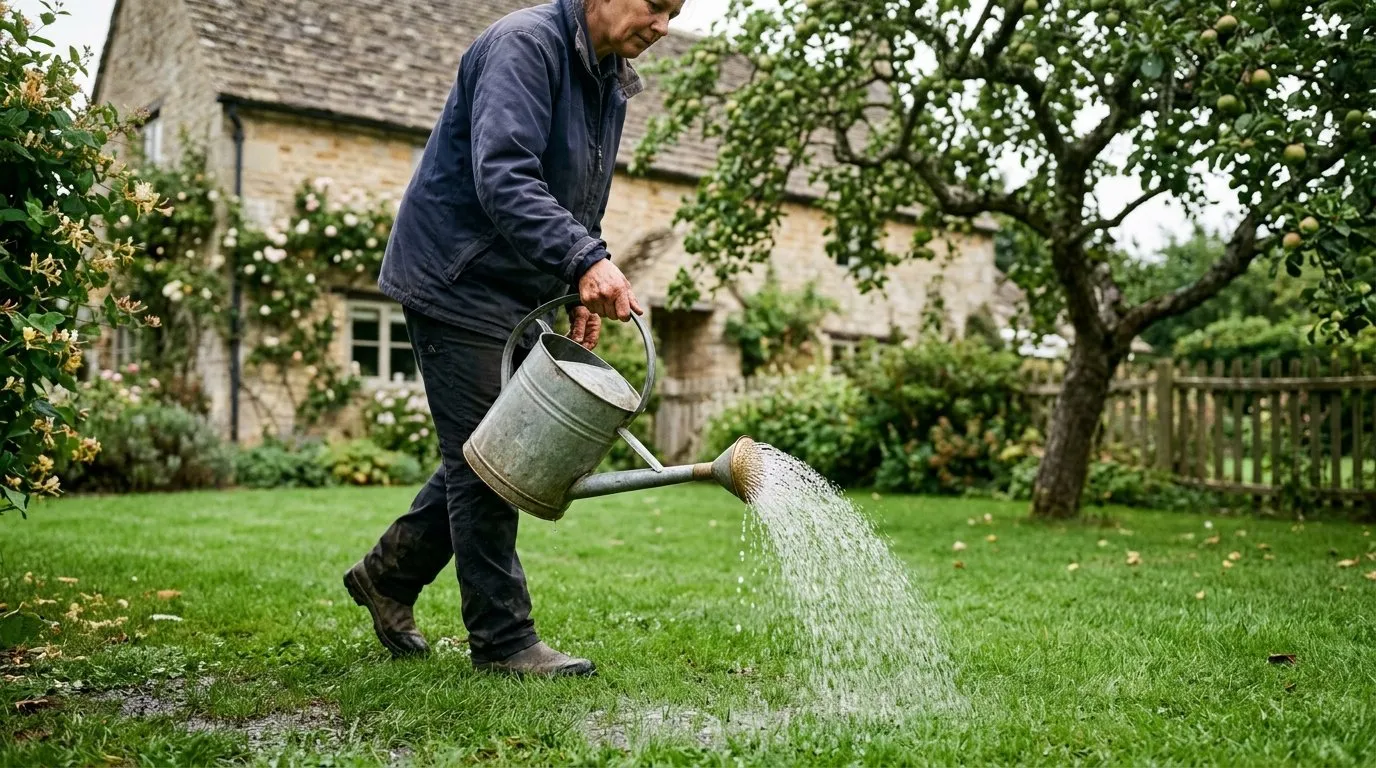 Nematodes go on through a coarse rose over pre-watered turf, on a cool evening. Keep the lawn damp for a fortnight afterwards.
Why are there no chemical controls for chafer grubs?
There are no chemical pesticides left for chafer grubs in UK gardens because the effective ones were withdrawn on environmental grounds. Gardeners who remember spraying the soil are out of luck.
Imidacloprid, a neonicotinoid once sold for lawn grubs, was withdrawn over its harm to bees and other pollinators. Chlorpyrifos, an older organophosphate, was banned for its toxicity to wildlife and risk to human health. Neither is available to home gardeners now, and no replacement chemical has been approved.
This is not a loophole to work around. The withdrawals reflect real damage these chemicals did to soil life, worms and pollinators. Nematodes, predators and good lawn care are the modern toolkit, and for the one-year garden chafer they work.
The upside is a lawn full of worms, beetles and birds, none of which a broad-spectrum insecticide would spare. The RHS guidance on biological control sets out how these living controls fit a chemical-free garden.
How do you prevent chafer grubs in your lawn?
A dense, well-rooted lawn shrugs off chafer grubs far better than a thin, stressed one. Prevention is mostly good lawn husbandry, plus a yearly nematode dose on problem lawns.
Adult chafers prefer to lay eggs in short, dry, open turf, so the fixes are the same as general lawn care:
- Mow a little higher. Keeping the sward at 3-4cm rather than shaving it shades the soil and hides it from egg-laying beetles.
- Water in dry spells. Adult chafers target parched summer lawns. Occasional deep watering in June and July makes turf less attractive and keeps roots strong.
- Feed and overseed. A thick, dense lawn recovers from light grub feeding without showing it. Follow a seasonal lawn care calendar to keep the turf vigorous year-round.
- Encourage predators. Starlings, rooks and hedgehogs all eat chafer grubs. The peck marks they leave are minor next to the good they do.
A yearly preventive nematode application in August is worth it on any lawn that has had chafer damage before. It costs about £15 and stops the population rebuilding.
If badgers are the visible problem, deterrence has to run alongside grub control. Our guides to stopping badgers digging up the lawn cover fencing and repellents, but removing the grubs is what finally stops the digging. Take away the food and the animal moves on.
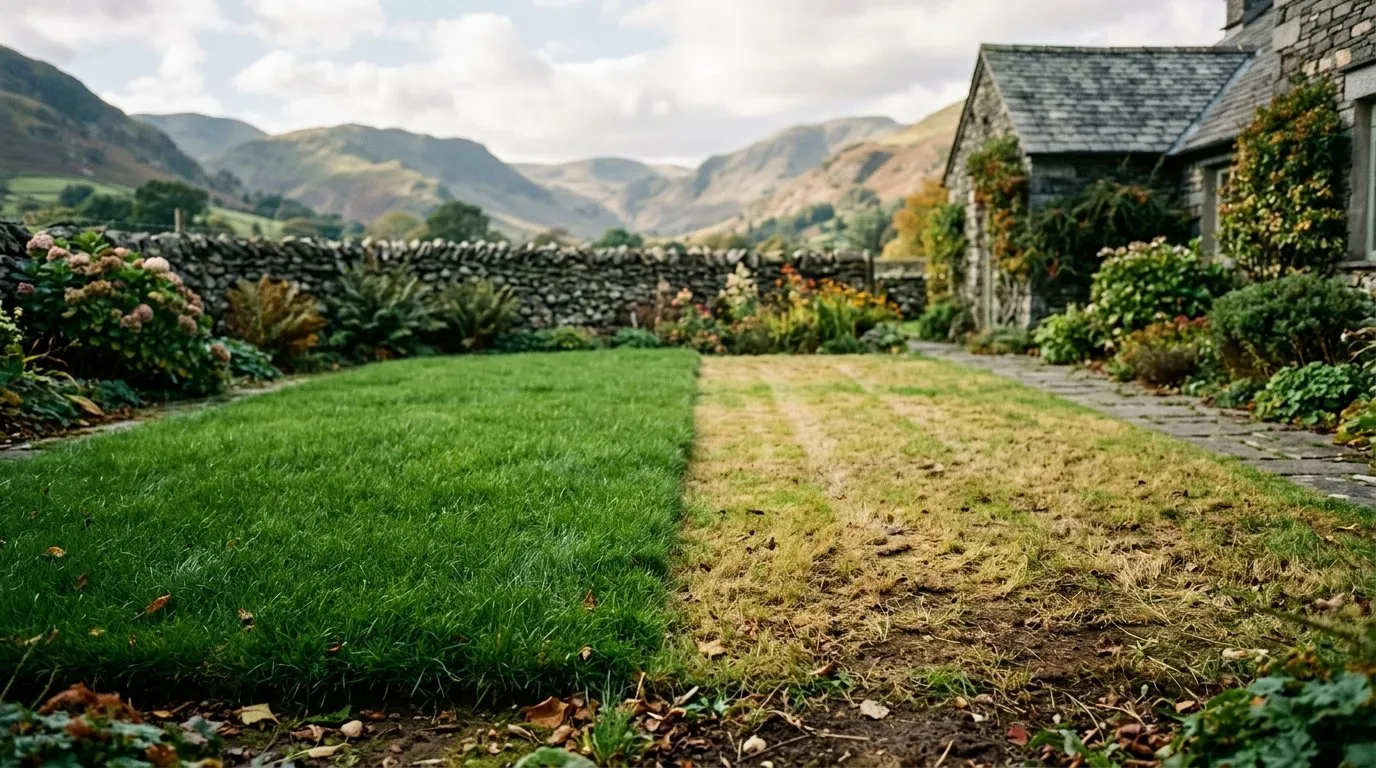 A thick, well-fed lawn (left) resists chafer grubs. Thin, dry turf (right) is where beetles lay eggs and damage builds.
How do you repair a lawn damaged by chafer grubs?
Clear the grubs first, then repair the turf, because reseeding into a live infestation just feeds the next generation. Do the two jobs in order.
Once nematodes have knocked back the grubs, firm any rolled-back turf back into place and tread it down. Flaps lifted by badgers often re-root if you replace and water them within a day or two. Larger dead areas need reseeding.
For bare patches, rake out the dead thatch, loosen the surface, and sow fresh grass seed. Mid-August to late September is the best window, while the soil is still warm and moist. Our guide on sowing grass seed covers seed rates and aftercare. Reckon on £4-8 for enough seed to patch a domestic lawn.
Where the damage is widespread and thin rather than bald, overseeding across the whole area works better than spot repairs. The method in our guide to fixing a patchy lawn suits chafer damage well.
Keep new seed watered and protected from birds, which will happily eat both the seed and any remaining grubs. Netting or a light fleece over freshly sown patches for two to three weeks pays off.
Repair timing matters. Seed sown by late September establishes before winter. Sow later and cold, wet soil rots the seed and you wait until spring. Time the whole job, treat then repair, for the late summer and early autumn window when both work.
 Once the grubs are cleared, rake out dead turf and oversow bare patches. Late August to September gives seed warm, moist soil to establish in.
Frequently asked questions
What do chafer grubs look like?
Chafer grubs are fat, C-shaped, creamy-white larvae with an orange-brown head. They have three pairs of legs near the head and a dark, swollen rear end. Garden chafer grubs reach 15-18mm long. They always curl into a comma shape when you turn them out of the soil, which tells them apart from straight, legless leatherjackets.
How do I get rid of chafer grubs in my lawn?
Water on Heterorhabditis bacteriophora nematodes between late July and September. These microscopic worms infect and kill the grubs, and they need moist soil above 12C to work. Keep the lawn damp for two weeks after applying. No chemical treatment is now available to UK gardeners, so nematodes are the only effective control.
What is the difference between chafer grubs and leatherjackets?
Chafer grubs are C-shaped with legs; leatherjackets are straight and legless. Chafer grubs have a hard orange head and six legs, and curl into a C. Leatherjackets are the grey-brown, tube-like larvae of crane flies, with no obvious head or legs. Both feed on grass roots, but the controls and timing differ slightly.
Will chafer grubs kill my lawn?
Light infestations rarely kill a lawn, but heavy ones do real harm. Five or more grubs per square foot start to thin the turf, and yellow patches appear as roots are eaten. The worst damage comes from birds, badgers and foxes tearing the loosened turf apart to feed. That secondary damage often ruins a lawn faster than the grubs.
Why is a badger digging up my lawn at night?
A badger is almost certainly hunting chafer grubs or leatherjackets. Badgers and foxes smell the fat larvae under the turf and rip it back like carpet to eat them. Torn, rolled-back turf overnight is the classic sign. Clearing the grubs with nematodes removes the food source, and the digging usually stops within a few weeks.
Can I use chemicals to kill chafer grubs?
No, there are no chemical pesticides left for chafer grubs in UK gardens. Imidacloprid and chlorpyrifos were both withdrawn on environmental grounds, mainly harm to bees and soil life. Biological nematodes are the only effective control now sold to home gardeners. Encouraging predators and keeping the lawn healthy makes up the rest of the approach.
When are chafer grubs most active?
Chafer grubs feed most from August to October, near the surface. They hatch in summer, feed heavily through autumn, then move deeper as the soil cools over winter. They rise again to feed in spring before pupating. Adult beetles emerge and fly in May and June, which is when they lay the next batch of eggs.
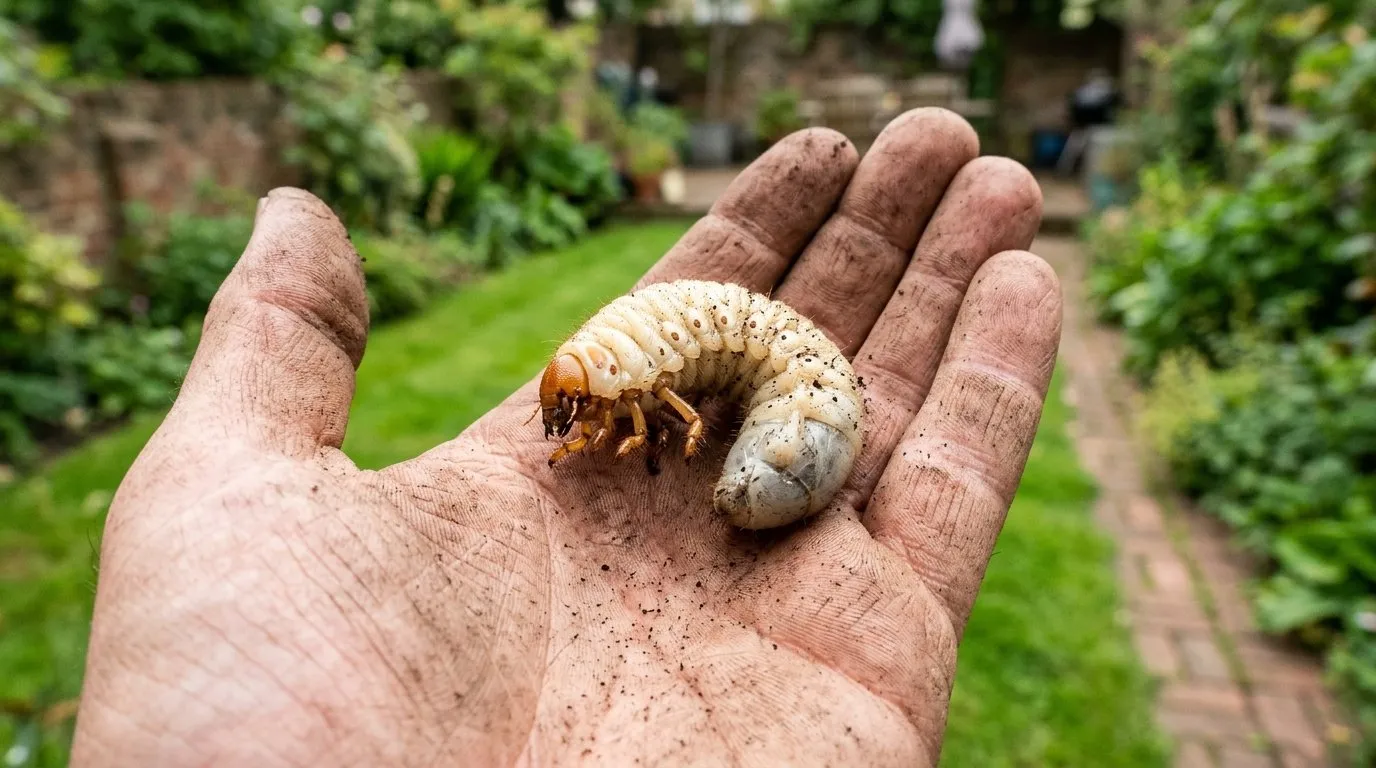 A single garden chafer grub, 15-18mm long, curled in the hand. The orange head and six legs are the identification you need before you treat.
Our team produces practical UK gardening guidance from source research, contributor records and established horticultural practice. Editorial standards are overseen by Matt W.