Key takeaways
- Leek rust shows as bright orange pustules on the leaves from midsummer onward
- It thrives in nitrogen-rich, low-potassium soil and crowded, humid plots
- No fungicide is approved for UK home growers, so prevention does all the work
- Resistant varieties such as Apollo and Bandit cut rust hard, but no leek is immune
- Affected leeks are still safe to eat once the rusted outer leaves are trimmed off
- A three to four year allium rotation breaks the overwintering cycle
Leek rust is the orange dust that creeps over leek leaves every UK summer. It is the most common leek problem on allotments and plots from June onward. The fungus, Puccinia porri, paints raised orange pustules across the leaf blades, then bursts to release wind-blown spores. It looks alarming. It rarely kills the crop.
This guide shows you how to tell leek rust from other leek troubles. It explains why the disease arrives in midsummer, how it spreads and overwinters, and which controls actually work. There are no home-grower fungicides for it, so everything here is cultural. Get the variety, the feeding and the spacing right and you keep leeks cropping through winter.
What Leek Rust Looks Like On The Leaf
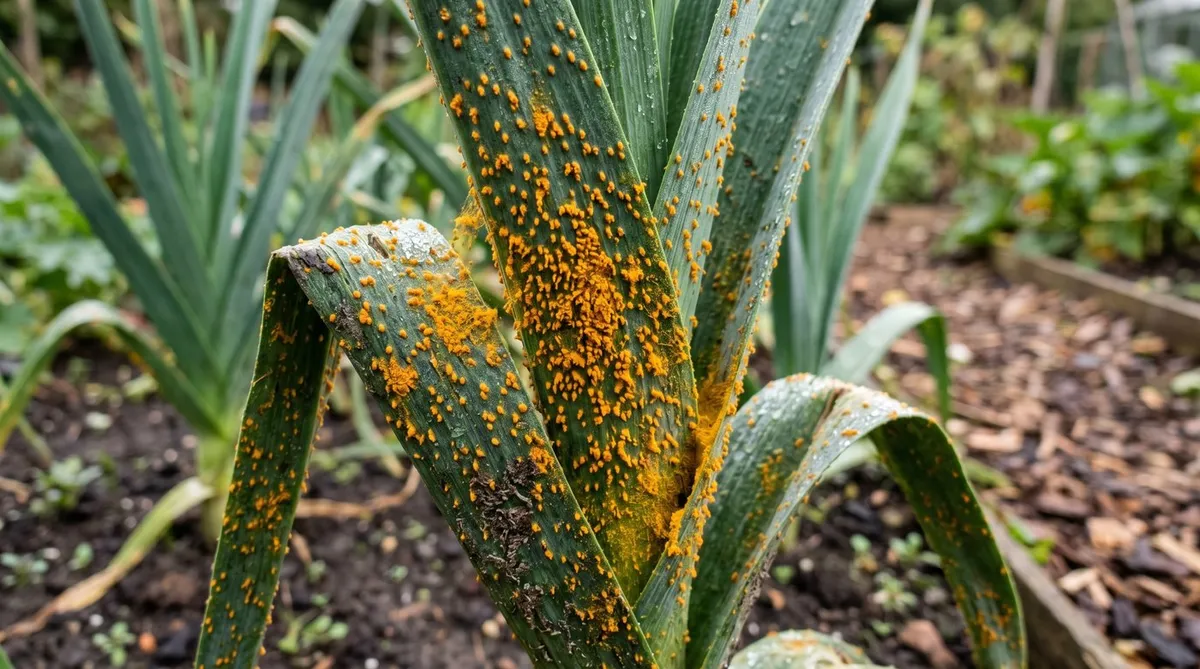
Leek rust is easy to name once you know the signs. Look for bright orange, slightly raised pustules on both sides of the leaf blade. They start as tiny flecks, then swell into oval pustules a few millimetres long. Each one is often ringed by a pale yellow patch.
Rub a pustule with your finger. Leek rust smudges into an orange powder, because the bumps are packed with spores. That dusty orange smear is the single clearest test. No other common leek problem does it.
Do not confuse it with the other things that mark leek leaves. Allium leaf miner and leek moth leave white mines, ragged holes and visible grubs. Downy mildew shows grey-violet fuzz, not orange dust. White tip bleaches the leaf tips pale. Only rust gives you the orange, powdery, raised spots.
The pustules sit on the green leaves. They do not infect the blanched white shank you eat. That detail matters later when we cover whether the crop is still worth lifting.
Why Leek Rust Appears From Midsummer
Leek rust waits for warm, damp weather. In the UK that means midsummer onward, usually from June through August, peaking in warm humid spells in September. A cool, dry early summer holds it back. A muggy August lets it run.
The fungus needs specific conditions to take hold. Spores germinate best at 10C to 20C when there is free water sitting on the leaf. High humidity and still air around crowded plants make it worse. Low light and soft growth give it an easy way in.
Soil chemistry decides a lot. Rust is worse on nitrogen-rich soil with low potassium. Excess nitrogen pushes soft, sappy leaf growth that the fungus loves. Potassium does the opposite. It hardens the leaf tissue and slows infection. This is why a late feed of high-nitrogen general fertiliser is a mistake on leeks.
| Condition | Effect on leek rust |
|---|---|
| 10C to 20C with wet leaves | Spores germinate and infect quickly |
| Below 5C | Symptoms slow or stall |
| High humidity, still air | Pustules multiply across the leaf |
| Dry leaf surface | Spores cannot germinate |
| High nitrogen, low potassium | Soft growth, far more infection |
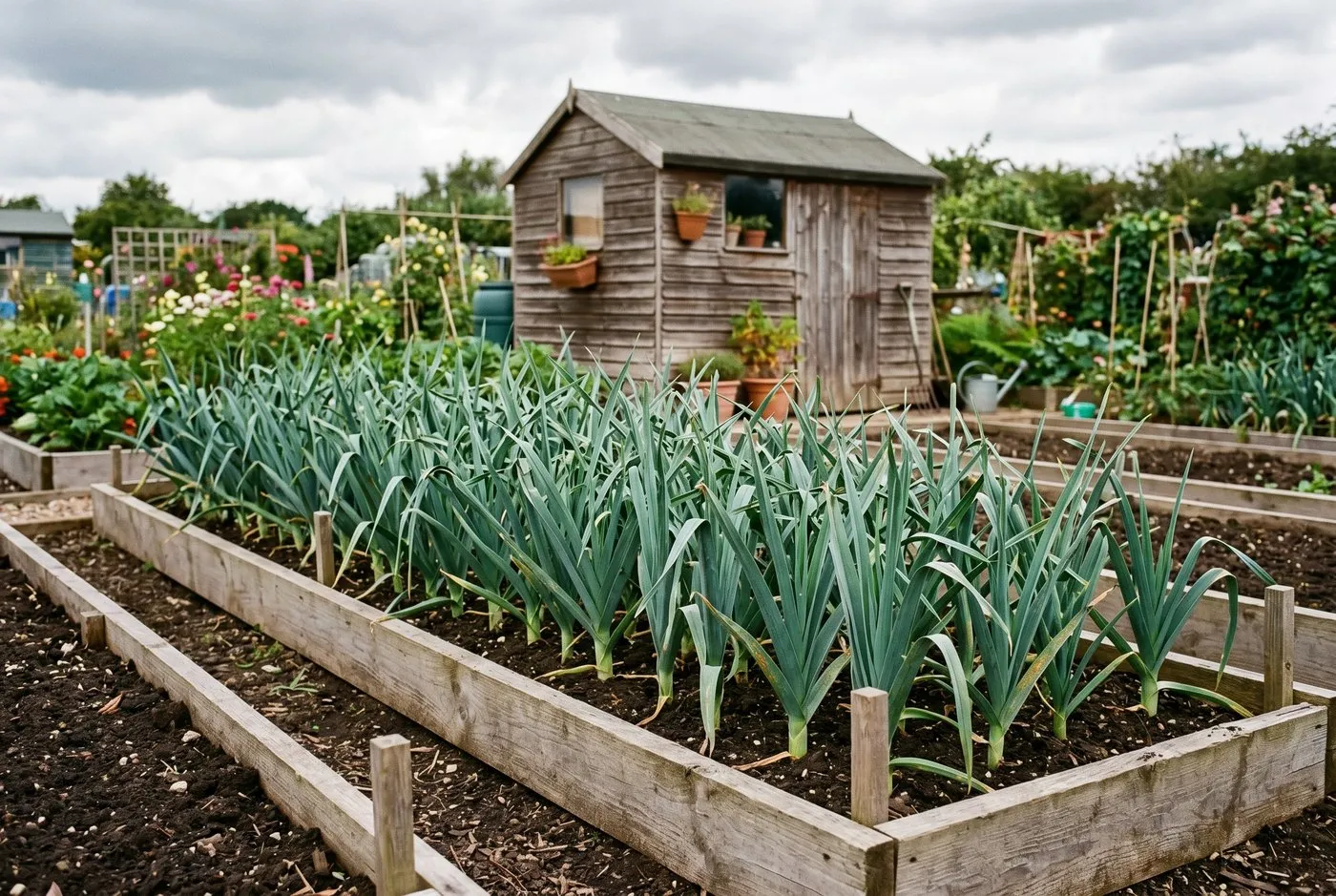 A maincrop leek bed on a damp Midlands allotment in September. Crowding, humidity and a wet summer are the classic triggers for a rust outbreak.
How Leek Rust Spreads And Survives The Winter
Leek rust travels on the wind. When pustules burst, they throw dusty orange spores into the air and onto nearby leaves. Rain splash moves them shorter distances. One infected plant seeds the whole row within days in warm, wet weather.
The disease has a clever survival trick. The fungus cannot live on dead plant matter. Instead it overwinters on living alliums. Because UK leeks stand in the ground right through winter, there is always a green plant for it to sit on. Growers call this the green bridge. It carries the disease from one season into the next.
This is why timing your clear-up matters. If you lift and clear old leeks by January, you cut the bridge. Leave a few rusty stragglers and self-sown allium weeds in place, and you hand next year’s crop a ready supply of spores.
The same fungus attacks every allium. It moves between leeks, onions, garlic and chives, though leeks suffer the worst. Treat the whole allium group as one when you plan where to grow them. For the wider picture, our guide to common onion and allium diseases covers the rots and mildews that hit the same crops. The pattern is familiar across rusts: bean rust spreads on the wind in much the same way.
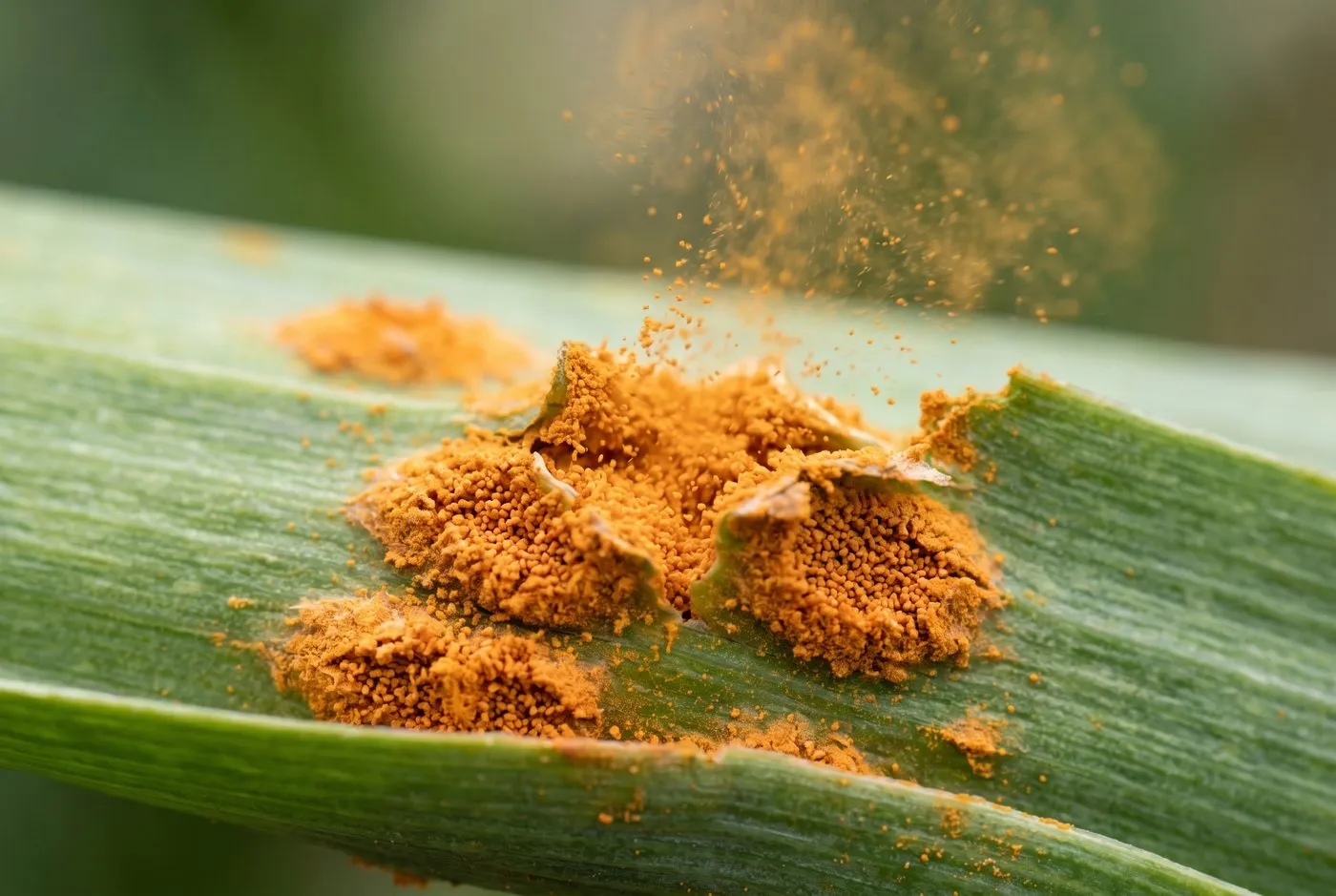 Burst pustules releasing spores on a leek leaf. Each orange speck is wind-blown to the next plant, which is why rust races through a crowded bed.
Stopping Leek Rust: Methods Ranked By What Works
There is no chemical fix for home growers. No fungicide is approved in the UK for amateur use against leek rust. That sounds bad, but cultural control works well when you stack several methods together. Below they are ranked by how much they actually help.
| Method | Role | How well it works | What it cannot do |
|---|---|---|---|
| Crop rotation, 3 to 4 years | Primary prevention | Breaks the soil and green-bridge cycle | Stops nothing once spores blow in from a neighbour |
| Resistant varieties | Primary prevention | Cuts pustule cover sharply | No leek is fully immune |
| Wider spacing and airflow | Primary prevention | Lowers leaf humidity | Limited help in a very wet season |
| Potassium feeding | Maintenance | Hardens leaf tissue against infection | Will not cure an active attack |
| Watering at the base | Maintenance | Keeps spores from germinating | Useless once rain wets the leaves |
| Stripping infected leaves | Emergency | Slows spread and saves the crop | Does not remove established infection |
The gold standard is rotation plus a resistant variety. Those two together do more than anything else. Layer on wider spacing, a potash feed and base watering, and even a wet UK summer rarely ruins the crop.
Water matters more than people think. Water the soil at the base of the plant, never over the leaves. Wet foliage overnight is exactly what the spores need. If you must water from above, do it in the morning so the leaves dry by dusk. Learn the basics in our guide on how to grow leeks, which covers spacing and feeding from sowing onward.
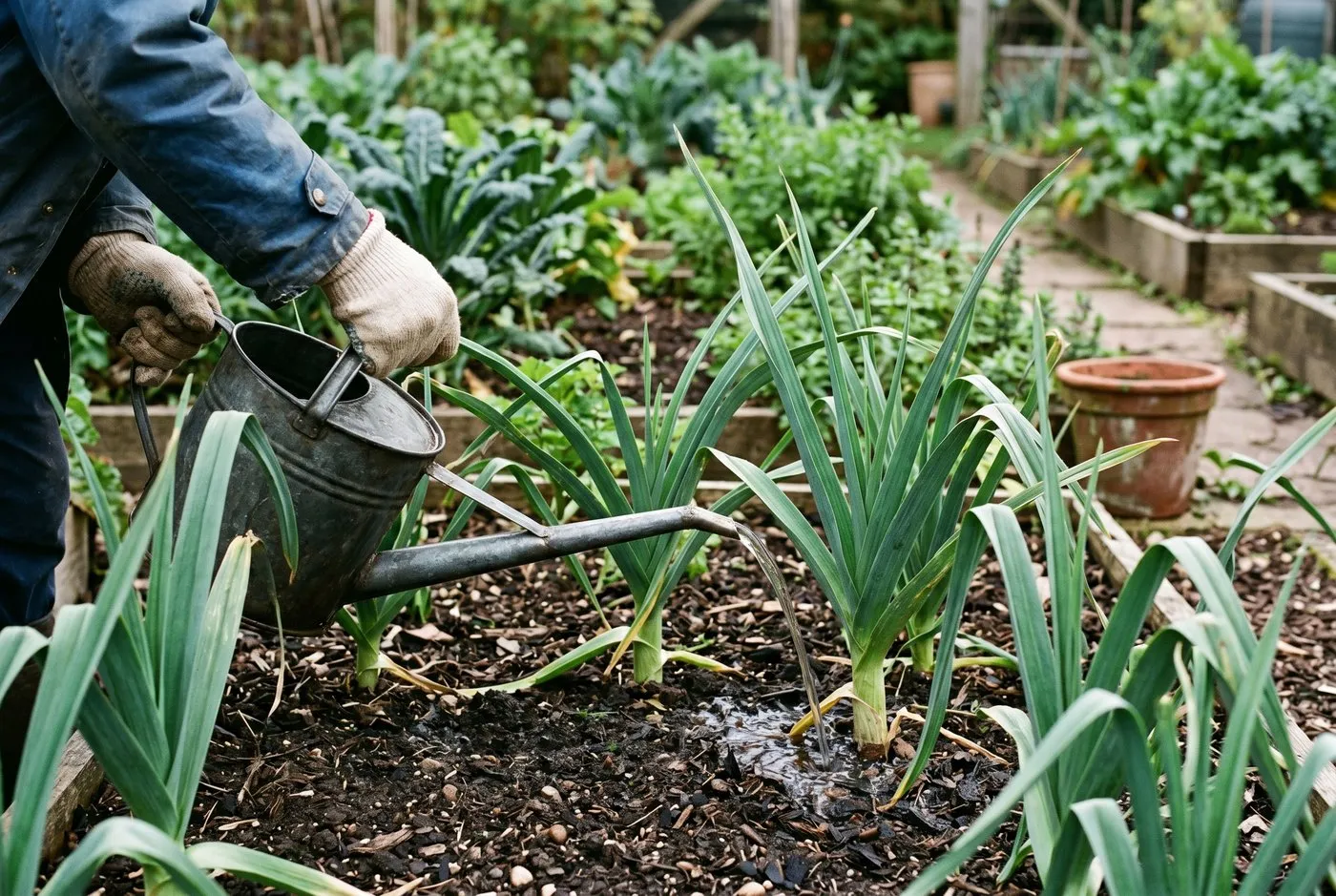 Watering at the base keeps the leaves dry. Free water on the foliage is the trigger rust needs, so a long-spout can aimed at the soil makes a real difference.
Resistant Leek Varieties Worth Growing
Variety choice is the easiest big win. Modern F1 hybrids carry far better rust tolerance than old heirlooms. Apollo is the variety the RHS names for rust resistance, and it is the benchmark on most plots. Bandit matches it for tolerance and shrugs off hard frost with its dark blue-green leaves.
Heirlooms have their place for flavour, but they rust. Musselburgh, the classic Scottish leek, marks up readily in a wet year. Grow it if you love it, but expect to strip leaves.
| Variety | Type | Rust tolerance | Winter hardiness | Notes |
|---|---|---|---|---|
| Apollo F1 | Modern hybrid | High | Good | RHS-named for rust resistance |
| Bandit | Modern | High | Excellent | Dark blue-green, stands hard frost |
| Oarsman F1 | Modern hybrid | High | Good | Stands well, slow to bolt |
| Porbella | Modern | High | Excellent | Strong, very hardy winter type |
| Musselburgh | Heirloom | Low | Good | Fine flavour but rusts readily |
Gardener’s tip: No leek is rust-proof. In a bad UK rust year even Apollo and Bandit show some pustules. Treat these as tolerant, not immune, and keep up the rotation and feeding even with a resistant variety.
Can You Still Eat Rusty Leeks?
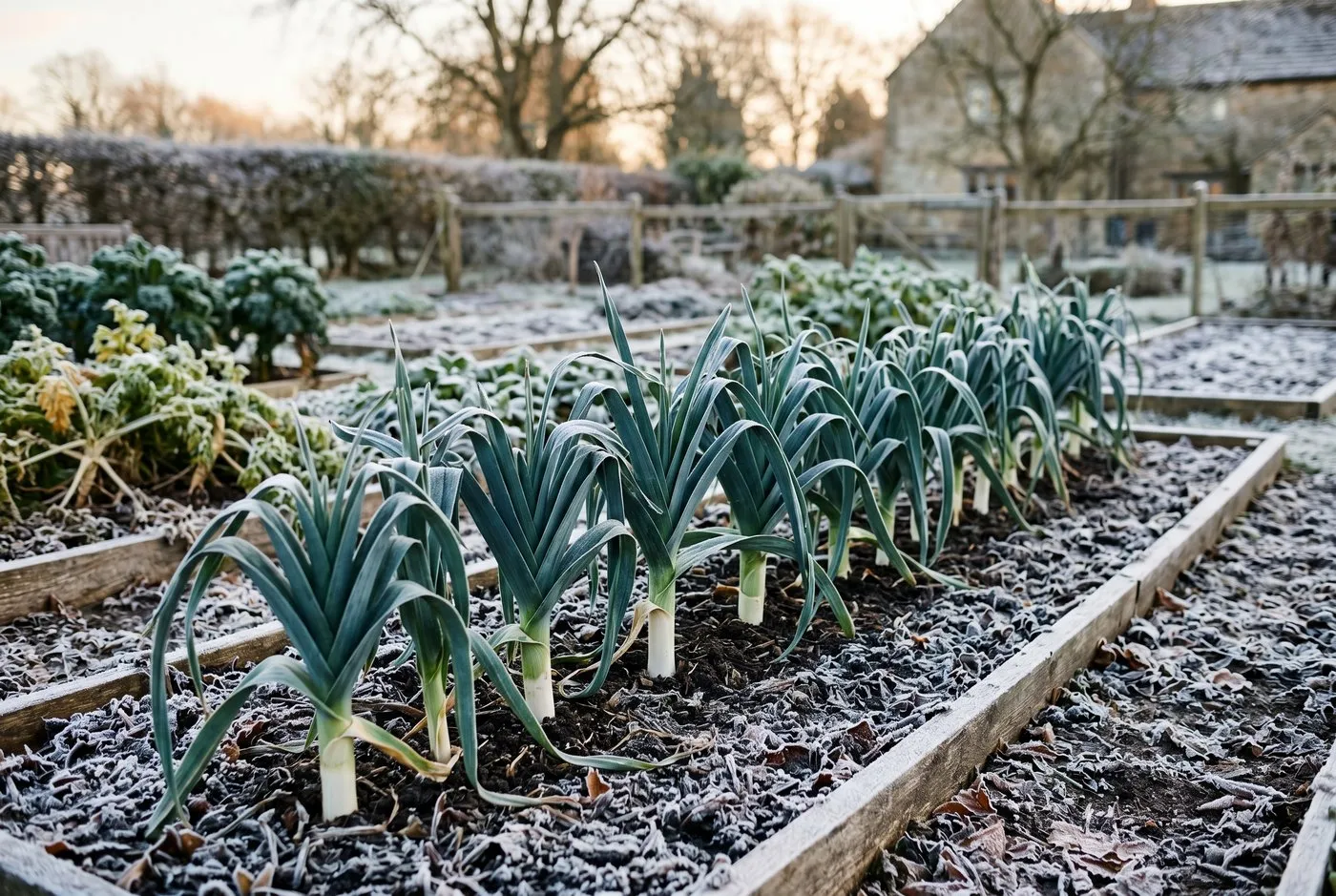
Yes. Rust-affected leeks are perfectly safe to eat. The disease sits on the outer leaves, not on the white blanched shank you cook with. Peel away the badly marked outer leaves and the leek underneath is sound.
Only severe infection causes a problem, and even then it is about size, not safety. Heavy rust makes leaves die back early, which reduces vigour and gives thinner shanks. The leek is still edible. It just feeds you less.
Chives are the one exception in the allium family. You eat the chive leaves, so heavy rust spoils the part you want. With leeks, onions and garlic, the bulb or shank stays fine. Lift, trim and cook as normal.
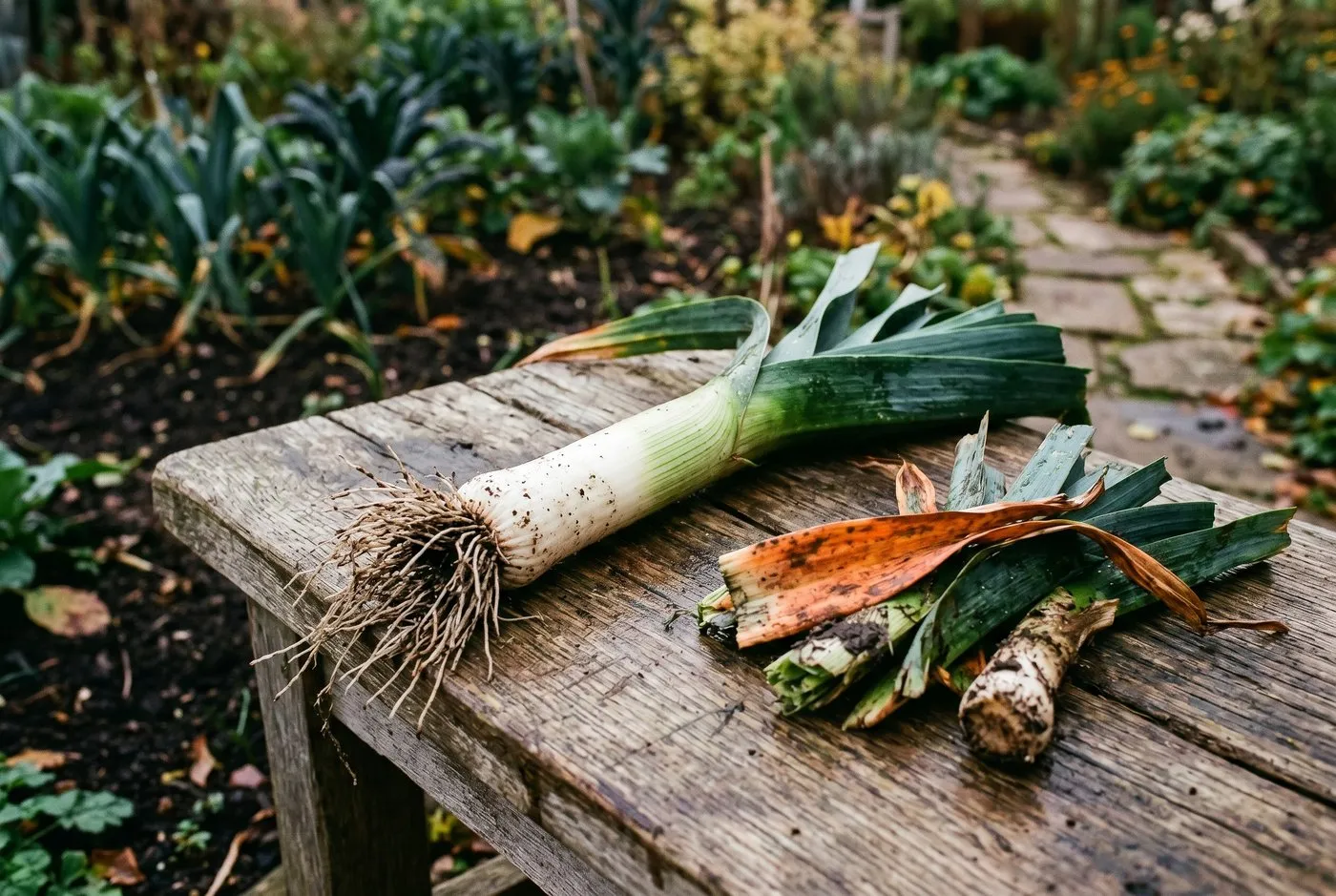 The same leek before and after trimming. Once the rusted outer leaves are stripped, the white shank underneath is clean and good to cook.
Leek Rust Through The UK Growing Year
Leek rust follows a yearly rhythm. Work with the calendar and you stay ahead of it. The key windows are the midsummer first strike and the midwinter clear-up.
| Month | What to do |
|---|---|
| February | Sow early leeks indoors in modules |
| March to April | Sow maincrop outdoors in a seedbed |
| May to June | Transplant at 20cm tall, space 15cm apart |
| July | Watch for the first orange pustules, switch to a potash feed |
| August to September | Strip badly rusted leaves, keep foliage dry |
| October to December | Harvest as needed, rust slows in the cold |
| January | Clear old plants and debris to break the green bridge |
| Year-round | Keep a 3 to 4 year gap before alliums return to a bed |
A good rotation underpins the whole year. Map your beds so alliums only come back to the same ground every fourth year. Our crop rotation planner sets out a simple four-bed system that keeps leeks, onions and garlic moving.
Common Leek Rust Mistakes To Avoid
Most rust outbreaks trace back to a handful of habits. Fix these and you remove the conditions the fungus needs.
Feeding high nitrogen late in the season. A general lawn or growth feed in summer pushes soft leaves that rust loves. Switch to a high-potash feed from July instead.
Watering over the leaves in the evening. Wet foliage overnight is the perfect nursery for spores. Always water the soil, and if overhead, water in the morning.
Composting rusted leaves. Home compost heaps rarely get hot enough to kill the spores. Bin or burn infected leaves rather than risk spreading them back.
Growing leeks in the same bed every year. This builds the green bridge and concentrates spores in one spot. Rotate the whole allium group on a three to four year cycle.
Planting too close for a bigger crop. Crowding traps humid air around the leaves. Keep 15cm between plants so air moves freely and the foliage dries fast.
Frequently asked questions
Can you eat leeks with rust?
Yes, rusty leeks are safe to eat. The rust sits on the outer leaves, not the white edible shank. Trim off the worst marked leaves before cooking. Only severe infection cuts yield and stem size.
What kills leek rust?
No fungicide is approved for UK home growers. Control is cultural only: rotate crops, feed potassium, space plants wider, water the soil rather than the leaves, and remove infected debris.
Should I remove leaves with rust?
Yes, strip and bin the worst rusted leaves. Do not compost them. Removing badly infected foliage slows the spread and keeps the plant cropping. Leave the healthy green leaves in place.
Which leek varieties resist rust?
Apollo, Bandit, Oarsman and Porbella show the best rust tolerance. None are fully immune. Older heirlooms like Musselburgh tend to rust more in wet UK summers.
Does leek rust spread to onions and garlic?
Yes, the same fungus attacks onions, garlic and chives. Leeks suffer worst. Rotate all alliums together and never follow one allium crop straight with another.
Will leek rust come back next year?
It can, because the fungus overwinters on living alliums. Clear old leeks by January, remove any volunteers, and rotate the ground to break the cycle.
Now grow a cleaner crop
Diagnosis is the first step. The lasting fix is rotation, variety and feeding worked together over the season. Start by choosing a tolerant variety and giving alliums their own rotation slot, then keep the leaves dry and fed with potash through summer. For the next decision on the plot, see our guide to the best UK onion varieties, and browse the full set of plant problem guides to stay ahead of the next outbreak.
External references: the RHS leek rust guide and the First Tunnels leek growing guide back up the nitrogen, potassium and spacing advice with their own trial notes.
Our team produces practical UK gardening guidance from source research, contributor records and established horticultural practice. Editorial standards are overseen by Matt W.