Key takeaways
- None of the 36 UK pollen beetle species damage garden plants; the threat is to commercial oilseed rape at bud stage only.
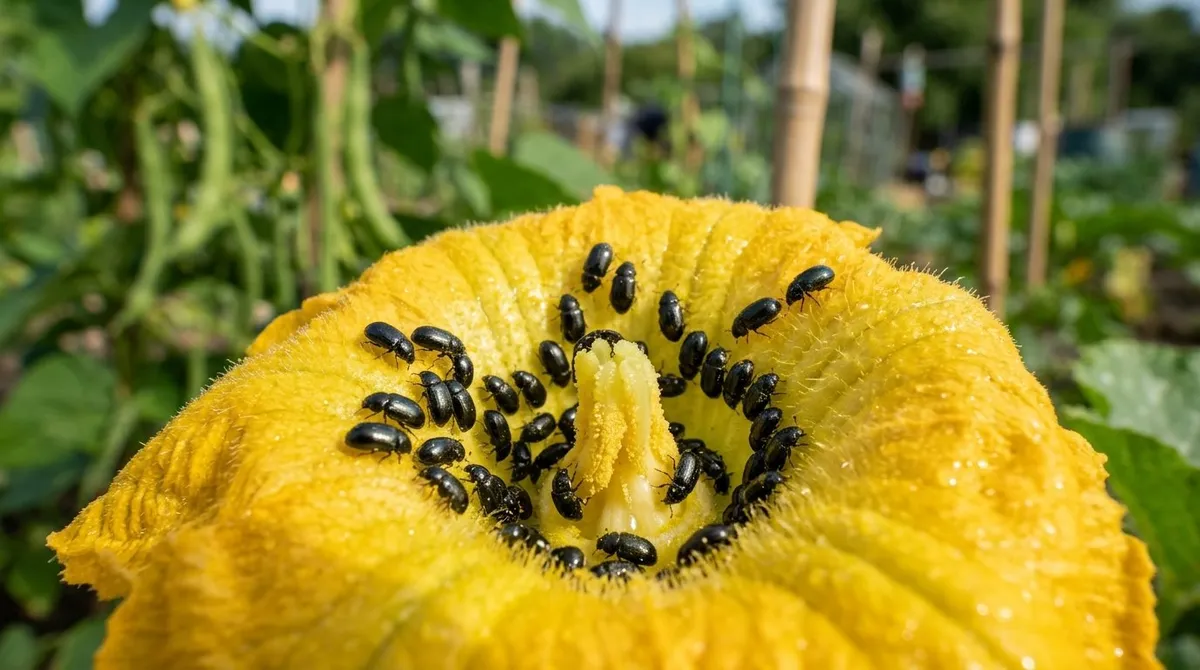
- Adults measure 1.5-2.5mm and are drawn to yellow, so they cluster on courgettes, roses, sweet peas and beans.
- The dark-room trick clears 90% of beetles from cut flowers in 30-60 minutes using a single light source.
- Spraying is pointless and harmful; one insecticide pass can kill foraging bees across a 4m radius.
- Beetles overwinter as adults and produce one generation a year, peaking June to August.
- A yellow water trap monitors numbers but is not needed for control in any normal garden.
The harmless verdict: what the evidence actually shows
The damage story comes entirely from agriculture. On oilseed rape, females lay eggs inside the green flower buds before they open. The feeding and egg-laying at that bud stage can make buds abort and drop. That matters across hundreds of hectares of a flowering crop. It has nothing to do with your sweet peas, which the beetles only visit once the flowers are fully open and the pollen is exposed. By then the beetle is a pollen guest, not a pest.
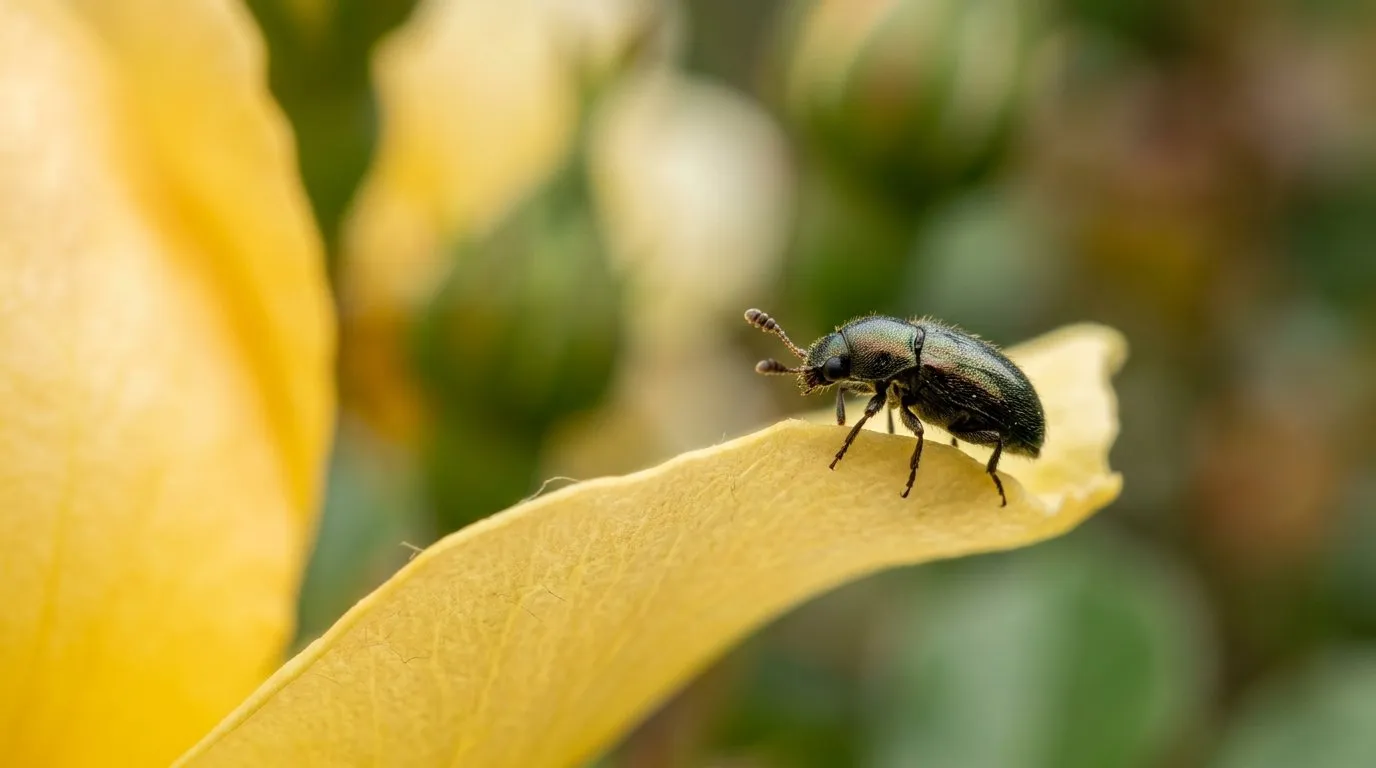 A single pollen beetle on a rose petal. At 1.5 to 2.5mm, the clubbed antennae and rounded body separate it from a flea beetle.
How to identify a pollen beetle and its lookalikes
A pollen beetle is a tiny oval beetle, 1.5 to 2.5mm long, shiny black with a faint metallic green or bronze sheen in good light. The antennae end in a small club, which you can see with a hand lens. Hold a flower still and the beetles crawl rather than scatter, at least for the first few seconds.
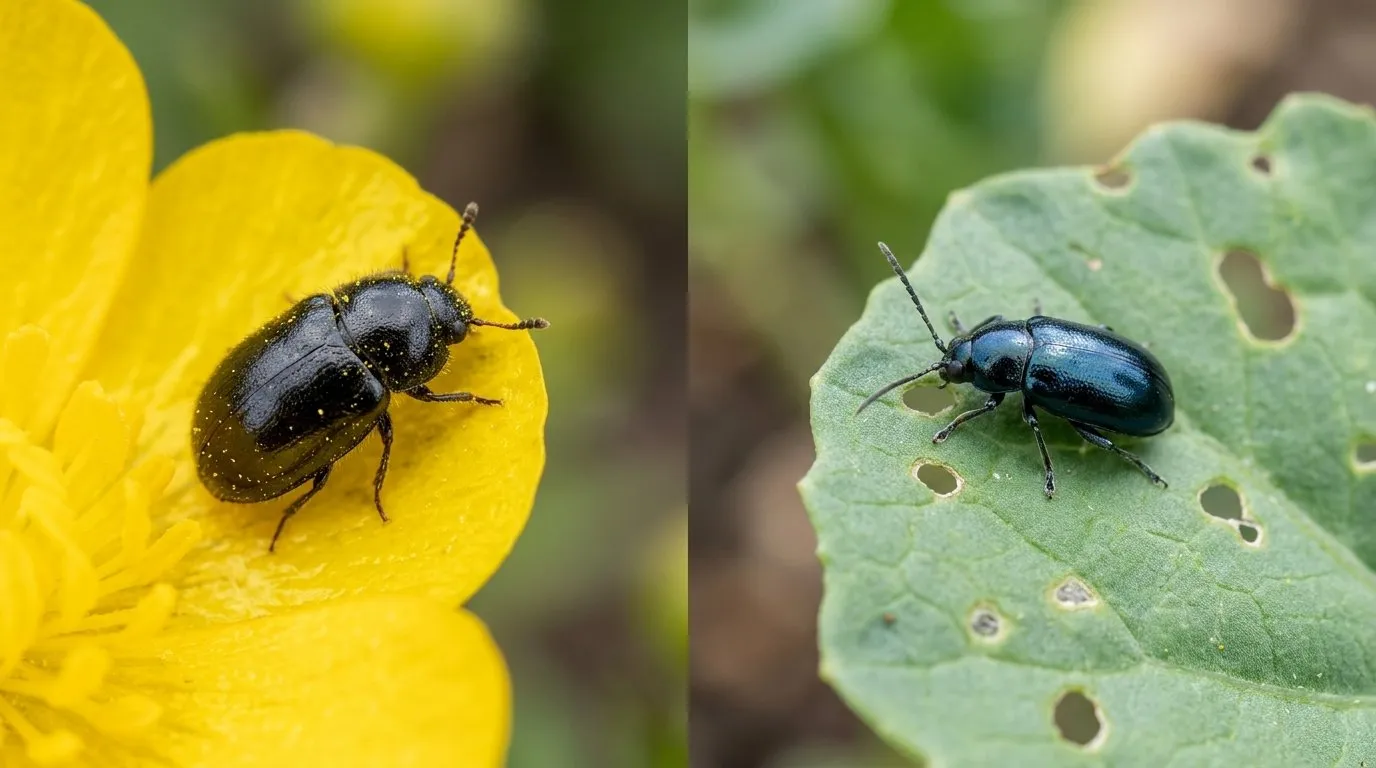 Pollen beetle, left, against a flea beetle. The pollen beetle is rounder and stays on flowers, not leaves.
Why they swarm sweet peas, beans and yellow blooms
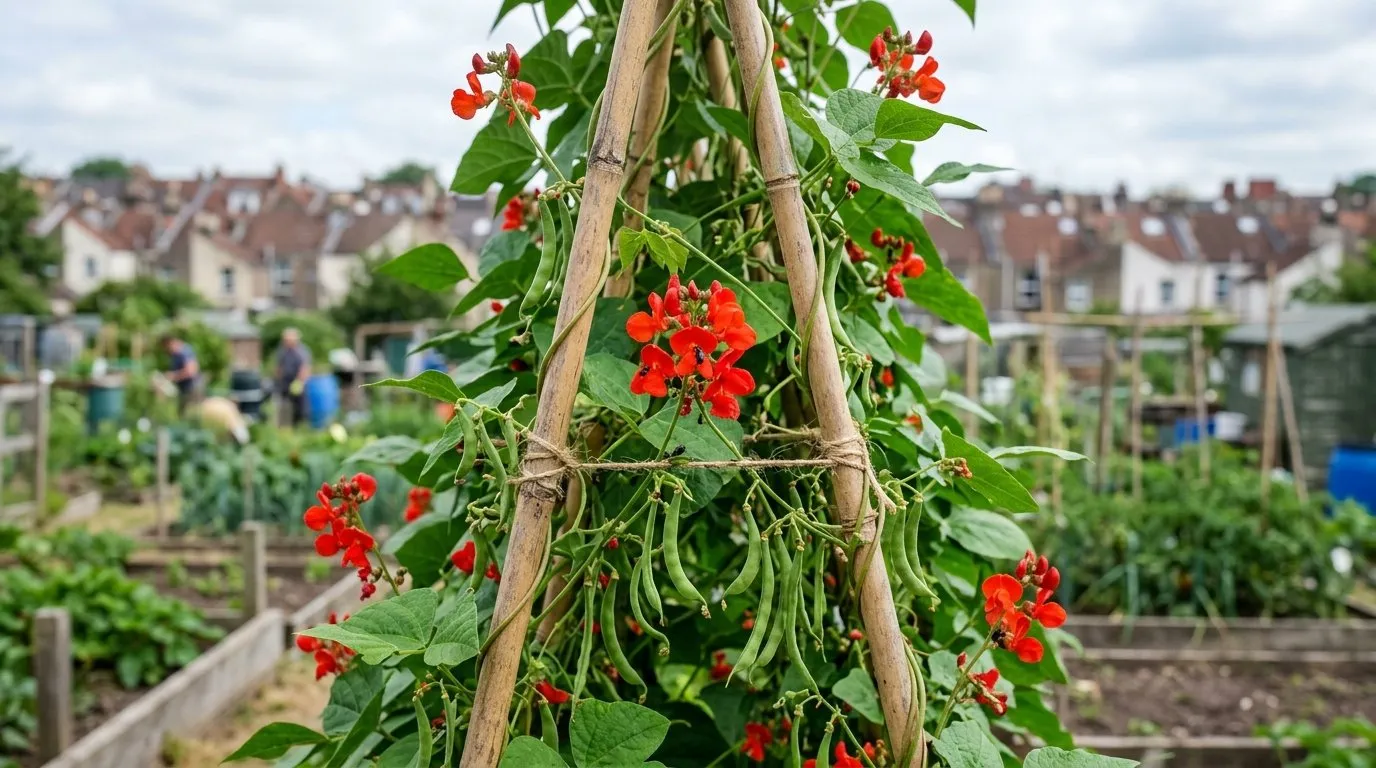 Runner beans flowering at a Bristol allotment. Beetles graze the open flowers while pods set normally below.
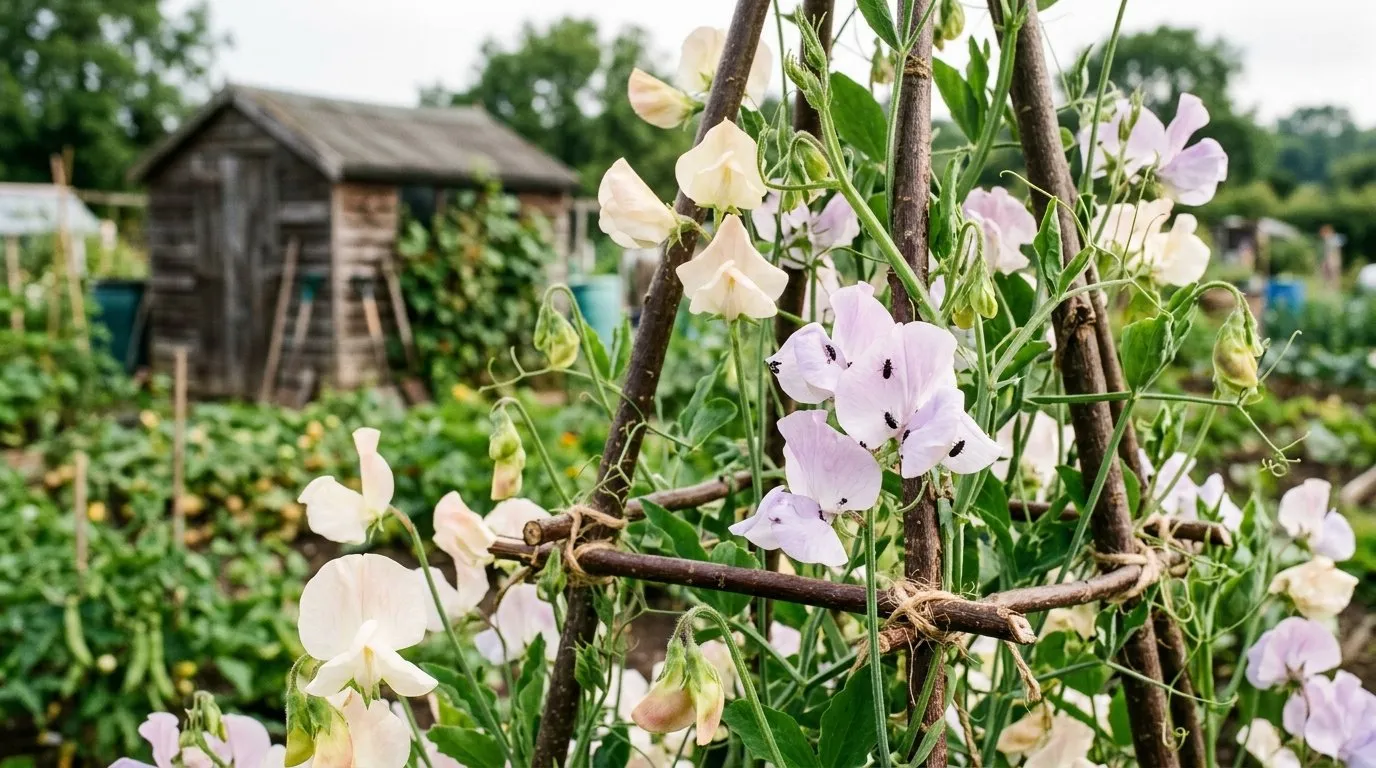 Sweet peas on an allotment wigwam. Beetles cluster on the open blooms but flower production and seed set are unaffected.
The pollen beetle lifecycle through a UK year
Understanding the lifecycle explains why control is never needed and why the beetles vanish on their own. The cycle runs through these stages.
- Overwintering. Adult beetles shelter through winter in leaf litter, soil and rough grass. They do not overwinter as eggs or larvae.
- Spring emergence. From March to May the adults wake and fly to early flowers, including oilseed rape buds and garden blooms.
- Egg-laying. Females lay eggs inside flower buds. On rape this is the damaging phase; on open garden flowers it is irrelevant.
- Larval feeding. Pale larvae, up to 3mm, feed on pollen within the flowers, then drop to pupate in the soil.
- New generation. Fresh adults emerge from July into August, feed up on late pollen, then seek winter shelter again.
There is usually one generation a year in the UK, sometimes a partial second in a long warm summer. The single critical mistake most people make is reaching for a spray during the July adult peak. That timing does nothing useful and lands an insecticide exactly when bees are busiest on the same flowers.
The dark-room trick for cut flowers, step by step
This is the one genuinely useful technique, and it costs nothing. It exploits the beetles’ attraction to light. Bring cut flowers indoors and the beetles wander out onto curtains and windowsills, so deal with them first in a shed or garage.
- Cut your sweet peas, roses or dahlias as normal and stand them in a bucket of water.
- Put the bucket in a darkened shed, garage or porch with one bright window, an open door, or a single torch at the far end.
- Leave the stems for 30 to 60 minutes during daylight. The beetles fly toward the one light source and leave the blooms.
- Give the stems a gentle tap, lift them out away from the light, and bring them indoors clean.
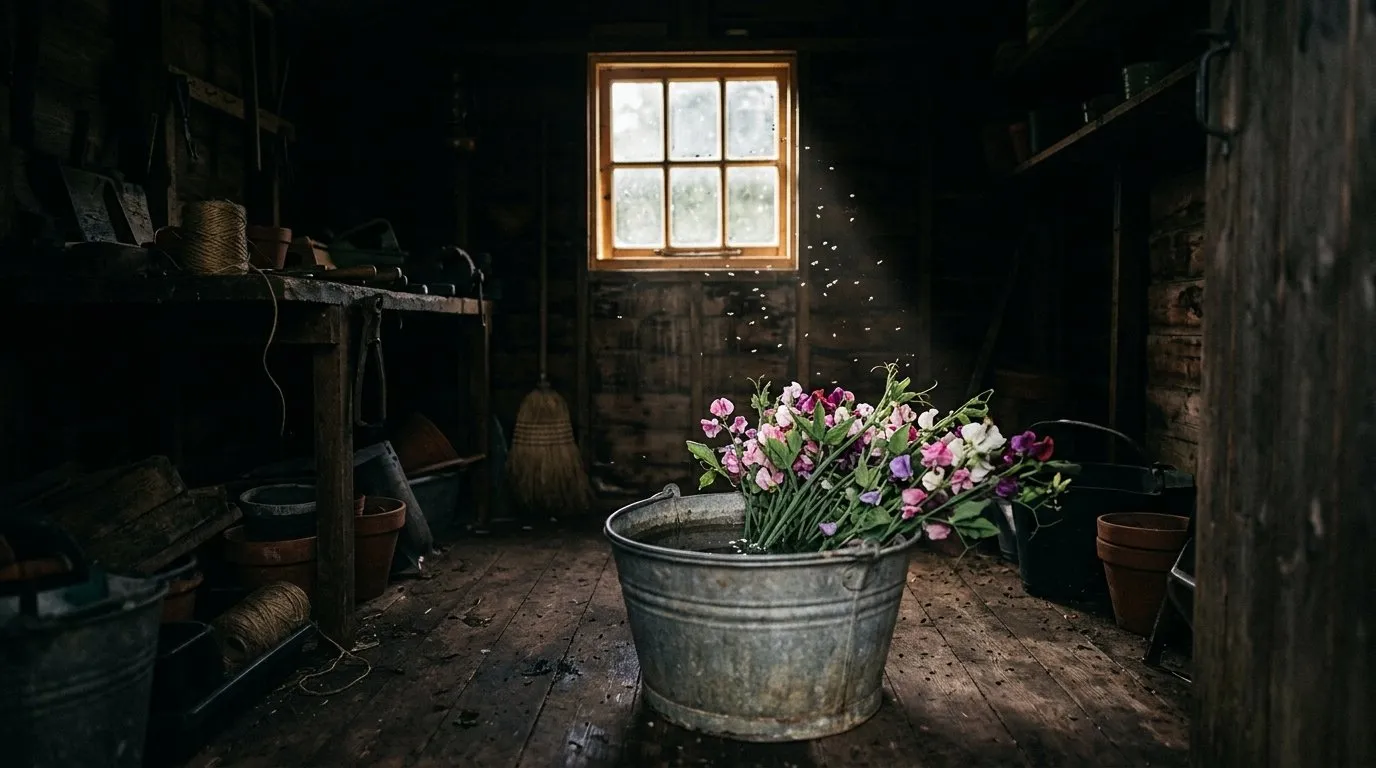 The dark-room trick in action. One bright window draws the beetles off the blooms within the hour.
Why spraying is the wrong move
The root cause of most pollen beetle distress is not the beetle at all. It is the instinct to treat any swarming insect as a pest. Spraying a flower in full bloom is the single worst thing you can do, because that flower is also feeding bees, hoverflies and other beneficial insects.
A contact insecticide applied to open bloom does not distinguish between a pollen beetle and a foraging honeybee. One pass can kill pollinators across roughly a 4m radius of treated flower. You would remove the very insects that set your beans, fruit and squashes, to deal with a beetle that was never harming them. The far better long game is to build a garden that hosts natural balance. Plant for bees and pollinators, welcome ladybirds and lacewings for the pests that do matter, and lean on biological controls and natural balance, treating spraying as a last resort, not a reflex.
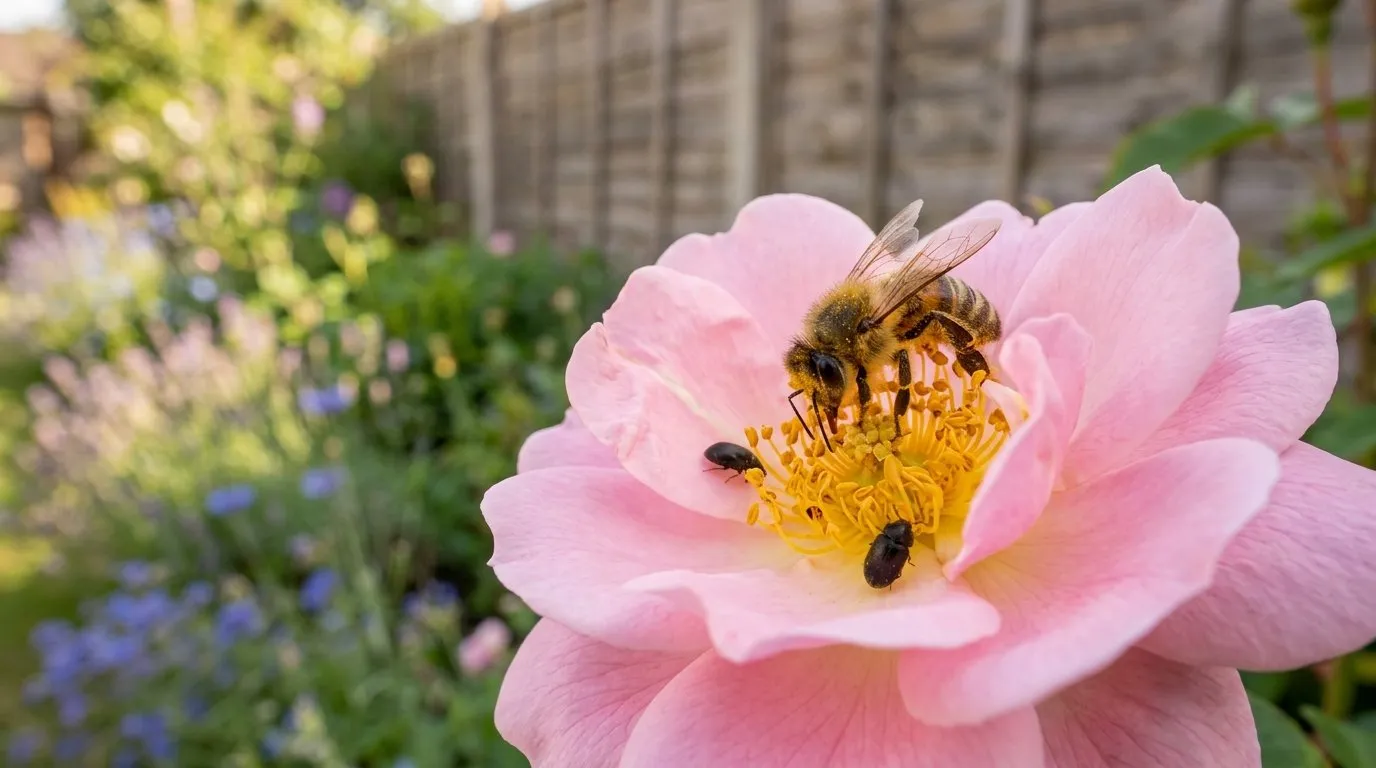 A honeybee and pollen beetles share a rose. Spraying one would kill the other, which is why no insecticide belongs here.
When pollen beetles are genuinely a problem
For honesty, here are the few cases where the beetles cause real bother, and the appropriate response.
| Situation | Actual risk | Recommended action | Role |
|---|---|---|---|
| Cut sweet peas, roses, dahlias for the house | Cosmetic; beetles wander indoors | Dark-room method, 30-60 minutes | Primary |
| Beetles on beans, courgettes, brassica flowers | None; pollination unaffected | Leave alone; brush off picked flowers | Maintenance |
| Showbench or wedding flowers needing zero beetles | Cosmetic; judges mark down | Dark-room method, then a yellow water trap nearby to monitor | Barrier |
| Beetles on yellow washing or clothing | Nuisance only | Shake outdoors; move washing line | Emergency |
| Garden beside flowering oilseed rape field | High inflow in June; still no plant damage | Tolerate the surge; numbers crash by August | Maintenance |
The pattern is clear. Even at the worst, the action is physical and gentle, never chemical. A garden next to a rape field gets a heavy June influx, but the beetles do not damage the garden plants they land on, and they thin out quickly once the crop and the garden’s flower flush pass.
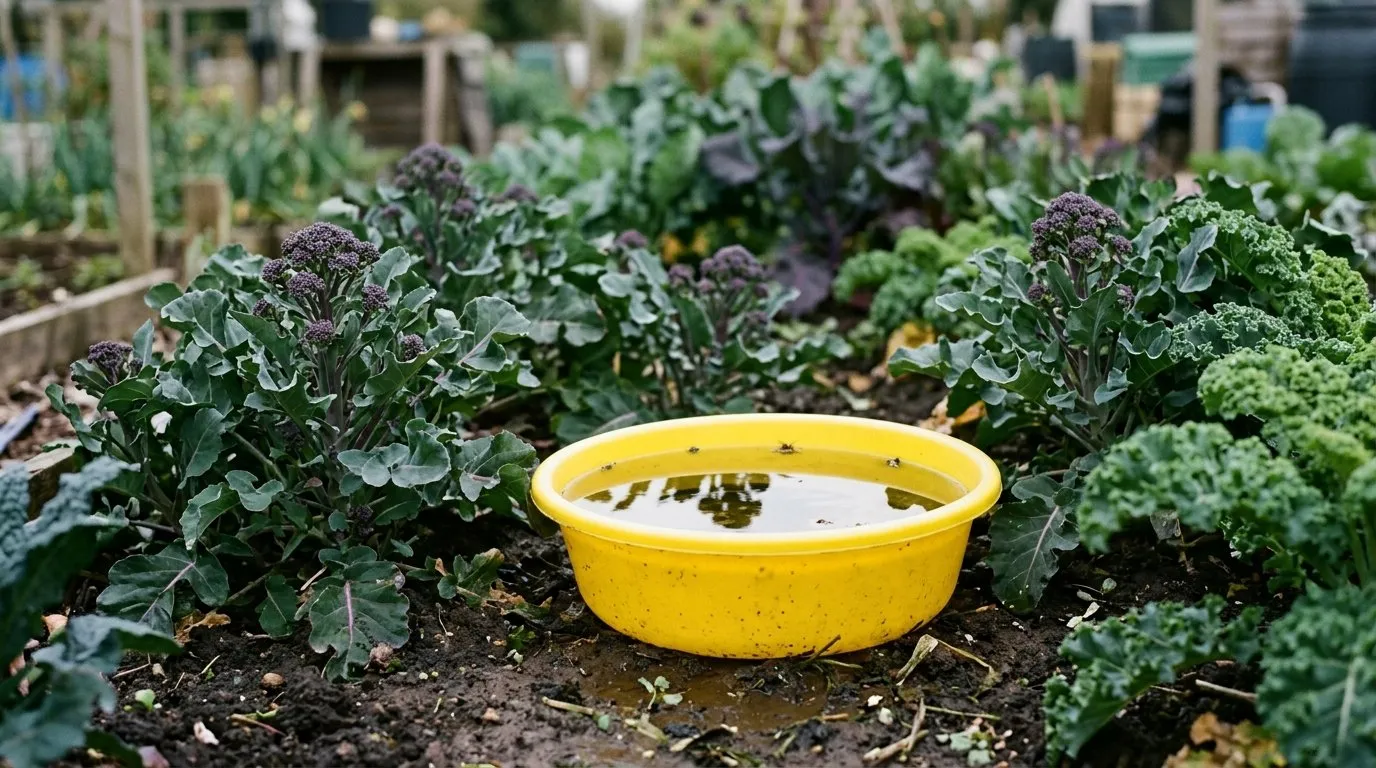 A yellow water trap among brassicas. It monitors numbers for the curious grower but is not a control tool.
Common mistakes gardeners make
Three errors come up again and again. Avoiding them saves money, time and pollinators.
Spraying the flowers. People see a swarm and reach for an insecticide. This happens because swarming looks like an infestation. Avoid it by checking the simple rule: beetle on a flower eating pollen equals harmless. No spray, ever, on open bloom.
Mistaking them for flea beetles or aphids. A gardener finds holes in brassica leaves, then blames the pollen beetles on the nearby flowers. This happens because both are small and black. Avoid it by matching the insect to the damage. Holes in leaves mean flea beetle; sticky stems and curled tips mean aphids; beetles in flowers are pollen beetles.
Hard shaking or rinsing cut flowers. Trying to dislodge every beetle by force, the gardener bruises the petals. This happens out of impatience. Avoid it with the dark-room method, which lets the beetles leave on their own with no handling.
Gardener’s tip: Plant a small block of bright yellow flowers, such as calendula or oilseed rape leftovers, a few metres from your cut-flower beds. The beetles prefer the brightest yellow, so a sacrificial patch draws many of them away from your sweet peas before you ever pick.
Warning: Never spray any flower that bees are visiting. Pollen beetles share open blooms with honeybees, solitary bees and hoverflies all summer. An insecticide aimed at the beetle kills the pollinators you depend on for fruit and bean set.
Working with nature instead of against it
The most reliable long-term answer is a garden that regulates itself. Pollen beetles are part of that system, not a fault in it. They feed pollinators’ competitors and predators alike, and they themselves become food for ladybirds, spiders and ground beetles. A border planted for early-season pollinators and left unsprayed builds the diversity that keeps every minor visitor in proportion.
Think of the beetle as a seasonal guest with a short stay. It arrives with the rape and the roses, breeds quietly, and is gone by late summer. The work, where any is needed, is a 45-minute shed session before a vase of sweet peas goes on the table. That is the whole of pollen beetle control in a real UK garden.
Frequently asked questions
Are pollen beetles harmful to garden plants?
No. None of Britain’s 36 pollen beetle species damage garden plants. They feed on pollen and can help move it between flowers. The only economic damage is to commercial oilseed rape, and that happens at the green bud stage before flowering, not in any garden border.
Should I spray pollen beetles?
Never spray pollen beetles in a garden. Insecticides kill bees, hoverflies and other pollinators that share the same flowers. The beetles cause no real harm, so spraying brings risk and no benefit. A single pyrethroid pass can wipe out foraging bees across a 4m radius of open bloom.
How do I get pollen beetles out of cut flowers?
Stand the cut stems in a dark shed beside one bright window. The beetles fly toward the single light source and leave the blooms within 30 to 60 minutes. Sweet peas, roses and dahlias all respond. Avoid shaking stems hard, which bruises petals and rarely shifts every beetle.
Why are pollen beetles all over my sweet peas and beans?
Pollen beetles are drawn to yellow and pale flowers rich in pollen. Sweet peas, runner beans and dahlias all qualify. They feed on the pollen but do not stop pods setting. Bean and pea yields are unaffected, so no action is needed beyond brushing them off picked flowers.
What do pollen beetles look like?
They are tiny, 1.5-2.5mm, shiny black or bronze-green oval beetles with clubbed antennae. Hold a bloom still and you will see them crawl rather than fly at first. They are smaller and rounder than flea beetles and lack the flea beetle’s jumping habit.
Do pollen beetles bite or harm people?
No. Pollen beetles do not bite, sting or carry disease. They are a nuisance only when they land on yellow clothing or settle on washing. Move indoors away from a window and they will gather on the brightest glass, where you can collect and release them.
When are pollen beetles most active in the UK?
They peak from late May through August across most of the UK. Adults emerge from overwintering shelter in spring, breed through early summer, and a new generation appears from July. Numbers fall sharply once the main flush of oilseed rape and garden flowers fades.
Now you’ve sorted the pollen beetles, read our guide on organic pest control for UK gardens for the handful of pests that genuinely do need your attention.
Our team produces practical UK gardening guidance from source research, contributor records and established horticultural practice. Editorial standards are overseen by Matt W.