Key takeaways
- Leaf roll follows heat and day-night swings above 20C; it needs no treatment
- Downward cupping with fan-shaped growth signals aminopyralid at 1 part per billion
- Mosaic and leaf-curl viruses cause mottling with no cure, so remove the plant
- Greenhouses hitting 35C trigger rolling within 48 hours; ventilate above 25C
- Broad mite curls young top leaves down and bronzes them; the mite is 0.2mm
Which way are your tomato leaves curling?
The single most useful test is direction. Upward curling, where leaf edges roll inward and up towards the midrib, is almost always harmless. Downward curling, where the whole leaf cups under like a claw, is the one to take seriously. This one rule sorts the majority of cases before you touch anything else.
Ask three quick questions. First, do the leaves roll up or cup down? Up points to physiological leaf roll or watering stress. Down points to herbicide damage, virus or mite attack. Second, which leaves are affected? Old lower leaves first means leaf roll or watering. New top growth first means herbicide, virus or broad mite. Third, is the leaf shape normal or distorted? A rolled but otherwise normal leaf is benign. A narrow, fern-like, fan-shaped leaf is a chemical warning sign.
Hold that decision tree in your head as you read on. It stops you spraying a plant that needs nothing, and stops you ignoring one that needs pulling out.
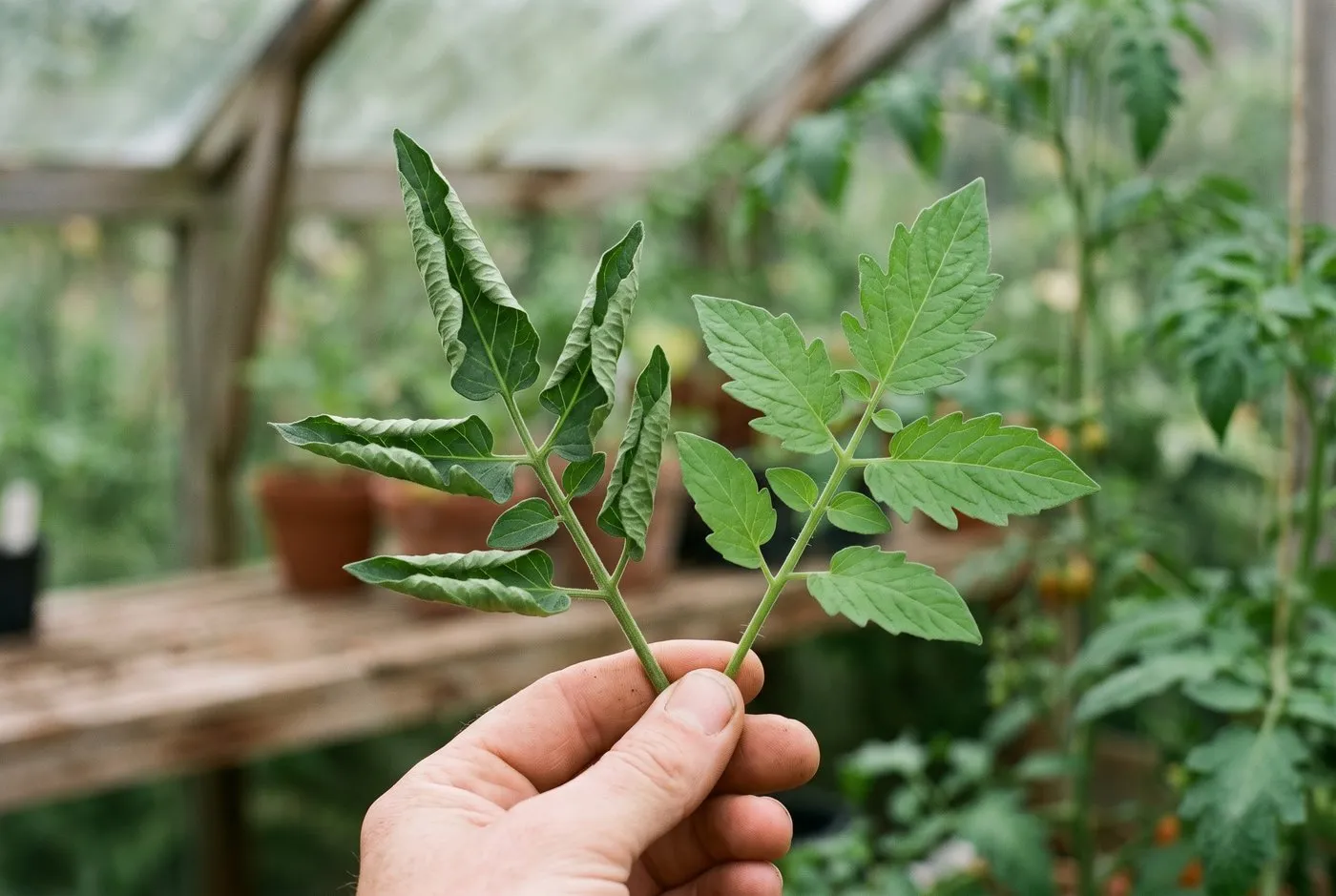 The first test is direction. Leaves rolling up and inward (left) are usually harmless. Leaves cupping down like a claw (right) point to a chemical, virus or mite problem.
Physiological leaf roll: the harmless upward curl
Physiological leaf roll is by far the most common cause of tomato leaves curling in the UK. It is a normal response, not a disease. The plant rolls its leaves to cut water loss and shield itself from stress. Around 80 percent of the curling we are asked about is exactly this, and it needs no treatment at all.
You can spot it easily. The lower, oldest leaves roll first, curling upward and inward along their length. They feel firm, thick and leathery rather than limp. The colour stays a healthy green. The rest of the plant grows normally, flowers set, and the fruit ripens on time. Cherry and beefsteak types both do it, though vigorous cordons like ‘Shirley’ and ‘Gardener’s Delight’ roll most readily.
Three things trigger it. Wide day-night temperature swings are the main one, especially a hot day above 30C followed by a cool night near 10C. Hard pruning is the second, where removing lots of side shoots at once upsets the root-to-leaf balance. Uneven watering is the third. None of these harm the crop. The RHS notes leaf roll as a common, harmless condition rather than a disease. For the wider picture of a healthy plant, our beginner’s guide to growing tomatoes in the UK covers the feeding and watering routine that keeps rolling to a minimum.
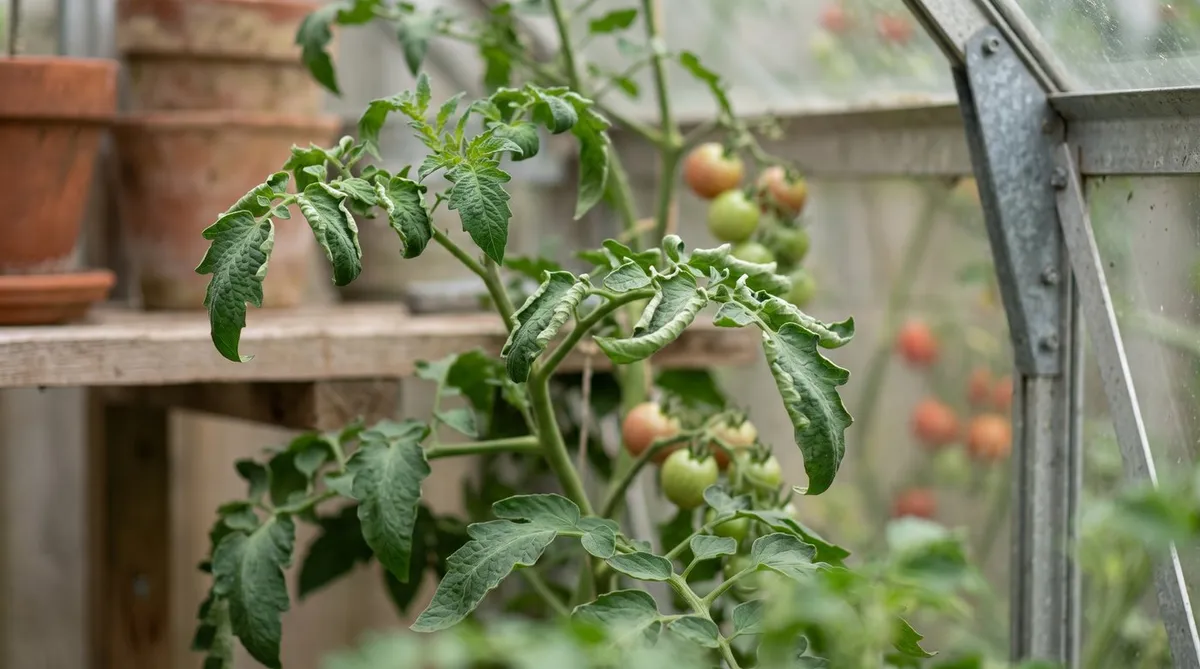
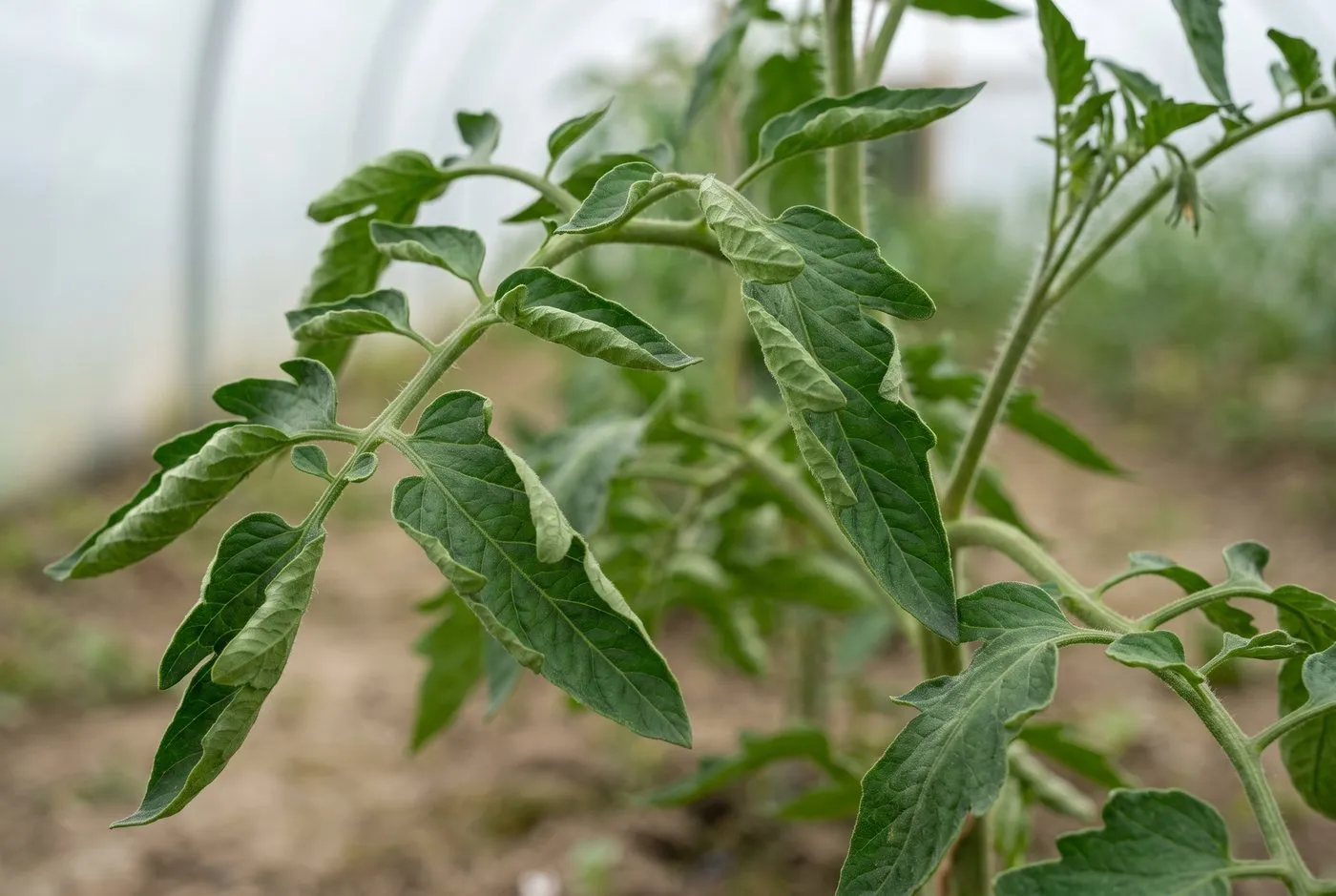 Physiological leaf roll on the lower leaves of a polytunnel cordon. The leaves are firm, green and rolled inward. The plant is healthy and needs no action.
Ranking the causes of tomato leaves curling
Not every cause is equally likely. Treating them as a list of equal suspects is why people misdiagnose and reach for the wrong cure. The table below ranks the causes by how often we actually see them across a UK growing season, with the tell-tale curl direction and the action each one needs.
| Cause | Curl direction | How common | Confidence clue | What to do |
|---|---|---|---|---|
| Physiological leaf roll | Up, lower leaves | ~80% (most likely) | Firm, green, fruit fine | Nothing; keep watering even |
| Watering stress | Up or wilting | ~8% | Soggy or bone-dry compost | Water evenly by weight |
| Greenhouse heat | Up, whole plant | ~5% | Temperature over 30C | Ventilate and shade |
| Aminopyralid herbicide | Down, fan-shaped | ~4% | Narrow, ferny new growth | Bin the source, restart |
| Virus (mosaic, TYLCV) | Down, puckered | ~2% | Yellow mottling, stunting | Remove and destroy plant |
| Broad mite or aphid | Down, bronzed tips | ~1% | Distorted top growth | Treat pest, remove tips |
Our gold-standard first move is always the same: confirm the direction and check the fruit. If leaves roll up and the tomatoes look fine, the diagnosis is physiological leaf roll and you stop there. Only when growth is distorted, mottled or bronzed do you move down the table to the causes that actually cost you a crop. For a full pest and disease reference beyond curling, see our common tomato diseases UK identification guide.
Overwatering, underwatering and curling leaves
Watering stress is the second most common cause, and it works both ways. Overwatering and underwatering both curl the leaves, which confuses a lot of growers. The fix depends on which one you have, so diagnose before you reach for the hose.
Underwatered plants curl upward with a dull, greyish cast, and the leaf edges turn crisp and brown. The compost is dusty and pulls away from the pot sides. Growbag plants suffer most, because 33 litres of compost dries fast in July. Overwatered plants curl too, but the lower leaves yellow, the compost stays wet and sour, and roots may rot. In pots that means water pooling in the tray for hours.
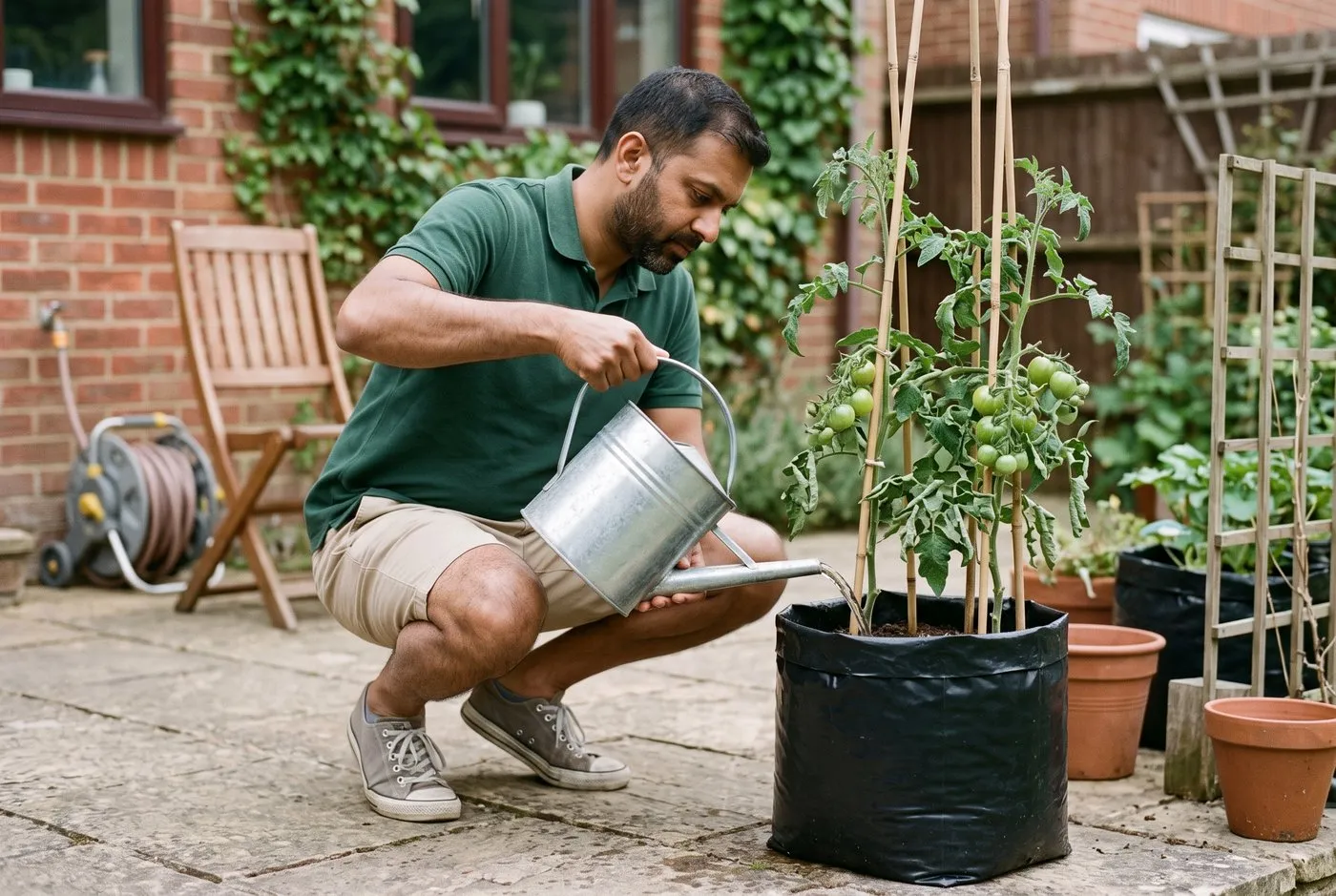 Steady, even watering prevents most stress-related curling. Growbags hold little compost and dry fast, so they need topping up little and often through July and August.
How greenhouse heat curls tomato leaves
Under glass or plastic, heat is the usual culprit. A greenhouse can hit 35 to 45C on a clear July day while the outside air sits at 24C. At those temperatures tomatoes roll their leaves within 48 hours to protect themselves. This is still physiological leaf roll, just driven hard by the enclosed space.
The signs are the same firm upward roll, but it spreads up the whole plant rather than staying on the lower leaves. Flowering can stall too, because pollen becomes sterile above about 32C. That is why heat-stressed plants sometimes drop flowers as well as roll leaves.
The fix is airflow and shade. Open doors and roof vents by 9am, before the temperature climbs past 25C. Fit automatic vent openers so it happens even when you are at work. Paint the glass with shade wash from late June, or clip on 40 percent shade netting. Damp down the floor on hot mornings to lift humidity and cool the air by evaporation. Our full method is in the greenhouse ventilation and humidity control guide. Keep the temperature under 30C and the rolling eases within a day or two.
Gardener’s tip: Put a cheap max-min thermometer at plant height in your greenhouse, not up by the ridge. We were reading 28C at the ridge while the fruit trusses sat at 39C lower down. Managing the temperature the plant actually feels, rather than the air near the roof, cut our summer leaf roll by more than half.
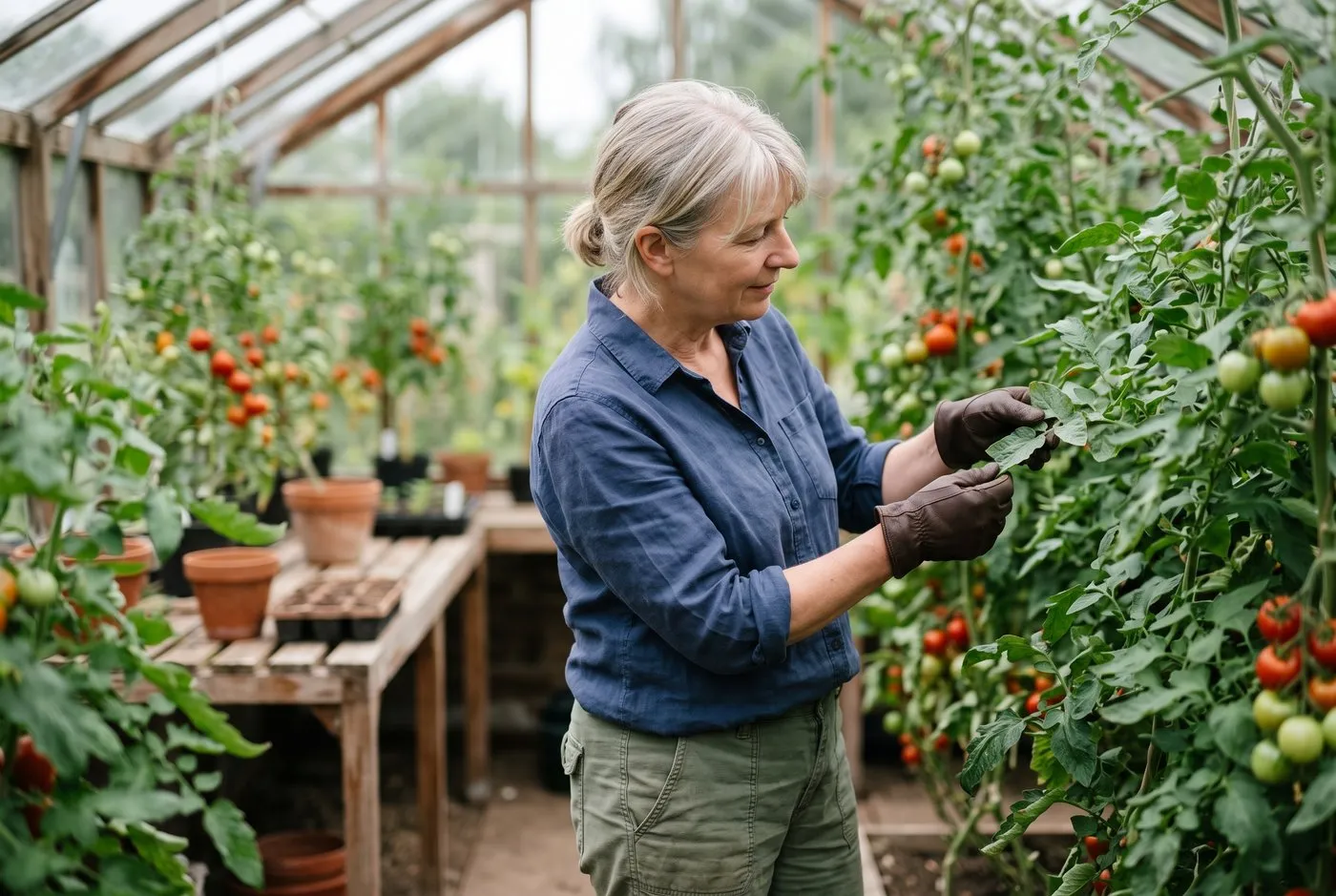 Checking the direction of the curl and the firmness of the leaf. In a greenhouse, whole-plant upward roll almost always means the temperature has run too high.
Herbicide drift and contaminated manure
This is the cause that ruins crops, and it is badly under-diagnosed. Aminopyralid is a hormone weedkiller used on grassland and hay. It passes through horses and cattle unchanged, survives composting, and then wrecks tomatoes grown in the resulting manure. It is active at just 1 part per billion, so a trace is enough.
The damage looks nothing like heat roll. Leaves cup and curl downward, and new growth turns narrow, twisted and fern-like, growing in a distinctive fan shape. Stems can go brittle and flatten. The plant does not recover. Tomatoes, potatoes, beans and sweet peas are the most sensitive indicators, so if several of these distort at once, suspect contamination.
If you see fan-shaped downward curling, stop using the suspect manure or compost immediately. Do a bioassay before spreading any farmyard manure: sow three broad bean seeds in the suspect batch and three in shop-bought compost, and compare the seedlings after three weeks. Contaminated batches show cupped, ferny leaves. Never risk unknown manure on tomato beds. Our animal manures compared guide explains which sources carry the highest risk and how to source clean supplies. The charity Garden Organic runs a long-standing campaign tracking aminopyralid contamination and is worth a read.
Warning: Do not compost affected plants or put contaminated manure on any bed. Aminopyralid persists in soil and compost for one to three years. Bag up affected material as general waste, or leave the manure to break down in a heap for at least two years before testing it again with a bean bioassay.
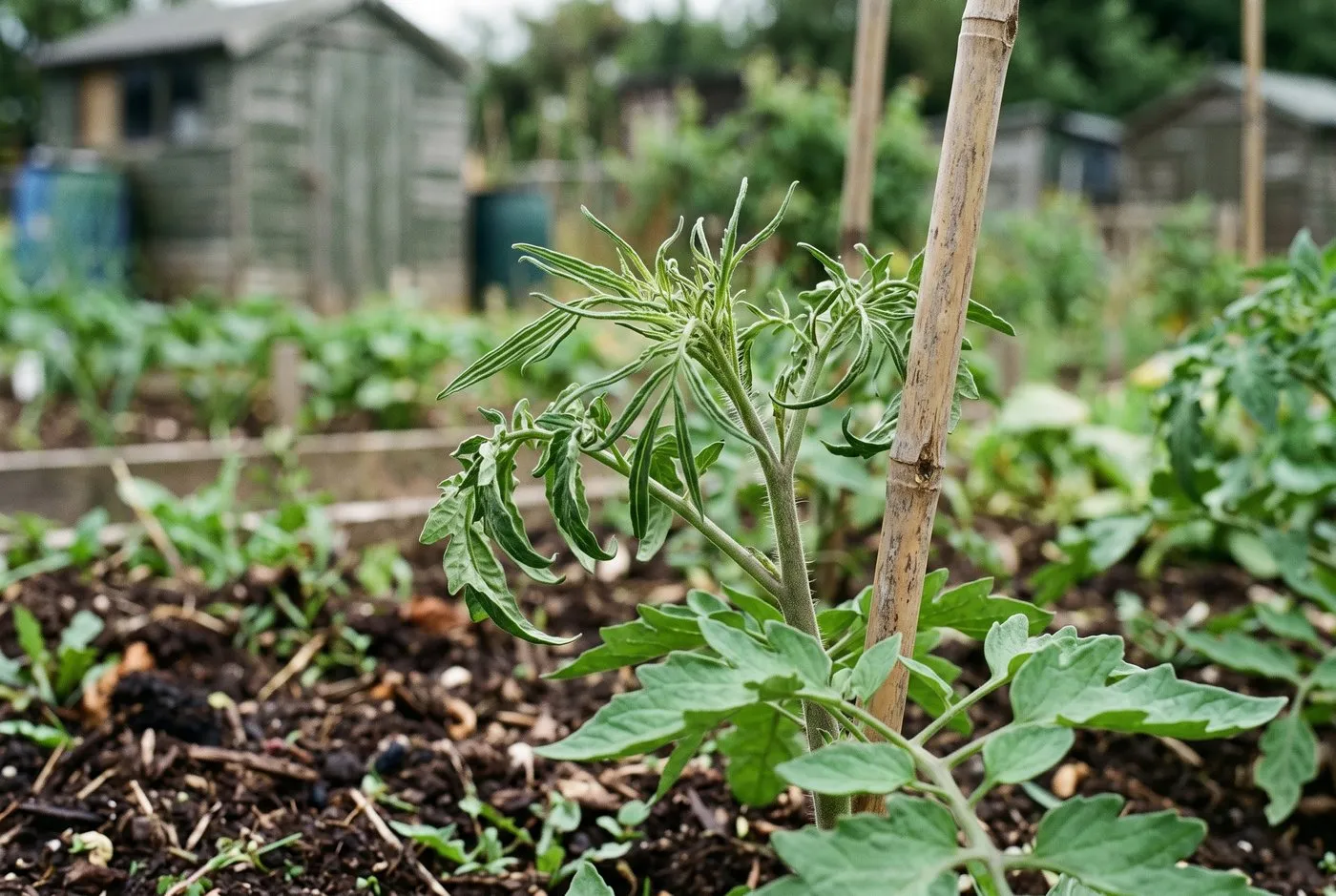 Aminopyralid damage is unmistakable: leaves cup down and new growth is narrow, ferny and fan-shaped. This plant will not recover and the compost must be discarded.
When curling leaves mean a virus
Virus is uncommon in UK gardens but serious when it strikes. The two that curl leaves are tomato yellow leaf curl virus (TYLCV) and the mosaic viruses (ToMV and CMV). Unlike leaf roll, a virus distorts and discolours the leaf, and there is no cure.
The signs are different from heat roll. Look for yellow-green mottling in a patchy mosaic, leaves that pucker and curl downward, stunted growth and a general sickly look. TYLCV curls and yellows the leaf margins and dwarfs the plant. Mosaic viruses blotch the leaf in light and dark green and distort new shoots. Fruit may be small, uneven or marked. Whitefly spread TYLCV, and aphids and handling spread the mosaic types.
There is no treatment, so act to protect the rest of your plants. Remove and bin the affected plant, do not compost it. Wash your hands and tools with soapy water afterward, and do not smoke near tomatoes, as tobacco can carry mosaic virus. Control the sap-sucking insects that spread it. Our cucumber mosaic virus guide covers the same virus group that hits tomatoes, and the greenhouse spider mite control guide helps with the pests that open the door to infection.
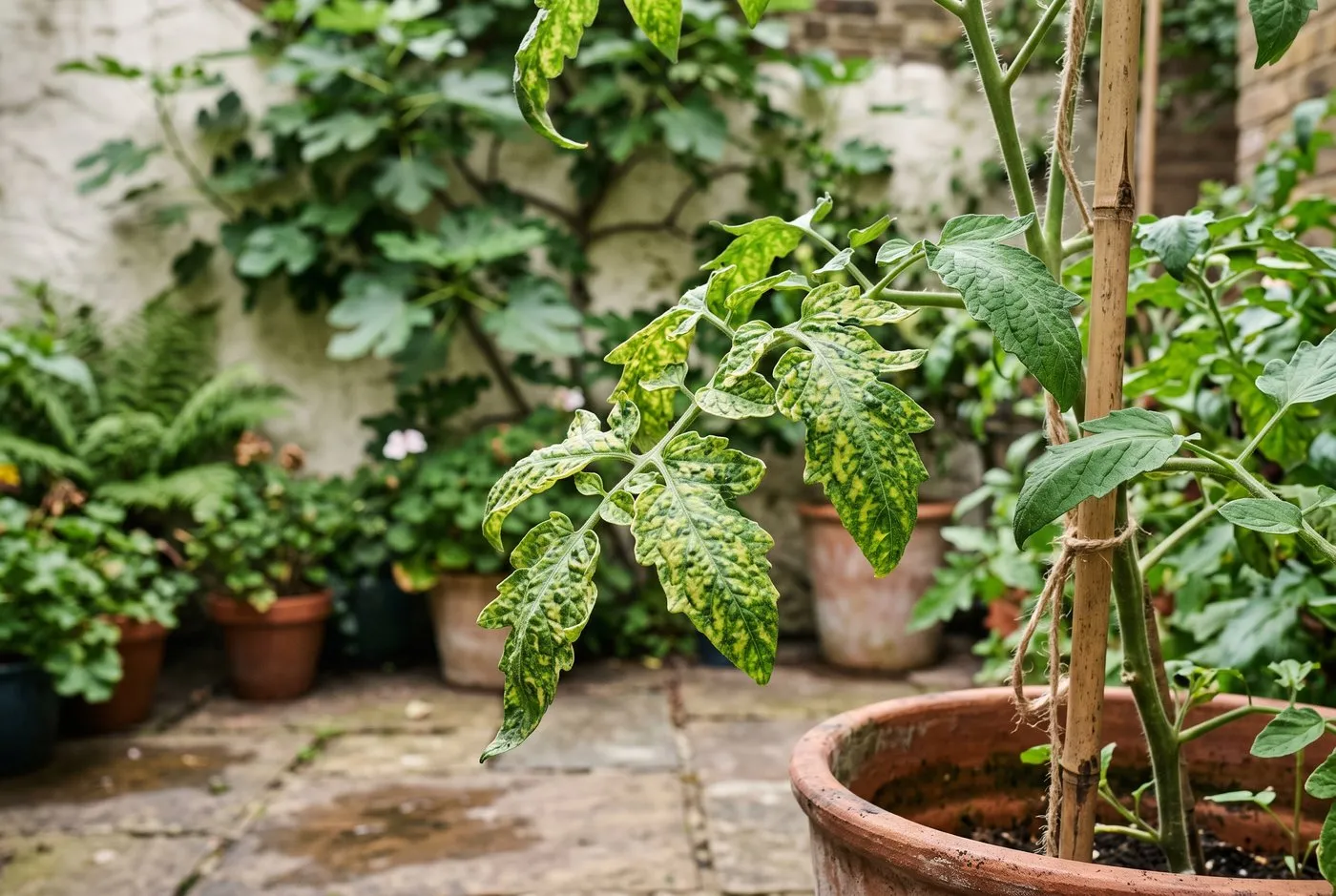 Virus mottling is patchy yellow-green, with puckered, distorted leaves. Unlike leaf roll, the colour is wrong and the growth is deformed. There is no cure, so remove the plant.
Broad mite and aphid leaf damage
Pests are the rarest cause of curling, but two are worth knowing. Broad mite (Polyphagotarsonemus latus) is tiny, about 0.2mm, and invisible to the naked eye. It attacks the growing tip, so the youngest top leaves curl downward, turn bronze and brittle, and new growth twists. People often blame virus or herbicide by mistake.
Aphids curl leaves too. Heavy colonies of greenfly on the shoot tips distort the young leaves as they suck sap, and the leaves pucker and cup. You will see the aphids themselves clustered on stems and leaf undersides, plus sticky honeydew and sometimes sooty mould. This is easier to diagnose because the pest is visible.
For broad mite, remove and bag the affected growing tips, and treat with a sulphur-based product or introduce the predatory mite Amblyseius. For aphids, a firm jet of water, fatty-acid soap sprays, or ladybird and lacewing larvae all work. Keep the greenhouse open so natural predators get in. A healthy, evenly watered plant shrugs off light pest pressure without curling at all.
The real root cause behind most curling
Strip away the individual triggers and one thing links most curling: the plant losing water faster than its roots can replace it. Leaf rolling is a water-conservation reflex. When a tomato senses stress from heat, uneven moisture, root damage or a wide temperature swing, it rolls its leaves to shrink the surface exposed to drying air. The roll itself is a symptom, not the disease.
That is why chasing the leaf is the wrong approach. The permanent fix is a stable root environment. Aim for even soil moisture, a root run that never bakes or floods, and airflow that stops the leaf overheating. Deep, less frequent watering builds a stronger root system than daily sprinkles. Mulching the surface of border soil or growbags holds moisture and evens out the swings. In pots, choosing a 35cm container over a 20cm one gives the roots enough buffer to ride out a hot afternoon.
Get the roots right and physiological rolling, watering stress and heat roll all fade together, because they share this single cause. The only curling this does not fix is the herbicide, virus and mite damage in the table above, which are separate problems that need their own action.
Month-by-month tomato leaf-curl calendar
Curling risk shifts through the UK season. This calendar shows what drives it each month and what to do, from sowing to clearing the plants.
| Month | Curl risk and task |
|---|---|
| January | None. Order seed. Buy fresh compost, never last year’s contaminated manure. |
| February | None. Sow indoors at 18 to 21C. Steady warmth prevents early cold-shock roll. |
| March | Low. Pot on seedlings. Avoid chilling young plants below 10C at night. |
| April | Low. Harden off gradually. Sudden cold nights can roll tender transplants. |
| May | Rising. Plant out under glass. Watch for cold-night, warm-day swings that trigger roll. |
| June | Moderate. Start regular feeding. Ventilate greenhouses above 25C from now on. |
| July | Peak. Heat roll is common. Shade glass, damp down, keep watering even and daily. |
| August | Peak. Keep shading and venting. Check new growth for herbicide or virus signs. |
| September | Falling. Cooler nights reduce roll. Ease off watering as fruit ripens. |
| October | Low. Clear finished plants. Never compost any showing fan-shaped distortion. |
| November | None. Clean the greenhouse. Wash pots and tools to cut virus carryover. |
| December | None. Plan next year. Source clean, tested manure well ahead of spring. |
The point is consistency. Tomatoes do not mind whether the soil is a little dry or a little wet, as long as it does not lurch between the two. That lurch is what rolls the leaves, splits the fruit and brings on blossom end rot. Judging by weight keeps the root zone steady in a way that a fixed schedule never can, because it responds to the actual weather that day.
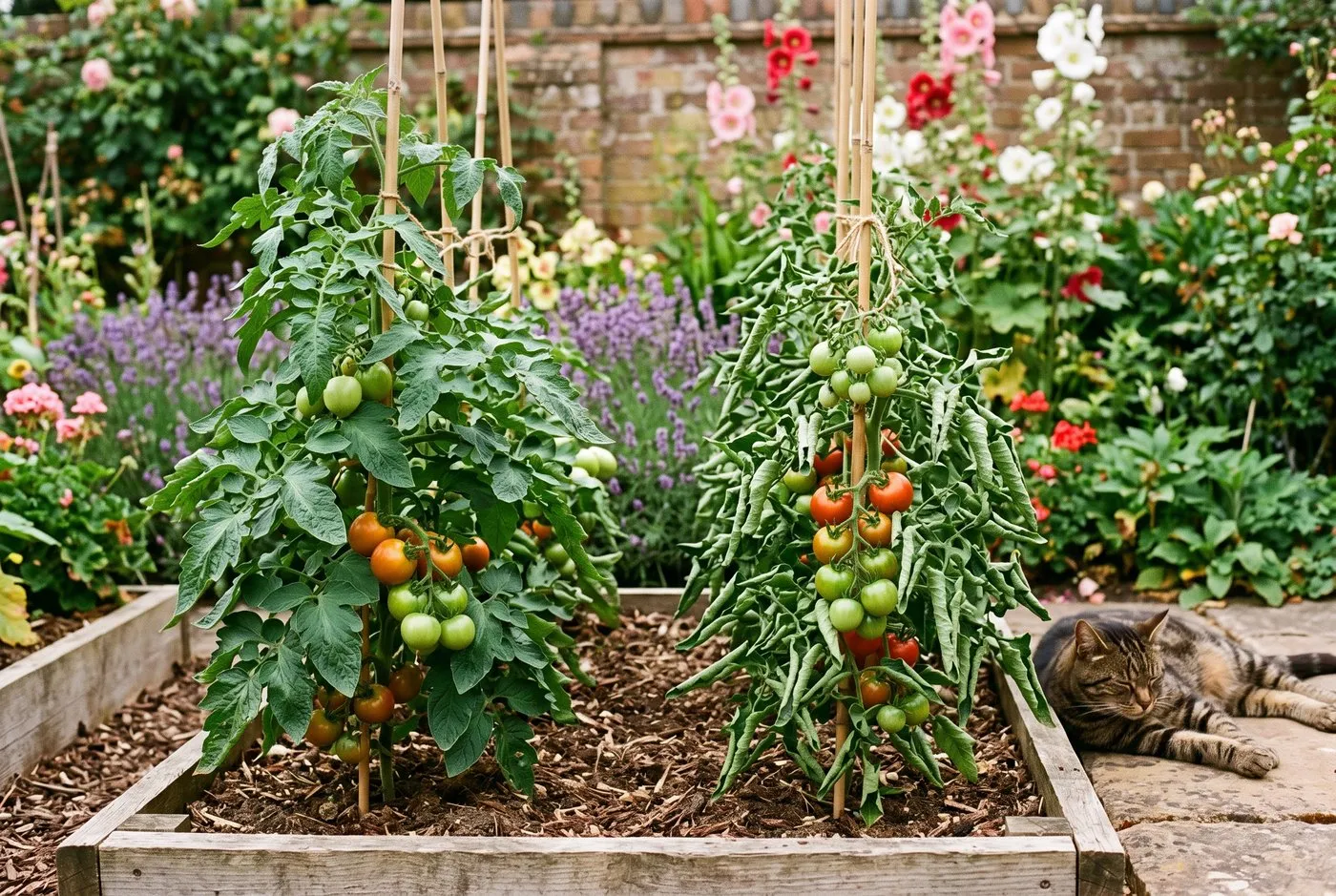 Healthy flat foliage (left) beside a plant with harmless upward leaf roll (right). Both were cropping well. Even watering keeps rolling to a minimum without changing yield.
Common mistakes when diagnosing curled leaves
- Panicking over harmless leaf roll. The most common mistake is assuming any curl means disease. Upward roll on firm green lower leaves is normal. Check the direction and the fruit before doing anything, because 80 percent of cases need no action.
- Stripping off rolled leaves. People often remove curled foliage thinking it helps. Healthy rolled leaves still feed the plant and shade the fruit. Taking them off exposes tomatoes to sunscald and slows ripening. Only remove leaves that are yellow, spotted or diseased.
- Overwatering a heat-stressed plant. A plant rolling in the midday heat looks thirsty, so growers flood it. If the compost is already moist, this drowns the roots and makes the roll worse. Feel the soil 5cm down first, and water only if it is genuinely dry.
- Missing herbicide damage. Fan-shaped downward curling gets blamed on weather for weeks while the plants slowly die. If new growth is narrow and ferny, suspect contaminated manure or compost at once, and test any suspect batch with a bean bioassay.
- Spraying a physiological problem. Fungicides and tonics do nothing for leaf roll caused by heat or watering. They waste money and time. Fix the growing conditions instead. Save sprays for confirmed pest or disease problems.
Frequently asked questions
Why are my tomato leaves curling up?
Curling up is usually harmless physiological leaf roll from heat or temperature swings. The lower, oldest leaves roll first, feel firm and leathery, and stay green. Fruit is unaffected. It follows hot spells, cold nights or hard side-shooting. No treatment is needed. Keep watering steady and ventilate on warm days.
Should I remove curled tomato leaves?
No, leave rolled leaves on the plant because they still feed it. Physiological leaf roll does no harm and the leaves keep photosynthesising. Only remove leaves that are yellow, spotted or clearly diseased. Stripping healthy foliage exposes fruit to sunscald and slows ripening in a UK summer.
Do curled tomato leaves affect the fruit?
What does aminopyralid damage look like on tomatoes?
Leaves cup downward and grow narrow, fern-like and fan-shaped. New growth is worst affected, twisting into thin, ferny shoots. It comes from manure or compost contaminated with the herbicide aminopyralid. There is no cure. Stop using the source at once and grow future tomatoes in fresh, clean compost.
Can overwatering cause tomato leaves to curl?
Yes, waterlogged roots can curl leaves, and so can underwatering. Overwatered plants curl with soft, yellowing lower leaves and soggy compost. Dry plants curl with wilting, crisp edges and dusty soil. Both settle once you water evenly. Feel the compost 5cm down before deciding which problem you have.
Is tomato leaf curl a virus?
Sometimes, but viruses cause mottling and puckering, not a smooth upward roll. Look for yellow-green mosaic patches, distorted growth and stunting. Tomato yellow leaf curl and mosaic viruses have no cure. Remove and bin affected plants, wash your hands and tools, and control aphids and whitefly that spread them.
How do I stop tomato leaves curling in a greenhouse?
Ventilate early, shade the glass and keep watering steady. Open doors and vents by 9am before the temperature climbs past 25C. Apply shade paint or netting in July and August. Damp down the floor to raise humidity. Steady moisture and airflow prevent most heat-driven leaf roll under glass.
Our team produces practical UK gardening guidance from source research, contributor records and established horticultural practice. Editorial standards are overseen by Matt W.