Key takeaways
- Horse manure NPK 0.7-0.3-0.6, ages in 6-9 months, best for general beds
- Chicken manure NPK 1.6-1.5-0.8 fresh, 4-3-2 pelleted, use sparingly
- Cow manure NPK 0.5-0.2-0.5, cold and safe, ages in 4-6 months
- Apply 5-8 kg per square metre of well-rotted manure to most beds
- Never apply fresh manure to root crops or seed beds within 6 months
- Aminopyralid herbicide contamination from horse manure ruins tomatoes and beans
- UK price ranges from £0 (livery yard) to £8 per 50L bag at garden centres
After 8 tonnes of horse manure, 1.5 tonnes of cow, 60 kg of pelleted chicken, 200 kg of sheep and a single pig manure trial bed, the patterns are clear. Choose by what your soil needs and what you are growing. The wrong manure on the wrong crop is worse than no manure at all.
Animal Manures NPK Compared for UK Gardens
NPK stands for nitrogen, phosphorus and potassium, the three macronutrients listed on every fertiliser label. Animal manures are low in absolute NPK compared to artificial fertilisers but high in organic matter, trace elements and biology that artificial feeds cannot supply.
The figures below are typical UK averages for well-rotted manure. Fresh manure NPK is roughly 20-40% higher because nothing has leached out yet, but fresh manure cannot be applied to growing crops.
| Manure | N % | P % | K % | pH | Best for | Avoid for | Ageing |
|---|---|---|---|---|---|---|---|
| Horse | 0.7 | 0.3 | 0.6 | 7.0-8.0 | General beds, brassicas, courgettes | Seed beds, root crops fresh | 6-9 months |
| Cow | 0.5 | 0.2 | 0.5 | 6.5-7.5 | Soil structure, asparagus, fruit | Light feeders | 4-6 months |
| Chicken (fresh) | 1.6 | 1.5 | 0.8 | 6.5-8.0 | Nitrogen-hungry leaf crops | Direct contact with seedlings | 12+ months |
| Chicken (pelleted) | 4.0 | 3.0 | 2.0 | 6.5-7.0 | Top-dressing growing crops | Acid-loving plants | Ready in bag |
| Pig | 0.5 | 0.3 | 0.4 | 6.5-7.5 | Heavy feeders, sweetcorn | Salad crops | 4-6 months |
| Sheep | 0.7 | 0.3 | 0.9 | 7.0-8.0 | Potassium-needy crops, fruit | Acid lovers | 3 months (dry pellets) |
Chicken manure stands out with two to four times the nitrogen of every other type. That is why a 50 g handful of pelleted chicken manure does the job of 1.5 kg of well-rotted horse manure for nitrogen-hungry crops like brassicas in spring.
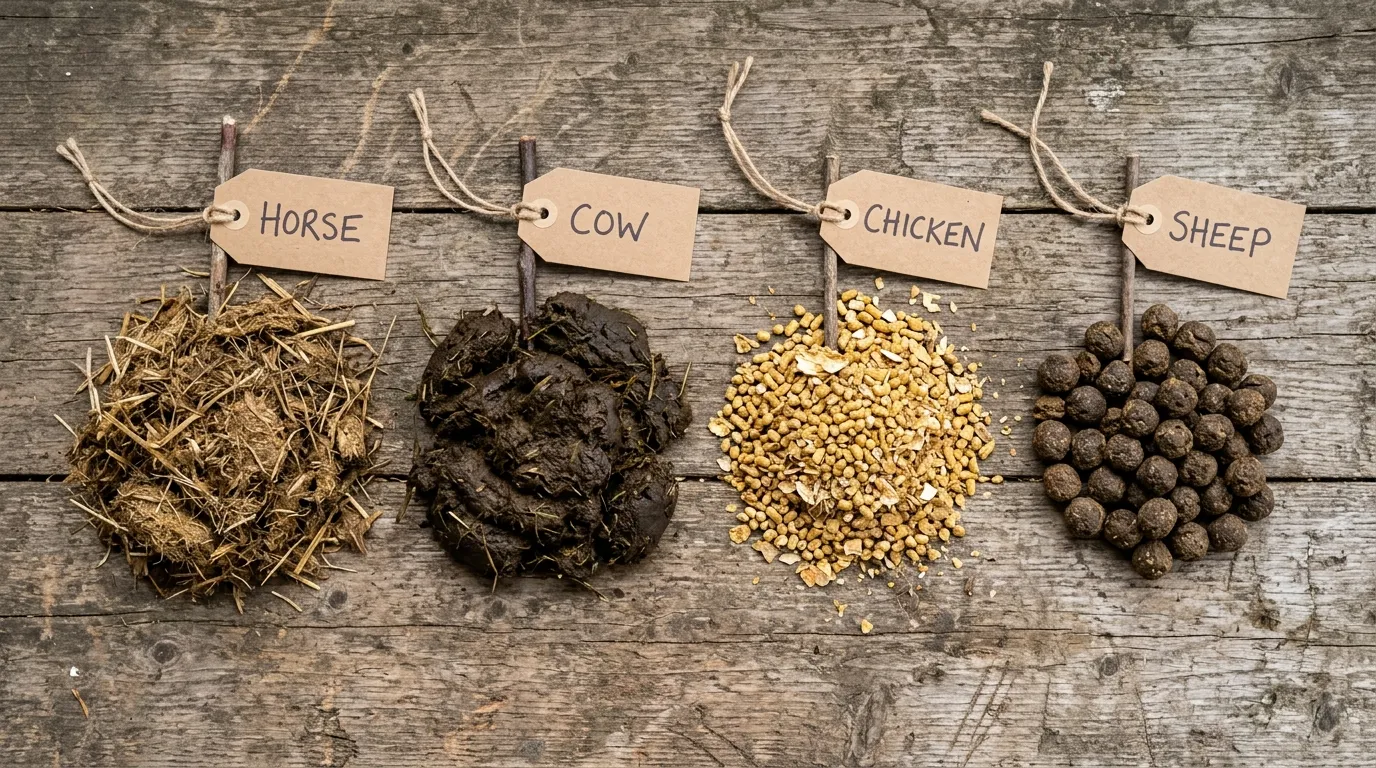 Four UK animal manures arranged on a potting bench. From left: straw-rich horse, dense dark cow, golden chicken pellets, dry round sheep. The visible texture difference reflects the chemistry difference.
Hot vs Cold Animal Manures and Why It Matters
Manures are split into hot and cold types. The difference is composting temperature and how aggressively they release nitrogen.
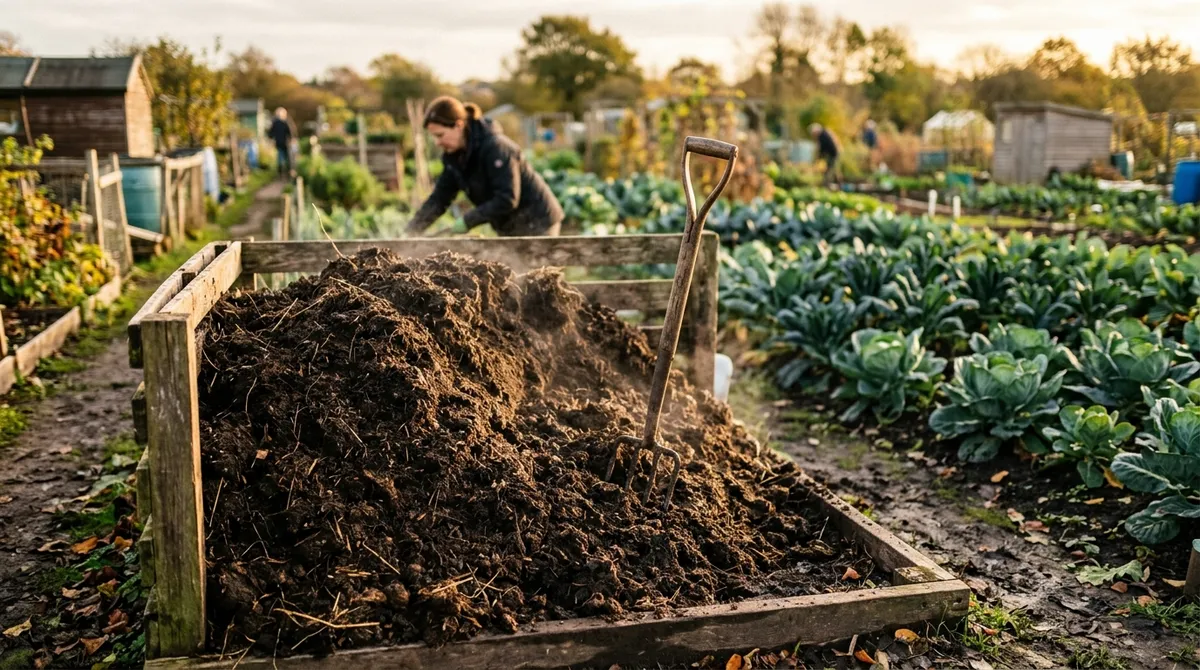
Hot manures (horse, chicken, sheep) compost above 60C in the heap. The temperature comes from rapid microbial breakdown of nitrogen-rich material. A fresh horse manure heap turned in October will steam visibly into November and remain hot in the core through January frosts.
Cold manures (cow, pig) compost at 20-40C, well below pasteurisation temperature. They break down slowly, release nutrients gradually, and never reach the volcanic core temperatures of horse manure.
Cold manure is more forgiving. Fresh cow manure spread thinly around an established hedge causes no visible damage. It is still bad practice on growing crops but the margin for error is wider.
Warning: Hot manure piles can reach 70-75C in the core during the first 6 weeks of composting. This is hot enough to kill seeds, weed roots and most pathogens. Do not turn the heap during this initial heating phase, you will lose the sterilising effect.
Horse Manure NPK and Application Rate UK
Horse manure is the UK gardener’s default. Around 1.4 million horses live in the UK, every yard produces 8-12 tonnes per horse per year, and most yards give it away free to anyone who arrives with sealed bags or a trailer.
Typical NPK 0.7-0.3-0.6. The exact figure varies with bedding. Straw bedding rots faster and contributes potassium. Wood shavings lock up nitrogen for 12-18 months and should be avoided unless aged for 2 years. Always ask the yard which bedding they use before loading up.
Ageing time: 6-9 months. Bring fresh horse manure home in autumn, stack in a covered heap, use the following autumn or spring. Well-rotted horse manure is dark brown to black, crumbly, with no visible straw strands and no ammonia smell.
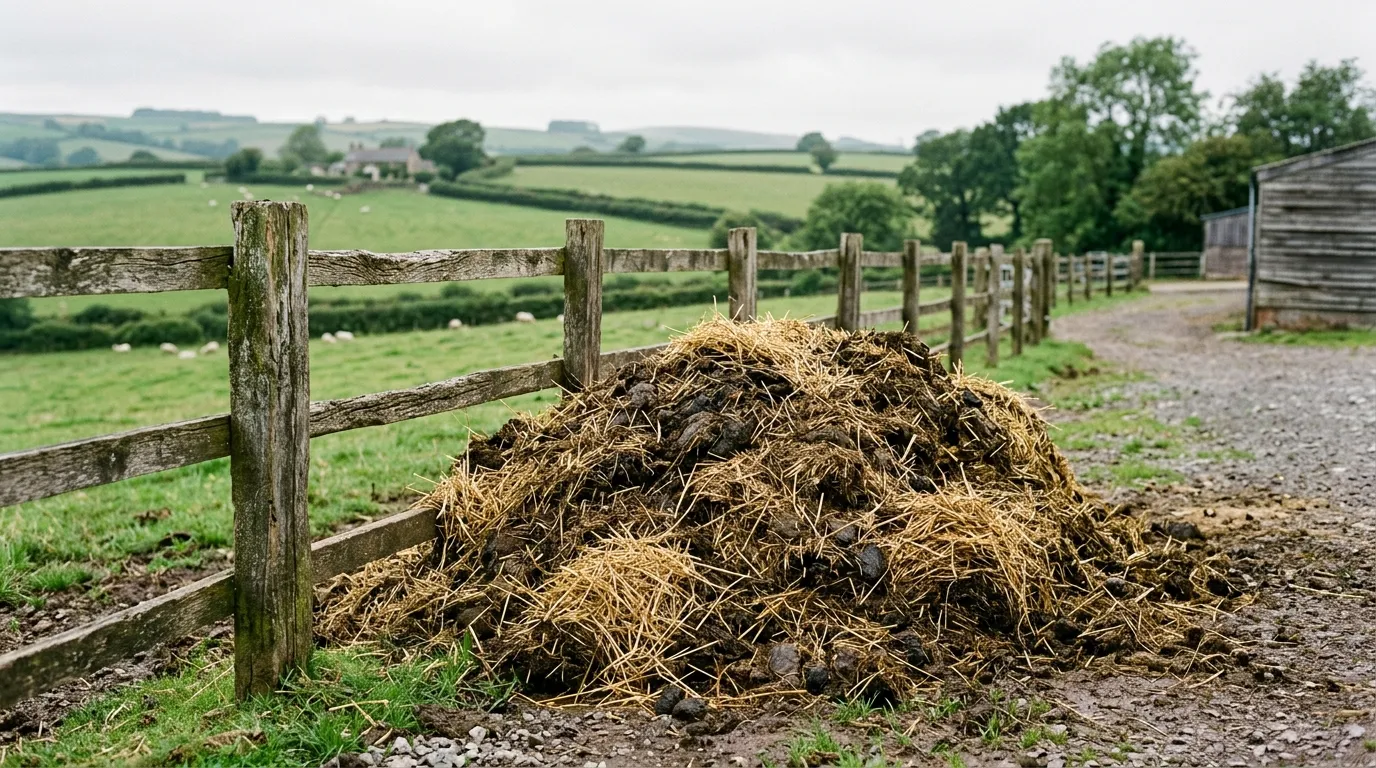 Fresh horse manure at a Devon livery yard. The yellow straw bedding is visible throughout. This pile needs 6-9 months in a covered heap before it is ready for the vegetable bed.
Chicken Manure Pelleted vs Fresh for UK Gardens
Chicken manure is the strongest animal manure available. Fresh chicken manure NPK is around 1.6-1.5-0.8, roughly double horse manure. Pelleted chicken manure is heat-treated, dried and concentrated to 4-3-2 NPK or higher.
The two forms suit very different jobs.
Fresh chicken manure must be composted for 12 months minimum before use. The high ammonia content burns roots and the high uric acid raises soil pH sharply. Composted at 5-10% chicken manure mixed with 90-95% garden waste, it makes excellent finished compost.
Avoid pelleted chicken manure near acid-loving plants like blueberries, rhododendrons and heathers. The alkaline pH 6.5-7.0 of chicken pellets shifts soil pH up by 0.2-0.4 units per kg per m², enough to kill blueberries over 2-3 years.
UK pelleted chicken manure costs £4-£8 per 10 kg bag, available at every garden centre. A 10 kg bag covers around 100 square metres at the recommended rate.
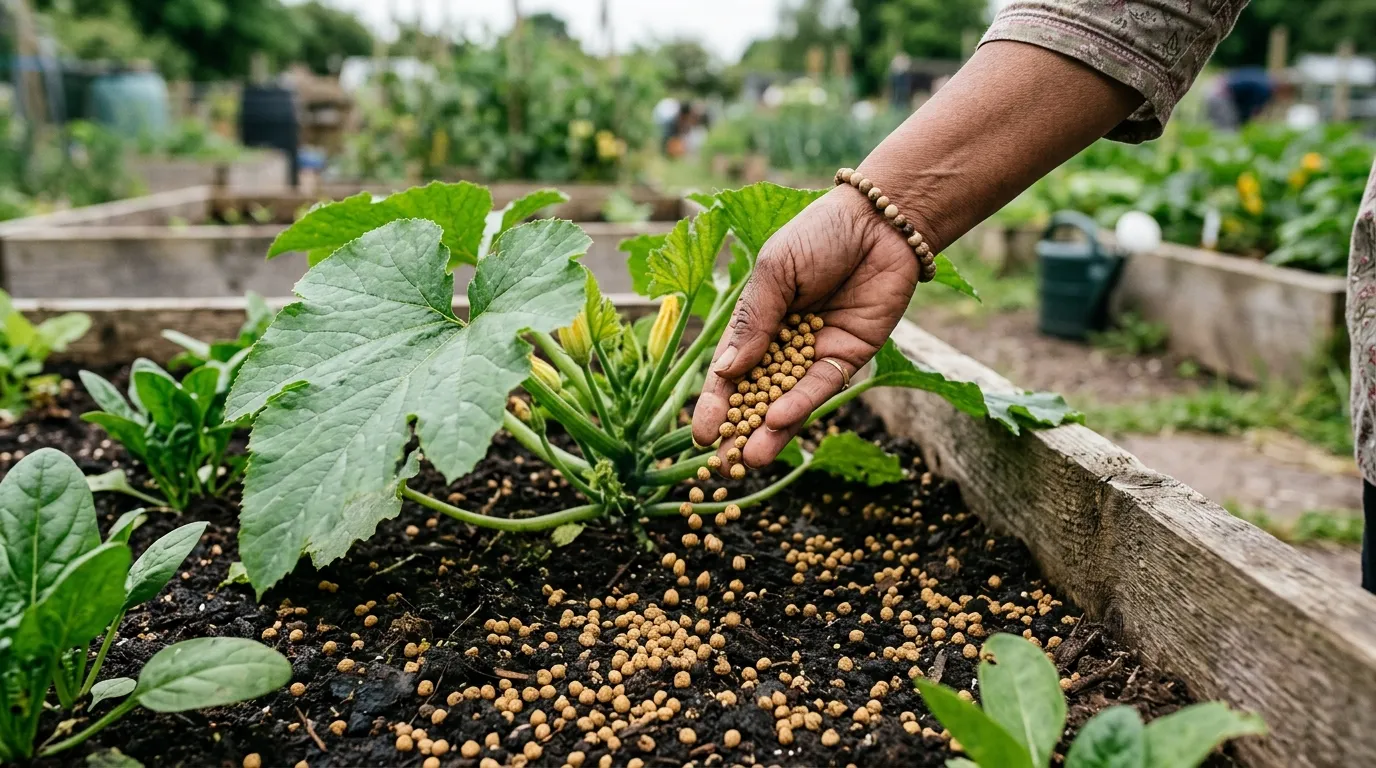 Pelleted chicken manure top-dressed around a courgette in a Berkshire raised bed. 100 g per square metre once in March and again in June carries nitrogen-hungry crops through the season.
Cow Manure NPK and Why It Builds UK Soil Structure
Cow manure is the soil-builder of the five. NPK 0.5-0.2-0.5 is the lowest of any animal manure, but the high fibre content and slow breakdown make it the best for long-term humus building on heavy or sandy soils.
Ageing time: 4-6 months. Cow manure rots faster than horse because cattle digest their feed twice (the rumen plus the second pass), leaving manure with finer particles and lower fibre. A heap spread in October is usable by April.
Cow manure is the safest choice for fruit trees and perennial beds. Apply as a 50 mm mulch around the drip line in late autumn. Worms drag it into the soil through winter. Year-round application also moderates soil moisture, reducing summer drought stress.
Sourcing: UK dairy farms occasionally sell or give away well-rotted manure, £10-£30 per tonne loaded. Smaller quantities at garden centres in 50L bags cost £5-£8. Beef cattle on grass produce cleaner manure than dairy cattle on silage.
 Well-rotted cow manure spread across a Yorkshire kitchen garden bed in November. The slow breakdown and balanced NPK build humus year on year without nitrogen spikes.
Sheep Manure and Pig Manure for UK Allotments
Sheep and pig manures are less common but useful in specific situations.
Sheep manure NPK 0.7-0.3-0.9. The high potassium (0.9%, the highest of the five) makes it excellent for fruiting crops like tomatoes, raspberries and apples. Dry sheep manure pellets are odourless, easy to handle and usable within 3 months of collection. UK upland sheep farms in the Lake District, Wales and Scotland are the main source.
Pig manure NPK 0.5-0.3-0.4. Cold, moderately high in soluble nutrients, and very wet when fresh. Pig manure is the best of the five for sweetcorn and squash because of its balanced moderate NPK and rapid release of available nitrogen once aged.
Apply at 4-6 kg per m² of well-rotted material. Avoid using pig manure on salad crops and herbs. The high water content and pathogen profile (E. coli prevalence is higher than ruminant manures) makes it less suitable for crops eaten raw. The UK Food Standards Agency recommends a minimum 4-month gap between any non-ruminant manure application and harvest of leafy crops eaten raw, see their guidance on manure and compost use on food crops.
Sourcing pig manure is harder. Most UK pig farms operate on slatted floors with slurry collection, not solid manure. Outdoor pig units and smallholdings are the realistic source.
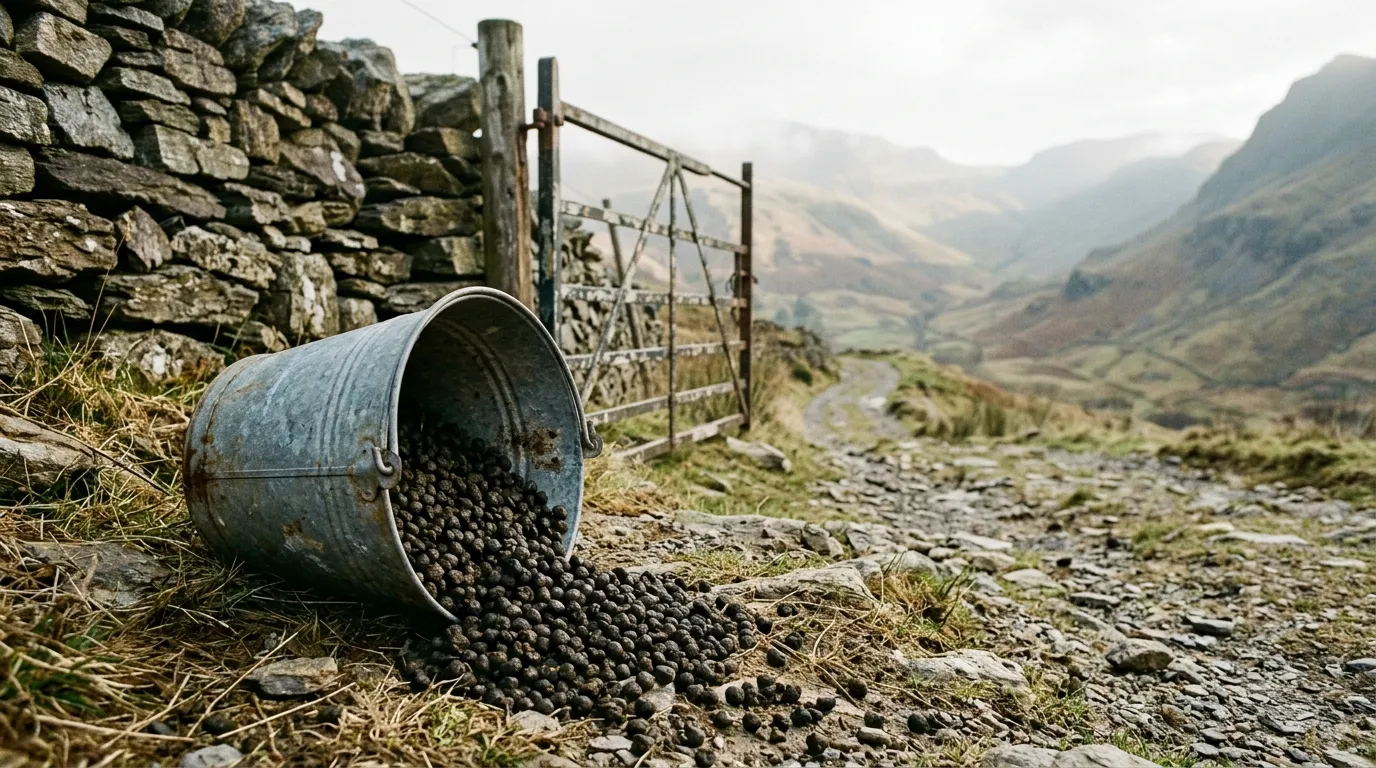 Dried sheep manure pellets from a Lake District hill farm. The high potassium content (0.9%) makes them the best of the five manures for fruiting crops and soft fruit beds.
Best Animal Manures for Heavy Clay Soil and Sandy Soil
Soil type changes which manure works hardest.
Sandy soils (East Anglia, parts of Surrey, the south coast) need cow manure for moisture-holding capacity and humus. The finer particles and higher gum content of cow manure bind sand grains and create water-retentive crumbs. Apply at 8-10 kg per m² in autumn, repeat annually.
Silty loam soils (river valleys, parts of Hampshire and the Severn Vale) suit any of the five, with horse and cow manure as default choices.
Chalk soils (Chilterns, Downs, Yorkshire Wolds) need the slowest-release manures. Cow manure first choice, horse manure second. Avoid chicken manure on chalk, the already-high pH plus alkaline chicken pellets will raise pH above 8.0 within 2-3 years and lock out iron and manganese.
Animal Manures to Avoid for Root Crops and Seed Beds
Some pairings of manure and crop are reliably disastrous.
Never apply fresh or part-rotted manure to root crops. Carrots, parsnips, beetroot and salsify fork their roots into multiple branched fingers when they hit lumps of fibrous manure. The fork is permanent. Apply manure to the bed the previous autumn, plant root crops 6 months after.
Never apply chicken manure in direct contact with seedlings. The ammonia released as pellets break down burns young stems and root hairs. Keep all chicken manure at least 100 mm from any seedling stem.
Never use pig or chicken manure on salad crops eaten raw within 4 months of application. E. coli and salmonella risk is higher than with ruminant manures. Cow, horse and sheep manure carry lower pathogen loads because of the multi-stomach digestion process. Garden Organic publishes detailed guidance on safe manure handling for vegetable growers.
Never use horse manure from unknown pasture without testing for aminopyralid. The persistent broadleaf herbicide aminopyralid passes through horses unchanged and ruins tomato, bean, pea and potato crops with characteristic twisted fern-like leaf growth. The test takes 21 days, see the contributor’s Top Tip in the article header.
Never use chicken manure on blueberries, rhododendrons, camellias or heathers. The alkaline pH shifts the soil and kills these acid-loving plants within 2-3 years.
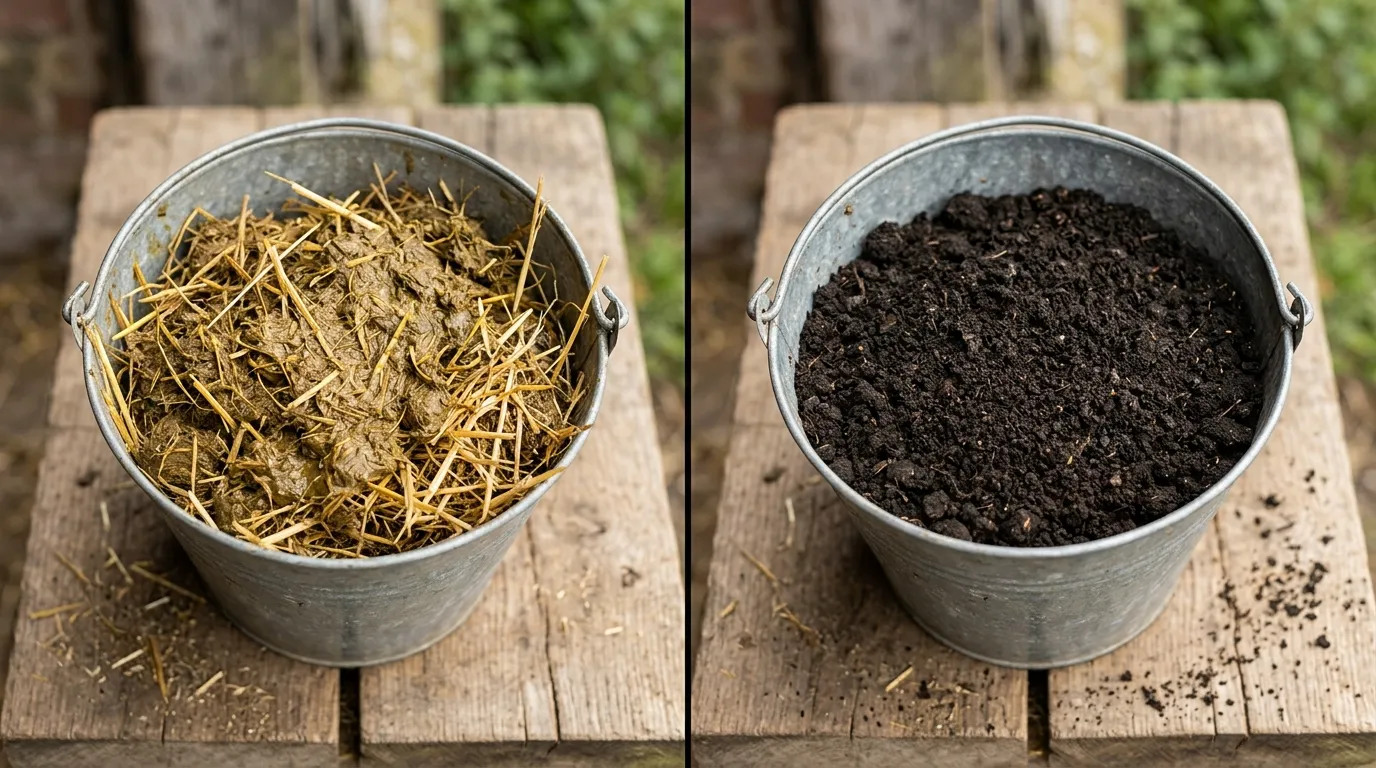 Two years apart. Fresh straw-rich manure (left) versus the same material after rotting in a covered heap (right). The right-hand bucket is what your beds need, the left will burn plants and fork carrots.
When to Apply Animal Manures in the UK Garden
Timing matters as much as quantity. The default rule is apply in autumn, plant in spring.
| Month | Task |
|---|---|
| September | Collect autumn manure from livery yards and dairy farms. Start ageing heaps. |
| October | Spread well-rotted manure from last autumn at 5-8 kg per m². Fork into top 100 mm. |
| November | Apply cow manure mulch around fruit trees and perennials at 50 mm depth. |
| December | Cover ageing heaps with plastic sheet to keep rain from leaching nutrients. |
| January | Run the broad bean test on any new manure batches before spring planting. |
| February | Last chance to apply manure to spring planting beds. Allow 4 weeks before sowing. |
| March | Top-dress brassica seedlings with pelleted chicken manure at 100 g per m². |
| April | Side-dress sweetcorn and squash with well-rotted pig or horse manure. |
| May | Mulch fruiting crops with sheep manure for potassium. |
| June | Second pelleted chicken manure dose for brassicas and leaf crops. |
| July | Stop bulky manure applications. Use liquid feeds for top-up nutrition. |
| August | Turn the autumn heap to even out composting before spreading season. |
Autumn is the priority window. Spreading well-rotted manure in October-November lets winter rain and earthworm activity incorporate it into the topsoil by March. Spring applications must be very well-rotted to avoid burning newly emerging crops.
How to Source Animal Manure in the UK
Five reliable sources with realistic price ranges.
Livery yards and riding schools are the standard horse manure source. Search “livery yard near me” on Google Maps, ring 3-4 local options. Most will give it away free in exchange for you taking it away. Bring rubble sacks, builders bags or a small trailer. Cost: £0.
Dairy and beef farms sell or occasionally give away aged cow manure. Phone local farms in late summer when sheds are mucked out. Loose loads delivered cost £15-£35 per tonne. Pre-bagged retail manure costs much more.
Smallholdings and sheep farms are the source for sheep manure. Less common but listed in local farmers’ market directories. Often free in exchange for collecting your own pellets from drying sheds. Cost: £0-£10 per 25 kg bag.
Garden centres sell bagged manure (usually cow, occasionally horse or chicken) at £5-£8 per 50L bag in spring and autumn. Convenient but expensive per kg compared to farm-collected.
Pelleted chicken manure is available at every UK garden centre and online from suppliers like Westland and Vitax. £4-£8 per 10 kg bag is the standard range. A 10 kg bag covers around 100 square metres at recommended rates.
Always confirm two things before loading up. Has the pasture been sprayed with aminopyralid (sold as Forefront, Pharaoh, Halcyon)? What bedding is used (straw is preferred, wood shavings need 2+ years to break down)? Garden Organic maintains a useful list of UK farms with verified herbicide-free manure.
Why Fresh Manure Burns Plant Roots
The root-burning effect of fresh manure has two distinct causes that gardeners often confuse.
Cause one: ammonia. Fresh manure contains 0.5-2% ammonia by weight, released from urea and uric acid in animal urine. Ammonia is highly soluble, dissolves into soil water on contact with damp ground, and forms ammonium hydroxide. This raises soil pH around the roots and disrupts the root cell membrane structure. Symptoms appear within 24-72 hours: brown leaf margins, wilting, and dead root hairs.
Cause two: soluble salts. Fresh manure contains 2-5% soluble mineral salts (potassium chloride, sodium chloride, calcium chloride). These create high osmotic pressure in soil water near roots. Water flows out of the root cells back into the soil rather than into the roots, dehydrating the plant from within. Symptoms appear within 48-96 hours: leaf scorch starting at tips, plant collapse, dry brittle stems.
Composting solves both problems. Microbes convert ammonia to stable nitrate salts that plants can absorb safely. Rain leaches excess soluble salts down through the heap into the underlying soil. After 6 months for cow and pig, 6-9 months for horse, and 12 months for chicken, both ammonia and salt levels drop to safe ranges below 0.1% by weight.
The critical mistake most UK gardeners make is assuming “rotted” means “old”. A manure heap left untouched for 9 months may still be fresh in the core if it never reached composting temperature. Turn the heap once at month 3 and once at month 6 to ensure even composting throughout.
Common Mistakes With Animal Manures in UK Gardens
Mistake 1: applying fresh manure to growing beds in spring. The crop fails within a week. Always apply fresh manure to empty beds in autumn, never to active beds in spring. If you must add nutrients to a growing bed, use pelleted chicken manure or liquid feed.
Mistake 2: ignoring the aminopyralid risk. Hot manure from sprayed pasture looks identical to clean manure. The damage appears 4-8 weeks after planting susceptible crops. Always run the broad bean test before spreading new batches. Tomatoes, beans, peas, potatoes and lettuce are the indicator crops.
Mistake 4: using wood-shaving horse manure too early. Wood shavings need 18-24 months to break down. Spread too early they lock up soil nitrogen for the following season, yellowing every crop in the bed. Either age wood-shaving manure for 2 years, or only collect from straw-bedded yards.
Mistake 5: applying chicken manure pellets too heavily. The bag says 100 g per m². Many gardeners eyeball it and apply 300-500 g per m². The result is scorched seedlings, leached nitrogen into watercourses, and a soil pH that takes years to correct. Use a kitchen scale on the first application of the season to calibrate your handful.
Tip: Keep a small notebook in the shed. Record date, source, weight, bedding type and broad bean test result for every manure batch. After 3-4 years the patterns reveal themselves: which livery yards never have aminopyralid issues, which farms produce the cleanest cow manure, which months yield the best material.
Frequently asked questions
Which animal manure is best for a UK vegetable garden?
Well-rotted horse manure is the best all-rounder. Its balanced NPK around 0.7-0.3-0.6, moderate ageing time of 6-9 months, and free availability from UK livery yards make it the standard. Use chicken manure for short bursts of nitrogen, cow manure for slow steady feeding.
What is the NPK of horse manure compared to chicken manure?
Horse manure averages 0.7-0.3-0.6 NPK. Fresh chicken manure runs 1.6-1.5-0.8, more than twice the nitrogen of horse. Pelleted chicken manure concentrates to 4-3-2. Use chicken at one tenth the rate of horse manure to avoid scorching plants.
How long does animal manure need to rot before use?
Cow and pig manure need 4-6 months. Horse manure needs 6-9 months. Fresh chicken manure needs 12 months or more. Sheep manure pellets are usable when dry. Pelleted chicken manure is heat-treated and safe to apply straight from the bag.
Why does fresh manure burn plants?
Fresh manure releases ammonia and contains soluble salts. Both damage root cell membranes. Hot manures like horse and chicken also generate composting heat above 60C, which cooks fine roots within 48 hours. Ageing converts ammonia to stable nitrates and dilutes the salt.
Where can I get free horse manure in the UK?
Local livery yards and riding schools usually give it away free. Ask in person, bring sealed bags or a trailer. Check the bedding type first. Straw bedding rots faster than wood shavings. Always ask about aminopyralid herbicide use on the pasture.
Pick your manure and start the heap
Five manures, five different jobs. Horse for general beds and clay improvement. Chicken for nitrogen-hungry leaf crops. Cow for slow soil-building and fruit trees. Sheep for potassium-loving fruiting crops. Pig for sweetcorn and squash beds. Test every batch for aminopyralid. Age every batch to the right schedule. Apply at the right rate for the right crop in the right season.
Our team produces practical UK gardening guidance from source research, contributor records and established horticultural practice. Editorial standards are overseen by Matt W.