Quick answer
Yes, hedgehogs hibernate in the UK, usually from November to March or April. They sleep in nests of dry leaves under hedges, log piles, sheds or hedgehog houses. They wake up a few times each winter and may move nest. Help them by leaving leaf piles, putting out food in autumn and checking bonfires. Hedgehog poo is dark, sausage-shaped, about 2-5cm long and full of shiny beetle bits.
Key points6 at a glance
- Hedgehogs hibernate from about November to March or April, depending on the weather
- They sleep in nests of dry leaves under hedges, log piles, sheds and hedgehog houses
- Waking up and moving nest during winter is normal
- A hedgehog out in daylight in winter, or a very small one in late autumn, needs help
- Put out meaty food and water in autumn so they can fatten up
- Hedgehog poo is dark, sausage-shaped and full of shiny insect bits
In this article10 sections
Yes, hedgehogs hibernate in the UK, usually from November until March or April. They sleep through the cold months in nests of dry leaves, tucked under hedges, log piles, sheds or hedgehog houses. You can help by leaving them somewhere safe to sleep and food to fatten up on in autumn.
Hedgehog poo is the easiest way to tell if they visit your garden. It’s dark, sausage-shaped and full of shiny beetle bits. Read on for how hibernation works, when a hedgehog needs help and how to tell hedgehog poo from the rest.
Do hedgehogs hibernate?
Yes. Hedgehogs are one of only three UK mammals that truly hibernate. Bats and dormice are the other two.
Hibernation isn’t just a long sleep. A hedgehog’s body cools right down, its heart slows and it barely breathes. This saves energy when there are hardly any beetles, worms or caterpillars to eat. The hedgehog lives off fat it built up in autumn.
When do hedgehogs hibernate in the UK?
Most hedgehogs hibernate from November to March or April. The exact timing depends on the weather and where you live.
| Time of year | What hedgehogs are doing |
|---|---|
| September to October | Eating as much as they can to build up fat |
| Late October to November | Building winter nests and settling down |
| December to February | Hibernating. Some wake briefly and move nest |
| March to April | Waking up, very hungry and thirsty |
| May onwards | Looking for mates and raising young |
In a mild winter, hedgehogs may stay active into December. In the south, some wake up in February. Males usually wake first in spring, then females.
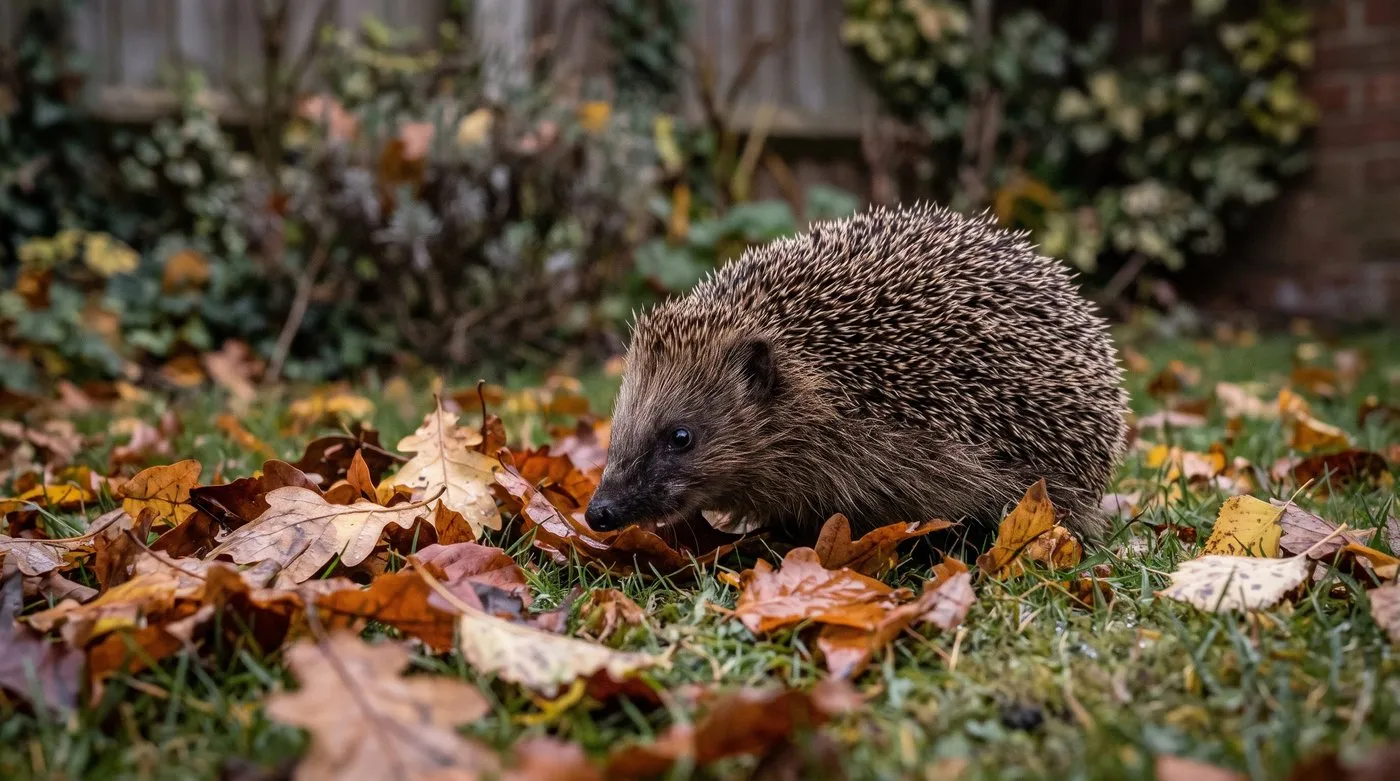
Autumn is feeding time. Hedgehogs need to build up plenty of fat before they hibernate.
Where do hedgehogs hibernate?
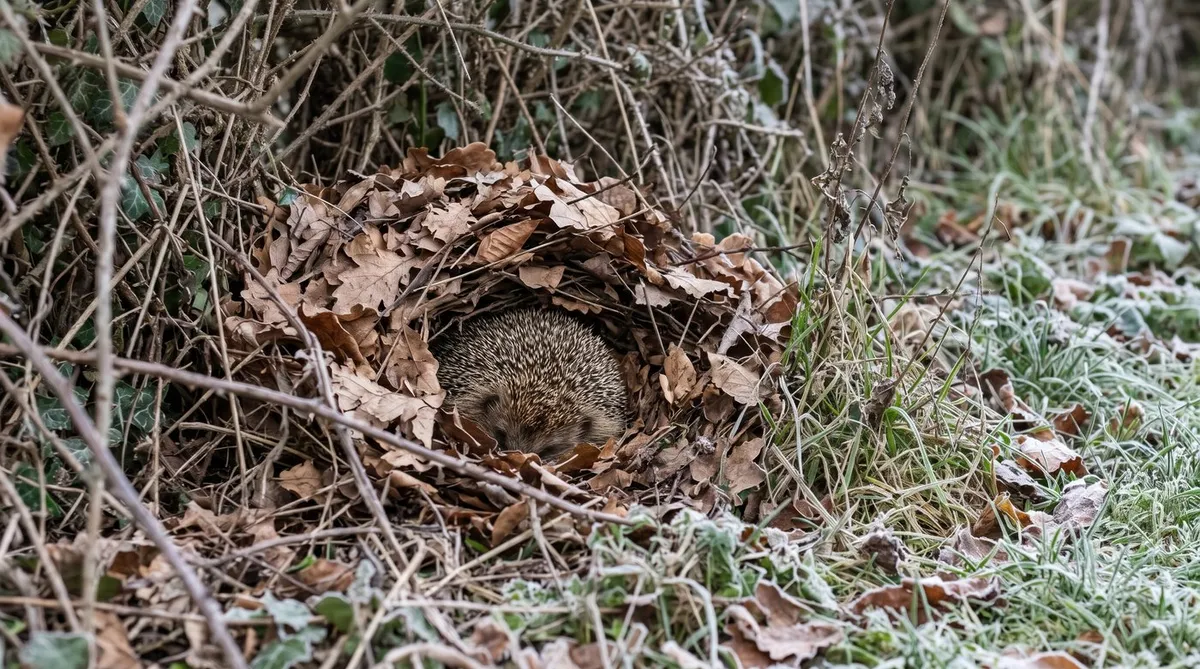
Hedgehogs build a winter nest called a hibernaculum. They weave dry leaves into a thick, waterproof ball, usually under something solid. Favourite spots include:
- The base of a thick hedge or bramble patch
- Log piles and compost heaps
- Under sheds, decking and garden buildings
- Piles of leaves and garden cuttings
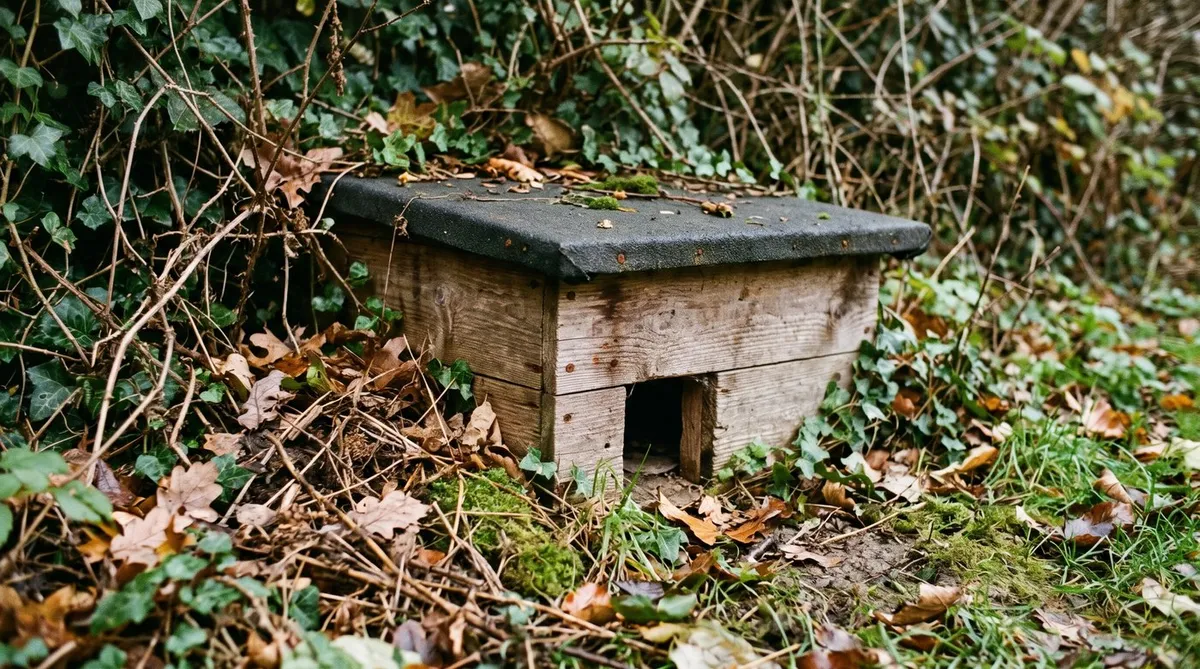
- Hedgehog houses
Medium-sized leaves such as oak, beech and hornbeam make the best nests. Our guide to building a hedgehog house shows how to make a safe one. A wildlife log pile is another great option.
Gardener’s tip: Leave a big pile of dry leaves in a quiet corner this autumn. Hedgehogs will help themselves to nest material, and you’ll have leaf mould to use later.
Do hedgehogs wake up during hibernation?
Yes, and that’s normal. Most hedgehogs wake a few times over winter. Some move to a new nest, especially after a mild spell or if their nest gets wet.
So seeing a hedgehog out at night in a mild January isn’t always a worry. If it looks healthy and walks off normally, leave it be. Put out a dish of water and some meaty cat food in case it’s hungry.
How to help hedgehogs before and during hibernation
A few simple jobs make a big difference.
- Feed them in autumn. Put out meaty cat or dog food, cat biscuits or hedgehog food, with a shallow dish of water. Never give milk or bread.
- Leave wild corners. Don’t tidy every leaf away. Let a patch of hedge bottom or bramble stay messy.
- Check before you strim or fork. Look carefully under hedges and in compost heaps before cutting or turning them.
- Check bonfires. Build bonfire heaps on the day you light them, or move them by hand first. Our guide to bonfires on allotments explains how.
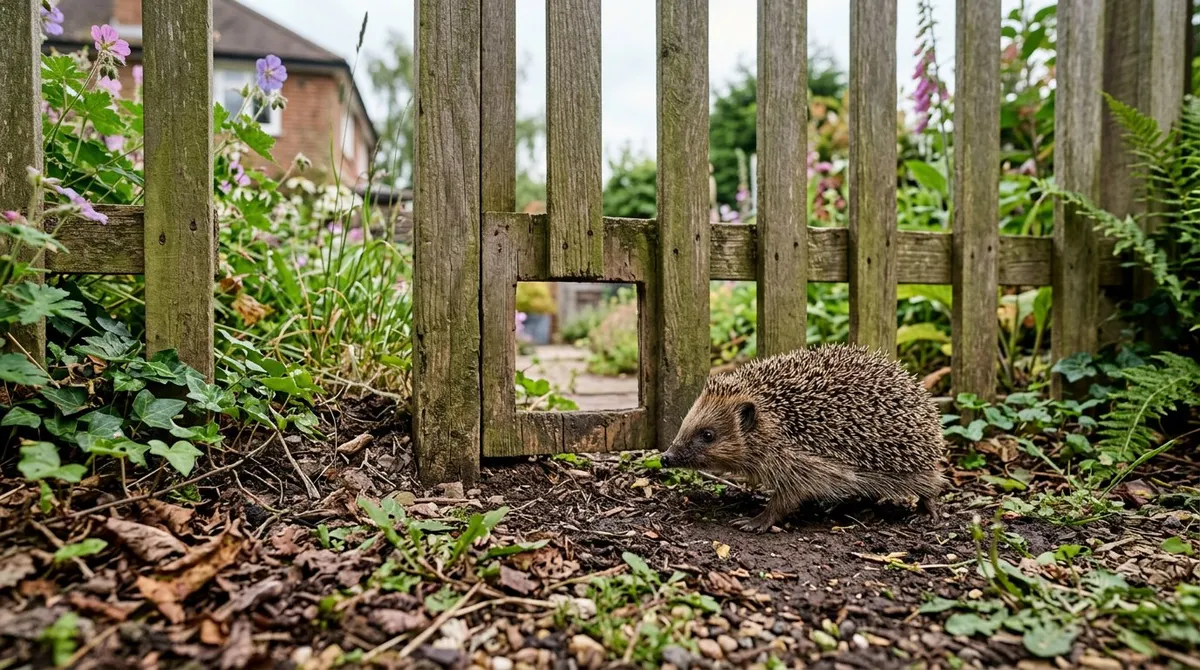
- Keep a way in. A 13cm gap in your fence lets hedgehogs reach your garden. See our guide to the hedgehog highway.
- Leave nests alone. If you uncover a sleeping hedgehog, cover it back up with leaves and walk away.
For more ways to help all year, read our hedgehog-friendly garden guide.
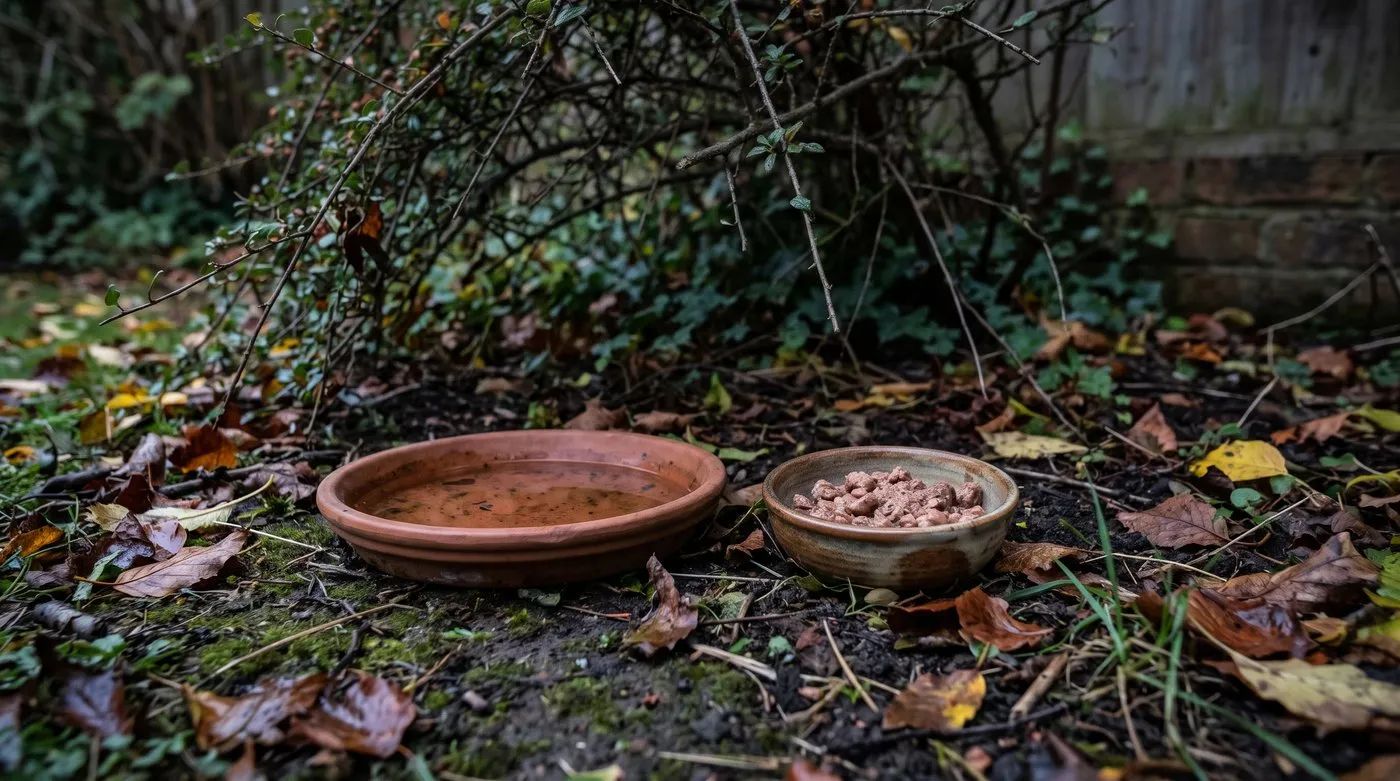
Meaty cat food and a shallow dish of water help hedgehogs put on weight in autumn. Never give milk.
When does a hedgehog need help?
Most hedgehogs cope well on their own. But some need a rescue. Call a local hedgehog rescue or a vet if you see:
- A hedgehog out in daylight, especially in winter
- One that’s wobbling, lying still or sunbathing
- One with injuries, flies or maggots on it
- A very small hedgehog out in late autumn, roughly smaller than a large apple
- A hedgehog trapped in netting, a drain or a pond
Pick it up gently with thick gloves or a towel. Put it in a high-sided cardboard box lined with a towel, in a quiet, warm room. Offer water and meaty cat food, then call for advice straight away.
Warning: Don’t try to keep a sick hedgehog over winter yourself. Rescues know how to treat them and when they’re ready to go back. The British Hedgehog Preservation Society can put you in touch with a local carer.
What does hedgehog poo look like?
Hedgehog poo is one of the best signs that hedgehogs visit your garden. Here’s what to look for:
- Colour: Dark brown to black
- Shape: Sausage-shaped, often tapered at one end
- Size: About 2-5cm long and as thick as a pencil
- Texture: Firm, often glossy, packed with shiny bits of beetle wing case
- Where: On lawns, paths and near feeding dishes
Fresh hedgehog poo is soft and shiny. Older droppings dry out and crumble, showing more of the insect bits inside.
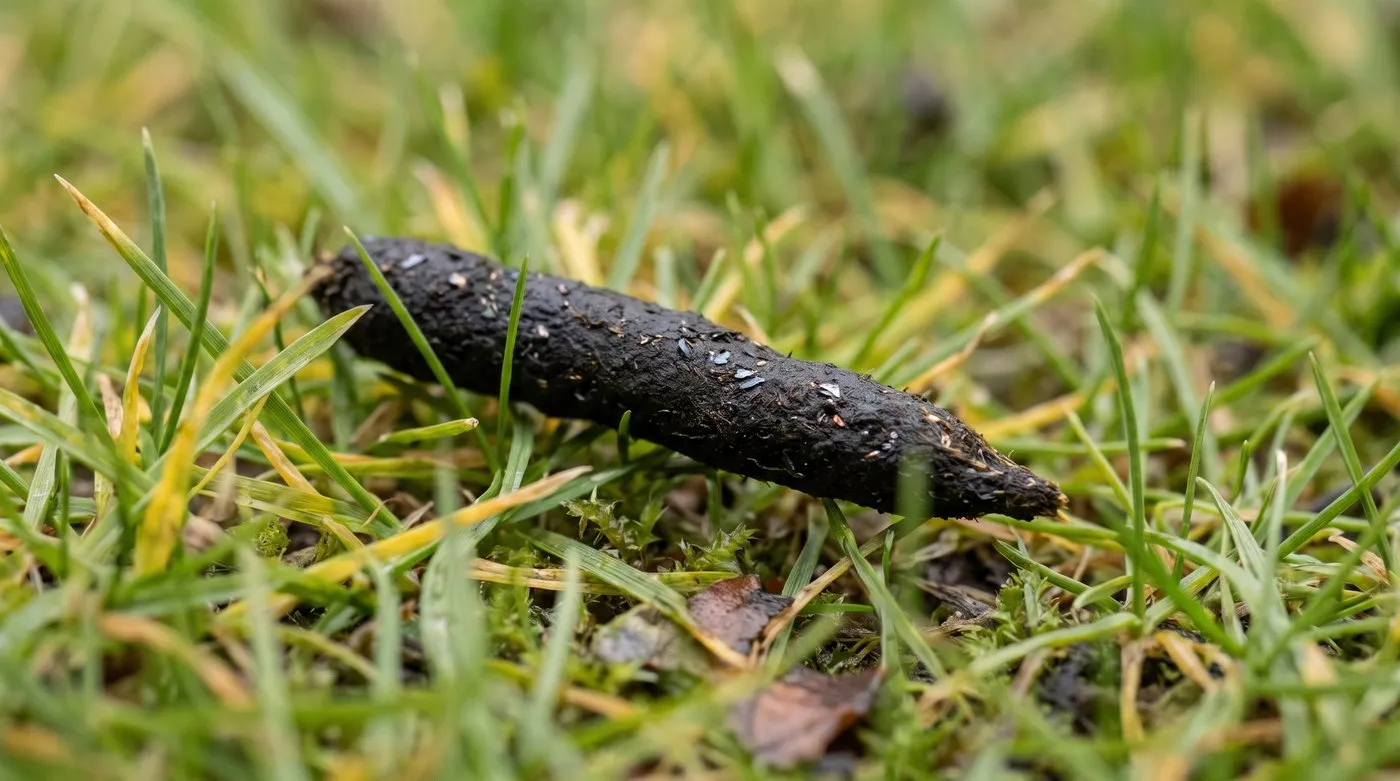
Hedgehog poo is dark, about 2-5cm long and full of shiny beetle bits. You’ll often find it on the lawn.
Hedgehog poo or something else?
Lots of animals leave droppings in gardens. This table helps you tell them apart.
| Animal | What it looks like | Where you’ll find it |
|---|---|---|
| Hedgehog | Dark, 2-5cm sausage, shiny insect bits | Lawns, paths, near food dishes |
| Rat | Small, 1-2cm, like fat grains of rice, often in groups | Along walls, sheds, bins and compost heaps |
| Mouse | Tiny, under 1cm, like dark seeds | Sheds, garages, near food |
| Fox | Larger, twisted tip, with fur, bones or seeds, strong smell | Left in the open, often on a raised spot |
| Cat | Smooth, segmented, strong smell | Usually buried in soft soil or borders |
| Badger | Soft, often in small dug pits | Latrine pits along boundaries |
If you’re seeing rat droppings, see our guide to getting rid of rats. For cats, try our guide to stopping cats pooing in the garden.
Always wear gloves if you pick up droppings, and wash your hands afterwards. Animal poo can carry germs.
Other signs that hedgehogs visit your garden
As well as droppings, look out for:
- Footprints in mud or sand, with five long toes
- Snuffling and grunting noises at night
- Food disappearing from a dish overnight
- Trails through long grass or dewy lawns in the morning
A wildlife camera pointed at a feeding dish will tell you for sure. Children love seeing what turns up overnight.
Common mistakes with hibernating hedgehogs
Tidying the garden too thoroughly in autumn takes away nest spots and food. Leave some leaves, long grass and a messy corner.
Lighting a bonfire on a heap that’s been standing for days is a real danger. Hedgehogs crawl inside to sleep. Move it or build it on the day.
Waking a hibernating hedgehog to check on it uses up fat it can’t spare. Cover it back up and leave it.
Giving milk or bread does more harm than good. Hedgehogs can’t digest milk. Stick to meaty pet food and water.
Ignoring a hedgehog out in daylight in winter can be fatal for it. That’s a sign it needs help, so call a rescue.
Frequently asked questions
Do hedgehogs hibernate in the UK?
Yes. Hedgehogs are one of only three UK mammals that truly hibernate, along with bats and dormice. They usually hibernate from November to March or April.
When do hedgehogs come out of hibernation?
Usually in March or April, once nights warm up. Males tend to wake first. They’re very hungry, so food and water in your garden really helps in spring.
Is it normal to see a hedgehog in winter?
Seeing one out at night in a mild spell can be normal, as they wake and move nests. A hedgehog out in daylight, wobbling or lying still, needs help. Call a local hedgehog rescue.
How big does a hedgehog need to be to hibernate?
As a rough guide, a young hedgehog should be bigger than a large apple by November. A small one seen out late in autumn may not survive winter, so call a hedgehog rescue for advice.
What does hedgehog poo look like?
It’s dark brown or black, sausage-shaped and about 2-5cm long, often with one tapered end. Look closely and you’ll see shiny bits of beetle wing cases and other insects.
How can I tell hedgehog poo from rat poo?
Rat droppings are smaller, about 1-2cm, and look like fat grains of rice, often in groups. Hedgehog poo is longer, often glossy, and full of crunchy insect bits.
Should I wake a hibernating hedgehog?
No. Waking a hedgehog uses up precious fat it needs to survive the winter. If you find one by accident, cover it back up gently with leaves and leave it alone.
For more ways to help garden wildlife through the cold months, read our winter wildlife guide. Then leave a leafy corner untouched this weekend.
Our team produces practical UK gardening guidance from source research, contributor records and established horticultural practice. Editorial standards are overseen by Matt W.