Quick answer
A hedgehog house is a simple box with a 13cm square entrance, a short tunnel or inner wall to keep predators out, and room inside for a nest of leaves. Build it from untreated wood or an upturned plastic storage box. Put it in a quiet, shady spot against a hedge or fence, with the entrance away from the wind. Add dry leaves, never food, and clean it only in April or October.
Key points6 at a glance
- Make the entrance 13cm by 13cm, big enough for a hedgehog but too small for most predators
- Add an inner wall or tunnel so foxes and badgers can't reach in
- Use untreated wood, or a plastic box with air holes, never anything airtight
- Place it somewhere quiet and shady, against a hedge or fence, entrance away from the wind
- Put dry leaves inside and leave more nearby, but no food or water
- Clean it out only in April or October, after checking nobody is home
In this article11 sections
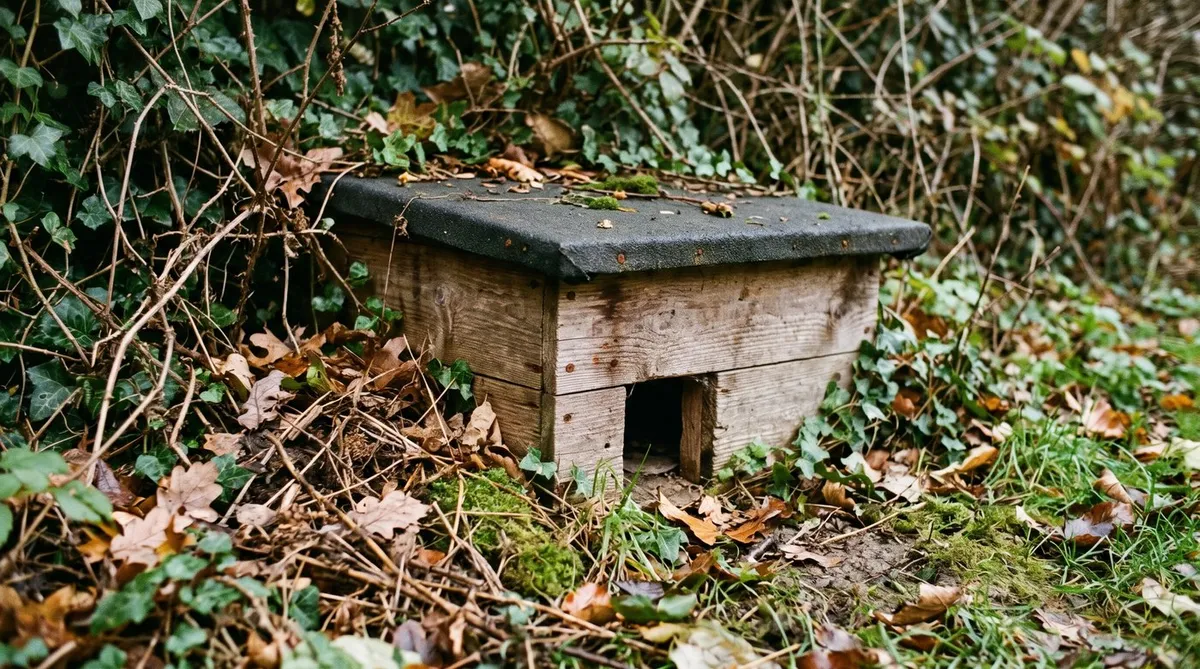
A hedgehog house is just a dry box with a 13cm square entrance and room inside for a nest of leaves. A short tunnel inside keeps predators out. You can build one from untreated wood in an hour or two. Or make a quick version from a plastic storage box. Put it somewhere quiet and shady against a hedge or fence, add dry leaves and leave the rest to the hedgehogs.
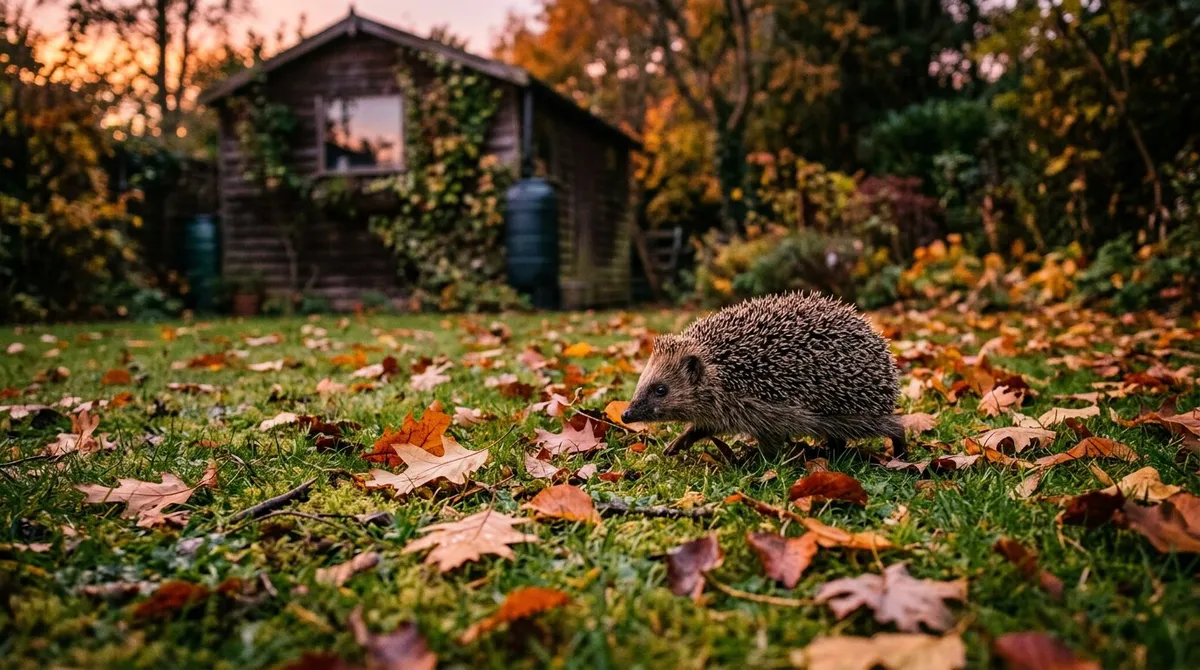
Autumn is the perfect time to build one, because hedgehogs are hunting for somewhere safe to hibernate. Here’s how to make both versions, where to put them and how to look after them.
Why build a hedgehog house?
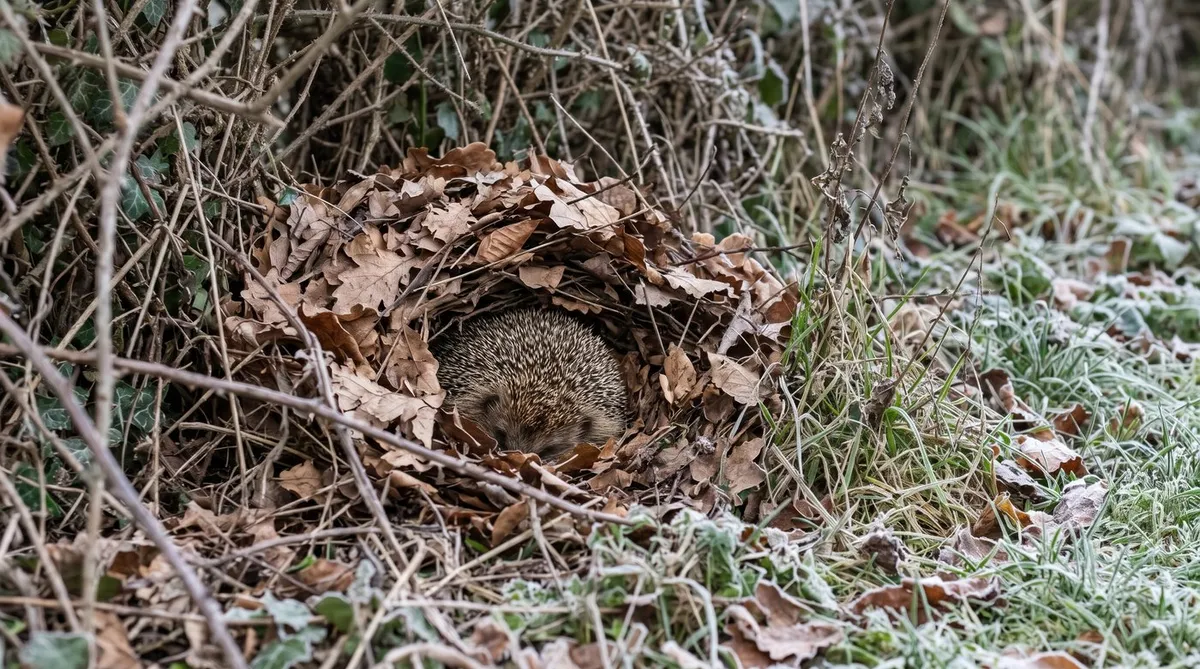
Hedgehogs have lost a lot of their natural shelter, such as thick hedges, brambles and leafy corners. They need dry, safe spots for sleeping in the day, raising young in summer and hibernating in winter.
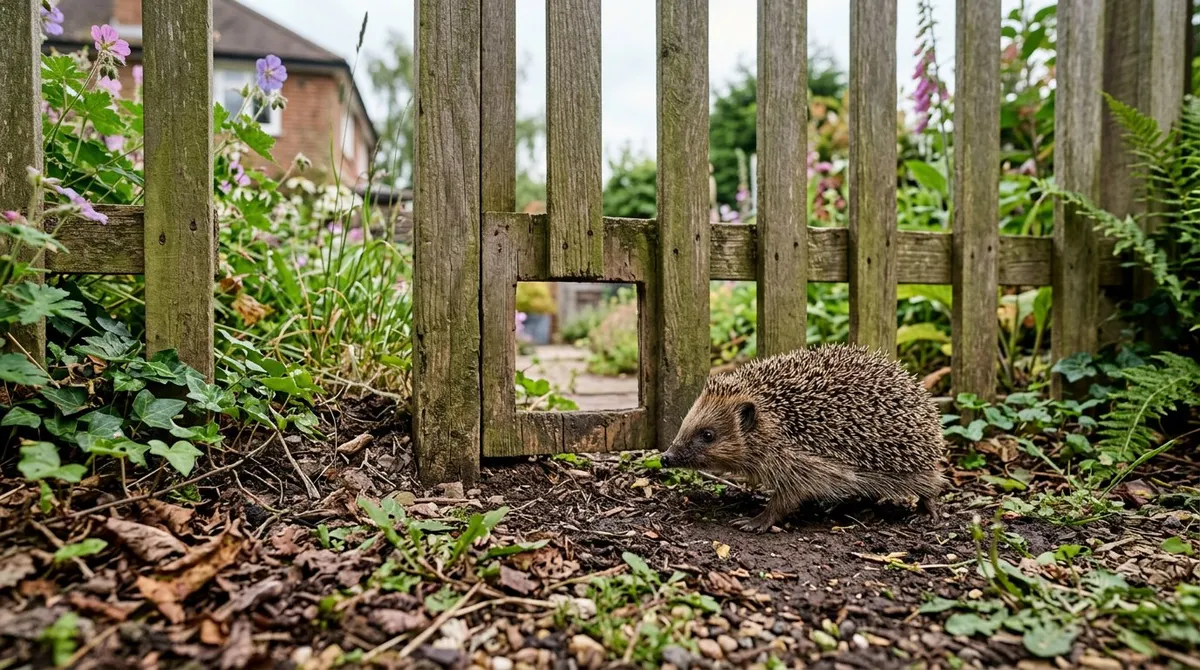
A house gives them all three. It works best alongside a garden they can get in and out of. Our guide to making a hedgehog highway shows how to cut a 13cm gap in your fence. For the wider picture, see our hedgehog-friendly garden guide.
What makes a good hedgehog house?
Whatever you build it from, a good hedgehog house has these things:
| Feature | Why it matters |
|---|---|
| Entrance 13cm by 13cm | Lets hedgehogs in but keeps most cats, foxes and badgers out |
| Inner wall or tunnel | Stops a predator reaching in with a paw |
| Inside space at least 30cm square | Room for a big nest of leaves |
| Air holes | Stops damp and condensation building up |
| Drainage holes | Lets any water run out |
| Lift-off roof | Makes cleaning easy |
| Untreated wood or safe plastic | Wood preservatives can harm wildlife |
How to build a wooden hedgehog house
This simple design takes an hour or two. Use untreated timber, 15-20mm thick. Larch, Douglas fir, cedar or old untreated pallet boards all work well.
Cut list
| Panel | Size | How many |
|---|---|---|
| Base | 45cm x 35cm | 1 |
| Side | 35cm x 25cm | 2 |
| Back | 45cm x 25cm | 1 |
| Front | 45cm x 25cm, with a 13cm x 13cm entrance at one end | 1 |
| Inner wall | 20cm x 20cm | 1 |
| Roof | 55cm x 45cm | 1 |
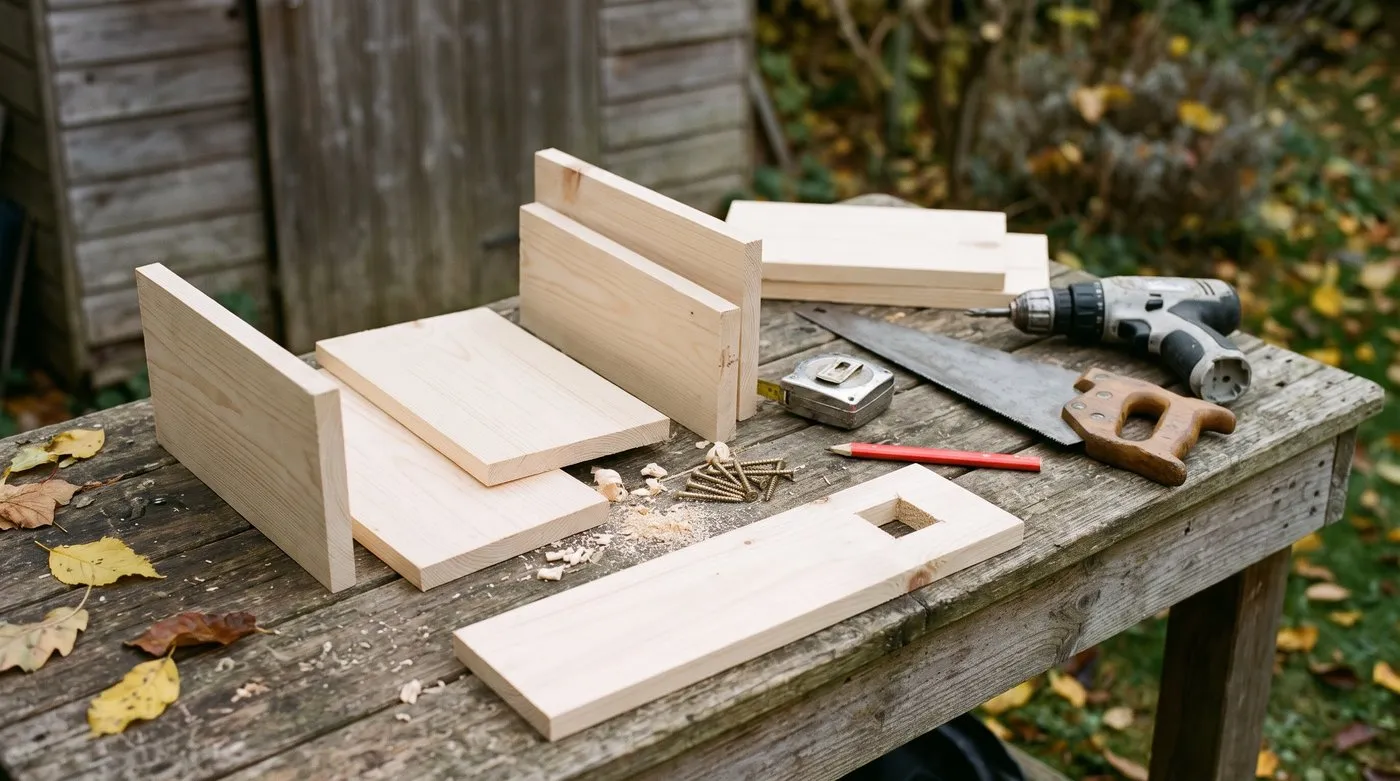
Cut all the panels first. Untreated pallet wood is perfect and costs nothing.
Step by step
- Cut the panels. Mark and cut each piece from the cut list.
- Cut the entrance. Mark a 13cm square at one end of the front panel, touching the bottom edge. Drill a hole in each corner, then saw between them.
- Fix the walls. Screw the back and two sides to the base, then add the front.
- Fit the inner wall. Screw the inner wall to the base about 15cm in from the entrance side, running front to back. Leave a gap of about 11-13cm at the back so hedgehogs can walk round it. This makes a little corridor that predators can’t reach along.
- Drill holes. Drill four or five 8mm air holes high up in the sides. Drill a few drainage holes in the base too.
- Make the roof. Cover the roof panel with roofing felt or old pond liner. Fold it over the edges and tack it underneath. Let it overhang on all sides.
- Leave the roof loose. Rest it on top and weigh it down with a brick or log. You’ll lift it off to clean the house.
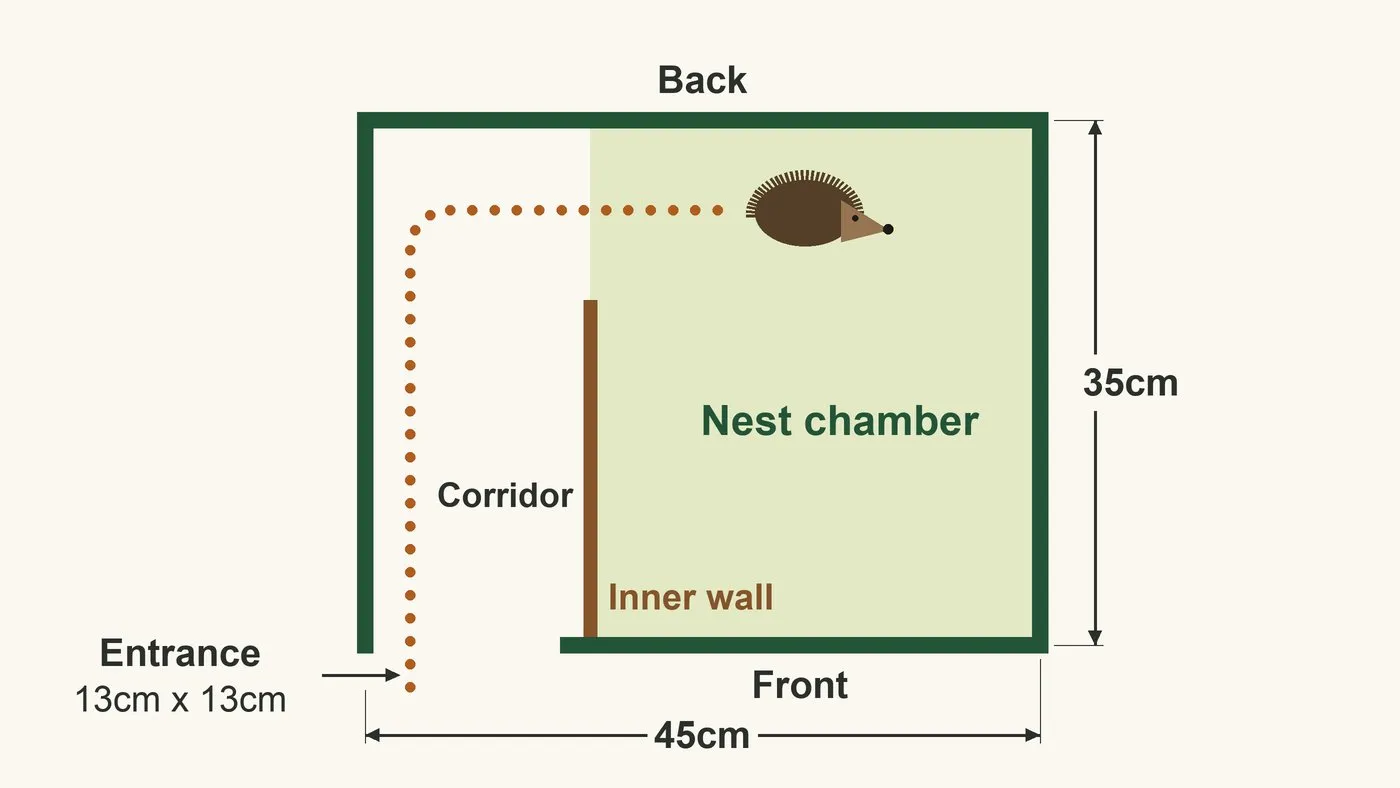
The inner wall makes a short corridor from the entrance, so a fox can’t reach round into the nest.
Gardener’s tip: Don’t paint or treat the wood, inside or out. Hedgehogs don’t mind a weathered, grey box, and you’ll avoid any harmful chemicals.
How to make a quick plastic-box hedgehog house
No tools or timber? A plastic storage box makes a cosy house in ten minutes. It’s a lovely project to do with children. See our wildlife activities for kids for more ideas.
- Find a plastic storage box, at least 40cm long. A crate with holes works too.
- Turn it upside down.
- Cut a 13cm by 13cm entrance in one of the long sides, at ground level. Tape over any sharp edges.
- Drill or melt a few air holes in the top and sides, so it can breathe.
- Put a handful of dry leaves inside.
- Cover the box with plastic sheeting, then pile leaves, soil or grass cuttings on top. This keeps it dark, dry and well hidden.
Never use a sealed box with no air holes. Condensation builds up fast and soaks the nest.
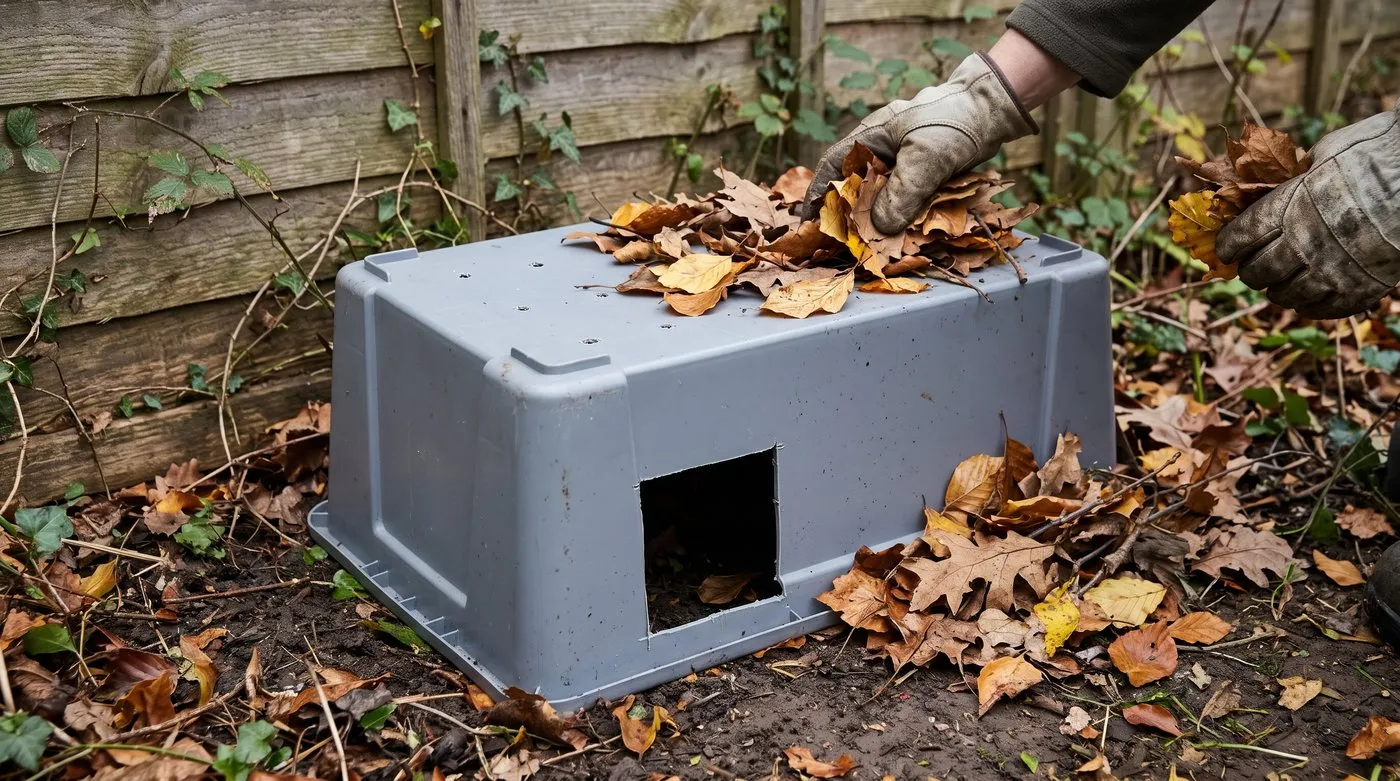
An upturned storage box with a 13cm door and plenty of air holes. Cover it with sheeting and leaves.
Where to put a hedgehog house
Position matters more than the build. Choose a spot that’s:
- Quiet. Away from paths, bins, play areas and the dog’s favourite patrol.
- Shady. Under a hedge, against a fence or tucked into thick shrubs.
- Sheltered. Turn the entrance away from the wind and rain. In most UK gardens that means facing roughly south or east.
- Level and firm. Set it on bare soil or a couple of paving slabs so it doesn’t rock.
Once it’s in place, pile leaves, twigs and branches over the roof and sides. It keeps the house warmer and makes it feel safe. A log pile next to it adds even more cover, and brings in beetles for hedgehogs to eat.
Bedding and food
Put a handful of dry leaves or clean straw inside. Hedgehogs prefer to build their own nest, so also leave a pile of dry leaves close by. Medium-sized leaves such as oak, beech, hornbeam and lime are their favourites.
Avoid hay, which can go mouldy. Our guide to making leaf mould is a handy way to use up any leaves the hedgehogs don’t need.
Don’t put food or water inside the house. Food attracts predators and makes the nest dirty. Put a shallow dish of water and some meaty cat or dog food a few metres away instead. Never give milk or bread.
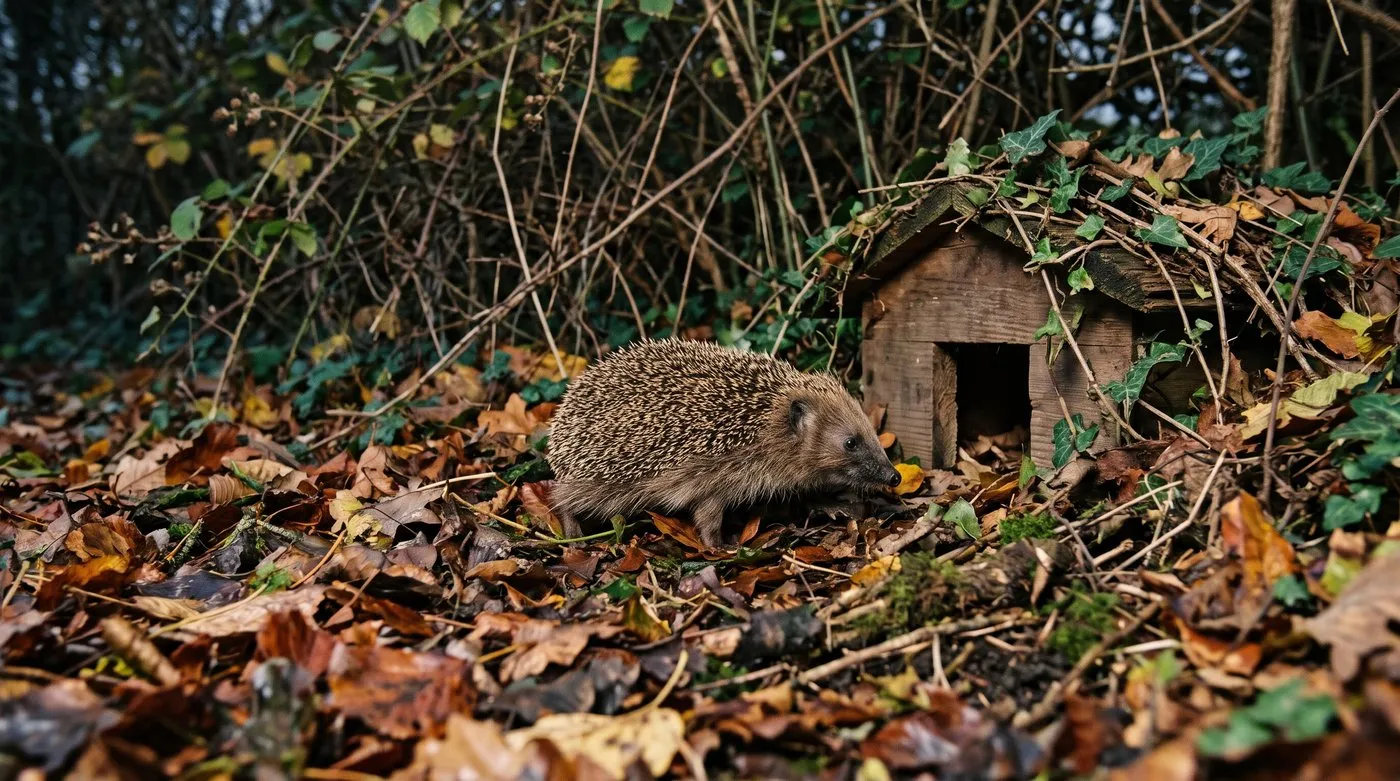
Hedgehogs often check out a new house in autumn. Give them a few weeks to find it.
How to tell if a hedgehog has moved in
Try not to peek, as disturbing a nest can make a hedgehog leave. Instead:
- The twig test. Lean a twig or a few leaves across the entrance in the evening. If they’ve been pushed aside by morning, something has been in.
- Footprints. Spread a little sand by the entrance and look for small, five-toed prints.
- Droppings. Hedgehog droppings are dark, sausage-shaped and often full of shiny beetle bits.
- A wildlife camera. Point it at the entrance from a few metres away.
Be patient. It can take a season or more before a hedgehog moves in.
When to clean out a hedgehog house
Clean it once or twice a year, and only at these times:
- April, after hibernation but before hoglets are born.
- October, after the young have left but before hibernation starts.
Do the twig test first to make sure it’s empty. If you find a hedgehog, put the roof back gently and leave it alone.
Wear gloves. Take out the old bedding and put it on the compost heap. Scrub the inside with boiling water and let it dry completely, then add a handful of fresh dry leaves.
Warning: Never clean or move a hedgehog house from May to September, when there may be babies inside. Leave it alone from November to March too, when a hedgehog may be hibernating. A disturbed mother can abandon her hoglets.
Hedgehog house calendar
| Month | What to do |
|---|---|
| March to April | Clean out the house once it’s empty. Put out fresh leaves |
| May to September | Leave it alone. Hoglets may be inside |
| September to October | Best time to build and place a new house |
| October | Clean out an old house if it’s empty. Leave leaves nearby |
| November to February | Leave it alone. Hedgehogs may be hibernating |
Common mistakes with hedgehog houses
Using treated or painted wood is an easy slip. Wood preservatives can harm hedgehogs, so use bare, untreated timber.
Making the entrance too big lets cats and foxes in. Stick to 13cm by 13cm, and always add a tunnel or inner wall.
Putting the house in the open, on a path or in full sun, means it’s unlikely to be used. Tuck it into a quiet, shady spot.
Checking inside every few days often scares hedgehogs away. Use the twig test and leave the roof alone.
Leaving food inside the house draws in predators. Feed a few metres away.
Forgetting how hedgehogs get in is a common one. A house in a sealed-off garden may never be found, so make sure there’s a gap in your fence.
Before an autumn bonfire, check the pile for hedgehogs, or build it on the day you burn it. The guide to bonfires on allotments covers the safest way to do it.
Frequently asked questions
What size should a hedgehog house entrance be?
Make it 13cm by 13cm. That’s big enough for an adult hedgehog but too small for most cats, foxes and badgers. A tunnel or inner wall behind it adds extra protection.
Where is the best place to put a hedgehog house?
Somewhere quiet and shady, against a hedge, fence or thick shrub. Turn the entrance away from the wind and rain, and avoid spots where people, pets or mowers pass often.
When should I put out a hedgehog house?
Any time, but September and October are best. Hedgehogs look for winter hibernation spots then. A house put out in spring may be used for summer nests.
Should I put food in a hedgehog house?
No. Food inside can attract predators and makes the nest dirty. Put meaty cat or dog food and a dish of water a short way from the house instead.
What bedding should I put in a hedgehog house?
A handful of dry leaves or clean straw is perfect. Hedgehogs like to build their own nest, so also leave a pile of dry leaves close by. Avoid hay, which can go mouldy.
How do I know if a hedgehog is using my house?
Lean a twig or a few dry leaves across the entrance one evening. If they’ve been pushed aside by morning, something has been in. A wildlife camera will tell you what it was.
When should I clean out a hedgehog house?
Only in April or October, and only when it’s empty. Check first by blocking the entrance loosely with a twig overnight. Wash it with boiling water and let it dry before adding fresh leaves.
Can I use a plastic box as a hedgehog house?
Yes. Turn a storage box upside down, cut a 13cm entrance and drill plenty of air holes. Cover it with plastic sheeting and leaves to keep it dry and dark.
For more ways to help garden wildlife through the cold months, read our winter wildlife guide. Then grab some old planks and build a hedgehog house this weekend.
Our team produces practical UK gardening guidance from source research, contributor records and established horticultural practice. Editorial standards are overseen by Matt W.