Key takeaways
- Flying ant day is the mating flight of black garden ants (Lasius niger)
- Triggered by warm, humid, still weather, usually mid-July in the UK
- Not one day: several regional flights spread over two to three weeks
- The winged ants are harmless queens and males; they do not sting
- They aerate soil and feed gulls, swifts and garden birds
- Never use boiling water or insecticide; sweep off paving instead
Flying ant day is one of the few wildlife events the whole country notices at once. For a few hours on a muggy July afternoon, the air fills with winged ants, gulls go berserk, and phones light up with “is this normal?”. It is normal. This guide covers what triggers the flight, why the ants are harmless, and what to actually do when they land on your patio or get near the back door.
What Flying Ant Day Actually Is
Flying ant day is the nuptial flight of the black garden ant, Lasius niger. This is the species in almost every UK lawn, patio and pavement crack.
For most of the year you only see the wingless workers. Once a year the colony produces winged queens and winged males. On the right day they all leave the nest together and take to the air to mate. Mating happens on the wing.
Who is flying:
- Large winged females (new queens), up to 15mm long
- Smaller winged males, around 8mm
- No workers; the ants you see swarming cannot sting you
The males die soon after mating. Each surviving queen lands, bites off her own wings, and looks for a crack or crevice to start a new colony. That single queen can live 15 to 20 years and head a nest of thousands.
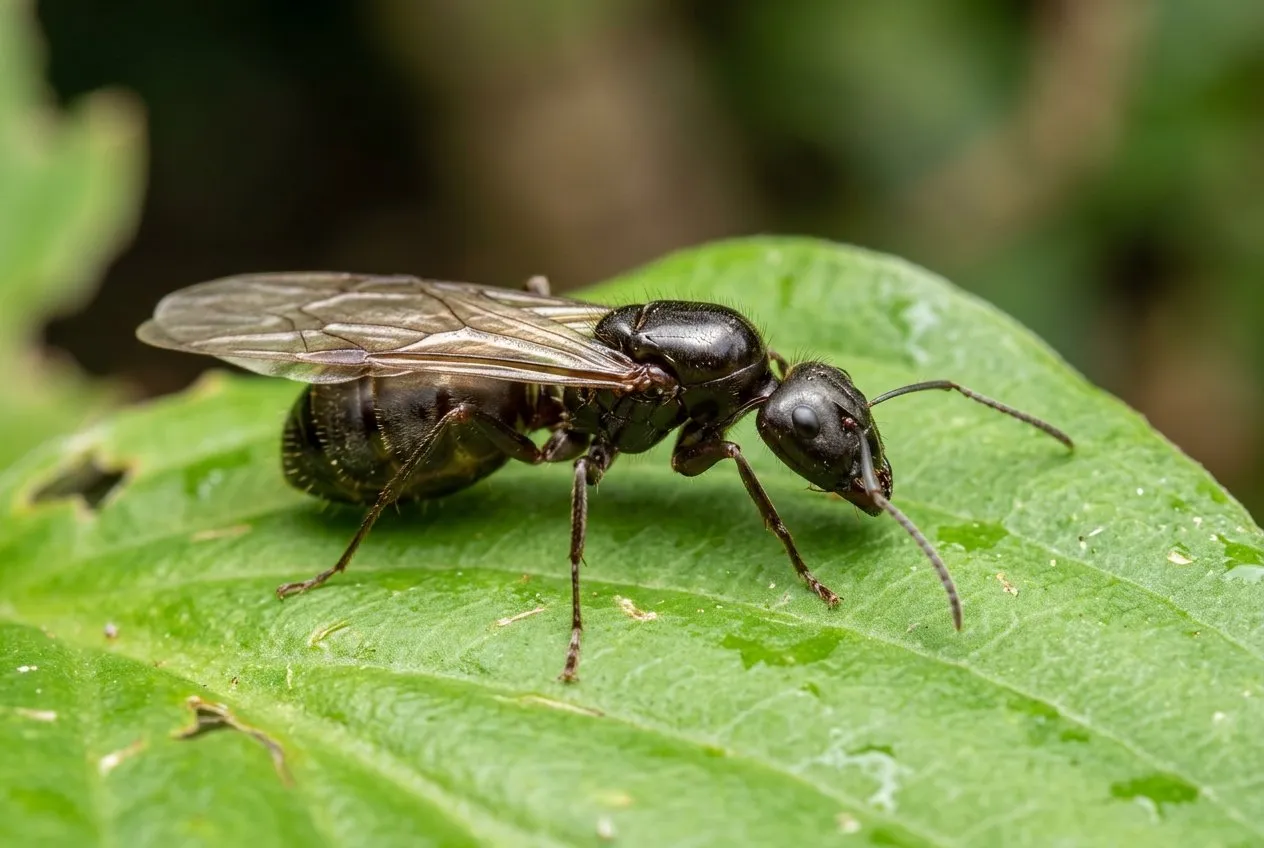 A new queen of Lasius niger photographed close up at Staffordshire in mid-July. At around 15mm she dwarfs the males. After mating she bites off her own wings and digs in to found a colony that can last two decades.
Why They All Fly On The Same Day
The synchrony is the clever part. Thousands of separate nests release their queens and males within the same few hours, often across a whole town.
The trigger is weather, not the calendar. Black garden ants wait for a specific set of conditions before they fly.
| Condition | What the ants want |
|---|---|
| Temperature | Warm, above about 25°C |
| Humidity | High, muggy air |
| Wind | Still or very light |
| Timing | Often a hot afternoon after recent rain |
| Pressure | Settled, after an unsettled spell |
Flying in a synchronised mass is a survival tactic. It swamps predators, so most ants get through, and it mixes queens and males from different nests so colonies do not inbreed. A lone queen flying on her own would simply be eaten.
This is why the date jumps around each year. In a cool, wet July the flight slips later. In a hot, settled spell it comes early. The ants read the weather, not a fixed day.
When Flying Ant Day Happens In The UK
There is no single national flying ant day. The name is a bit of a myth. In practice there are several flights, spread across regions over two to three weeks.
Most UK flights happen in mid-July. The Royal Society of Biology ran a flying ant survey for several years and found activity clustered around mid to late July, but spread far wider than one date once the weather varied. You can read about their findings at the Royal Society of Biology.
- Southern England often flies first, in early to mid-July
- The Midlands follows a few days later
- Northern England, Scotland and higher ground later still
- A single warm spell can set off a whole region within 48 hours
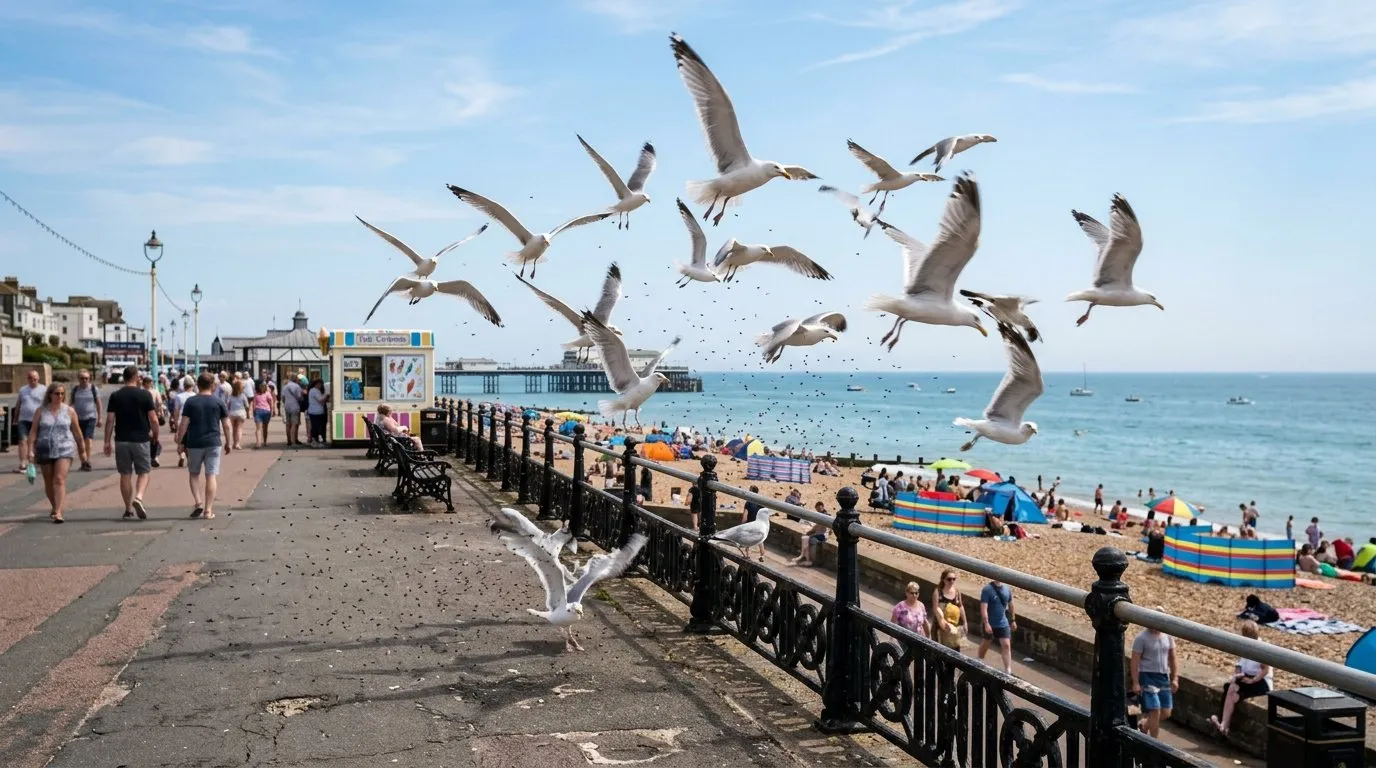 Herring gulls feeding on a flying ant swarm over a Lancashire seaside promenade in July. Gulls gorge on the fat-rich queens. The formic acid in the ants is harmless to the birds, despite the old tale that it makes them “drunk”.
Why Flying Ant Day Is Good For Your Garden
The instinct is to treat the swarm as a pest event. It is the opposite. Black garden ants do real, measurable good in a garden.
What the ants do for you:
- Aerate and drain the soil through their tunnels
- Recycle nutrients as they move organic matter underground
- Feed huge numbers of birds during the flight
- Eat aphids and other small pests as workers through the year
The “drunk gulls” story is folklore. Gulls do behave oddly during a swarm, lurching about on roads, but it is gluttony and distraction, not intoxication. The formic acid in the ants does not get them drunk. They are simply gorging.
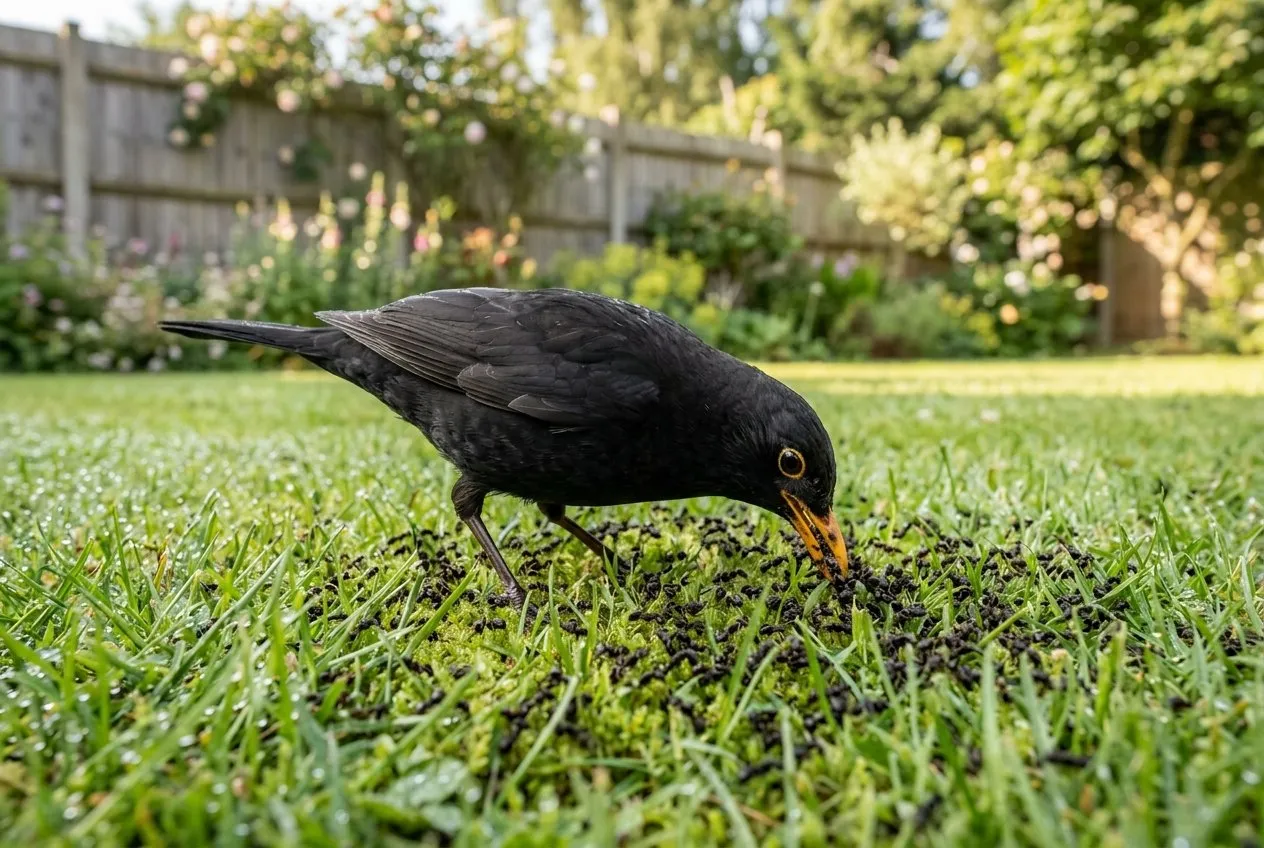 A blackbird working a flying ant swarm on a Birmingham suburban lawn in July. Ground-feeding birds clean up the spent ants once the flight ends. Encourage them and the swarm self-clears within a day.
What To Do On Flying Ant Day
The short answer is: very little. The flight lasts a few hours and the garden sorts itself out. But there are sensible jobs if the ants are in your way.
On the patio or path:
- Sweep them up with a stiff broom and dustpan
- Tip them onto a border or the lawn, where birds finish them off
- Hose paving down with plain water if you want it clear faster
- Leave it an hour or two; most will simply fly off
Keeping them out of the house:
- Shut doors and windows during the flight, especially on the sunny side
- Close trickle vents on hot afternoons in mid-July
- Wipe up any food and crumbs that draw workers indoors
- Vacuum any strays inside, then empty the bag or canister outdoors
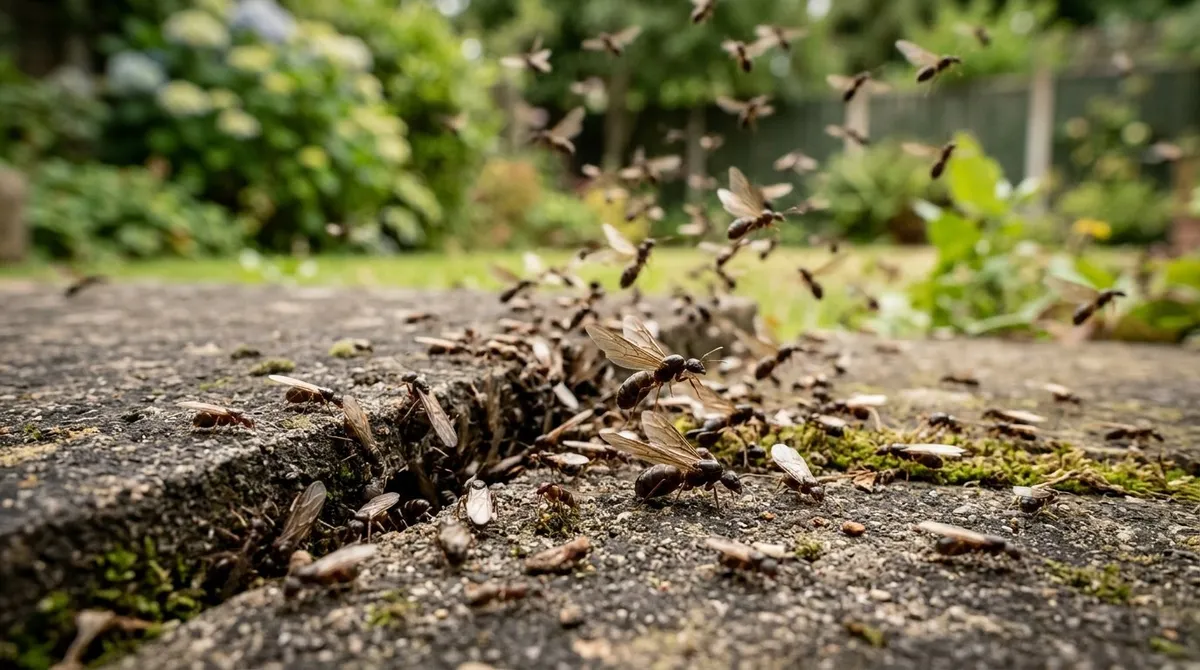
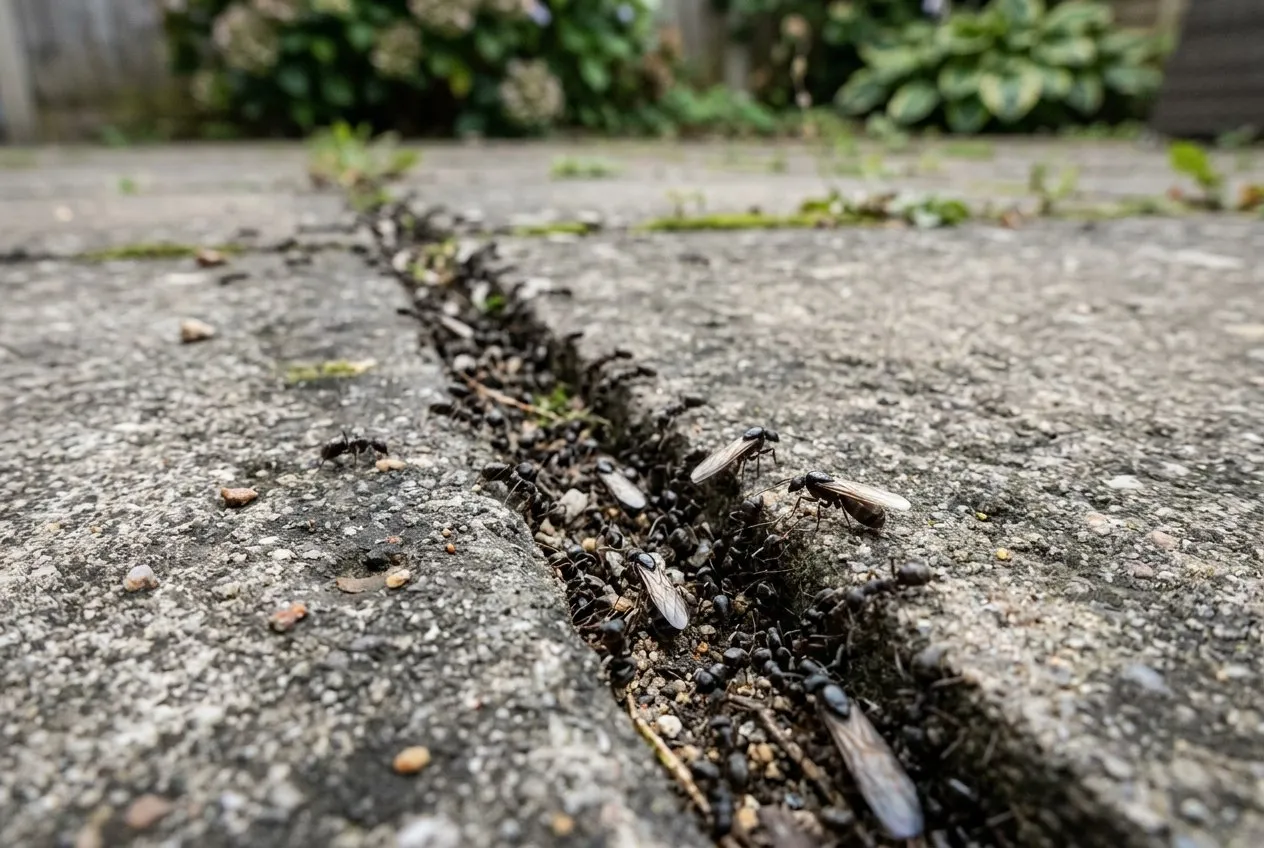 Ants streaming along a patio joint at Staffordshire on the morning of a flight. The nest below has spent months aerating the soil under the slabs. A broom clears the surface without harming the colony.
Why You Should Never Use Boiling Water Or Insecticide
Why boiling water fails:
- It scalds the plants and grass either side of the nest
- It rarely reaches the queen deep underground
- The colony simply rebuilds within weeks
- It does nothing about the flight, which is already airborne
Why insecticide is worse:
- It kills the soil-aerating workers you actually benefit from
- It poisons the birds that then eat the dying ants
- It leaches into borders and harms other ground insects
- It is pointless against a swarm that disperses on its own
If you are tempted to act because the ants are “ruining the lawn”, the honest fix is the opposite of poison. A healthy, well-fed lawn shrugs off ant nests. Our guide to feeding a lawn covers the timing that keeps grass dense enough to grow over an anthill.
When Ants Are Actually A Problem
Flying ant day itself is never a structural problem. But ants can occasionally be a genuine nuisance, and it helps to know the difference.
Harmless and normal:
- A swarm on flying ant day, gone by evening
- Anthills in the lawn that birds and a mower deal with
- A nest under a slab that does no real harm
Worth acting on:
- A persistent indoor trail to food, week after week
- A nest lifting and tilting paving over several seasons
- A nest against a house wall causing repeated indoor invasions
Even then, the answer is rarely poison. Block the entry point, remove the food source indoors, and relay loose slabs on a proper mortar bed. For lawns, ant nests often signal poor grass cover. A nest in a thin, mossy lawn is a symptom; our guide to getting moss out of a lawn tackles the underlying weakness that lets nests dominate.

How To Predict The Flight
You can read the signs and get a day or two of warning. Useful if you have a barbecue or washing out.
The pattern to watch:
- An unsettled, cooler spell, then a hot, humid, still afternoon
- Workers gathering at nest entrances, looking agitated
- Winged ants massing just inside the nest holes before they go
- Temperatures pushing 25°C with muggy, thundery air
Pets are no cause for worry either. Cats and dogs sometimes snap at the swarm, and an inquisitive dog may eat a few ants. Lasius niger is not toxic, and a mouthful of harmless garden ants does no lasting harm. Keep water down on a hot day and there is nothing else to manage.
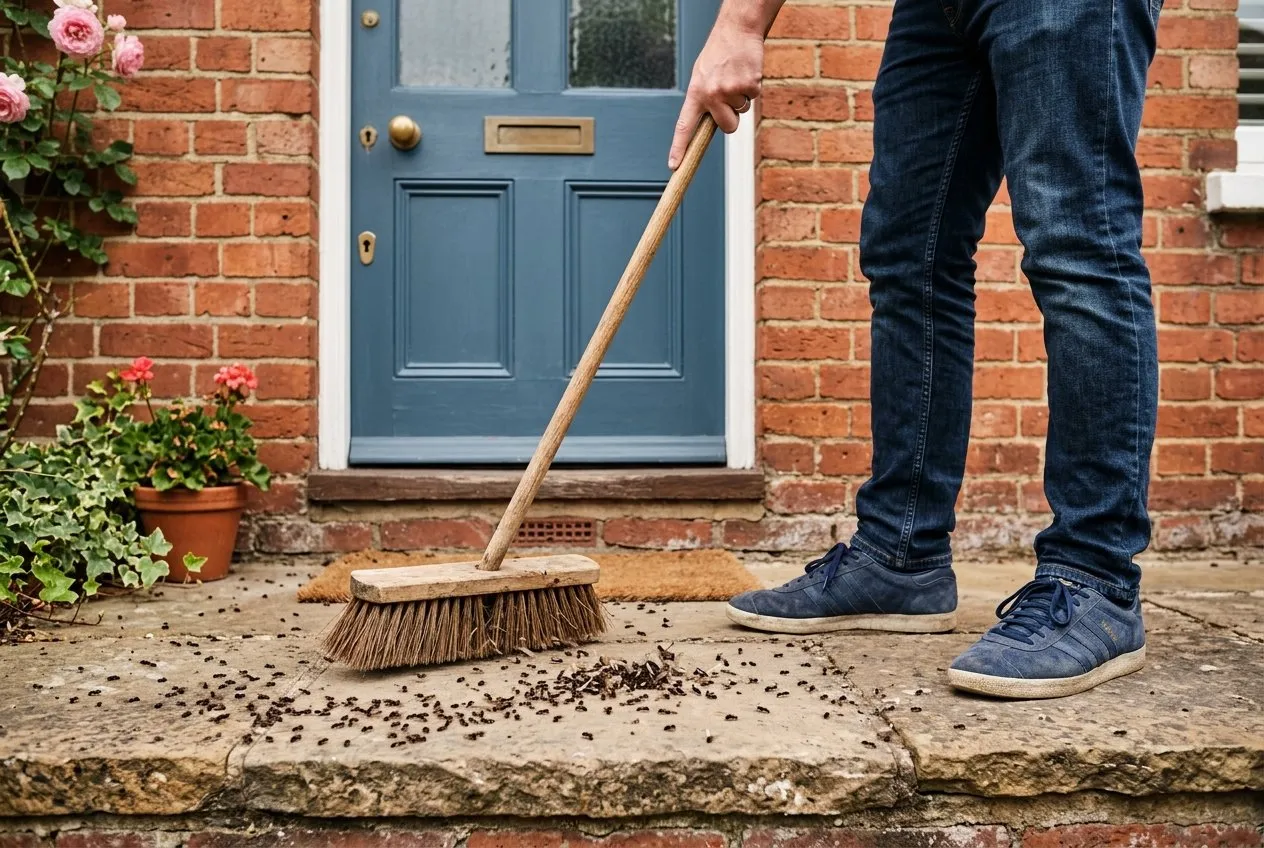 Sweeping flying ants off a terraced-house doorstep in Manchester in July. A yard brush and two minutes is the whole job. No boiling water, no powder, no harm to the colony below.
Flying Ant Day Calendar UK Month-by-Month
| Month | What the ants are doing |
|---|---|
| January | Colony dormant underground; queen overwintering |
| February | Still dormant; no surface activity |
| March | Workers begin to stir as soil warms |
| April | Foraging resumes; nests rebuild |
| May | Winged ants developing inside the nest |
| June | Late-June flights possible in very hot summers |
| July | Peak flying ant day window; main flights |
| August | Late or second flights after a cool July |
| September | Flights over; workers foraging hard |
| October | Activity slowing as soil cools |
| November | Colony winding down for winter |
| December | Fully dormant; queens overwintering |
Frequently asked questions
What is flying ant day?
It is the synchronised mating flight of black garden ants. Winged queens and males leave the nest together to mate in the air. It happens on warm, humid, still days, usually in mid-July across the UK. The ants are harmless.
When is flying ant day in the UK?
Usually mid-July, but there is no single fixed date. Flights are triggered by warm, humid, still weather and spread across regions over two to three weeks. A hot spell after rain is the classic trigger. Southern England often flies a few days before the Midlands and north.
Are flying ants dangerous?
No. Flying ants are black garden ants and do not sting. The winged ants are mating queens and males, not workers. They do not bite people in any meaningful way. They are gone within a few hours and harm nothing in the garden.
How do I get rid of flying ants on my patio?
Sweep them off with a stiff broom and a dustpan. Do not use boiling water or insecticide on this beneficial species. Shut nearby doors and windows so they do not come indoors. The flight lasts a few hours, so waiting it out usually works.
When are ants an actual problem?
Only when a nest undermines paving or gets into the house repeatedly. Flying ant day itself is never a structural problem. Persistent indoor trails to food, or a nest lifting slabs over several seasons, are the cases worth acting on.
Now plan the wider wildlife garden
Our team produces practical UK gardening guidance from source research, contributor records and established horticultural practice. Editorial standards are overseen by Matt W.