Key takeaways
- The small volcano mounds with a central 4mm hole are mining bee nests, not pests
- Most are Andrena species, including the fox-red tawny mining bee Andrena fulva
- They are active March to June, then gone by early summer for the rest of the year
- Females almost never sting and males cannot sting at all, so they are safe around children and pets
- The burrows cause no lasting lawn damage and the mounds wash or mow away in two to three weeks
- The best action is to leave them be: they are early pollinators of apple, pear and cherry blossom
Mining bees are the most common reason small volcano-shaped mounds appear in a UK lawn each spring. If you have spotted neat cones of soil with a single hole on top, mining bees are almost certainly the cause. These are solitary bees, mostly Andrena species, and the bright fox-red one many people notice is the tawny mining bee (Andrena fulva). Each female digs her own private burrow and pushes the excavated soil into a tidy mound at the surface.
This guide shows you how to tell a mining bee nest from wasps, ants and other lawn diggers. It explains the spring nesting cycle, why the bees pose almost no sting risk, and why they leave no lasting damage. There is a simple answer at the end of it. In nearly every case the right move is to leave them alone and let an important early pollinator finish its short season.
How to Identify a Mining Bee Nest in Your Lawn
A mining bee nest is easy to recognise once you know the shape. Look for a small conical mound of fine soil, usually 30 to 50mm across, with a single round hole about 4mm wide in the centre. The soil looks freshly turned and slightly granular, like a tiny molehill. One mound means one female and one burrow.
The bees themselves are the giveaway. Mining bees are furry and solitary, not smooth and swarming. The female tawny mining bee is covered in dense, bright orange-red hair from head to tail, roughly the size of a honeybee at up to 1.2cm long. Males are smaller and browner, with a white tuft of hair on the face, and they take no part in digging.
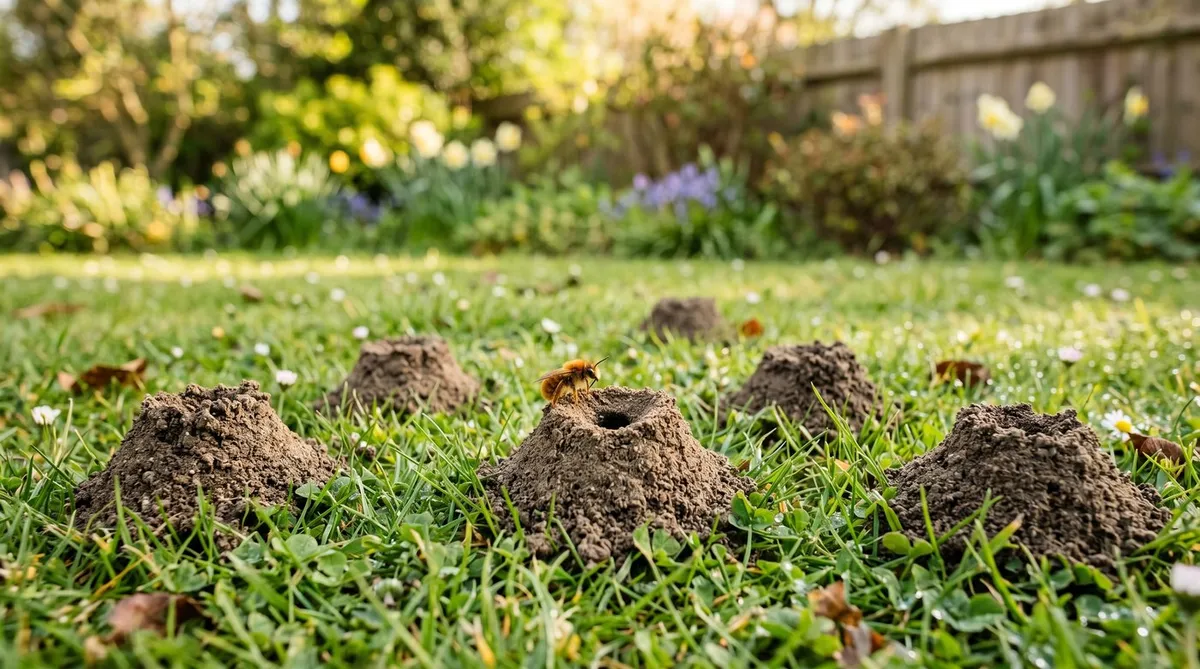
You will often see several mounds grouped in one area. This is not a colony in the social sense. Each female works alone, but many choose the same patch of warm, well-drained soil. Watch for a few minutes and you see individual bees flying low, landing and dropping into their own separate holes.
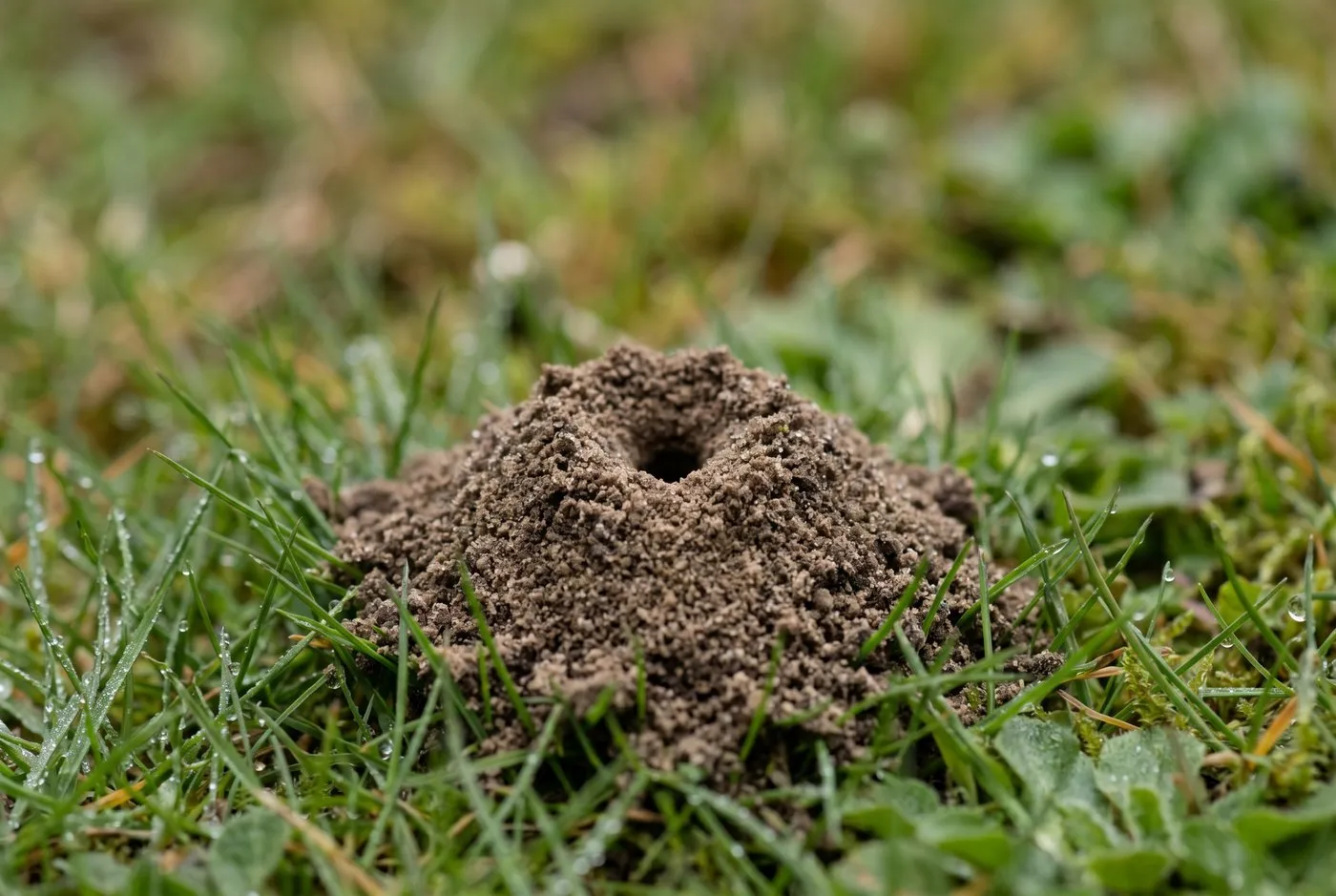 A single mining bee mound in a Staffordshire lawn. The neat cone of fine soil with one central hole about 4mm wide is the clearest sign of a mining bee, not a pest.
Mining Bee vs Honeybee, Bumblebee, Wasp and Ant Mound
Telling mining bees apart from other garden visitors stops most needless worry. The fastest test is the nest itself: a single central hole in a small soil cone is a mining bee, not a shared nest. The table below sets the differences side by side so you can name what you are seeing in seconds.
| Feature | Mining bee (Andrena) | Honeybee | Bumblebee | Wasp | Ant mound |
|---|---|---|---|---|---|
| Nest type | Single burrow, soil mound | Large shared hive | Shared nest in a cavity | Shared paper nest | Shared colony, loose soil |
| Lawn sign | Cone with one 4mm hole | None in lawn | None in lawn | None in lawn | Loose granular heap, many ants |
| Body | Furry, fox-red or brown | Slim, amber-brown | Large, round, very fuzzy | Smooth, bright yellow-black | Tiny, six-legged, no wings mostly |
| Behaviour | Docile, flies low and alone | Forages, defends hive | Gentle, bumbling flight | Can be aggressive late summer | Swarms when disturbed |
| Sting risk | Almost none | Moderate near hive | Low | High in autumn | Bites, some sting |
| Season at nest | March to June | All season | Spring to autumn | Spring to autumn | Spring to autumn |
The honeybee and bumblebee never build mounds in your lawn, so a soil cone rules them out at once. A wasp is smooth and shiny, while a mining bee is clearly furry. The one real lookalike on the ground is an ant nest, which we cover next.
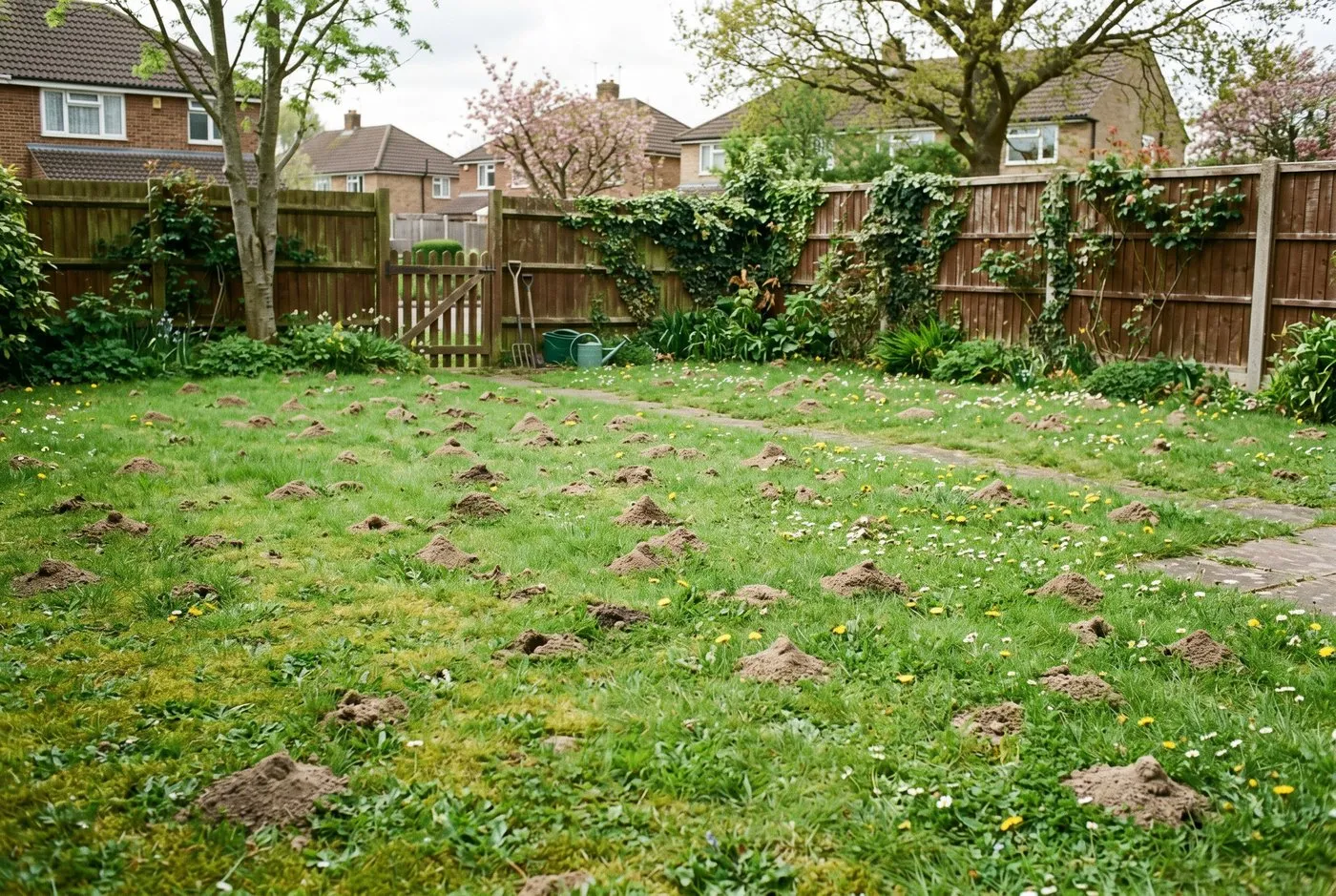 Many mining bee mounds spread across a spring lawn. Each cone is one female working alone, which is why they cluster yet never form a single shared nest.
Telling a Mining Bee Mound From an Anthill
Mining bee mounds and anthills both appear as raised soil, but the detail separates them. A mining bee mound is a single neat cone with one clear hole in the middle, built by one bee over a day or two. The soil sits in a tidy ring around that central entrance.
An anthill is looser and more spread out. Ants push up fine granular soil across a wider, flatter heap, and there is no single 4mm entrance hole on top. Disturb it gently and dozens of ants pour out, which never happens with a bee burrow. A mining bee nest stays quiet, with one bee coming and going.
Timing helps too. Mining bee mounds appear suddenly in March to June, then vanish by early summer. Ant activity peaks later, through the warm months into autumn, and the same nest can persist for years. If your mounds arrived with the daffodils and faded by June, they are mining bees.
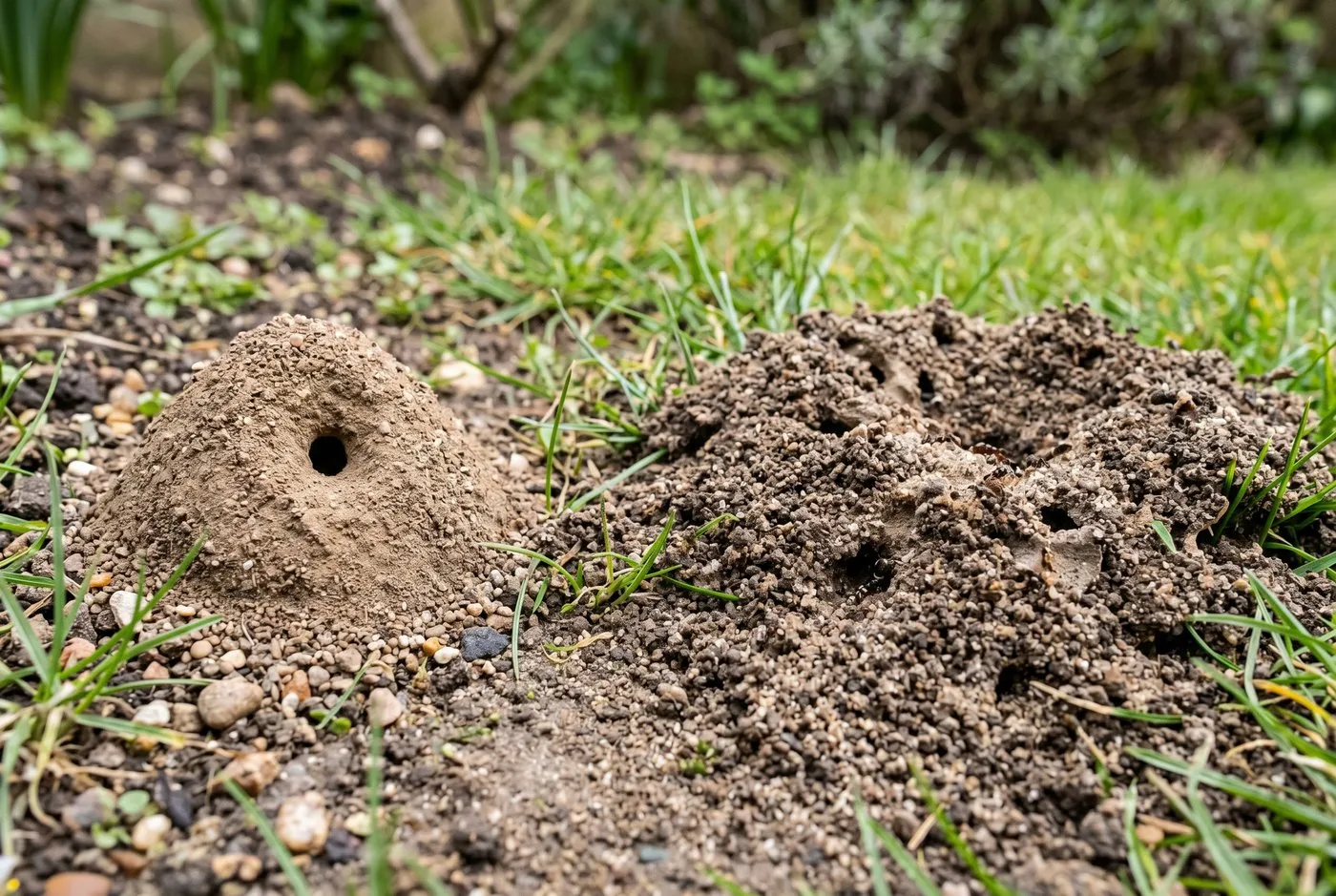 A mining bee cone on the left, an ant nest on the right. The single central hole marks the bee burrow, while the ant heap is looser with no one entrance.
The Mining Bee Nesting Cycle Through Spring
Understanding the cycle explains why the mounds come and go so fast. Mining bees spend most of the year underground and surface for only a few weeks. The whole visible phase runs from March to June, peaking in April and May, and matches the flowering of fruit blossom.
The sequence is simple and worth knowing.
- Emergence (March to April). Adults that overwintered as pupae dig their way out of last year’s cells. Males appear first, then females.
- Mating and digging (April to May). Each mated female excavates a vertical burrow 100 to 300mm deep, pushing soil up into the surface mound.
- Provisioning (April to June). She stocks small side cells with pollen and nectar, lays one egg in each, then seals them.
- Adult die-off (late May to June). The adults finish nesting and die. The mounds wash flat or mow away within two to three weeks.
- Underground year (June to next spring). Larvae feed on the pollen store, pupate, and hibernate as pupae through autumn and winter, ready to emerge the next spring.
The critical mistake is treating the mounds as a permanent problem. By the time most people notice them and worry, the adults are already near the end of their six to eight week season. Acting against them is almost always pointless, because they leave on their own within weeks.
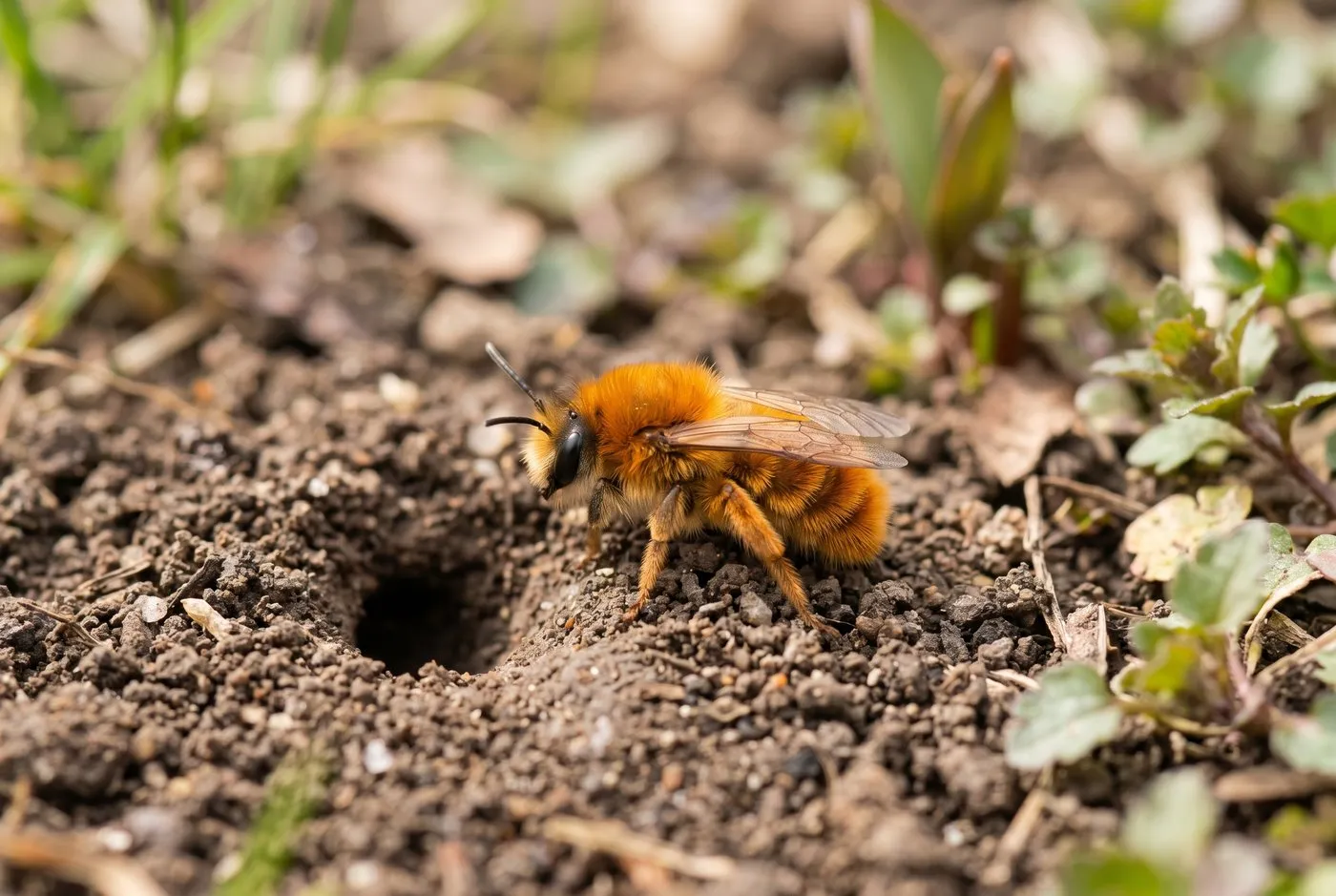 A female tawny mining bee beside her burrow. The dense fox-red coat marks Andrena fulva, the species most gardeners notice nesting in their spring lawn.
Are Mining Bees Dangerous and Do They Sting?
Mining bees are among the most harmless insects in the garden. Females can technically sting but almost never do, and they are very reluctant even under direct handling. Male mining bees have no sting at all. There is no nest to defend in the way a wasp or honeybee defends a shared colony, so the bees have little reason to act aggressively.
Reassurance tip: You can walk barefoot across a mining bee patch without real risk. The sting, if it ever comes, is weaker than a honeybee’s and the bees would rather flee than fight. Sit and watch them instead. A nesting aggregation in April is one of the best wildlife shows a small garden offers.
If anyone in the household has a known bee-sting allergy, give the patch a wide berth during the few weeks of activity, as you would with any bee. For everyone else, the risk is close to zero.
What to Do About Mining Bees in Your Lawn
Faced with mining bees, you have three broad options, and they are not equal. The table ranks them by how well they serve both you and the bees. The clear recommendation is the first row: leave them alone.
| Option | Role | How well it works | What it cannot do |
|---|---|---|---|
| Leave them alone | Best choice | Mounds gone in 2-3 weeks, bees pollinate, no harm | Nothing: there is no downside to fix |
| Encourage them | Good for wildlife | Supports an early pollinator, fun to watch | Will not stop new mounds appearing each spring |
| Discourage with denser turf | Last resort only | Fewer mounds next year as bare soil is covered | Slow, partial, no effect on the current season |
| Insecticide | Never do this | No legitimate benefit | Kills a beneficial pollinator and is unjustified |
The gold-standard response is simply to do nothing. The bees finish in weeks, the lawn recovers fully, and you have hosted a useful pollinator for free. If you actively want more, leave a sunny strip of thin grass undisturbed and they will likely return.
Only if you truly cannot accept the mounds should you discourage them, and even then never with chemicals. Mining bees prefer sparse, dry, bare soil. Thicken the lawn by overseeding in autumn and keep it watered in dry spells, so there is less open ground for next year’s females to dig.
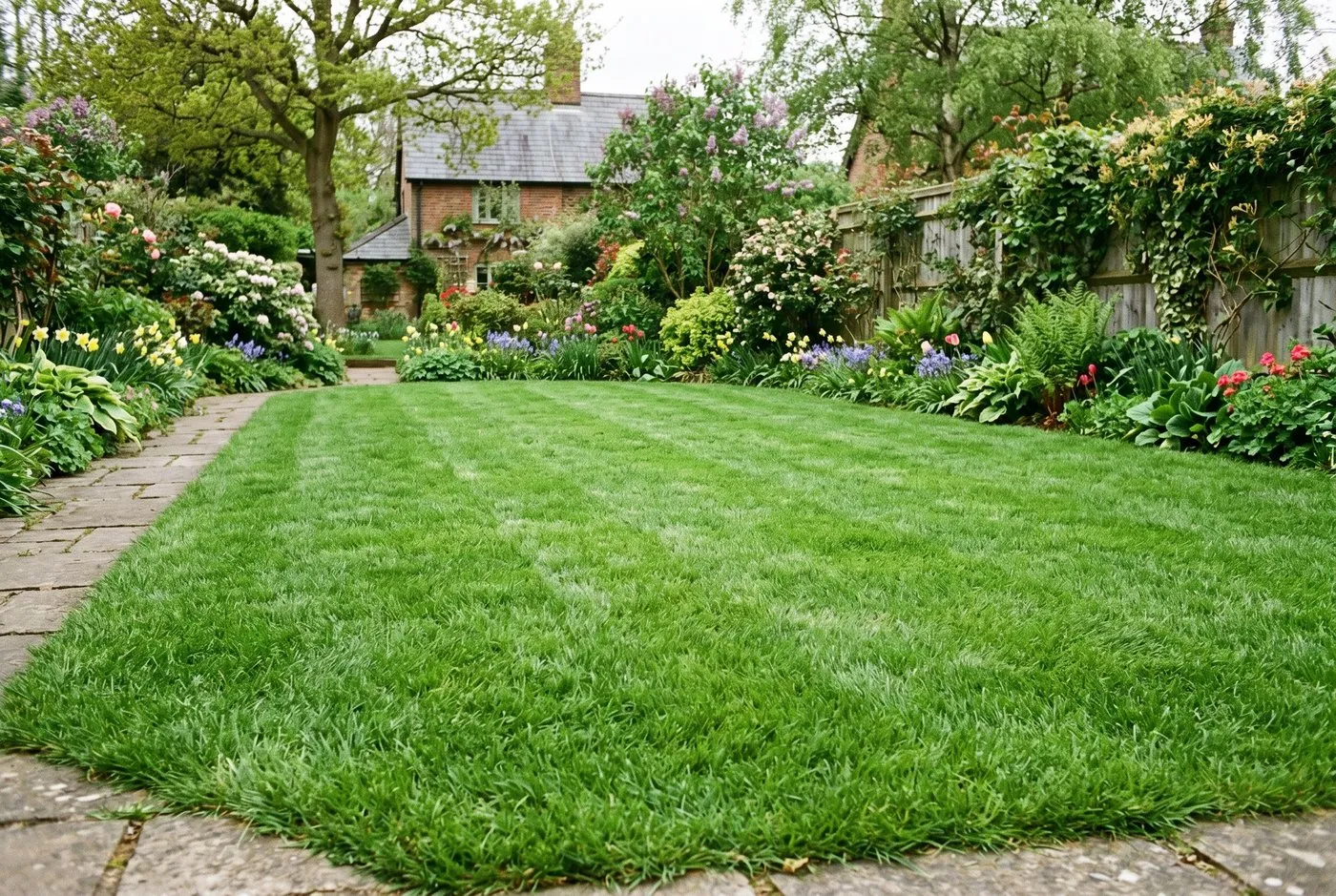 A thick, well-watered lawn like this gives mining bees little open soil to dig. Overseeding thin patches in autumn is the only humane way to reduce mounds next spring.
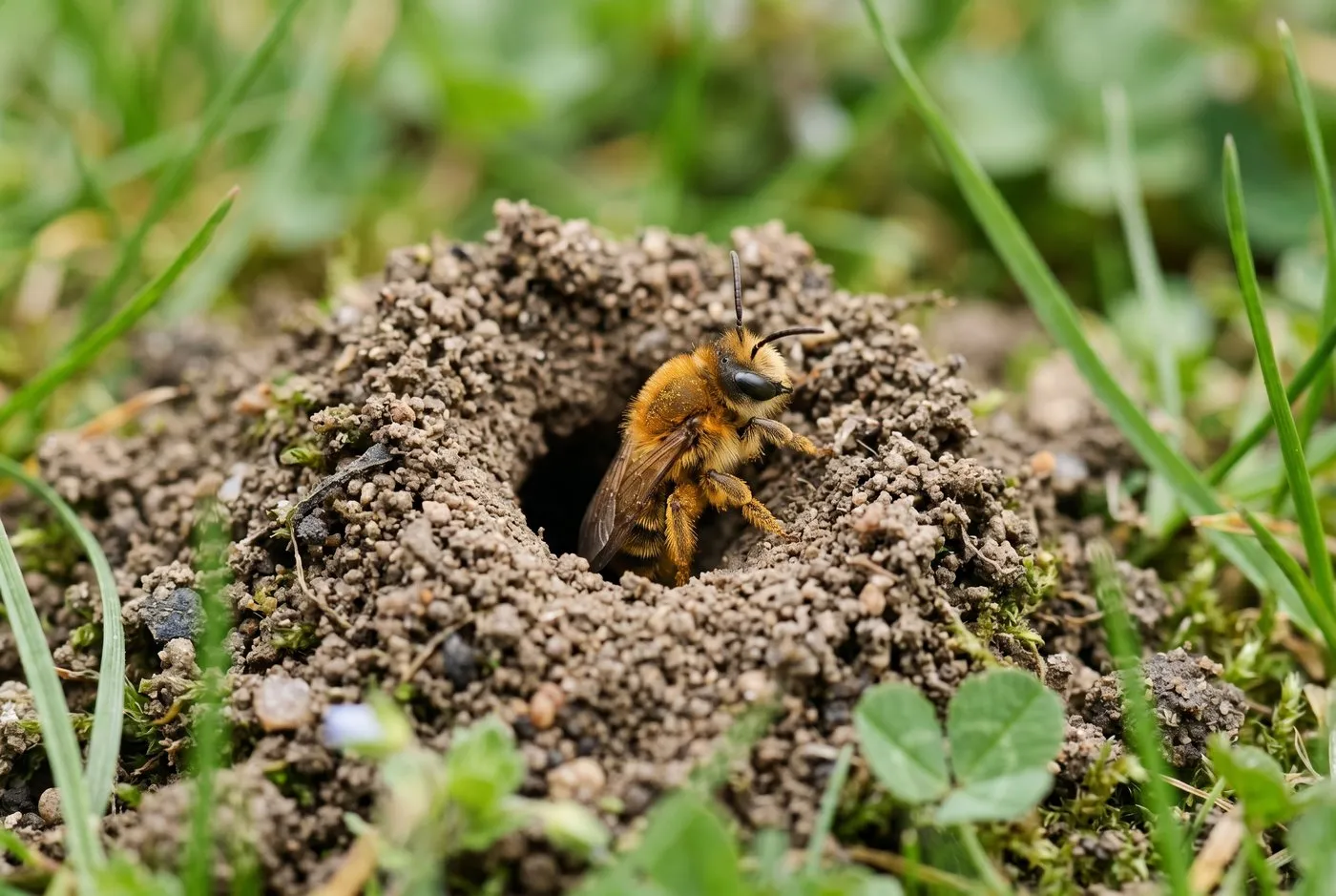 A mining bee at its burrow entrance. Leaving the nest in place lets her finish provisioning, and the mound flattens on its own within a fortnight or two.
Why Mining Bees Are Worth Keeping in the Garden
Mining bees earn their place as early-season pollinators. They are on the wing from March, when little else is flying, and they work the blossom of apple, pear, cherry and plum just as those trees need pollinating. The tawny mining bee is a known pollinator of oilseed rape and many garden plants too.
Their conservation value matters. The UK has around 250 species of solitary bee, and many Andrena species are in long-term decline as nesting habitat disappears. A lawn that hosts a small aggregation is providing exactly the warm, open soil these bees struggle to find elsewhere. Keeping it is a genuine, low-effort contribution.
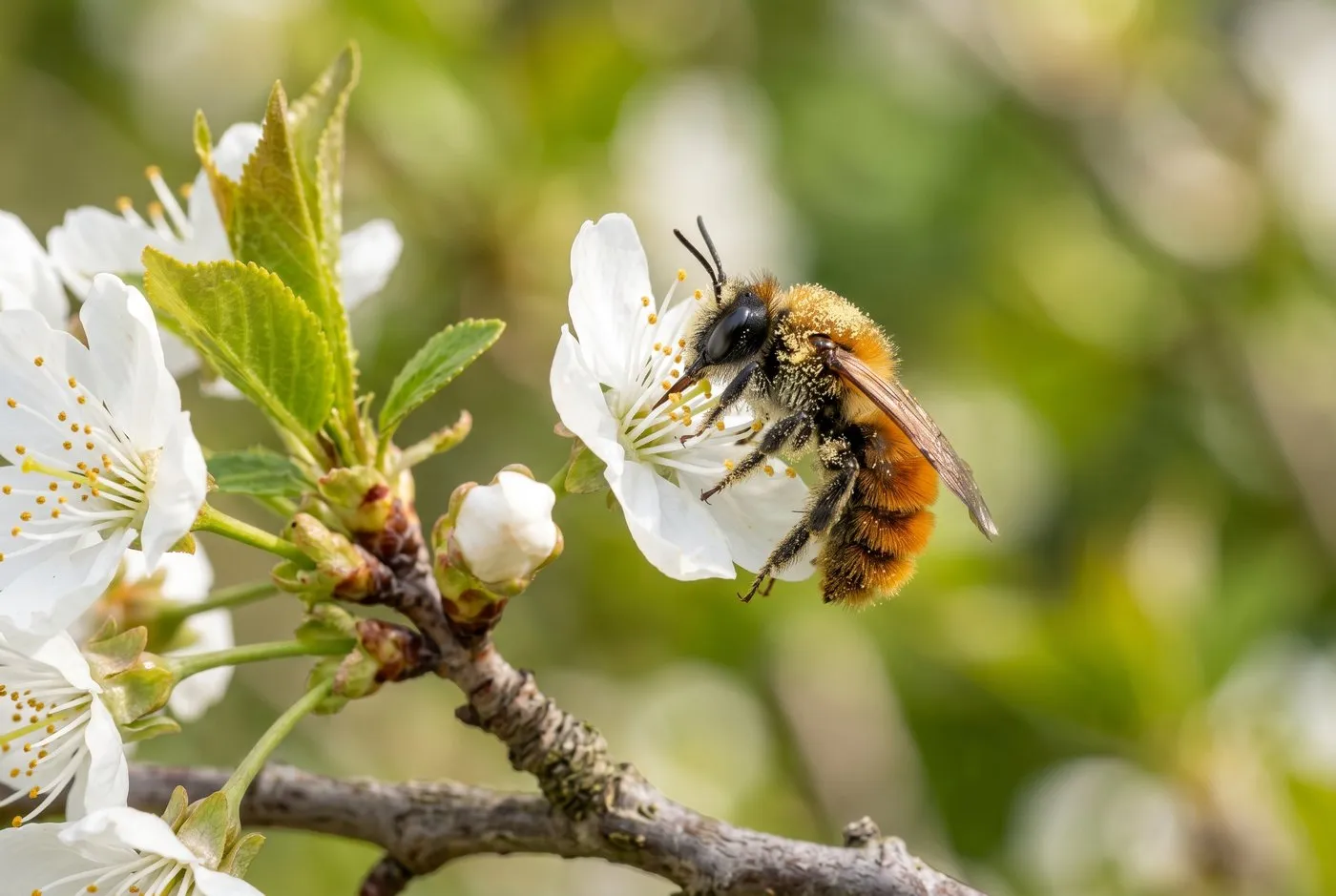 A mining bee working fruit blossom in April. These early fliers pollinate apple, pear and cherry just as the trees need them, weeks before most other bees appear.
Mining Bees Through the UK Year
Mining bees follow a tight annual rhythm. Knowing the calendar tells you when to expect the mounds and when they will be gone. The key window is the short March to June surface season.
| Month | What is happening |
|---|---|
| January to February | Bees dormant underground as pupae, no surface sign |
| March | First adults emerge in mild spells, early mounds appear |
| April | Peak emergence, most mounds dug, mating and provisioning |
| May | Activity continues, late provisioning, adults begin to die off |
| June | Last adults gone, mounds wash and mow flat, season ends |
| July to December | New generation develops and overwinters underground |
For most lawns there is nothing to schedule. If you decided to discourage them, the only useful job is autumn overseeding in September to thicken the turf before the next spring. Do not disturb the soil during the active months, as that destroys the sealed cells of next year’s bees.
Common Mistakes People Make With Mining Bees
A few habits turn a harmless wildlife moment into a needless problem. Avoid these and you keep both the lawn and the bees in good shape.
Reaching for insecticide. This is the worst response. Mining bees are beneficial pollinators that disappear on their own in weeks. Killing them is unjustified, harms wildlife, and does nothing the calendar would not have done anyway.
Mistaking them for wasps and panicking. Mining bees are furry, solitary and docile, not smooth and aggressive. There is no shared nest to swarm from. Identify before you act, and the worry usually vanishes.
Flattening the mounds in spring. Raking or stamping the cones destroys the sealed cells holding next year’s bees. It also achieves nothing, since the female simply re-digs. Leave the soil alone until June.
Heavy watering or rolling to drive them out. Soaking or compacting the lawn during nesting stresses the grass and rarely shifts the bees. The proper time to make soil less attractive is autumn, by thickening the turf, not spring force.
Assuming the mounds mean a lawn problem. Mining bee mounds are not a disease, a grub infestation or drought damage. They are nests. The grass underneath is healthy and recovers without any repair work.
Warning: Never apply insecticide, ant powder or lawn pesticide to mining bee mounds. These are protected, beneficial pollinators, the products do not target them well, and you risk poisoning other wildlife for no real gain.
Frequently asked questions
What are the small volcano mounds appearing in my lawn in spring?
They are mining bee nests. Each female digs a burrow and pushes out a small soil mound with a central hole. They are harmless solitary bees, not a pest, and clear within a few weeks. Most are Andrena species, including the fox-red tawny mining bee.
Do mining bees sting?
Almost never. Female mining bees can sting but are very reluctant to, and males cannot sting at all. They are safe around children and pets, even when you walk across the nests. The sting, if it ever comes, is milder than a honeybee’s.
Will mining bees damage my lawn?
No, they cause no lasting damage. The burrows are narrow and the mounds wash or mow flat within two to three weeks. The grass closes over with no bare scars left behind. The soil underneath stays healthy throughout.
How do I get rid of mining bees in my lawn?
Leave them: they are gone within weeks. If you must discourage them, thicken and water the lawn so the soil is not bare and dry. Never use insecticide on a protected pollinator. Overseed in autumn for fewer mounds next spring.
How long do mining bees stay in the lawn?
About six to eight weeks. Adults fly from March to June, then die off, and the mounds flatten. The next generation stays underground until the following spring. You see surface activity only during that short window.
Are mining bees the same as wasps or ants in the lawn?
No. Mining bees are solitary, furry and docile. Wasps are smooth and live in shared nests. Ant mounds are loose granular soil with no single central hole and visible ants. The tidy cone with one 4mm hole means a mining bee.
Now make your garden work harder for bees
Once you can name the mounds, the rest is easy: leave the bees to their short season and enjoy the free pollination. If you want to do more for them, the next step is planting for the gap between blossom flushes. Read our guide to early spring pollinator plants to give mining bees and others a steady food supply.
External references: the Buglife tawny mining bee profile and The Wildlife Trusts tawny mining bee page confirm the April-to-June season, the harmless sting risk and the volcano-shaped mound with its 4mm hole.
Our team produces practical UK gardening guidance from source research, contributor records and established horticultural practice. Editorial standards are overseen by Matt W.