Key takeaways
- Clover, grass seed heads, weed seed and fresh shoots are the main lawn food
- They swallow grit and small stones to grind food in the gizzard
- After rain they take leatherjackets, worms and surface grubs
- Damage to an established lawn is minimal; bare patches recover
- Real harm is to brassica seedlings nearby; net at 30cm height
- A wood pigeon weighs 480-550g and is Britain's commonest pigeon
Wood pigeons land on the lawn for a reason. They are after clover, grass seed, fresh shoots and the grit that helps them digest it. Most gardeners assume the birds are wrecking the turf, but on an established lawn the damage is slight. This guide covers exactly what they peck at, whether it harms the grass, and how to protect the brassica bed where they really do cause trouble.
What Wood Pigeons Peck at on the Lawn
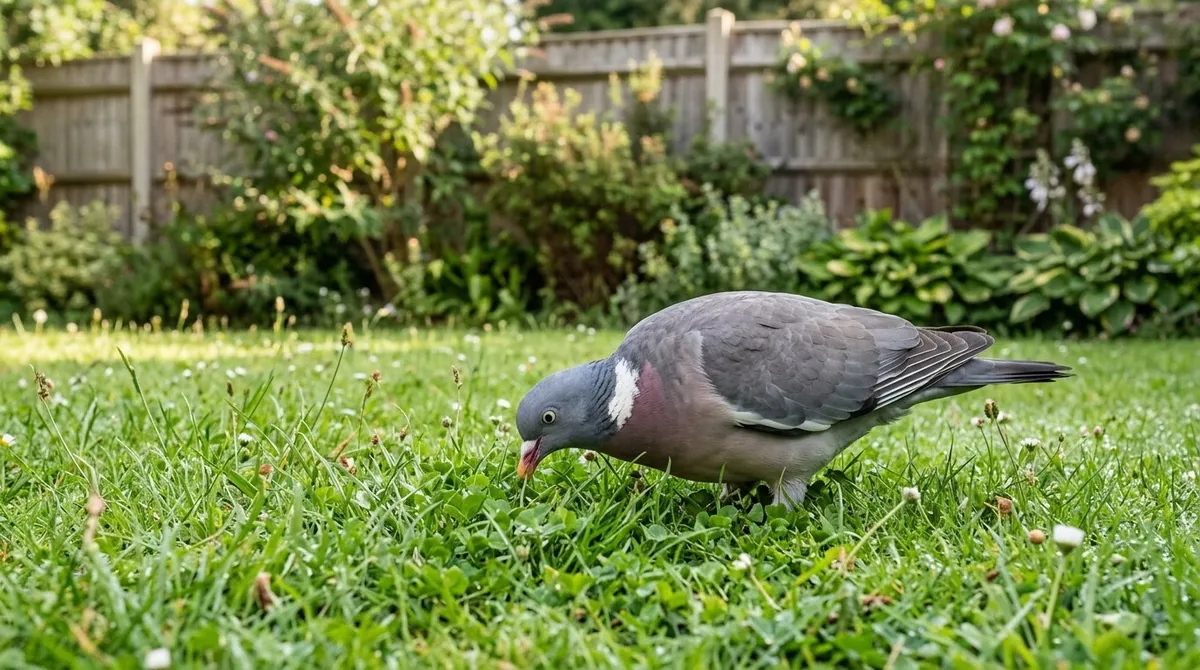
A wood pigeon on the grass is grazing, not hunting. It walks in a slow shuffle and pecks at anything soft and green or seed-sized.
The main lawn foods:
- Clover leaves and white clover flowers
- Grass seed heads in early summer
- Weed seed from dandelion, plantain and meadow grass
- Fresh grass shoots and overseeded seedlings
- Soil grit and small stones for the gizzard
- Leatherjackets, worms and surface grubs after rain
Clover is the standout. A lawn thick with white clover (Trifolium repens) pulls a flock in every morning. The birds strip the leaves and flowers, then move to seed heads as the grass sets seed in June and July.
The pink breast and bold white neck patch tell you it is an adult wood pigeon (Columba palumbus), not a feral or collared dove. Adults weigh 480-550g and stretch to 40cm, the largest pigeon in Britain.
Why They Swallow Grit and Stones
Wood pigeons have no teeth. They grind food in the gizzard, a muscular pouch in the stomach, using swallowed grit.
You will see a pigeon peck bare soil, gravel paths and molehills for small stones. The grit sits in the gizzard and acts like a grindstone, breaking down clover, seed and shoots into a paste the gut can absorb. A bird tops up its grit constantly because it wears down.
This is why a flock targets bare patches and path edges in dry weather. They are not eating the soil. They are collecting the grit they need to process the rest of the meal.
Wood Pigeons and Lawn Pests
After heavy rain, wood pigeons switch from plants to protein. Soft, damp turf lets them probe for grubs.
Lawn pests they take:
| Pest | When taken | Benefit to lawn |
|---|---|---|
| Leatherjackets | Autumn and after rain | Reduces crane fly larvae that chew roots |
| Earthworms | Wet mornings | Limited; worms aerate soil so this is mixed |
| Surface beetle grubs | Spring and summer | Cuts pests that damage turf |
| Chafer grubs | Occasional | Small dent in a damaging pest |
Leatherjackets are the useful one. These crane fly larvae chew grass roots and cause yellow dead patches. A pigeon hunting them after rain is doing the lawn a quiet favour, the same job a starling or a magpie does.
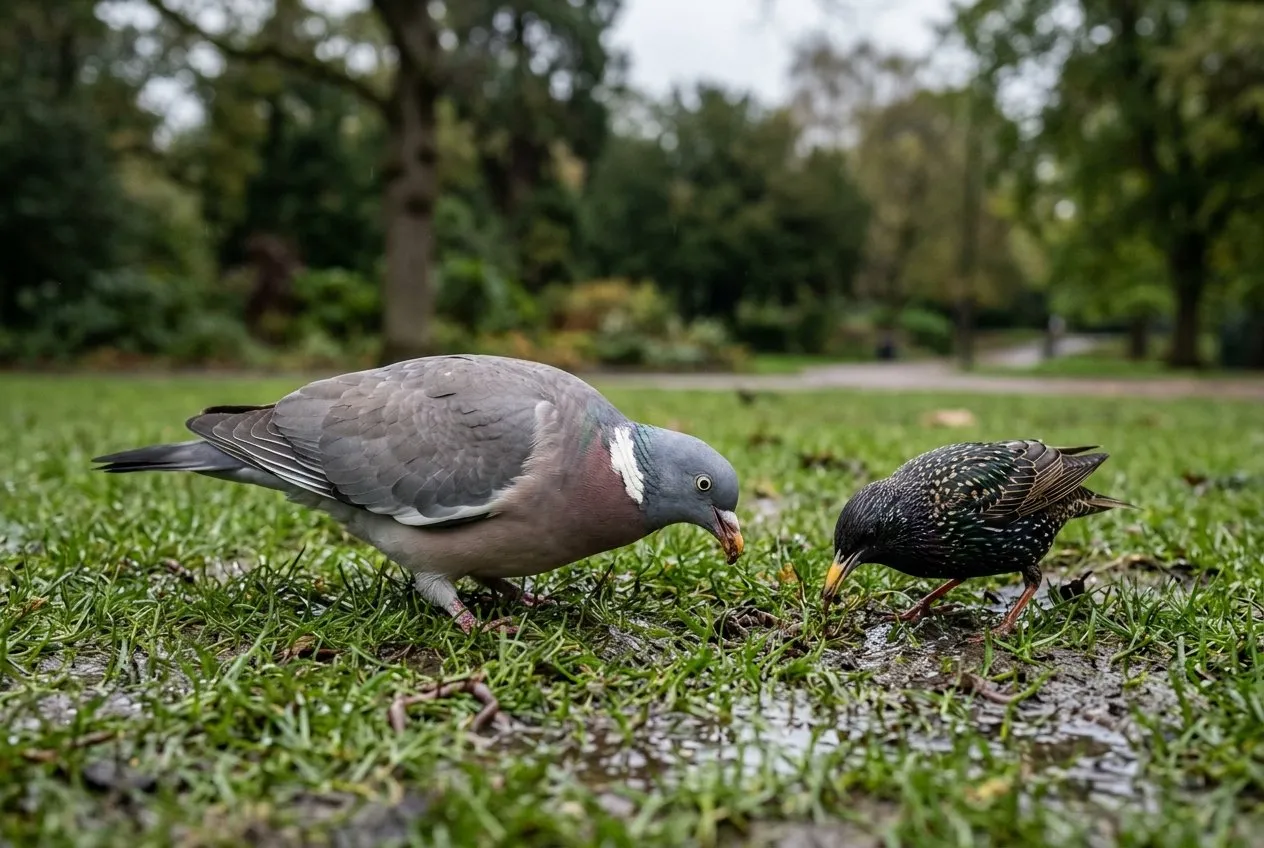 A wood pigeon and a starling probing for leatherjackets on a damp Birmingham park lawn after April rain. Both birds eat the crane fly larvae that yellow turf. The pigeon is twice the starling’s size.
Do Wood Pigeons Damage Lawns?
On an established lawn, no. The pecking is shallow and the turf recovers within days. The grass grows faster than a flock can graze it.
The exception is freshly sown grass seed. A flock can clear a newly seeded patch in a single morning, leaving bare soil and a wasted bag of seed. The same goes for thin, struggling turf where the birds reach the soil.
If your lawn looks chewed, the birds are usually a symptom of a thin sward, not the cause. They land because clover and weed seed have taken hold in gaps. Thicken the grass with overseeding and feeding and the flock loses interest. The clover that draws them in is the real thing to fix.
How to Protect Grass Seed and Brassicas
Two jobs need real defence: new grass seed and the brassica bed. Everything else can be left alone.
Protecting new grass seed:
- Cover the seeded area with horticultural fleece or fine netting
- Peg it taut so birds cannot land on the seed through it
- Lift it once the seedlings reach 3cm
- Or string black cotton at 10cm in a criss-cross over small patches
Full detail on materials and timing is in our guide to protecting grass seed from birds.
Protecting brassicas is the bigger fight. Wood pigeons strip cabbage, sprouts, kale and broccoli seedlings to the stalk. They land on or beside the plants and peck the leaves to ribbons.
Telling Wood Pigeons Apart from Other Birds
People often blame wood pigeons for damage done by collared doves, feral pigeons or even rabbits. The ID matters.
| Bird | Size and weight | Key marks |
|---|---|---|
| Wood pigeon | 40cm, 480-550g | Grey body, white neck patch, white wing bars, pink breast |
| Collared dove | 32cm, 200g | Pale buff, thin black neck collar, no white patch |
| Feral pigeon | 33cm, 350g | Highly variable colour, often grey with green neck sheen |
| Stock dove | 33cm, 300g | No white at all, dark eye, two short black wing bars |
The white neck patch and white wing bars in flight are the giveaway for a wood pigeon. If you can learn one wing pattern, learn that one. Once you can name the bird, you can stop blaming it for damage done by doves, feral pigeons or rabbits.
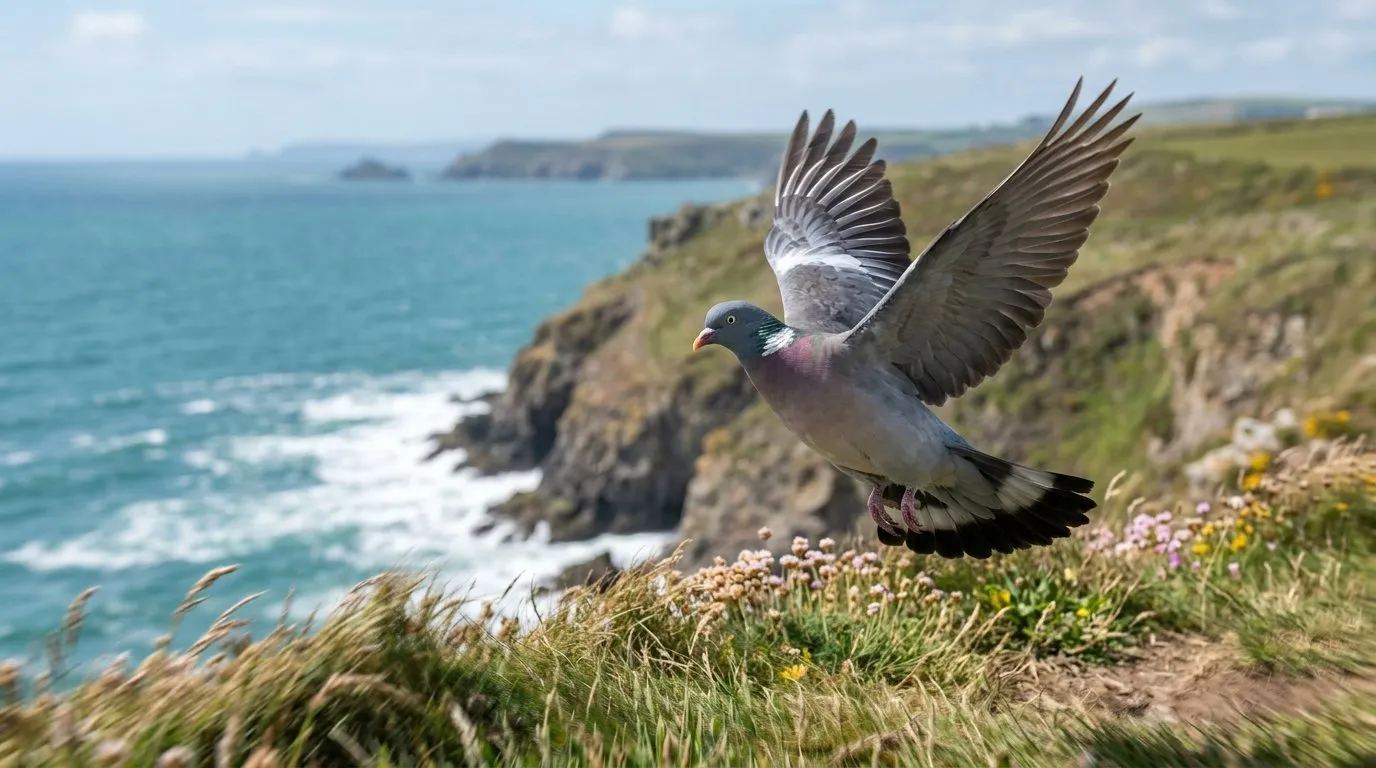 A wood pigeon lifting off a clifftop lawn in Devon, white wing bars flashing. The white wing flash in flight and the white neck patch at rest separate it from every other UK pigeon and dove.
Should You Feed or Discourage Wood Pigeons?
This depends on your garden, not on the bird. Wood pigeons are not protected as rare, but they are part of the British garden and most of the year they do no harm.
If you enjoy them, you do not need to do anything. They will clear spilt feeder seed below your hanging stations and tidy the ground. If you want to slow them, stop feeding ground seed and switch to caged or mesh feeders that exclude large birds. The RSPB’s bird feeding rules cover the hygiene and timing that keep a feeding station healthy.
For the broader picture of who visits and why, the RSPB wood pigeon facts page and the BTO BirdFacts entry for the woodpigeon both give population and diet detail worth a read.
Wood Pigeon Lawn Feeding Calendar UK
| Month | What they take on the lawn |
|---|---|
| January | Spilt feeder seed, any green clover, grit from bare soil |
| February | Early grass shoots, weed seed, path grit |
| March | Fresh shoots, overseeded seedlings at risk |
| April | Leatherjackets after rain, new grass seed at high risk |
| May | Clover leaves building, brassica seedlings stripped if unnetted |
| June | Clover flowers and grass seed heads, peak lawn feeding |
| July | Grass and weed seed heads, dry-soil grit collection |
| August | Seed heads, leatherjackets where soil stays damp |
| September | Weed seed, autumn leatherjacket flush after rain |
| October | Leatherjackets, fallen tree seed, last clover |
| November | Spilt feeder seed, grit, worms on wet mornings |
| December | Feeder spillage, grit, any remaining green growth |
Frequently asked questions
What do wood pigeons eat on the lawn?
Clover, grass seed heads, weed seed, fresh shoots, grit and leatherjackets. They peck clover leaves and low-growing weeds, swallow soil grit to grind food, and take worms and crane fly larvae from damp turf after rain. On a lawn they do far less harm than people think.
Do wood pigeons damage lawns?
Rarely on an established lawn. They peck shoots and seed but the turf recovers within days. The exception is freshly sown grass seed, which a flock can strip in a morning. Net new seed or use the lawn-recovery steps below.
Why do wood pigeons eat grit and small stones?
Grit grinds tough food inside the gizzard, a muscular part of the stomach. Wood pigeons have no teeth, so swallowed grit and small stones break down clover, seed and shoots. You will see them pecking bare soil and path edges for it, especially in dry spells.
How do I stop wood pigeons stripping my brassicas?
Net the bed at 30cm above the plants on hoops. Wood pigeons need space to land and peck, so taut netting held clear of the leaves stops them completely. Scarers and CDs work for days then fail. Netting is the only lasting defence for cabbage, sprouts and kale.
Are wood pigeons good or bad for the garden?
Mostly neutral, sometimes useful. On a lawn they eat clover, weed seed and leatherjackets, and their feet aerate damp turf. They become a pest only at the brassica bed and on bare grass seed. Across the rest of the garden they earn their place.
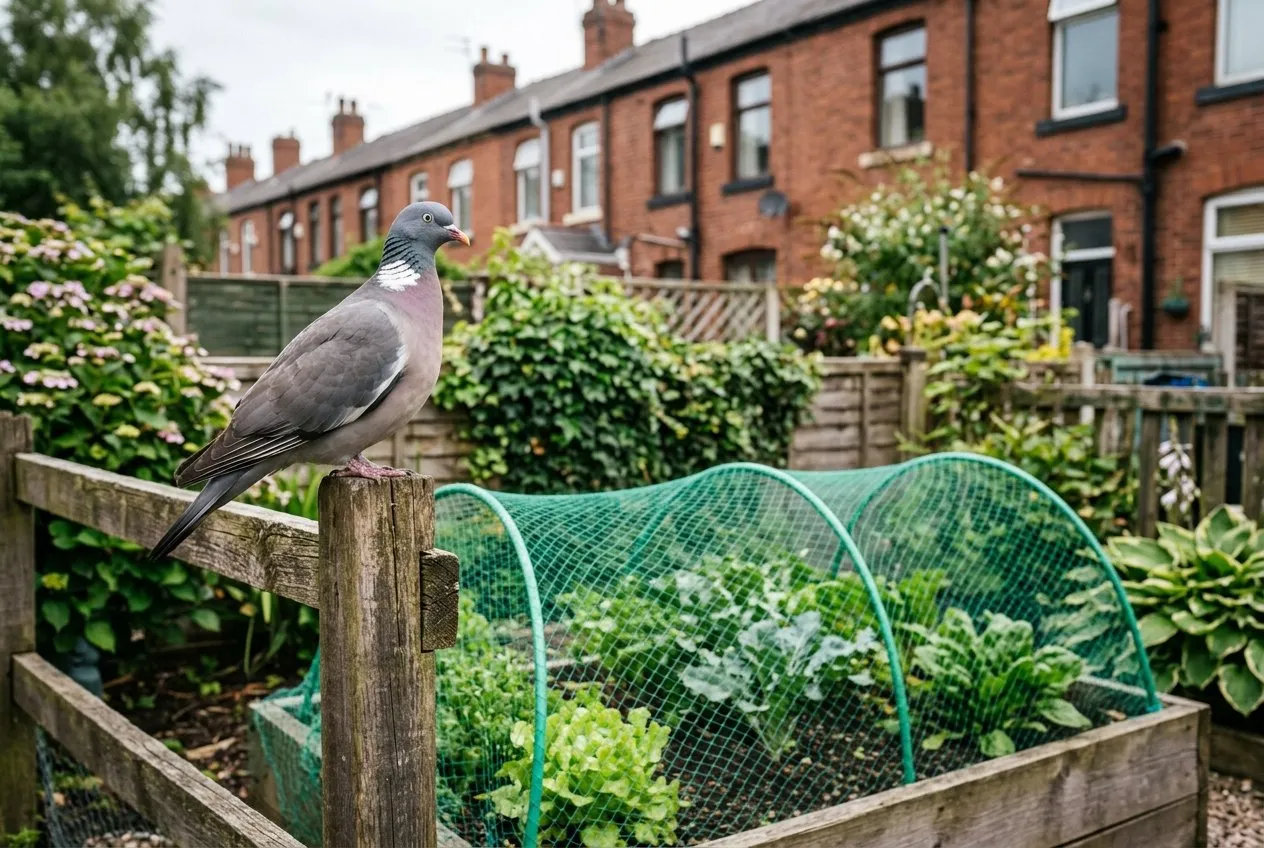 A wood pigeon watching a netted vegetable plot from the fence in a terraced Manchester garden. Once the brassicas are netted the bird drops back to the lawn for clover and grit, where it does no harm.
Now plan the rest of your garden bird care
Our team produces practical UK gardening guidance from source research, contributor records and established horticultural practice. Editorial standards are overseen by Matt W.